Quentin Tarantino’s Visionary Advice for Filmmakers | Master Creativity FAST
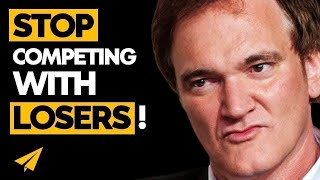
The video compiles Quentin Tarantino’s candid reflections on filmmaking, presented by Evan Carmichael. Tarantino shares his "Top 10 Rules" for success, describing his personal journey from a video‑store clerk to a globally‑renowned director. He emphasizes making a "kick‑ass" film that reflects a specific vision, hiring talented collaborators to translate that vision, and embracing competition while staying true to one’s voice. He discusses coping with self‑doubt through grandiosity, his disciplined writing routine (including pool‑side meditation), and his philosophy on car‑chase sequences, drawing on Australian influences. Tarantino also talks about genre reinvention, the importance of being the audience for one’s own work, and the need to leave a small‑town environment for a more challenging creative community. The content blends practical advice, personal anecdotes, and motivational statements aimed at aspiring filmmakers.
Chapters
Yeah, I'm— yeah, okay, I'm a big fish in a puddle. So what? All right? They're not doing anything.
You make a goddamn kick-ass movie, and you can take it all over the fucking planet Earth.
Now, true, I'm making specific films. And if you make a specific film that's not everything for everybody, you're gonna turn some people off.
I grandiose my way out of fear.
How do you get that vision that's in your head— how do you get it on the screen?
I worked for— got 3 years on a 16mm film that ended up becoming nothing but guitar picks. You also can't just— When the going gets tough, not give up on your vision.
Do a heist film. Deliver the Goods is a heist film, but it's a heist film where you never see the heist.
Now that I've written the first pass on it, what do I think about it? How can I make it better? Is there another element I can bring into it?
You can't make a 14-year-old girl coming-of-age movie in Australia without having a car chase break out at some point.
He's an American filmmaker and actor. His films have garnered both critical and commercial success. He received a star on the Hollywood Walk of Fame for his contributions to the film industry. He's Quentin Tarantino, and here are his top 10 rules for success.
I got a, uh, uh, you know, I started working at this video store. It was pretty much what you're talking about around that time. And, and it was great at first because I'd always hated day jobs and stuff. And so I got a day job and it ended up being pretty good. But admittedly, I was there for 5 years. At a certain point, it was a narcotic. I didn't have to keep pursuing my dreams because it's not what I want to do, but it's sort of, kind of close. And if I didn't have an artist's soul burning in me, I could have made myself happy with that. If I didn't have an artist's soul burning to get out, I could have walked backwards a couple steps and just done that. And it would have been a fulfilling— well, to anybody else, it would have been a fulfilling life. It wouldn't have been for me because I would have known I would have had something to say that I didn't get a chance to say. To say. But it did put me to sleep for a while. And I've always just thought— I mean, what really got everything kind of truly going for me— you could point out a lot of different things, but the bottom line is the fact that I realized that even the group of people I hung around with, they were all great, great, great fellas and great gals. But, you know, it was easy for me to think that I was doing a lot because I was doing more to try to move myself forward than they were. But, you know, that's not— yeah, okay, I'm a big fish in a puddle. So what? All right, they're not doing anything, all right? So yeah, I'm doing more than them. But I realized that actually I need to get my ass out to Hollywood and meet other people who are, you know, like, in my category or working a little higher. And I should be the weakest link in my chain that I have, and that'll make me be stronger, it'll make me run faster. I mean, like an analogy I've always used is, all right, if you run the 100-yard dash with people that can't run as fast as you, yeah, you'll win hands down, you know that. But if you run with people much faster than you, all right, yeah, you might come in last every single time, but your time will be better. Because they're making you run all the faster. They're making you dig down just a little bit more. Doesn't matter that you won, your time is faster. And that's what I knew I had to do. I had to get out of Loserville and throw myself into a place where like, this is what the fuckers do for a living.
Do you think it's still possible for an upcoming filmmaker to go the route you guys went and still be successful?
That's a good question.
Make Reservoir Dogs. That's a tough one. Actually, no, I'm not even being a smartass.
That was a fucking kickass movie, alright? You make a goddamn kickass movie and you can take it all over the fucking planet Earth.
Not America, not fucking Los Angeles, not New York, the planet fucking Earth. And everyone will know it.
But there is a lot more competition than there was when I was, you know, like kicking around with El Mariachi, so you got, you know, there's just a lot more to do.
These days.
You got a lot more competition because everybody's got a camera now and everybody can edit, and it's, it's just, it's tough. I don't know, with the state of independent filmmaking changes.
But at the same time though, yeah, there's a lot more competition, but also those crappy movies aren't competition if the fucking thing is like fucking dynamite.
There you go. You know, all that shit is, you know, yeah, there's a lot of, there's a lot of people out there doing stuff, but if, you know, it's like waves on the beach, all right? You make something, you make a piece of nitro that you throw in an audience's lap, you know, people notice.
You know, people ask me from time to time, do you make a movie with an audience in mind?
Yeah.
And my answer is yes, I do, all right? But the audience I have in mind isn't some faceless blobs that I'm trying to second-guess, all right?
It's me. It's not like a focus group. Yeah, it's me.
I'm the audience. I'm the guy that goes out and pays $7 or $8 in New York, you know, to go and see a movie.
All right, I go see— if I'm excited about seeing a movie, I see it on opening day.
All right, I am the audience.
All right, and I know what I want to see, you know.
And I was betting, and I was a little surprised at how many there were, I was betting that there are other people like me out there. All right, now true, I'm making specific films, and if you make a specific film that's not everything for everybody, you're going to turn some people off. All right, but you're going to turn some people on too.
When you experience moments of self-doubt, how do you approach getting out of that dark place? Good question.
I grandiose my way out of fear.
If you can imagine that.
It's a good way. It's charming. It's like, literally, it's like, okay, I'm gonna do one of the greatest car chases of all time, and if I don't, I'm not as talented as I thought I was, and I will realize that there is a ceiling to my talent. Right now I don't think there is, but if I don't do— but if it's not I'm not one of the greatest car chasers of all time, then I failed and there is a ceiling to my talent. I'm not as good as I thought I was. And I said that to everybody. And was I scared? Fuck yeah.
All right?
I had trepidation going all the way, because it's mine to fail. And it would be— and it's failing in front of the mirror too, because I'll know if I did it or not. And I'll be like, okay, Evan, you are not as good as you thought you were. And that got me to Mount Everest. It's true.
I remember at one point he goes, Robert, can you imagine?
You and me doing this car chase together, how great it's going to be.
And I'm like, hey man, you're on your own, brother. I ain't going out there, man. I got 5 kids. I'm not going to do 100-mile-an-hour bullshit. You want to live the Vanishing Point dream, buddy, live it. And he did it all by himself, and I'm so fucking proud of him.
You see movies and they, they can have— be full of vision, and you know, you want your movies to be like that, but You know, you see these other movies that don't have any vision, but I'm sure the director tried. So what's the difference between this guy versus that guy?
How did he—
how was this guy able to get this on the screen and how was this guy not able to get this on the screen? I'm sure if I talked to that guy, he'd tell all these, you know, I'm sure he wanted that.
Who knows?
And I was afraid of being that guy. I wouldn't be that guy. And, well, Terry Gilliam definitely has a vision. No two, three, four ways about it. So we were at Sundance and there was like a lunch going on at the picnic tables there and everyone FO'd, and it was just me and him talking, which was a thrill. And I go, look, you know, you have a very specific vision in your movies, and it's right there on the screen. How do you do that? How do you get that vision that's in your head, how do you get it on the screen? And he said, well, Quentin, you have to understand, as a director, You don't have to do that. Your job is to hire talented people who can do that. You hire a cinematographer who can get the kind of quality that you want. You don't have to be able to know how to take the lights and move them around to create an effect. You hire a talented costume designer who can give the colors that you need and the flamboyance, or not, that you want. Uh, you hire a production designer who can do that. Your job is explaining your vision. Your job is articulating to them what you want on the screen. And then all of a sudden, the whole mystical shamanistic thing that I thought directing was just went boop. And I realized I could do that, that it wasn't this Merlin-like magic kit that I needed to know the right spell in order to conjure.
Oh, I can describe what I want. I know what's in my head. That's the easiest part. I'm good at describing. If you got the passion, if you got the passion to do it and you do it and it doesn't like work out— I worked for, got 3 years on a 16mm film that ended up becoming nothing but guitar picks. And I was very disappointed when I realized it wasn't any good, but it was my film school, alright? And I actually got away really cheap. When it was all over, I knew how to make a movie. I didn't want to show anybody that, but I had the experience. I had it a lot cheaper than I would have gone if I'd gone to film school. If you're really going to be an artist with your own voice and you want to do different things and try, you know, not the standard thing, then, you know, the biggest balancing act you have to pull isn't really even being a good filmmaker. We'll just say that you have that. Is that balancing act between sticking to your vision, sticking to your voice, but not being some asshole who could only hear the sound of his own voice. You know, and that's— I mean, it's all right there. That's it. You got to be able to listen to people. You got to be able to hear what they're saying. But you also can't just— when the going gets tough, not give up on your vision.
There's a French director named Jean-Pierre Melville who came out in the '50s and basically started doing a whole series. He was like a total, like, entertainment director. He did a whole series of crime films, always like set in Paris or Marseille or something, that were basically the Warner Brothers Bogart-Cagney films, all right? But completely set to this like French Parisian rhythm when they start— "Allons-y." And they're great! And they work very much in the same way that like Sergio Leone's films do, where they take a genre that we know left, right, forwards, up and down and backwards, but they've—
but they do it with a whole different style and a whole new perspective.
And here they've basically reinvented the genre. They've created something new that didn't exist before. Now that's what I'm always kind of trying to do with my genre films. I don't know if I'm succeeding or not, but that's the attempt.
To?
To take something you've seen before, I love it, I respect it, and I'm gonna deliver the goods. I'm not just gonna be some arty guy going off, you know, but I'm delivering the goods, but I'm also trying to You know, reinvent it in a way. All right, do something, you know, do it in a much different way you've ever seen before. Like in the case of Reservoir Dogs. Again, it's not trying to just be a clever boy. It's not just a clever idea. It's gotta work dramatically. All right, but like, you know, do a heist film. Deliver the Goods is a heist film, but it's a heist film where you never see the heist. That's just my goofy way of doing it.
I always say like, if I was gonna do like, you know, a hunchback movie, the guy would get like, have an operation at the beginning of the film. The guy used to be the hunchback in the early days.
I started writing, like, say around, you know, 10, 10:30, 11, something like that. And then I write till about, you know, 5, 6, or 7, something like that. But around, around that time, around 5 or 6, I'm gonna stop for the day. And what I do is I stop for the day, and then after a little bit of time of unwinding, I go into my pool, and I keep it all nice and warm there and everything. And so I just kind of hang out in the pool, and if I'm not I'm done with something. I think, okay, what do I want to do? How do I want to go further with this? Now that I've written the first pass on it, what do I think about it? How can I make it better? Is there another element I can bring into it? Did I add too much? Yeah, whatever. I'm just looking at it critically. And maybe I come up with some neat ideas. And then I get out of the pool and I make notes on those neat ideas that I came up with. Thinking, meditating about it. It actually is meditating. And then that's my work tomorrow when I get up, all right? Or if I finished a scene, okay, boom, bam, that's done. Now that part of the story is done. Now I go in the pool and I go, okay, what happens next? What's the next thing? And then I usually come up with a pretty good idea and then I make my notes and then that's the next day's work. And that was never really the way I did it. And that has come exclusively the way I did in Glorious Bastards and Django and this. It truly brings a lot of joy to my life. It's a really, really lovely, lovely way to work that makes me feel really happy.
The American car chases that we grew up loving in the '70s, like The Driver or Bullitt or French Connection, you know, they were location-based. That was part of it. The fact that the chase scene is happening in downtown LA at night, you know, where it turns into a ghost town in The Driver, or even like Colors, all right, the fact that it's through Watts, That's a deal. That's a thing. All right? But then once the Australians got involved in it, they revolutionized car chases. And I'm not just talking about Mad Max. I mean, you can't make a 14-year-old girl coming-of-age movie in Australia without having a car chase break out at some point. But the thing that they did that was so great was, you know, location-oriented. It's the fucking outback, all right? Everything looks like this fucking same, all right? So they— All of a sudden, they didn't have drive-by shots. Everything, you were in the chase. You were with the cars constantly, every second. It was like pussy to put a car off the side of the road and have a rawr. They were with them. And so I wanted to actually do that. I wanted to do the Australian style and bring it in. But then there's even one more difference. And that is, who's chasing who?
All right?
Most of the time, it's the protagonist is being chased by a bunch of cops. Like in Blues Brothers or something like that. You're being chased by somebody. But the most exciting chases, the ones where you're on the edge of your seat, yeah, get him, get him, get him, get him, get him, all right, is when the protagonist is chasing the person and you want that person to get caught. That's French Connection. That's what makes French Connection so good. You want Popeye Doyle to get that bastard. Exactly.
All right?
And those were always more emotionally connective when you were following the hero. Well, I have both in my head. I have the girls being chased. I have the girls chasing. So I tried to hit all those emotional bases.
Thank you guys so much for watching. I made this video because the Morrow Brothers asked me to. So if there's a famous entrepreneur that you want me to profile next, leave it in the comments below and I'll see what I can do. I'd also love to know which of Quentin Tarantino's Top 10 Rules had the biggest impact on you. Leave it in the comments and I'll join the discussion. And one last thing, my personal goal with this channel is to get it to 1 million subscribers. So anything you can think of to help, share it, tweet it, comment, give it to some friends, add it to playlists. I'd really, really, really appreciate it. Thank you guys so much. Continue to believe, and I'll see you soon.
Well, you know, I have to say, you know, all that criticism that came out, yeah, it ended up being kind of a good thing because one of the things that I wanted to do is I wanted to actually start a conversation about slavery, about America's role in it, and to actually take an audience member from the 21st century and stick them in the antebellum South and see what it would— and have a sense of what America was like back then. And so even the people that have been criti— have criticized the movie, and some— a lot of people don't like it, and I can understand that. A lot of people do like it, and they've been kind of going back and forth. And that back and forth is really what I really wanted for the end of the day of this movie.
And I hope that actually even continues for the next few years. It truly is a situation where we just—
like the '70s.
Yeah, exactly. We would truly, because he was my audience and I was his audience and everything, and he was like the perfect sounding board. So we really would inspire each other to go further, to like, oh, Robert's going to love this. All right, I'd read him this. And then he'd come up with like, oh man, that's going to be so cool. The greatest gunfight never heard.
I remember that. The silencer gunfight you had at one point.
And actually it was the Columbia— it was the Sony lot, so like Versailles, that Cuban place, is right across the street. So we'd like, we'd web spin all day and then go to Versailles at night and eat and just talk about how we were going to take over Hollywood.
A reporter or something will say, we wouldn't do a big in-depth story on Quentin, we want to just spend some time with him and just, you know, have him do what he does during his day. What I do during my day is I go out to restaurants and I go to movies.
That's what I do, you know, and I hang out with my friends. And stuff. You know, I'm not into sports.
I don't like sports.
Anything with a ball, no good. All right?
I'm not into sports. I'm not into cars or anything like that. I mean, I'm into driving a car, but I'm not into, like, you know, I'm not into— I don't collect cars or make model cars or anything like that. I'm into movie stuff and horror stuff and, like I said, just hanging out with my friends and watching TV and, you know, messing around.
And now I'm into travel. I like traveling. I love traveling.
I love being here in London.
That's great.
Yeah, I love going different places and stuff. But that's it. You know, that's kind of what I like to do. The best thing is now that I'm making a living in the industry, I have a little bit of money, is that you have to see before when I didn't have any money at all, all I spent my money on was movie stuff anyway. Buying videos, buying records, you know, buying movie posters. I have a big movie poster collection. Buying all that memorabilia, buying all that crap. Alright, when I didn't have any money to spend, I spent my rent money on that. Stuff. See, now I got more money to spend on it, and it's tax deductible because it's all in the industry. So I get it all. I have much more money to spend. I can buy damn near anything I want, all right? And it's all written off at the end of the year. I mean, so it's like, what a life! This is great.
More from Evan




How the Biggest Mistake in History Created A Trillion-Dollar Empire | Sergey Brin



9 Machiavelli Principles That Force People To Respect You | Machiavellian Philosophy



The First 10 Words That Instantly Ruin A Sales Conversation | Vanessa Van Edwards