Set Clear INTENTIONS and MANIFEST Your DREAM LIFE! | Oprah Winfrey | Top 10 Rules
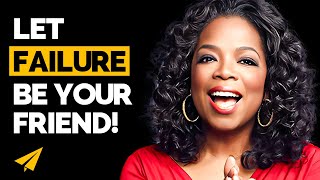
In this 25‑minute motivational video, Evan Carmichael curates ten core principles that Oprah Winfrey has shared throughout her career, weaving her original interview excerpts with his own commentary and a call‑to‑action worksheet. The piece opens with Oprah emphasizing the power of clear intention—knowing not only what you want but why—linking intention to the physics law of cause and effect and to karma. She recounts personal stories (the “disease to please,” early career struggles, the rise of The Oprah Winfrey Show) to illustrate how intention shaped her decisions, interviews, and philanthropic work. The ten rules are presented sequentially: 1) Set clear intentions; 2) Embrace failure; 3) Care enough to try; 4) Create meaningful connections; 5) Get still; 6) Stand for something; 7) Engage constructively; 8) Choose you; 9) Serve; 10) Inspire and motivate. Each rule is illustrated with anecdotes (e.g., Adele’s divorce, Brené Brown’s emotional vocabulary, a bipartisan diner in Queens, brick‑by‑brick metaphor from Will Smith, the Angel Network, etc.) and reinforced with Oprah’s characteristic conversational, passionate tone. Evan interjects with brief prompts (“Need motivation?”) and offers a free worksheet to help viewers translate the lessons into concrete action plans. The overall narrative urges viewers to adopt intentional, purpose‑driven habits, to view setbacks as learning opportunities, and to use personal influence for broader service.
Chapters
In order to step into the most powerful version of yourself, you need to have clarity of intention. You need to know not just what you want, but why you want it. Put your honor where your mouth is. When you give your word, keep it. Show up. Do the work. Get your hands dirty. I love being number one. I love winning. But it's the times when things go wrong, when you fall or fail, that you're actually going to learn the most about yourself. I learned back in the '80s after reading Gary Zukav's book, Seed of the Soul. So in that book, he speaks of cause and effect. That's the third law of motion in physics, which says that for every action, there's an equal and opposite reaction, also known as karma, or what goes around comes around. And before there is a cause or action, there is always an intention that fuels that action, a motivation or reason behind the action. The reaction will reflect what that intention is. For example, I used to have the disease to please. I lived that way until my late 40s, saying yes to things when I really wanted to say no. Can anybody relate to that? Why would I say yes? Because I didn't want to upset anybody. And I never did. Because when your main intention is pleasing other people, they do that, get pleased, then keep asking you for more until you're the one who's upset. So this principle is at work in big and small ways all the time. Someone apologizes to you, but they're not really sorry. What you hear is their words, but you feel the energy of their intention. We see this often in relationships where the intention is to have a big splashy ceremony and all the energy goes into making a fantastical wedding with no clarity of intention for what the day-to-day marriage will look like. Well, learning this principle of intention was a life-altering, life-enhancing, transformational experience for me. It changed everything. The way I moved through the world, the way I did business, who I chose to work with, everything. It is, I believe, the one reason that The Oprah Winfrey Show was number one for 25 years, because we were an intentional show with not just a mission, but a daily practice, a mission to use television to uplift, enlighten, and entertain. And that was because after learning this principle, I brought my whole team together and said, from this day forward, We do not do a show unless we are aligned in our intention. So when y'all bring me an idea, state your intention at the top, and my yes will come only if I can feel that I can accomplish or align with whatever you're doing. So you want an interview? Tell me what the intention is. What do you want? I ask every guest that I'm interviewing with, from Whitney Houston to my sit-downs with Lance Armstrong, Shaka Senghor, the mother who lost her daughter to domestic violence, and most recently, even Harry and Meghan. Before the interview, I say, tell me your intention. So you get the idea. Intention is ruling your life whether or not you're aware. It is law. It is one with cause and effect, and you can't have action or reaction without it. So in order to step into the most powerful version of yourself, you need to have clarity of intention. You need to know not just what you want, but why you want it. So let's start by setting your intention for this week. And after today, we're gonna meet every week going forward to create a more intentional life, to discuss what needs to happen and what will be your why, your motivation for making it so. It all starts with thinking about why you do the things you do. And if you're not getting the results you want, don't look at the results, look at what fueled it, the intention.
Need motivation?
Watch the top 10 on Believe Nation.
Hey, it's Evan Carmichael and I make these videos because you are probably the most ambitious person in your circle. But you know you're capable of more, and you get that push by surrounding yourself with the best. So today, let's learn from one of the best, Oprah Winfrey, and my take on her top 10 rules of success. Enjoy. Rule number 2: Embrace failure.
Let failure be your friend. There are going to be times, of course, where you're going to win a lot. A lot of things are going to go your way, and it's wonderful to bask in that adulation and to feel proud of your successes. But there are also going to be times— the satisfaction that those moments bring, nothing can compare to that. Those victories will feed you for years to come and help you stay committed when your tank is sometimes empty. Winning is great. It's fantastic. I love it. I love being number one. I love winning. But it's the times when things go wrong, when you fall or fail, that you're actually going to learn the most about yourself. You know, all those years on the Oprah Show, 25 years, we were the number one show for 25 years. And that's because I lived with the intention to serve the audience. The audience came first every show. I would sit with the producers and say, "Well, I can't do that because I can't find the truth of myself in that show. I have to have a thread of truth to be able to hold on to." So I knew so well the audience. I felt like I was the audience, the audience was me, and I felt so connected. And then I ended that and started a new network. And I flailed for a while, and I was really upset with myself. But I will tell you that when I was able to shift the paradigm to start to looking at, wow, what I have instead of what I don't have, what I have instead of what I thought I'd lost, I was able to begin to turn things around. But it's those moments of being of uncertainty, it's the moments where All of my mistakes show up on the evening news. You can make a mistake. I can tell if I've done something wrong. It's on the CNN crawl. I can read about it. But learning from the moments where things weren't going so great, being able to get still, to connect with that which I know is God, the force, the power greater than myself, and to come back and realize that in order to move forward, you move forward by taking the next right step. You don't have to know everything to do. You don't have to know all the steps to make. Just what is the next right move?
Rule number 3: Care enough to try.
It's true, you can't personally stop anybody from walking into a school with an assault rifle, nor can you single-handedly ensure that the rights that your mothers and your grandmothers fought so hard for will be preserved for the daughters that you may someday have. And it'll take It will take more than you alone to pull 40 million Americans out of poverty, but who will you be if you don't care enough to try? And what mountains could we move, I think, what gridlock could we eradicate if we were to join forces and work together in service of something greater than ourselves? You know, my deepest satisfaction and my biggest rewards have come from exactly that. Pick a problem, any problem, and do something about it, because to somebody who's hurting, something is everything.
Rule number 4: Create meaningful connections.
I wanted to share with you this line from Brené Brown's latest extraordinary new book, Atlas of the Heart, that will be available come this Tuesday, November 30th. She says, our connection with others can only be as deep as our connection with ourselves. That's what we're talking about this week. And there perhaps is no time in recent memory when it's more necessary to actually cultivate empathy and connection in order to make sense of the profound changes that we're all undergoing. We just— everywhere we turn, we can't grapple with the many urgent issues facing us and facing our planet without understanding ourselves first. And in Atlas of the Heart, Brené and her team of researchers and therapists and educators and others have so richly explored how to cultivate an emotional vocabulary. Like, we need the words, the language, the expressions that help us process and identify what it is we're feeling and what is happening to us, and to be able to communicate that to other people. And What they've discovered is that without that, we won't find the solid ground within us that gives us the courage and the confidence to embrace love, to embrace happiness and our own vulnerability, to face and transcend our pains, or to navigate the great uncertainty that is the human condition. So in Brené's words, she says, with an adventurous heart and the right maps, we can travel anywhere and never fear losing ourselves, even when we don't know where we are. I just love that. The solid ground, the anchor we're searching for, is connection, and it is within each of us. But to forge meaningful connections with others, again, we have to first connect with ourselves. And I know we're doing a lot of connecting this week with family and friends. We have to establish a common understanding of the language of emotions and human experience in order to do that.
Also, to make sure you're actually taking action after watching this video, I've designed a special free worksheet just for this video. The worksheet will highlight all the lessons learned in this video as well as pull out our 3 favorite learnings and quotes that will inspire you to actually do something. The worksheet will also give you space to write down what your key takeaways are and your specific plan of action to make sure you're getting results. If you want the worksheet designed specifically for this video, absolutely for free, there's a link in the description below. Go click on it and start building the momentum in your life and your business. I'll see you there. Rule number 5: Get still.
As you're trying to figure out, what do I do? How should I do it? First of all, I will say this, that when you don't know what to do, my girls have heard this, over 100 times. When you don't know what to do, you do nothing. You get still until you do know. Because when you have to ask everybody else, should I, should I, should I do this, should I, should I— and that's whether it's buying a pair of shoes or going with a guy, buying a house, taking a job— should I, should I, should I, should I— when you have to ask everybody else, it means you don't really know the answer fully yourself. So you get still. Be still and know the answer will come.
Rule number 6: Stand for something.
Here are variations on a few grand themes, beginning with this: pick a problem, any problem. The list is long. Here are just a few that are at the top of my list. There's gun violence, and there's climate change, and systemic racism, economic inequality, media bias. The homeless need opportunity. The addicted need treatment. The Dreamers need protection. The prison system needs reforming. The LGBTQ community— the LG— The LGBTQ community needs acceptance. The social safety net needs saving. And the misogyny needs to stop. Needs to stop. But you can't fix everything. And you can't save every soul. But what can you do? Here and now, I believe you have to declare war on one of our most dangerous enemies, and that is cynicism. Because when that little creature sinks in its hooks into you, it'll cloud your clarity, it'll compromise your integrity, it'll lower your standards, it'll choke your empathy, and sooner or later, cynicism shatters your faith. When you hear yourself saying, "Oh, it doesn't matter what one person says. Oh well, so what? It's not gonna make any difference what I do. Who cares?" When you hear yourself saying that, know that you're on a collision course course for our culture. And I understand how it's so easy to become disillusioned, so tempting to allow apathy to set in, because anxiety is being broadcast on 157 channels, 24 hours a day, all night long. And everybody I know is feeling it. But these times, these times are here to let us know that we need to take a stand for our right to have hope. And we need to take a stand with every ounce of wit and courage we can muster. The question is, what are you willing to stand for? That question is gonna follow you throughout your life. And here's how you answer it. You put your honor where your mouth is. Put your honor where your mouth is. When you give your word, Give your word, keep it. Show up, do the work, get your hands dirty, and then you'll begin to draw strength from the understanding, the true knowing that history is still being written. You're writing it every day. The wheel's still in spin, and what you do or what you don't do will be a part of it.
Rule number 7: Have constructive engagement.
More than ever, I would have to say I miss the Oprah Winfrey Show. I chose to let it go. I felt that I'd said everything I needed to say after 25 years, and I wanted it to be my decision when I let it go. But I will say this past year, and now more than ever, I miss it because I miss the opportunity for the spirit of constructive engagement that that platform offered. So 2 weeks after the election last year, I went to a diner in Queens for Oprah Magazine with a group of women. Half of them were Trump supporters, half of them were Hillary supporters. Nobody wanted to come to breakfast. I was like, it's going to be some great, great, great croissants. We're going to have some nice jams, ladies. Nobody wanted to sit down and have the croissants. So everybody came in the room all tight and hardened. And so we were able to— I was able to— they were like, well, I've never been this close to these Hillary elitists. I've never been this close. And there are other people who are saying, well, I never sat this close to Trump supporters before, but we're going to do it. I will tell you, after 2.5 hours, I had those women not only eating croissants, sitting around the table, listening to each other's stories, hearing both sides. And by the end, they were holding hands, exchanging emails and phone numbers, and singing Reach Out and Touch. We're all pretending to be Diana Ross, which means it's possible. It can happen. So I want you to work in your own way to change the world in respectful conversation. With others at a rate and a rhythm that's in tune with the source from which you have come, your truth. And I want you to enter every situation aware of its context, open to hear the truths of others, and most important, open to letting the process of changing the world change you. That is the spirit of constructive engagement. So that's the goal: to be a compassionate woman of substance, to be committed, to have constructive engagement, to live this life of substance. Substance. What I know for sure is if you focus on the substance, the success will come.
Rule number 8: Choose you.
These past few weeks, I've been thinking a lot about Adele and our one-night-only conversation that we had for CBS. Such a beautiful conversation and concert and beautiful album. You can feel her heart and soul in every lyric on 30. Her emotional pain, she seems to have used as a muse. I said that to her during our conversation, and you know by now that she wrote that album while going through a divorce. And she told me that she left her marriage in pursuit of her own happiness. And she has so many meaningful things to say about choosing you and not being guilty about it. The pursuit of your own happiness is enough of a reason to make a major change like Adele did. Let that sink in for a minute. So how did Adele find the bravery to trust herself and uproot her life I asked her just that, and her answer struck me. She told me that she imagined the person she would want her 9-year-old son to know. When she was unhappy, which she was in the marriage, he, her son, wasn't getting the best version of her. So Adele dedicated the album to him as a way of telling him what she was going through. So of course Adele's situation is specific to her, but the greater lesson can apply to just everyone. So many women stay in miserable situations, whether it's their job, their friendships, romantic relationships, and even encounters with family members because they don't feel they have the strength or the right to let go. They might feel scared to put themselves first, to listen to that voice that's in in your spirit saying, do what's best for you, make the change. The best thing I gathered from this new 30 album, along with being soothed by the music— it's such a great album— is an even more compelling understanding that choosing happiness for yourself is what truly allows you to begin bringing happiness to other people. So during the holiday season, we all are being We've already been conditioned to give and give and give and give and give and give and give to others, but it's important to make time for yourself too. That care is the gift you give to yourself, and that's what we're taking away from this week, I'm hoping. Being able to choose what's right for you and knowing when it is right.
Rule number 9: Serve.
I was not your age, but about 30 years old, I started to realize that it was my whole life, not just parts of my life, just not parts of what I was doing, but my whole life was a prayer. My whole life is an offering in service, first to yourself to become a fully actualized human human being. And you do that through your actions and your interactions with others. But when I started to realize it's not just what I do, but it's how I do it— it's how I'm not just praying on my knees, but I live in a state of humility on my knees in service to the higher calling of my life— that things started to change.
And rule number 10, the last one before some very special bonus clips: is inspire and motivate.
Eat a good breakfast. It really pays off. Pay your bills on time. Recycle. Make your bed. Aim high. Say thank you to people and actually really mean it. Ask for help when you need it. And put your phone away at the dinner table. Sit on it, really. And know that what you tweet and post on Instagram today might be asked about in a job interview tomorrow or 20 years from tomorrow. Be nice to little kids, be nice to your elders, be nice to animals, and know that it's better to be interested than interesting. Invest in a quality mattress. I'm telling you, your back will thank you later. And don't cheap out on your shoes. And, and if you're fighting with someone you really love, for God's sakes, find your way back to them because life is short even on our longest days. And another thing, another thing you already know that definitely bears repeating: don't ever confuse what is legal with what is moral because the because they are entirely different animals. You see, in a court of law, there are loopholes and technicalities and bargains to be struck, but in life, you're either principled or you're not. So do the right thing, especially when nobody's looking. And while I'm at it, do not equate money and fame with accomplishment and character, because I can assure you, based on the thousands of people I've interviewed, One does not automatically follow the other. Something else, something else you need to know this: your job is not always going to fulfill you. There will be some days that you just might be bored. Other days you may not feel like going to work at all. Go anyway, and remember that your job is not who you are. It's just what you're doing on the way to who you will become. Every remedial chore, every boss who takes credit for your ideas, that is going to happen. Look for the lessons because the lessons are always there. I was inspired by yet another book, Will Smith, who has just released his memoir, and I'm telling you, it's a remarkable achievement. It's, it's so honest and packed with so many wonderful life lessons and aha moments, and yet it sounds just like Will's voice because he wrote it. And one of those life lessons that really stuck with me is a story he tells from his childhood growing up in West Philadelphia about building a brick wall. Yes, an actual brick wall. He was 11 years old and his father needed a new wall constructed in front of his shop, a 12-foot-high, 20-foot-long wall to replace an old one that was crumbling. And his father, who the family called Daddy-O, assigned the job to Will and his brother Harry. And first Daddy-O demolished the old wall, leaving this big gaping hole. And then it was up to Will and his brother Harry to build a new one brick by brick. Now, Will describes that task. He says it seemed overwhelming and endless, and their father didn't care if it was raining or cold, if his sons didn't feel like working that day. Week after week, they worked to rebuild that wall, yet they didn't feel they were ever making any progress. And so the two 2 little boys now are working on holidays, during their vacations, on the weekends. Over the course of a year, they mixed concrete and toted that, what seems to seem like millions of bricks, back and forth. And if they were in bad moods or sick or had tests to take the next day, Daddy-O didn't care. That wall had to be built. And on a day that they were in a particularly stark mood, Will describes it, they protested to their father that the job was impossible, that it was ridiculous that these two little boys are being asked to build this wall and that it would never get done. So here's where the aha moment came. Tired of hearing his sons complain, Will's father, Daddy-O, threw down his tools, walked over to the wall-to-be, and said, stop thinking about the damn wall. There is no wall. They're only bricks, and your job is to lay this brick perfectly, then move on to the next brick, then lay that brick perfectly, then the next one. Don't be worrying about no wall. Your only concern is one brick. And Will says that sunk in, and he writes that when I focused on the wall, the job felt impossible, never-ending. But when I focused on the brick, just one brick, everything got easier. As the weeks passed, the bricks mounted and the hole got just a little bit smaller. I started to see that the difference between a task that feels impossible and a task that feels doable is merely a matter of perspective. Are you paying attention to the wall or are you paying attention to the brick? So when life feels overwhelming, when a task at hand is daunting, when you look ahead and you think, oh no, it's just too much, can't do that, you can take Daddy-O's advice and think about things brick by brick. I just love this analogy. One brick at a time. One baby step at a time if necessary. So that's a half a brick if need be. Will writes that every single day, no matter where you are going or what you're going through, through, there's always another brick sitting right there in front of you waiting to be laid. The only question: are you going to get up and lay it? So this week, everybody, just take things brick by brick, and before you know it, what felt like a wall that was impossible to build, that grief you thought would be impossible to endure, that achievement you thought was out of your grasp, you'll suddenly find that, yep, you have built a wall. You made it through one brick at a time. It doesn't matter how far you might rise, at some point you are bound to stumble. Because if you're constantly doing what we do, raising the bar, if you are constantly pushing yourself higher, higher, the law of average the myth of Icarus, predicts that you will at some point fall. And when you do, I want you to know this, remember this: there is no such thing as failure. Failure is just life trying to move us in another direction. Now, when you're down there in a hole, it looks like failure. So this past year I had to spoon-feed those words to my those words to myself. And when you're down in the hole, when that moment comes, it's really okay to feel bad for a little while. Give yourself time to mourn what you think you may have lost. But then, here's the key: learn from every mistake. Because every experience, encounter, and particularly your mistakes are there to cheat you and force you into being more of who you are. The greatest lesson I've learned throughout my career came from Maya Angelou, actually, when I was, you know, first meeting her. And after I'd known her for a while, she said, baby, you know, you need to know that when people show you who they are, you believe them the first time, Oh, you know that lesson too now. First time. And your problem is it takes you 29 times to see the same lesson coming in a different skirt or wearing a different pair of pants. So I think that has been one of my greatest wisdom teachings is to assess from people's behavior, their actions, not just towards me but towards other people, who they are and how they behave. Because if people talk about other people, they'll talk about you. So I think in business and in personal relationships, that's also been my greatest lesson. The challenge of life, I have found, is to build a resume that doesn't simply tell a story about what you want to be, but it's a story about who you want to be. It's a resume that doesn't just tell a story about what you what you want to accomplish, but why. A story that's not just a collection of titles and positions, but a story that's really about your purpose. Because when you inevitably stumble and find yourself stuck in a hole, that is the story that will get you out. What is your true calling? What is your dharma? What is your purpose? The way to make movies is to do stuff that you love, because, you know, for 25 years I worked on the Oprah Show, and Stedman will tell you that there were nights that I came home and I almost, you know, it's hard to even like take off my clothes because I knew I was gonna be getting up 4 hours later. But I never really felt exhausted, like depleted. I never felt exhausted, but I never felt depleted. So I Do the work that comes straight from the soul of you, from your background, from stories that you've grown up with, from stories that bring you passion, from stories that you not just yearn to tell, but that if you don't tell them, they won't get told. And when you are operating, you know, the single greatest wisdom I think I've ever received other than when people show you who they are, is that the key to fulfillment, success, happiness, contentment in life is when you align your personality with what your soul actually came to do. I believe everybody has a soul and has, you know, their own personal spiritual energy. So when you can use your personality to serve whatever that thing is, you can't help but be successful. So if you do films that come from the interior of your soul, you do work, you do art that comes from the interior of you, you cannot miss. It's only when you're doing stuff that you think might make money, you think it may be a hit, or you think it may bring you some level of attention or success that isn't what does it. I would have to say that all of the great, wonderful experiences of my life that have brought me to this moment have come from working from the interior of myself. And so that's why it feels so authentic, because it, it actually is. So when you do that, you'll win. There comes a point, and I'm really, I'm really good at this, is at not holding on to what was and being able to live in this present moment. You know, I never was one of those women who's afraid to tell your age or you're trying to be something you're not. I mean, I think for everything there's a time and a season. The Bible, completely right about that, I think. I think, and you know in your own self when it's time to move from that. My television career began unexpectedly. As you heard this morning, I was in the Miss Fire Prevention contest. That was when I was 16 years old in Nashville, Tennessee, and you had the requirement of having to have red hair in order to win up until the year that I entered. So they were doing the question and answer period, because I knew I wasn't going to win in the swimsuit competition. So during the question and answer period, the question came, why, young young lady, what would you like to be when you grow up? And by the time they got to me, all the good answers were gone. So I had seen Barbara Walters on the Today Show that morning, so I answered, I would like to be a journalist. I would like to tell other people's stories in a way that makes a difference in their lives and the world. And as those words were coming coming out of my mouth, I went, whoa, this is pretty good. I would like to be a journalist. I want to make a difference. Well, I was on television by the time I was 19 years old. And in 1986, I launched my own television show with a relentless determination to succeed. At first, I was nervous about the competition. And then I became my own competition, raising the bar every year, pushing, pushing, pushing myself as hard as I knew. Sound familiar to anybody here? Eventually, we did make it to the top, and we stayed there for 25 years. The Oprah Winfrey Show was number one in our time slot for 21 years, and I have to tell you, I became pretty comfortable with that level of success. Every single day, to channel our own inner Jucindas, to exemplify the truth and the respect and the grace that we actually wish for the world. We need to tell it, as we're doing at this conference, We need to write it. We need to sing it. We need to proclaim it. We need to be it. We need to be the truth. We have to be the respect. We have to be the fierceness, the love that we want to see. And when we do that, mark my words, a change is already coming. I wake up in the morning. What you do? And the first thing I say is thank you. That's my first thing. Even before I'm awake, even before my eyes are really fully open, I say, "Thank you." I can feel the gratitude, like, "Ooh, I'm still here. I'm in a body. Thank you so much. I thank you for that." And then I go through the letting the dogs out, the whole, you know, brushing your teeth and all that stuff. And then I have either silence or prayer or something that acknowledges that I'm still here. I do not reach for that phone first. That's your problem. You have no idea of the power of noticing another human being and what it feels like when somebody knows that they have been seen, truly seen by you. It is the greatest offering you can give. And all those years of the Oprah Show, the greatest lesson I learned was that, you know, after every show, someone would say invariably in one way or another. How was that? I finished an interview with father who killed his twin daughters. I finished an interview with politician Barack Obama, Joe Biden, George Bush, Beyoncé. They all say the same thing. How was that? And so I started to see that there's this common thread in our humanity where everybody wants to know, how was that? Did I do a 'Are you okay? Did you hear me? And did what I say mean something to you?' So I would have to say that recognizing that in other people has helped me to become, you know, a person of compassion, a person of understanding, a person who can interview anybody about anything, because I know that the core of you is the same as the core of me. You just want to be heard. Have you ever made a made a complete fool of yourself over a celebrity? I'm sorry. Okay. I have. I've never shared this story with you, but today I feel I have to let it out. It was 1973 or '74. I was 19 or 20. I can't quite remember. But I was working in Nashville, and I had this obsession— I mean obsession— Session with Neil Diamond. Now, I would wake up— I would wake up in the morning playing Song Song Blue, everybody. And I would go to bed to Cracklin' Rosie, and— which is not an easy thing to do in high school because I could have lost my Negro membership card. You know, there were not Not a lot of Negroes singing Cracklin' Rosie, but okay. So I'm working in television at this television station, and there was some kind of benefit, and Neil Diamond was there because he was performing in town. And so I'm in the green room, and I am— by the time 1973, I'm already an anchorwoman on TV. And so I walk into the green room, and there he is. And so I say, Mr. Diamond, Would you like some shrimp? And he says— and he says, "Yes, yes, I'll take a shrimp." And he took a shrimp, and I'm like, "Okay." And then he moved across the room, and then I followed him across the room. That's a big mistake. That's the big mistake people make. So I follow him across the room, and so I'm like, Would you like another shrimp? And he said, yeah, I'll take a shrimp. He did. And then I followed him again. So I'm just staring at him across the room. And finally I walked up and he goes, enough already. Enough already. OK, so that was my Neil Diamond moment. I know you all understand better than most that real progress requires authentic— an authentic way of being, honesty, and above all, empathy. I have to say that the single most important lesson I learned in 25 years talking every single day to people was that there is a common denominator in our human common experience. Most of us, I tell you, we don't want to be divided. What we want, the common denominator that I found in every single interview, is we want to be validated. We want to be understood. I've done over 35,000 interviews in my career. And as soon as that camera shuts off, Everyone always turns to me and inevitably in their own way asks this question: Was that okay? I heard it from President Bush. I heard it from President Obama. I've heard it from heroes and from housewives. I've heard it from victims and perpetrators of crimes. I even heard it from Beyoncé and all of her Beyoncé-ness. She finishes performing, hands me the microphone, and says, "Was that okay?" Friends and family, yours, enemies, strangers, in every argument, in every encounter, every exchange, I will tell you, they all want to know one thing: Was that okay? Did you hear me? Do you see me? Did what I say mean anything to you? And even though this is the college where Facebook was born, my hope is that you will try to go out and have more face-to-face conversations with people you may disagree with. That you'll have the the courage to look them in the eye and hear their point of view and help make sure that the speed and distance and anonymity of our world doesn't cause us to lose our ability to stand in somebody else's shoes and recognize all that we share as a people. This is imperative for you as an individual and for our success as a nation. What about something that you feel like you've personally achieved or overcome? Is there something that you are especially proud of yourself for? Yeah, I'm especially proud of myself for not living in the world of comparisons. You know, years ago when I pulled out that wagon of fat, I was actually comparing myself to everybody else or what I thought you're supposed to look like or what size you're supposed to be. So I've now reached the point where I'm really okay exactly where I am, and that's, that's You know, it's taken me a lifetime practically to figure that out. Being okay exactly where you are. Comparing is a dangerous thing. It's so hard because we are in the world of insta-comparison, you know? And so the real spiritual practice is to like live from within and not let the world define who you are, but you do that for yourself. That's, that's the hardest work. You are now the CEO of your You're the owner and the CEO, and you've got thousands of people working for you. Yeah. And as a CEO, do you have to say no to people all the time, and is that hard to do? Uh, you get other people who say no for you. Say no is hard. That is one of the big, big lessons, life lessons for me. I grew up, obviously, girl, raised in the South, women need to please, wanting to please everybody. So it took me a long time to get that lesson. Of only saying yes to what you intend to say yes to. And so I try to do all of my business decisions and personal decisions based upon my intention. Many of you, as I have been, as I am, are where you are in your life based upon what you believe. And it's not just what you think you believe on the surface. It's also your shadow beliefs. That are holding you back from moving into the life that you believe you deserve. What I know is if you're not looking at the shadows, if you're not looking at what is subconsciously running through the tape in your mind, telling yourself you're not good enough, you're not worthy enough, you're not smart enough, you're not enough, which is a tape that's playing for a lot of people, if you're not conscious of that, then you end up acting out of that belief system and not out of what you know to be the truest or want to be the truest for yourself. You don't become what you want because so much of wanting is about living in the space of what you don't have. That's why Jim Carrey's story is so powerful, because he started to act as though he already had it. He would go up to Mulholland Drive He would drive away thinking, I already have those things. I just haven't accessed them as yet. I believe those things are going to come to me, and I'm going to act like they are. So I'm going to move forward in my life in order to draw that to myself in such a way that my actions are in alignment with what I say I believe. So if you start to think about that, really, why are you where you are in your life? The biggest transformation for me was living my life with intention. You know what I know? I live by this law of— that's the third law of motion physics— what you put out is coming back. But before you even put it out, you have an intention. And so to have a clarity of intention about what you actually want to do and why you want to do it is the most important thing. And then to just set that vision and have every step you make move you in the direction of that vision. It doesn't mean that every day it's going to happen. Some days you're off track, like I intended to work out 45 minutes, I only got in 37 this morning. Well, that's better than zero. It's better than zero, and that's what I said, okay, at least you got some movement in, and I'll go back and I'll make up the other 8 later. I think you just made it up. Actually, as I was walking, I think this is going to be 8 minutes, I'm going to make it up. So it's about, it's daily renewal, it's not one —big gigantic goal. It's every day coming back, giving yourself the opportunity to get it right. There has to be some way that this darkness can be banished with light, says the man whose little boy was massacred on just an ordinary Friday in December. So whether you call it soul or spirit or higher self intelligence. There is, I know this, there is a light inside each of you, all of us, that illuminates your very human beingness if you let it. And as a young girl from rural Mississippi, I learned long ago that being myself was much easier than pretending to be Barbara Walters. Although when I first started, because I had Barbara in my head, I would try to sit like Barbara, talk like Barbara, move like Barbara. And then one night I was on the news reading the news and I called Canada Canada. And that was the end of me being Barbara. I cracked myself up on TV, couldn't stop laughing, and my real personality came through. And I figured out, oh gee, I can be a much better Oprah than I could be a pretend Barbara? I have a very big life, and so people with big lives can do big things. And so I started to think about what was the best Christmas I ever had in my life. I grew up poor, uh, on welfare with my mother for part of my life, and I remember that the best Christmas of my life was when I was 12 years old, and my mother had said, we're not going to have Christmas. Because we can't afford it. And my feeling at the time was, okay, well, so that ruins that Santa Claus bit. I was 12. That's when I realized there was no Santa Claus, 'cause now he ain't coming 'cause we're poor. And I remember feeling like it's gonna be really hard on Christmas morning to go outside. Does everybody have— you know, you go outside with your toys? What am I gonna do when everybody else is outside? I thought. What am I going to do when everybody else is outside? And what am I going to do when I have to go back to class and say I got nothing? So that's what I was mostly worried about. And then some nuns showed up. Some 3 nuns came to our house, and they gave me a doll, and they bought us food, and we had our Christmas. That was the best Christmas of my life because somebody remembered, and I wasn't going to have to be the kid that said I got nothing. So I wanted to be able to create that same feeling for children who had nothing. So I decided to go to South Africa. Originally, I wanted to do 1 million kids, 'cause I thought, "We can do 1 million kids." And then just realized with— I only had 4 weeks' vacation. So in 4 weeks, I could not reach 1 million kids, 'cause I didn't want to just write a check, send a donation. I wanted to be able to look in each kid's face and say to that child, somebody remembered you. And so that's what I did with my life this Christmas. I took 41 people from here, hired another 50 people over there, and we were a traveling caravan from one village to the next. We did 2,000 kids a day. We had, um, parties for children who were, uh, orphans. And it was singularly— I will tell you, I could weep thinking about it. The singularly— the best experience of my life. The singularly best experience of my life. The first day in Africa where we had 280 kids in a room, and every single one of those kids had lost a parent. Every single one of those children, they were age 3 to 17 in that room. And my team that you're talking about— I have the greatest team in the world. My team in the— here in the United States had been in contact with the orphanages so that by the time we got there, we had a present with every child's name on it. I had, um, uh, this summer, every black doll manufacturer in the country had sent me dolls, 'cause I— these girls had never seen black dolls, and so it was my mission to do for them what the nuns had done for me, was to let the— African girl see a black doll. So I wanted every girl to have a black doll. I wanted every boy to have soccer balls. We bought radios. We bought clothes. And the most important thing is we had their names on every box for every child. And I called up the children one by one. And when those children, you know, received their gifts and then waited for the next child to receive their gifts and said— I said, nobody can open their presents until everybody can open their presents. And on the count of 3, when I counted to 3 and those children opened their presents, was the single greatest moment of my life. And I share that with you. I share that with you because that's what I can do. I can be— I have a big life, so I can take 50,000 presents and do that over and over and over again to Orphanage— Effort Orphanage. But what I felt in that room for those— from those kids is a lot of what you're talking about and what you're talking about and what you see in the faces of those women. When you look into the eyes of someone and you give them a gift, whether that be a physical gift or it be a gift from your spiritual self, from your presence, from the essence of you, and you see the light, you see the joy— what I felt in that room was not just that I was remembered, that— that the child felt that I was remembered, but you felt a sense of hope, a sense of validation, a sense of validation that somebody cared about me. And I will tell you that of all the years and shows that I have done and every theme for every show that I've done, the single common denominator that I found that every human being is looking for is validation. Every single person needs to know, wants to feel that they matter, that they matter. And what happened in that room, that was the greatest day of my life. I knew that those children knew in that moment that they mattered, that they mattered. And so I encourage you, it's exciting to be able to write a check. It's even more exciting to be able to touch one life to be able to do that for one person. It's like Cynthia was saying, when you can do that for one person, when you can do that, you will know that your life has meaning. And I will tell you, when I left that place, my friend Gayle and I were there and we were all boo-hooing. We're like, boo-hooing with the children. Oh, my God. And Gayle was saying, what is it? What is it? We're so full. And Gayle said to me, she said, you know, as big as your show is, As big as your show is, what happened in that room seemed bigger. What happened in that room seemed bigger. And that is true. That is true for me, who has this big life and a television show. And I'm telling you, for everybody here, extending yourself beyond your world, your kids, your family, your stuff, and reaching out to somebody who is not like you, somebody who is like you, who is in need, If you are feeling depressed or you are feeling down or you're feeling like things aren't going the way you want them to go in your life, the way you turn that around is to reach outside of yourself to somebody else. I don't make resolutions anymore. I have a word. So at my dinner table, we all go around the table and we say, "What's your word for this year?" And my word is purpose. My word for this year is purpose because when I look back on my life, You know how you can't even figure out what you did in a year because your life's so full? Yeah. So another— now I just go back and I look through my phone. So I was doing that on New Year's Eve, looking through the phone at all the pictures, all the stuff you've done. And I did a lot of things, but I didn't do a lot of things on purpose, with intentional purpose. So my thing this year is don't do anything unless you have an intention and a purpose behind it. You wish yourself— they call her Auntie Gayle in me, Mamo. I said, you all wish to have a friend like Auntie Gayle. You want to have a friend who wants the most, the best, and the highest for you. I have never seen a person like Gayle. I've never— yeah, you know, everybody, especially if you, uh, are on the rise in your career and you have had certain friends and they all act like they're happy for you, but not everybody's happy for you. And every now and then you can hear just a teeny-ninety bit of jealousy. You can hear it. You can sense it. I've never had a moment's jealousy from Gayle in, you know, the 30-odd years of her friendship, except for the one time I was on stage dancing with Tina Turner. In all of the years of doing The Oprah Show, there were many days that I sat in my chair across from 1 or 2 or 5 or 6 or 7 people, and I would be so frustrated because I just wanted to shake people sometimes and say, why didn't you pay attention to your life? I said on the show, probably the producers tell me that they counted 33 times, but I know I thought it at least 1,000 times. I would say listening to your life as it whispers to you first so that it does not have to knock you upside the head with a brick or come crashing down on you as a brick wall is one of the greatest principles of life because there are many things that happen in life that are beyond our control. Natural disasters, death, unexplained events, but there are also Many, many, many things in life which we can control and become out of control because you're just not paying attention. You are sleepwalking through your life. And I have seen this so many times on the show. I wanted to take the guests and go, would you just pay attention? So this is what I've learned and how I've explained it to myself. Life whispers to you. All the time. Your life is speaking to you all around, from the time you wake up in the morning and every single experience that's coming into your personal space, into your physical space. All of those experiences are speaking to you. They're telling you something about your life and about your circumstances. It whispers, and if you don't get the whisper, the whisper gets you. It gets louder. If you don't get the whisper when it gets louder, it gets— I call it like a little pebble, like a little thump upside your head. When I was a kid, if I was doing something my grandmother didn't like, she'd just turn around and thump me. She wouldn't even look at me. She'd just give me a thump, and I'd know that's my cue to stop it, or we're going to get worse. The whisper is the message. The pebble or the thump upside the head, usually it's gone into a problem. You don't pay attention to the problem. The problem becomes a brick upside your head. The brick upside your head is a crisis. You don't pay attention to the brick upside your head. The crisis turns into a disaster, and the whole house brick wall comes falling down. The Angel Network— I've been on the air for a long time, but it was the Angel Network that actually focused my internal GPS. It helped me to decide that I wasn't just going to be on TV every day, but that the goal of my shows, my interviews, my business, my philanthropy, all of it, whatever ventures I might pursue, would be to make clear that what unites us is ultimately far more redeeming and compelling than anything that separates me. Because what had become clear to me, and I want you to know it isn't always clear in the beginning, because as I said, I'd been on television since I was 19 years old. But around '94, I got really clear. So don't expect the clarity to come all at once, to know your purpose right away. But what became clear to me was that I was here on earth to use television and not be used by it, to use television to illuminate the transcendent power of our better angels. So this Angel Network, it didn't just change the lives of those who were helped, but the lives of those who also did the helping. It reminded us that no matter who we are or what we look like no matter where or what we may believe, it is both possible and, more importantly, it becomes powerful to come together in common purpose and common effort. What I deeply believe is not that do unto others as you would have them do unto you. What you do is already done. That moment in The Color Purple where she says, "Everything you ever tried to do to me"— where Whoopi says that? Everything you ever— everything you even try to do to me, already done to you. So the law, the third law of motion in physics says that what you're putting out is coming back all the time. I'm gonna continue developing shows that speak to the humanity of people in a way that makes them want to live better and do better, and that exalts their their victories and lets them know that they are important and meaningful in the world. You know, I would have to say that every day, David, that show was such a— it was like therapy for me, kind of like now. Every day the show was— I paid attention. So I've never been to a therapist, but I paid attention all those days on the show, and I made therapy acceptable unacceptable for a lot of people who thought, "Uh-uh, not me." So one of the things I started to get around mid to late— no, no, mid to late '90s is that everybody that I had on the show at the end of the show would say something to me like, "Was that okay? Was that okay? How was that? Was that okay?" at the end of the interview. And I started to then track it. It didn't matter if it was— I had gone and done a show where I was in a prison. I was interviewing a father who was in jail for life for murdering his twin daughters. And at the end of the interview, even behind bars, he said to me, is that okay? How'd I do? And Barack Obama said it when he sat in the chair the first time. And George Bush said it, Beyoncé said it at the end of— she taught me how to twerk and then said, is that okay? So that's an acquired skill, isn't it? Yes, the twerking thing. But this is what I learned sitting in that chair for 25 years, that at the end of the day, whether you are interviewing me or I get to interview you, whatever your profession is, is wherever you are in your life, in your relationships, every person that you encounter, every experience, the person wants to know, was that okay? Was that okay? And what I started to hear was that what people are really saying is, did you hear me? Did you hear me? And did what I say mean anything to you? You will find true success and happiness If you have only one goal, there really is only one, and that is this: to fulfill the highest, most truthful expression of yourself as a human being. You want to max out your humanity by using your energy to lift yourself up, your family, and the people around you. Theologian Howard Martin Luther King Jr. said it best. He said, "Don't ask yourself what the world needs. Ask yourself what makes you come alive and then go do that." Because what the world needs is people who have come alive. The world needs people like Michael Stolzenberg from Fort Lauderdale. When Michael was just At just 8 years old, Michael nearly died from a bacterial infection that cost him both of his hands and both of his feet. And in an instant, this vibrant little boy became a quadruple amputee, and his life was changed forever. But in losing who he once was, Michael discovered who he wanted to be. He refused to sit in that wheelchair all day and feel sorry for himself. So with prosthetics, he learned to walk and run and play again. He joined his middle school lacrosse team, and last month when he learned that so many victims of the Boston Marathon bombing would become new amputees, Michael decided to banish that darkness with light. Michael and his brother Harris created MikeysRun.com to raise raise $1 million for other amputees by the time Harris runs the 2014 Boston Marathon. More than 1,000 miles away from here, these two young brothers are bringing people together to support this Boston community the way their community came together to support Michael. And when this 13-year-old man was asked about his fellow amputees, He said this: First, they will be sad. They're losing something they will never get back, and that's scary. I was scared. But they'll be okay. They just don't know that yet. We might not always know it. We might not always see it. Or hear it on the news, or even feel it in our daily lives. But I have faith that no matter what, Class of 2013, you will be okay. And you will make sure our country is okay. I have faith because of that 9-year-old girl who went out and collected the change. I have faith because of David and Francine Wheeler. I have faith because of Michael and Harris Stolzenberg, and I have faith because of you, the network of angels sitting here today. One of them, Khadijah Williams, who came to Harvard 4 years ago. Khadijah had attended 12 schools in 12 years, living out of garbage bags amongst pimps and prostitutes and drug dealers. Homeless, going into department stores, Walmart, in the morning to bathe herself so that she wouldn't smell in front of her classmates. And today she graduates as a member of the Harvard class of 2013. For me, colored girl, Negro child, growing up in Mississippi, that one of the greatest gifts I was ever afforded was not to have been put in a segregated school system. Had I been put in a segregated school and taught in a segregated school system that said you are less than because you're a woman and you're less than because you're a colored woman, I probably wouldn't be here today. I would have had to then overcome that belief, that conditioning of a belief. But because I was raised by a grandmother who raised me in the church, And I went to church, Sunday school, lived in the church. And I would sit there, second pew on the right, third row, every Sunday, just taking it all in. And I would listen to the stories, listen to the Bible stories. I would hear that through God all things are possible. I would hear the story of Jesus talking about if you have the faith of a mustard seed. And you know, as many years later that I actually saw a mustard seed, I could not believe what a mustard seed actually looked like. Have you ever seen a mustard seed? Here, I have some here. I want to pull one out. Now Jesus said if you had the faith of a mustard seed, you could move mountains and anything was possible. Now, I heard this as a kid and I really believed it. And so the question is, what do you believe? Do you believe that you are worthy of happiness? Do you believe that happiness, success, abundance, comfort, fulfillment, peace, joy, love is a part of your birthright. Is that what you believe, or do you believe something else? Because you will manifest the life that you believe. I've always known that no matter what my belief is, I'm going to be all right. Empowerment is authority. It is a signed permission slip to actually seize the day. It's the process of getting stronger and more confident and more engaged, and to be empowered is to move through the world without any kind of fear or any kind of apology. And with these gifts comes an even deeper privilege, I believe, and that is the ability to take charge of your own life, to own yourself and claim your rights. And here's what I know for sure: that to whom much is given, much is expected. And I have been given so much. I've earned it. I've been blessed with it. But I've been given a lot. And that's why I've chosen to use my life to lift other people up. Nobody's journey is seamless or smooth. We all stumble. We all have setbacks. If things go wrong, you hit a dead end, as you will, it's just life's way of saying, time to change course. So ask every failure— this is what I do— every failure, every crisis, every difficult time, I say, what is this here to teach me? And as soon as you get the lesson, you get to move on. If you really get the lesson, you pass and you don't have to repeat the class. If you don't get the lesson, it shows up wearing another pair of pants or skirt to give you some remedial work. And what I found is that difficulties come when you don't pay attention to life's whisper, because life always whispers to you first, first. And if you ignore the whisper, sooner or later you'll get a scream. Whatever you resist persists, but if you ask the right question— not why is this happening, but what is this here to teach me? What is this here to teach me? It puts you in the place and space to get the lesson you need. My friend Eckhart Tolle, uh, who's written this wonderful book, uh, called A New Earth, that's all about letting the awareness of who you are stimulate everything that you do— he puts it like this. He says, don't react against a bad situation. Situation, merge with that situation instead, and the solution will arise from the challenge. Because surrendering yourself doesn't mean giving up, it means acting with responsibility. Okay, many of you know that, as President Hennessy said, I started this school in Africa, and I founded this school where I'm trying to give South African girls a shot at a future like yours, Stanford. And I spent 5 years making sure that school would be as beautiful as the students. I wanted every girl to feel her worth reflected in her surroundings, so I checked every blueprint, I picked every pillow, I was looking at the grout in between the bricks, I knew every thread count of the sheets, I chose every girl from the villages from 9 provinces, and yet last fall I was faced with a crisis I'd never anticipated. I was told that one of the dorm matrons was suspected of sexual abuse. Well, that was, as you can imagine, devastating news. First I cried, actually I sobbed for about half an hour, and then I said, "Let's get to it." That's all you get is half an hour. You need to focus on the now, what you need to do now. So I contacted a child trauma specialist, I put together a team of investigators, I made sure the girls had counseling and support, and Gayle and I got on a plane and flew to South Africa. And the whole time I kept asking that question, what is this here to teach me? And as difficult as that experience has been, I got a lot of lessons. I understand now the mistakes I made because I had been paying attention to all of the wrong things. I built that school from the outside in when what really mattered was the inside out. So it's a lesson that applies to all of our lives as a whole. What matters most is what's inside. What matters most is the sense of of integrity, of quality and beauty. I got that lesson. And what I know is, is that the girls came away with something too. They've emerged from this more resilient and knowing that their voices have power. I have always known this about celebrity. The real power of being somebody that somebody knows, and I really think that the only difference between being famous And not is it more people know your name. So the only difference between understanding that is understanding that what Selma has done, what Susan has done, what Anna has done, Rebecca has done, what Jim has done, what I've done, you too can do. Because true philanthropy comes from living from the heart of yourself and and giving what you have been given. How will you do that? How will you use your personality, the energy of your personality, to serve that which is your soul's calling? I know this for sure. Any life, no matter how fantastic it is, how glorious it seems, how much attention you receive, how much square footage you have, Any life and every life is enhanced by the sharing and the giving and the opening up of the heart space. Your life gets better when you can find a way to share it with someone else. So what we've done, you can do. The real empowerment comes when every person leaves this room and makes a decision, makes a decision, Maybe that decision is that you will write a check and support some of the wonderful organizations you've heard here today. But the true decision is, how will you use yourself? How will you use everything that you have been given to serve that which is greater than yourself? How will you use that to become truly, authentically empowered? Now, it is a beautiful thing to receive an award and to be on the COVID of Variety. Thank you very much. It's a beautiful thing, but the true reward is in the lives that you are able to touch and the people who you know you have impacted. Are you ready to allow abundance and blessings? People can't figure out how I got to be so successful. It is because I have lived in the space space of spirit my whole life. My favorite Bible verse, because I am Christian, is Acts something. I used to know the number, but it's in Acts. Y'all can Google it. But it says— thank you— 17:28. In God I live and move and have my being. I live and move and have my being. And you want to know why I am really so successful? I knew that at 4 years old. I knew that when my grandmother said, "You better watch me now, because one day you're going to have to learn how to wash these clothes and hang them up like this." So we had to watch how I hold these clothespins in my mouth. I went, "Mmm." And the reason I could do that is because spirit, otherwise known as intuition, my instinct, said, "Mm-mm, that's not gonna be my life." So we all have that spiritual side, and this lesson tonight is about connecting to it. I believe that beneath the surface of all physical problems is a spiritual solution. There is a spiritual solution. Why? Because you are a spiritual being having a human experience. That's the beginning of understanding spirituality. You are a spiritual being having a human experience. I had to— I define success. Let me tell you, money's pretty nice. I'm not gonna stand up here and tell you that it's not about money, cuz money is very nice. I like money. It's good for buying things. But having a lot Having a lot of money does not automatically make you a successful person. What you want is money and meaning. You want your work to be meaningful because meaning is what brings the real richness to your life. What you really want is to be surrounded by people you trust and treasure and by people who who cherish you, that's when you're really rich. I'm content. I'm not just relaxed. I'm content because I know a lot of rich people who are not happy, but I am not one of them. I am one of the happiest rich people you are ever going to see. When you're trying to just— when you're trying to get away from it all and just get away from everything, you just relax at one of your homes, or— Yes, I realize. Well, and also, it doesn't take a lot for me to relax. I can be happy looking at a leaf. Gayle will say, "What are you, sitting out under the trees with your thoughts?" And I'll say, "Yeah, I'm really—" I could be happy with a book. I can be happy reading poetry. I can be happy in front of a fire. I can be happy. Time to time, you may stumble, fall. You will for sure, count on this, no doubt, you will have questions, and you will have doubts about your path. But I know this: if you're willing to listen, to be guided by that still small voice that is the GPS within yourself, to find out what makes you come alive, you will be more than okay. You will be happy. You will be successful. And you you will make a difference in the world. You know, I managed to get here. Steadman and I have absolutely differing philosophies because he teaches the idea of— he has a book called— not— yeah, what is the book called? The book is called "You Can Make It Happen: 9 Steps to Success." And he's always talking to me about having a vision, that with no vision, the people perish. And I always say I didn't have a vision. I didn't have a vision to get here to where I am. My vision was surrendering to what I believe was God's vision for me. And I always say God can dream a bigger dream for you than you can dream for yourself. I now believe that I need a vision. I think Stedman is finally right that in order to continue to move forward, that I need to develop a vision for myself. And one of my big goals is to use this television show as a forum and a catalyst for change in people's lives. That's one of them. Yes. The other is to move out into the world in a more impactful global format to help women and children across the globe. Without education, the people perish. Without education, nobody will be able to survive. That's true. Without education, women cannot overcome poverty. Will not be able to learn to take care of themselves, will not be able to move forward on the planet. So I want to use my life and this television show to continue to do that. You find that behind the facade of all of your opinions and your beliefs, that at the heart of us, we all want the same thing. I want the same thing that you want. And I know that whether you are Republican or Democrat or Libertarian or whatever you call yourself, that underneath everybody is this desire and need to be valued and to know that what you say, what you think, what you want to do in the world, your fullest expression of yourself, that that thing matters. I think some people think that— are under the impression that I was born empowered, that I was born coming out of the womb ready to interview a Klansman. Then cut to commercial, we'll be right back. But the truth is, I know very well what it's like to be marginalized, to be told either subtly or quite directly that my contribution isn't or wasn't welcome, that my face was invisible, and that my needs were an affront. So back when I was doing the news in Baltimore, I asked to be paid the same as my co-anchor who did exactly the same job as I was doing, and I expected that I would be compensated. So I went in and I asked that I would get the same amount of money. So he was doing the same job I was doing, except that he called me babe all the time. Babe, yeah, babe. Anyway, I was told by my news director and by the general manager, because first I went to news director, then I was general manager, and I was told that because I was a single woman who didn't have a mortgage and I didn't have kids, that I was not entitled to earn the same kind of money as the man who was sitting next to me doing the same thing. And I realized in that moment that my employers did not get it. They did not understand my value. But you know what? I did. So cut to AM Chicago. The team's hard at work, and they had been working for a long time. And after a year or so, we were asked to be syndicated. That work began to pay off. And before long, we were now no longer called AM Chicago. We're the National Oprah Winfrey Show. I got a raise. This is before I owned myself. So I got a raise. But my producers did not. So I went into the boss at the time and I asked that my producers, who incidentally were all female, I asked that they would be given a pay raise increase. And my boss, this is in 1986, said, "Why? They're only girls. What do they need more money for? Girls." I've used the word affectionately sometimes referring to women as girls, and there was no affection in his tone. It was absolutely condescending. So, you know, it takes a while to develop a voice, but once you have it, you damn sure better use it on stuff that matters. So I took a deep breath in that moment and said, either they're gonna get raises or I'm gonna sit down. I'm not going to work if they don't get paid more, babe. Now, I would like to believe that I could have spoken that kind of truth to misogyny even if I'd been all by myself. But here I was on the brink of finally getting what I really wanted and had been working many years for, a national show. I mean, I might have been too intimidated to stand my own ground against this guy if I were actually alone. But here's the thing: you're never alone. You're never alone. The sovereign sound of Maya Angelou's voice was pushing me forward that day, whispering, "I come as one, but I stand as 10,000." So when I was faced with the opportunity to advocate for my producers, I silently called on some of the 10,000 and walked into my boss's office, hand in spirit with the women who had come before me. I could feel Bessie Smith and Billie Holiday and Ella Fitzgerald and Pearl Bailey and Sarah Vaughan and Lena Horne clutching their Green Books looking for a place to eat while they sang in supper clubs for whites only. And I could I could feel Recy Taylor and Rosa Parks refusing to relinquish their dignity in the face of death threats. All these women were with me that day, walking into the office in Chicago, as was Diana Carroll and Petula Clark and Joan Baez and Mary Tyler Moore and Moms Mabley and Barbara Walters and all of the astonishing women whose names none of us will ever even know, despite their sacrifice. And I'm pretty sure I even heard Shirley Chisholm urging me on with this thought: If they don't give you a seat at the table, bring a folding chair. And I understood, I understood that there were so many times that many women from my mother's generation, and God knows my grandmother's generation, who were forced to grit their teeth and just take it because standing up for themselves wasn't even an option. The risk was too great, and they knew it. But they also knew in their bones what my dear friend Maya put so eloquently into words when she says, "You may not control all the events that happen to you, but you can decide not to be reduced by them." Because these women and so many others like them made the decision not to allow themselves to be reduced by the many injustices they were subjected to, I found the strength to act, if not just for myself, not just for my producers, but for all the women who in their ingenious ways subverted the rules, laid the foundation, and pushed the envelope just a little bit further for me. I know exactly the moment I started to feel valued, and for me it was school. I wanted to be a 4th grade teacher because of Mrs. Duncan, and I haven't seen Mrs. Duncan since then, and Mrs. Mrs. Duncan is here today. Mrs. Duncan! How are you? The moment I felt the most value was in my 4th grade class when Mrs. Duncan said to me I was the one who was chosen to lead the class in whatever it was. So what was I like? I don't really remember. I do remember you. I remember you were such a fluent reader. Well, if I had had a class full of students like Oprah, I would have been floating on air. Mrs. Duncan instilled in me this sense of believing that I mattered, and that is what every human being is looking for. When you first heard that I had, like, done something in life, did you know that it was me? Yes, I kept up with you. Without your being aware of it. And it was Mrs. Duncan who helped heal you? For me, yes. It was Mrs. Duncan, and then it was my 6th grade teacher, Mr. Graham. It was school that made me feel a sense of value and connection. You learned a lot on this story. Oh, I learned a lot on this story. This story was life-changing for me. Life-changing, really? Life-changing. And people use that word rhetorically. Life-changing. It's changed the way I operate with in my business, with my people, with my school. 1, 2, 3, yay! You say that the most important question to ask of people who have gone through trauma is not what's wrong with you, but what happened to you. Yeah. Yeah. Yeah. So when you see, you know, a church being shot up, or you see, you know, all of the headline-making stories of people seemingly gone mad, your first thought is, what happened to that person? Right. Right. You know, what has been life-changing for me is the question, what happened to you? Not what is wrong with you, but what happened to you? Which is an important question, not just for people who have been so-called traumatized, but it's the most important that's the hardest question you can ask of anyone. I can say that of all the stories I've ever done in my life and all of the experiences I've ever had and people I've interviewed, this story has had more impact on me than practically anything I've ever done. It's changed the way you see everyone? It's changed the way I see everyone. So when I have an employee who is acting out of line or who is just being a jerk, I don't think, what's wrong with that guy? What's wrong with that girl? What's wrong with that? I think, I wonder what happened to them. I wonder what happened to them. I wonder what happened that caused them to behave that way. That's what this story did for me. For me, I've already made more money than I expected. I've already got more shoes than I know. I'm like, okay, what to do with the shoes? You know, so— and it never was about material possessions. I don't think if I could have— if I'd sat down and said, how do I dream myself up to be able to get all this, I wouldn't have known how to do it. So I was driven by a passion that was bigger than the show in the beginning. And I believe that in order to continue, every person has a responsibility to use their life. You, everybody who came here today. Your life may not be as big as mine, meaning not as many people know you, and the only difference between being famous and not is that more people know your name. The real reality is what Billy was singing and what Matty talks about in his poetry is that we are really all alike. Yeah. Except for our hair. We are really— we are really all alike. And that has been one of the greatest lessons I've learned in doing this television show is that what everybody is looking for is validation. In every experience, people are looking to know that they matter, that you matter, that I matter. In every encounter, in all of your fights at home, all your arguments with your boss or with your children, with your husband, when you really peel back the layers and get down to, "What is— what is this? What are we arguing about?" you're arguing— you want to say, "I matter." And I think that what we've been able to do on this show is to help people see that for themselves. And if I can be able to give that back to people in a way that makes them matter to themselves, then this is worth billions of dollars. It's priceless. It's priceless to be able to do that.
If you want more top 10 videos, they're not on this channel anymore. I have a dedicated channel just for it. Go check it out. The link is right there next to me. Continue to believe, and I'll see you there.
More from Evan




How the Biggest Mistake in History Created A Trillion-Dollar Empire | Sergey Brin



9 Machiavelli Principles That Force People To Respect You | Machiavellian Philosophy



The First 10 Words That Instantly Ruin A Sales Conversation | Vanessa Van Edwards