Steve Ballmer Success: Once You Understand This, Success Happens IMMEDIATELY!(This is How)
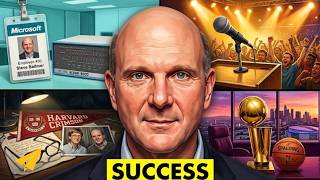
In this motivational video, Evan Carmichael presents a compilation of Steve Ballmer’s keynote remarks, highlighting Ballmer’s ten core rules for success. Ballmer emphasizes that not every idea is valuable and that one must carefully select and nurture the few ideas that truly matter. He uses the "weight room" metaphor to stress continuous preparation, building new capabilities, and gaining leverage. The speech repeatedly urges listeners to "carpe diem"—to seize opportunities, even when they involve risk or failure. Ballmer stresses optimism as a "force multiplier" and contrasts it with the natural tendency of smart people to be critical. He describes a "hardcore" mindset of tenacity, dedication, and relentless focus, learned from his Harvard math peers. Storytelling is presented as an underappreciated business skill essential for conveying value. Execution and measurement are portrayed as non‑negotiable: one must set clear goals, track outcomes, and hold oneself accountable. Ballmer shares personal anecdotes about time‑management tools, the importance of budgeting one’s time, and the role of luck in his own career. He concludes that fun, patience, and the freedom to fail are vital for sustained success. Throughout, Evan Carmichael frames the clips, encourages audience interaction, and promotes his own content.
Chapters
Not every idea is a good idea. Not every idea matters. And not every idea should be pursued.
Carpe diem!
Seize the day! The opportunities are there, but you gotta reach out and pick 'em up. Smart people love to be critical, they love to be negative, they love to find fault, and you have to to succeed. You can have a brilliant idea for your startup. You've gotta become a storyteller.
He's an American businessman who was the CEO of Microsoft. He's the owner of the Los Angeles Clippers. He has an estimated net worth of $27.8 billion. He's Steve Ballmer, and here's my take on his top 10 rules for success. Rule number 3 is my personal favorite, and make sure to stick around all the way to the end for some special bonus clips. Also, as Steve is talking, if he says something that is really meaningful to you, make sure to leave it in the comments and put quotes around it so that other people can be inspired by the comment as well.
[Speaker:EVAN CARMICHAEL] Number one for me, life lesson, is that ideas matter. Now people say, of course ideas matter. What kind of stupid life lesson is it that ideas matter? The truth of the matter is, this is both under and overappreciated. Most people think every idea is a good idea, as long as they had it. The truth of the matter is, not every idea is a good idea, not every idea matters, and not every idea should be pursued. And if you're in a field like I am, or was, of innovation, not every idea is a good idea, even if it strikes you that way on first blush. In fact, most people are lucky to have one idea that really matters in their whole life. That's not a criticism, but earth-shattering, life-changing ideas are very few and far between. Research insights, investment insights, innovations. A good idea needs to be cherished and nurtured. I apologize in advance for the sports reference, but I would say get in the weight room, the weight room of life. What do you do in a weight room if you're an athlete or a kind of retired senior citizen like me? You prepare. You prepare. You build new capabilities. You get stronger. You get faster. You figure out how to get leverage. And yet in your business lives, those are precisely the right messages. One of the things that I think has made Microsoft the company that it is today is that we weren't afraid to get in the weight room. In the late '80s, we had plenty of customers, investors, tell us we would, quote, "Never be an enterprise company." Today, many people think the bulk of the $350 billion of value in Microsoft is in our enterprise business. We weren't afraid to sit there even before we had it figured out and just work to prepare, to get better, to build new capabilities. And whether we're talking about what you need to do for your startup for the hospital that you join, or for yourself personally, you have to build new capabilities, new quickness, and new leverage. There's a Latin expression which I think is great. I love it. It was in a now very old movie called The Dead Poets Society. But the line of the movie was carpe diem, seize the day. The opportunities are there, but you gotta reach out and pick 'em up. You've gotta grab at 'em. Some of you may have already done that at the U in your classes, in other students that you met, in your extracurricular activities, but grab them. Don't be afraid to make a mistake 'cause you know what you can do if you grab the wrong one? Drop it and pick up another one. It's okay. Seize the day. I think back of all of the luck, but also the times that were in front of me to seize the day. I don't know what got me to drop out of business school and come to Microsoft. My parents thought I was a whack job. Neither one of them graduated college and they thought this was really a wild idea. I was lucky, I seized the day. Microsoft, one day some guys fly in from IBM and all of a sudden we figure out we could actually provide all the software they need for this thing that became the personal computer. People, Bill, Paul, they had the wisdom to seize the day when that opportunity presented itself. Yet, when you think of all the opportunities, when I think back of all the opportunities I've had, the one that was most important was an opportunity I got in 1969. Sitting in my junior high school class, I was in a public junior high, not very stimulated at the time, and over the loudspeaker they said that a private high school in our area that I'd never heard of was giving scholarship tests that weekend. I told my mother I wanted to take them. She said, "That's fine as long as you get a scholarship because we can't afford to send you there." But that's really where I got switched on. Switched on in math, switched on personally, energized in a way that never, never could be turned back. And I am very thankful for that opportunity. Yes, there's a lot of luck in opportunity, But there's a lot of seizing the day. And I encourage you all to reach out and carpe diem, really seize the opportunities that are in front of you. Optimism. Smart people love to be negative. It's my basic sort of summary of life. Smart people love to be critical, they love to be negative, they love to find fault, and you have to to succeed. On the other hand, if you really want to be successful, you have to stay optimistic. Colin Powell, who ran the Joint Chiefs of Staff for the US, has written books on leadership, but he's got one line I love. I love, "Optimism is a force multiplier." Some of the folks I was sitting down with, I don't know what you call it, the other part of the union, some of the union members before we started, you know, we were talking about goofy YouTube speeches and videos some of them had watched of me speaking. And why? I am optimistic, and leaders, whether they're optimistic or not, you better project it. Because if you're not leading with optimism, if you don't believe, nobody else is going to go your direction. Nobody's going to be with you, nobody's going to follow, nobody's really going to buy in. Is there is an advantage to being what I like to call now hardcore. Hardcore. I don't know quite how to describe it. It's a combination of tenacious and dedicated and passionate and committed, something like that. Hardcore. I learned about being hardcore from math concentrators at Harvard. I'm not going to ask whether we have any math concentrators here, but I would say that's where I got kind of my lesson. I mean, people could just go crazy focused. And it wasn't just the people who were genius, but working and working and working and working. You know, I'd sit in my room working on a problem set, and after 3 hours— I'm a little ADD, I just couldn't take it— the most hardcore people could just power through anything. And the advantage of being that tenacious and dedicated and committed, I claim, It helped us at Microsoft. It was fundamental at Microsoft. But I learned it here at Harvard. You really need to learn how to tell a story, particularly with MBAs. And when I say MBAs, I'm really speaking generally to the group, but I'm being parochial because I can't come up with a general expression for MBA tonight. But I do find that a lot of people coming out of school focus a lot on the what we should do. And don't spend enough time learning how to tell the story of why their idea brings value to others. The number of storytellers in the world is very, very small. I don't know what exactly I will do next in my life. I don't know, I'm not sure. I don't have an idea. But I've been spending a lot of time in the weight room reading up on the US government budget, healthcare costs, and debt. And I say that to people and nobody knows what the heck I'm doing. I can't explain, I don't know. Earlier this week I came up with a way to explain it. As CEO of Microsoft, I was responsible for signing on something called our 10-Q. Every quarter you had to publish it. And it had to tell a story of your company. You had to get up in front of analysts. I didn't do that very well, but nonetheless— I did it well, I just didn't do it very frequently. Nonetheless, you got out every month, every quarter, and you put out a statement. You explained yourself. You told the story. What's good? What's bad? What's working? What's not working? The US government doesn't put out a quarterly statement. There's no regular story from our government. About what's working and what's not working, where cost really is going and where it's not, what the President is trying to do. The State of the Union is a long list, and whether you like Republicans or Democrats, you still don't get a simple and succinct story. I started telling people this week I want to work from publicly available information on putting together a 10-Q for the government. People said, "Oh, we get that." That's a story. A story that you can start telling and people understand. You can have a brilliant idea for your startup, you've got to become a storyteller. Some of you will say, "I'm not an expert at telling stories and telling yarns." You're not great public speakers. That is not what I'm talking about. I'm talking about a clear, simple, concise way to convey the value of the ideas that are in your head. I think it's one of the most underappreciated skills in business. It's one of the skills that we talk about, we did talk about explicitly at Microsoft. And if I could wish you one new capability to go build, it would be the capability of storytelling. You better stay on top of yourself and really measure. Unless people measure themselves, you don't get any better. You cannot succeed unless you are really holding yourself accountable and owning outcomes. Believe me, I've seen plenty of people at Microsoft, various places in the tech industry, brilliant people, who when it came time to execute and actually count success, eh, maybe not so much. Maybe not so much. You get, in order to do that, you have to actually know what the goal is. If the goal was to get to 450 million users and then sell to Facebook, WhatsApp did a hell of a job, right? And I mean that, that's not a, I mean, it's a hell of a job at 19 billion, 55 people. That's a hell of a job. But you have to decide what outcome do you want? Bill Gates was offered $7.5 million to sell all of Microsoft in 1979. It would have been a rich guy if he had taken it. Richer if he didn't, but a rich guy. But even putting that aside, the impact on society wouldn't have been the same. We had discussions with Facebook about buying Facebook, but Zuckerberg knew what he viewed as a, an outcome that he really desired and was willing to put in the blood, sweat, and tears just like we were. So execution and measurement are hugely important, and yet people let themselves off the hook. In life, you want to be your own quarterback. See the playing field. Many people like to get myopically tied into one thing, and they have a hard time stepping back. Being CEO of Microsoft is this amazing, wonderful opportunity. Turns out everybody in the world wants to tell you what to do. And they'll educate you. You want to learn about any field of technology? As long as you don't act like a know-it-all, somebody will educate you. And you have a unique ability to see broadly across the technology field. Right now I'm spending a lot of my time studying government and the economy. Turns out the number of places you can actually read about the totality of government in the United States is almost zero. What is the total spend in government in this country? And what does it get spent on? There's no government report on that topic. The best site happens to come from some random blogger who I met, who I think is great by the way, but I found him through our Bing search engine, not surprisingly. But that's my only plug for today. I'm still a shareholder. But seeing the field, have fun. You're not going to have fun every minute of every day. I don't care what job you take, you know, any job you take. I don't care how well rewarded you are. I don't care anything about that. It won't happen all the time, but you better be having fun in what you do. The truth is a lot of success won't just come from ideas and being hardcore and being in the weight room. A lot of your success is going to come from luck. I know that was true in my case, and I know frankly it's the case of almost every successful entrepreneur I met in the tech business in the last 34 years. People will make it seem like it was the grand master plan in all cases of an all-knowing and all-seeing genius. That and a lot of luck. Is what really leads to success. So given that you're gonna have to have a lot of luck, you better be having a lot of fun. Don't take the next job or don't do the next startup because you should. Do it because you want to. Because you can think of nothing better, more exciting, more energizing to get up every day and go do than whatever it is that you selected. Be patient and be urgent when— sorry, be patient when you get the first signs that it's not fun, because time must be measured. Constantly be improving yourself, because only by improving yourself will you maybe find that next idea. I'm sure there are many people in this audience who'd like to do a startup, and yet the first law of doing a startup is you gotta have an idea. But if you're having fun, if you're building capabilities, if you're treasuring your time, if you're building your muscle and being hardcore, the good ideas will come to you. By the way, I believe in, uh, winners and losers, and especially the freedom to fail.
Who?
Who? Him? Who? Him? Who?
Him? Him? Who? Me?
I'm just going to enjoy— I just want to enjoy this for a minute.
Soak it in, all of you. Soak it in. You work for the greatest company in the world. Soak it in. And I want to say thank you. I want to say thank you.
Thank you, thank you, thank you, thank you. This isn't about any one person. It's about this company. It's about a company that's important, that's forward-thinking, that's innovative, that's ethical, that hires great people and leads— lets them lead great lives, that helps people around the world realize their full potential. It's my whole professional world Microsoft's like a fourth child to me. Children do leave the house. In this case, I guess I'm leaving the house. My last song is one I've always wanted to use, but it was always deemed inappropriate. It's a great song.
Not that kind of inappropriate.
And I wanted to pick a song that was exactly perfect. A song that let me say thank you. A song that looked back retrospectively. And a song that celebrated the future. It's from one of my favorite movies. It's one of my favorite songs. And I think it has all that in it. It's a song that comes at the very end of a movie where one of the actors gets up on stage and talks about kind of how he likes to do things. Well, I want to end with this song. Respectful, a song that talks about what you've meant to me and what you've done for me. You've made this The time of my life.
Thank you!
Thank you guys so much for watching. I made this video because Brennan Dolan asked me to. So if there's a famous entrepreneur that you want me to profile next, leave it down in the comments below and I'll see what I can do. I also love to know what of Steve's said had the biggest impact on you and why. Leave it in the comments. I will join in the discussion. Finally, I want to give a quick shout out to Patty from smallbizsalescoach.ca. Patty, thank you so much for picking up a copy of my book. Really means a lot to me. For those of you watching, you want a chance at a shout out in a future video, make sure to pick up a copy of the book and email in your receipt so we can keep track. Thank you guys so much for watching. Continue to believe, or whatever your one word is, and I'll see you soon.
Time. How many people in the room would say they're too busy? Not busy enough? That's a politically unpopular place to put your hand, but God bless you for putting your hand up over there. The truth of the matter is thinking about time as something to be managed, whether it's how long How long, for those of you who are seniors, I'm sure you'll ask the question, how long will I do my first job? How long will I stay in my job? 6 months, a year, 5 years? How long before I decide whether I really like my career? How long before I really like my major? How am I really managing my time? I got involved in a lot of extracurriculars. The one that broke the bank for me was becoming publisher of The Advocate. I'm not even sure why I did it. Really, I'm not sure why I did it. It was another resume build. I was already busy with football and the Crimson. But I did it. And then time management really got into my vocabulary. I really did have to manage. And I don't even measure— I started skipping class. I already sort of confessed to that. But managing time even amongst the extracurriculars got to be a big, big deal. Today I actually keep a spreadsheet, a budget. These are all the things I'm gonna do in my life. Here's how much time is budgeted to them and allocated. I record everything into my, into Outlook. I have a macro that spits it out in Excel, and I do budget versus actual comparisons. Now it's a little different since I've quote retired unquote. But at Microsoft I could tell you I was gonna have 12 one-on-ones with Hairy this year. And then I would track them. How many did I have? I was going to spend 10 hours a year talking to customers over the telephone versus in person. And I, I just measure everything because I think time is so, so important. When you have enough success that what you need to do is pedal fast, that's good. A lot of people try to pedal fast before they have anything that's worth pedaling. And a lot of other people never pedal fast. So it's kind of a life lesson. Get a good idea and then work like hell to make it popular.
Ladies and gentlemen, Steve Ballmer! Woo! Woo! Woo! Come on! Get up! Get up! Come on! Woo! Come on! Give it up for me! Come on! Who said sit down? I have 4 words for you. I love this company. Yes!
Developers, developers, developers, developers, developers, developers. Developers! Developers! Developers!
Yes!
More from Evan




How the Biggest Mistake in History Created A Trillion-Dollar Empire | Sergey Brin



9 Machiavelli Principles That Force People To Respect You | Machiavellian Philosophy



The First 10 Words That Instantly Ruin A Sales Conversation | Vanessa Van Edwards