Steve Jobs: Meet The Visionary That Built Apple From A Garage!
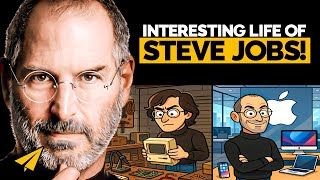
Steve Jobs went from adopted kid in San Francisco to building Apple in a garage with Steve Wozniak. After leaving Apple, he founded NeXT and bought Pixar, then returned to Apple and launched the iMac, iPod, iPhone, and iPad. He transformed computing, music, phones, and film before dying of pancreatic cancer.
Chapters
Steve Jobs is a man who revolutionised 6 different industries. This is the story of his life and how he achieved that remarkable feat. Stephen Paul Jobs was born on 24th February 1955 in San Francisco. He was adopted and this was something he was aware of from a young age. Jobs learnt to read before he went to school and often found himself bored. Whilst still a student, Jobs became friends with a former student 5 years his elder, Stephen Wozniak, or Woz as he was known. They also made a good partnership when it came to work. Woz had the engineering skills and Jobs had the vision. Jobs went to Reed College, which was a liberal arts school in Portland, Oregon. He dropped out of college but did still attend classes that interested him. One such class was a calligraphy course that Jobs said influenced him to create the Mac computer with multiple typefaces and proportionally spaced fonts. After 18 months, Jobs returned to his parents' house and got a job working for Atari, the video game company who developed the famous arcade game Pong. The simplicity of Atari's games and lack of need for any sort of manual influenced Jobs in his later endeavours. In his spare time, Woz was building a personal computer. Jobs was impressed and convinced Wozniak to start a company with him to sell the computer's circuit boards. Jobs came up with the name Apple as he was on a fruit-based diet and had just visited an apple farm. After a demo, a computer shop owner offered to pay for 50 fully assembled circuit boards at $500 each. More orders followed and eventually they created the Apple I personal computer, including a case with a sleek design and that set Apple apart from the other machines around. The Apple I would go on to be sold for the next 16 years and register 6 million sales. For the previous 5 years, Jobs had been in an on-off relationship with Chrisann Brennan. She got pregnant and gave birth to their daughter, Lisa, in 1978. Jobs did not deal with the pregnancy well, either ignoring it or denying he was the father. A year after Lisa was born, Jobs took a paternity test and and was forced to start paying child support. His behaviour regarding his daughter is one of the few things he is remorseful about. After the court case, Jobs changed. He stopped taking drugs, dressed smarter, and cut back on his Zen interests. One of the next projects Apple took on was a computer Jobs called Lisa. Once the court case was finished, Jobs took Apple public. Its valuation went from $5,309 in January 1977 to $1.79 billion in December 1980. In the early '80s, Jobs was put in charge of the Macintosh project, named after the previous manager's favourite type of apple. Jobs not only created but successfully marketed a machine that transformed personal computing. One of the greatest traits that Jobs possessed was his ability to convince people of nearly anything. His powers of persuasion were described as a reality distortion field. A combination of his charisma, willpower, and eagerness led people to get caught in this distortion field and allowed Jobs to be able to actually change reality. It made people do the impossible because they didn't realise it was impossible. Ever since Jobs started Apple, he was a firm believer in great design. He knew a simple logo and sleek casing would set apart his company and products from the rest. Apple's first office was in a building shared with Sony. And Jobs used to study their marketing material and dark industrial style. Then he attended a design conference and was exposed to the Bauhaus movement, which merged art with manufacturing, creating a bright, simple, and clean look. This is the look he implemented on his Apple products. Jobs became a master of product launches, from the Mac in 1984 to the iPad in 2010. He combined captivating adverts with comprehensive media coverage The final piece of the puzzle was a launch event with a public unveiling of the product by Jobs himself. After the successful launch, sales for the Mac slowed down in the second half of 1984. The relationship between Jobs and the Apple CEO also deteriorated to a point where a "him or me" ultimatum was issued at a board meeting. The board sided with the CEO and Jobs was removed as head of the Mac team. Jobs resigned from his position as chairman of the company soon after and he left Apple completely. At 30 years of age, he started a new venture called NeXT. NeXT would develop and manufacture computers for the higher education market. At the same time, Jobs had struck a deal with George Lucas to buy his Lucasfilm computer division. Jobs paid Lucas $5 million with the promise of a further $5 million investment. In return, Jobs owned 70% of the newly formed company called Pixar Walt Disney's nephew, Roy, wanted to revive Disney's animation department, and Pixar won the contract to computerise the development. In 1988, the first film they worked on was The Little Mermaid. In October 1989, Jobs gave a lecture at Stanford Business School, and before he was introduced to the stage, was sat next to a graduate student called Laurene Powell. The two hit it off straight away, and Jobs proposed on New Year's Day in 1990. They got married the following year and Jobs' daughter Lisa, now aged 14, moved in with them in their new home in Palo Alto, California. Back at Pixar, a deal was struck between them and Disney to produce the film Toy Story together. The film was a tremendous box office success and a week after it opened in the cinemas, Pixar went public. Since his departure from Apple, the company had nosedived. There was little innovation and the Mac had hardly improved and its market share had fallen to just 4%. Apple needed a new operating system as the latest one they had produced was not good enough. They agreed to purchase NeXT to be able to use its operating system software. As part of the deal, Jobs returned to Apple in a part-time role as advisor to the chairman. When the Apple board decided to sack the current CEO, Jobs took a more active role, getting involved in all aspects of the business and joined the board. Eventually, Jobs took on the role of interim CEO It was the most gruelling time of his life, being CEO of two companies and having a young family took its toll on his health. Jobs' ability to focus helped Apple succeed again. The previous CEO had approved dozens of different products and Jobs got rid of 70% of them, resulting in over 3,000 staff losing their jobs. It meant the remaining staff were now more focused on a smaller range of four products. This strategy resulted in Apple going from making a loss of $1.04 billion in 1997 to a profit to $309 million in 1998. In May 1998, Apple released a desktop computer called the iMac. The teardrop-shaped design was unlike anything seen before. The iconic product epitomised Apple's "Think Different" slogan. The iMac became the fastest-selling computer in Apple's history. Jobs announced his role as CEO was permanent in January 2000. Jobs liked to control the entire process at Apple. But one aspect he didn't have control of was the customer experience of buying an Apple product at a store. He began developing Apple Stores in 1999. The first store opened in May 2001, and in the first year the stores had taken $1.2 billion in revenue. A decade later, there are over 326 stores worldwide, averaging revenue of $34 million per store every year, but their presence also helps create a buzz for product launches. And they increased brand awareness. The next aim for Jobs was to create a strategy to transform the personal computer into a digital hub. Apple started producing software focusing on people working with art and technology. This meant that Apple could control the full user experience as they now produced software, hardware, and digital devices, allowing them to be tightly integrated, something no other company could do at the time. After creating iTunes, the next stage of the strategy was to make a portable music player. The aim was to make the device as simple to use as possible. The device could hold 1,000 songs and fit in your pocket. The next step was to provide a way for consumers to purchase new music through the company. Jobs created the iTunes Store and sold songs individually as well as full albums. In the first 6 days after launch, it sold 1 million songs. Back in October 2003, a routine scan of his kidneys revealed that Jobs had a tumour on his pancreas. Unfortunately, the operation to remove part of his pancreas revealed the cancer had spread to his liver. Despite the illness, he returned to work and continued to run Apple. In 2005, the digital camera market was being decimated by the fact that mobile phones could now take photos. Jobs realised the same could happen to the iPod "If a phone could play music, the iPod would be unnecessary." They produced the iPhone, which was unveiled in January 2007. Jobs dubbed the device as "three products in one: a widescreen iPod with touch controls, a revolutionary mobile phone, and a breakthrough internet communications device." By the end of 2010, 90 million iPhones had been sold. The iPad was announced in January 2010. But the initial reaction was mixed. People had many complaints, ranging from the name to the lack of a camera or USB port. This soon subsided when the iPad went on sale in April. In under a month, they sold 1 million, less than half the time it took the iPhone to reach that target. Jobs initially didn't want outside developers creating apps for the iPhone and iPad, but he later allowed outsiders to create apps as long as they adhered to Apple's standard and were sold in an Apple App Store. The App Store produced a new industry instantly. 3 years after the App Store was launched, there were 500,000 apps that had been downloaded 15 billion times. Jobs began suffering another downturn in health around November 2010, losing his appetite completely and experiencing an increase in pain. At the start of 2011, doctors discovered signs of new tumours. And Jobs took another medical leave of absence from Apple. With his health deteriorating, Jobs knew he wouldn't return as CEO of Apple and resigned. Steve Jobs' personality was reflected in the products he produced at Apple. His intensity and ability to focus helped create great, innovative products that provided a simple yet seamless experience for the user. He built a startup from his parents' garage into the most valuable company in the world. And will be remembered as a visionary and a genius. If you enjoyed this video and would like to see more animated summaries of entrepreneurs and other successful people, feel free to check out the Obtain Eudaimonia YouTube channel. Cheers.
More from Evan




How the Biggest Mistake in History Created A Trillion-Dollar Empire | Sergey Brin



9 Machiavelli Principles That Force People To Respect You | Machiavellian Philosophy



The First 10 Words That Instantly Ruin A Sales Conversation | Vanessa Van Edwards