STOP Doubting Yourself: Michael Fassbender's 10 Golden Rules
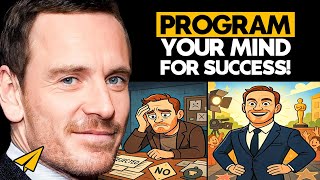
Michael Fassbender on acting: rehearsals are for failing, not perfecting. He uses a mantra of "good enough" to keep working, studied accents and film history for Tarantino, and seized his breakthrough role in Hunger by recognizing an opportunity. He copes with rejection by focusing on the scene's truth instead of external factors.
Chapters
Time changes, you're in a different mood, different environment. To never get set in one idea and think, "Okay, that's it," you know, there's a million ways to do something. I just always thought that I was good enough to be working, and that was kind of a mantra. I was terrified that, you know, I didn't want to be the weak link in a Quentin Tarantino film, so—
What's up, Believe Nation? It's Evan. My one word is believe, and I believe in you, and I want to see that great thing that you have inside of you come out so you can help change the world. So to help you on your journey today, we're going to learn from actor Michael Fassbender and my take on his top 10 rules for success. Rule number 4 is my personal favorite, and I'd love to know which one you guys like the best. And as always, guys, as you're watching, if you hear something that really resonates with you, please leave it down in the comments below and put quotes around it so other people can be inspired. And when you write it down, it's much more likely to stick with yourself as well. Enjoy!
I think, you know, maybe it's just a personal thing, sort of, but perhaps you guys feel like that as well, that you feel like you always have to sort of, you know, get it right all the time with sort of acting, or I guess anything in life really, but It's, I think, so much important, more important in a way, to fail and to fall flat on your face. And that's really what rehearsals should be used for, you know, to really mix it around, to really, you know, I remember there was times where, you know, Danny was like, "That's great, let's do that again." And we were like, "No, let's not," you know, because you wanna touch on it, but not like over, sort of set it in stone. Because, you know, something that works in a rehearsal period, 2 weeks ago and we're on set shooting that scene today, it was not gonna work again. Time changes, you're in a different mood, different environment. To never get set in one idea and think, "Okay, that's it," you know? There's a million ways to do something. And to always keep that sort of, um, uh, unexpected sort of element to it. Uh, and so, you know, the rehearsals are there to mess things up. And I always felt like I don't want to get too close to an end product in the rehearsal.
I also read that it happened a little bit later that you kind of achieved the success that you were dreaming of, and you were around 30, and you were bartending up until then.
Yeah.
I know so many musicians and artists and actors who are doing that now. You know, they're hitting 27, 28, 29, 30, 31, and they're still bartending, and they're wondering whether it's ever gonna happen.
Yeah.
And I'm wondering what you said to yourself to keep going when you started feeling like that too.
I just always thought that I was good enough to be working. And that was kind of a mantra. I just— the real sort of dream was to just make a living out of it, you know, that I could sort of make a living out of acting and didn't have to do jobs on the side. And yeah, I just knew, you know, having seen what was out there and what I could do, I just knew that I was good enough to be working and I would get an opportunity at some point. And to just be very alive to that opportunity, I think that's something that's so key. I mean, it's all luck, really. I mean, it's 95% luck, you know, to be in the right place. I have, you know, there's a lot of people that helped me be in the position I'm in today and would not be here without them. That's absolutely key and clear to me. But being alive to when an opportunity is there and taking it, I think, is, is very important.
Being ready for success when it comes.
Well, you know, just for example, when Hunger came my way and it was an opportunity to get a lead role and I knew that I was getting a chance here and that I had to really sort of grab it and take it because who knows when the next opportunity would come again, if it did, you know, at all.
So is Quentin's set a party compared to the other shows?
You know, it's—
I mean, he seems so light, but you don't—
He is— You know, I mean, he's a perfectionist, so you daren't come to work unprepared, you know. He doesn't want you to come as an actor and say, "Okay, what do you want me to do?" You know, he wants you to come to the table with your homework done, and he definitely, you know, has you out there. I was out there 5, 6 weeks before I stepped in front of the camera doing my prep work. I had to sort of— obviously I'm sort of, you know, putting a British accent on, and then the German side of it. I mean, I understand German, I can speak German, but It was pretty rusty, my German, so I had to, you know, I had to sort of get that in shape. And then, you know, just sort of not, you know, I was terrified that, you know, I didn't want to be the weak link in a Quentin Tarantino film. So, you know, it was, I had my preparation to do for sure, you know. Watched a lot of sort of George Sanders films, the early Saint movies, and just sort of, you know, tried to sort of pick sort of nuances and study the way sort of people talked and moved in the '30s and the use of props, you know, very elegant sort of lighters and cigarette cases. And tried to sort of surround myself with those, um, those props and, you know, possessions that they would have had and just sort of like the way that they held themselves, things like that.
How have you handled situations in the past where you felt like a director wasn't opening up to you or wasn't inviting you into the process, do you just kind of grin and bear it, or do you speak up?
I think so. I think a lot of the times actors like to talk because they're afraid of getting up there and doing it, you know, and I put myself in that category. So I generally just try to do stuff without telling them. It's more fun as well, you know, when you show them something without sort of having told them. You can see them going, "Oh, what was that?" Or they're going, "What was that?" But, uh, you know, it's, uh, it's, it's I think it's more fun again. It's sort of, you know, what do they— would they— would they— you know, because you can talk about something and, you know, for as long as you want, but if you sort of get up on his feet and it's not showing or it's not reading, then it doesn't really matter. So I always think just sort of showing is the best way. I think, you know, human beings are kind of complex in our relationships, and I like to play characters that don't hold answers for audience, and I don't like to sort of be on any moral crusade in terms of sort of how I present characters. I just want to present them in a provocative way, meaning sort of with all the sort of bells and whistles, as opposed to, you know, the more sort of comfortable or pleasing elements of personality, to try and sort of COVID all of the sort of— the whole sort of medium of it all. And that way audiences leave the theater and they have a conversation, and they sort of question things, and it provokes thought.
So what inspired you to be an actor in the first place?
Um, lack of options and laziness. No, no, it was— I didn't really know what I was going to do when I was 17, and I was at school, and then this guy that was a former pupil at the school had went to drama school, and he came back, and, um, he just started doing these workshops, and I just went to them, and I just really sort of got hooked after that, and and then sort of realized then that that's what I was gonna sort of go on and do.
Do you like the disappearing, or do you like the play, or what's the—
You know, I don't know. I think I just sort of felt like it was something that felt right and comfortable in a way that I sort of could express myself, you know, creatively. I really wanted to sort of be a guitar, lead guitar player in like a heavy metal band, you know, when I was 15. I really sort of went at that all guns blazing for a couple of years, and then I realized it just didn't sort of, you know, I didn't have the sort of, you know, the chops for it. So then I came across acting and it just felt really, you know, I felt at home and comfortable in it. Physicality in performance is always something that's very important to me. It's something that I will be sort of thinking about immediately, how the character moves, what kind of sort of, you know, is the character weighty or is the character light on his feet, and how you can sort of really tell an inner life story of the character through the physicality. It's very helpful. So sometimes you can express so much more through your sort of body language and movement than, you know, a page of dialogue.
Hunter, who's 11, wants to know, what kind of advice can you give an 11-year-old like me who's just starting, who's in the second year in the industry, And what keeps you motivated with all the rejection?
You're 11, by the way. I think I'll be getting advice off you in a couple of years. So, you know, I think as well, just have fun, you know? Just have fun with it, you know? It should be fun. And unfortunately, you know, I think, you know, rejection is just part and parcel of it, you know? But it's also a good thing. It's also a good thing, rejection, because it does teach you how to get that little bit stronger and just know that, well, that was an experience, and you'll just move on, and you learn from it and take things from those moments, you know? And also, you know, the fact, you know, they could be looking for somebody with red hair or, you know, 2 feet taller or whatever happened to them that day. There's so many things that are out of your control. I think just concentrate on the scene, what it's about, what you're doing, you know, where are you coming from, where are you going, what are you trying to get in the scene. All those little things that are about the scene, that'll take away the fear, the nerves. Concentrating, "Okay, where have I just come from? Have I come from the store? Did I buy an ice cream on the way to this place?" before I arrived? How does this person in the room that I'm doing the scene with make me feel? What do I want from them? How do I go about getting what I want from them? All those things will take away all the sort of nerves and the fear, and, uh, and then you just do your thing. And as long as you do your thing and enjoy it, then you've done your job. Then they'll be picking you for whatever reasons they'll— they will be, or not. And but you've done your thing. Well, yeah, I got the script for Hunger, and I thought, you know, Wow, I was like, I read, you know, the first act is so sparse and there's hardly any dialogue at all. And I thought, okay, this is something, you know, different. And then the second act came in and then there's that all sort of cascade of dialogue going on. And I thought, oh, well, you know, this is another sort of shift. And then I thought, well, who really can handle this script? I did think it was an amazing script that Enda had wrote, but I was like, can it be brought to film, you know? And then I went to meet Steve, and as soon as I met Steve, I was like, I've gotta work with him. I'm definitely going to learn something from him. I just got a real powerful sense of, you know, he has a real empathy and there's a real sort of humane quality about him. He's a genius, and I just sort of knew that I was in the presence of something special.
So when you read a script like that, I mean, the challenge for you as an actor is not the thing like, okay, I'm going to do it no matter what kind of director it is because this is such a great challenge for me as an actor, or?
No, you know, I mean, it's a combination of the two things, just what you said, you know. I base my decisions on the script and then the director, and if I haven't seen any of the director's work or it's a first-time director, I'll meet them and then I'll sort of get a vibe off them and think, can I, you know, you know, that was pretty heavy material, Hunger. It's like guys spreading excrement on the wall and starving themselves to death for an hour and a half. I thought it had to be in very specific hands, and I'd seen so many films about the Troubles in Northern Ireland before that I didn't think did justice to the topic. So, and of course, you know, I had the whole weight change and, you know, there was a lot of sort of commitment involved in it. So I wanted to make sure that it was in the right hands. And as soon as I met him, I was like, for sure, this guy is gonna do something interesting. I can't dive though. That was like one of the times when I was sort of out of work as an actor, I would set myself little challenges. And one of them was diving off the high thing. I don't know, it's like, you know, whatever, 10 meters high. This was when I was 20. 23? He's like, last week. This was last week. Yeah, yeah, 23. And I was up there, and I was kind of like going to the edge and then sort of backing off. And then these kids came up, and they were like jumping off sideways and all sorts of ways. So I was standing on the side. And next thing, the kids came back up again. And they were like, I don't know, like 10, 11. And one of the kids came over to me, and he's like, you haven't jumped off yet. He's like, first time you jump off, you're going to get hurt a little bit, but it won't be as bad as you think. So I took his advice, and I dived off. And it did hurt. I kind of went in like that— I didn't fully commit so it hurt this part of my leg.
Did you slap on the wall?
But after that, I was up and down stairs going "pew pew." Kept jumping off! He's right... Listen to the children! Listen to the Children?! Sound effects—I always sorta have thing about doing—it's almost an OCD-thing—even those things when you would press the walk sign. You know—"do doo duh-duh-dooh!" I've just rented Harley-Davidson for first time Brrr. Brrr. I like this bird. Chirp. I think that's a robin redbreast. Formula One I followed. Okay, so it's like— Vroom. No. Vroom. Vroom. Oh, here.
Thank you guys so much for watching. I made this video because Melissa O'Brien asked me to. If there's a famous entrepreneur that you would like me to profile next, check out the link in the description and go and cast your vote. I'd also love to know what did you learn from this video that had the biggest impact on you? What lesson are you going to take and immediately apply it somehow in your life or in your business? Leave it in the comments below. I'm really curious to find out. I also wanna give a quick shout out to Michael Lamott from Chart Your Trade. Michael, thank you so much for picking up a copy of my book, Your One Word, and taking a picture and posting it on Twitter. I really appreciate your support and I'm so glad that you enjoyed the book. Thank you guys again for watching. I believe in you. I hope you continue to believe in yourself and whatever your one word is. Much love. I'll see you soon.
Hunger broke you in so many ways as a star and you were called— I have it here— the Sunday Times described you as the great— one of the great European actors of his generation. The praise that came and the awards that came with that, Michael, do they sit easy with you? Do they— are you okay with that? Because there's a sense of the build, the build. Well, yeah, you know, it's sort of— most of the time, you know, it's like, Jesus, you know, I've managed to sort of get away with another one. You know, it's like— and you know, you're always sort of expecting, I don't know, a fall when stuff like that— I just don't really read that much, to be honest. In general, no, I don't read reviews or anything like that. I was working with an actor when I was sort of doing some stage, and he was sort of well established, and he said to me, "If you live by the sword, you die by the sword." Like, you know, Noel Coward as well, I think, said, "If you believe the good reviews, you have to believe the bad ones." And, you know, it can sort of become a distraction as well.
So at this point, are you looking to push yourself harder? Are you looking to mix up the— You know, the commercial and the not so commercial? Because—
Yeah, you know, the balance between the two is ideal for me. And I'm always trying to— Yeah, I'm always, you know, trying to push myself and take risks and try and challenge myself and try and not stay in a comfort zone.
So let me give you the one word secret to happiness.
One word.
This is all you need to be happy.
The most important word ever. If you had to think of one word Is there one word that's most important to you or that sums you up or that would be kind of like a little beacon?
Hey, Believe Nation! If you want to know what the most important one word is for Tony Robbins, Gary Vaynerchuk, Oprah Winfrey, will.i.am, and Howard Schultz, I have a very special secret video for you. Check the description for details.
More from Evan




How the Biggest Mistake in History Created A Trillion-Dollar Empire | Sergey Brin



9 Machiavelli Principles That Force People To Respect You | Machiavellian Philosophy



The First 10 Words That Instantly Ruin A Sales Conversation | Vanessa Van Edwards