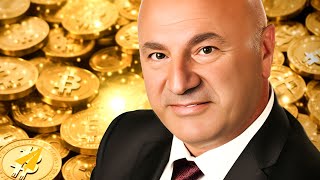
In this interview, Evan Carmichael sits down with Canadian entrepreneur and investor Kevin O'Leary to distill his "top 10 rules for success." O'Leary recounts an early experience of being fired, which cemented his belief that true freedom comes from never working for someone else. He emphasizes that entrepreneurship demands sacrifice, risk, and a willingness to learn from failure. Central to his investment philosophy is the use of gut instinct as a calibrated risk barometer, strict diversification limits (no more than 5% of capital in any single idea and 20% in any sector), and a focus on dividend‑paying securities that preserve principal while spending only the interest. He stresses the importance of clear, concise communication when pitching ideas and the need to demonstrate personal commitment (e.g., investing personal capital). O'Leary advocates for strategic equity partnerships that fill personal skill gaps, rather than trying to do everything alone. He prefers simple, cash‑flow‑positive deals—like the Talbot Teas story—over complex high‑tech ventures, and he reinvests the cash back into similar opportunities. For Canadian entrepreneurs, he urges expanding sales internationally to mitigate domestic market risk, leveraging government consular support. Finally, he warns against mixing family/friend relationships with investment decisions, urging emotional detachment and disciplined capital allocation.
He's a Canadian businessman, investor, entrepreneur, journalist, and television personality. He's the co-founder and chairman of O'Leary Funds and the co-founder of SoftKey. His estimated net worth is $400 million. He's Kevin O'Leary, and here are his top 10 rules for success.
I tried working for somebody when I was very young and they fired me.
Right.
And ice cream. Right. And it was a very, very profoundly— it affected me profoundly. And I just said, I'm never working for anybody again. It doesn't mean your life is easier. In fact, you have to have a lot of sacrifices on the road to success and a lot of failures along the way. I just find it a more interesting way to spend your time, and I really believe in this concept of money buys freedom. And so, you know, I think it's a very noble pursuit for some percentage of the people out there, but not for everybody, because you have to sacrifice a lot for the period that you're working on your business. And not everybody wants to do that. And I think you find that in your own— you start down that path, and if it's too much of a sacrifice, you revert back to being an employee. It's very noble to do that too, but it's not the same thing. It takes a long time to set yourself free working for somebody else. I was with a bunch of other investors who I respect, and they brought me a deal, and I wanted to be part of it, but it didn't feel right. And I wrote millions of dollars on that one. And it just didn't feel right, and I lost it all within 2 years. So should investors trust their gut? Absolutely. And trust your— but what about you said earlier, don't be emotional, and sometimes the gut— no, this, this is a barometer of risk. It's something internalized for an investor that says, I don't feel comfortable. It's not about emotion, it's just don't write that check. That was recently the first time I didn't listen to that, and I lost everything. So now my, my radar is up. I listen to my gut. It's not an emotion, it's an, an index of risk. And you get it as you age. You become a better investor every year. If only I could live to 200, I'd be really good. Diversification. What I've learned that works if you're an investor, no matter how much money you've got, whether it's $5,000 or $500 million, diversification is what saves you from disaster. Having investments in a wide range of businesses and sectors There's always something working when something else isn't. So today I can go to bed tonight knowing that I have one objective. I want to go to bed richer than I woke up, and the only way that's gonna happen to me is to be invested in a lot of different things, because every day one thing works while three others don't. But sometimes that's why you get richer.
So how does that play out for the average working woman like myself? Does it start with doing an investor profile questionnaire and starting to invest a little bit of your money in a diversified portfolio?
Yes, what I find people do is they fall in love with one idea, one stock, or one investment, or their sister comes to them and says, "I want to open a restaurant." Ah, yes. You should never do that. What you should say is, "Whatever money I've got, I'll never put more than 5% into one idea. I'll never let myself get caught up in an idea that ends up being so big to me that if it fails, I get wiped out." This is the key to success. No more than 5% in any one idea and no more than 20% in any one sector. For example, if you love energy stocks, only 20% max. If you love gold, only 20% max. You have to have diversification. This is the one thing that will save your hiney. You should make the assumption when you make an investment there's some probability you'll lose it. It'll go to zero. And that's why you need to have, you know, a reserve. Like a backup plan, some cash set aside that if everything blows up, you're okay. I find it extraordinary when people make their first liquidity event and they have some capital that they blow it all again. That is the biggest mistake. You've got to take a nut, even if it stays in cash or it's a very, very liquid safe security to say, "That I don't touch." It goes back to what my mother taught me, spend the interest, never the principal. I mean, look, you know, I make a lot of crazy investments. I don't touch the principal. Communication skills, it turns out, are paramount. The ability to actually articulate what your idea is in a very short period of time is number one. Number two, and this is far in some ways more complicated to explain, but just because you have a good idea doesn't mean you're going to make money. There's a difference between a good idea and someone who can execute the business plan. So you spend the next 5 minutes of your presentation explaining why you're the right the right person to actually execute the plan. And this is far more complicated because you get peppered with a whole series of questions in any presentation that you're trying to raise money for, whether it's on Dragon's Den, Shark Tank, or out somewhere else. How much of your own money have you put into this business? I put $50,000 of my own money, and I haven't taken a salary out of this company in a year and a half. Cry me a river! You have to go through that gauntlet to prove that you're the right person or your team are the right people. And if those two things come together, Then the magic starts. That's when a team or a person starts to sizzle like an isotope because clearly they become a leader. It's clear that they're different than everybody else. Not only can they articulate their idea, they can actually convince you they can execute it. The reason most people fail in business is they make the assumption they're good at everything. And they're egotistical maniacs. And even when it starts to fail because of their own inadequacies, They don't stop themselves and they blow up. That's a typical situation for an entrepreneur. So you have to look yourself in the mirror, and this is hard to do sometimes, and say, what am I really good at and what do I suck at? Because you don't want to spend any of your time doing things you're no good at. I'll give you an example. I hate logistics and operations. When you run a software company, you have to make 10 million discs a month and you don't like that, you better find a guy who knows how to do that. And you better make him your partner very early on in the process. And I mean partner. I mean you give him something. You give equity up to fulfill the weaknesses in your own portfolio. That is the key to success. I have never made any money doing it all myself, ever. I've sold many businesses now, started many, failed at many, The only ones I really made money on were partnerships where I found people that were good at things that I wasn't good at. I don't mean employees. I mean giving them equity in the business so that they have the same risks and desires that I have. There's only two things in business that matter. One is owning it and the other is being an employee. Guess which one you want to be. And I remembered a story and it really affected me years ago. My mother— I was born in Montreal— worked at a company called Kitty's Togs. And she used to come home and tell my brother and I, because they pay them every week on Thursday morning, she'd always invest a third of her paycheck into Bell bonds with coupons. She'd always say to me, boys, never spend the principal, just the interest, and never, ever, ever, ever buy a security that doesn't pay a dividend. And, you know, back in those days, stocks paid higher dividends than the bonds. For example, you know, Bell Canada had a 6% yield on its 5-year paper, its bonds, The stock yielded 7% to entice people to take the risk to own an equity, and we got lost somewhere between the '50s and the '60s and '70s, and we actually thought that it was a good investment to buy a stock that didn't pay a dividend, which to me is insane. So anyways, I wanted to found a firm on that, my mother's basic concept, because, you know, she died a few years ago, and I was executor for her estate, and I looked at her portfolio, which she never shared with anybody, But 40 years compounded dividends and bonds, you know, 73% of the market's returns over the last 40 years came from dividends, not capital appreciation. And she knew that intuitively. So that's how we built the foundation of O'Leary Funds. We listened to mom. We don't own a single security that doesn't pay a dividend. I will never buy a stock in my life that doesn't pay a dividend. If it's not returning cash to me, it's It's a speculation. And if a manager can't send me cash, I'm not interested. Often your family will come to you, your cousin, your uncle, your sister, saying, "Please invest in my business." You've got to differentiate between family, friends, and money. You've got to be careful that you don't get yourself in a situation where you lose your money because you got emotionally involved. That's a very big piece of advice because I've done it the wrong— everybody's made mistakes as investors. That's one of the ones I made in New York. Early times I never make again. But I tell every Canadian entrepreneur I talk to, and business leader, and owner of business, any business, try and get over the next 5 years 30% of your sales outside of North America. And Canada's unique. We actually have within the government a support system. You can call the consulate in any country you want to do business in They'll return your call, they'll set up meetings for you. I did this 2 decades ago when I wanted to move to the States. I called the Canadian consulate in Boston. You can do that now in Brazil, India, China, Asia, Cambodia, Thailand, and there's somebody that'll say, "I care about that Canadian company. I'm gonna make calls for them." You still gotta do the work, but the whole idea is to diversify your sales risk. You diversify your portfolio. If you're just selling in the US, you're gonna be selling to a an economy that's growing at sub-3% for the rest of your life. So Oprah has a hairdresser, interesting guy. He's, um, his hobby was tea, this tea you drink, and he became what's called a nose. He had a certain skill to be able to smell Ceylon teas and blend them. One day he gives, a couple years ago, a cup of tea to Oprah while he's doing her hair, and she sips it and says, "This is the best tea I've ever had." She goes on the show half an hour later and says, "This tea, called Talbot Teas, is the best tea I've ever had." He gets orders the next day for $500,000. You know the Oprah effect. You've heard of it, right? He can't finance that. So he comes on Shark Tank and he's looking for $250,000, and I agree to buy 35% of the company for that. I love tea. It's so simple. Gets on Oprah, 500,000 orders, Neiman Marcus, all kinds of individuals ordering on the internet. Simple. Tea, orders, cash flow, right? While we're in the middle of doing the deal, the show airs and Jamba Juice, a public company, says, "We want to be in the tea business. We love this story. We love the brand. I want to buy the company." I haven't even written the check yet and bang, the deal's done. Wow. Yes, wow. That's the kind of deal I like because it was simple. It's not a complicated tech story. It's tea. Tea with a brand. Now you go into a Jamba Juice anywhere in North America, that's my Talbot Teas. That's right. Isn't that wonderful? It is wonderful.
That's why you are—
Well, that's why I am Mr.
Wonderful.
But you know, I look at it this way: the simple deals are the ones you make money on. So I take that cash back, I redeploy it. So I like simple stories with revenue attached to them. You know, the high-tech stuff, I came out of that market. It's so complicated, so much can go wrong. So I just love deals where they see an easy path to revenue.
Thank you so much for watching. I made this video because Adil Albert asked me to. So if there's a famous entrepreneur that you want me to profile next, leave it in the comments below and I'll see what I can do. I'd also love to know which of Kevin O'Leary's top 10 rules had the biggest impact on you. Leave it in the comments and I'll join the discussion. Thank you so much for watching. Continue to believe, and I'll see you soon.
You know, they're probably in their 50s, 60s, 70s, and even older. Their number one mandate to their own investment strategy is preservation of wealth. Secondly, it's income, and lastly on the hit parade is capital appreciation. The only way we get capital appreciation is we find companies that are growing free cash flow. I don't believe in earnings. That's mumbo-jumbo to me. I believe in free cash after CapEx. You tell me how much free cash flow you're making every quarter. It's the only thing I care about. I don't want to hear anything else because if you're not— you can't lie about cash. That's what I love about cash. There's no vision. There's no story. There's just cash. And that's what I trust and that's what I understand. So I find companies that are growing cash. I buy their debt, their prefs, their converts, their common shares because they pay a dividend and I wait in the weeds. I get paid every single quarter. Anything that doesn't pay me cash, not interested. When it comes to winning in business, I like to be very competitive. I like to pour boiling oil over my competitors and think every day, how can I kill them? Because that is the war of business. Ultimately, I want my shareholders to make more money than my competitors, and that's very healthy. So I think the DNA of a business has to be, how do you make money? How do you spend your time making money for your shareholders? And you're nobody as an entrepreneur until you've made money for somebody else. You know, I'd like to be remembered for sticking with one ideal: supporting capitalism, believing in it, and fighting for it my whole life. I mean, I, I really, really, really believe that the only value in a society is that of an entrepreneur creating a company, creating jobs, creating wealth, and sustaining our standard of living. Government gets us nothing. There is no value created there. You pay for it. From the private sector and it provides a service. As far as I'm concerned, every government employee works for me and that we should ask from them the same metrics we put on ourselves. If you don't perform, you should be fired. We do that in the private sector. We should do it in the public sector as well. I respect them as leaders, but I also understand I pay for all of their costs. So what I want and what I want to be remembered for is To my dying day, I want to cut government by a third. I believe that every dollar they spend is 33% wasted, and they're 33% too big. In this country, we need less government. We need more private sector. That's how we become rich and win.