The Psychology of Men Who Succeed Late in Life
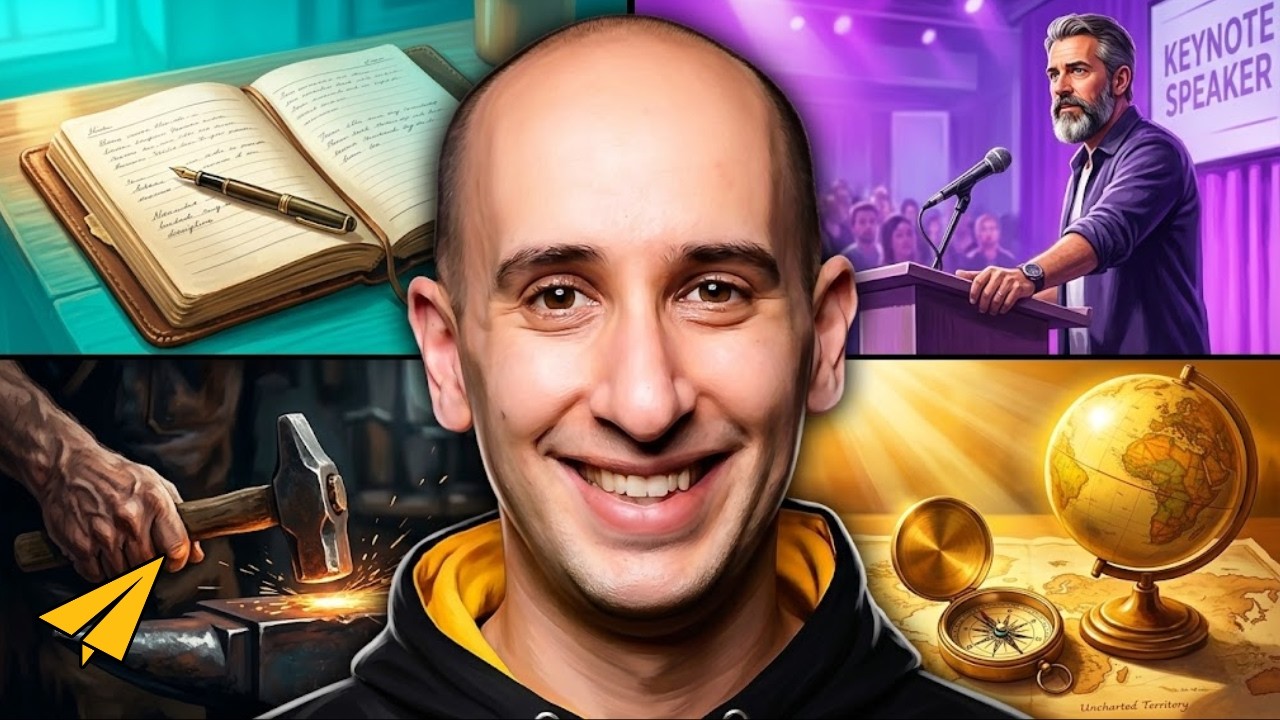
In this 2026 YouTube interview, Evan Carmichael and Warren Buffett debunk the myth that it’s ever too late to achieve success. They cite MIT and US Census data showing the average age of successful startup founders is 45, and illustrate the point with stories of Colonel Harland Sanders, Henry Ford, Ray Kroc, and others who built empires after 50. The conversation shifts to the psychological transition that occurs around mid‑life: a move from external validation to self‑mastery, turning accumulated experience into a strategic advantage. Carmichael outlines concrete frameworks for late‑bloomers – the 25/5 focus rule, an 80/20 split of effort, the power of repetitive "reps" (350 videos, 700 to feel proud), borrowing belief from mentors, a 500‑page daily reading habit, scheduled thinking time, and designing an environment that protects focus. He stresses turning insecurity into purpose, serving others, and building unstoppable momentum through tiny daily actions. The video ends with a call to action: download a free worksheet, adopt the three Buffett habits, and start taking concrete steps now.
Chapters
The most dangerous idea living in your head right now is that it's too late for you. It's too late. I'm too old. What do you want to say to that person?
I'm not—
it's never too late.
Obviously, you know that. I know that.
You cannot allow yourself to say that I'm too old ever again. I don't care if you're 98 and you know that you have 15 seconds left to live. Don't buy into the myth that you're too old because that is going to slow you down. The founders behind the most successful startups in America aren't 25 years old. They're 45 on average, according to a study from MIT and the US Census Bureau that tracked 2.7 million company founders.
The moral to my life: don't quit at age 65. Maybe your boat hasn't come in yet. Mine hasn't.
There are absolutely a ton of entrepreneurs that started their companies in their 40s, 50s, 60s, and 70s when it was difficult to do such a thing. Sidney Frank, who created Grey Goose, didn't invent his big thing until the '70s. So this was never really about business or about your age. It's about whether you quit on yourself in the exact chapter where your whole life was about to turn around. The most powerful decision we make, most of us don't make it consciously, is what are we going to focus on? Don't have a fucking quitting mind.
Repetition every day. Stay hard.
Let me tell you about a man named Harlan Sanders. At 65 years old, he was broke. A new highway had rerouted the traffic away from the little roadside restaurant that he'd spent years building. And just like that, the thing that he poured his life into was gone.
Now they come along, survey this interstate system, that went 7 miles back of me, left me sittin' high and dry.
He was living on a Social Security check of $105 a month. So picture that for a second, right? 65 years old, a failed business behind him, $105 to his name. He was carrying around all of this doubt. He had every reason in the world to sink into a chair and decide that that was it, his shot is gone. But what he had instead was a chicken recipe and a decision to make.
I was 66 years old. I couldn't afford to quit.
He climbed into his old car and he started driving. He'd pull up to a restaurant, walk to the back, and offered to cook his chicken right there for the owner and the staff. If they liked it, they could use his recipe and his name, and he'd take a few cents of royalty on every piece of chicken they sold.
I only got a nickel on every chicken that they sold. They got 3 dinners out of it, but I got 1 nickel for the whole meal. But you'd be surprised how fast those nickels add up.
Door after door, kitchen after kitchen, he got no more times than any person should ever have to hear it. He slept in his car and he kept going at 66, at 67, at 68. Then one day a single restaurant said yes, then another said yes, then hundreds.
When you started with this franchise, how long before the real break came and it began to take off across the country? It began to do pretty good after about 2 years.
By the time he was 73, Colonel Harland Sanders had franchised more than 600 Kentucky Fried Chicken outlets, and he sold that company for $2 million, which is worth more than $20 million in today's money.
After 7 and a half years, this franchise business I sold out for $2 million— not a lot of money. I see in the paper yesterday the same company that I sold for $2 million sold for $240 million yesterday.
He became the white-suited face of one of the most recognizable brands on the entire planet, KFC. And remember, he started all of this at 65. Now you might be thinking, okay, that's a nice story, Evan, but that was a different time. Sanders got lucky. It's harder now, and I've already burned too many years. And that thinking and that objection is the one thing that's standing between you and everything that I'm about to give you here in this video. You feel behind because you're measuring the years that you've lived against some imaginary schedule that somebody else handed to you, right? That schedule is not real. The pressure that you have to have your life figured out by a certain age is just a myth, and it creates unnecessary weight on your shoulders that has nothing to do with what you're actually capable of building. The years you think that you wasted weren't wasted at all. They were reps. They were you stacking up the exact experience that, that research we talked about says makes a 50-year-old nearly twice as likely to build a runaway success as a 30-year-old. So we're not too late. You are loaded with experience, and what you choose to do in the next few minutes decides whether all of that experience becomes your actual next breakthrough, or you let it stay your excuse to stay stuck. If you've been here before, drop a hashtag #believe in the comments below so I can feature you here in a future video. And if you're new, welcome to Believe Nation, the only channel that helps you believe in yourself daily, one video at a time. Believe. Your timeline belongs to you and nobody else. So the first thing you have to understand about people who win late is they just stopped racing against somebody else's clock. So there's no deadline for finding your purses. Zero. Life isn't a straight line where you're just supposed to arrive at some fixed point by some certain birthday of yours, right? It says winding path full of tons of detours and setbacks, and the detours are exactly where you need to pick up everything that eventually makes you dangerous. So Henry Ford's first company completely fell apart, and then the second one did too. He didn't found Ford Motor Company until he was 39 years old, and the Model T that changed the world didn't arrive until he was 44. Two failures behind him, and his real work hadn't even started yet. If he had accepted that, that was it, his shot was gone. He'd have never known the name Henry Henry Ford. And he's not some rare exception. Taichihiro Mori was an economics professor who didn't start building his real estate business until he was 55 years old. By the time he was in his 80s, he was the richest man in the entire world. Ray Kroc was 52 years old. He was a milk machine salesman. He was sick and tired of driving from town to town selling milkshake machines when he walked into a little burger stand and turned McDonald's into this global empire. These are not lucky freaks of nature. These are men who refused to believe that their birthday, their age, was going to decide how far they can go. And so it's a shift that happens in your psychology, and it's the whole reason why 45 keeps showing up in the data. Carl Jung talked about how a 16-year-old's mind is aimed at conquering the world out there— the money, the status, the proving to everyone that you matter. But somewhere around 45, you wake up to a deeper truth. The only thing you actually needed to conquer this whole time wasn't the world, it's yourself. And that's actually the most powerful upgrade that a human being, I think, can go through. The man who spent 45 years learning how his own mind works, learning where he panics, learning where he's willing to sacrifice, what he refuses to do, where his values at. That person is holding a weapon that a 25-year-old can't even picture yet. So you have that weapon right now. You've been sharpening it for years without even noticing. So the goal is to stop asking, hey, am I too old for this? And start asking, what have these years actually taught me that I can finally put to work? Every hard job that you hated taught you something. Every relationship that ended, it taught you something. Every business that didn't make it taught you something that you can't put in a textbook. The bird sitting on a branch isn't afraid of the branch breaking because her trust was in the branch, it's in her wings. So your circumstances, they're the branch. They'll shake, they'll break, they'll get rerouted by some new highway like Colonel Sanders that you never saw coming. Your wings are everything that you've learned about yourself over all of these years. Trust those. That's a psychology that wins late, and you already own it. Turn your insecurity into a mission. So here's something that almost nobody says out loud about high achievers, and it's especially true for the ones who break through later in life. A lot of them are running on a dangerous cocktail of massive insecurity mixed with massive ambition, right? You feel deep down like you're not enough, so you work harder and reach higher and chase more, all to cover up that hollow feeling of not being good enough. And when you're older, that insecurity gets bigger because now there's a second voice on top of it that's also saying, hey, and you should have done this already, you should be further ahead than where you are right now. So this is really important. That insecurity doesn't mean that you are a broken human. It is just energy sitting in your chest waiting for you at some point to feel something worthy. The way you point at is at service. So when you get nervous, when the doubt floods in, when you feel like an imposter for trying something at your age, shift the focus to the person that you're here to try to help. Service. The second you stop asking, do I look stupid for doing this? And start asking, who is not getting health because I'm sitting on the projects protecting my pride? The fear starts to go away. It has to, because you physically cannot be self-conscious and of service at the same moment. Your brain has only room for one of those. So choose service. And watch the nerves quiet down. And this is the part that I believe with everything in me: your purpose comes from your pain. Whatever you struggled with the most in your life, whatever cost you all of those years that you kept grieving, that is the exact thing that you're meant to help other people through. The struggle wasn't your punishment. The struggle was your preparation. The messy divorce, the bankruptcy, the addiction that you beat, the years of feeling invisible— all of it handed you a map that people who haven't walked that road, they simply don't have. And now you have it. Colonel Sanders spent decades cooking in a side kitchen before that recipe was worth anything. The pain came first, the purpose grew out of it. And if you have the ability to help somebody through the thing that you survived, then you have the responsibility to do so. If you can, then you must. That's how you take the insecurity that might have been eating at you for years and turn it into a mission that finally pulls you forward every morning to do something. Hit the same spot until the wall breaks. Okay, so now let's talk about why late bloomers actually break through, because it often comes down to a very specific and repeatable way of working that you can start copying today. So just imagine this giant brick wall in front of you and a, and a sledgehammer in your hand. If you swing that hammer at 15 different spots in the wall, you're gonna exhaust yourself and the wall is still just gonna be standing there. But if you hit the exact same spot for 15 or 20 times in a row, that wall cracks and starts to come crashing down. Same amount of effort, just completely different result. Difference is focus and repetition landing on one single point. That's what the years of struggle are really for when you put them to use. People never break through because every few months they get discouraged and they swing at a brand new spot. New business idea, new business plan, new spot over and over and over. They spread their swings across the entire wall and then wonder why nothing ever cracks. The person who wins late is usually just the one who kept pounding on the same spot after everyone else kind of wandered off to swing somewhere else. Focus is a competitive advantage because it's rare. If your idea is genuinely ahead of its time, you might have to hit the same spot 40 times instead of 20. So what? You built the arm for it. You've got the patience the 25-year-old version of you never had. There's this picture that I'd love for you to, you know, burn it here into your mind. Especially when it all feels pointless. Think of a combination lock with 6 numbers on it. You have 5 of the 6 numbers already dialed in correctly and the lock still won't open. From the outside, even from the inside, it looks completely stuck. It feels like nothing you're doing is working, but you are one single click on that final wheel away from the whole thing springing wide open. This is exactly where a huge number of people are standing at the exact moment that they quit. They're 5 clicks in, 1 click away. Sanders was 1 restaurant away from KFC for years, and it looked like total failure the entire time, right up until the second that it didn't. So on the day it feels hopeless, don't read that feeling as a stop sign. It's a, it's an idea that you need to keep going, to keep turning the wheel until you get that last click. Also, if you want to take real action after this video, I made a free worksheet just for you. It covers the top lessons from today, gives you space to write your biggest takeaways, and helps you build a simple action plan. It's 100% free. Just click the link in the description below to go grab it. I'll see you there. Get rich slow, then get rich fast. One of the most freeing things that you can accept is how the timeline of real success actually works. So there's a saying that I love that you get rich really slow and then you get rich really fast. The slow part is what scares people away because for a long time it looks like nothing is actually happening. But that slow part is where you're pouring the foundation of your empire. You're making your product genuinely great. You're taking care of the people you serve so well that they can't stop telling their friends about you. You're building your launch pad so solid that when it's finally time to scale, you go up like a rocket ship instead of, uh, something that explodes in the sky. Building anything real that lasts is usually a 5 to 7 year haul before it looks like an overnight success to everybody else watching from the outside. And that length of time is the exact reason people burn out and walk away around year 2 or 3. They just don't see the money show up fast enough. They get discouraged and they decide, hey, this isn't working. And so they quit right before the fast part was about to begin. But if you know going in that it's a multi-year climb, you stop panicking and freaking out when month 6 doesn't make you rich. You expected month 6 to be quiet. You're playing a longer, calmer game than most people who are trying to sprint past you and be gone by next spring. So this is a way to look at the slow years without going broke or also losing your mind and confidence. Split your focus 80/20. Put 80% of your energy on the work that brings in real revenue right now, the stuff that keeps the lights on and pays the bills so you're not operating just from pure desperation, and then put the other 20% on the bigger creative vision, the long-term thing that you're truly building towards. That 20% is your future. The 80% is what buys you enough time to actually reach it. So many people go all in on the dream with zero income and they flame out inside of a year. And plenty of others play it so safe on the income side that they never once touch the actual dream. The 80/20 split lets you do both at the same time, and it's how you stay standing in the game long enough for slow to finally turn into fast. Or the belief until you build your own. Okay, so the hardest part about winning late— some days you will not believe in yourself. There will be this giant doubt that'll be louder than your faith, and everything I've said will feel like it was written for somebody else, somebody younger, somebody stronger, somebody who didn't make all the mistakes that you made. I've been there more times than I can count. You don't. So here's what you do on those days. You borrow belief. When you do not have the belief in yourself, you lean on someone else's belief in you until you can rebuild your own. You borrow it from the stories of people who walk through the same fires before you. You read about Colonel Sanders or watch this video again in that car and you let his stubbornness pour into your morning. You study how Steve Jobs got kicked out of the very company that he founded, wandered for years and came back to build it into the most valuable company in the world. You surround yourself with a community believes in the mission on the exact mornings where you can't find the belief anywhere in yourself. That is strategy. It's not just some weakness. Every strong person that you admire has borrowed belief from someone at their lowest point. This whole game is simply refusing to quit during the stretch of time when you're still building up your belief in yourself to do the thing that you don't think you're capable of doing yet. But you don't rebuild belief by sitting around just trying to think positive thoughts. You rebuild it through action. So confidence is not something that you just think your way into. It's something that you earn. One scary very small action at a time. You take the step, you survive it, and your brain updates its files here on who you are and what you're capable of doing. Being leads to doing. You decide to be the kind of person who shows up. You act like that person today even before you feel ready, and the actions slowly make it real, makes it the truth. So don't sit and get ready to feel ready. Ready is not real. Nobody who ever did anything great felt ready the moment before they started. You know when the best time to start is? Now, how about right now? The best years are the ones you haven't lived yet. Here's what I would love for you to walk away with. You are not behind. You're right on time. You're carrying an arsenal of experience your younger self could only have dreamed about. Sanders started at 65. Crocs started at 52. The best founders in the country are 45+. Your timeline becomes your own. So keep hitting the same spot, keep serving people through your pain, and keep turning that final wheel even when it looks stuck. Because you are so much closer than it feels right now. The chapter you're most proud of hasn't even been written yet. The man you're becoming is standing just on the other side of the discomfort that you are feeling right now. So trust in your wings, not the branch. The impossible is exactly what you were here on this earth to do. And congratulations, you're one video closer to who you're meant to be. Believe. It took me 45 years and almost losing everything to learn what I'm about to teach you right now. Being realistic about your goals is the absolute worst advice anyone can give you.
We choose to go to the moon in this decade and do the other things, not because they are easy, but because they are hard.
Everything you want as a YouTube creator, every freaking goal you want to hit, whether it be subscribers— you want to hit 1 million or 10 million or whatever— will come if you just make the best videos possible. So my goal, and this is what it will be till the day I die, is to make the best YouTube videos possible. When we were putting together this tour, I had some really lofty goals goals I wanted to reach conceptually. When you lower your expectations to match what is normal, you kill the exact vision that makes your ideas special. My family was still mad at me for not going to medical school, and now my wife was divorcing me because I lacked ambition. Once again, I was unable to live up to the expectations of others. Their dreams and my dreams were different. You know, I'm always going to expect myself I have to do, you know, certain things or surpass certain things. As long as I believe that, then, you know, my road to success is going to continue to expand.
Everybody told me I couldn't have what I was dreaming of.
Everybody told me it's not possible, give it up, don't have high expectations.
Well, the truth is, my entire life I've had monster, monster expectations.
And if you keep playing small to make other people comfortable, you'll lose your passion and end up working for someone else's 10-year plan. Your time is limited, so don't waste it living someone else's life. I wrote this over and over and over again.
I talked to myself in the mirror.
I'd sit on the toilet and say, one day, one day I'm going to— I'm going to make $1 million. One day.
One day.
And people used to tell me, that's crazy, dude. Like, why do you think so big? This is when people were telling me not not to. What do you believe holds people back from just taking action? Other people's opinions. And how do you overcome that? By telling your mom to go fuck themselves. I'm 45 years old right now, but when I was 19, I joined a biotech software company. I worked 15 hours a day, but I only made $300 a month. I owned 30% of the startup, but I was eating beans every single day because that's what I could afford. I almost lost the business multiple times. I was so close to giving up and taking a realistic, safe $100K+ banking job. And my own brain was giving me incredibly smart reasons why I should quit. But I asked myself one question: when I'm an old man at 40 or 45 years old, will I regret not chasing this unrealistic dream? And the answer was yes. So I decided to stop playing small. I modeled success from Bill Gates and finally saved the business. If I had listened to the people telling me to be realistic you wouldn't be watching this video right now. But I have bills to pay. You're sitting there thinking it's easy for a 19-year-old to eat beans. You have rent, you have kids, you need a steady paycheck right now. You're absolutely right about your responsibilities, but playing it safe doesn't actually protect your family. It just guarantees that you stay stuck. The risk of failing at a normal job is just as high as in a business, but the upside is zero. You can protect your family and chase a massive dream at the same time. Let me show you the exact steps to build your empire without risking your rent money. Redefine your risk. So most people think of starting a business means risking everything. You think you need to empty your bank account, quit your job, and go completely broke. That is the absolute wrong way to do it. You can start testing your idea right now for exactly $0. A major study shows that 60% of new businesses fail within the first 3 years, and it is almost always because they just just run out of cash. Don't be part of that statistic. Keep your day job to pay your rent. Use your evenings to build your real dream. Spend just 1 hour every single night working on your idea. You don't need to be reckless to be successful. You just need to be incredibly consistent. Start small and test what actually works with real customers. If you want to start a marketing agency, don't run an expensive office. Send 50 emails to local dentists offering to run their ads. When your side income finally matches your job income, then you can quit. Until then, use your job to fund your empire. This keeps the pressure off your creativity. You make terrible decisions when you're stressed out about paying for groceries. So keep the steady paycheck and build your legacy in the dark. You can start reaching out to 10 potential clients today on social media without spending a single dollar on ads. The internet right here gives you free access to the entire world. Use it. Your lack of a budget is an actual advantage because it forces you to be creative. But what is the exact thing you should be building? I'll show you how to figure that out right now. Discover your core value. So you need to figure out your most important core value. I call this your one word. My word is belief. Every single decision I run through this exact filter. Does this project spread belief? If yes, I try to do it. If no, then I skip it. Research from the Harvard Business Review shows that companies with a clear purpose have 400% more growth than companies without one. This applies to you too. I recently analyzed data from 50 different billionaires to find their common success frameworks. Every single one of them had a massive, undeniable core value that drove their decisions. So think about the hardest moments of your life. How did you pull yourself out of the darkness? The specific lesson you learned in that pain is your core value. You want to teach other people how to avoid the exact pain that you went through. Once you know your word, your entire business plan becomes incredibly easy. You stop stopping other people and you start building something that only you can build. So look at your favorite movies, your favorite songs, your favorite teachers. They all share a common theme. That theme is your core value. When you align your business with your deepest value, you stop feeling exhausted and burnt out. You wake up with energy because you feel like your work actually matters to you because it does. You aren't just selling a product or service anymore. You're leading a movement, even if it's a small one. But what happens when you wake up feeling completely crushed by doubt? I have a specific system to fix that immediately. Borrow belief from giants. So you'll have days where you completely doubt yourself. Your environment will try to drag you down. The people around you might tell you to just be normal and play it safe, man. You need to change exactly who is in your ear. When I started my channel, nobody in my real life really understood what I was doing, so I borrowed belief from people who are already massively successful. I listened to Steve Jobs and Les Brown in my ear every morning. It's called my believe walk. Get outside, put something in your ear that helps you believe in yourself more. A study by the American Society of Training and Development found that having a mentor increases your chance of success by 65%. If you don't have a mentor in real life, find one online. Listen to their interviews while you brush your teeth. Watch their speeches when you commute to work. Fill your brain with the voices of people who absolutely refuse to play small, and their extreme confidence will slowly become your confidence. You'll start thinking bigger because you're surrounded by giant thinkers. You have to aggressively guard your mind. Turn off the negative news. Turn on the people who make you want to win. Your daily habits dictate your future. So if you spend 2 hours a day watching mindless entertainment, you'll stay exactly where you are. If you spend 2 hours a day though listening to successful leaders, your entire mindset shifts. But watching videos isn't enough. You actually have to put in the reps. I'll tell you exactly how many reps you need to do next. Commit to 350 reps. Now you're probably judging your first attempt against everyone else's 10th year, right? That's the big mistake. Mistake. When I started making YouTube videos, I was terrible. I hated watching myself on camera. It took me 350 public videos before I stopped feeling just completely embarrassed by my own work, and it took me 700 videos until I actually inspired myself for once. A study from the University College London showed that it takes an average of 66 days to form a new habit, but mastering a complex skill takes thousands of repetitions. So you can't expect to be great on day one. You have to be willing to completely suck at the beginning. If you want to grow a massive audience, you have to constantly test what works. You need to spend time completely optimizing your titles, maximizing your click-through rates. You test cinematic, you test text-free thumbnails. Your first product is going to be ugly. Your first video will get zero views. Put it out anyway. The only way to get the skills you need is to actually do the work. If you refuse to release anything until it's 100% perfect, you'll stay stuck forever. So stop overthinking and start producing. Buy cash flow instead of building. You don't always have to start a brand new company from scratch. Sometimes the absolute smartest move is to buy an existing business that already works. You look for completely boring business models that print money every single day. So think about buying a local laundromat or a waste management company. The current owners are getting ready to retire and their kids don't want to run a boring company. According to the Exit Planning Institute, Institute, 75% of business owners plan to transition their business over the next 10 years. That is a massive opportunity for you to step in and acquire wealth. You can buy a highly profitable asset instead of spending 5 years trying to build one. You step into a company that already has high-paying customers, trained staff, and consistent revenue. You just apply your maybe modern marketing skills to a very traditional business and the profits could explode. You don't need to invent a brand new tech software to be incredibly you just need to find a solid, boring business and run it much better than the previous owner. Buying an existing business gives you immediate momentum from day one. It completely removes the high risk of a brand new startup failing. But once you own the business, you need to tightly manage your time. If you do every single daily task yourself, you'll burn out fast. Here's exactly how to fix your schedule today. Eliminate what does not matter. The obsession with being extremely busy destroys people's potential. Working 15 hours a day on the absolute wrong tasks will keep you broke forever. You need to look at your daily schedule and instantly cut out the garbage. Apply a 3-step process to your life: eliminate, automate, and delegate. First, eliminate everything that doesn't directly bring in revenue or build your brand. Second, aggressively automate your repetitive tasks. Use advanced AI tools, custom prompts, and integrations to handle most of the boring work for for you. And then third, delegate the remaining tasks that you aren't an expert at to other people. A study by Stanford University found that knowledge workers spend up to 41% of their time on discretionary activities that could easily be handled by others. You should only be doing the specific tasks that only you can do. If you hate editing audio for your videos, hire someone else to do it. If you need a cheap scalable solution, use open source alternatives to get some of the heavy lifting off your plate. Protect your daily energy at all costs. You need your brain to be totally fresh for the bigger strategic decisions. You can't be a visionary leader if you're completely exhausted from doing basic data entry. So taking control of your time becomes the ultimate business flex. Now you have the perfect strategy, but you still need one final push: create massive momentum today. The only thing you're truly missing right now is momentum. You have the great ideas. You have the burning desire, but you keep waiting for the perfect moment to start. The perfect moment simply doesn't exist. You just need to take the very first messy step today. According to the Journal of Personality and Social Psychology, making visible progress on a goal drastically increases your motivation to keep going. It's called the progress principle. Don't worry about step 100 right now. Just focus entirely on step 1. Build a system to track your daily progress. Use a simple spreadsheet to monitor your daily habits or your nutrition goals. High protein foods, Greek yogurt, salmon, eggs. It gives your brain the energy to focus, but your tracking sheet gives you the discipline to execute. So register your domain name tonight. Film your first rough video today. Send that one terrifying email that you've been avoiding. Do something physical that makes your dream slightly more real. When you look back at your life as an old person, you won't regret the times you failed. You'll only regret the times that you never even tried. So don't let fear control your entire future. You're fully capable of achieving incredibly impossible things if you just refuse to stop stopping. Every single massive empire started with one single uncomfortable decision. So make that decision right now. You are absolutely ready. Your next step to greatness. You have everything you need right inside of you right now. So stop listening to the people telling you to play it safe, to be realistic. Step up and claim the life you actually want. Now let's learn from Warren Buffett and the 3 things successful people do every day. Your busy calendar might be a massive warning sign that you're failing as an entrepreneur.
I just flipped through it, and you know, there's, there's practically nothing in it. You've got to keep control of your time, and, and you won't keep control of your time unless you can say no.
I think it's the secret to all of my success.
I have calendar anorexia. I want as little in my calendar as possible.
I'm meticulous about it. You got to be very careful if you're somebody who feels like you're busy all the time to understand that busyness can become a habit, and busyness can become your biggest excuse. Warren Buffett creates massive wealth because he uses 3 completely different daily habits to protect his focus and reject 99% of requests.
Focus has always been a strong part of my personality.
When he came to Columbia and spoke to the business school, the very last question that was posed to him was what his secret was, and he had this— I'll never forget it— he had this giant pile of paper and he pulled it out. It was a complete hodgepodge and said that he reads 500 pages a week, and anyone can do do it. And, uh, you know, it's like compound knowledge. If you start today, it would just build over time.
I just read and read and read. I probably read 5 to 6 hours a day. I like things quiet. I shut the door actually at the office because I, I don't want to hear anybody talking outside. I still probably spend 5 or 6 hours a day reading and, and, and, or, or thinking while I read.
If you don't aggressively take control of your time right now, you'll become a prisoner to other people's priorities and never build the empire that you deserve.
I buy anything I want, basically, but I can't buy time. And so to have time is the most precious thing you can have. I better be careful with it. There's no way I will be able to buy more time.
You have to prioritize your time really carefully. Your time is limited, so don't waste it living someone else's life. Years ago, Bill Gates thought being productive meant packing his schedule. He booked his calendar down to the minute. Then he looked at Warren Buffett's personal pocket calendar and was shocked. I also remember Warren showing me his calendar, and I love this. You know, I had every minute packed, and I thought that was the only way you could do things. And, you know, the fact that he, uh, is so careful about his time— days that there's nothing on.
This is the week of April, of which there are only 3 entries for a week.
Warren explained that you control your time, and sitting down just to read and think is far more valuable than rushing to another meeting. He built a $130 billion fortune mostly by sitting in a quiet room, completely ignoring the busy culture everyone else falls for. Now, right now you might be saying, hey, well, that's easy for Warren Buffett to have a blank calendar. You think you got to hustle 15 hours a day to keep your head just above the water. You feel like if you stop grinding, grinding, you'll lose everything. But constantly grinding is exactly what keeps you stuck. Buffett didn't buy his freedom after he got rich. He acted like his time was priceless long before he made his first million. I'm going to show you the 3 exact things he does every single day that you can start doing right now to take back your time. The 25/5 Focus Method. Okay, you want to be successful. You've got massive goals for your life. You have a huge list of projects that you are trying to complete. You're trying to build a business, you're trying to grow your YouTube channel, you're trying to get in shape, you're trying to invest your money. You think that working on 25 different things at once makes you a hard worker. You think juggling all these priorities proves that you're dedicated. Warren Buffett completely disagrees with you. He believes that chasing too many things is exactly why you're failing. He uses a strategy called the 25/5 rule. The story goes that Buffett was talking to his personal pilot pilot. He told the pilot to write down his top 25 career goals. The pilot made his list. Then Buffett told him to circle his top 5 most important goals. The pilot circled his top 5. He told Buffett that he would focus his main energy on the top 5. He said he would work on the other 20 goals when he had some spare time. Buffett looked at him and said, no. He said, those 20 goals are now your avoid at all costs list. If you don't completely ignore those 20 goals, they'll destroy your chances of They'll steal your time. They'll drain your energy. You'll never achieve the 5 things that actually matter. You're probably doing this right now. You're spreading your energy so thin that nothing gets your full attention. You have a massive vision for your life, but you're getting zero results because you refuse to focus. So you have to realize that good is the enemy of great. You might have 20 good ideas, but pursuing those good ideas is exactly what stops you from executing your 5 great ideas. So you have to cut away the distractions. You have to be willing to ignore things that you do care about out just so you can win the things you care about the most. Your brain, it's going to tell you that you're missing out. Your brain will give you really smart reasons why you need to keep all your options open, but all that happens is you stay stuck. You have to learn how to say no. If you don't ruthlessly cut your goals down, you'll always be average. You'll never reach your full potential. You'll watch other people pass you by because they had discipline to focus. So you have to stop treating your focus, uh, like it's inevitable, like it's a cheap commodity. It's the most valuable asset that you own. If you want to know exactly how to do this, you need to build your avoid at all costs list. Building your avoid at all costs list. Okay, so how do you actually do this? You have to write down your list today. Write down every single project that you're working on. Write down every goal that you have for the next 5 years. Look at that list. It's probably huge. Now force yourself to pick just 5. This is gonna hurt. You want to pick 10. You're gonna try to negotiate with yourself. Don't do it. Warren Buffett says don't do Do it. Pick exactly 5. Take the rest of your list and put it in a drawer. You aren't allowed to look at it or touch it until you succeed at the top 5. You have to protect your attention like it's your most valuable asset. The wealthiest people in the world are extremely aggressive about what they ignore. If you want to make millions of dollars, you must ignore almost everything. You have to cancel projects. You have to say no to people. Every time you say yes to a distraction, you're delaying your ultimate success. Your 6th most important goal is your biggest enemy. You like it just enough to spend time on it, but it won't ever give you the massive success of the top 5. When I joined my first software company at 19 years old, I was struggling. I didn't know what to do. I had to focus entirely on modeling success. I studied how Bill Gates started Microsoft. I applied his exact strategy to my business. It landed me my first deal for $13,500. It only worked because I ignored everything else. I focused on one specific model and put all my energy into it. You have to do the same thing. Find your top priority.
Priority.
Commit to it completely. People will invite you out, they'll pitch you new business ideas, they'll, they'll ask you to join their exciting new startup, right? You have to tell them no. It's going to feel uncomfortable. People might even get mad at you. Let them be mad. You can't let other people dictate where your time goes. If you don't take control of your schedule, somebody else will happily take it from you. You're built to serve a specific purpose, and you can't do that if you're constantly distracted. Distracted, so you have to stay laser-focused on your top 5. But focus alone won't make you rich. You need to know exactly how to compound your value, which brings us directly to Warren Buffett's second daily habit. The 500-page knowledge habit. Once you have your focus, you need to execute. Warren Buffett spends up to 80% of his day reading. When a student asked him how to prepare for an investing career, Buffett held up a stack of paper. He said to read 500 pages like this every day. He said knowledge builds up like compound interest. Everyone can do it, but he guaranteed very few actually will. Now, you might think you don't have time to read 500 pages. That's not the point. The point is that you must aggressively consume knowledge about your specific focus. Most people consume garbage. You wake up, you immediately scroll through negative news, you look at social media and compare yourself. To people who are faking their success. You load your brain with all sorts of distractions. You have to change your environment. If you want to be great, you have to put greatness into your mind every single day. So start your morning by listening to someone who inspires you. Put on a video of a successful entrepreneur. Listen to the greats. When you surround yourself with massive thinkers, your own problems start to look small. You begin to believe that you can overcome your current struggles. You borrow the belief from them. If you aren't learning every day, you're falling behind. Your competitors, they're studying, they're getting ready, they're getting better. You have to make learning a non-negotiable part of your daily routine, and ideally first thing in the morning. So I go for a walk every morning. I call it my believe walk. It's my dedicated time to clear my head and find my focus. And while I walk, I listen to videos and interviews of successful entrepreneurs. I want the greatest minds in history speaking into my ear. I want their belief to transfer into me. You can do the same. Find the authors, the speakers, the leaders who've already accomplished your goal. Consume their content relentlessly, right? Let their knowledge compound inside of your brain. It's the highest return on investment you will get. But consuming information is only half the battle. If you don't know how to translate that knowledge into real-world action, you're just wasting your time, which is exactly what we're gonna fix right now. Turning knowledge into action. Reading and learning are completely useless if you don't take action. Watching this video is useless if you don't take action. You can read 100 books a year. If you don't change your behavior, you just wasted your time. You're just trying to feel productive without actually doing the work. So you need to implement what you learn. And when? Immediately. You have to start taking risks. Your fear of failure is the number one thing holding you back. You want everything to be perfect before you launch. I get it. You want the perfect website, the perfect camera, the perfect plan. Perfectionism is really just fear. It's a mask for You have to expect to suck at the beginning. When I started my YouTube channel, I was terrible. You can go back and watch the videos. I hated my first 350 videos. I couldn't even watch them because I was so embarrassed by myself. And it took me 700 videos before I actually felt a little bit proud of my work. But I kept posting, I kept learning. I took the knowledge I had and I put it into action. And you can get there faster. You can do the same. Make the messy video, send the awkward email, launch the ugly product, just get it out there. The market will tell you what works.
Works.
You will learn far more from 10 days of taking action than you will from 10 months of just reading books. Every time you test a new idea, you're gathering new data. You're figuring out what works and what doesn't work. So stop overthinking your next move. Stop waiting for the perfect moment. The perfect moment, it doesn't exist. You just have to start where you are with what you have. Action builds confidence. When you combine massive knowledge with massive action, you become incredibly dangerous to your competition. But to make sure that you're taking the right actions, you have to master the third habit of the ultra-rich. It's a habit that almost every entrepreneur completely ignores. Scheduled thinking time. The third habit is the most difficult for entrepreneurs to master. It's the habit of sitting in a quiet room and simply thinking. Warren Buffett doesn't just read. He schedules large blocks of time to just think. Just think. Bill Gates used to schedule every minute of his day. Then he saw Buffett's calendar and realized it was mostly blank. You think that being busy means you're being productive. You fill your calendar with meetings and calls and emails. You pride yourself on working 15 hours a day, but you're running on a treadmill a lot of times. You're moving fast but going nowhere. If you don't schedule time to think, you'll never solve your biggest problems. You'll just keep reacting to fires. You have to pull yourself out of the daily grind. You need time to step back and look at the whole board, the bigger picture. I call it CEO time. You have to ask yourself the hard questions. Are you actually moving closer to your ultimate goal or not? Are you spending your time on those top 5 priorities that we identified earlier, or are you slipping back into your old habits? You have to protect your thinking time. Treat it like the most important meeting of your week. Turn off your phone, close your laptop, sit with a blank piece of paper and pen, let your mind wander. The best ideas come when you give your brain the space to breathe. Most people are terrified of silence. You constantly need a podcast, a song, a video playing in the background. You're afraid to be alone with your own thoughts, but your thoughts are where the million-dollar ideas live. You have to practice being bored. You have to force yourself to sit and strategize. This isn't wasted time. It's the most profitable time of your entire week. But to make this actually work, you have to ruthlessly engineer your physical and mental space, which is what we're going to cover next. Designing your daily environment. To make thinking time work, you have to ruthlessly control your environment. Your environment right now, it's perfectly designed to keep you exactly where you are. If you want to change your life, you have to change what surrounds you. You have to limit access to negativity. You have to shut down the voices that tell you that your ideas are crazy. Sometimes those voices are your friends and family. Sometimes the loudest negative voice is in your own head. You have to fight back by engineering your surroundings. When you sit down to think, you can't be in a place full of distractions. You need a dedicated space. You need a place where your brain knows it's time to work. So you need to find your version of that. Maybe it's a quiet corner in your house, maybe it's a park bench. It doesn't matter where it is, it only matters matter is that you guard it fiercely. If you let other people interrupt your thinking time, you're telling them that their priorities are more important than your future. So stop doing that. You have to value your own mind enough to give it the silence it needs. So when I'm creating something new, that's when I feel the most free. You need to give yourself permission to explore your ideas without judgment. So don't worry if the idea sounds stupid at first. Let it develop. Write it down. Look at the different angles. You'll have these moments where you doubt yourself. You'll wonder if you're sitting there wasting your time. You'll want to go back to checking emails because it feels easier. You get that dopamine hit. Don't give in to that urge. Push through the discomfort of deep thinking. When you create an environment that supports deep focus, your productivity will absolutely skyrocket. You'll start seeing opportunities that were totally blind to you before. You'll finally have the clarity you need to push forward. But there's one final piece of the puzzle that ties all of this together. Building unstoppable momentum. Okay, you now know the, the 3 habits. You need to ruthlessly focus on your top 5 goals. You need to aggressively consume knowledge about those goals. You need to schedule quiet time to think and strategize. Knowing this is not enough. The only thing you're missing right now is momentum. You don't need a massive breakthrough. You don't need a viral moment. You just need to take one small step today, and then another small step tomorrow. Momentum is created by doing the boring, repetitive tasks every single day, even when you don't feel like it. You're going to wake up tomorrow and you won't want to execute. You're going to feel tired. You might feel overwhelmed. That's the exact moment that defines your entire life. Are you going to give in to the comfort, or are you going to push through and do the work? You have to believe that the work you're doing today will eventually pay off. The results will will not show up immediately. You'll put in massive effort and see zero results for a long time. That's the test. That's the filter that removes the weak. You have to keep pushing until the momentum takes over, and when it does, you'll become unstoppable. You'll look back at your life and realize that mastering these 3 daily habits changed absolutely everything. Lack of belief is the biggest problem in the world today. That's what I think. You have to believe in your own potential before anyone else will. You have to trust that if you put in the daily reps, the compound interest of your effort will eventually explode. So stop waiting for someone to come and rescue you. Stop waiting for permission from anybody else. Give yourself the green light right now. Protect your focus, expand your knowledge, and guard your thinking time. Everything you want is on the other side of that consistency. Your next step. Your dreams aren't impossible. They're just waiting for you to actually commit to them. You have everything you need right now to start making a massive impact. So trust your vision and take the very next step today. To learn everything you need to know about building wealth, check the video right there next to me. I think you'll love it. Continue to believe, and I'll see you there. The traditional retirement advice you learn in school is guaranteed to keep you broke. Our school systems teach us nothing about money.
Nothing.
It's pathetic.
Colleges are basically for fun and to prove you can do your chores.
More from Evan




How the Biggest Mistake in History Created A Trillion-Dollar Empire | Sergey Brin



9 Machiavelli Principles That Force People To Respect You | Machiavellian Philosophy



The First 10 Words That Instantly Ruin A Sales Conversation | Vanessa Van Edwards