The Worst Business Deals in History Explained Like You're 5
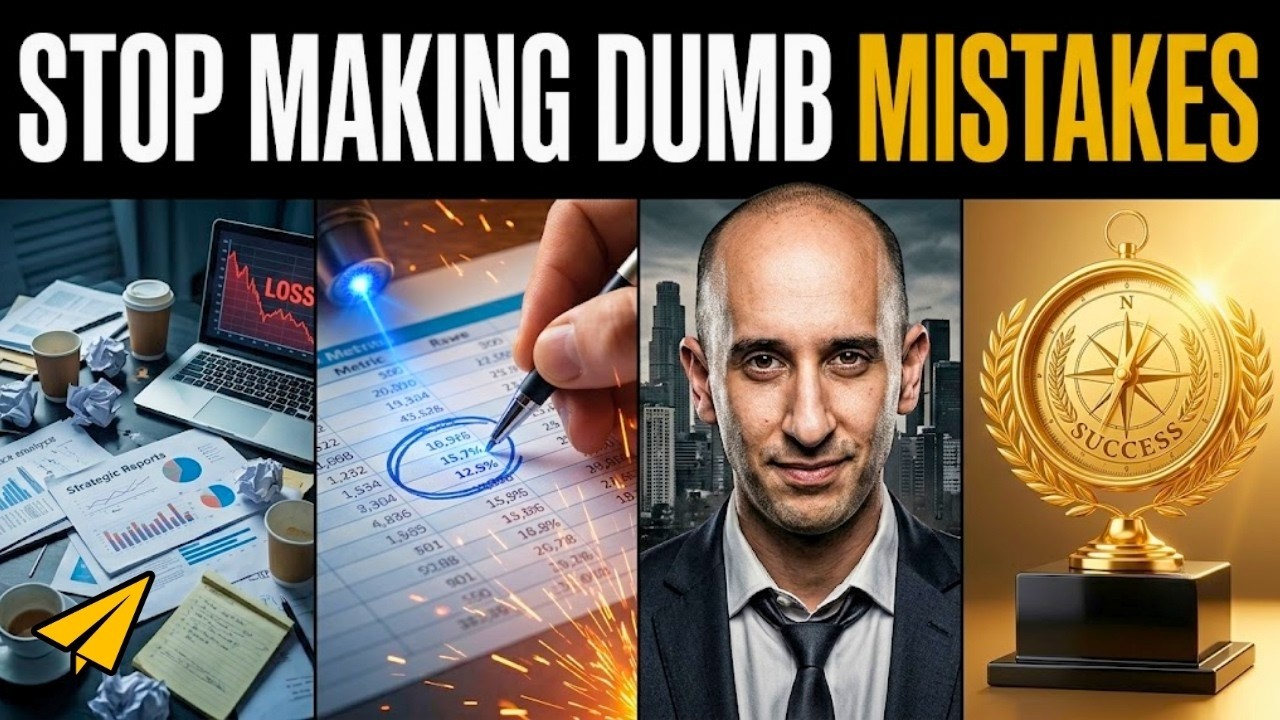
In this 30‑minute motivational video, Evan Carmichael examines a series of famous business failures – Blockbuster’s rejection of Netflix, Excite’s missed acquisition of Google, Yahoo’s balk at buying Facebook, Kodak’s refusal to embrace digital, Ronald Wayne’s sale of his Apple stake, Snapple’s mishandling by Quaker Oats, Xerox’s hand‑off of the GUI to Apple, and many others – to reveal five recurring psychological patterns: (1) saying “no” out of comfort, (2) settling for “good” instead of pursuing “great,” (3) ego‑driven protection of legacy, (4) over‑analysis and paralysis, and (5) handing the future to a rival. Carmichael then offers a decision‑making framework that asks viewers to imagine their 80‑year‑old self and choose actions they won’t regret. He reinforces the concepts with personal anecdotes (his own startup gamble) and a rapid‑fire showcase of famous risk‑takers – Lady Gaga, Sylvester Stallone, Beyoncé, Elon Musk, J.K. Rowling, Walt Disney, Oprah Winfrey, Dwayne “The Rock” Johnson, Colonel Sanders, Tyler Perry – each illustrating how embracing fear and betting on people can create massive value. The video closes with a free worksheet link, a call to subscribe to the “Believe Nation” channel, and a segue into a separate segment highlighting ten University of Alabama alumni entrepreneurs (Marillyn Hewson, Destin Sandlin, Morris Dees, Wynton Redd Blount, Benjamin Russell Jr., Janet Gerwich, Millard Fuller, Joe Gibbs, John Hendricks, Jimmy Wales), underscoring that the same patterns apply across industries and generations. The overall message is that fear, ego, and comfort are the most expensive mistakes, while vision, courage, and a willingness to say “yes” to the unknown drive lasting success.
Chapters
Some of the smartest people on the planet running billion-dollar companies make catastrophically bad decisions all the time. And it's almost always for one boring little reason. Most people don't take enough risk. You gotta leave your home. You gotta leave your comfort. Everybody can do 10 times more than you think you can. And before you get to 10x, you'll end up changing the goal to 10 times more. Study after study shows that 70 to 90% of major mergers and deals actually fail according to Harvard Business Review, which means even the so-called experts get it wrong far more often than they get it right. I find it really powerful. I found power in saying yes to so many things.
I'm in yes culture. My whole game is yes, comma, I'm not a great person to ask the no thing. I think there's people that are more disciplined at no. I just like the value of yes, and then if I'm a week, an hour, a year in and I've realized it's not right, I leave.
And here's why it matters to you, because the exact same blind spot that cost these giants billions of dollars is quietly costing you opportunities in your own life in business right now too. If you want to be successful, learn from the other people's mistakes. Let me tell you the greatest example of this in all of history, I think. Picture the year 2000. There's a tiny struggling little company called Netflix that mails DVDs to people in little red envelopes. It's losing money and its young founder Reed Hastings is nervous about the future. So Reed flies to Dallas to meet the absolute giant of his industry, Blockbuster. Did you go to Blockbuster or did they come to you?
No, we tried going to Blockbuster for months. We tried reaching out to them, but this was this ultimate— I mean, we listen, We were doing $5 million a year. They were doing $6 billion a year. It took months and finally we got the call. That's when Blockbuster calls, goes, "We'd like to see you tomorrow in Dallas." Back then, Blockbuster was a monster.
It had 9,000 stores. It pulled in $6 billion a year and it made a fortune charging people late fees on their rentals. Reed walks into that meeting and makes Blockbuster a simple offer.
When we make our pitch, we go, "We'll combine forces." You'll run the stores, we'll run the online business, we'll build a blended model, which our research has shown is a game changer, and everything will work out.
He asked them to buy his little company Netflix for $50 million and let his team run their brand new online business for them. And here's the moment that changed everything. The Blockbuster executives basically laughed him out of the room. $50 million for some tiny website that mails DVDs around? No thanks.
And then they asked the big question, you know, how much? And we figured we're $50 million in the hole, so $50 million. And there's this silence in the room. And I'm looking at, uh, Blockbuster execs trying to piece together what the reaction is. And it finally dawns on me, they're trying to suppress laughter.
They were making way too much money on late fees to care about some silly little internet idea. So they said no. And Reed flew home stung. Now here's how the story ends. Blockbuster, the giant, kept right on doing exactly what was already working all the way up until the world quietly changed. In 2010, Blockbuster filed for bankruptcy. Gone. And that tiny little company they laughed at, Netflix, the one they could have owned for just $50 million, is now worth hundreds of billions of dollars. One single word, no, ended up costing Blockbuster absolutely everything. And the scary part is they didn't say no because they were stupid. They said no because they were comfortable. Now you might be sitting there thinking, this has nothing to do with me. You could be thinking, Evan, these are giant corporations with billions of dollars on the line, and I'm just a regular person. I'm an entrepreneur. What does Blockbuster's mistake have to do with my business or my life right now? I think all progress begins with telling the truth. Blockbuster didn't fail because of money or size. It failed because of a mindset, and it's the exact same mindset that is quietly ruining a lot of people's decisions every day too. It's the fear of letting go of what feels comfortable. It's the little voice, the whispers that say, don't risk the safe thing for the unknown thing. You feel it every time you stay in the job that you've already outgrown, or you sit on the idea that you're too scared to actually start. So in the next few minutes, let me walk you through the simple patterns hiding behind the history's worst business deals so you can spot them coming and never make the same mistake in your company. If you've been here before, drop a hashtag #believe in the comments below so I can feature you here in a new video. And if you're new, welcome to Believe Nation, the only channel that helps you believe in yourself daily. One video at a time. Believe. The most expensive word in business is no. Here's the first pattern. And once you see it, you'll start seeing it absolutely everywhere. The most expensive word in all of business is the tiny word no. Blockbuster said no to Netflix, but they are nowhere near alone. Back in 1999, a search engine called Excite had the chance to buy a little startup named Google for just $750,000. They said no.
The greatest interest came from Excite, and actually came from Vinod. You were the investor in Excite, and we spent a while talking to them and talking to you, Vinod. Yeah. You remember that. In the end, I don't think the management team there was quite as excited about it, no pun intended.
Google is now worth trillions of dollars. Yahoo had the chance to buy Facebook for $1 billion back in 2006. Then they got greedy and tried to lower the price at the very last second, and a young Mark Zuckerberg just walked right out of the room.
Zuckerberg's decision not to sell Facebook to early bidders has become legend in Silicon Valley. After he rejected a bid from Viacom, Yahoo offered to buy Facebook for $1 billion in the summer of 2006. But when Yahoo stock fell more than 20% after a disappointing earnings report that July, Yahoo reduced its offer and Facebook again walked away from a deal.
Facebook is now worth over $1 trillion too. Do you see the pattern forming? Every single one of those nos came from a smart, wildly successful company. They weren't dumb people. They simply couldn't see the future because they were too busy protecting their comfortable present. So here is the takeaway. The next time a scary opportunity shows up, the kind that makes your stomach turn and flip over a little bit, don't reflexively just say no just to feel safe again. Stop and pause. Ask yourself if you're saying no because the thing is truly wrong for you or just because it feels new and unfamiliar. Because saying no to the right thing is quietly the most expensive mistake a human being can make. Good is the enemy of great. Here's the second pattern, and it's a sneaky one that hides in plain sight. Often good is the enemy of great. So think about it. Blockbuster was not struggling at all when it said no to Netflix. It was absolutely thriving. It had 9,000 stores and billions in revenue rolling in. And that right there was the whole problem. When something in your life is going badly, you fix it fast because the pain forces you to. But when something is going fine, you protect it, you cling to it, and you quietly stop reaching for what could be next. That comfortable, good enough kind of success is exactly what lulled Blockbuster to sleep while a tiny little Netflix quietly built the entire future. And the same silent killer could be running loose in your business, your life too right now. It's the decent enough job that's good enough, so you never chased a great one. It's the relationship, the, fine little routine, the comfortable plateau that you've settled onto. Good feels safe and it's warm, but good is exactly where greatness quietly goes to die. So look really hard at your own life right now and ask, where am I settling for good and calling it finished? That cozy little spot you don't ever want to leave might be the exact thing that is holding you back from something truly incredible. Ego writes the checks that bankrupt you. Pattern number 3 is maybe the deadliest of all, and it all comes down to pure ego. Smart people make genuinely terrible choices because they are flat out terrified to walk away from a process that already made them rich. I call this moment the death of an ego, and almost nobody is brave enough to go through it. So look at Kodak. All the way back in 1975, a young Kodak engineer invented the world's very first digital camera. Kodak engineer Steven Sasson invented the prototype that would eventually become the digital camera. Kodak literally held the entire future of photography in their own two hands, but the executives took that invention and buried it. Why on earth would they do that? Because they were making an absolute fortune selling film, and a digital camera that needs no film would kill their golden goose. In the mid-'70s, 1976, Kodak owned 95% of the film market and 85% of the camera market in the United States. Their ego and their past success completely blinded them to what was coming, and by the time they finally tried to catch up to everybody else, it was way too late, and Kodak filed for bankruptcy in 2012. With the failure to successfully pivot to digital complete, on January 19th, 2012, Kodak filed for bankruptcy. They didn't lose because they lacked the technology— they literally invented it. They lost because they couldn't let go of who they used to be. So ask yourself honestly, what old way of doing things are you still clinging to just because it worked for you once before? Sometimes the exact thing that got you here is the same thing keeping you from getting there to the next spot. The tiny decision you regret for the rest of your life. Here's a pattern that's much smaller, but somehow even more painful. Sometimes one tiny fear-based decision ends up haunting you forever. So meet Ronald Wayne. Most people have never heard his name, but he was actually the third co-founder of Apple, sitting right alongside Steve Jobs and Steve Wozniak back in 1976. Ronald owned a full 10% of Apple. Think about that. But only 12 days in, he got scared. The young company felt risky. He was worried about the debt and he just wanted out. So he sold his entire 10% stake back to Jobs and Wozniak for a grand total of $800. That very same stake today could be worth tens of billions of dollars. $800. He didn't lose it in some complicated deal or some giant market crash. He simply gave it away in a moment of panic, right when things got a little scary. And that's a— Important lesson: the most painful regrets in life usually aren't the big dramatic gambles that didn't pan out. They're the moments you bailed on something that you believed in the second it got a little uncomfortable. So before you walk away from something that you know deep down has real potential, stop and ask if you're leaving for a genuinely smart reason or just because the fear got way too loud for a minute. Also, if you want to take real action after this video, I made a free worksheet just for you. It covers the top lessons from today, gives you space to write your biggest takeaways and helps you build a simple action plan. It's 100% free. Just check the link in the description below to go grab it. I'll see you there. Bet on people, not just on numbers. Now, here's a pattern that runs in the complete opposite direction. The quiet secret of the people who actually win big— they bet on people, not just on spreadsheets. So picture two different investors looking at the very same young, broke, totally unproven founder named Jack Ma, the man who would build Alibaba. One investor, a famous Wall Street firm, looked only at the shaky numbers, got nervous, and ended up selling their early stake way too soon. They missed out on billions of dollars. But another investor, a man named Masayoshi Son, met Jack Ma for just a few short minutes and said yes almost instantly. He wasn't betting on the messy numbers because the business looked shaky on paper. He later said he could simply see that Jack's eyes were shining and he chose to bet on the person. That one decision to back a human being instead of a spreadsheet became one of the greatest investments in all of history. So the lesson: numbers can only tell you what has already happened, but people show you what's actually possible. When you're deciding who to trust, who to partner with, or even when to finally bet on yourself, don't just stare at the safe, provable numbers on the page. Learn to see the fire in a person's eyes, especially your own. Don't choke the golden goose. So here's a pattern when you finally do win on something great. Don't smother the very thing that made it special in the first place. In 1994, Quaker Oats bought the quirky little drink Snapple for a massive $1.7 billion. Snapple was fun. It was weird. People loved it. So what did Quaker do with it? They stripped out all the fun and they treated it like a boring grocery store product and alienated the exact customers who loved it the most. And just 27 months later, they sold Snapple for $300 million. They lost $1.4 billion, which works out to losing more than $1 million for every single day they owned it. MySpace did the same kind of thing to itself. After News Corp bought it for $580 million. They crammed it so full of ads that users fled to a cleaner, simpler Facebook, and MySpace later sold for $35 million. So the takeaway: when something in your life is generally working, whether it's a business, a relationship, a daily routine, the worst thing you can do is start changing it before you truly understand why it works. When you finally get your hands on something great, your first job is not to fix it. Your job is to protect the magic that made it great to begin with. Overthinking is its own decision. Pattern number 5 is one you might be doing at this very moment, and I'm guilty of too— overthinking. While you sit there gathering just a little bit more information, waiting for the perfect moment, and running the same numbers for the 100th time, the opportunity often will stand up and walk out the door. So here's a question that I, I want you to burn into your brain forever: what's the real opportunity cost of you overthinking yet another chance? Yahoo didn't just say no to buying Google one single time. They hesitated, they debated, they tried to squeeze out a slightly better price. And while they were busy overthinking it all, Google quietly became completely unstoppable. Waiting felt safe to them. It was actually the opposite of safe. Choosing not to decide is still a decision, and it's almost always the worst one available. You will basically never have all the information that you want. That, that perfect moment you're waiting for is a complete myth. The only way to know 100% is when it's already happened. So you know when the actual best time to act on a real opportunity is? Now, how about right now? The longer you sit and analyze and stall, the more those Blockbuster and Yahoo style moments show up in your life. Done and moving forward beats perfect and frozen every single time. Never hand your future to a rival. Here's one of the sneakiest patterns of them all. Sometimes a company literally hands its entire future straight to a rival without even realizing that it's happening. And the greatest example, I think, is Xerox. So back in the 1970s, Xerox built a secret research lab, and inside that lab they invented invented the actual future of computing, the mouse in your hand and the graphical screen that you're literally looking at right this second. They had it first, but Xerox was completely obsessed with selling photocopiers, so they never saw what they were truly sitting on. They even invited a young Steve Jobs in for a friendly tour, and Jobs walked right back out of the door with the blueprint for the personal computer. Xerox handed Apple the future on a silver platter, and Apple ran with it to become one of the most valuable companies on the entire planet. So the lesson here, and it's a big one: never give away the one thing that's going to define your future. It's totally fine to get help with the small stuff, but the core idea or skills that decides whether you win or lose— guard that one thing and build it yourself. Don't trade your future away just because you're too busy protecting your comfortable present. Decide from your future, not from your fear. This is a fun last pattern and it quietly ties all the other ones together. The worst deals in all of history were made from a place of fear, never from vision. Blockbuster, Kodak, Yahoo, all of them. They decided out of fear of losing what they already had instead of excitement for what still could become. So the simple tool that you can apply in your business, your life, when you're staring down a big scary choice, don't ask the fear-based questions. What could I possibly lose here? Instead, imagine yourself at 80 years old sitting in a chair and looking back over your entire life. Then ask, will I deeply regret not doing this? And if the honest answer is yes, then you absolutely have to do it. Personally, I would generally rather know and fail than spend my whole life wondering what if. And that is exactly how the people who change the world make their decisions instead of the comfortable giants who get left behind in the dust. Because if you have the ability to see a better future for yourself, then you have the responsibility to actually move towards it. And being the kind of person who decides from vision is precisely what leads to actually building the life you really want. You can see the patterns now, so you'll never repeat them. Here's what I really want you to walk away from this video today with. Every single one of these billion-dollar disasters came down to the same thing: fear, ego, and comfort beating out courage and vision. And now you can see those patterns hopefully coming from a mile away, which means you never have to be the next blockbuster in your own life. You are already ahead of the giants. And congratulations, you're one video closer to who you're meant to be.
Believe.
Now let's learn from the 9 celebrities who risked it all to chase their dreams. Nobody ever achieved their dreams by playing it safe. I've seen it again and again. The people who reach the top are the ones who are willing to leap when everyone else clung to the edge. If you never dare to pursue what you love, you'll spend the rest of your life haunted by regret. Knowing you let fear stop you from becoming the person you were meant to be. Lady Gaga was no overnight sensation. She bet everything on herself long before the world knew her name. At 19, she dropped out of a top university to chase a music career, working 3-day jobs just to survive. Soon, her gamble seemed to pay off. She landed a record deal, but 3 months later, the label dropped her. Gaga was devastated. That Christmas, she moved back into her childhood home in tears. Ears. Everything in her screamed that she'd failed, but instead of giving up, she doubled down on her dream. She hit the grimy New York clubs and burlesque shows that finally let her unleash her authentic self. There, amid the dive bars and drag queens, she honed the fearless persona that we now know. And it was in one of those clubs that she got her next big break. R&B star Akon saw her perform and signed her to an Interscope By 2008, Lady Gaga's debut album was a global smash, and the world recognized a star had been born. But remember this: when she was dropped by that first label, Gaga felt the same crushing doubt you feel when your dreams get rejected. She faced the same pressure to quit that you might be facing right now. The only difference is she didn't quit. She felt the fear and kept going anyway, and that made all the difference. When I was 19, I had to make the hardest decision of my life. I had dream job offers waiting, jobs I'd wanted all through college, and I turned them all down Instead, I agreed to take 30% of a struggling startup and pay myself just $300 a month. I was supposed to be a banker, not an entrepreneur living on ramen and hope. I was terrified, but I said yes to the startup and it absolutely did not go as planned. We sucked at the start. We failed over and over, and those failures drove me into the lowest point of my life. After continuing to look at my empty bank account, I finally broke. One day I told my business partner, I'm done. I quit. I felt like I'd wasted a year of my life and had nothing to show but fear and shame. The next night was the worst of my life, but the next morning something in me flipped. I realized I could handle failing, but I could not handle giving up on my dream. If I quit now, I'd always wonder what might have been. So I decided to give it one more shot, but this time I try something different. I read how Bill Gates made his first million and discovered his strategy of partnering to sell software. So why not model it? I thought. I went back to my partner. Yes, after quitting the day before. And we refocused our approach. I started reaching out to potential partners, trying to sell through them instead of all alone. And within a few weeks, I closed my first major deal. Everything began to turn around. That tiny company I joined at $300 a month grew to over 300 customers in 30 countries, and we got acquired. None of that would have happened if I hadn't made one gutsy decision under pressure: to press on just a little bit longer when every fiber of my being wanted to run. I was scared, I hesitated, and I acted anyway. And that made me who I am today. Now, you might be thinking, sure, this all sounds great for them, but I just can't risk everything like that. I have responsibilities. I'm not Lady Gaga or Elon Musk. I'm just me. Maybe you have a family to support or mortgage to pay. Maybe You're telling yourself you're just not talented enough. You're not lucky enough, not something enough to pull it off. Listen, that voice is lying to you. Every one of the people that I'll talk about here, they felt the fear. They had doubts. They had people telling them they were crazy, but they didn't let that stop them. And neither can you. In fact, the riskiest thing you can do is play it safe. Mark Zuckerberg, who built Facebook, said it best: In a world that's changing really quickly, the only strategy that is guaranteed to fail is not taking risks. If you freeze and you do nothing, you're virtually guaranteeing that nothing will change. And years from now, do you know what hurts more than failure? Regret. Psychologists have found that when people look back on their lives, they regret the chances they didn't take far more than the ones they did. So yes, you might fail if you go after your dream, but if you don't even try, you'll live with regret. Which one do you think is worse? The pressure you're feeling right now, that knot in your stomach, it's not there to hold you back. It's there to push you forward. So let's push forward together. Okay, you've seen how Lady Gaga put it all on the line for her passion. She is far from alone. Now let's dive into 9, 9 more incredible people who risked it all to chase their dreams and see what you can learn from each of them. Sylvester Stallone, betting on himself when it mattered most. In the mid-1970s, Sylvester Stallone was a broke, struggling actor with a paralyzed slur to his voice and barely $100 in his bank account. He had to sell his dog to buy food. But Stallone had one thing going for him: a script he'd written in a fever of inspiration, the story of an underdog boxer named Rocky. When Hollywood producers read Rocky, they loved it. They offered Stallone $300,000 for the script, an unheard of sum for an unknown writer. There was just one catch. They wanted a famous actor, not Stallone, to play the lead. This moment right here, that was Stallone's crossroads. He had nothing, no money, no security, yet he refused to sell his story unless he could star in it as Rocky. The studio kept upping the offer all the way to $350,000. Stallone still said no. Imagine that. He's practically homeless, but he walks away from a small fortune on principle. He later said, 'You just roll the dice and fly by the seat of your pants.' That's exactly what he did. Ultimately, the producers caved. They paid Stallone a fraction of their original offer, $35,000, and let him play Rocky. Stallone poured every ounce of his soul into that film, and we know how the story ends. Rocky became an Oscar-winning smash hit, grossing over $225 million. It turned Sylvester Stallone, the starving actor who bet on himself, himself into a Hollywood legend. Now think about what you can take from this. Stallone literally had nothing to lose except his dream, and he protected that dream with everything he had. Are you protecting your dream that fiercely? Number 2: Beyoncé, daring to break all the rules. In December 2013, at the peak of her career, Beyoncé did something that shocked the entire music industry. Without a whisper of warning, no marketing, no singles on the radio, she dropped a full surprise album on iTunes overnight. The move defied every traditional rule of music promotion and Beyoncé was terrified about it. I was so scared, she admitted. I already imagined the worst that could happen. Releasing an album with zero promotion was a huge risk, even for Queen Bey. Industry experts called it career suicide. Harvard Business School even wrote a case study on what a gamble it was. Why did she do it? Because Beyoncé felt creatively suffocated by the old way of doing things. She wanted to reclaim her power on her terms. In her own words, she wanted to show other women, you don't have to go sign with someone else. You can do it yourself. So she trusted her gut and jumped. The result? Her self-titled album broke records, racing up to number 1 on the US and proving all the skeptics wrong. It was a cultural earthquake that changed how albums could be released. More importantly, it taught millions of entrepreneurs and creators that sometimes the boldest, scariest move is the one that sets you free. Beyoncé was already a superstar, but with that single daring act, she went from superstar to icon because she owned her vision completely. So ask yourself, where are you playing by others' rules? Maybe your breakthrough lies in trusting your own. Number 3: Elon Musk going all in, literally. Elon Musk's risk-taking is the stuff of, uh, Silicon Valley legend. After selling his company PayPal in 2002, Musk personally made $180 million from the deal. He could have retired at 31. Instead, he risked every cent of it on two wild dreams: SpaceX, a private rocket company, and Tesla, an electric car startup. Friends told him he was crazy. Why not just invest a little and keep a safety net? But Musk poured all of his PayPal fortune into these two ventures. By 2008, both companies were on the brink of bankruptcy. The global economy was crashing. And Musk himself was broke to boot. As he later recalled, he had to borrow money for rent that Christmas. It was the worst year of my life, he said. Think about that. A multi-multi-millionaire reduced to scrounging, all because he believed so fiercely in his dreams of space travel and sustainable transport. Musk had one rocket launch before SpaceX would run out of money. If that launch failed, it was game over. They launched and it succeeded. SpaceX hit orbit for the first time. Just weeks later, NASA awarded SpaceX a $1.6 billion contract, saving the company. Around the same time, Tesla secured critical funding to stay alive. By the skin of his teeth, Musk's all-in bet paid off. Today, SpaceX routinely sends rockets to space, and Tesla is a household name, together worth over a trillion dollars. But it all traced back to that moment when Elon Musk put everything on the line. The takeaway here isn't be reckless with your money, it's have skin in the game. Musk was so invested, literally, that failure was not an option. He worked night and day, slept under his desk, and did whatever it took. When you treat your dream like your life depends on it, powerful things happen. Number 4: J.K. Rowling, turning rock bottom into a launch pad. Joanne J.K. Rowling knows about risk on a very personal level. In the early 1990s, she was a single mother living on welfare battling depression and writing stories in Edinburgh cafes because she couldn't afford heat at home. She had no stable job, no spouse, and barely enough money to feed her baby. Chasing a fantasy of becoming a novelist seemed to outsiders utterly impractical. She spent years crafting Harry Potter under these conditions. That was her risk, devoting what little time and energy she had to a dream that no one else believed in. And initially it looked like a pretty bad bet. 12 different publishers rejected Harry Potter and the Philosopher's Stone. 12 nos in a row. Any one of those could have been the moment she quit. Can you imagine? You're exhausted, living on government assistance, and a dozen publishers slammed the door in your face. It would have been easy to say, I tried, it didn't work, I need to get real. But J.K. Rowling refused to give up. I never really gave up on Harry, she said, because I always had a tiny stubborn core that believed I was meant to be a writer. Finally, a small publisher, Bloomsbury, took a chance on her manuscript, and we all know what happens next. Harry Potter became a once-in-a-century phenomenon, making Rowling the world's first billionaire author. The key here is that she risked continued failure and hardship in the short term for a chance at a massively different future. She literally bet years of her life on a story about a boy wizard, and the bet transformed her life and millions of others. If you're hesitating because the odds look bad or people scoff at your idea, remember Rowling writing in that café. Remember that every single no is one step closer to yes, as long as you keep knocking on doors. Number 5: Walt Disney, betting his home on his vision. Walt Disney is now synonymous with magical success, but in 1937, he was on the verge of losing everything for his dream. Disney had a bold idea to make the world's first feature-length animated film, Snow White and the Seven Dwarfs. Today that sounds cute. At the time it sounded insane. A full-length cartoon was such a crazy gamble that Hollywood insiders called it Disney's folly. They were sure it was going to ruin him. Walt's own wife and brother tried to talk him out of it, but Disney believed in the project, so he went all in. He and his brother Roy Disney mortgaged their homes to help fund the production. The studio took out loan after loan, stretching to the brink of collapse. Midway through production, Snow White ran massively over budget. It ended up costing $1.5 million, an unheard of amount in the 1930s. There were moments when Walt couldn't make payroll and was begging bankers for one more loan. He was literally risking his family's house on this animated fairy tale. Finally, in late 1937, with Walt Disney's personal finances going to zero, Snow White premiered. What happened? It received a standing ovation from the audience and went on to become the highest-grossing film of its time. It validated Walt's crazy gamble a thousand times over, and it gave birth to the Disney Empire that we know today. But imagine if it had failed. Walt Disney would have been financially ruined. He knew that, yet he was willing to take the chance because he so passionately believed in the art of animation. His risk wasn't just about It was about proving that animation could move people's hearts, and it did. The lesson here for us is sometimes the world calls your dream folly until you prove them wrong. If your conviction is that strong, you might have to put everything on the line. That's sometimes what it takes to build something that outlasts you. Number 6: Oprah Winfrey reinventing at the pinnacle of success. Oprah Winfrey was already a multimillionaire media queen when she decided to take one of the biggest risks of her career. In 2011, at age 57, Oprah walked away from her phenomenally successful daytime talk show, the number one show for 25 years, to launch her own cable network, OWN. Think about that. She voluntarily gave up a sure thing. Her show was a money printing machine to start a new venture from scratch. And the launch of OWN was rough. In its first year, Oprah's network struggled so badly it lost over $100 million and was bleeding viewership. Critics called it Oprah's flop. Her reputation took a huge hit for the first time in decades. She was kept out of Time's Most Influential list that year. Oprah herself went on TV and confessed, "Had I known it was this difficult, I might have done something else." This is Oprah Winfrey, one of the most confident, capable people on the planet, admitting that self-doubt had crept in. That's how intense the pressure had gotten for her. She invested not just her money, but her name, her legacy into OWN. OWN, and it looked like a very public failure. But here's the thing about Oprah— she doesn't give up. Instead of folding, she doubled down too. In 2012, she took over as CEO of OWN, retooled the programming, and partnered with people who could bring fresh content, like filmmaker Tyler Perry. Slowly but surely, the network's fortunes reversed. By 2013, OWN was turning a profit and climbing in its ratings. Today, OWN is a success and an extension of Oprah's vision but it exists only because Oprah was willing to risk her enormous success to grow even further. She could have coasted on her talk show into comfortable semi-retirement. Instead, she essentially said, I'm going to bet my empire on the chance to empower more people in a bigger way. So for us, the takeaway is that even at the top, growth requires risk. You're never too successful to challenge yourself. Oprah had everything to lose, and that's exactly why she had to try. Number 7: Dwayne 'The Rock' Johnson, from $7 to Seven Bucks Productions. Today, Dwayne 'The Rock' Johnson is a global movie star and entrepreneur, but in 1995, he was just a 22-year-old kid with a failed dream. He'd spent his youth training to be a professional football player. That dream collapsed when he got cut from the Canadian Football League. Suddenly, he had no team, no career, and only $7 to his name— literally 7 bucks in his pocket— when he flew home to Florida. He sank into depression, living in his parents' tiny apartment, feeling like he'd let everyone down. But in that rock bottom moment, Johnson made a decision. He refused to be defined by failure. With only $7, he looked in the mirror and told himself two things: I'm broke as hell, and one day I won't be. He pivoted to a new path. He knew pro wrestling, his family's business. Even there, success wasn't instant. He started as a nobody in dingy arenas, faced the crowds jeering at him, chanting, Rocky sucks, and paid his dues with countless bumps and bruises. But he poured his heart into it with a ferocious drive, motivated by that memory of having nothing. In a few years, The Rock became the biggest name in WWE. Then guess what? He risked it all again. At the peak of his wrestling fame, he decided to pursue acting, a field where so many wrestlers had failed. Hollywood was skeptical. He's a muscle action guy, not a real actor, they said. Johnson had to prove himself all over from scratch. He took roles that paid a fraction of his WWE income, trained with acting coaches, and hustled. But slowly, film by film, he built a new reputation. Now he's the highest-paid actor in the world, with blockbuster franchises and his own production company called Seven Bucks Productions in honor of that humble beginning. The Rock's story illustrates the power of reinvention and just work ethic. He risked failure twice—once when he had nothing, once when he had everything—and both times it moved him to new heights. His mantra is always be the hardest worker in the room, and he lives it. So ask yourself, are you willing to outwork everyone and risk starting over in order to live your vision? Number 8, Colonel Harland Sanders. Never too late to risk it all. Not all big dreamers are young. Harland Sanders, better known as Colonel Sanders, the founder of KFC, was 65 years old when he embarked on the riskiest venture of his life. Up to that point, Sander's life had been marked by failure and frustration. He had been a farmhand, a soldier, a railroad worker, a lawyer, very briefly, a gas station operator. He kept losing jobs or businesses due to fights and fires, the Depression, you name it. In his 60s, he ran a small restaurant attached to a motel in Kentucky where he served fried chicken using a recipe that he'd perfected. But then an interstate highway opened that bypassed his restaurant and he had to shut it down. At an age when most people retire, Sanders looked at his almost empty bank account and saw one last chance. He had a great fried chicken recipe. What if he franchised it to restaurants around the country? So he hit the road, living out of his car, going door-to-door to diners and cafes to pitch them adding on his Kentucky Fried Chicken to their menu. He was rejected again and again and again. In fact, by his own count, 1,009 restaurants said no before he finally got his his first yes. 1,009 rejections. Most people couldn't handle 100 rejections, let alone 10 times that. But the Colonel kept driving, kept pitching. Finally, in 1952, one restaurant in Utah agreed to sell Sanders's chicken. It was a hit. Slowly, deal by deal, Sanders built a franchise network, and by 1964, KFC had grown to 600 locations, and Colonel Sanders sold the company for $2 million, which is about $15 million today. Not a bad retirement fund for a guy who'd been barely scraping by. And the brand kept exploding globally way long after. Colonel Sanders became an unlikely celebrity with his face still on every KFC bucket to this day. The lesson here for us is clear: it's never too late to chase your dream, and it's never too late to fail one more time if it brings that failure a little bit closer to your success. Sanders had every excuse to resign himself to a quiet old age. Instead, he risked his small savings and his pride on a crazy idea, and it made history. So whatever age or stage you're at, if you're still breathing, there's still time to bet on yourself. And number 9, Tyler Perry— this is 6— number 9, Tyler Perry: Fighting Through Failure After Adventure. Tyler Perry is one of the most successful writer-producer-actors in Hollywood today, but his early journey was a trial by fire. In 1992, a young Tyler Perry had saved up $12,000 while working odd jobs. He poured every penny of it into producing his first stage play in Atlanta, I Know I've Been Changed. Perry was sure that this play, based on his own painful experience, would resonate with his audience. He rented a small 200-seat theater, scraped together a cast, and prayed for a good turnout. Opening night, only 30 people showed up. The show bombed. Tyler Perry's entire $12,000 was gone in a flash, and he had nothing to show for it. He was devastated. That kind of failure might make you quit on your dream for good, right? Not Perry took odd jobs again as a waiter, a bill collector, slowly saved that money and tried again to stage the play. It flopped again. He tried again and again from 1992 until 1998. Every single time he put on the show, it failed to attract a crowd. 6 years of persistence, 6 years of losing money and sleeping in seedy motels, even living out of his car when he couldn't afford to pay rent. He reached the edge of giving up. His mother pleaded with him to get a real job, but Tyler Perry says, I thought I had failed, but the truth is I never really failed because I didn't stop. Each version of the play taught him something new— a better joke here, a tighter scene there. In 1998, he tried one last time. He changed his marketing strategy, promoting the play through local churches and the Black community in Atlanta. This time, the word caught fire. The show sold out for 8 nights Tyler Perry finally had his breakthrough. His blend of his humor and his faith and raw honesty struck a chord, and it launched an entertainment empire for him. Within a few years, he was making moves, writing best-selling books, eventually building his own 330-acre film studio. And today, Tyler Perry is a billionaire. But he'd be the first to tell you that the foundation of his success was failure— repeated, soul-crushing failure that he refused to let crush his spirit. So if you're struggling and it feels like you're banging your head against the wall, remember Tyler in that car, homeless but unyielding. Sometimes the darkest hour really is just before your dawn. Now it's your turn. Most people never even get to this point, but you did. You showed up, you listened, and now you're ready to make a move. It's time to take all this inspiration and turn it into action. Think about the one story here that resonated with you the the one that made your heart beat a little bit faster. Hold on to that feeling because that's your sign. That's your inner hero saying it's go time. No more excuses, no more waiting for the right moment. You create that moment. Bet on yourself. Start today. Now let's learn the 10 bold entrepreneur stories from the University of Alabama. Imagine stepping on the campus and rubbing shoulders with the future co-founder of Wikipedia, or playing pickup basketball with the guy who'd one day build a a TV empire beaming into 400 million homes. The University of Alabama has produced some legendary entrepreneurs, and today you're going to learn from 10 of the best. These aren't just regular Crimson Tide alumni. They're world changers, innovators, and rule breakers who turn bold ideas into reality. Get ready, because these stories will fire you up with practical lessons and motivation to elevate your entrepreneurial game. All right, let's kick it off with number 10. 10. Marillyn Hewson, the aerospace power player. So starting off our list is a leader who shows that entrepreneurial mindset matters at the highest levels of business. Marillyn Hewson, the former CEO of Lockheed Martin. Now, she's not a founder, but as a UA alumna, class of '76, who rose from entry-level analyst to CEO of the world's biggest defense contractor, Hewson exemplifies entrepreneurship and visionary leadership. At Lockheed Martin, Hewson oversaw game-changing projects like the F-35 F-35 fighter jet program and led a 100,000-employee company to record growth. In 2018, Fortune ranked her number one most powerful woman in business, and Time named her one of the 100 most influential people in the world. So why include her on our list of entrepreneurs? Because Marillyn ran Lockheed with the innovation and boldness of a startup founder, encouraging cutting-edge R&D, agile problem solving, and even internal Shark Tank-style pitches for new ideas. She proved that you can have an entrepreneurial impact from within a giant corporation. Houston's story also shows the doors an Alabama education can open. She's been an active UA supporter, and the business building Houston Hall is named after her, a testament to giving back. For the aspiring entrepreneur, she's proof that where you start doesn't limit where you can go. From Tuscaloosa to top of the Fortune 500, Marilyn never forgot the values learned at UA. If you aim high, stay humble, and empower those around you— Houston was known for championing diversity and young young talent, you can leave an outsized legacy. So your challenge: channel that same executive mindset in your projects. Think big, act with integrity, and never stop innovating, whether you're employee number 1 or 100,000. Coming in at number 9 is Destin Sandlin, YouTube educator and engineer. So switching gears to modern media entrepreneurship, meet Destin Sandlin, the brain behind the hit YouTube channel Smarter Every Day. Destin earned his engineering degree from UA in 2005 and a master's from UAH, but he's become world famous not from a traditional engineering job, rather by teaching science on YouTube right here. What started as a hobby in 2007, posting fun slow motion videos and science experiments, has exploded into a channel with 11.7 million subscribers and over 1.2 billion views. Think about that reach. Destin essentially founded a one-man, now multi-person media company that educates millions outside a classroom. And he did it with an engineer's approach— lots of curiosity, analytical thinking, and continuous improvement in his content quality. Dustin's journey has led him to incredible opportunities. He's interviewed President Obama one-on-one, traveled the world for science stories, and inspired countless young people to pursue STEM. Not bad for a self-described Alabama country boy with a camera. His story proves that in today's world, you are not limited by your geography traditional gatekeepers. If you have an expertise or message, and in his case was making science fun, you can directly reach a global audience. It's unbelievably empowering. So whether you are coding software or creating content, remember Destin's example. Consistent effort, genuine passion, and smart use of technology can transform a small side project into a full-blown career, and one that makes you and millions of others smarter every day. All right, coming in at number 8 is Morris Dees, the civil rights entrepreneur. Entrepreneurship isn't confined to tech or business. Sometimes it's about building movements for justice. Morris Dees applied his UA-honed legal skills to co-found the Southern Poverty Law Center, SPLC, in 1971, creating one of America's most impactful civil rights organizations. After graduating from Alabama's law school in 1960, Dees could have pursued a comfortable law career like everyone else. Instead, he felt called to fight the hate and intolerance plaguing the South. SPLC started small, a few young lawyers in Montgomery, Alabama, but Dees thought big. He pioneered using lawsuits to bankrupt violent hate groups and bring justice where others thought it to be impossible. His team took on the Ku Klux Klan and white supremacist groups, winning multi-million dollar judgments on behalf victims and decimating those organizations. That's social entrepreneurship at its finest—identifying an ingrained societal problem and innovating a solution that changes the game. Morris Dees' work literally reshaped civil society. The SPLC has taken numerous hate groups to court and won, and its famous Hate Map keeps the nation informed on extremist threats. Dees reminds us that entrepreneurship can be a vehicle for profound change. He's a lawyer by training, entrepreneur by mindset, proving that with ingenuity and determination, you can fix systems that seem unfixable. So if there's a wrong that you feel compelled to right, you might just be the entrepreneur to do it. In Dee's words, it's very rare that a person who stands up to do what's right fails. His life's work certainly didn't fail. It's still saving lives and inspiring new generations of changemakers. Coming in at number 7 is Wynton Redd Blount, a construction mogul and visionary Builder. Ever walked into a massive stadium or flown from a space launch pad and wondered, who built this? One answer: Wyndon M. Red Blount, a UA attendee who became a construction magnate and one of Alabama's most influential businessmen. Red Blount founded Blount International, a construction company that tackled projects of awe-inspiring scale, from the Louisiana Superdome to Cape Canaveral's Launch Complex 39A, which sent Apollo 11 to the moon. Yes, this Alabama entrepreneur literally helped launch mankind's giant leap. Now, beyond business, Blount also served as U.S. Postmaster General. He was the last one to hold it as a cabinet post, and he was a major philanthropist in the state. But it all began with a small contracting firm he started with his brother after World War II, with grit and an ambitious vision. So take inspiration from Blount's legacy in Alabama. He donated generously to education and the arts. The Blount Undergraduate Initiative at UA carries his name. And despite his national stature, he invested his home community. As you succeed, remember your roots. Building a business that thrives is fantastic. Using that success to uplift others is even better. Blount's life shows us to think big, literally beyond the world, while staying grounded in service and integrity. All right. Number 6, Benjamin Russell Jr., creator of the sweatshirt. Chances are you or someone you know is wearing a comfy sweatshirt today, and you have Benjamin Russell Jr. to thank for that. This story goes way back to the 1920s. Benjamin Russell Jr. was a football player at Alabama who got fed up with the itchy, heavy wool of jerseys of the era. So instead of just complaining about it, he innovated. Russell teamed up with his father, Benjamin Russell Sr., who ran a small textile mill founded in 1902, and together they developed a lightweight, all-cotton practice jersey, effectively inventing the modern sweatshirt. Shirt. That simple idea turned into a revolution in sports apparel. The Russell's company, later known as Russell Athletics, would go on to outfit athletes and fans for generations, becoming a major brand and eventually becoming part of Fruit of the Loom/Berkshire Hathaway. By the way, Russell's athletic invention didn't just make players more comfortable, it kicked off the idea of athleisure long before it was a trend. The sweatshirt became an American wardrobe staple on and off the field. So the next time you throw on that hoodie, remember it started with a UA student athlete who turn irritation into innovation. The big takeaway: solve a real problem and you might accidentally start an industry. Even a seemingly small improvement, a softer shirt, can snowball into something huge over time. All right, coming in at number 5 is Janet Gerwich, the beauty entrepreneur and brand builder. How do you go from a small-town Alabama student to a cosmetics industry titan? Janet Gerwich has playbook. A 1976 UA graduate in fashion merchandising, Janet climbed the corporate ladder at major department stores, then made a bold entrepreneurial leap, founding her own beauty brand. In 1995, she co-founded Gerwich Products, and in 1996 launched the Laura Mercier cosmetics line. Back then, niche makeup brands weren't the powerhouse businesses that they are today, but Janet's keen eye for an emerging trend, the flawless face concept set her brand apart. She partnered with a French makeup artist, Mercier, developed high-quality products, and marketed them as the go-to tools for a natural yet elegant look. Fast forward and Laura Mercier became a globally beloved brand famous for products like its tinted moisturizer. Gerwich eventually sold the company for a hefty sum, but she didn't stop there. Today she's an investor and board member for a roster of beauty and fashion companies, and even a minority owner of the Houston Astros. Astros. Talk about a portfolio. If you have expertise from your career— Janet had 20+ years in retail— and you spot a gap in the market, bet on yourself. Gerwich took all her industry knowledge and bet it on her own venture at age 40, an age when many are afraid to pivot. That courage was rewarded many times over. Your experience is an asset. Combine it with courage and you could create the next breakout brand. And if doors don't open, knock again like Janet did. Persistence plus insight is a winning combo. Number 4, Millard Fuller, founder of Habitat for Humanity. So next is a University of Illinois Law graduate who redefined giving back on a global scale. Millard Fuller. In 1976, Fuller co-founded Habitat for Humanity International, a nonprofit that has helped over 39 million people achieve safe housing. But his story starts earlier. After earning his UA law degree in 1960, Miller became a self-made millionaire by 29, then had a change of heart. He realized that true success meant using his skills to help others. So selling all his possessions, he and his wife Linda started building houses for those in need, one humble home at a time. That tiny project grew into Habitat for Humanity, a movement where volunteers and future homeowners could build houses together, providing a hand up, not a handout. Fuller's guiding philosophy: Communities thrive on love and concern. For a community to be whole and healthy, it must be based on people's love and concern for each other, he said. And he put that belief into action. You can do well by doing good. Fuller proved that sound business skills— raising funds, organizing volunteers, managing projects— can drive a mission that benefits society. So as an entrepreneur, your venture doesn't have to be purely profit-driven. Some of the most fulfilling enterprises are those with a double bottom line: making money and making a difference. Also, don't fear starting small. Habitat began on a community farm with a few volunteers. By persistently replicating that model, Fuller scaled a local idea into a global organization. If you have a socially conscious idea, start where you are, use what you have, and invite others to join. As Fuller's life shows, the ripple effect of compassionate entrepreneurship are immeasurable and incredibly rewarding. All right. Coming in at number 3, Joe Gibbs, the co-founder of the Golf Channel. How does a business grad from Alabama help turn a niche sport into 24/7 entertainment? Joe Gibbs did exactly that. A 1975 UA alumnus, Gibbs co-founded the Golf Channel and proved that even a single sport idea can become a booming business. In the early '90s, Gibbs noticed golf's passionate following and envisioned a channel channel just for golfers. Critics thought it was too narrow, but Joe saw an opportunity. Partnering with legendary golfer Arnold Palmer, he raised an $80 million startup fund and launched the Golf Channel in 1995. Fast forward and the network became a staple for fans, at one point reaching 85 million homes during its peak and about 59 million homes as of 2023. A focused vision can beat a broad one. Joe Gibbs bet on a singular passion and in doing so created an entirely new space in media. So ask yourself, what community or need is underserved? If you can answer that and deliver real value, you might just tee up the next big thing. Number 2: John Hendricks, founder of the Discovery Channel. Ever binge-watch Shark Week or an epic space documentary? Thank John Hendricks, the UA Huntsville alumnus behind Discovery Channel. In the early 1980s, Hendricks took out a second mortgage on his house to fund his wild idea: a cable TV network dedicated satisfying curiosity. That network launched in 1985, grew from broadcasting to 156,000 households into a global media powerhouse now reaching over 400 million homes worldwide. Talk about a vision. Hendricks literally named his memoir A Curious Discovery, and for good reason. He believed curiosity was the driving force of progress. Curiosity is the fuel of human progress, he says, a mindset he kept while building Discovery into the world's number one nonfiction media company. So what's one crazy idea that you have that others don't quite get yet? Hendricks' story proves that if you see an unmet need like intelligent entertainment, go for it. Market research helps, but it starts with your gut. Be ready to sacrifice and blaze a trail. When you stay true to a mission you believe in, you attract others who believe it too. As Hendricks showed, a single entrepreneur's curiosity can snowball into a multi-billion dollar enterprise fueling the curiosity of the world. And coming in at number 1, Jimmy Wales, co-founder of Wikipedia. Jimmy Wales gave the world one of its greatest free resources, Wikipedia. Back in 2001, he dared to believe knowledge should be accessible to everyone and acted on that belief. He co-founded Wikipedia, the open encyclopedia that now hosts nearly 7 million English articles and tens of millions in hundreds of languages. Think about that. An idea born in a UA grad's mind now empowers billions with information. Wales' vision wasn't just technical, it was deeply human. Imagine a world in which every single person on the planet is given free access to the sum of all human knowledge. That's what we're doing, he famously said. So the big lesson for you: big visions can start small. Jimmy began Wikipedia with a community of volunteer editors, a radical openness, and relentless faith in his mission. So dream big. Your venture might not build the sum of all human knowledge, but if it solves a real problem and you rally others to believe in it, you can achieve something just as extraordinary. Don't wait for permission to pursue your vision. Jimmy Wales was just a guy in Alabama with a crazy idea. If you have a mission that fires you up, like giving everyone knowledge, then start now. Be bold, be open, and get others involved. As an entrepreneur, your vision can change the world if you're willing to pursue relentlessly. Roll Tide, roll inspiration. These top 10 entrepreneurs and entrepreneurial leaders from the University of Alabama come from different eras and industries, but they share something powerful: an unwillingness to settle for the way things are. They each said, I can make this better, whether this was an encyclopedia, a TV channel, a community's housing, or even the culture within a huge company, and then followed through with action. That's the heart of entrepreneurship—your vision and your grit. So now it's your turn. You've got your own ideas brewing, your own problems to solve. Take a lesson from each of these legends. Be curious, be bold, persevere through all the nos, innovate from what you know, and lead with your heart. As an entrepreneur or aspiring one, you're joining a proud legacy of UA changemakers. And who knows, one day your story might be the one that inspires the next generation of Crimson Tide entrepreneurs to keep pushing boundaries. So get out there and build something great. And as always, keep that fighting spirit. The world needs what you've got. Roll Tide. To learn the 60 habits that will upgrade the next 60 years of your life, check the video right there next to me. I think you'll love it. Continue to believe, and I'll see you there. You say you want a better life, but every day you repeat the same habits, and deep down you know nothing will change if you stay the same. When something is important enough, you do it even though the odds are not in your favor.
More from Evan




How the Biggest Mistake in History Created A Trillion-Dollar Empire | Sergey Brin



9 Machiavelli Principles That Force People To Respect You | Machiavellian Philosophy



The First 10 Words That Instantly Ruin A Sales Conversation | Vanessa Van Edwards