Tom Hanks on Reexamining Your Life and Career at Every Stage
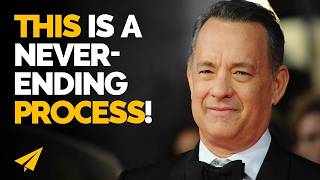
In this YouTube interview hosted by Evan Carmichael, the conversation weaves together Tom Hanks' reflections on periodically reassessing one’s life and work, Alex’s personal story of multiple career pivots, and Evan’s insights on how entrepreneurs and creators must continuously align their businesses with their evolving selves. Tom Hanks describes a five‑year cycle of self‑evaluation, noting how his age and experience change the roles he wants to play. Alex recounts moving from security guard to aspiring cop, then to sales and finally to a dance studio (TDS), emphasizing the importance of a personal “compass,” willingness to quit unfulfilling paths, and recognizing signals that it’s time to change. Evan expands on these ideas, warning against letting a business become stale as the founder matures, advocating for constant evaluation, delegating tasks that cause dislike, and taking creative risks (e.g., choosing a new studio floor). The discussion also introduces a “lighthouse in the fog” metaphor for spotting warning signs, and ends with a call to viewers to reflect on their own need for revaluation.
Chapters
Good morning, Believe Nation! Today's message is—
Right, you see, it's been a while. It's my turn, right?
Good morning, Believe Nation! Today's message is—
Examine where you are. Over to you, Tom Hanks.
In the beginning, I was just thrilled to know that someone was asking me to be in a movie, and I thought that was all that was required. And as long as they keep asking, everything will fall into place. And I think I had to become dissatisfied with my own process, you know, 5 or 6 movies in, where I was feeling that I was not bringing I was not bringing to the work anything other than that, anything other than that instinct. And that's when I realized that, you know, okay, part of me got older. And I think even if you're as old as 29, you have a different set of chops and perspective. You have a different, believe it or not, wisdom than you did when you were 24. And I think about every 5 years, I went through some sort of process of reexamining where I was in life, you know, as a man. As well as an actor, and thinking like, guess what, I'm 36 now and there's a whole world of movies that I can't make anymore because I can no longer— I don't want to play the young man who's trying to figure out life. I want to play a man of bitter compromise. I want to play somebody who's been through something. So it's a never-ending process, I think, of examining where you are in life as a human being and then transposing that so it's going to be reflected in your work somehow.
So what do you think?
The only thing I can give example is my own life. I was looking to be a—
wait, how old are you? 29?
I'm 29.
He's talking about 29. That's a good coincidence.
My career change came at about 2— about a year and a half— no, 2 years ago or so. I wanted to be a cop, so I was working as a security guard to gain some experience, and I did it for about a year and a half. And just the nightlife, working on the weekends, missing out on all the salsa parties, not being able to see my friends. Always in jet lag. So I did the swing shift, which meant that I would do 2 days and 2 overnights constantly. So every day was jet lag for me. I'd only get like 4 hours of sleep and then I wake up anxious or uncomfortable, gain a lot of weight, and just— it was not a great experience for me. So I had to reevaluate, uh, my priority, which was hard because I was working 2 years to be a cop already at that point. A lot of investing, uh, into that, doing tests and physicals and all that kind of stuff, my resume, getting everything ready. I I looked at where I wanted to be in 5 or 10 years, and I knew I wanted a family. I knew that I wanted to have kids, to be there for them on the weekends, and make sure it was just a regular schedule, 9 to 5, to some extent, right? So I did a whole career change there, started from scratch, went into sales, and then reevaluated myself. An opportunity came with TDS, and then I looked at myself and what really makes me happy, and then took another plunge. So I honestly don't know where I'll be in 5 years. I knew in all these jobs, I knew what was important to me. So that was sort of my compass. There's always room to change direction. And, you know, the fear of I've invested this amount of money or this amount of studying or whatever it is, right, into this, I can't quit. That's not true. If you feel that it's really not right for you, that it's not going to make you happy in the long term, then reevaluate and look for your passions.
I like it. So for context, I hired Alex, I headhunted him away from a job that he had to to run TDS. So the hardcore fans know who he is, and new people are like, "Oh, who's this guy?" So, you know, there you go. I think for me, people make the mistake of not continuing to change the things that they're working on as they grow as a human being. And you see it a lot with entrepreneurs, where they'll start a business and they'll be really excited by it, and then their own interests and passions will change, but their business doesn't change with them. And then going to work becomes work, it becomes a job, it becomes less interesting. The thing that you were all excited about leaving you're working for the man to start your own company by, now you're working for the man again. You've boxed yourself in, and entrepreneurs hate being boxed in. And it's one of the biggest mistakes that as you grow as a human being, because you're going to grow, like, you know, Alex is 29, Tom Hanks talks about being 29, you compare yourself to where you were 5 years ago or 10 years ago, your interests have changed. You've grown, you've matured, you've learned new things. Maybe you don't want to be out partying as much, or like whatever, like your interests have changed. And so that has to be reflected in the work that you do. Otherwise you'll stop being creative and you'll start hating your job or hating your business. And so I think instead of only waiting till you're super frustrated and waiting to like, I can't stand this thing anymore, 5 years later, you've been doing it already, doing it for 2 or 3 years that like is absolute hell. And then only to the point where like, I can't take it anymore, I'm going to quit. Where a lot of people get that with their jobs or business. Constantly evaluating, constantly trying new things, constantly trying to evolve the work that you're doing to be a reflection of you. Where my business has always been a reflection of what I'm interested in. Even the YouTube channel, it's only been around for 5 or 6 years, I forget, I can go back. The content that I've talked about has changed over the years. The message is still the same about believe and trying to help and inspire entrepreneurs, but how I've executed it has changed. Like the Top 10 series is a relatively new thing that didn't exist on the channel multiple years ago. I still like it. I'm still learning from it. If I stop liking the top 10s and doing the work, then I'll stop putting them out there. We won't have them anymore on the channel, but I'll be evolving into something new. And that's part of the drive, is I like being creative, and you guys like being creative as well. And if you can't be creative anymore because, you know, the success you've had has now changed to prevent you from going forward, then that's when you start to struggle. You start to get bored, you start looking for other things. And so I would just encourage you to do that constantly, to constantly think about how you can make things better. If you have a creative idea, find a small way to get started on it and not get to the point where you hate your life and you hate your business and you hate your job, and then you're forced to make a change.
We don't normally do this, so I'm going to throw out something different. I want to ask you something maybe the viewers will be interested in too. I like it. When you say that, you know, you need to constantly evaluate yourself, are there certain things you can pay attention to in your life that you think are sort of signs that you should be evaluating? It would be hard for me to every morning to wake up and every morning reassess because then you're not really giving opportunity for the things you're trying that are new to really grow to fruition, right? They sort of, they say about fitness, right? You should give it a certain amount of time to do a certain fitness program, see if it's actually working. So is there any advice you can give or something that they can, that people can work like a sort of a lighthouse, right? In the in mist and fog, what do you look for?
I like that, the lighthouse in the fog. Yeah, two things. One is on the negative side, one's on the positive side. The negative is if I find myself doing something that I hate doing constantly, I need to find a way to change it. Either I need to stop doing it completely or I need to give it to somebody else to do. Like, is it important enough to my business that it has to happen? If so, let me bring on somebody who likes that work and I'm going to stop doing it. So for TDS, booking the meetings, you know, managing my calendar. I was, I was bad at it. It wasn't happening. I wasn't going to the classes. I wasn't meeting with as many people as I needed to. And it was important for the business that it happen. And so I gave it to my assistant who manages all of my Evan Carmichael stuff. I also gave her now my Toronto Dance Salsa stuff. And it's great. Like it's in my calendar. I could set her the rules. It's happening now, but I didn't want to do it myself. And every time I looked at it, it just, I just didn't want to do it, but it had to get done. Sometimes I'll just drop projects because I look at the work like, I don't want to do that work, that sucks, I don't want to do that. And so I drop it, and it may be something that is profitable that you can give to somebody else to run, or maybe it's not profitable, and then you just drop and move on to something else, like the sunk cost idea of, hey, I've invested all this time and money into becoming a cop, and you know what, I don't like this anymore, I'm gonna drop it and move on. Every time I'm feeling like I hate this work that I'm doing, even if it's, even if it's like a 10-minute span in the day, if that's consistently happening, then I will find ways to eliminate that. The other side is the positive where I want to do something, I'm excited by something, I have this idea to test something, and you know I try. He gets to live with it. I have crazy ideas that I want to go and try, and sometimes they work and sometimes they don't, And more often than not, it's usually pretty good, but sometimes they don't work. But when I get an idea that I want to try, I go out and I just start doing it. I find a way to make it happen, even on a small scale, to see if I like it, if I'm excited by it, if it makes me come alive, if I want to keep doing it. I would default to taking the risk and trying versus taking the safe path. As an example, TDS, we just changed our floors. And we brought in these new floors that I would never have picked these floors. They're way brighter than I thought. I wanted a dark wood and these are way brighter than I ever would have thought I ever would have picked. I looked at the sample, I'm like, I can't pick this. This is ugly. Like, I would never pick this. And then I walked into a store and I saw it on the floor. I'm like, whoa, man, that's a nice looking floor. I gotta get that floor. And then we went and I brought Alex and who else? It was Nina, my sister, and another instructor. And we had them dance on the floor. And there's all of the, all the risks, like, oh, it's really different than what we have. I don't know if it's gonna work. And all of that, and same, the same thing is going through my head too. Like, it's very different than what we have. It may not work. But I remember the feeling of loving it when I walked in. It's the only floor that I walked in of any of the places that we visited, and I loved it. And so you know what? I have to do it. Even if it's a fail, even if we have to rip up the floor, and that's like a you know, $5,000, $6,000 mistake that I made, I've gotta do it, I have to do it, I have to do it. And so when I get those creative ideas, I just start taking immediate action on it, even though it may not make sense for the people around me, as sometimes you witness and experience. So both of those, like, that's the constant evaluation. If there's something you're doing that you don't like, then find a way to stop doing it, whether delegating it or just stopping it. And if there's something that you want to start doing, then find a way to start doing it consistently. Even like taking you away from your job was a risk, right? Like there were safer options that I could have gone with for the skill set that we needed for the like admin work to run the school, which wasn't something that you're like the best at. Yeah, but I didn't want just an admin person. I wanted somebody who would grow and build the company. So Alex was a risk. Like we had a lot of conversations till late at night and I needed to at least know that I gave my best effort to make it work. And if you said no, whatever, awesome, we'll move on to someone else. But you said yes. It might have sunk the company. It didn't. It didn't. We're doing it.
We're doing it.
But like that risk, like that knowing I don't want to take always the safe path. If there's something that I'm curious about, I have to figure out a way to at least try to make it happen at the risk of losing something, because I don't wanna always just play the safe path and then wonder, what if? Like, what if I talked to Alex, and what if I gave him this, or what if, right? And I'm stuck with somebody who's just doing an okay job. So that's it.
No, awesome, thank you. So the question of the day today is, are you finding that you need to revalue yourself? And if so, where are you at right now?
Leave it in the comments below, we will join in the discussion. Finally, I want to give a quick shout out to Carrie Lee from carrieleeart.com. Kerry, thank you so much for buying a copy of my book. It really means a lot to me. For those of you watching, if you want a chance at a shoutout in a future episode of one of these videos, make sure to pick up a copy of the book. It's pretty good.
It is.
I've read it already.
Part of it. You haven't given me the— Are you gonna give me free copy?
No.
Uh-huh.
You gotta buy your copy.
I'm an employee, I should—
You gotta buy your copy. Pick up a copy, email in your receipt so we can keep track and give you the bonuses. Thank you guys so much for watching. Have an amazing day. Continue to believe, or whatever your one word is, and we'll see you again tomorrow morning for another shot of espresso.
More from Evan




How the Biggest Mistake in History Created A Trillion-Dollar Empire | Sergey Brin



9 Machiavelli Principles That Force People To Respect You | Machiavellian Philosophy



The First 10 Words That Instantly Ruin A Sales Conversation | Vanessa Van Edwards