Unlock Your Entrepreneurial Edge | Tristan Walker’s Top 10 Rules for Success
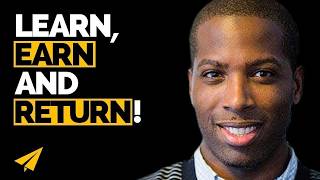
In this interview‑style video, entrepreneur Tristan Walker shares the principles that have guided his journey from a Wall Street oil trader to the founder and CEO of Walker & Company Brands, the creator of the Bevel line of grooming products for people of color. Walker recounts pivotal lessons he learned from mentors such as Tyler Perry and Bill Leighton, outlines a three‑phase life framework (learn‑earn‑return), and stresses the power of authenticity, comparative advantage, and relentless curiosity (the "sixth why"). He explains how he built a company culture rooted in respect, courage, wellness, and loyalty, and how he balances empathy with harsh realism as a CEO. Walker also discusses the importance of spotting personal passions through everyday product use, leveraging hustle cultivated in his upbringing, and managing personal and corporate brand as a perception shaped by others. Throughout, he offers concrete advice for aspiring entrepreneurs on identifying underserved markets, crafting a consistent brand narrative, and taking control of one’s public persona in the digital age.
Chapters
I kind of stopped the interview because I had to soak that up for a little bit.
And he said, Tristan, I figured out life. Sit down, I'm going to tell you how to live your life.
You have no idea how much of a comparative advantage that is relative to anyone else.
I hate Wall Street. I want to get as far away from this place literally and figuratively as possible.
But you really have to like entrench it into the culture of the organization. This is the way it happens, right? Yeah. This is real life.
Number one, it allows you to identify things before anybody else does.
So now in Silicon Valley, like literally everything just moves way slower.
But I wasn't going to be the best person to do it.
Brand is not It's what they say it is.
He's the founder and CEO of Walker Company Brands. He started off as a volunteer at Foursquare and was its director of business development 2 years later. He's been named to Ebony magazine's 100 Most Powerful People list. He's Tristan Walker, and here are his top 10 rules for success.
First bit of advice came from Tyler Perry, the famous director, kind of movie producer, that sort of thing, right? About 2 years ago I had the good fortune to interview him one-on-one in 3 different cities around the country where he got to speak about his entrepreneurial story to a bunch of small business owners around the country. Tyler Perry is like he did his thing, he was homeless for a while, right, now he is like the highest paid dude in Hollywood, right? Really fascinating story. So I'm interviewing him one-on-one, start the Q&A, one woman raises her hand, stands up, He says, Mr. Perry, we have to always go through these different trials and tribulations as entrepreneurs, like what keeps you going, right? How do you get back up and just go, right? He said the most profound thing that I had ever heard. He said the minute he realized that the trials that you go through, right, and the blessings you receive are the exact same thing, like that freed him as an entrepreneur. Right, like just think about that for a second. Like it— I kind of stopped the interview because I had to soak that up for a little bit. Right, like every single kind of trial, tribulation, all that stuff that you go through, it's just a lesson, right? And that lesson is just an inherent blessing, right? So as entrepreneurs, like this entrepreneur thing is hard, right? Like at times it's amazing, at times it sucks, right? And I've been very blessed and fortunate to have really good opportunities, but it's very, very hard, right? And you don't want to stress yourself out unnecessarily and what that lesson taught me was that I didn't have to be as stressed out. Like I'm going to go through these issues, they're just lessons, let me treat that as a blessing, we're going to move. And a lot of folks look at me when I start this company and they're like Tristan, you're way more calm than you should be. And it's like yeah, because I fundamentally understand this lesson that I learned.
When I was at Lehman Brothers and working in finance, there was a gentleman, his name was Bill Leighton. and he was a managing director, African American, most senior guy at the firm, and called me in his office one day and he said, Tristan, I figured out life. Sit down, I'm gonna tell you how to live your life. So I'm like, all right, tell me, Bill. And he said, Tristan, you wanna spend the first third of your life learning, right? The second third of your life earning, and the last third returning, right? Now here's a guy, he left Yale when he was 20, he started working on Wall Street the day he turned 40, He quit. He could have been way more successful, acquired way more wealth, but now he's dedicating his entire life to philanthropic efforts. And the reason he kind of ordered it in that way, he said too many people try and put the returning thing before the earning thing, which prevents them from scaling their returning efforts. So when I think about my career, you know, I say, I talk about wealth a little bit facetiously, but, you know, it's a means to that very end, right? So I think I've done the learning thing and I continue to. How do I shorten the earning thing to maximize my ability to return and give back to the community?
If I was going to dedicate the next 10+ years of my life to anything, I wanted to fundamentally feel like I was the best person in the world to solve that problem. When you look at a lot of entrepreneurs that either you're inspired by, certainly for me, they had this one thing about them that kind of carried with each one. They had this unique authenticity to the thing that they were trying to build. And one thing that you'll realize if any of you kind of want to become entrepreneurs, like you have no idea how much of a comparative advantage that is relative to anyone else, right? There are a lot of entrepreneurs that are entrepreneurs for the sake of being entrepreneurs, right? But once you have that authenticity, you can't— it's very, very hard to lose, right?
After I left university, I was working on Wall Street. I was an oil trader on Wall Street for 2 years, hated it. It was the worst experience of my entire life. I was a victim of bad culture and knew I wanted to be a creator of a great one. And when I was growing up, I realized I had one goal in life, right? And that was to get as wealthy as possible as quickly as possible. And I realized that there are three ways.
I like that you're honest about it.
I keep it very real about that. There are three ways to do it. The first was to be an actor or an athlete. That didn't work out for me at all. The second way was to work on Wall Street. Hated it. And I said, damn, I've already exhausted two of the three. The last one was entrepreneurship. And the day that I came to that realization, I said, you know what? I hate Wall Street. I want to get as far away from this place literally and figuratively as possible. There's a school called Stanford. I think it's well known for entrepreneurship. I didn't really know what that meant. Let me apply. And fortunately I got in. And it wasn't until literally I got out in August of 2008 that I saw other 24-year-olds not only making millions of dollars, but fundamentally changing the world. And I knew I wanted to be a part of that, and kind of the rest is history at that point.
So how does the— how do I ensure, at least as a company kind of grows and scales, that the vision is kind of passed on for kind of new employees? That's right? So it also starts with values we have for the organization, right? So we say, here are things that we all agree are important, right? We've got to be inspired by our employees, we've got to have respect for each other, we've got to have the courage to do daring things, right? We've got to practice good judgment, like wellness is an important thing and loyalty, right? Now a lot of people always talk about all these values that are in companies and they feel fluffy and all that stuff, right? But you really have to entrench it into the culture of the organization. That's how we recruit, right? So when we actually recruit a candidate, we will kind of base our judgment on that candidate based on those values, right? Every single new employee that comes in, they're going to have to learn those values. That's just like one of the very many types of ways that we do it, but you have to put it in the processes of how the organization operates. The hardest job that I have as CEO is blending or finding the right balance between empathy and realism. And I guess what I mean by that is, you know, I have a few or a bunch of employees who work for me who haven't been at startups this early, you know, don't necessarily kind of understand things break all the time and that sort of thing, but you have to still be empathetic about it because you don't want them to give up, but you have to kind of offer a harsh dose of realism, like, This is the way it happens, right? Like, this is real life. So that's something that I've never had to really balance before, because I was just playing business, right? Now I'm playing with folks' livelihood, their children's health insurance, right? You know, I have to think about things that I would've never thought. So this is the hardest job I've ever had in my entire life, but the most rewarding. And one thing that I tell a lot of folks who come to me and ask me these questions, right, like, how do I know which company I wanna work for, or, you know, how do I know what startup to create? I just tell them like look at their phones, right? And you'd be amazed by even on that like first page of your phone, the types of things that you use that other people do not. And you start to get a very clear picture about like what you're most passionate about and what you have a view on that other people do not, right? And the reason why that's so important is because number one, it allows you to identify things before anybody else does. Which allows you to be introduced to those companies at times when no one else is trying to compete for those same roles, right? And I've been very, very lucky to be able to find those things as a result of that. So think about things you already use and the things that actually make your life better. Do you feel like growing up in projects gave you a certain edge as an entrepreneur others don't have? Oh, yeah, yeah, especially in Silicon Valley. I feel like— folks just don't have as much hustle as I kind of was raised with. You know, when I moved out there for the first time, it just felt like everything was moving way slower, right?
And I think, you know, the way that I articulated it, once I got to business school, someone told me this that really stuck with me for a long time.
He said, Tristan, while a lot of your classmates are willing to ask why 5 times, you're always willing to ask it 6 times, right? And that hustle was really kind of ingrained in me from the very beginning. So now in Silicon Valley, like, literally everything just moves way slower, and I don't know what it is, but I think it was an important part of, like, who I am now as an entrepreneur, for sure.
How did you get to—
how did you come to Walker Company and the Bevel line of products?
Yeah, so when I left Foursquare, I joined Andreessen Horowitz as an entrepreneur-in-residence there. You know, Ben Horowitz at the time said, come spend 9 months with us to figure out what you want to do. I spent all 9 months there, and I spent the first 7 months they're wasting their time, right? Just chasing things that I wasn't uniquely qualified to do. They were ambitious, but I wasn't gonna be the best person to do it. And I said, if I'm gonna dedicate the next 20-plus years of my life to anything, I wanted to fundamentally feel like I was the best person in the world to solve said problem. And it hit me 7 months later. And Ben would always, from the kind of Peter Thiel school of thought, he'd always encourage me to think of the one thing that you believe that few people in the world believe.
And I had two.
The first really pertaining to culture, right? I had this fundamental belief that all global culture is led by American culture, which is led by Black culture in the US. If you think about food and music and dance, etc. And a big frustration of mine is my living in the earliest adopting region in the world, and it's knowing very little about the earliest adopting culture. That discord makes zero sense to me. And then the second view of the world that I had pertained to health and beauty consumer packaged goods companies. I think they're all doomed for all types of business model and structural reasons. But, you know, I always talk about my experience of going to these retailers, going to some shelf that has some dirty, outdated packaging that hasn't been updated for decades, right? And it's a second-class citizen experience that this community shouldn't have, right? And you loop in Latino and Asian folks as well, you know, we're the majority of the country in 20, 30 years, let alone the majority of the world, and we still have the second-class citizen experience. So I felt that there was an amazing opportunity to put those two views of the world together to build a very special health and beauty products company focused uniquely on the needs of people of color and leverage everything that I've learned in Silicon Valley to really reimagine the build-out of kind of next-generation consumer packaged goods company.
I got some advice a couple years ago from a marketing executive, and it stuck with me for a long time. And this kind of relates to personal brand or, you know, your company or whatever. He said, Tristan, brand is not what you say it is, it's what they say it is, right? And the minute you realize that, you start to really understand the importance of the thing that you're trying to build, right? When it comes to like personal brand, like whether it be on Twitter, Facebook, all that stuff, like I'm pretty ridiculous. If you're following me on all these services, like I apologize because I'm pretty heavy on every single one of them, but it's only because I care so much about my own personal story and no one else should be telling my story. And the thing that a lot of folks really don't get about brand is that sometimes it's okay for people to be a jerk. If you're consistently a jerk, that's cool, right? If you're consistently nice, that's cool. Where the problems happen is when you kind of break from that consistency, right? So as long as you understand that like brand is what you— like what other people say it is, That allows you to kind of manage your own, your own, right? And like that has stuck with me for a really, really long time and I think has benefited not only just me but my company and every company that I kind of create from here on.
I'd love to drill down on that. I think that's really interesting, especially we've got a room full of lots of young people who probably have a primordial brand at this point, right? At what age should people start thinking about their brand? Is this something, you know, when you're a little kid you start thinking about this? Is it when you get in the professional world? At what point and And how do you really start crafting it?
Well, I mean it's become different for me, right, because I mean things like Twitter didn't exist 10 years ago, right? Now your brand is public, right? Everyone is talking about it and you might think that people aren't talking about you but they probably are, right? Like there are haters everywhere, right? People will care enough about other people to be able to like try and bring them down, right? So as long as And maybe that's an inherent cynicism, right, about everyone, but I believe it to be true. So now we're in a world where kind of your life is public. You better take control of it before someone else does, right? So, you know, as early as you have the ability to control your own personal brand publicly online, I think you should be doing it.
Thank you so much for watching. I made this video because Mike P asked me to. So if there's a famous entrepreneur that you want me to profile next, Leave it in the comments below and I'll see what I can do. I'd also love to know which of Tristan Walker's top 10 rules hit you the hardest, meant the most to you. Leave it in the comments and I'll join the discussion. Thank you so much for watching. Continue to believe and I'll see you soon.
More from Evan




How the Biggest Mistake in History Created A Trillion-Dollar Empire | Sergey Brin



9 Machiavelli Principles That Force People To Respect You | Machiavellian Philosophy



The First 10 Words That Instantly Ruin A Sales Conversation | Vanessa Van Edwards