Unlock Your PASSION | The BIGGEST LESSON Jamie Oliver Learned About Success
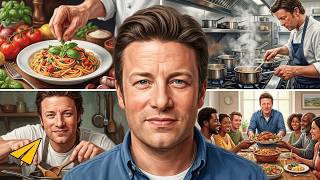
The video, narrated by Evan Carmichael, presents Jamie Oliver’s personal "top 10" rules for success, interwoven with clips of Oliver discussing his career, philosophy, and initiatives. Each rule is illustrated with Oliver’s own anecdotes, ranging from his unconventional approach on The Naked Chef to his belief in competition, entrepreneurial experimentation, and the importance of passion. Oliver emphasizes proving skeptics wrong through socially‑impactful projects like the Fifteen restaurant, investing in staff, and maintaining an obsession with empowering people to cook. He advises against chasing money, stresses adequate sleep for health, and celebrates the joy of baking. The segment concludes with a bonus clip where Oliver advocates for mandatory food education in schools, critiquing sugary milk and urging a movement to teach children about nutrition. Throughout, Evan adds motivational prompts encouraging viewers to believe in themselves.
Chapters
Competition is good. It keeps you awake at night. It makes you think.
You know, I'm quite experimental, and I'm not really wedded to cash.
It doesn't really—
it's not a motivator for me, honestly.
I always say I wanted to do it, and I could do it, so I did do it, and no one was going to stop me.
Need motivation? Watch a top 10 with Believe Nation. What's up, it's Evan.
My one word is believe, and I believe in you. I believe you have an amazing gift inside you that I want to see explode out onto the world.
So let's get your motivation to a 10 and get you believing in you.
Grab a snack and chew on today's lessons from a man who went from working in his parents' pub to becoming one of the best-known celebrity chefs and restaurateurs. He's Jamie Oliver, and here's my take on his top 10 rules of success.
Enjoy!
All right, let's kick things off with rule number 1: do things your way.
You were at the sort of the first step of a really big trend of cooking shows. I mean, now of course there's a million different types of cooking shows. Why did it work? What is it about that format that you helped revolutionize that works?
Well, I think I was, I was very naive and I was very accommodating, but I was also incredibly single-minded. So I'm not doing it in a studio. No, no, no, no, I'm not wearing that. I'm wearing my own clothes. No, no, if you're going to cut it to music, it's got to be music from my record collection. I'm sorry, you're not going to cut it to that terrible library music from the BBC. No, no, no, no, no way. No, no, I'm not cooking that. I don't cook that at home. I cook this at home. No, no, I don't plate up. I just put it in the middle of the table. So there's all these things that I was very particular about. And I think if you add them all up, and even to the point where, because I genuinely was sort of nervous to look down the camera, I could never look down the camera. So I looked off the camera. So my producer Pat, it was a conversation. And certainly in Britain at the time, no one had ever made a cooking show like that.
It was more observational documentary.
And the camera was kind of trying to keep up with me.
So it was quite free-flowing.
So you add it all up, and that was The Naked Chef. And of course, now it's not unconventional. But back then, it was like super fresh.
Rule number 2 is be passionate.
You know, when you look at what's being done on YouTube and everything else, it's about the love and the passion.
I think you can get away with murder if you've got a quirk or if you're kind kind of single-minded, you know, there's loads of crap stuff that's single-minded and it does well because it's single-minded. But I think, you know, regardless of all the clever or weird bits and pieces about things that work, I think good old-fashioned quality, values, and authenticity and passion, you know, just drip with passion. I think you can't mess with that. That's like, that's the treacle, that's the real deal. And I think, I think looking back, you know, to be so young and so excited about food was quite rare, or seemingly it hadn't really been expressed on British TV before.
Rule number 3 is love healthy competition.
You're going to be neighbors with Gordon Ramsay. How do you feel about that?
I think it's great, brilliant. I mean, I've, you know, I've always got on with him. I don't see him very often. He's in the States a lot, and, you know, but when I do see him, we have a good laugh, and, you know, we cook in very different ways. We have very different customers and we have very different audiences. So I think it's brilliant. If anything, he's going to bring more people here, which is good for me really. But we've got quite a lot of good operators within a square 400 meters here. And you know, I've been doing it, I grew up in the business. It's competition, it's good. It keeps you awake at night. It makes you think. That's a good thing. And also there's plenty of room for everyone, you know. Whether it's great burgers down there or, you know, Italian or pizzas or— there's quite a lot going on. It's been a big thing for me. I grew up in a family business, so, you know, when your brother down the road had equipment that went pear-shaped, you lent him yours. You know, I'd never really understood the very London attitude towards chefs and the bitterness and the hatred. But, and then for Adam, he don't even recognize it because it's not like that out there.
It's a fraternity.
So, you know, that's why if Gordon comes next door, happy days, God bless him, you know, and if his guys need anything, I'm here, and hopefully vice versa. If they run out of ice, I can go and get some cubes.
Rule number 4 is have an entrepreneurial mindset.
You have enormous wealth. You have an enormous empire and reach. You keep expanding. You're opening restaurants in Canada, a new show that's airing here. What motivates you? When is enough enough?
Because I'm quite sort of entrepreneurial or don't mind having a go, you know, I'm quite experimental and I'm not really wedded to cash.
It doesn't really—
it's not a motivator for me, honestly.
I don't—
I mean, absolutely factually, I have less money in my bank account today than I would have had 10 years ago, you know. I mean, everything that I've got is out in restaurants and people, and I generally, you know, come up with some good stuff. But we, you know, we have stuff that doesn't work as well. I mean, if you're going to pioneer or test things, Often you're kind of making all the mistakes for others. So I think, yeah, often people tell me how massive my empire is. And I kind of think, well, if you look at my bank account, it ain't that flush. But I do like—
the world of food, I think, is really exciting.
And I do like to have a go.
And I do think that whatever I do, trying to raise the bar is absolutely my job.
But, you know, it still makes me get out of bed in the morning and I'm excited. So while that sort of still happens, I mean, I'd like to think that I kind of narrow but widen what I do, if that makes any sense at all. I'm going to do less things, but I want to do them better and bigger and badder.
Rule number 5: Prove people wrong.
What I decided to do was create a restaurant called Fifteen that took unemployed kids, homeless kids, kids from prison, and create a restaurant that was a legit top-end restaurant that all the profits would train those kids. And we made a documentary about it. And the documentary changed everything in British sort of— the stuff, you know, about kids and that sort of— that genre of sort of observational documentary.
They loved it.
It was like rated like through the roof. Let's be really honest, I didn't do it because I was a really nice, kind person. You know, I did it 'cause I was a young, romantic, cocky kid with the idea. You know, I always say I wanted to do it and I could do it, so I did do it.
Mm-hmm.
And no one was gonna stop me. My dad told me not to do it. He really didn't believe it. He hated the idea. He said, "You can't make a silk purse out of a sow's ear." You know, basically saying, you know, once— You know, if you're fucked, that's it. You know, don't mess with it. It's done. And I deeply disagreed. And so there was a little bit of rebellion there, like someone, people telling you you couldn't do it, or it was uncomfortable because the thing, the thing is, because I, I, because I was wild in the sense of just doing it like single-mindedly, there was about 3 weeks when officially I was bankrupt, but we hadn't quite— luckily I got another royalty check from, from a book which just saved my ass at the last minute. So I mean, it was exciting, it was wild, it was It was romantic, it was risky, it was stupid, and it was the best thing I ever did.
Rule number 6 is invest in people.
But how do you run a successful business empire when your schedule is just so hectic?
I don't really look up to anyone for inspiration or guidance on my job. I don't believe there's anyone in the country that has to do the shit I have to do and the scope of things that I have to do. My lifestyle is like wrestling an octopus, you know, and the only way I can be good, proficient, and profitable at doing this shit that I do is by being true to my word, knowing what I'm talking about, and most importantly, working with people and gathering people that agree in the same stuff that I do. The only reason I can do what I do is because of 12 years of gathering staff. I don't lose many staff. We don't have many people leave my organization. I'm no superstar. I'm human, and I only say my how many hours in a day. But my only advice is invest in people, treat them right, pay them right, incentivize them right, give them clear goals, and then you might have a go at, you know, doing what you want, which is what I try to do. But it is complicated. It's all about people.
Rule number 7: Find your obsession.
Personally, I think my strengths is just a complete obsession to any expression of empowering people and teaching people to cook. It's that simple. Whether it's a book, the paper it's on, the photographer we use, sitting next to— you know, 15 years later, the effort on design, how we lay out a page to try and empower Billy from Bogner to be able to achieve something that's really affordable that a king would be happy to eat. Ultimately, that is what it comes down to for me.
Rule number 8, my personal favorite: don't chase money.
I think the plan between me and my dad was he had a bit of money saved. I would go and like to London, learn skills, give it 4 or 5 years, then I would come up, I'd put my savings and his savings together, we'd get a bank loan and we'd get a little pub in the country, maybe 65 covers, and kind of do my version of what dad did. And that was That was honestly, that was the total plan. Signed, sealed, delivered. That was it. And I was really excited for it. And the concept of money, I mean, when you become a chef, you do not become a chef to be rich.
You don't.
No, I know.
There's no money until you're a head chef. Right. And even then, half the chefs fail. No, no. Honestly, there's no one in technology that makes less money. I mean, even head chefs compared to technology is nothing. So it's, you don't do it for money. So you do it 'cause you love it or because you're lost. So I was just very, very happy with the dream of a pub in the country, probably back home near dad, but not too close so I'd take his customers. You know, he was pretty clear about that.
Rule number 9, get enough sleep.
The thing I treat like a job now is not my job.
I love my job. It's a joy and a hobby.
So what I treat as a job is sleep and breakfast. And that's just my thing, right? And why is that important? Okay, so I wasn't sleeping right, and as an adult with modern technology and being responsible, like, I was never— I always wanted to be personally involved in my stuff, so I was not stopping, and there was always an excuse to not go to bed. And even though you're a grown man, just get to bleeding bed. I spend all night saying it to the kids, so what about you? But then I went and met a sleep scientist and started getting into it, and you start realizing that sleep sleep has the most powerful effect on all of your body, the way you metabolize food, your energy, the way you fight disease, your skin, your energy, and the rhythms of those. So it's quality, not quantity.
No less than 6, no more than 9.
And rule number 10, the last one before the bonus clip, is bake it off.
Bake it, cake, cake, cake, cake, cake. My kitchen's a steak, steak, steak, steak, steak.
Bake it off, bake it off. Woo! Woo! Come on, baby. Come on. That's it. Come down to my level. OK. Baking's fun.
I'm working this loofah.
Oh.
Yay!
Woo!
This is much more fun. Oh! Oh! Bake it off. Yeah! How did you do that? I baked it off, Jim.
It's very nice though. Lovely pipework and decorations.
Thank you.
Nice to meet you, Jeremy.
Now I've got a special Jamie Oliver bonus clip for you, but before that, the question of the day is around rule number 9: get enough sleep.
I want to know how much sleep do you get on an average night during the week? Leave it down in the comments below, really curious to find out.
Thank you guys so much for watching.
I believe in you. I hope you continue to believe in yourself and whatever your one word is. Much love, I'll see you soon, and enjoy the bonus clip.
We're not teaching our kids. There's no statutory right to teach kids about food, elementary or secondary school, okay? We don't teach kids about food, right? This is a little clip from an elementary school, which is very common. Who knows what this is? Potato? So you think these are potatoes?
Do you know what that is?
Do you know what that is?
Broccoli.
What about this? A good old friend. Do you know what this is, honey?
No.
What do you think it is? Onion?
No.
Immediately you get a really clear sense of do the kids know anything about where food comes from.
Who knows what that is?
Uh, pear.
What do you think this is? I don't know.
If the kids don't know what stuff is, then they will never eat it. Normal.
England and America. England and America. Guess what fixed that? Guess what fixed that? Two 1-hour sessions. We've got to start teaching our kids about food in schools, period. I want to go— I want to tell you about something. I want to tell you about something that kind of, it kind of epitomizes epitomizes the trouble that we're in, guys, okay? I want to talk about something so basic as milk. Every kid has the right to milk at school. Your kids will be having milk at school, breakfast and lunch, right? They'll be having 2 bottles, okay? And most kids do. But milk ain't good enough anymore because someone at the milk board, right? And don't get me wrong, I support milk, but someone at the milk board probably paid a lot of money for some geezer to work out that if you put loads loads of flavourings and colourings and sugar in milk, right, more kids will drink it.
Yeah.
And obviously, you know, now that's gonna catch on, the apple board is gonna work out that if they make toffee apples, they'll eat more apples as well. Do you know what I mean? For me, there ain't no need to flavour the milk, okay? There's sugar in everything. I know the ins and outs of those ingredients. It's in everything. Even the milk hasn't escaped the kind of of modern-day problems. There's our milk, there's our carton. In that is nearly as much sugar as one of your favorite cans of fizzy pop, and they're having 2 a day. So let me just show you. We've got one kid here having, you know, 8 tablespoons of sugar a day. You know, there's your week, there's your month, And I took the liberty of putting in just the 5 years of elementary school sugar, just from milk. Now, I don't know about you guys, but judging the circumstances, right, any judge in the whole world would look at the statistics and the evidence, and they would find any government of old guilty of child abuse. That's my belief. My wish is for you to help a strong, sustainable movement to educate every child about food, to inspire families to cook again, and to empower people everywhere to fight obesity.
Raise your standard.
Apple, at the core, its core value is that we believe that people with passion can change the world for the better.
Not one drop of my self-worth depends on your acceptance of me. I don't ever give up. I'd have to be dead or completely incapacitated.
Hey, Believe Nation, if you want to see my all-time favorite top 10 rules of success, I have a very special special secret video for you. These are the individual clips that I have personally learned the most from and applied to my life and my business. Check the link in the description for details.
More from Evan




How the Biggest Mistake in History Created A Trillion-Dollar Empire | Sergey Brin



9 Machiavelli Principles That Force People To Respect You | Machiavellian Philosophy



The First 10 Words That Instantly Ruin A Sales Conversation | Vanessa Van Edwards