Warren Buffett Reveals the Worst Thing To Do with Your Money
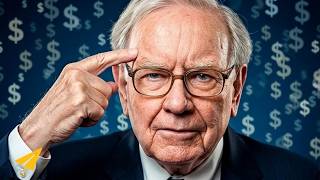
In this interview compiled by Evan Carmichael, Warren Buffett shares his perspective on the worst investment he ever made, emphasizing that missed opportunities (mistakes of omission) are more costly than outright losses. He stresses the importance of defining and staying within one's circle of competence, understanding the economics of a business rather than chasing trends, and making investment decisions independently—often by looking in the mirror and consulting his long‑time partner Charlie Munger. Buffett argues that rationality, temperament, and emotional stability matter far more than raw IQ, and that smart people can still make foolish bets, illustrated by the collapse of Long‑Term Capital Management. He also highlights the value of investing in oneself—through health, communication skills, public speaking, and nurturing relationships (spouse, friends, mentors). Buffett describes his valuation approach as "assigning yourself the right story" for a company, citing the Washington Post purchase as an example. Throughout, he weaves personal anecdotes about painting, running Berkshire, and living a purposeful life. Evan Carmichael frames the conversation as part of a "Top 10 Rules of Success" series, invites viewer engagement, and promotes his own book.
Chapters
Don't sleepwalk through life and don't say it's all going to be great, you know, I'll do this and I'll do that, and you know, I'm just marking time to get to be older. That's— I've told people that's like saving up sex for your old age. I don't have to do, you know, follow what Wall Street is telling me to do next quarter or something like that. So I own the brush, I own the canvas, and the canvas is unlimited. Defining your circle of competence is the most important aspect of investing. Bill says if I'd been born a few thousand years ago, I'd have been some animal's lunch because I'd have gone on saying, well, I allocate cake capital, you know, and the animals say they're the kind that taste the best, you know, and I can't run fast and I can't climb trees.
He's been the chairman and largest shareholder of Berkshire Hathaway since 1970. His success in investing has led to people calling him the Oracle or Sage of Omaha. He's considered to be the most successful investor in the world and is the second wealthiest person in the world with an estimated net worth of $73.9 $1.2 billion. He's Warren Buffett, and here's my take on his top 10 rules of success, volume 2. Rule number 1 is my personal favorite, and make sure to stick around all the way to the end for some special bonus clips. Also, as Warren is talking, if he says something that is really meaningful to you, please leave it in the comments below, put quotes around it so other people can be inspired as well. Enjoy.
I was just wondering, what is— what would you consider to be the worst investment you've ever made? The worst investment I ever made? How long do you have? I've made some very bad ones, but that doesn't really bother me. I, you know, it may bother the shareholders, but that's another question. The, you know, you're gonna make— you're gonna make mistakes in life. I mean, I There's no question about it. You don't want to make them on the big decisions, you know, who you marry and some things like that. So there's no way I'm going to make a lot of business and investment decisions without making some mistakes. I may try to minimize them. I don't dwell on them at all. I don't look back. The biggest mistakes are the ones that actually don't show up. They're the mistakes of omission rather than commission. We've never lost that much money on any one investment. But it's the things that I knew enough to do that I didn't do. We have, we have missed profits of as much as, you know, maybe $10 billion in things that I knew enough to do and I didn't do. Now, the fact I didn't buy Microsoft way back is not a foregone opportunity because I didn't know enough to make that decision. But there have been other investments where I did know enough to make the decision, and for one reason or another, I either didn't do it at all, or I did it on a small scale. I was sucking my thumb when I should have been writing checks, you know, basically. And, you know, those don't show up. There's no place where it shows missed opportunities, but I've missed some big ones. The triumphs in life are partly triumphs because you know that everything isn't going to be a triumph. And I would never get too hung up on mistakes. I know a lot of people that really agonize over them, and it just isn't worth it. I mean, tomorrow's another day, and you live it forward, and just go on to the next thing. I advise students, as much as possible, look for the job that you would take if you didn't need a job. I mean, don't sleepwalk through life and don't, don't say it's all going to be great. You know, I'll do this and I'll do that. And, you know, I'm just marking time to get to be older. That's— I've told people, that's like saving up sex for your old age. I mean, it just is not— it is not a good idea. Yeah. Yeah. What are you urging them to do? I'll explain. Guess what I'm talking about now. It, it, it just— yeah, you really want to be doing what you love doing, and you can't necessarily find it on your first job, right? But don't give up before you find it. What brings you the most satisfaction beyond family? Well, My most greatest satisfaction is just staying in good health. When you're 86, I mean, yeah, you look at this a little differently. So you, you're in good health? Oh yeah, I mean, I enjoy every day. I enjoy it. What is it that you enjoy? Well, I enjoy running Berkshire. I mean, if you get right down into my psyche, I mean, that's what I want to do. Yeah, no, it's, it's, you know, it, it's been my painting for 50-some years. I get to paint what I want. I don't have to, I don't have to do, you know, follow what Wall Street is telling me to do next quarter or something like that. So I own the brush, I own the canvas, and the canvas is unlimited. Now that's a pretty nice game, and I get to do it every day with people I like. I don't have to associate with anyone that causes my stomach to churn. If I were in politics, I'd have to smile a lot at people that I wanna hit. So I've got a good deal, and I'm hanging on to it. I'd like to know, we all consider you to be the financial business experts and we look to you and follow your lead, but when you need advice and feedback about an idea or decision, I'd like to know, who do you go to? Well, usually I look in the mirror, to be perfectly honest. The nature of what I do means I have to think pretty much independently, because if I take a poll, in effect, I'm going to do what everybody else is doing, and I don't think much of that usually in investments. And so I have to have an environment and I have to have a temperament personally that lets me think for myself. And I've got a terrific partner, fellow named Charlie Munger. And you can't find anybody any smarter, any better quality of anything. But we think a lot alike, and we do talk things over occasionally, but we don't talk them over very often because I know how he thinks, he knows how I think. He's taught me a lot, you know, and why should I pay for a phone call if I know what he's going to say? So if I need to get a cabinet around to make decisions or anything like that, I probably shouldn't be running the place. And that doesn't bother me to have the responsibility for it, but I just don't want to put it up to a vote because I've seen too many, particularly in the investment world. As you get larger and larger groups making the decisions, they get more and more homogenized. And I don't think you will ever get brilliant investment decisions out of a large committee. I always look at IQ and talent as sort of representing the horsepower of the motor, but then in terms of the output, the efficiency with which the motor works, that depends on rationality because a lot of people start out with 400 horsepower motors and get 100 horsepower of output, and it's way better to have a 200 horsepower motor and get it all into output. And so why do smart people do things that interfere with really getting the output they're entitled to? And it's It gets into the habits and the character and the temperament, and it really gets into behaving in a rational manner and not getting in your own way. As I say, everybody here has the ability absolutely to do anything I do and much beyond, and some of you will and some of you won't. But the ones that won't, it will be because you get in your own way. It won't be because the world doesn't allow you to. It will be because you don't allow yourself to You will move in the direction of the people that you associate with. So I— it's important to associate with people that are better than yourself. And actually, the most important decision many of you make, not all of you, will be the spouse you choose. And, uh, you really— you want to associate with people who are the kind of person you'd like to be. You'll move in that direction. And the most important person by far in that respect is your spouse. I can't overemphasize how important that is. And you're right, the friends you have, they will form you as you go through life. And make some good friends, keep them for the rest of your life, but have them be people that you admire as well as like. I have an old-fashioned belief that I can only— should expect to make money in things that I understand. And when I say understand, I don't mean understand I don't mean, you know, what the product does or anything like that. I mean understand what the economics of the business are likely to look at— look like 10 years from now or 20 years from now. I know in general what the economics of, say, Wrigley chewing gum will look like 10 years from now. The internet isn't going to change the way people chew gum. It isn't going to change which gum they chew. You know, if you own the chewing gum market, in a big way, and you've got Doublemint and Spearmint and Juicy Fruit, those brands will be there 10 years from now. So I can't pinpoint exactly what the numbers are gonna look like on Wrigley, but I'm not gonna be way off if I try to look forward on something like that. That— evaluating that company is within what I call my circle of competence. I understand what they do, I understand the economics of it, I understand the competitive aspects of the business. So figuring out the economic consequences. TV. I think there's, I don't know, 20, 25 million sets a year sold in the United States. I don't think there's one of them made in the United States anymore. I mean, you'd say TV set manufacturer, what a wonderful business. I mean, everybody— nobody had a TV in 1950 or thereabouts, '45 to '50. Everybody has multiple sets now. Nobody in the United States has made any real money. Making the sets. They're all out of business. You know, the Magnavoxes, the RCAs, all of those companies. Radio was the equivalent of the '20s. There were 500 companies making radios in the 1920s. Again, I don't think there's a US radio manufacturer at the present time. But Coca-Cola, you know, what was it, 1884, Jacobs Pharmacy or whatever, this fellow comes up with something. A lot of copiers over the years, but now you've got a company that is selling roughly 1.1 billion 8-ounce servings of its product— not all Coke, Sprite, and some others— daily throughout the world, 117 years later. So understanding the economic characteristics of a business is different than predicting the fact that an industry is going to do wonderfully. And so when I look at the internet businesses, or I look at tech businesses, I see this as a marvelous thing and I love to play around on the computer and I order my books from Amazon and all kinds of things, but I don't know who's going to win. And unless I know who's going to win, I'm not interested in investing. I'll just play around on the computer. Defining your circle of competence is the most important aspect of investing. It's not how important, how large your circle is. You don't have to be an expert on everything. But knowing where the perimeter of that circle of what you know and what you don't know is and staying inside of it is all important. Tom Watson Sr., who started IBM, said in his book, he said, "I'm no genius," he said, "but I'm smart in spots and I stay around those spots." And, you know, that is the key. So if I understand a few things and I stick in that arena, I'll do okay. And if I don't understand something but I get all excited about it because my neighbors are talking about it and the stocks are going up and everything, they start fooling around someplace else, eventually I'll get cream. And I should. Well, in 1973, the Washington Post company had gone public in 1971, right about the Pentagon Papers type time. But in '73, the Nixon administration was, through Bebe Rebozo, who was a pal of Nixon's, They were challenging the licenses of two of the Florida television stations the Post owned. So the stock went from 37 down to 16. Now at 16, there were about 5 million shares outstanding. So the whole Washington Post Company was selling for $80 million, and that included the newspaper, four big TV stations, Newsweek, you know, and some other assets, and no debt to speak of. So the Washington Post Company, which was intrinsically worth $400 or $500 million, was selling for about $80 million in the market. We bought most of our stock at about the equivalent of $100 million in the market, and it was ridiculous. I mean, you had a business that unquestionably was worth 4 or 5 times what it was selling for, and Nixon wasn't going to put them out of business. When you're doing these analyses then and now, do you have computers that help you, or how did you actually read all— would you just get printed materials, or how did you in those days get the materials to read about the Washington Post, and how do you do it today? Well, The same, pretty much the same way, except there's fewer opportunities now. But, uh, I met Bob Woodward back, and, and, and he'd just come out with All the President's Men, and all of a sudden, as below 30 years of age, he was getting quite wealthy. And we had, we had breakfast or lunch over at the Madison Hotel. They said, what do I do with this money? And I said, I said, investing is just about assigning yourself the right story. I said, imagine Ben Bradley this morning said to you, what is Washington Post Company worth? What would you do if you have to write the story in a month? You'd go out and interview TV brokers and newspaper brokers and the owners, and you'd try and value each asset. I said, that's what I do. I assign myself the right story, and it's nothing more than that. Now, there's some stories I can't write. If you ask me to write a story on, you know, what is some glamorous but nonprofit-making business worth, I don't know how to write that story. But if you ask me to write a story on what is Potomac Electric Power, or something like that. I can write the story, and that's what I'm doing every day. I'm assigning myself a story, and then I go out and— one thing I will tell you that I didn't realize when I was getting out of school is how much the unusual person will jump out at you. I mean, you know, and it isn't because they got 200 IQs or anything like that. It's really because it's just how they behave, you know, what they bring, the energy they bring, the commitment they bring, the quality of how they do things, how they treat the people around them, all kinds of things. But you will jump out much more than you might anticipate. One of the things you would want to be sure to do is, whether you like it or not, get very comfortable— it may take a while— with public speaking, for example. I mean, that's an asset that will last you 50 or 60 years, and it's a liability if you you don't like doing it and are uncomfortable doing it, that also will last you 50 or 60 years, and it's a necessary skill. But a lot of the skills are just human skills. If you get the best out of people around you, that's a rare talent, and it doesn't correlate with IQ. It correlates with an attitude toward the world and toward other people, and it's a talent that if you work at early and you're really conscious about it, you don't have to show up other people. You don't have to be smarter than they are or anything else. You want to bring out the best in them. It will pay huge dividends. I went one-on-one with LeBron a few years ago, and we had a jump ball. And LeBron went up, he got the tip, went the length of the court, dunked it, and just then turned around, and just then I was jumping. I got lucky. Bill says if I'd been born a few thousand years ago, I'd have been some animal's lunch because I'd have going around saying, well, I allocate capital, you know, and the animals say they're the kind that tastes the best, you know, and I can't run fast and I can't climb trees. You don't need a lot of brains in this business. I mean, I've always said if you got an IQ of 160, give away 30 points to somebody else because you don't need it in investments. What you do need is emotional stability. I've got a partner, Charlie Munger, says he admires humility enormously, but he wasn't quite given his fair share. You know, we, we call on people people that have a billion or more, at least Steve tells us they do, and all we ask is 50%. So if, you know, if you can't, if you have trouble living on $500 million, I'm going to put out a book, How to Live on $500 Million. I don't think I can win every game. You know, somebody said, how do you beat Bobby Fischer? You play him any game except chess. So I don't play Bobby Fischer chess. Let's do it here. Now the end is near, and so I face the final curtain. My friends, I'll say it clear, I'll say the final— something or else, of which I'm certain. I've lived a life that's full and traveled each and every highway. And more, much more than this, I did it my way.
Thank you guys so much for watching. I made this video because a lot of you enjoyed the Warren Buffett Top 10 Rules of Success Volume 1. So if there's someone who you really enjoyed the Volume 1 of and you want us to do a Volume 2, let me know, leave in the comments below, and I'll see what I can do. I'd also love to know what did Warren say that had the biggest impact on you? What lesson are you going to take from this and immediately apply it to your life or to your business? Leave it in the comments below. I'm super curious to find out. Finally, I want to give a quick shout out to Riza Pereira. Riza, thank you so much for picking up a copy of my book, Your One Word, and sharing that picture with me. I really, really, really, really appreciate it. So thank you guys again for watching. I believe in you. I hope you continue to believe in yourself and whatever your one word is. Much love. I'll see you soon.
The whole Long-Term Capital Management— I hope most of you are familiar with it— but the whole story is really fascinating because if you take John Merriweather and Eric Rosenfeld, Larry Hillenbrand, Greg Hawkins, Victor Agani, the two Nobel Prize winners, Merton Scholes If you take the 16 of them, they probably have as high an average IQ as any 16 people working together in one business in the country, including at Microsoft or wherever you want to name. So there's an incredible amount of intellect in that room. Now you combine that with the fact that those 16 had had extensive experience in the field they were operating. I mean, this was not a bunch of guys who had never made their money, you know, selling men's clothing and then all of a sudden went into the securities business or anything. They'd had— they'd had in aggregate, the 16, they probably had 350 or 400 years of experience doing exactly what they were doing. And then you throw in the third factor, that most of them had virtually all of their very substantial net worths in the business. So they had their own money up, hundreds and hundreds of millions of dollars of their own money up, super high intellect, working in a field they knew, And essentially they went broke. And that to me is absolutely fascinating. I mean, if I ever write a book, it's going to be called Why Smart People Do Dumb Things. My partner says it should be autobiographical, but this might be an interesting illustration. And these are perfectly decent guys. I respect them and they helped me out when I had problems with Solomon. And so they're not bad people. People at all. But to make money they didn't have and didn't need, they risked what they did have and did need. And that's foolish. That is just plain foolish. I don't make any difference what your IQ is. If you, if you risk something that is important to you for something that is unimportant to you, it just does not make any sense. I don't care whether the odds are 100 to 1 that you succeed or 1,000 to 1 to succeed. If you hand me a gun with 1,000 chambers, 1 million chambers in it, and there's a bullet in one chamber, and you said put it up your temple, how much do you want to be paid to pull it once? I'm not going to pull it. You know, you can name any sum you want, but it doesn't do anything for me on the upside, and I think the downside is fairly clear. So I'm not interested in that kind of a game, and yet people do it financially then without thinking about it very much. Generally speaking, investing in yourself is the best thing you can do. Anything that improves your own talents— like, nobody can take it away from me. They can run up huge deficits and the dollar can become worth far less. You can have all kinds of things happen, but if you've got talent yourself and you've maximized your talent, you've got a terrific asset. And so that doesn't mean everybody should go to college, but it does mean that any way you find to improve— communication skills are enormously important. I mean, I took a Dale Carnegie course that I paid paid $100 for, and it was worth a college degree. At least I thought it was. Maybe this interview will convince people otherwise.
More from Evan




How the Biggest Mistake in History Created A Trillion-Dollar Empire | Sergey Brin



9 Machiavelli Principles That Force People To Respect You | Machiavellian Philosophy



The First 10 Words That Instantly Ruin A Sales Conversation | Vanessa Van Edwards