You Are BROKE Because of THIS | Chris Gardner
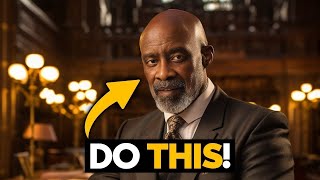
Chris Gardner, who inspired "The Pursuit of Happyness," explains why people stay broke: they don't own their circumstances or execute with discipline. He calls it the "I drove here" mindset—taking full responsibility instead of blaming your past. Gardner also warns against keeping a Plan B, saying it splits your focus and guarantees failure.
Chapters
Hello, Believe Nation! I started the Mentor Me series with the goal to learn from people who've done more than us, to hang around them just a little bit longer and hope some of their ideas, mindsets, way of thinking seeps into us to help us be the best version of ourselves. So today we're going to learn from Chris Gardner on staying motivated. As Chris is talking, if he says something that really inspires you, leave it in the comments below and put quotes around it so that other people can be inspired as well.
I once mentioned spiritual genetics to Oprah Winfrey in a conversation, and she calls me the very next day and she asks, "What have you been reading? I've never heard about that." I had to tell her, "I haven't been reading. I've been writing." As a matter of fact, that's the subject of my new book that I'm working on right now. We all understand genetics. You're gonna get your mother's eyes, your father's nose, and there's nothing that you can do about it. But the spirit of who you're going to become as a man or a woman, I believe that you can choose. It is indeed biblical. Scripture tells us that we are all born with a spirit that allows us to embrace God, whatever you perceive God to be. Well, that same spirit can be beaten down into darkness. I don't know how many of you all read my first book, The Pursuit of Happiness, but those of you who did, you met my stepfather. And there are folks who will say, "I could have become him. I could have become another alcoholic, wife-beating, child-abusing, illiterate loser." And a lot of people would have said, "Well, look where he's from. He didn't have a choice." Well, I did have a choice. I saw the light in my mother and in others with whom I did not share a single drop of blood, and I embraced it. As jarring and strange as change can be, there were times when it was hard to imagine that my life would be what it is today, especially the time when my son and I were living in that bathroom. Maybe you remember that scene in the movie. There was a highly polished sheet metal piece over a sink. It wasn't a mirror, but it served as a mirror. And I had to wash myself and that baby every day, wash my baby in that sink, and I had to ask myself some very predictable questions. What happened? Why did this happen? Why did that happen? But the most difficult question I had to get through was, "How did I get here?" And the answer was even more brutal. The answer was, "I drove here." I had something to do with it. You can't change something until you own it. So if you're 50-plus and you're sitting out there and pointing fingers at other people, you can do that for a long time, but it's hard to look in the mirror and say, "How did I get here?" and have the answer be, "I drove here. I had something to do with it." It's uncomfortable to admit that, "Well, I made some bad decisions. I made some investments I shouldn't have made. I had something to do with it. When that man sold me that house for no money down, I should have told him what he could do with that house." Huh? When I signed that adjustable rate mortgage, we all know these things only adjust upwards. No one's ever going to call you and say, guess what, you're going to pay less for your money, your house next year. Ain't going to happen. So the idea of I drove here is empowering because the other side of it is, if I drove here, that means I can drive out of here. I have to own it. And that bathroom, I finally had to understand what my momma used to say to me. She would say, boy, the Calvary is not coming. Ain't no backup. I was 28 years old when that part of my life happened. Change was coming fast. And you know what? Change is everywhere, all the time. Social change, technological change, and the most potent of all, personal change. The most urgent question today is not so much as, "What are my values?" and "Who are we?" The urgent question in these times of constant change is, how exactly are you going to navigate these new realities? Put another way, what are you going to do? Probably my favorite scene from that whole movie, directly related to education, it was not written as you saw it. The scene I'm referring to is the scene that took place on the basketball court. Our writer had a very dim, dark view of the world, and when the little boy said his dream was, "I'm going to become a ball player," the father said, "Forget that. It'll never happen. I couldn't do it, so you can't do it." I went up to Will Smith on the set that day, and I said, "You can't tell that to that little boy, because that's not what my mother told me." You can't tell him what he cannot do. We tore up the script, and what we wrote was— and I've heard from so many parents, and especially parents of children with special needs. I've heard from so many parents every day. I tell my son, I tell my daughter every day, don't ever let somebody else tell you what you can't do. When somebody else is saying— when somebody else is saying something something can't be done, what you gotta hear them saying is they can't do it. As a young guy, 23 years of age, I had the opportunity of a lifetime. I had a chance to go to work for and become the protégé of one of the top young heart surgeons in the country. His name is Dr. Robert Ellis. We both met while we were in the military. I was a US Navy Hospital Corpsman. I was 23 years old, single, no children. I had a chance to move to San Francisco, California. I took the job for $7,500 a year. Dr. Ellis and I worked together for 4 years. We co-authored and published numerous articles in major scientific journals. About this time, I met, fell in love with, moved in with, and had a child with this beautiful woman who had just graduated from the University of California Dental School. Becoming a parent for me was the most important, precious, and loving thing I'd ever been a part of in my life. I was one of those little boys who grew up without a father. And not just without a father, but with a stepfather who was fond of reminding me every day, "I ain't your daddy. You ain't got no daddy." Sometimes putting a 12-gauge shotgun right here just to make his point. I didn't know what a commitment was, but I knew what a promise was. And I promised myself as a 5-year-old boy, when I grow up, become a man, and have children, my children are going to know who their father is. So when I became a parent, there wasn't just some biological extension of the bloodline. There was a whole lot of stuff came with that. I had worked my way up to the top of the pay scale at the university. I'm now making $17,500 a year. My ex had not passed her boards, she couldn't practice, and we got a baby. We're a young family. I had to forget about a possible career in science. I had to forget about maybe becoming a physician. I got to take care of a family. I got a real job. I went into sales. I went to work for a distributor of scientific products. The computer industry was in its infancy 40 miles south of San Francisco down in the peninsula. We moved across the bay to Berkeley, California to save money. It meant a nightmare of a commute, but you do what you gotta do. But I was now making $25,000 a year, and I thought, man, we gonna be okay. Big guys in the business that I was in at that time, big guys in that business made $80,000 a year. We had this one guy, I'll never forget him, his name was Ray Moss, and he used to walk like he was the NBC peacock just because he made 80 grand a year. And I remember thinking, man, 80 grand, I want to walk like that. But one day I happened to be at one of my accounts, San Francisco General Hospital, where there's never any place to park. I see something that's the beginning of my life changing. I don't even know it. I see a guy that is absolutely the sharpest guy I've ever seen in my life. No flash, no BS, just sharp. And he was driving this gorgeous red Ferrari, slowly circling the parking lot looking for someplace to park. I go up to the guy and I say, "Hey man, I'm coming out. You can have my parking place, but I gotta ask you two questions." The two questions were, "What do you do?" and "How do you do that?" Turns out this guy's a stockbroker. And not just a stockbroker, he's one of the top institutional salespeople on Wall Street, and he makes $80,000 a month. Now I'm not the smartest guy in this room, but I'm pretty good with some numbers, Bo. I figured that out. One guy's walking around like the NBC peacock, the other guy was rolling like a rock star. I knew what I wanted to do. I started spending a lot of time with this guy in his office downtown San Francisco learning what a stockbroker does when I was supposed to be 40 miles away selling scientific equipment. Couple of things happened simultaneously. Number 1, I began to accumulate a huge amount of parking tickets. Double parking, illegal parking, late to feed a meter. Number 2, every place I went to interview, I heard the same word, "No." No, no, no. From my ex at home, I heard a couple of other words. I remember them also. I believe they were delusional and unrealistic. She had a point. Major Wall Street firms have begun to require an MBA just to get into their institutional training programs. I had never gone to college. Didn't mean I wasn't smart. Didn't mean I wasn't bright. I just didn't have a college degree. But I kept coming back. I interviewed for a year. I've been asked many times, "You interviewed for a year to get a trainee slot with no guarantee. Do you think it was racism?" No, absolutely not. There's another ism, something called placism. Think about it. I had never gone to college, did not come from a politically connected family, had no money of my own to invest in the stock market. Who's going to do business with you? That's placism. That could affect anybody in this room. But I kept coming back. And I kept coming back for one reason for a full year of interviews, and that one reason was my mother. I had one of those old-fashioned mothers who taught me from the very beginning that I could do or be anything I wanted to do or be. Apparently, I took it too far. I made up my mind, my first ambition in life, I was going to become Miles Davis. Mama said I could be anybody. I chose Miles. I studied music, music theory. I played trumpet for 9 years. I got pretty good. People would ask me as a little boy, "What you gonna be when you grow up?" Man, I'm gonna be Miles Davis. My mom heard me say it one time too many. We sat down one day at the kitchen table and we had what I call the talk. And she explained to me, she says, baby, you're pretty good with that thing, but you can't be Miles Davis. Ain't but one and he got that job. And when your mom put it to you like that, you got to feel that. And I had to look at the facts. The facts were, At 18 years of age, Miles Davis was in New York City playing with Quincy Jones and Dizzy Gillespie. At the same age, I was playing with some boys named Pookie and Ray Ray. Hey, we were good, but it wasn't gonna happen. But the point is, another key decision was made as a young guy, and that decision was I was going to become world-class at something. I just had to find that one thing that turned me on as much as the music did. And the very first time that I walked into a Wall Street trading room, I knew, man, this is it. The ticker tape is rolling, the phones are ringing off the hook, people are screaming and shouting out orders, bodies are flying all over the place, tickets are getting stamped, and what looked like chaos to anybody else, for me it was like reading a sheet of music, and I could feel it. And I knew this is where I'm supposed to be. I wore one branch manager down to the point that he says to me, "Gardner, based on persistence alone, we gonna give you a shot." What worked for me regarding balance between family and business opportunities was always to be mindful of, in a tie, family comes first.
My child always came first. First. If you've managed your relationships properly, the business presentation you're so concerned about, the big conference call that cannot happen without you on the phone, all those things can be rescheduled. But your son is going to have one first baseball game. Your daughter is going to have one first dance recital, and you gotta be there in a tie. Family wins. How you motivate key employees, I believe, is number one, you got to respect them. You've got to let them grow, and you got to trust them and leave them alone. And you have to also show them the opportunity to make more money than they've ever made in their lives. All that combined, that's how you motivate your key core employees. I know how important it is to try and take care of your child and still pursue your career. That's why we've had to be very flexible here. And regards to children, it's very, very important to, to have an environment where people who have children, if they need to, can bring their child to work. But the deal is, you know what, if you could bring your little boy, your little girl to work, I could bring my dog. And that's the deal. I get inspiration from the people that I meet when I'm on the road 200 days a year. I get to see and meet and hear from people who are doing incredible things in their own lives and not waiting for someone else to come and do them. I met a young person just 2 weeks ago down in Charleston, South Carolina, that had raised $30,000 to feed homeless veterans in their community $5 at a time by telling a story about a key and how important a key is to a family. $30,000, $5 at a time, and the person that did it is 11 years old. Those are the people that inspire me. I firmly believe this, and I know it to be a fact. 50% of all the companies in the Fortune 500 were started in a Bear market or recession, this is the time to pursue greatness. But the key is you've got to be doing something that you're truly passionate about. It could not be, I just want to make money. It can't be that. It's got to be something that the sun can't come up soon enough in the morning because you want to go do your thing.
Baby steps count too. As long as you're going forward. And one day you add all those baby steps up and you might be surprised at where you can get to. But more importantly, I remember something my mom used to say to me every day. She would say, "Son, the cavalry ain't coming. You got to do this yourself. Ain't no backup." Okay? And when you put those two things together, man, it wasn't as hard to keep going forward. As you might think. No one is supposed to live in here. No one is supposed to just spend extended periods of time in here. This is a public restroom. This is not a living space. But were it not for this space, there were some days we would have had no place else to go. I mean, a lot of decisions, a lot of hard decisions were made right here about what are you going to do with your life. Where are you gonna go? How are you gonna get there? You gotta have a plan. Everybody's got a dream, everybody's got a goal. What's the plan? And your plan has gotta have something I call the C5 complex. Your plan has gotta be clear, concise, compelling, consistent, and committed. You gotta have a plan. And when you're trying to do something that you are truly passionate about, there is no plan B. Okay. Plan B sucks. Alright. Okay, so it's as simple as that. You gotta have a plan. I mean, think about that for a second. 3 examples: Michael Jordan won 6 NBA championships with the Chicago Bulls because he was committed to Plan A, not Plan B. Oprah Winfrey became the queen of all media because she was committed to Plan A, not Plan B. Whatever your politics are, Barack Obama Obama is sitting in the White House because he was committed to Plan A, not Plan B. Okay, Plan B sucks. Okay. Gardner was heavily influenced by decisions he and his mother made, sometimes with just a look between them, when he was terrorized by his gun-wielding stepfather. He would come out with a shotgun. You wrote, my last Christmas at home, man, I, I was put out of the house. But naked at gunpoint. To this day, I still have a problem with Christmas, but I made a decision that I was going to be everything that this guy was not. I'm not going to drink, and I'm not going to beat women. I'm not going to be ignorant. And one of the tactics that I developed as a young kid. I would read, and I'd read out loud, and I would be saying to this guy, "Yeah, you can beat me down, you can beat me, you can beat my mom, you can put us out of here with a gun, but I can read, and I'm going places." This man, whose own father had abandoned him, found himself carrying his plans into the office of Nelson Mandela. You walked into his office Yes, he looked at you and said, welcome home, son. I had to be 46 years old, and for the first time in my life, a man ever to say the words to me, welcome home, son, and for it to be Nelson Mandela. I cried. I cried. I asked myself when I was trying to compose my thoughts, what would I want to hear from someone today? Would I want to hear more about the state of the economy, Wall Street bailouts, or the job market? No. I would like to hear from someone someone that, you know what, amidst all this chaos and turbulence, there's an opportunity to create a new vision of the American dream. That's what I would like to hear from somebody today. A new vision of the American dream as great as any of the visions and dreams of our forefathers, founding fathers, and ancestors. A new vision of the American dream that says achieving balance in your life is more important than the balance in your checking account. A new vision, a new vision of the American dream where appreciation is greater than expectation. A new vision that says for too long a lot of us been living in in exile in a place called things. And it's time for us to come home to friends, families, and folks. I submit to you today that this new vision of the American dream means that what you do does not define who you are. A new vision that says, do not confuse your net worth with your self-worth. A new vision that says, hey, stuff, toys, and things exist, but they are not necessary for you to be happy. This vision, I submit, firmly rooted in the past, appreciative of today, but clearly focused on the future that we can choose to create. And my last words to you today will be this: a lot of other folk will tell you that the sky has fallen. I will not say that to you. I will not tell you that the sky has fallen. I will say that those are pennies from heaven. You know why I say that? Because I've seen this I've seen this movie before and I know how it turns out. And the last thing, the last thing I will say to you today is this. All of my fellow classmates, all my fellow classmates and graduates, you are in a position to go forward and I encourage you that whatever you do for the rest of your life, Always pursue happiness, and you can start where you are.
Thank you guys so much for watching. I hope you enjoyed this video. I'd love to know, what did you think? What did you take from Chris's message? Is there something that you learned today that you're going to apply to your business, to your life? Leave it down in the comments below. I'm going to join in the discussion. I also wanted to give a quick shout out to Valerie Mondier. Valerie, thank you so much for buying a copy of my book. It really means a lot to me. For those of you watching, if you want your chance at a shout out in a future video, make sure to pick up a copy of the book and email in your receipt so we can keep track. Thank you guys so much for watching. Continue to believe, or whatever your one word is, and I'll see you soon.
More from Evan




How the Biggest Mistake in History Created A Trillion-Dollar Empire | Sergey Brin



9 Machiavelli Principles That Force People To Respect You | Machiavellian Philosophy



The First 10 Words That Instantly Ruin A Sales Conversation | Vanessa Van Edwards