This content was created by Kathryn Najafi MD. This content was uploaded by Kathryn Najafi MD. This is a YouTube video titled "Bonus Educational Video Monovision" created on December 12, 2024, providing an educational explanation about presbyopia and the monovision technique as a solution to reduce dependence on glasses.
Chapters
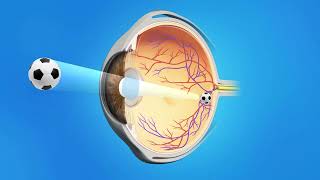
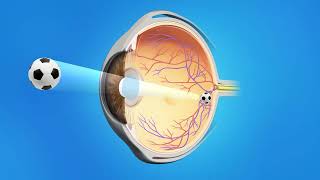
Presbyopia is the frustrating loss of sharp close up vision that comes with age. Beginning in their 40s, people usually find they have to hold reading materials farther away to be able to see them clearly. This is due to normal changes in the eye that make it harder for us to focus on near objects. When we are young. The lens in our eyes is soft and flexible and easily changes shape to focus on objects close up or far away. But at around age 40, the lens becomes more rigid and can't change shape as easily as it once did. That makes it more difficult to focus at close range. Those magnifying eyeglasses we call readers are the most common solution for presbyopia. However, however, many people find it annoying to have to constantly take them on and off depending on what they want to see clearly. Wearing bifocals offers relief for some, though many people would prefer not to wear glasses at all. For some people, monovision may be the solution for having clear vision at most distances and reducing dependence on glasses. Monovision is a technique that corrects vision in one eye for clear distance vision and the other eye for clear near vision. Monovision can be achieved with contact lenses, refractive surgery, or with artificial lens implants that replace the eye's natural lens. In each case, one eye is set for good distance vision while the other is set for good vision close up. Your dominant eye is usually the one corrected for distance vision. With monovision, the eye that sees distant objects clearly will see close objects as slightly blurred. The eye that sees well up close will see distant objects as blurry. The brain learns to adapt to using one eye or the other depending on the task at hand. It may sound difficult to adapt to monovision. However, many people eventually find that when both eyes are open, they don't even notice which eye is set for distance and which provides near vision. If you are considering monovision, your eye doctor may recommend trying it with contact lenses first to see how well you adapt. It may take a few weeks or a few different adjustments to determine if monovision is right for you. Some people who try monovision may find that things in the distance are slightly blurry. Other people may be disappointed to find their near vision isn't quite as crisp as they had hoped. Also, your depth perception or the ability to judge the distance of an object from you may be affected. If wearing bifocals or reading glasses for presbyopia bothers you, talk with your ophthalmologist. He or she will ask you about your vision needs and expectations. Monovision may be a solution for you to reduce your dependence on glasses. Also, if you have any questions or concerns about your eyes or your vision in general, don't hesitate to bring them up. Your ophthalmologist is committed to protecting your sight.