Filip Kozera: The Fastest Way to Build AI Stack | E106
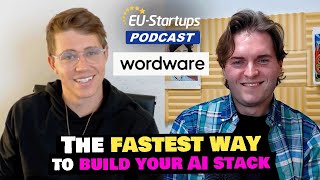
In this EU Startups Podcast episode, host Marcin Lewandowski interviews Filip Kozera, founder and CEO of Wordware, a platform that lets domain experts build AI agents without deep technical skills. Filip recounts his 11‑year AI journey from early LSTM research to building startups around BERT and GPT, emphasizing a deep conviction in the long‑term mission of structuring human‑AI collaboration. He explains Wordware’s vision as the "Excel of AI," empowering non‑technical users to add their creative intent to AI outputs, and differentiates the platform from typical no‑code tools by focusing on agent‑first design, handling fuzzy inputs/outputs, and a three‑dimensional workflow that mirrors code functions. Filip discusses common misconceptions when building with AI—clarity of task definition, data sourcing, and trust in the model—and stresses the iterative nature of AI product development. He shares concrete use‑cases (marketing‑channel optimization, personalized dashboards, automated note‑taking) and reflects on the technical and adoption challenges of early‑stage AI adoption. The conversation moves to his Y Combinator experience, the high cost of equity, and the reality of startup life, including imposter syndrome, pivots, stress, and a Bali break. Filip distills two core founder lessons: the importance of a strong co‑founder relationship and a decade‑long, purpose‑driven idea. He also talks about personal growth through extreme mountaineering and an upcoming Ironman, linking those experiences to resilience in entrepreneurship. Looking ahead, he envisions a future where AI agents are a creative extension of humans, with influence‑based “billionaires” and hiring practices focused on long‑term friends. Finally, he offers practical advice for non‑technical builders: start experimenting in Wordware, iterate, and expect multiple failures before finding product‑market fit.
Chapters
When you're creating something totally new, there's often friction, either from skeptics or just the sheer challenge of execution. Are people more resistant to technology or to the shift in how they work?
The revolution that is coming is, is, is massive. I think when our kids look back on the fact that, you know, we received an email, we searched for some stuff on Google Docs or like Google Sheets, I manipulated a couple of numbers and got to an answer and then wrote it there. They would look at this as if we are peasants working in a field in the 1880s. You know, it will be as ridiculous to them that we did this kind of random work as it is to us that people manually farmed and there was nothing that helped them. Welcome to the EU Startups Podcast. Sit back and enjoy the show hosted by Marcin Lewandowski.
Hey, you startups! If you're running a startup like me, you have more than enough on your plate. So when a prospect asks if your company is ISO 27001 or SOC 2 compliant, you're probably thinking, how the heck are we going to do this? We don't have the time, we don't have the manpower, and we definitely don't have the know-how. That's where SiteL comes in. With our automated platform and in-house experts to manage the entire process for you, you'll get compliant super fast. Compliance has never been easier.
So if you need help with compliance, visit cytale.ai/eustartups— that's C-Y-T-A-L-E.ai/eustartups— for $1,000 off your first framework. Hey everyone, this is Marcin Lewandowski and you're listening to the EU Startups Podcast. My guest today is Filip Kozera. Founder and CEO of Wordware, a startup that empowers non-technical domain experts work with AI engineers to build task-specific AI agents. Welcome to the show, Filip. It's amazing to have you here.
Hi, thank you for having me.
So Filip, before we dive into Wordware, let's start with your journey, with your story. I know that you went from Cambridge to San Francisco, from ML research to building startups. What first drew you to this space and when did you realize its potential?
So I've been in this space for almost 11 years now, which is longer than most people. I've actually met my co-founder Robert 11 years ago when we were starting Cambridge. At the beginning it was information engineering, but very soon we both realized that deep learning is the future. It wasn't as obvious as it is today, back in the day. I remember that one conversation actually we had around 2015 when we were like, shit, NVIDIA is probably gonna be huge, huh? And then we just like looked at each other and like, yeah, if we had any money, we should definitely invest. And looking at it right now, it would have been a great, great decision. But we've been in this space for quite a while from academia, For me, it was my focus once on LSTMs, which was a precursor to the Transformers architecture that all of ChatGPT is based on, to my first startup, which was based on BERT and GPT-1 and 2, where they were pretty stupid back in the day. And then right now, a lot of the stuff that we do comes from very deep conviction in the space. I think that's one thing that people underestimate when they're building startups is having that deep, deep conviction in maybe not the product as this right now sometimes, but the problem and the mission. And for us, this basically means we're trying to bring structure to human-AI collaboration. And this is the long-term goal. We believe that it will only get harder as the tasks that you delegate to AI are getting harder. And that the human taste and the human intent will always be difficult to communicate because it's even difficult when we talk with humans and it's even difficult when we try to structure our thoughts in our head and to enable people to kind of have a place where they can mold their creative vision into what AI does. This is what Wordware is.
Amazing. I love it, Filip. So how was it with YC, with Y Combinator? Were you guys, did you guys score the biggest round in the history of Y Combinator or not?
Yeah, I think they're being very defensive about allowing us to say that, but I couldn't find any records of it not being the case. But you know what, the story goes a little bit deeper. I think it's really nice to say, oh my God, they raised a lot of YC, such a big round. But we've approached this building our company a lot, like in a very different manner to a bunch of startups in YC. We've actually decided that we're going to build and not like always be super close to customers. We of course talk to a bunch of customers, but then there was like 7, 8 months when just me and my co-founder, we built a lot of So it isn't, you know, the most typical seed round. It's a little bit for PR that we called it a seed round. We have been working on this company for longer than like the 3 months that typical YC startups are around. And just a fun fact is that this was my 5th application to YC. So, you know, stuff doesn't come easy. And I think like there is this one thing that stays with me sometimes when people say, oh, it didn't work out. I abandoned my company idea, my mission and so on. I'm like, dude, I failed more times than you tried. And yeah, that's kind of a testament a little bit to the startup life. It's a hustle. It takes time. Yeah.
And also testament to YC magic. Like, it's not easy to get in, but once you're in, I don't actually think so.
I think for us, it was a very expensive decision and I'm not sure whether it was a good one. Oh. It is 7% of the company, which is a lot, a lot. And I would still take that decision because a lot of things, a lot of things aligned for us. And like startups are a little bit of like the opposite of the death by a thousand cuts. 1,000 things needs to align for you to succeed. And we're far from success, by the way, but like we are getting closer to like people, like I think some people really love our product, but YC is an expensive decision. And they, even though the whole momentum with the cohort was amazing, I think they've got a lot of work to make sure that they are a little bit better tuned for the revolution that is AI. I think for the last 10 years almost, the vertical SaaS getting to Series A, getting to Series B has been a cookbook. And this is changing right now. We're getting a completely new platform and the GUI and the UX of how to interact with that new engine of reasoning. Is still very unclear. And I think it's not going to be predominantly chat in a couple of years. So, you know, the products that are being pushed out there into the market need to be audacious. They need to be different. And I think, you know, most vertical SaaS is going to die. So I think OIC has a lot of work to do to be better prepared for these times. They've actually like discouraged us from doing some things that we that were very instrumental to our successful round and to showing our product in front of hundreds, actually millions of people within a couple of months of launching.
That's refreshing to hear, Filip, actually. Hey, going back a bit, answering the previous question, you've mentioned that you've worked with LLMs since the GPT-2 days, long before they were mainstream. What's the biggest, I wonder, journey I've been, I want to say that I've been enjoying the beginning of the conversation a lot. What's the biggest misconception people still have about building with AI?
I think one thing that comes to my mind straight away, but let me think about what's the biggest misconception. I think there are two that are linked. And one thing that you need to be good at is to actually explain what the AI has to do. A lot of people just come in and ask for something ridiculous. And then, you know, I always ask them, hey, you gotta be able to express what needs to be done on a piece of paper as if you're sending an email to an intern. And it's not only about, you know, what needs to be done, but it's also about, you know, where are the data sources? Or if you let an intern create a report and they just Google on the internet and don't adhere to your directions on what do you think it's true, they might, you know, end up with a completely different conclusion because of the noise out there. So if you can write down what it, how an intern would do this task, and you know, some of the interns might be like, Data analytics interns have their Stanford, and that's fine, but they are still interns. And so you need to know how to exactly express it. You need to have the right data sources. And third, and really important as well, you need to trust that intern with the output. Because if you're going to end up reviewing their work in minute detail, because you don't trust them, that task is extremely important. Then that's not going to be great either. So you need to build that trust over time. And also, as you're building these complex AI agent systems, which is what Wordoor is, it's not one prompt, it's mostly like much more complex agents. You need to be okay with iterating on it. So it's almost like software, you know, you wouldn't expect to pay an agency one-time fee for an app and be like, I'm done. This is all ready. You do need to iterate on it. You do need to adjust as new models come out. And it's an ongoing process. That's why Wordware makes the person who is the main expert, puts them in charge of doing these updates and realizing what good looks like.
Awesome. Filip, why is this shift so important? Why what you're actually doing, building with Wordware and empowering, letting the domain experts build AI agents without deep technical skills, why is it so important?
I think we're on the precipice of a big revolution. And these kind of things is much easier to explain it on the basis of some analogy. And the analogy in this case that comes to mind is what Excel did to data analytics back in the '80s and calculator use. And you know, the equivalent of the calculator is probably ChatGPT or any chat system. The equivalent of a data analytics team right now is a team of AI engineers. And what Excel did is they put the person, the accountant, the financier, the person who was doing, you know, a bunch of random calculations in the company, they put them in the pilot seat and they allowed them to be empowered by and basically use the numbers to their advantage. And that basically meant that a bunch of people lost their jobs for sure. And you know what, like these people were just getting there extremely quickly with Excel. And right now, you know, we have a bunch of domain experts. They know what could be done with AI. And what needs to happen is they need to have the right tools to interact with it directly, not through an engineer who might not be able to, you know, do this job or review this job the right way. And they need to understand that they are right now AI engineers or Wordware engineers. So however you want to call them. And you know, the numbers are staggering. There is 30 million software engineers in the world and there are 750 million active users of Excel. So we see that empowering individuals to get the shit done by themselves, it's really a powerful concept. And as I think about the jobs of the future and how will the society look like in 10 years, I see basically humans still being important in giving the intent and giving the taste to the outputs of AI. And I'm excited about it. And that's why Wordware is that important. We are the tool that enables people to get this done.
Hey, and we've seen many no-code AI tools emerge, but Wordware seems to take a different approach. What sets you apart from others?
So I think, you know, once you start building these more complex systems with AI, you start to realize that agents are kind of a different type of software where some part of it is fuzzy. Normal software takes discrete numbers of discrete data. Has some kind of algorithm, does something to it, and it outputs something else. So AI agents are still very separate. Wordware is not about CodeGen. It's not about generating this algorithm, but we are approaching this by saying, hey, a lot of things will still be software. There are CodeGen tools for that, but we are a tool that puts the AI agent first and foremost. And that basically means that, you know, one of the parts of this triple stage thing, the inputs, the outputs, or the middle step involve some kind of fuzziness. And that can be an image. That's not something that's super discrete that cannot be expressed easily. There is maybe voice, there is maybe written language. And what we're building is the best platform for building complex systems. And the no-code tools as we know them today are mostly based on 2D canvas with a bunch of blocks. And people fail to understand that the complexities and conveying your intent and creative vision to these AIs is actually quite a complex, you end up building quite complex systems. On 2D canvas, you end up running out of dimensions. If you imagine a loop, a reflection loop, inside of a reflection loop, you start to run out, you need 3 dimensions. And these systems get really complex really quickly. That's why we took some affordances from typical code, which is functions calling functions. All software is really conditional statements, loops, functions calling functions. And that's pretty much it. And clearly defined inputs and outputs. That's also very important. So we took all of these concepts. And we just married them with the fuzziness of powerfulness of the English language to give you a final tool where the floor is low. So you can start very low and you don't have to be a domain expert, but really make sure that the ceiling is extremely high. So you can build really complex problems without the graduation problem. So graduation problem, like you start with a tool, but then you can't actually do something and you have to like switch to something else. We don't have that in Wordworth. And that's why maybe it's a little bit more difficult for people to learn exactly how to use it. There is a little bit of like onboarding curve, but yeah, we are excited about maybe lowering the floor a little bit and making sure that this is more open to a bigger number of people as the models progress.
Filip, you mentioned revolution a few times. During this conversation. You know, when you're creating something totally new, there's often friction either from skeptics or, you know, the, just the sheer challenge of execution. What have been the biggest technical and adoption challenges? Are people more resistant to technology or to the shift in how they work?
Huh. I think there's still very little understanding of AI. We're still in very early stages. We are focusing on early adopters, you know, people who have used both Claude and ChatGPT. They know the differences and they know how they would apply it in their own personal lives or in their companies. The revolution that is coming is massive. You know, I think when our kids look back on the fact that we received an email, we searched for some stuff on Google Docs or like Google Sheets, manipulated a couple numbers and got to an answer and then wrote it. They would look at this as if we are peasants working in a field in the 1880s. It is as ridiculous, will be as ridiculous to them that we did this kind of random work as it is to us that people manually formed and there was no, nothing that helped. And our whole society is going to shift based on that. Uh, you know, from Industrial Revolution meant that, you know, a bunch of people who were doing manual labor, uh, became knowledge workers. Now, my claim right now is that AI will be that knowledge workers will become, uh, creatives. And it doesn't mean that they will have to be artists in their current understanding of the work, but it will mean that, you know, they use AI to express their creative vision about what and shape the world around us. So there will be still people who are super fascinated by creating the right shoe or the right monitor, but they will use AI. I'm just looking at things around us where headphones or create the best water, but they will all be like the CEOs of that big company creating water. and it will be the best hockey water. And yeah, I'm excited about that.
It is indeed super exciting. Hey, actually, what's an example of a real-life, real-world AI agent that a team has built using Wordware, if you can give any? And how, like, just for the users to, for them listeners to imagine how does it change the way we work?
So I'll just give you a couple quick examples. A lot of our stuff is still just a couple prompts where you combine models and you create that better sales email or you create a better product specification or you create a much better marketing blog, which actually it does not sound like a idiotic machine as right now one call to GPT-4o makes it, but actually encapsulates your knowledge about the topic and maybe does some research in between. So those are kind of the simpler deployments and still majority of them are like this, but stuff that we've seen creates a lot of value is, for example, we have one company that helps their end users, their customers to optimize marketing channels and they have a bunch of data about each one of their end users. For example, selling, let's say shampoo and creating marketing campaigns about these kind of cosmetic products. And right now their end users are able to ask a question about any one of their products and their intent. So that would be, for example, running the campaign in Brazil for 18 to 24 females to market a particular product. And then the agent actually writes live code, queries their databases based on its kind of hypotheses about what could be the best, creates a report and creates a live dashboard based on that particular question. So we kind of see how everything and the UXs and the UIs become much more personalized, even for one particular customer. And you can kind of start imagining that everything is personalized and no vertical SaaS is created just for a big group of people. Everything is a little bit more granular and a little bit better suited just for you. So, you know, you sometimes like are interacting with like a vertical SaaS, maybe they don't have an integration or they don't have something. And you get annoyed. And Wordware is both the product that runs that infrastructure and also something that might make you not use that new company at all and build it yourself in like 20 minutes. And I do a lot of that kind of stuff. I have, for example, notes and I don't want a note taking up that would, you know, basically I have to pay $20 for. And I created that prompt inside of Wordware which takes that transcript, does a lot more stuff, searches my Atio, searches my Notion, creates context about that person that I was just speaking with. And then it saves it into Notion in a place where I can easily search it. And I don't have to interact with like a third party, another fucking, you know, website where I go and search this stuff. So we are a horizontal tool at the end of the day. But I hope I I just gave you a couple of good examples which make you understand how wide it is.
This is amazing. This is so cool, Filip. Hey, Wardware, it's not your first startup, right? You had some, I know you had successful exits raised over—
That's cool. It's like, I think always my first company raised $8 million, but at the same time, you know, I think there's just such a, like startups are such an optics game and everything looks great from the outside. But once you're inside of the company, you start realizing how much shit there is. And, you know, I like, we had a very hot round, which meant that a lot of investors were taking us for dinners with like really, really credible CEOs to just show that they are the connector. Uh, oh, I had dinner with. Fred from Coinbase or Dylan from Figma. And when you ask these questions to them, you see the same imposter syndrome. And you kind of see that they still haven't figured it out, even though they're multi-billion companies. And, you know, it's easy to say, oh, I had a successful exit. Like, I don't have to worry about, you know, financially for a while, but like, you know, I still don't think like I'm a, successful CEO, there's like a lot more on the journey. And I kind of, you know, impostor syndrome mocks founders is like, I recently hired an executive assistant. Like, you know, why do I have somebody who's doing all this shit for me? I'm like, I don't deserve this. You know, it's my first reaction. And yeah, so I think there's a lot of optics, even though I had an exit, it wasn't like incredible, to be honest. And yeah, and I think I would love for people to understand a little bit better how tough startups are on the inside. And startups are not for everyone. And I like, sometimes people ask me like, how do I get into startups? Like, don't.
No.
Like you have a great job and actually doing the next 8 years and being in pain and not being able to sleep and having chronic stress. It's not for everyone, you know. I'm a little fucked up in that way. I kind of like it.
Yeah, it's hard as fuck. Um, yeah, not everyone is telling also about it. I mean, like, well, I can even tell that startups are unhealthy for people, man. They take a toll on your health and your life. But yeah, but on the same— on the other hand, um, when they're right that you're on, you must be loving it.
Right now I'm loving it, but you know, I've been in pivot hell before and I've been extremely stressed about, you know, people's money that they gave me money. And right now I'm taking like a break or something like this. We did go through one major pivot and something that like I've learned is the fact that I wasn't freaking out, you know. I went to Bali for 3 months and I did not communicate it to my investors that I'm in Bali and I'm just thinking about the next thing. And I think a lot of startups are like this, you know, and the optics outside are like, oh, great ideas, but yeah, but it ends up being very different inside.
So often that's the case that things on the outside look a bit different than on the inside. Filip, given all those experiences that we just talked about, what's one lesson from past ventures or the people that you met?
I think it's two lessons. The two most important things. The first thing is your co-founder. We have a very special bond with Robert. We live together. You know, we've known each other for 11 years. We work together and I don't imagine we're not going to live together. Even when we have families, we'll probably live in like a huge house with like two separate apartments or something like this. And really, you know, most companies fail because of like the first time the tough times come, the co-founders fail, you know, or they just don't have an agreement about the future vision. And the second one is for me, The idea is really important. A lot of people say like, oh, it's all about execution. I'm a questioning type of person. And if I don't see like a purpose in what I do and like an ability to express in one sentence what I'm trying to do in the space of between now and the next 10 years, I just freak out a little. And I will question the stuff that I do. And this is the first company where I'm actually not doing that because I've thought really deep and hard, oh, the IKEA I want to devote my 10 years of my life to. And I think most people, especially first-time founders, they think like, oh, it's going to be 3 years, I'm going to be a billionaire. This is a 10-year journey. And, you know, you have to start doing things properly, build the team properly, you know, set the brand properly. Have the right first customers, have the right product, and it all accumulates. And so long story short, choose the right co-founders and choose the right idea, knowing that event horizon you should be looking at is 10 years.
Filip, since we are already talking about the lessons learned, Let's get a bit more personal. I know that you've traveled to like over 100 countries, if I'm not mistaken, and you climbed some of the world's toughest mountains. What's maybe a lesson from those experiences that influenced you?
It's like, don't stress too much. There is much more stressful shit in the world. And, you know, putting yourself in a space where you are in a tent in like minus 40 degrees Celsius. And, um, you're like, I had a very near-death experience in like a year and a half ago when I was climbing a mountain in Nepal. And overall, like even without the near-death experiences, high-altitude mountaineering can be described as like you have a hangover of your life for, you know, 4 weeks and every week, every day you run a marathon. And, you know, if you put yourself through pain, there's this, like, you're going to remember the good parts about your life. There's this concept in like Japanese culture. It's called misogi. And it basically means that you should try to do something extremely difficult and push yourself every year. Just to remind yourself that like you're a human with free will and you are capable of these things. For me, this year is going to be an Ironman, uh, and I'm already training for it. Uh, but at the same time, like, I think most people don't do it. Most people just get like, they slowly get old and not only like by their body, but like their mind to just stop thinking like they're going to challenge themselves. There's this statistic I would love to like look it up right now. It's like percentage of people that never, that will never sprint after the year, after the age of like 25. Sprint again. Oh, there you go. It comes up. So 95% of people over 30 will never sprint again. So like, I don't know if this is true or not. Don't hold me to it. But You're like, you know, when was the last time you sprinted?
Like, just now before the podcast, I was late.
Yeah, for me it's the same. But like, every time I like sprint, I like, I'm doing a jog and then I'm like, I gotta finish with a fucking sprint. And then I have a halt and many normal people don't do it.
True, true, man. You clearly have a high tolerance for risk. But actually, and you mentioned already that you like to, you know, push yourself every year and remind yourself of of what you're capable of or even push the boundaries. What's been the most intense moment either in the mountains or in a startup and how did you push through it?
I think, you know, since we launched the next 3 months have been like an episode of Silicon Valley. I would really recommend, not an episode, probably like 2 whole series. And I would really recommend watching it. Really started out sort of like this. It's really true. And, you know, anywhere from organizing hackathons to having like office drama with like a different startup to somebody breaking into our house because they didn't make it through their work trial to like, it's just started to turn kind of crazy. It's kind of fun, but it's a little crazy as well. So that was a very intense period, which, you know, culminated in raising $30 million at the high valuation. Probably higher than some people think. We decided not to disclose, but I think many people think it's like a lot lower than ended up being, and we did a great job. But it's also like, no, it's a game and you got to play that game. It's almost like dating, you know, getting, and it's just a lot of money is involved. And if I wouldn't have been doing this kind of stuff that are a little bit more extreme in terms of like what truly matters, which is, you know, are you gonna fucking die on this mountain? I think I would be freaking out a little bit more. I wasn't stressed. I really enjoyed this stuff. So, you know, even though it's like big money, that was kind of intense. It was not the most intense thing in my life. I think when we were going through pivoting and shit wasn't working, I like, it influences me quite heavily if I don't have a purpose in life. And those are the moments where I was like struggling the most probably. So that was like early 2023, January. I think we pivoted and it was just sucked. And I kind of thought like, was thinking a lot about climbing some crazy mountains and yeah, it wasn't good.
Hey, let's fast forward 5 years, if we were, or 10 years, because it's 10-year game. If Wordware succeeds in its mission, how will the way we interact with AI have changed?
So I kind of alluded to this before. I think Wordware enables you to add your own human sprinkle onto the outputs of an AI and add your human taste. You can start thinking about people doing exactly the things that they enjoy doing. In their life. And I think, you know, it will still have billionaires and the billionaires of the future will be measured by influence and measured by, you know, the outputs of stuff like a luxurious good that they are producing with this enterprise of one person. And I'm not sure if everyone will be doing this, but I do believe in the innate quality of human beings being drawn to creative endeavors. And I would love for Warbird to be a huge part of that movement. You know, a multi-trillion dollar company is kind of the goal, but I think, you know, it's an audacious, delusional goal. But we just, as a team, we enjoy the journey. We really love working with each other. My two go-tos for, you know, how we're trying to run this company is Fortuna Audientes, which is like fortune favors the bold, and work with friends. Once you realize it's a 10-year journey, you really change your hiring practice. It's not like somebody's a cogwheel that you just need to plug in a hole of like, oh, I need somebody to write a bunch of blog posts. You're like choosing friends essentially that you're gonna spend a lot of time with. And it's cool. You know, I'm gonna enjoy this journey. Hopefully won't freak out and stress out as I sometimes do. But if I see the big picture of some of the days, it's It's a beautiful vision.
I love it. I love it. Finally, if someone listening today wants to build an AI agent but has no technical background or idea where to start, what's the first step they should take?
They should go inside of Workware and start playing around with all different models, start to see how they interact with each other. Start simple. And then combine that API that they produce from Mordor with Lovable UI, generative UI from a company called Lovable. Push out the product out there, see what happens. You probably need 10 to 15 failures until you learn exactly what the market wants and what you want from that. And just start building. I think start building, start iterating. Most people just get back on the first step of doing the first thing. You always want, but it never materializes.
Awesome. Thank you so much, Filip, for taking the time and joining me on the show. Everyone clap for Filip. This is a wrap. I hope you enjoyed it. I enjoyed it a lot. I think it's going to be an amazing podcast and people will love it. Thanks so much. And I hope to meet you in person sometime. Maybe you're— Of course.
Yeah. I intend to be around for Polish summer. Uh, and hit some music festivals, live a little. Uh, for now it's just work, work, work, and San Francisco is a great place for that.
For sure. Filip, um, thanks again and take care. I'll talk to you soon. Thanks so much.
More from Filip

Beyond Conversation: Why Documents Transform Natural Language into Code - Filip Kozera


Is Prompting The New Programming? with Filip Kozera and Robert Chandler, Wordware AI

Wordware AI, an IDE for programming using natural language - interview with Filip Kozera