Wordware founders, Filip Kozera and Robert Chandler
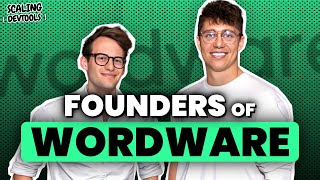
In this interview, host Jack talks with Wordware co‑founders Filip Kozera and Robert Chandler about their platform that lets users create document‑style assignments for AI agents to automate repeatable knowledge‑work. They contrast Wordware with one‑off LLM usage (e.g., ChatGPT plugins), using a wizard‑vs‑potion‑maker metaphor to explain how a single, well‑defined assignment can be reused across data. They introduce a tongue‑in‑cheek productivity metric (the POOP index) to illustrate time saved on mundane tasks. The conversation covers practical use‑cases such as fixing transcript errors, generating blog posts, and email triage, and explains how Wordware targets cross‑functional AI product teams where domain experts drive prompt design while engineers handle implementation. They discuss the stochastic nature of LLMs, the need for new evaluation mindsets, and the trade‑off between deterministic software and fuzzy AI outputs. Market positioning is explored, from early technical users to a simplified entry point that lets anyone write plain‑language specifications to build workflows. The founders share hiring philosophy—emphasizing on‑site teams in San Francisco, hiring “agent freaks,” and building with friends—while also mentioning the company’s culture, office plans, and upcoming product releases. A brief sponsor spot for WorkOS and a testimonial from Utpal of digger.dev are included. The interview ends with advice for founders about staying true to vision, maintaining high hiring standards, and embracing the AI‑driven automation renaissance.
Chapters
I'm joined today by Robert and Filip from Wordware. Hilarious guys. Wordware is just like, we'll talk about it, but wait.
We are— Okay, we're building agents that automate repeatable processes in your life. You get to basically describe the whole assignment for an agent in document-like form. It feels very friendly and familiar. And then once you click go, you schedule it based on explicit or implicit triggers. It runs in your life. And you sometimes get a notification. You get to approve, reject stuff that the agent has done for you. You feel incredible about it. One of the main indexes we measure is a POOP index, and that means productivity optimization on potty. How much time are you able to save in 10 minutes when you're sitting on the toilet? So we're trying to bring a world where you don't do busy work. You do creative deep work that you love.
But seriously, I tried Wordware today. I like so many cases where it's actually gonna be super useful for scaling DevTools, like legit. Like I feel like, I mean, the blog post is the obvious one, but there's also like tons of other things that wouldn't be worth me doing. But like, so for instance, when I get transcripts, it's like often the names are wrong for the company names and people hate it when you like miss case miscase a company name or something.
Wordware very rarely gets picked up on transcripts as wordware.
Yeah, they'll probably put like a space or something. Yeah. And then it's like—
Or woodware or woodwork or something.
I hate it. Also, I'm Polish and my pronunciation is not perfectly British as Robert. So whenever I say wordware, people are like, what? And I just hate it. I'm like, it's like software but with words. And they're like, what? Why? I'm like, oh no, it's like my whole life is gonna be like this.
Yeah. Um, but like to kind of— and maybe this will explain Wordware to people a bit as well— is that there's like, you know, ChatGPT had the like kind of App Store thing. I can't remember what they called it.
Plugins, I think, for—
yeah, you build your own things. It was very much like you basically put a prompt in there and then it's like hopefully you just don't have to copy paste as much.
But it was like, uh, GPT is that—
that was it. Um, and I tried to set up like a few of those and it just like wasn't that helpful. But for Wordware, like, I could set up like, okay, here are my inputs. So I could have like my transcript and my description and I could say, okay, so check the transcript, make sure the words are like the logo, all the company names are actually like correct and like the transcript matches all those things. Also generate me a blog post based on these different criterias. Also do various other things, which would be like a total pain to do in code, but it's like And they're all things you can do in ChatGPT.
That's like, you know, we don't add a lot of magic on top of the LLM, but we just help you. The way we used to describe this to the kind of non-technical people was when you use ChatGPT, you're a wizard and you're casting a spell and you're muttering the incantation. You have to be a bit of a, you know, a learned wizard to know the right prompt engineering to do. And then, you know, you'd be back and forth waiting for it to happen. But with Wordware, you become a potion maker and you're able to like distill all of that. You do it once, you like mix up your cauldron and then you can bottle it. And then you can just pour that potion on your new data or you can like give it to your friends and they can be powerful wizards without having to learn the magic.
That's what we strive for. It's, you know, ChatGPT, Claude, whatever research tool is for one-off and we are for the repeatable tasks. And hopefully, you know, we introduce just a little bit more effort when you know that something, but when you know you're creating an assignment for an AI agent that you're going to do repetitively and you're okay with doing just this tiny bit more. And you also feel like you are almost like training your own AI in doing things in your work that will not complete the work, but will eliminate it.
Yeah.
And that's kind of our goal, you know, we want people to be running around and still working, but doing more deep creative work. And in between that deep creative work, background agents just come to you and say, hey, I've done this, this, this, and this. Would you like to approve? Would you like to change? Or would you like me to try it? And I think this is where the world is heading. We are not going to all be sitting by the beach. You know, we're going to be doing more creative things, things that make us truly human, not the productive knowledge work that we claim that is so innovative, but actually we're sitting on email, taking things from Google Drive and mixing it with some Word document somewhere and creating a PDF to send to our accountant. That sucks. I don't want to be doing that work. I want to be doing really cool creative work. And yeah, I think recently I've gotten an executive assistant. I never had an assistant before and my life changed. Like really, I'm so much better at my job. And I think we want to create that for everyone with background agents, kind of automating big parts of your life and doing this in kind of like a document interface when you get to explain and have control over it, and then a mobile app where you kind of get to approve the work. So you always feel in control. Seems like the answer that nobody has cracked yet. And there's a lot of difficult engineering there, but we can get to that later.
That's a hot scoop, you know, this is the first time you're hearing it publicly of, uh, of other, other things we're introducing into the Webby platform.
Oh, very cool. Okay. Yep.
Don't release it too early, right?
We'll verify with you first. I also want to verify from Robert that Filip is actually better at his job since the exit.
Filip is better at his job.
It's, you know, I like, we get the vibes and feelings, you know, we had a lot of wine, you know, we're in a very good place.
Yeah, normally, normally I might not have to say no. No, I think, I think as you grow as a company, more and more of your day is reactive to interrupts. You're like, you know, you get an email and it's like something to do. Well, there's more people that want your attention. And when you have 100 emails in your inbox every few hours, it takes long enough just to go through and work out which ones do you need to action. And if you can choose the bury my head in the sand option and ignore them all for 24 hours and then like do it once a day, the problem is you then miss really important things. On the flip side, you can be checking it every hour and then all you're doing is reacting to things that come up. It's other people's jobs for you. And I think the only way to truly be productive is to be in charge of your own time. And having hired our first EA, she helps manage our emails. No longer do we have that anxiety, like, oh my God, what am I missing if I'm not checking my emails? But also, yes, we get to do deep work without the anxiety. But if there is something important, Lucy can come in, knock and be like, hey, this happened, or she can Slack us and, you know, Slack, we react to a little bit more because it's all internal company stuff. It's all the kind of, you want to be unblocking your team.
So the first agent, you know, I wrote for myself and Wordware was based on this quite complicated prompt that understands my priorities at this particular period of time in my company. I want these things surfaced to me immediately. So now I get like a Slack message where the priority has as kind of decided by my AI agent is higher than 90 out of 100, right? And I get this message and I immediately get a link and I can just go there and respond or I can respond in a thread and you know, it makes it so that I don't have this anxiety in the back of my head being like, is there anything I should be on it? You know, I'm waiting for this and this and this thing. If any of these comes, I need to respond immediately. I feel like a lot of that stuff that like people have in their lives, if they have assistants, can be introduced very quickly and very easily to people's lives when they are working with it.
Yeah, it kind of makes me think of like, if I imagine how like someone like Bezos works, like I imagine he's not like kind of doing—
He's looking at his own email, he's doing something wrong.
I think it goes like this. I think if you're extremely junior, You respond to each email in like super verbose way and you like, you know, you put so much work into each one of them. And that was me when I was like 22, started my first company in Silicon Valley. And I was like freaking out about each email. I was like, those are important people. And then once you like, when you progress in your career, you realize that nobody gives a shit and you start caring about just like the information. And those are the type of people who respond on Superhuman with one sentence, you know, dear John, or no kind regards and all the best. It's just like information, 4 words, almost like email for these people.
WhatsApp. I actually loved Sam Altman's tweet where he was like, the number of people that are probably using ChatGPT to convert 4 bullet points into a full paragraph, like set of paragraphs for emails, and then they're being received on the other end and being used, that person's using ChatGPT to convert it back into bullet points is vast.
And then you go one above. And you like deal with really important people and those people don't touch their keyboard. So I'll say they don't like, you can kind of see when something is written by like the, still a busy person that blurted out 4 words to someone else and someone human GPT'd it into a nice email that actually makes sense with the context. And I can kind of see where is each one of these people on their like journey in life, you know?
Yeah.
Yeah. That's, uh, that, it makes sense. Like, yeah, I know it's the classic is the Bezos question mark one, but, um, the ultimate, the ultimate form of, uh, what is it? I think it was like, so I did try it a few times. Like if Amazon really cocked up, like you could email Bezos or like Jeff at Amazon. And then like, I did it a few times where like, it was like something stupid. And then in the book that, that was written about in The Everything Store. They talk about how he would forward this to like the relevant person with just like a question mark. And that was like, you are like, you better drop everything and work on this. And it worked. Like sometimes like you could do that, you'd get like a refund or like something like that would happen.
I mean, he's the guy who was like, I think he was trying to prove that their customer service sucks. And then all of the VPs were telling him that like an average response time on their customer call is like 4 minutes and then he was like, people are reporting it's 60. And then on the board meeting, he just called the customer service. That was him. And he was just like, just sit here. And then everyone was sitting there and they sat there like, and then somebody picked up and Jeff was like, hey, I don't know if this is a true story.
No homo.
I think he talked about that on like Lex Fridman. I mean, it's true.
But I am known to make up stories like this. So narratives.
Narratives.
Scaling DevTools is sponsored by WorkOS. If things start going well, some of your customers are gonna start asking for enterprise features. Things like audit trails, SSO, SCIM provisioning, role-based access control. These things are hard to build and you could get stuck spending all your time doing that instead of actually making a great devtool. That's why WorkOS exists. They help you with all of those enterprise features and they're trusted by OpenAI, Vercel, and Perplexity. And for user management, the first million monthly active users are completely free. Let's hear from Utpal from digger.dev, a dev tool using WorkOS.
How it's designed is that you can start as early as day zero, but for us it wasn't day zero, it was closer to when we first started monetizing because we didn't have a signup at all. People could just anonymously use our tool. So it was a little later, coincided with when we wanted to start monetizing and like we needed a nice enterprise feature set. If you're open source and you're doing enterprise first, The minute you think about monetization is when you should think about WorkOS. To be honest, if we do that again, I think I would think about that on day zero, to be honest, because like we should have done it on day zero ideally. Anonymous usage should be permitted, but you should know who's using your tool. It should be optional, 100%. It should be opt-in, 100%. But it'd be great to have auth from day zero. You don't necessarily think about these enterprise features, but they still lead to revenue, and it kind of is a no-brainer in that sense. So yeah, I highly recommend.
So we think of developers as like people that, you know, write React or they're experts at Go and there's like 30 million developers. And so someone might think like Wordware is like kind of, it's a question. It's like, is this, are these people that are building these workflows, are they developers? And what does it even mean to be a developer anymore?
Oh God. Yeah. I think that has changed so much since AI came out. The number of people that are just like, technically minded that now are unlocked to be able to build things is insane. And you know, we've seen these stories of like Cursor and, well, Cursor's unlocked the developers themselves, plus the sort of PMs that were technical, but not technical enough to call themselves developers, to fly. And then you've got like Lava Ball on the other end that's unlocked the sort of non-technical PMs, anyone with an idea to be a builder. And like, you know, what is a developer other than a builder? I think I described myself as a maker a lot of the time. And I wanted to make stuff so much that I taught myself to code because that's the easiest way to make stuff, or like was the only way to make stuff that could scale to like infinite people and use the power of the internet. So like AI has truly changed the definition of what it requires to be a developer or a builder or a maker. And I think Wordware itself is about the makers that want to build things with this new reasoning engine that is these LLMs. It's this thing that can think, and nothing in the history of humanity has been able to think. It's incredible. You can teach this thing. And we used to use the intern test. We used to say, okay, what would you do if you had 1,000 interns? And what kind of tasks would that unlock? Because there's things you just wouldn't do. And the same with your podcast, you just wouldn't go through the transcript and rewrite every word from like, oh, word war, or something into the right Wordware spelling. But with AI, you could now do that. And so it's like, what are those kind of tasks that you otherwise wouldn't do or would be too expensive to do or just would, you would do, but would be way more expensive. And now they're like free and cheap and you can just pay 5 cents to Anthropic and it'll be done. So yeah, it's kind of exciting times.
Yeah, it is. And do you think, what would you say is the skill set of If someone doesn't need to know like the syntax of like different JavaScript libraries and stuff, what is actually important?
What makes you a Wordware aficionado? I mean, you need to be able to speak English or not English. You need to be able to speak to LLM. I think what I'm having to do is to break down problems into their steps. So if you can't communicate clearly what needs to be done to an intern, then you're probably not gonna be able to automate it with AI, let alone Wordware.
Yeah, that's the one. Oh, it's gonna go like this. That's the one I would agree with. I think we've got quite a lot of clients where they just want, like, we have the saying in Polish, apples from a pear tree, and they just want impossible things, you know, like this one guy wanted to, optimize the gas consumption in all of Polish houses based on weather. And he was like, just let the AI do it. I don't know if you're watching, but that was stupid. And he just didn't know how to get there at all. And if you don't know that, like AI is not going to help you. It's not magic, you know? It's like if you want to like you need to know how to do it. And I think what AI is great at, it's almost like whatever you do as services, even in a company that's not services-based, because you have these huge customers and you give them that beautiful treatment, you know, because they are worth $4 million ARR, you know, you can now do that to everyone. And that's like the power of AI. It's like once you know something, you can automate it. But like the knowing is the important part. And if you cannot write down, you know, step by step, we always ask our customers and even like prosumers who want to like automate something a little bit more difficult is like, hey, think of this as a piece of paper. Take a piece of paper, take a pen, write down what needs to happen and what decisions need to be made. And if you can do that, Wordware can do that. But if you can't do that, then you're just wishful thinking, you know?
Yeah, I think that's actually such a good point because it's like, I always think like, I'm often explaining to like friends that aren't— it's like very rare that a friend who isn't a developer is like actually doing anything like more than just asking ChatGPT something.
Yeah.
Even though they could, and there's no programming barrier there, but it's like, I think It sounds like that actually is quite a good frame, the way you put it, that they have to kind of understand what's possible. They can't just ask, like, I think you also talked to another podcast about, like, they want it to predict the weather or something. And it's like, well, that's not like the, it just can't, it's not going to be able to do that.
Yeah. It's a chaotic system, the weather. There's no, there's no AI that's going to solve, like, or LLMs aren't going to solve that. That's a whole separate research problem.
Yeah. It's like people mistake ML. Problems which need vast amounts of data with LLM problems. And LLM problems are good at taking vast amounts of data and especially text or human-produced data and distilling it down to a summary or writing content. LLMs are actually incredibly good at things which cannot be determined as good or bad. Sorry, can be determined as good or bad, but cannot be determined as right or wrong. And what we are trying to do is bring enough structure to these LLMs for them to be able to make real life decisions. And that's difficult because, you know, in software you're like intrinsically dealing with a deterministic system that can be checked. If you're dealing with the words, with humans, with fuzzy world, you are dealing with a stochastic system. And now what needs to happen is like those systems will eternally be somewhat stochastic. And what you need to do is you need to actually weigh the benefits of using stochastic systems and the disadvantages of them and stop thinking like everything that the computer does will be deterministic. And when you get to a stochastic system that actually earns you money and you need to embrace it, and you know, every human is a stochastic system. Yet we hire people, we pay them a lot of money and they, you know, they perform. And now AI is entering this world and you need to just kind of flip. You're like, I will not sometimes understand everything that the AI does, but I'm getting so much benefit and so much money out of this. Makes sense.
Yeah. So like the way you would a human, but they're like, they're not like, well, robots are maybe not helpful. Word to use, but like, there is variation.
It's variation. It's not software anymore. It is this kind of new fuzzy thing. And I think it's trying to achieve the same goal. So like software for the last 30 years has been automating processes. Pretty much all software has been some kind of automation, even if it's just around like automating your contacts book or, but a lot of it is like automating communication, like email and things. With LLMs, you've suddenly unlocked the ability to deal with the fuzzy real world. So software had to be if-else and structured data. LLMs can deal with, you know, PDFs and audio and like just unstructured web pages and text, which is incredible because now that's a lot of what humans were doing and are doing in admin roles is taking in some email, reacting to that by like looking up some data somewhere else, maybe reading some documentation. Turning that into an answer and writing that out and passing it into, and probably also turning it into something that they put in some form that then runs software. And so, combining these two together, you get something that's more than some of its parts, that can deal with the fuzzy real world, can deal with the unstructured nature of life, but also have the repeatability, the reliability of software and leverage. Computers are amazing at arithmetic and logic and reliability.
And it makes me actually think right now, we just came back from AI engineering conference and in this stochastic world, you kind of want to go to evals and evaluations to make a little bit more sense after the stochastic processes and kind of understand them a little bit more. And I was just thinking when Robert was talking that we don't do that for humans. The evals for humans are actually extremely fuzzy. And you know, there's even these rules which say like, hey, 80% of work that you do should be correct. 20%, like, you know, there's this rule being like, take risks, like be yourself. Imagine if we start applying that towards agents. It's like 20% of the task, it's totally okay if you fuck up, you know? And it's like the 80% should be right and you should be learning as you go. If we would apply the same rule, being like, hey, we're going to really embrace this stochastic new world. Like, I wonder how far could we get, you know, even with the current models.
We're getting there slowly. I think now with things like Codex and these like agents that you can just kick off, I now will fire off any bug that I see. I will first fire it to something like Codex before writing a ticket and passing it on to like the bugs channel for triage and like engineers to tackle, just because there's about a maybe 30% chance that it'll do it. One shot. And maybe about a 50% chance that it'll do it correct at all. And then if it doesn't work after like one little comment, I will make the bug ticket still. And it's cost me very little amount of time and effort to first get the AI to try. And that's only gonna go up. It has, I guess it kind of does mean like, you know, my barrier bar is lower. It's like, you know, you can be wrong 70% of the time, 'cause I'm not gonna merge you to main.
And I also think like the cost of that is incredibly low. People say like, oh, LLMs are so expensive, like compared to Robert's time, fuck, they're so cheap. Yeah. And I think Wordware is trying to do kind of, you know, the same for knowledge work. We're trying to say, hey, have a bunch of background agents that you wrote an assignment, you wrote this kind of description of what should happen running behind the scenes and being like activated based on implicit or explicit triggers do work for you. You can trust it. You can, it can come to you with an end result and you can approve or reject that. Same as like if your assistant wrote an email for the first couple of weeks, you don't really let your assistant send off emails on your behalf, you know, still like actually some people never do that. And other people are just like, yeah, that's good enough. You got, you got to a level and they just allow you to do that. So I think like embracing that stochastic mindset and embracing the fact that like you can have work being done when you're not doing work is so powerful. Like I have the notification for Deep Research running on like, and on my app, on my ChatGPT app and shows me the progress bar. I could be like eating lunch. I look at it and there's 4 processes that have been kicked off. It's same with Codex. It actually shows you the progress bar.
Work being done. It's great. It's like you're just like eating food. You're waiting in a queue. You're in a Waymo. You're like, cool. I'm being productive right now.
Yeah. That's actually so true. And then also, I guess like in terms of, we kind of talked about what it means to be a developer, but like also what does it mean in terms of like go-to-market? Because like you're at this, like in this kind of like almost like intersection where I'm like, I'm like thinking like, who is this? Because this, is this something that you sell to like software engineers? Is this something that you go like straight to like domain-specific like marketers? Like, and then like you kind of show them how to use like, yeah.
I mean, I can answer this one more based on, you know, what we see out there today with Wordware. So Wordware was really built for these cross-functional AI product teams. And that sounds like a lot of words. And what it really means is that there are so many teams trying to build things, AI features, AI products, that are leveraging their domain expertise to, you know, automate some process. And there's like all these vertical SaaS companies are trying to build something. And what we see time and time again is you have the engineer kind of writing the prompts in the codebase, and they show the output of those prompts to the PM or the CEO if it's a small startup, but generally the one with domain knowledge, the one who's got experience doing that thing. And that domain expert will be like, hmm, the vibes are off. And that'll be the feedback they give the engineer. And the engineer will be like, what are you doing giving me vibes? Like, what are the requirements? And then the domain expert will be like, well, I don't really know. It's like, it's all that tacit knowledge that you've leveraged, like you've learned over like years of experience. Like I think like an SDR, they can tell the difference between like a good cold email and a bad cold email, but they can't tell you why one's better than the other necessarily. Like sometimes it's obvious and other times it's like, mm, this one feels better.
Feels salesy.
It feels, yeah, that one feels salesy. This one feels like I've done some work and like more human. And it's the same in healthcare, in legal, in finance, in marketing. It's like just this broad array of industries. And so what Wordware really tackles and where Wordware really helps is we put the domain expert in the driving seat. We allow them to iterate on these prompts, on these chains of prompts, actually put their domain knowledge, their taste into these agents. And they still collaborate with the engineers. So it's like, that's the cross-functional part. It's like, they are trying to build a product, the output is an API, they can put that into their codebase. And we have a bunch of people doing this today across all those different industries.
So let me now give you the future and also a little bit of a spicy take because on what actually is happening and what are all these people behind the window working on. We've realized that, and I'm gonna put one of the companies I really like in a difficult spot if I say this, but what we realized is that there is an equivalent of what we're trying to do in the land of programming. And we have Lovable here where it's basically for noobs. You know, and it's great.
It's incredible.
It allows these people that would otherwise not be able to code or build anything.
And then you have Replit and then you have Cursor. And you know what, like if I could choose any of these two positions being Cursor or Lovable, like I would choose these two over Replit because Replit is fighting on two fronts. It needs to go both ways.
Replit is awesome, but yeah.
But it's the difficult go-to-market strategy and we had the same. Being that infrastructure play where you both need engineers and you need domain experts, we've realized that the go-to-market is difficult in the world of AI. The whole market is doing backflips underneath us. And so we've— they have actually been designing a much simpler entry point to Wordware where you just literally say what you want in a way that you would have written down that description for the intern.
Or the ticket for the linear ticket or the, yeah.
And sign up for the waiting list. It's gonna be coming out soon. It's rolling out to alpha users.
That's interesting. This is even simpler than what we have already.
Even way more simpler.
Because what you have already is—
Way more simpler.
No, no, way simpler. We're leveraging a lot of what we built, but it's, yeah, it's, there is an entry point where, you know, the point of Wordware is that you can just write words and create. I guess, software. And for us, software is workflows, automations, these kind of things. And so that is true. But if you look at Webware today, and I'm sure you used it, there's elements of needing to like think more logically, be able to think like a systems person, break down the problem, like work out when do you split from one flow into subflows, and like, when do I use an if-else or a loop? It's, it requires more, a little bit more of an engineer's mindset. So it's been great for these like cross-functional product teams, often PMs are slightly more technical than the average user. Now we're really saying anyone should be able to build equivalently powerful software. The models have got good enough in the last sort of 6 months or so that we can build a copilot that can build effectively Wordware flows, which may or may not be what's going on under the hood.
So, uh, and that's, we shouldn't talk about that. And, uh, I think, you know, you'll have, you'll get a personality. An agent that will help you craft that assignment, ask the right questions, a little bit like what deep research tries to do when it asks clarifying questions, but way more than that. And because it will know a lot more about you and it will help you draft the right exact assignment with the tasks being there. And once that's drafted, you can read through it in a very simple, you know, step-by-step way. You get to click run and you get to like basically schedule that based on implicit or explicit triggers being every new email, every new calendar event, whatever, and that gets to just come alive and document that comes alive. And there is a lot more that we do in terms of making it a little bit more inefficient, even if you would, if you would. And because it's basically a reflection agent running behind and trying to, you know, fill all the gaps that you actually did not explain and trying to use AI intelligence and, you know, costing tokens. In order for you to have to do a minimal amount of work and only improve it with time. I think that's another thing that we've seen the era of AI and the era of like slightly technical people, they have way less patience than engineers. You need to deliver a time to wow that is like probably less than 2 minutes.
Yeah.
Like probably even less, you know, and engineers have intrinsically been trained like by years of education to be patient.
Yeah. And that like those people that are willing to make investments for like the payoff that they'll be able to do something really useful and build software that scales infinitely.
Most people do not have Zapier running like in the background, you know, and it's because the binary switch of unlocking automation has not been flipped. What we are trying to say is like you will have thousands of background agents running behind. The scenes because we will create them both implicitly and you will also get to create them explicitly in a way that's so easy that we want to be the ones who unlock that automation. It's an audacious goal. It's a multi-trillion dollar market and it's just fun to do it with people we like to do it with in an office on a beach, you know? So we're actually moving very soon.
You're moving to the beach. We're moving to the beach. Really great.
We're getting a kite surfing rack, kite surfing lessons for everyone. What's the name? Chrissy Fields.
Chrissy Fields.
Opposite the Golden Gate Bridge. It can't be more San Francisco than that.
Oh, wow. Yeah, so we probably will have the sexiest office in the world.
Okay.
Just, you know, not even playing around.
I mean, if I'm in the office, those guns.
I feel like you've got to say it. Work alongside those guns. If people are just listening, Robert is flexing his biceps, but you're hired. They're really big as well.
If you're just listening, turn on the video. Oh, he just took off his shirt. My God. No, he didn't.
Okay. But I'm trying to get, I'm trying to, so you guys are hiring as well? We are hiring, yes. Okay.
Very actively, yeah. So I'm looking especially, well, I'm looking especially for top tech talent. So engineers, we actually, the entire engineering team bar one is an ex-CTO. So I really care about people that can ship things end to end, can empathize with like what the user wants and turn that kind of fuzzy noise of all this user feedback into concrete shipped high quality features. We give you so much autonomy, but we really expect a lot from you and it's the place that you can do the best work of your life.
We don't have PMs as well. We are the only two PMs, I think, in this company. And additionally, outside of that role, which is kind of like most of our engineers, we are also looking for people who are consumer heavy. So they've shipped beautiful, beautiful products. And then basically like agent freaks. If you think you're an agent freak, you can come to work for us.
If you speak in prompts.
Yeah, if you like have been thinking about swarms of agents for the last year and a half and tried a bunch of frameworks and you know how to cut through the noise of everything that's coming out, come work for us. And additionally, we need a marketing person and kind of head of content, head of story persona, which helps us draft a narrative around the shift in the economy that's happening. I think there's so much exciting things there that I would like to make it public and talk about it more in the world. I'm just really fucking busy, actually. What time is it?
You've got 2 minutes. You need more. You need more.
So wrap it up.
You need more Wordware running behind the scenes. Okay, so a bit, okay, we'll call it there. Do you have like one very last takeaway for people listening? Is there like anything that you think you guys are like, do that most other people don't do?
Build with friends. This is not going to be a 2-year journey. There's no like a $50 million acquisition waiting for you. You got to build something that you really believe in and not listen to the market or the VCs that much. Just build something you really fucking want. Build it with friends. Set up your company as if you would be setting up like your relationships. Really think about who are you doing it with. You're going to be spending more time with these people than you're spending with your kids and your wife. And then come to San Francisco if you're in AI, build an on-site team. There's so many benefits. Out of that. It's ridiculous. So that's in terms of like just startups.
It's a long, long, long story. I would echo the San Francisco is where the Renaissance is happening. This is Florence and AI is the new Renaissance. So like come here if you're building an AI company, hire slow, hire great people. It really pays dividends when people come into our team who are possible hires. They see who they're working with and they're like, this is a team I want to be part of.
It gets easier as well.
It gets, yeah, it gets easier to close amazing people the more time you spend.
The more you have good people.
But it does mean you spend like weeks being like, why is there no one good enough that's coming through? Um, so yeah.
And just don't lower the bar.
Don't lower the bar.
Keep the bar high. Okay, amazing. Well, thank you, Robert. Thank you, Filip.
Thank you, Jack.
Thanks for having me at Wordware.
Of course.
It's great to have you.
More from Filip

Beyond Conversation: Why Documents Transform Natural Language into Code - Filip Kozera


Is Prompting The New Programming? with Filip Kozera and Robert Chandler, Wordware AI

Wordware AI, an IDE for programming using natural language - interview with Filip Kozera