Debt Acceleration Strategies That Actually Work For W-2 Earners
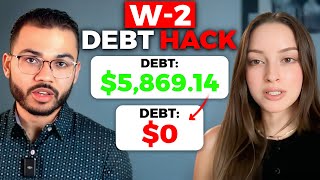
Denzel Rodriguez talks with a guest who paid off $82,000 in debt over five years using the debt-avalanche method and balance transfers. The guest keeps investing simple: Roth IRA in VTSAX, 401(k) split between VFIAX and another Vanguard fund, and a brokerage account heavy in VTI. The conversation covers whether to pay off a low-rate mortgage or invest instead, and why mindset and fee awareness matter more than the strategy itself.
Questions this video answers
About $82,000.
About five years.
Debt avalanche (highest-interest-first), with some balance transfers; benefited from COVID student-loan forbearance.
100% VTSAX (total stock market).
About a 50/50 split between VFIAX (Vanguard S&P 500 index fund) and another Vanguard fund referenced as "Vigax".
Chapters
Is there anything else you'd like to add to the. To the framework in terms of where this is going to take us? Anything you'd like to add there that I may have missed or is that pretty solid on just your framework?
I think that's everything. You said your audience is mostly out of debt, right? So.
So no. So most of my audience is in debt with a desire to get over it. Debt over earlier so they get out of debt. I have a good amount of clients that have become debt free now that I've been working with them for five to seven years. So I've helped a lot of people become debt free, helped a lot of people retire debt free in that sense. And now they're at that stage of just simply compounding money, saving, investing. And then there's folks that are doing a combination of wanting to get out of debt with their W2 income, but then doing what you did and wanting to start this business business and wanting to serve people and coach people and maybe do that via YouTube and how that's really accelerating the process there. But yeah, does that, does that help?
Yeah. So I guess because I didn't really touch on my debt. I had about 82,000. It took me about five years to pay that down. I know your approach is with velocity banking. Like I said, that kind of just went over my head. I. Even with my finances now, like when you asked about the 401k and that, like I don't. I try to keep things as simple as possible like S P500 total stock market. That's what I invest in. When it came to paying down my debt or like things that I put my money into, anything like that, I want to make sure I fully understand it. So I followed the debt avalanche method personally. Highest interest rate to lowest interest rate. Had some balance transfers in there. Luckily I did get. I did get lucky with during COVID because of the student loan forbearance. And that saved me a ton on student loan debt interest. And I kind of just saved that money so I could make a lump sum payment. And I made money by doing that because there was no interest. So that's not. That's kind of unique to me. But that was. My approach was just slow and steady. Do what I could. I still enjoyed life. I think that's important. I don't. You should, you know, be within reason and don't go crazy. But I was still traveling. Uh, I was still buying stuff and just making a budget, but mostly focused on paying down my debt. After I hit like A certain amount in savings and it was so fun. Honestly, getting out of debt is, is so fun. Like, nothing beats it, in my opinion.
I love that mentality. I. I like to encourage my clients, like, hey, this looks scary right now. I understand you have three car loans and you got all these. You have 12 credit cards and student loans. To me, this is a jigsaw puzzle. That's like. It's a game. Yes, for me it's a game and it's fun. And when we win, like, there's so many rewards that come with this. Yeah, this is like an evergreen infinity kind of a game. Like, you just keep playing and you keep growing, growing, growing in it. And it's like you, you just have to playground all day. That's. That's how it is for me. I go to work, I. In my office, I'm at the playground, whether it's creating content or I'm on phone calls with clients, and I'm just putting the pieces together for them and I'm trying to translate, like, that experience, even though, like, hey, you're the one in the thick of it. But I also want you to know, like, on the other side of this coin, there's so much fun. And if you can use that, I'm telling you, your performance is going to increase in terms of how fast you get out of debt. I know what the math says. It's going to take X amount of years and whatnot. But if we can get your mindset in alignment with your values and beliefs on how you want to proceed with your finances, you're going to accelerate what this, what the math says, what the spreadsheet says, what we're, what we're mapping out here. And then you're going to have so much clarity and you're going to have ownership and control and authority over, over everything you do. So I like that. Great. So we can close that chapter there. That's huge. Moving on to the financial strategy, which you touched on just a little bit, which just, you know, you're like, I like to keep it simple, which I think is very powerful now. You know, in, in my world, it's definitely more complex. I've always, you know, let my audience know, like, the type of stuff that I'm doing is, is definitely more advanced, higher level. It's going to attract certain people. And then I also know how to drop my levels down and, and just meet my client, where they're at, and then take them through the steps. So I've done debt snowball with my clients debt Avalanche. There's another method, I'm not sure if you're familiar with a cash flow index. There's another way of getting out of debt and very similar to debt avalanche where it focuses more on how much cash flow would I recover from paying off this debt over this, over this other debt. And some sometimes. For example, like a 30 year mortgage, if you locked in a 2, 3% mortgage back in 2021 and you have a super low mortgage payment and it's not a huge burden on you, yes, it's a huge balance, but it's not a burden like on their income and cash flow, then you can make a strong argument of maybe not paying off that debt early and sticking your money in a separate account like a high yield savings or brokerage account and you can earn more than 2, 3% on your, on your mortgage, then you're creating an offset in a way. So that's a little more complex, little tougher. It requires disconnecting your emotion from, from that mortgage, which is really hard to do at the end of the day. Like I still, I like to present the options and then kind of let the client, you know, choose what, what they want to do. Because I can, I can show them, hey, you know, I can, I can illustrate anything on, on, on a piece of paper and show you how awesome it is to say not pay off your debt and not pay off your mortgage early and just invest over here. But are you actually going to do that, right? Will you have the discipline to actually invest? Difference that you're cash flowing and not spend it versus just get the hell out of debt, right? Like just pay everything off, remove all the burdens, remove all the obligations and then you're starting with a fresh clean slate. The math might be against me with this method, but the reality is how many people will actually succeed in that versus the other way? And that's where it's like you're injecting human behavior into any, any math formula. So coming back to you again with your financial strategy, now that you got these accounts set up, here's how I'm operating. What do you actually invest in? And if you can share, what are your goals when it comes to the different financial accounts that you have? So you mentioned S&P 500 that you just contribute and is that your roth and your 401k and the brokerage account is just like, is what it is.
So all right, Roth IRA is all vtsax. That's total stock market.
Okay.
The whole thing. I still, even if I add to that I.
100% allocation. VTSA. Say again?
Yeah, Saxon. And a lot of people are like, why that one? It's like the most common question. I started by learning from the financial independence community. The fire. The fire movement.
So beautiful.
That's it. What's that?
That. No, that's beautiful. That's a framework. I'm gonna put that over here.
Okay. Yeah. So that's where I was first starting from. Aside from the debt, the. The way I started learning about investing was. Was that movement. And they were huge on BTS X. So it was like the bobbleheads. And that's what I started with. So putting your money into VTI is just as. As great, you know, that's my thought, anyway. Not financial advice, as we always have to say. But yeah, the ETF version of VTSAX is perfectly fine. So that's my Roth IRA. My 401k is split between Vigax and Fi. Vfiax, which Vfiax is Vanguard's S P500 index fund. Vigax. I don't know right now, off the top of my head, honestly, but I liked it because I go with anything that is. Has the highest return, you know, for like the lifetime of. Since it. Since it had begun, or at least over the last 10 years, the highest return and a lower expense ratio. Yeah. I can't remember off the top of my head what the Igax is, but it's a 50, 50 split in my 401k between those two.
Gotcha. And it's primarily indexing is what you're doing. You're getting dividends, and then you're just benefiting that you're betting on America essentially. Like, hey, it's going to keep on growing. And so I'm going to benefit in that. In that growth over the long haul and try to do it for as little fees as humanly possible. Because I'm pretty sure as you. As. As you know, and this is what a lot of my clients that are in their 50s and up have no idea. They're sitting on these qualified retirement accounts that are being managed by somebody else. They're paying 1.5 to 2 1/2% fees. And I'm informing them, I'm like, hey, I see you got a million dollars in there. 900,000, 700,000. That's not all yours. Yeah, it's been. It's gonna get, you know, eaten up. Hundreds of thousands of dollars in just fees alone. And we haven't gotten to the tax conversation, so I encourage a lot of my clients to consider and do deep research. Again, not financial advice. But take a look at what your fees and costs are to participate in this fund, in this thing that has all these management and admin fees in it, and just look at what the alternative would be. If you had more control over your money, you decided where you can allocate it. And you can essentially fire your financial advisor but still keep them on staff for maybe later insight as your account grows even more, maybe they can come back in. Yeah, but there's a lot of people that I'm like, you don't need a financial advisor. We're living in a time where it's opened up where you can, you can do this yourself without having to speculate, without having to guess. Like, do you believe America is just going to keep on growing? Like, look at its track record, right? We're crossing 250 years as a country. You're able to buy America, essentially buy the best companies in the world and just bet that they're, they're going to keep, you know, increasing. People are going to keep using these businesses to service all the different products and services that are, that are out there. So I like that. So 100% allocation on the Roth with the VT SX 5050s and P with, through Vanguard's GA X on the 401K. And then there was something else that you said, but essentially it's indexing 100% allocation there. Technically, that's, technically you're taking on 100% risk technically because you're not buying any bonds. Right. You're not keeping any money in cash necessarily. And that's not a bad thing. It's just you're, you're very intentional about it.
Yeah.
And so outside of the 401k, the Roth, we could go over the brokerage account. What is your strategy with the brokerage account? Even though, as you said, you're not contributing anything to right now, but you have in the past.
Yep, yep. So I actually, I want to go back to the being in 100 stocks. And I, I do do that intentionally. I'm 32 years old. So for me, I don't mind being risky right now. Like, I'm fine with 100 stocks and I feel very diversified by being in what I'm invested in. You know, like if a company goes out, I'm good. It's all right. And I know that this is putting a lot of trust into the U.S. government and U.S. everything. But I just, I, I really, truly do trust the people that I grew up listening to over the last decade as far as, like, the financial independence side of things goes, and that's primarily Choose Fi. Choose a five podcast. The other thing is I probably wouldn't start putting mixing bonds into my portfolio until I was like 50. So that's just personal preference. But I can absolutely understand if people don't want to be as risky. The other thing that you were talking about is the personal advisors. I also, I. It's so sad when I see people have them like, you probably don't need that. And, you know, I won't give my opinion unless I cast of it, really. But the thing too is there's fee advisor only. Is that what it's called? Fee Advisor? Fee Only advisors is what I'm looking for.
Fiduciaries.
Yeah, yeah, yeah. So you can just meet with an advisor for a flat rate and they can give you investing advice or, you know, whatever you need with that and not have to pay them monthly. And I think that's so much better than somebody constantly just with your money. But yeah, with my brokerage, I have, I have like 11,000, 12,000 there, and it's an 80%, 80% VTI, which is total stock market, the ETF version, and then 20% VGT, which is Vanguard's information technology fund. And that one does really well. I learned about it at some point, maybe two years ago, and I just did some. I heard about it and I did some research on it. I was like, hey, I think this is going to do pretty well. I. It's like a lot of the technology companies and it has grown. It's like the most growth I've seen. So.
That's awesome.
Yeah, that was kind of fun.
That's awesome. So you have some exposure to the AI market, the technology world. That's cool. 80% VTI. And this is not even something you look at necessarily. You don't have to really even look at this. You just. Just contribute, contribute, contribute. So that's your mentality there. Because I. And I have a funny feeling that it's less about how those things perform, it's more about how you're going to keep creating more value. To say, look, I believe that I can increase my income.
Yeah.
Far faster than what it would take for this to grow. Okay, well, I like that.
And I'm going to continue investing too. Like, that's the. I'm in this for the long run. It's not like I need that money anytime soon. I just keep adding to it and I feel pretty confident that I'LL be good come actual retirement age, so.
Gotcha. And then when it comes to the savings, emergency funds, sinking funds, those all are sitting in high yield savings. I'm assuming earning like 3, 4 plus percent.
Yeah.
And that is your liquidity part of your portfolio. So you have money that's locked up that you're like set and forget. Think about it. Then you have liquidity, right? Money that's available to me. And you have additional liquidity with that brokerage account that you can pull from prior to 59 and a half without any, any penalties. Same thing with the Roth, just up to your cost basis.









