How To Become Rich In AI With @TickerSymbolYOU
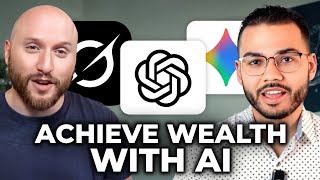
This content was created by Denzel Rodriguez. This content was uploaded by Denzel Rodriguez. This is a YouTube video titled "How To Become Rich In AI With @TickerSymbolYOU" created on November 7, 2025. It features a conversation between Denzel Rodriguez and Alex, discussing strategies for wealth building in AI by 2025. Denzel introduces Alex, who shares his journey from an engineering background to becoming a successful YouTuber and investor, focusing on AI and technology stocks. They discuss Alex's investment strategies, the importance of serving audience needs, and monetization through sponsorships and private consulting.
Chapters
Welcome, Alex. Thank you for taking your time to come on our channel. My channel today, where we're going to discuss your framework, how to become rich in AI in 2025. This is a topic that my audience for the most part, is not aware of. To give you a little bit of context of who you're talking to on my channel, you're dealing with majority folks that are between the ages of 45 to 55 and up, people that are about 10 years or so out from retirement. These are moms and dads, single moms, divorced moms, widows. My passion is working with moms. My first client was my mom. And the biggest block and hurdle for a lot of these folks is their debt, their cash flow, their credit score, and their overall stewardship of how they use their money. So for the last seven years, I've been helping them become a better steward over their money, pay off unnecessary debts, reduce interest on, on their cost of money, recover cash flow, positioning them to be able to save and invest. So there is, there's a nice category of folks that are at that point that are going to find this masterclass that we're putting together going to be very, very helpful, where they're cash flow positive, they're saving money, but when it comes to investing, they really were never taught what to look, where to go, how to start, that sort of thing. And they're looking for ideas, they're looking for opportunity. So I figured why not talk about one of the most revolutionizing things and in just the last few years here, AI and what it could mean for our everyday lives, but more so what it can mean for wealth building, creating generational wealth, and really securing financial freedom in a relatively short period of time. So sure, Alex, I want to give you the floor because I don't want to steal your thunder. I'll steal some of it. This guy has over 525,000 subs on, on, on YouTube. He's been on YouTube now for over five years, if I'm not mistaken.
Just on. Yeah, it'll be five years right after Covid.
Right, right after covet. Yeah, 340 plus videos, over 53 million views. And just to give it away, because I want to make sure everyone gets tremendous value and what to expect here. Some of the questions that I'm going to be asking Alex here really is the skills that he developed earlier, early on, his framework to become rich in AI as it relates to how he's investing his money, what he's doing to hedge, save, insurance, things like that, and ultimately his Mindset, strategy, and beliefs to formulate what he's been able to build in just the last few years here. So, Alex, take it away. I took some thunder, but if you can give us a little background how you got into this, then became a sensation on YouTube and been delivering tremendous value in the AI space.
Sure, yeah. So, first of all, I really appreciate that introduction. That was very kind. Probably much kinder than I deserve. Right. So my background is actually in engineering, not finance, which is probably like some of where the intrigue around my channel comes from. So I was a radar engineer for MIT for about eight years. I worked in their government lab. So I got to work on really cool projects. My sort of claim to fame is I work in the same place that Elon Musk tested his Falcon 1 rockets for SpaceX. I worked as part of that radar range on one of the radars there. I missed Elon Musk by a few years, but I worked with the direct people who work with him on testing those rockets. Right. So all that to say my background academically and career wise, is sort of in electrical engineering and AI, not finance. Right. So when Covid hit, what I did was I was still doing engineering work and I decided to start taking my investing very seriously and very publicly. So I've been a serious investor since about 2016, so going on 10 years now, maybe a little under 10 years. And I always invest in what I know, which is why I mentioned my background. So to me, I. I was investing in Nvidia, I was investing in amd, and I was investing in Tesla and Google very early because those were the products and services that I like, knew and understood very well in a personal level and in a professional level. And I'm sure we'll get back to that later when we talk a little bit more about my framework, which is definitely includes invest in what you know.
Right.
So when the pandemic hit, I was in desperate need of a hobby. Right. Everyone, you know, the world was shut down. I was stuck inside. I was working a remote job. I didn't know what to do with myself, like most people, I imagine. So I started looking for investing answers to specific questions that I was having. And I saw a market need. I wasn't finding what I was looking for at the time. People were investing in a set of funds called Ark Invest, led by Cathie Wood, who's an excellent AI researcher and she has an incredible research team. And so people recovering the types of stocks that she was buying, but not really tying it back to her research so how my channel got its start was in stock market research, talking about advanced technology that somebody else was investing in. And then that grew over time to talking about the things that I'm investing in and my background and, you know, sort of how I see the AI framework. So in about 2022, about two years after I started my channel, Cathie Wood made some investing decisions that I personally didn't agree with. They weren't wrong, they weren't right. They just like didn't follow sort of the way, the logic, the logical conclusions that I was drawing at the time. So I ended up diverging away from covering her and that's when I started covering my own stocks. And that's kind of when my channel blew up as a result.
Right.
Because I was starting to make some more accurate picks, let's say, about the way the world was heading. So I'll pause there. That's probably like the high level overview of like how I got my start, where I come from, who the heck I am in the first place.
So I love that. I love that. And so I got it. Covid comes and you're like, I need something to do. Why YouTube though? Was that the place that you were originally searching or did it feel most comfortable, kind of give us that the why behind?
Yeah, so I've never been like a short form guy. I think you're. So my audience on YouTube is actually a similar demographic to yours. I think my average audience member is 45 to 55 years old. So I think we all understand this very well. When I'm thinking about putting money somewhere, I don't want a one minute explanation. I want a thorough 15, 20 minute, you know, and I know that even that 15, 20 minutes is barely going to scratch the surface of what ends up being a pretty complex and nuanced topic. And whatever they say doesn't map one to one to my situation. Right. So just like you, I speak to, you know, tens or hundreds of thousands of people. So I have to keep things pretty generic and broad. And of course, everyone's financial situation is unique. Everyone different implies certain things about risk and all that kind of stuff. So I was looking for a medium where I could get that kind of nuance. So TikTok was out, Instagram was out. You know, Facebook and Twitter were more like text based. And I'm not trying to sit there and read walls of text. The only place where you can go for long form nuanced video discussions is YouTube. So it was a very natural selection for me. I've Actually, I tried like the other platforms and stuff along the way, like after YouTube, and I found that like, my heart and my home is on YouTube. Long form landscape content.
Yep, I like that. I like that. And so you're coming from a W2 background academic, right? When did you start an AI exactly? Because you said you became a serious investor around 2016, but you have 10 years of working as.
Yeah, so I actually. So my master's degree is in artificial intelligence. It's not in like all this generative AI stuff. It's not in the same type of AI like that we think about when we think about ChatGPT. But basically my background is in using AI to combine telescope and radar data to like, be better than the sum of their parts, which is how I ended up working at that missile and rocket test range. So I've been in AI for more than 10 years. I graduated college in 2011. Then my first job was with MIT as an AI researcher and a radar researcher. Used AI my whole time there, specifically Nvidia's GPUs. So, like, when we're talking about cameras and radars and like all these fancy, like, sensors, the long and short of it is, you know, this thing is collecting data, Right. Whether it's a telescope or a radar or whatever. And then we're using Nvidia chips to like run math through that data and come up with some answer on what, whether we're looking at something or something else or nothing or background noise or stars or. You know what I mean? So, like, not only have I been using AI academically and professionally, but specifically I've been using like Nvidia's AI stack academically and professionally, if that makes sense.
I see, I see. So we've got about 10 years of background. Just like you're in the industry, working it while. Yeah, tennis. By 2016, you're, you know, putting money away and you're investing into the things you already know about because you're like, I'm in it. I'm in the act.
Exactly.
Okay, then would you say 2021 is when you left your career or did you keep working?
Yeah, so I started the channel in 2020 and I took it full time in 2021. That's right.
Okay.
And I. Yeah, so it was the income. So, you know, I got lucky enough that my channel started paying the bills. I did the math that said, sort of like, hey, if I could do this full time, I would be able to grow it by, you know, let's say I was working on it. 10 hours a week part time while I had a full time job. So then the math becomes, hey, if I could actually spend 40 or 50 hours a week on the channel, you know, how could I scale it if I got five times more time on the channel and the number ended up being pretty substantial just based on what I was doing, one video a week. So, you know, I took the leap.
I love that. So there's definitely. You don't come from the school of thought necessarily where you'll see sometimes gurus, content creators, encourage people to like quit their job and go all in on, you know, social media or something like that.
You're kind of like, no, absolutely not.
You're like, no, this is what I know how to do and keep working. Covid hits remote opportunity strikes. I pivot. That's a skill in and of itself. You pivot and you're like, here's how I can double my skills and almost double my time in a sense. And now I'm creating two streams at the same time. It gets to the point where you're like, wow, this is really generating a lot of income. So when it comes to like your, your mindset, you initially stated that you invested in you, you doubled down on, on what you know, you double down on your own skills. And then the strategy was YouTube essentially creating content, educating people on what you already know. And I think this is a major gem that a lot of my audience, moms and dads, family people that I work with, I'm constantly encouraging them to double down on the fact that they've been a nurse for 35 years, that you've been a firefighter for 25 years.
Yeah.
You've been a police officer for 20 plus years. Maybe you don't need to start an Etsy store or an Amazon e commerce store. Maybe you don't need to join that mlm. Maybe you don't need to try to your luck in real estate and fix and flip. Like the opportunity just might be right in front of you and we just need a position. Yeah, need to tweak it, pivot. So I like that you're in alignment with that. And so mindset investing you what, you know, double down on your skills. The strategy just so happened to be YouTube. You're educating, you're creating content. And when it came to the business model now, because I'm assuming we don't have these business skills like some of these other entrepreneurs online that you're kind of just learning as you go. I'm assuming. Right. So for sure, at what Point were you like, okay, I'm going to leave this job, go all in on this, on this YouTube channel. But now in terms of continuing to create revenue to replace that high figure, high paying career, I'm pretty sure you, you amount it up to and benefits and security and all these things that come with totally being within a company to now going off on your own as a solo entrepreneur online and taking all this risk. What were some strategic either books you read, mentors anybody want to give a shout out to in terms of how you actually developed the business model to support what you're doing? Because that's a totally different ball game.
Yeah, it probably would have been smart to do all that stuff, huh? Like, so let me, let me back up and like get, give some real context, detail and color to like how I got here, right? So I, I think you did a great job summarizing it. But like since this seems to be more of like a, let's go deep, let's get detailed, let's try to extract real nuggets for people in their own life. Let me pivot and get like a little more like on the tactical level here, right? So I was an academic, right, Worked at mit, blah blah blah, worked in hardware and AI and I didn't ever plan on starting my own business. That wasn't in the cards for me. I loved the safety and security of paychecks. You know, I loved being able to turn my brain off at 5pm or 6pm When I got home, not working weekends. There's a lot to be said for having a W2 and home life, work life balance. Like I'm a full supporter of that. So I don't want to give anyone the wrong idea that like my goal in this conversation is to get you to quit your job and become a YouTuber because I work more hours now than I ever worked like at my W2. So first of all, right, I didn't want to be a YouTuber, so. And I'll explain how that ended up happening in a minute as, as we get there too, right? So the first thing that really happened was I had a personal need. I. There was a hole in my content diet that I was looking to fill. If ticker symbol you existed, I wouldn't have gone on to create another YouTube channel. I was looking for specific answers because I was taking my money and I was investing it. Let's get real detailed about what that means. I had a retirement account through work. It was a Roth ira. I was allocating the capital in it myself because I wasn't really happy with any of the fund choices that I was given after talking to a financial advisor, given my risk tolerance, given the fact that I don't have children, given that fact that at the time I didn't have a spouse, you know, and given my. The fact that at the time I had, like, maybe 40 years to retirement, right? So I'm pushing 40 today. We're talking about when I was in my early mid and late twenties. Retirement age is 65. So my time horizon was quite long, right? I was ready to take on outsized risks to make outsized returns, which to me means investing in individual stocks, investing in companies that are aggressively investing in their own businesses. So maybe not free cash flow positive, etc. But that basket couldn't be found by, like, a fund in my retirement accounts. So I started buying individual shares of Nvidia, Tesla, amd, Google, the stocks. I just mentioned at the start of this video, right? That investing research is what led me to start asking questions on YouTube at the during COVID right? So when I couldn't find them, I was like, well, okay, I'm gonna go find these answers. And instead of just like, okay, make my investment decision, go about my day, I was like, I'm gonna make the content I'm looking for. I bet somebody else is looking for this answer. And at the time, I thought I was gonna talk to maybe a couple hundred people, right? So if you're thinking about creating a side hustle, if you're thinking about starting a business, you're thinking. If you're thinking about, you know, making a pivot, don't think about it that way. That's probably my first and biggest piece of advice. Find a real need, hopefully one that you actually have, and just worry about filling that need however you're gonna fill it, right? Like, maybe it's doing research, but not making videos. Maybe it's creating a product prototype for yourself to, you know, do whatever it is that your need needs filling. And then when you fill that need, figure out how to monetize it after. Don't try to do it all at once, because that. That I think was like, how I bit off way more than I can chew in the beginning. And I had a lot of questions about, like, what do I do now? It takes me 40 hours to make a single YouTube video. Am I really going to quit my job? Right? So there's a lot of, like, headaches, heartaches, head scratching, you know, staring at my ceiling and stuff like that while I had both my W2. And a YouTube channel that, like, clearly had potential. But there's only 24 hours in a day, and I need some of that to, like, sleep, eat, you know, you're right. Stuff like that.
Have a life. Yeah, yeah.
So here. What now? Let's talk about the accounting. Right? So the first. The smartest thing that I think I did was I said, hey, here's my expenses. I know my budget very intimately. I built a spreadsheet just like, I'm sure many of the people you work with do.
Yeah.
I said, like, hey, this is. This is what it costs me to be alive for a month.
Right.
After all my responsibilities, all my nice to haves, all my pipe dreams, this is what it costs to be Alex for 30 days at a time.
Quick interjection. Are you debt free at this point?
At that interjection of, oh, so I have a mortgage.
Okay.
So. But that's it.
That's it. Okay, cool.
I like, you know, I have a rolling, maybe thousand dollars of credit card debt here and there. Like, go to a restaurant, pay it on credit, pay it off at the end of the month, whatever. Like. But yeah, my only major piece of debt is I own my home.
So. Great.
Shout out. My student loans got paid off. Like, that was, like, the first thing I did out of college was, like, aggressively overpay my student loans. Because, as I'm sure people are aware, that's, like, a pretty bad form of debt to have.
Yep.
And so you need to kind of like, roll it off yourself as soon as you can.
Right. So love it.
Debt free. No kids, no spouse.
Okay.
I'm in a position to take a risk. How do I know when it's time to take the risk? Make a spreadsheet. These are my costs for the month. Here's how many months of Runway I need to give myself. So before I went full time, I made sure I saved six months of expenses. So expense. I never measure my bank account in dollars. I realize that you store value in dollars, but the real way to measure bank accounts when you're serious about your money is, in my opinion, is time. Right. How many months, years, weeks do I have in the bank account? And when I'm making a big bet in the stock market, how many months of my life am I betting? And when you start measuring your bets in time instead of money, you start taking them a lot more seriously. Because when you lose, you know, you lose. Imagine some high figure, what, like $10,000, right? Like, that would hurt. Right? But when I. When that's like a Wait, that was like a year of my free time's worth of money. It hurts a lot more. It stops you from making that bet, right? So all of a sudden, and I'm sure that ramps up even more, by the way, if you go, wait, I'm betting my kids tuition on this, right? I'm betting my honeymoon fund, I'm betting my whatever the next big personal goal you have, right? So when you start. Stop. When you stop doing it in terms of dollars and you start doing it in terms of like real tangible things that that money could have bought you elsewhere. Now you have to be a good investor because you're probably too scared to invest that money unless you're sure about what you're doing with it. So that's why that's like my mental framework about investing now. And as I've grown the channel and as I've sort of taken on some personal responsibility about the things that I talk about to strangers who don't know me and I don't know them, I think about that even more. I'm like, hey, I'm about to open my mouth and 10,000 people, 100,000 people, maybe a million people are about to at least hear what I'm about to say, right? Maybe I need to take that very seriously, understand risk, understand reward, stop chasing hundred baggers or whatever and start focusing on real compound returns over time. And so if I could summarize my framework in a few words right now, it would be slow is steady, steady is fast, slow is steady, steady is fast. And as long as I'm doing things slow and steady, I know I will get rich fast because I'm not going to have setbacks. I'm not going to lose it all along the way, right? Like I'm going to be able to enjoy my life. I'm not going to burn out, right? I'm moving slow and steady. And steady is fast.
Absolutely. Another saying comes up in my mind about said by Myron golden, get rich fast and get rich slow. So there's, there's fast money and then there's slow money, and you really double down on that slowest steady, get rich fast quote, unquote. And, and the way we get rich fast is by that framework of investing in you what, you know, doubling down the skills you already dedicated time to instead of chasing the next shiny object that appears online that's getting all the hits. It's like, no, it's actually right in front of Alex. Here's what it is. And you found a gap in the marketplace. So I took note of that. But there's another underrated thing that you just kind of nonchalantly, you know, kind of threw out there is that this topic, this notion of serving. And that's interesting to me because oftentimes when we talk business, when we talk making money and trying to improve one's life, you said don't worry about. Really none of that. Worry about the need and filling it. Well, in order to fill a need, you've got to serve. Yeah. So where did that mindset belief come from? Just this idea of serving people, what people are looking for, and in exchange, you'll get what you want or your time will come eventually. So it may not happen right away, but your time will come. And, yeah, it's proven with what you've been able to build so far.
So that's a real. I've never, like, really put thought into where that belief came from, but if I had to guess. So my mom is a psychologist. She's a marital counselor by trade, and she is a frankly terrible businesswoman. That is like, just not her strong suit, right?
Her.
Her strong suit is her profession, right? It's. She's got a PhD in psychology. She. She loves helping people. She loves helping couples. She's really good at her craft, Right. She's an artist, and her art happens to be the academic pursuit of psychology. She is killing it in business today, and it's taken her decades and decades and decades to really refine her practice to the point where she's killing it because she's not a great businesswoman. But what that really showed me growing up is I think if you pay attention to your craft, whatever it is, right? It doesn't have to be psychology. It doesn't have to be engineering. It can be firefighting. It can be nursing. It can't. Whatever it is, right? If you're really good at your craft, there will be a moment where you realize how to monetize it, how to build a business around it. It's actually not that hard to, like, build a good business, like, register an llc, hire a decent accountant, know how to, like, track your books in a way to give it to them to do your taxes. Like, I was so daunted by opening my first LLC, and it ended up being, like, one form and 100 bucks. You know, I'm in Florida, by the way, so it's like, take that with a grain of salt. It depends on your state, right? But, like, you know, my Florida LLC and my Delaware LLCs were not hard to open, right? So today I have four LLCs, you know, and they work with each other in strange ways. And taxes do whatever my tax accountant tells me to do and stuff like that. The business part comes naturally, right? It comes when you are like, hey, I have a need that not only I have met, but I can meet other people's needs with the same product. I'm. I want to scale, right. I don't just want to do research for my portfolio. In my case, I want to put my answer online in a way that other people can digest. That was it for me. So I started publishing YouTube videos. And so going back to our earlier discussion, right, YouTube. I didn't choose YouTube. YouTube was the result of what I was trying to do. Right. I wasn't like, which platform is going to make me money? I was like, where can I post long form video content to get my point across? And at that time, 30 minutes, like, you think my videos are long now? I had videos on machine learning going Back to like 2018 that are like 34 minutes long that like, nobody watched. You know what I mean?
Yeah, you've really dialed in. You've got it down to a science. I'm still learning. I've got our two hour long videos where.
Dude. And there's nothing wrong with that. It's just like, you know, who, who. The kind of person that watches that is very different from the kind of person that has like 14 minutes, let's say. Right? So it's just an audience like you, and you learn that as you go. But my point is, I wasn't trying to be a YouTuber. I wasn't trying to make money. I was trying to keep a video diary of my own investment decisions and, like, figure that out. And so like, the pieces started falling into place. Hey, this is the tool you use to edit videos. This is the place to publish long form videos.
Yep.
This is the kind of stuff that works there. So you need to pick up this skill titles and thumbnails, Right? Like, so it was like a very natural evolution and not a forced one.
Yeah.
And it's definitely one that I'm still evolving.
Right.
Sorry, go ahead.
No, my, my fault. It became more of an efficiency conversation. You just can't stumble across this. Yeah, it's gonna make my life more efficient. And boom, you had the resources to do it. And then that made more money. And then that made more money. You just keep getting more and more efficient and then you surround smarter people around you, I'm assuming to help you continue to do what you do best and delegate the rest, in a sense. I'd like to ask another part on the strategy, staying on topic here, and now that I understand your belief model and the mindset and how you really adopted some of that thinking from your mom and how that's helped you just progress in life really, really well. And again, I think service, just the idea of serving first, filling that need, is super underrated because you can't necessarily measure it in terms of. On a balance sheet. But if we're talking relationship capital, we're talking networking. It's the largest bank account, in my opinion, in anyone's portfolio is that relationship capital you build with the marketplace, which in return looks like no like and trust, no love and trust a person like yourself or myself or anyone that is aspiring to be in the position that myself and Alex are currently in now. So I want to ask, as. As you're building this out, what were some monetization vehicles or products or services, tangible or intangible, that you were like, if I do this this way, this might work? Or was it I just stumbled on this monetization vehicle and then you went all in. How did it develop?
I'm. I am a serial stumbler. If I could describe my life, it's like, failing forward is basically what I'm known for, right?
Okay.
So the first thing I did when I became, like, YouTube partnered or whatever it is, is like, you know, you get your thousand hours. Sorry, your thousand subscribers and your 4000 hours, right? And, you know, you enable ads and you feel really great, and you get that first $7 paycheck from YouTube, and you're like, I did it. Made my first dollar online. You know, I can just hang up the hat now. I've. I've won at life, right? And then you go back to your budget and you're like, oh, crap, it cost me more than $7 a month to feed myself. I guess I better figure out how to make more than $7 if I want to keep this as my career, right? So that was it. That was like, I enabled ads. And then I, you know, somebody approached me and was like, hey, we want to sponsor one of your videos. We want to be, you know, we want you to read this ad for us and we'll give you money. And I was like, that's incredible. Yes, right? And I accepted a whopping $400 to, you know, read an ad in the middle of my video and, you know, figured out who from there.
That.
That is actually not a lot of money in my space, right? And I got totally ripped off because I'm new and that happens to everyone in every business ever. Right. Your first deal is like, wow, I did my best work for a fraction of a penny, right? So, so I got an agent. I grew up, you know, and I was like, I need somebody who understands that part of the business way better than I can. You know, you sort of admit to your own ego, hey, just because I run the business doesn't mean I'm the best at every aspect of the business.
Correct.
You know, so got an agent. That 400 number added a few zeros to it over time. And you know, that's now that's a substantial part of my channel's revenue. I've never really done like a newsletter. I had a Patreon like membership for a while, but that was just like, it was a lot of extra work for not a lot of extra revenue. And like, this is something that I've genuinely learned and like advice that I'm willing to give and sort of a hill I'm willing to die on. I would much rather take one big check from a big client than the equivalent to like thousand checks from small clients because then you can like spend time nurturing one relationship, figuring out the needs of like one person. In my experience, when I opened the door to like take five $10 a month from a lot of people, all of those came with their own sets of demands and wants and oh, you should do this, you should do that. Then you're like, well, I don't really have time to do all that. And they're like, oh, but I'm a paying customer. I give you $5 a month, right? And you're just like, well, wait a minute, like that's a coffee man. You know what I mean? You're buying me coffee and you're asking me to do like a PhD thesis on this stock, right?
Yeah. So given an inch, taking a mile.
Yeah, given an inch. So, so if you're trying to think of a side hustle or a business, realize that it's, it might be better to put yourself in a position to, to work with 2, 3, 5 people instead of 2, 3, 500 people, right? And just think about the trade offs in doing that, right? Like what skillset do I need to have to land a bigger fish, but fewer of them, right? So now, so what my business model is now is, you know, I make four, five, six videos a month. They're all sponsored by big corporations that can write big checks. And all the value I provide my audience is absolutely free, right? And I Love that. I love not taking money from the people I'm trying to serve and taking money from these giant faceless corporations instead. It's like a win, win, win.
Right.
I feel great, sort of karmically, spiritually, but also financially, but also like my actual service is doing very well for it because people are just trading their time for my value. There's no money being exchanged.
Yeah, you are one of those few channels where there's no ads. It's just you talking the whole entire time. And whatever sponsorships that are sponsoring your video is also in alignment with what you're talking about anyways, is what I.
It's great.
I've noticed that as well. You're not talking about a pharmaceutical drug that you should get, you know, or some random thing that just throws the whole video off in a sense where that, where that can occur with ads and stuff. So I really do appreciate a channel that can get to that point to do that because I totally understand that in the beginning you're again, you're trying to eat. So there's a lot of folks here that you're gonna do what you think you can do best and then you improve, you tweak, you make improvements over time.
Totally.
But you picked up on it quite early on. The sponsorship monetization from YouTube directly. Sponsorships took over the monetization, I'm assuming. And was there any other income streams that has formed out of this along the way or is it just strictly sponsorship?
Nope. I tell you, I have no membership. I have no course, I have no newsletter. I've no. Nothing, nothing, nothing. It's. And like I'm, I might like. So I do really want to like tackle the newsletter bit. They're like, you know, know 45 to 55 year old audience. Right. A big percentage of them are readers. They do enjoy reading online content. So I'm, I'm happy. But it's coming out of a place of. I want to meet the needs of my audience. Where they are. If they want to read stuff and I'm making videos, I should probably put out stuff that they can read.
Right.
So it goes back to like the whole like service first model of like where what, what do they want from me and how do I best fill that need. So one thing that always keeps coming up is they do want a membership from me so that they can network with other like minded people. I would have never thought of that. Right. It's like when I think of a membership it's like you pay me, I give you stuff. That you're not getting on the channel. It's me to you still. Right. And they're like, no, we don't care about you. I want to meet other ticker symbol, you fans. I want to see who else, like, shares my mentality. It's like, oh, that's smart. Like, you know, I can. So I'm working on stuff like that now because, like, there's a real need there and. And has nothing to do with me or my ego. They don't want more of me. They want to meet each other. Right. It's like, oh, because that's smart. I should pro. Okay. But it comes from. It always comes from. What does my audience need?
I love that. Right.
Not how can I extract more money from them, or else I'd have six courses in a, you know, 10 memberships. Right. Like, I know how the game is played.
Yeah, yeah. It's a game that I. I dip my toes in over the years. So I definitely see both sides of it. There's. There's worlds to it. There's good, bad, and ugly in total courses and programs, things like that. But in your case, it's rare. It's not spoken about a lot because it's not necessarily duplicatable. It's not incentivized from the guru that's recruiting a bunch of people to sell their coaching to get. To then get certified to create your own programs, to then recreate programs. Yeah, programs. And it creates this nice, everlasting flow of income of just repurposing content that you could probably learn for free or in a book for 10 bucks, you know, is the God's honest truth. And so I've dipped my toes in there. And then I took the model of give everything away for free. This is something Alex Hermosi says. I don't know if you're familiar with him.
Yeah, very.
He's like, just give it all away for free. And if you're gonna charge, you can charge for the process of someone actually helping get there. So I'm assuming maybe someone reached out to you online. It's like, hey, this is wonderful what you're doing, Alex, but can you actually do this for me? Right. And then it's up to you to say yes or no, Right? It's up to you say yes at that point. But I've had that experience too, where it's like, I'm. I got to the point where I was just giving it all away for free. And then people like, I want to pay you to do it for me. Then I don't want to spend 10 hours, please do it for me. And that's where I was like, okay, so I can serve for free and leverage the audience, but then there's going to be people that can also help me cover my expenses and needs to keep doing what I want to be able to do for folks, helping people for free and been able to build a whole, you know, ministry out of that. Just kind of just serving people for free. But then there's also the paid aspect. So there's both windows that those that are watching that you can go down and then there's this unheard of, not too spoken about model, which is go after a large client. Faceless corporation has a ton of money to blow on marketing and get in front of a marketing model. Social media, where television is dying, where old, you know, legacy media is dying, and all the eyeballs are now gravitating to these platforms. So the corporations are writing big checks to get in front of those big solo content creators because they know they're capturing a large audience and they know their customers are hanging out with Denzel or with Alex. That's a model in and of itself to absolutely consider. Which again, happy for you to break that down for us if you're okay with it.
Yeah, like that's actually a really good thing to double click on. Right. So do the model you just described of like, hey, give it all away from for free and then charge people to do it for them if they just want you to supply. The answer is exactly what I believe the right model is. Right. So as opposed to, let's say building a course, selling a product, getting people into a funnel, you know, doing all these other like intermediate things to sort that you have to repeatedly sell. Right. So I do have like a third business. The third business is literally exactly what you just described. It is where people will ask me to do investing research for them. It's usually like small family offices, you know, a couple rich individuals, whatever. But like they're like, hey, I love your stuff. I would like you to essentially make me a private video on this, that or the other thing, you know, usually a technology, usually a private company. Right. And I don't want it as a video. You can just like break it down for me over a phone call or whatever. But like I'm essentially paying you to like remove for this block on your content calendar so that you can answer my specific question that, that I'm planning to make a lot more money from. Right. So back to your example. That's exactly right. You know, you can learn how to do all this for free, or I can pay you to literally show up and do it for. Or you can pay me for me to literally show up and do it for you. And that's a great model because now you're just doing the same thing you were doing anyway, but for a private client, right? So I lose a sponsor slot. I don't make a video that week, whatever. So this, these people end up paying me to replace all that work, plus all the work of, like, you know, making a research project that I can only use once and then I'm not allowed to make another video out of and all that stuff. So there's a lot of overhead. So that's why it's so expensive, right? Like, it's not because, like, oh, I want a lot of money. It's because, well, I have two or three employees under me, I have sponsors I got to fill. I, you know, I. I'm going to be under crunch for the rest of the month if I take a week off and do this right. So, you know, again, it's never a pricing model that comes from, I want money. It's like, well, wait a minute, now you're paying me to replace all these other costs and expenses, right?
Is what it's worth.
So like. Yeah, exactly. So it's like the, the theme I'm trying to hammer in over and over again is all the answers come pretty naturally. I didn't like, derive or divine any of my business processes. I was like, how do I actually just do this? That's the process, right? Like, you know, and, and next time if I want to do it faster, I need to refine the process. Right? So it's not. I didn't open a business book. I didn't go and like, take some masterclass. I can recommend a few, like, personal development classes. Just that helped me, like, cope with the stress of it all. But, like, the actual day to day, I didn't take some YouTube boot camp. I probably am terrible at making videos if I only make one or two a week. I know people who make like two or three a day and it's like, okay, clearly they have a different process. Right, Right.
Different model. Yeah, yeah.
Different model. Yeah.
Thank you. Oh, this is, this is really good. I'd like to pivot now and go even deeper. Now that we've gotten to know Alex, his background, his mindset, strategy, beliefs, the skills you developed over the year, and how you've been able to really produce a lot of success, leveraging YouTube and all it has to offer. What I'd like to dive into now is your investing framework as it relates to creating wealth in AI. So it's a twofold question. There's the part about how much to invest, Alex, and where and what companies. Right. And you cover that a ton on your YouTube channel. So I urge people to go watch Alex's channel so that he doesn't have to spend too much time here on it. What I'm most interested in is, is the where are you storing the dollars and then how is that being allocated? So earlier you mentioned Roth ira. I'm a big fan of Roth ira. Are there other kinds of financial vehicles, accounts, setups that you're using as our starting point? So I'd like to get that understood, and then you can talk to us about maybe the allocation of the. Either the ideal portfolio, or you can just say, look, this is what I do. Not investment advice.
Yeah.
This is what I do.
Yeah. So, first of all, like, I want to make it clear I am absolutely unqualified to give financial or investment advice of any kind. Not a financial advisor, never claim to be. And I cannot and will not give financial advice. Right. So everything I'm about to say is absolutely my and only my opinion. And it's just an opinion of, you know, a guy who's in his late 30s, has no children, and has, like, a stomach for risk. Maybe not an appetite for it anymore, but, like, can handle risk for long stretches of time. Right. So massive grain of salt on everything I'm about to say. Right. Okay. So I have a Roth ira. I always max allocate that I have a traditional aira. These are leftovers from my time in my W2.
Okay.
So I always allocate to those first just because they. They grow tax free. Right? So it's like, that's where I want to, like, store as much of my wealth as I can. And then everything after that just goes into a standard Fidelity brokerage account. There's no, like, magic other than I have a holding company, the nuances of which we probably don't care about. But it's just because I'm both an investor and a financial YouTuber. So there's some, like, deep confliction that has to get done between how I buy stocks, when I buy stocks, which stocks I buy, versus, like, when I talk about them online.
Oh, really?
Yeah, there's something. There's some, like, stuff that you really want to, like, make sure you're doing or not doing when you're, like, if you make a video that moves the market and you're buying stocks and then making videos right after it. Exactly.
Yeah, dude. How do these other creators do it? Like the Graham Stephans and, and Andre Jix and where they're like, boom, buy this or I'm buying this right now.
Yeah, like it's a, it's an interesting question that I don't know the legal answers to. Okay, So I stay away from it all. So like here's, here's how I protect, I can tell you how I protect myself from any of that stuff.
Please, Right, Please do.
I talk about very big companies where it's very clear that little old me is not moving Nvidia stock, right? Like that's a $4 trillion company. If I move it one penny, it's like I have a superpower, right? That's incredible. So that's one thing is I cover very non volatile like investments for the most part. Two is I maintain a trust that has like a fixed allocation schedule. You know, so money goes in at the start of every month. It gets allocated equally like among whatever.
On your stuff, Your auto.
Yeah, on my stuff depositing, which has nothing to do with like my content schedule and whatever. So it's like, you know, I hold shares of Palantir, but when I talk about Palantir versus when I buy Palantir completely independent and irregardless and whatever. Right? So I'm never in the position where I buy a stock, then I talk about that stock, then that stock prices go up right after I bought it. Right. Like it just doesn't happen. So, you know, and I. That way I can sleep well at night. Nobody's calling me in the middle of the night. I'm not going to be on an episode of Billions. You know what I mean? Like I can just sort of live my life, right? So there's, but again all those account. There's like a little bit of nuance there around a trust. Other than that, it's like the Roth ira, the traditional ira and then the Fidelity account, the traditional standard brokerage account.
The traditional IRA, is that a Roth like 401k or 401k? Yeah, but Roth, because you said tax free growth in the traditional Iraq or is it tax deferred on that one?
Sorry, it's tax deferred.
Okay, thank you, Appreciate it. I wanted to clear.
Sorry, sorry, sorry.
Okay, cool, cool, cool. Yeah, got it. So we got a traditional IRA that's tax deferred growth because that's from your career that you just keep Feeding into.
Yep.
And the company you work for no longer contributes to that. That's just you, correct.
Yeah, yeah, got it.
And the max contribution is 26,000 now, or is it a little bit higher?
I'd say it's either 26,500 or 27.
Some. Somewhere around. I'll. I'll say 26. Five for now. And someone could fact check me in the comments for sure. And then you got the brokerage account, which doesn't have any limits. So we're literally just talking about.
And then the Roth. I think the Roth is seven right now.
Yeah, Roth is seven. Yep. Yep. Let me ask you this. You are a married man now, so congratulations. You and I both get. Got married on the same exact day and.
Yeah, hilarious. It's amazing.
Yeah.
Same day.
That's pretty, pretty cool. When it comes to your, your wife, are you leveraging anything on. On her in terms of, like, accounts, for example, like a Roth ira, like funding hers or do, you know.
So she works for the government, so she has her own set of funds she, like, her retirement can invest in. So I took a look with her once and I was like, hey, out of these three funds, you know, this is the one I would pick based on your age and your risk tolerance and the kinds of goals you have for retirement. We have a joint Robinhood account together, so yet another brokerage account, but it's just like a place. So this is not a plug for Robinhood. It just happens to be a Robinhood Gold account. The nice thing about Robinhood is it's like a high yield, like, cash account for the cash in that account. So in one. In like the same one account, we have like, high yield savings and our investments that we both have access to. So it's like we kind of just killed two birds with one stone, which is why we did that. But yeah, I don't. We just do that together because. Okay, that's how we combine finances. You know what I mean?
Very helpful. Okay, so Roth, traditional IRA brokerage account. When it comes to the Roth, because you personally funded that. When it comes to the different brokerage platforms, are you the type that just really loves one or are you the type that kind of spreads out for diversification purposes or, you know, risk, things like that? I've heard all the different angles.
Yeah, look, you, like, you probably know the answer, but the answer is I'm kind of an idiot, so I have a million of them. The reason why is so. All my personal non. YouTube stuff is on Fidelity. Okay, That's. That's where all my real like my personal holdings, Fidelity and then Robinhood, the joint, the one joint account with my wife and that's it. In actuality in, in real like truth, I have like six or seven brokerage accounts because I've been sponsored by six or seven brokerages for the YouTube channel.
Got it.
So I'll take some money and I'll put it in there to show a real portfolio and be like, look, this is why this brokerage is great, blah blah, blah. Right. So non ideal. But I have, you know, money spread all over the place, ideally invested in the same stuff and I try to keep track of it. So the way I manages all is like I download all the data every month. It auto populates a spreadsheet and I look at one spreadsheet instead of like six brokerage accounts.
Okay, got it, got it. So for the everyday American watching that is trying to not only decide the type of financial vehicle whether it be a raw traditional brokerage, we're trying to figure that out. The second thing is figuring out the location where you're going to hold these funds at would from, from your point of view, is it just a matter of hey, you could pick any one of these out of a hat and they have all pretty good reputation or is it a select few that you would say, or is there a process that you would encourage someone to do to vet maybe a brokerage before saying yes?
Yeah, I think the best brokerage is the one you're going to stick to. For me, like just because I've been on Fidelity so long. Fidelity is who my employer MIT Lincoln Laboratory used. So like we all got a Fidelity account as part of our retirement. Whatever. Whatever, right. So I started on Fidelity. I really like them. Turns out they're incredibly reputable. They've been around forever. Can't say highly enough about them. But the truth is today it's like, hey, if you want a mobile first experience, like if the only way you're going to invest is it's going to be on your phone, check out Robinhood. Robinhood's great. It's got a great interface, it's got a lot of great features. Very easy, you know, again I'm. But like if that's it, they're mobile first. If you're big into dividend stocks or allocate like managing portfolios, like if you're the type of person who thinks about portfolios versus just like multiple individual stocks. M1 Finance has a really great interface for managing a portfolio. Not just a list of stocks. That's like kind of their big shtick. So really if you have a specific investing philosophy or a specific investing, like mo, like I'm only going to use my phone. I don't like looking at my computer. There might be like, hey, go shop around for like the couple features you're looking for and see which brokerages have the best. But other than that, like if you're. And make sure you're sticking to brokerages with like hundreds of thousands of reviews obviously.
Yeah.
But between the Robinhood and M1 finances and the Fidelity and Charles Schwab's of the world, like they're all going to do all things, you know.
Yeah, okay, good. I like that. I like that response there for that. I think that's very, very helpful. So there's picking the types of accounts you're a fan of the Roth, you just had the traditional IRA from, from work and then you got your standard brokerage account. Now when it comes to the actual investments that you're making with the dollars that you now have contributed. And again, this is not investment advice. We're getting into a very narrow discussion here on how one can create wealth in a specific industry. AI, which is what you're solely focused on when it comes to how you invest in the AI industry. Talk to us a little bit about that process and then the allocation of how you're picking. And if you're someone that goes off timing or are you more so thinking long term, give us that, that framework there.
Yeah. So the actual framework is like pretty simple and difficult to execute, I would say. So simple in the sense that it's really one step, it's like research stuff until I'm really comfortable putting money against the idea, which is both, you know, that's it, I'm done with the framework. But Also it takes 40 hours of my week. Right. This is my full time job is sort of like I've stopped calling myself a YouTuber and I've started calling myself like a semiconductor analyst on YouTube. So like I really. The part of the like the video job isn't the part I care about. Right. It's the research part. It's the do I have an idea here that's like worth investing in? Do I? You know, and that just unfortunately takes time. Right. But let's talk about sort of one level higher, how people can like not spend 40 hours a week thinking about this and still reap most of the returns. Right. So it turns out that the nasdaq, which, the symbol, the best fund that I like is qqq. Right. Already handles a lot of this research for you, by the way, like, stocks are picked and by the way they're weighted and whatever. So if a company is winning in AI, chances are it's heavily represented in the nasdaq. And if you go back in time and you look at the NASDAQ versus the S&P 500, I can't remember the exact numbers for 20, 25 or whatever, but like in the last 15 years, it's beat the S&P, like 13 of those 15 years. Right.
The QQQ.
The reason it. The QQQ. Yeah. So I'm talking about QQQ versus spy would be the equivalent S&P 500 tracking fund. Right?
Yeah.
So very standard. Anyone can and should own these funds. They're both great funds. Right. SPY represents the S&P 500. NASDAQ 100 is represented by the triple Qs is how we call them.
Yeah. And the top 100 companies in the world, but with a focus on tech or. No.
Yeah, it's. It's like, not exactly like that. I actually can't remember if, like it includes international right now, for example.
Okay.
I know it doesn't include finance. So like one of the things, you know, S p is top 500 US publicly traded companies.
Yeah. And based off.
Yeah. And it's like, huh.
Based off revenues of the company. Because.
Based off market cap. Pure market cap, pure size. Right. So like nothing to do with the revenue. I think they have to be like, profitable. There's like a few other, you know what I mean? Free cash flow, positive market cap, blah, blah, blah. The NASDAQ has additional requirements. For example, you can't be a finance company. So there's no banks in the NASDAQ. Right. Bank of America, Chase, J.P. morgan Chase, blah, blah, blah. Okay. The reason that ends up working really well is the companies floating to the top of the NASDAQ tend to be very tech heavy because tech has the highest margins. Right. So like, if you're creating something that can be replicated for free, Right. Like copying pasting code and like selling the same code software to like thousands and thousands of businesses, you're going to float to the top of the NASDAQ because your market cap is going to be high and you're not going to be a bank, you're going to be a tech company. And there's. I'm. I'm oversimplifying, but the point I'm making is I only outperform the Nasdaq, it turns out, by like 2 or 3% a year, which is actually incredible. Like that's, that's really good results. But it doesn't justify spending 4 hours, 40 hours of your week doing it. You know what I mean? Like, if I didn't make a business out of doing it and I was just doing it for myself, I would be the biggest fool on the planet.
Yeah.
Spend all this time, you know what I mean? Because someone to eat out like 3% above the NASDAQ, right?
Exactly. They would be like, dude, just buy the QQQ.
Just buy the QQQs and enjoy your life. You're free, right? Like so I happen to love the research. Like it's, my master's degree is in it. I have years of experience in it. Like this is stuff like I'm really passionate about personally, you know, Like I spend my free time building spreadsheets and playing board games and optimizing like Dungeons and Dragons stuff. Right. Like my personality just lends itself very well to building financial models, thinking about the future, getting emotionally invested in technology, thinking about AI, playing with AI in my free time. If you're not that kind of person, drop some money in the queues and go live your life. Go enjoy your children. Go take that vacation. Never think about the stock market ever again. Right. Allocate to the QQQ every month if you want to take less risk. Can't recommend the S&P 500 enough. Maybe do something. So like the old advice on the street used to be 6040 portfolio, right? 60% stocks, 40% bonds. I believe that model is kind of dead. Sorry, I do have a 15 minute warning. Just, just so you know. Okay. I kind of think the 6040 portfolio is dead, but what's replacing it is 60% S&P 500, 40% NASDAQ or the other way around, right. Like you want to allocate more risk, 60% NASDAQ, you know, and then if you're really gung ho about one or two stocks, because you know about a lot about them, which we'll talk about next, buy one or two stocks, but otherwise, you know, you have 100 with the NASDAQ, 500 with the SPY. So you know you're going to be pretty diversified, right? Like now you're holding 500 plus companies and you can sleep well at night knowing that if any one of them goes down, you didn't just buy, blow up your retirement, right.
And so outside of the, again, the Roth, the tradition of the brokerage account, have you come across or learned any other kinds of Accounts like maybe the Roth 401k or like other, other accounts that might pique your interest in terms of. Because it would seem like between the Roth and the traditional, that money's locked up. You're not touching that. Yep. That's for retirement. So it's really only the brokerage account that's liquid and that's where you're, you're investing. And it sounded like on the, on the hedge side of things. So if I asked you, how do you hedge your money or, or protect what you're investing in, is it purely the confidence and research that you're doing, or is it something like purchasing the Q. Q. Q. Or just having a certain amount of money in a high yield savings tucked away? Yeah.
Okay, I see. Yeah. So, like, from a risk management perspective.
How do you derisk what you're doing if someone wants to, like, follow the suit?
From a risk management perspective. Right. There's lots of different ways to think about it. So the traditional advice that, like, people will give you is like, oh, make sure you have a diversified stock portfolio and make sure that if you're putting a dollar in Nvidia, you put a dollar in Costco or Walmart, because they're fundamentally different businesses. I think that's fine. That's not really the way I invest. So, like, I diversify across asset classes, not across stocks themselves. Right. Because what you'll find is in like a big drawdown. These stocks are all correlated anyway. For example, when Trump announced tariffs, consumer goods companies and semiconductor companies got hit. They all went down like 20 or 30% in April or whatever. You know, you pull up the stop chart, stock chart for any of these companies, you're going to see a big dip in April. So the way I like to do it is I, I hold some real estate, so I own my home. I have a mortgage. I bought my mom a condo a few years ago. You know, I have a couple other mortgages as well. I have private equity. So, you know, part of my job, I think I said it a little earlier, was I do some research on the private side for family offices and wealthy individuals. I also am allowed to be in those deals. So, like, part of the deal for a lot of the research that I do is, hey, like, if this turns out to be a great thing, I'd love an allocation. And most people are like, yeah, cool, if you have the money, you know, I, I'll connect you to the guy I'm buying shares from. Right. So I, I have actually a sizable private equity portfolio and then Public stocks, Right? Warren Buffett, I think, said this. I can't remember if it's Buffett or Munger off the top of my head, but it's one of them. And diversification is a shield against stupidity. And I strongly believe that. I strongly believe, like, if you're serious enough to be investing, you should be serious enough to do the research to make sure you know what you're investing in. And that, to me is. It's not as complicated as I think we've made it out to be in this chat, right? If you're an iPhone lover, you should invest in Apple. If you believe that the iPhone is. Is the best mobile experience, right? You should be an owner of this company. You understand the product that drives their revenue, right? You intimately understand their business, you know their services, right? If you have Apple TV, if you have AirPods or Beats, if you have the iWatch, right? That's it. You understand their business. They don't make other stuff besides what I just said. That's like 90% of their revenue. Everything I just said, go buy that stock. Be an owner of the business. You. You do understand as a user, right?
Mm.
If you shop at Walmart all the time, if you're like Walmart and Sam's Club, I swear by them because they have the best products, the best prices, you know, blah, blah, blah, blah, blah. The best customer experience. Go buy Walmart stock. Go buy it because you want to own the businesses that you understand, right? Walmart's a great company. If you look at Walmart stock chart, you're not going to be sad owning that business. I own Amazon stock because they carried me through the pandemic. Right? Like, not to mention they carry the entire Internet. But that's a separate story. But, like, don't overthink it. What are the things in your home that you know, love and use daily?
Yeah.
Should you own some of that business if you think there are a lot of people out there like you? Right?
Yeah. That's it, dude. This was extremely valuable. And I know I only have you for a little while longer, so I want to summarize here in terms of your framework. Again, just going back to. Is invest in you first, double down on what you know and your skills from there. How can we fill a gap? It doesn't always necessarily have to be a business, although it can be, but it could be something in your company that you're already in, that it's a matter of elevating. It's a matter of just acquiring a role or maybe It's a pivot, as you did in, in Covid 2020. It taught everybody how to pivot naturally or forcefully, I should say. Everybody had to pivot in some, some way. And people like you, myself really took advantage of that opportunity. And here you are today. And from, from there you take that same framework in how you invest. You keep it simple. You do research on the things that you know, like and trust as if I was a customer and you allocate it. The accounts that you use are Roth, traditional IRA brokerage account, pretty standard stuff. You could probably add more to it. Whether it's Roth 401ks self directed accounts, you can probably get a little more excited with it for those watching. Or keep it as simple as that. Have one that's fairly liquid of like a brokerage account and then have accounts that are not so liquid so that you're also investing for a long term future retirement, things like that. And then the way that you hedge your money is you're saving. So you keep money in cash. Q. Q. Q. Real estate, private equity. And you reject the idea of diversification in the traditional sense where it's like have money here but also in this place in case this goes down, this will stay up kind of thing. You're, you're more so asset class. Let me have some real estate, Let me have some private equity. Let me buy the entire stock market.
Yeah, the indexes.
Yep. Let me buy the individual stocks that I've done massive research on. And then I have a business that produces cash flow which allows me write offs and deductions, allows me to keep more of the money I already make. And then you have money in cash, whether that's sitting in a high yield savings or the Robinhood account where you can earn. I think it's like 4% or something like that for just money that's, that's sitting. I love it. I think this is awesome. And I'd love to finish off with some skills that you recommend, those that want to become wealthy in AI, whether it's you work in the industry and then create your wealth that way, or you're investing in AI via stocks and things like that. Can you think of any skills that you would, you would recommend or courses online or whether it's schooling, anything that you would, you would suggest for someone that's like, yeah, I want to go all in and AI because the next 10 years are going to radically change the way we see the world, I think in the next decade.
Yeah. So you know, like I'll give you the. The, like I'm half kidding answer first and then I'll give you the real answer, right? The if you just want to get wealthy in AI, just go watch Ticker symbol you. I like. I'm. I am for sure. This is the only time I'll be so confident and arrogant. I'm. I am the best channel on planet Earth when it comes to investing in AI. I'm the only one with the background. I'm the only one that goes to all these places, touches all the things, interviews the executives, you know, like, you're not going to do better than Ticker Symbol you full stop, right? I'm half kidding, but I'm half not answer. The real answer is treat it like any other product, right? Go touch it. Go play with ChatGPT. Go read about what data center powers which models. Go start connecting the dots on what AI is doing in every industry and who's building them, right? A lot of the best AI models are by publicly traded company Google. Gemini is incredible. You know, Meta's llama models are incredible. You don't have to imagine what these things are. You can go and use them today. A lot of my job right now is assessing how different models perform, who builds them, who hosts them, which servers they're on, right? Like what's happening to that infrastructure, who's investing more, who's, blah, blah, blah. But it all starts with go touch ChatGPT. Understand its capabilities. Get good at prompt engineering, right? Like, that's probably the buzzword I would go look up is you know, how to be a good prompt engineer. And whether you want to be an investor or you want to build a new skill, whether you're trying to upskill in your current job or get a new job altogether, understanding AI is going to help you in ways you cannot even understand. People are hiring people who understand AI. All the best investments are in AI. All of the best tools, frameworks, softwares, hardwares, everything are focused on AI. The best thing you can do right now isn't even watching Ticker Symbol you, it's going and touching ChatGPT itself, Google, Gemini itself, Metalama itself, and like just getting a better understanding of what the heck this AI thing is.
Dude, I love that. Thank you so much again for your time. It's been a pleasure having you on my channel. For those that are listening still, you're locked in, dialed in. Please go check out Ticker Symbol. You phenomenal channel. Big shout out and congratulations on your YouTube channel success, but also on your new marriage as well. God bless you thank you and enjoy the rest of your day, everyone. Talk soon. Bye now.
Hey. Thank you.









