How To Increase Cash Flow No Matter Your Debt or Income | Full Masterclass 2026
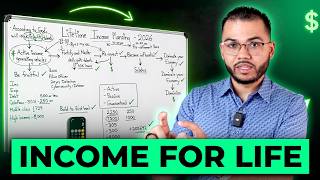
Denzel Rodriguez teaches a biblical wealth framework built on mastering your skills and reinvesting cash flow through five stages: Fruitful, Multiply, Replenish, Subdue, and Dominion. He outlines cash-flow thresholds ($500, $1,500, $3,000+) and a 12-step process to increase income without cutting expenses, emphasizing skill-based income before external assets like stocks or real estate.
Chapters
Let's take it straight to the whiteboard, giving you the framework of which this community will operate by, because it's the most reliable framework ever to exist and has the longest track record of success. So this is both rooted in principle, Kingdom principle, logic and historical evidence and proof, which is Genesis 1:26-28, which is referring to the original mandate given to the first man ever created on the planet. His name was Adam, first man created by God, and he instructs this man to be fruitful, to multiply, replenish, subdue, and have dominion over the earth. That was the original mandate prior to sin ever entering the world, and yet it is still the same mandate today, thousands of years later, and it still works. Not only does it work, it works phenomenally well today with all of the systems, with all of the technology, with all of the resources that we now have today that Adam did not. So I would argue we are at an advantage, although when Adam was first implementing this framework, there was no sin, so therefore really no distraction was in his way. That's probably the biggest disadvantage us Christians today and just people in general have, is the distraction and sin, the temptations of the world, the influences of the world. Is probably the biggest drawback as it pertains to this framework— to be fruitful, to multiply, replenish, subdue, and have dominion over the entire earth, really over your entire life— is the self-limiting belief, the self-limiting thoughts that you and I have. That's unavoidable. It just, it just is what it is. And our ability to overcome that can only be accomplished one way, and that is through the Father. So as it pertains to answering this question of income, the thing that dominates almost all of our decisions in life is based on the amount of income you make per month will determine the type of lifestyle you live. Will determine the type of clothes you wear, will determine whether you go on that trip with your family, whether you take your kids on that memorable experience or not. Right here. And that's unfortunate. That should not be the case. Our decisions should not be decided by our money. Our decisions should be filtered through the Father's word. Will always and always. And when we always filter our decisions through the Father's will, this produces everlasting joy. You can never be disappointed in your Father's will because he knows what's best for you, even in times of crisis. So I'm going to beat that down into this community, into the Finance Geek community, into the Increase Academy community, into the Plans of the Righteous community, and any other communities that end up collaborating with Finance Geek community. So I'm just going to beat this into our brains that if we operate according to God's will, he has put some skills and some gifts and some talents into us already. Those skills, gifts, and talents are active income-generating vehicles at some capacity. That is what that means to be fruitful in the 21st century today, is you are becoming who you are by exercising your skills, gifts, and talents in the marketplace and receiving income payment, the exchange of goods and services rendered onto you, the royal citizen of the Kingdom of Heaven here on Earth, as a kingdom ambassador, as a representor of the kingdom. You will, you will be compensated at high lengths, at high rates when you operate according to God's will. There is no refuting this. It just is what it is. And it is so powerful. And I want every believer to experience this because it is game-changing. It is not only life-changing for the user, for the individual, but it is also life-changing for the people that surround that individual. You will be able to create massive impact because God's gifts over your life will make room for the things you desire on, on this planet. And not only things that you desire, but things you desire for other people to operate in abundance, right? So According to God's will, skills, gifts, and talents, these will produce active generating income vehicles. These are the things I want you to really, really hone in on. You have to be clear on this. Active generating income vehicles are not— what are they not? So are not anything outside of you, meaning not stocks, not real estate, not gold, silver, crypto, not any asset outside of you is an active generating income vehicle. Now I'm going to confuse you because in order to generate income on this planet, you need assets. But I just said that there is no active generating income vehicle that is an asset outside of yourself is the answer, okay? It's the skills, gifts, and talents that you possess to acquire these things. Many of us, when we're putting financial putting our financial investment portfolios together and we're, we're saving money and we're investing money in assets or in products, financial products and financial vehicles, we're thinking it's the product, we're thinking it's the asset that's going to produce us that lifetime income forever. No, take a step back. It's the skills, gifts, and talents according to God's will that will help you acquire those things, but I don't want you to be dependent on those things. So active income generating vehicles can only be that W-2 role that you have, biz role that you have, or self-employed role that you have. Is So the thing that you're doing might be in the world of stocks, in the world of real estate, in the world of gold, silver, crypto, in the world of some type of industry. That's where we begin. This is where you're being compensated for your knowledge of a specific industry or asset class. Okay, that is where we take that step back and say, okay, first it's this, right? Then what I want to do with that individual that understands what their gifts are, I want to take a season of time. In my case, it took 7 to 8 years to fortify and master This is my example. Some may accomplish it faster, some may take longer. The active income generating vehicle that I possess is the financial wisdom of stewardship, cash flow management. That's where I rest my skills, gifts, and talents in the ability to comprehend someone else's finances and show them what's possible and show them how to recover and show them how to increase and show them how to multiply. So for the last 7 to 8 years now, I've been fortifying that skill. We want to take 10,000 hours or more to fortify and master those skills, gifts, and talents. That's the multiplication part, biblically speaking. So we need to be fruitful, we need to work work, not in the sense of what the world defines as work, but work meaning becoming who you are. Depending on the positions that we're all in, you might have to work or use a skill that you possess that may not be your passion. Sometimes the skills and the gifts or talents that we possess may not actually be your passion or the thing that you love to do, but it's the profit house. It's what will fund those passionate things that you desire to do. It may fund that. For some of you, your skills, gifts, and talents is the thing that you love most to do, and so it just pairs well. Okay, you're going to fortify and master that when you're locked in on this framework it no longer becomes a, a wrestle with life. It no longer becomes this idea of how much effort I have to put in. When you see the, the, the number of 10,000 hours, you're like, oh my goodness, how much— what work is that going to require to get that under my belt? Some of you already have 10,000 hours in. Some of you have 20,000 hours in, especially those of you who have been walking on this planet for at least 40+ years. There's something you've been doing for an ungodly amount of time that nobody knows about, and so therefore you're not being paid what you're worth because nobody knows. It's plain and simple. That's how the marketplace works. Marketplace is pretty brutal. There are thousands of people right now getting laid off because they refused to fortify and master their skills. They got comfortable being a driver for UPS, for Amazon. They got comfortable being on a manufacturing line. They just got comfortable doing the thing that they've been pretty good at doing, driving a forklift, whatever it may be. They got pretty dang comfortable at that and didn't realize in the background companies were investing billions and billions of dollars in AI, robots, and automated ways to do the things you know how to do as a human being. And it's now being replaced with AI, robots, automated delegated systems for a much cheaper cost. It's pretty insane. If you have been one of those people in the past, boom, that was your light bulb moment. That was your, whoa, this ain't safe. I'm not safe. I don't have a secure job. My skills, gifts, and talents are no longer of worthiness for that company or organization or for the industry as a whole because you or someone else refused to keep growing in that season. You refused to pivot, and now you're being forced to pivot. Why? Because remember what I said earlier, majority of your decisions are being influenced by income and not God's will of your life. When you operate according to God's will of your life, He'll give you advanced warning of when shifts are coming and how to pivot. God's been giving me plenty of time and warning to pivot, to shift, to add, to improve, to get better at my craft, to get better and better at my craft. And I refuse to not operate according to God's will. I refuse to operate according to my will. I refuse it because I've learned it just don't work. It just ain't so. Not fun. Quite stressful. You lose so much time in life. It's brutal. You can fall into sin. You can fall into temptation and just have setback after setback after setback because we're rebelling against God's will. Pretty simple. Fortify and master your skills, gifts, and talents. 10,000 hours minimum is a, is a standard, a rule of measurement that has not yet failed. Anybody that puts 10,000 hours into any craft is going to look like a master. People are going to come to you and ask, how do you do that? And you're going to be able to give the framework. Here's how you do that. As you're fortifying and mastering your skills, the next step according to the framework God's framework, he just simply says replenish. So reinvest back into the skill. I would say to explain— to expand on replenishing is we can begin to have an allocation. Right here is where we can begin to have an allocation. Cash flow majority should go to the skills, gifts, and talents that you already possess. Cash flow, minority protection, accumulation. This is where the conversation can start to begin depending on cash flow. Let's take a second. Let's look at what— how America is doing overall when it comes to cash flow. Let's, let's get some insight here. I'm going to share my screen. I'm going to zoom in on this. According to AI, the average American household has roughly anywhere from $1,700 a month to $2,250 per month in discretionary income, meaning money left over after taxes, housing, food, and debt payments. However, this varies widely by income level, as over half of Americans. So 50% of Americans today, half of the people in this room basically, have about $250 or less, while higher income households retain up to 40% of their income, which is why the average ends up being this higher number, when in reality We're, we're, we're more so here. Majority of the clients I work with are operating under a 50, under a, yeah, under $500 in cash flow per month. So let's take that data and let me get some participation here for the people who are present. Put your average monthly cash flow you have today. And we're gonna get an average of the room in here. I'm gonna put my average cash flow in the chat as well, and I want you to be conservative. Give me a relatively lower number. What is your conservative monthly net cash flow after all your bills are paid, after all your debt payments, after taxes? Just like it was saying on the, on the AI, what is that number? Okay, so we have $2,250 so far, right? We're gonna, we're gonna get an average of this room. Please participate, take a few minutes, and if you don't know the number down to the exact, just give a low conservative estimate like You know, it's no less than this number. Okay. And if you're negative cash flow, put the number. If you're zero cash flow, put the number. This is a safe place. This is a very, very, very safe place. There is no other place typically where, where you can be this honest, not be judged, not be called an idiot, not be called stupid, not be called anything. Very, very, very safe place that I've established over the last 8 years. Okay, we can be real here, we can be honest, and when we do that, we get the support that we need. Okay, I'm gonna be super conservative on my number. So my number is roughly $7,500 monthly. According to Google, we have categories. We've got, as it pertains to cash flow, we have 50% of Americans at at $250 or less. Higher income households retaining about 40% of their income. High income households, top 20%, have an average annual discretionary income approximately $96,000 after essential spending. So $96,000 divided by 12 is $8,000. That's about— I, I would say it's pretty accurate because I just gave you my number with $7,500 as a conservative number to a little bit higher than that. So that makes perfect sense. So I'm gonna use that number as well. Let's come back to the board. So far we have myself, two other folks, $2,250 in positive cash flow, $7,500, -$305. And then this is gonna really help segment us into groups on how we should be thinking Based on the cash flow level we are at. This is the ideal. Following this framework is the ideal. This is how I want you to think short-term and long-term and forever for the rest of your days. This is how I want you to be thinking. Dominion Wealth Creation Formula, God's way. This is ideal. I giving you this. This is the groundwork. This is the foundation. Now we inject your situation into that, and that's where we get the customization. So where this flows well, where this process of be fruitful, multiply, replenish, subdue, and have dominion begins to flow really well, starts right here where your active income-generating vehicles are producing a 17— if I would, I would say personally $1,500 or more per month. This is the first level, first level. When we can get to $1,500 or more in positive cash flow per month, okay, we can begin to enter into the stage 3 of the process of wealth building as it pertains to God's will. First level. It can also happen somewhere around here as well, but this is where the allocation of that cash flow can come into play, where you, where you can start to expand it a little bit. For as long as I remain under $1,500, no matter how old I am, I shouldn't be buying really anything outside of my own skills, gifts, and talents. This is, this is my opinion in alignment with God's will. If I focus on God's skills, gifts, and talents that he bestowed onto me, and I have $5 to work with, or $50, or $250, or $500, I should not buy Bitcoin. I should not buy gold. I should not buy silver. I should not buy a stock. I should not buy Nvidia. I should not buy the S&P 500. I should buy into God's stock. I should buy into God's portfolio of assets that he's provided to me already until the that has now produced $1,500 or more, we can now begin to allocate some of that $1,500 toward protection and accumulation that's in alignment. So protection and accumulation in alignment with your skills, gifts, and talents, not outside of it. Make sense? So $1,500 First level. Watch, you're going to be amazed at how this works, like how, how, how it just lines up perfectly when it comes to the data I just pulled off the internet and just doing a survey of the room. Okay, I have one of my clients in the room here, so I'm just going to go ahead and look at her numbers real quick. Okay, so we got -200 to 400. I'll go right in the middle. I'll do -300. So that eliminates one $250. And then my other client is positive $4,000. It's actually more, I'm being super conservative on their, on their part. So positive $4,000. Then I'll do the last person at $250. And then so that's 1, 2, 3, 4, 5, 6. And I'll Pick for the other person, I'll have them be a middle-class individual, $1,000 in positive cash flow. So we got 7 people in the house. This is mostly accurate. We're going to determine the average cash flow in this room and then we're going to segment the groups: high income, middle, and low income according to cash flow. Even if you make a high income, So that's how I'm going to segment you as well. Even if you make a high income but your cash flow is under that $250,000, under that $500,000 a month threshold, in my eyes you're low income. In my eyes, because I work with people who make a million dollars and spend a million dollars, to me you're low income. You have a really high paying skill but you're missing the management part. And the stewardship part. So it's just, it all comes in and it all goes out. If you're not properly stewarding those skills, gifts, and talents, and that's where my biggest skills, that's where I thrive the best in for a lot of folks, is again at that, at that very beginning stage. But many of us get desperate and we get concerned and we get scared. We're like, oh my God, Denzel, I'm 50 years old and I'm 55 years old and I'm close to retirement and I should be investing and I should be saving more. And there is some truth to that. The— I'm not going to say, but I'm going to say, and if we follow God's law, what's more likely my path to success of the thing that I want, which is to retire on time, which is to have enough income for the rest of my life. I don't want to have my money run out before I die. That's the fear that many pre-retirees have, people who are already in retirement. And everybody who's trying to get their money in order is that, that lurking, lingering fear of your money running out before you graduate Earth. Biggest fear. Everyone has it. How do we prevent it? There's only one way. There really is only one way. Now, if you don't follow God, can you still have success? Yeah. Well, whatever you define as the success— let's just say the world defines it as having plenty of income— I'd say the only way that would have occurred is they had enough time to make it happen. So if I'm talking to a 30-year-old that doesn't believe in God, hey, time's on your side, buddy. You could get your skills, gifts, and talents in order, fortify and master it. The cash flow delta you create, you start to allocate, you start to save some, invest some, and put some back into your, into your business. Give it time, you'll win. It's not even, you know, an argument there. You'll accumulate most likely over a 30, 40-year period. But if someone's got 10 years in them, we've got 10 years to work with, 5 years to work with, 7 years to work with to really do something. This is it right here. No avoiding it. This is where the game changes. Okay, so $2,250. $7,500 plus $4,000 plus $250 plus $1,000, right? And then minus $305 minus $300, okay? And divide that by 7. Average cash flow in this Zoom meeting is a positive $2,056.42. So the, the, the— this is a perfect example of high-income earners and middle class picking up all the slack of the person that's negative, negative, and then low cash flow. Okay, so we end up around this number of $2,056, which is above that first level. So again, for the people in this room and those catching the recording, if I'm negative cash flow, if I'm zero cash flow, and if I'm under $250,000— I would even say under $500,000 or less— your eyeballs should not be focused on any asset out there in the world. I don't care how much gold is going up. I promise you, you're not missing out. I don't care how much Bitcoin is going up. I promise you're not missing out. The, the people who are rocking here at the— in the room, and those catching the recording that are above the average, yes, you could be missing out if you're not properly distributing the cash flow that you've mastered. Because it's one thing to be actively engaging your skills, gifts, and talents, and then you're multiplying that and you're reinvesting in your skill. But if you stop at, at 3 and you don't become influential, you don't subdue the marketplace, you don't subdue your economy— the way you subdue your economy is now you put protection over it, you start to accumulate assets outside of yourself to protect yourself from your very own lifestyle, from your very own ability to get paid via your skills, gifts, and talents. What happens in the event you're not able to operate? What happens in the event Denzel can no longer speak because I get some kind of throat or vocal cord disease or something like that that strips me of my voice? My voice is one of the most expensive assets I have in my portfolio. This is my voice. I talk to my clients over the phone, on Zoom, to you guys right now in group. I make videos with my voice. My voice is everything for the most part in my business. If I lose that, cash flow tanks tremendously. So if I spend the next 40 years just being fruitful, just multiplying, and just reinvesting into my voice, into my skills, gifts, and talents, and my business, and I don't begin to allocate some of that cash flow positive into the Bitcoin and the crypto and the gold and the silver and the real estate and other people's businesses and private money lending and insurance and disability and long-term care and life insurance and the cash value and, and all those things. If I don't do that, I never become influential, and I don't finish the dominion part over my economy. So to subdue is becoming influential, is controlling what you can control in your environment, becoming very confident in that, to then dominating your economy. Having dominion. You gotta finish. So that's the message to the individuals in the room and those watching the recording that are above— you're well above the average cash flow of this room. The average cash flow of this room is $2,056.42. If you're well above that and you're just kind of stacking cash right now and it's just kind of sitting in cash accounts and, and CDs and it's, and it's getting put back into the business at great lengths, your vulnerability is not addressing key risk that you're now having, which is what if you get sued? What if you have this? What if you get hurt? What if you get injured? What if there's a death in the company? Okay, you can more than afford to allocate 10 to 20% of to protect the skills, gifts, and talents that God gave you. Very, very important. You have to be aware of that. That's the message to those people, to the people in the room operating under $500 a month, zero dollar cash flow, negative cash flow. Your sole focus is cash flow. That's your— that's, that's your main focus. Stay right here. You have not been fruitful enough yet. Is, is one of the elements. The second could simply mean that your lifestyle choices are not in alignment with the value you get paid in the marketplace for. You could potentially be in the wrong environment. You could potentially be in the wrong company. You could— there's a number of things that are, that are not lined up accordingly. And there's not enough financial professionals spending time on that. We're trying to solve a backend problem on the frontend. That's how most financial advisors are. Okay, for the two people who are negative cash flow, you go to a financial advisor and they're like, let's find money that we can take out of your hands put it into my hands and I'll earn you 8%. I'll get you an average rate of return. No, that's not for you. That's not for you yet. 8% is 8 cents on the dollar. Think of it that way. You know how long that's gonna take? Forever. We don't have forever. We need to make drastic change. In the next 6 months, in the next 1 year, in the next 2, 3 years. Drastic shifts. And in part 1, I really hammered on this idea of when we're following God's will over our life, our lifestyle starts to become in alignment in terms of what it costs to live God's lifestyle that he has over your life, all of a sudden you start to recapture all this cash flow because you're no longer living for yourself and you are putting your money where your mouth is. So when you're praying to God and you're showing up at church and you're doing all the things that in the body of Christ says to do, right? So this is not to devalue any of the Christian things that we do in the Christian community, whether it's, whether it's give your time, whether you're giving some money, whether you're tithing or whether you're not tithing, whether you're attending church and you're reading your Bible and you're praying every day, every night, every morning, blah blah blah. This is not to devalue any of those things. We want to keep doing those things. Those are our, those are our cultural rituals and traditions. Keep it up. Don't, don't stop those things. There's no need. None of those things interfere your outside of Christian lifestyle. Does that make sense? As Christians, we have a portion of our life that's Christian lifestyle. Go to church, you volunteer here, you go on a mission trip, you do this, you do that, but that's only a portion of your time. What if it became 20%, 30%, 40%, 50% of your time? Well, then guess what? The things you do outside of the lifestyle that God has for you, the, the, those things that cost more money that you're no longer dedicating towards, okay, now you start to recapture that, that cost of living. Now granted, let's say we've combed through a lot of your lifestyle. Let's just say we've done that. There's some people who are catching the recording and, and even present in a sense where we've done that, we've combed through everything. Part of the playlist that I, that I have. Let me just copy and repaste it for those that came in slightly after. You go to that playlist, there's a 5-part series, 12 Ways to Increase Your Cash Flow Without Spending More Money, without, without reducing your spending. And without working more hours. So there's 12 things that we can do, and in all seasons of life, and it applies to all ages. Not all 12 things, but all 12 things will apply to every single person at some point in their life in this room. They all will apply. They're all relevant. It's just a matter of timing, picking and choosing which of the 12 makes sense that we're going to, uh, attack. I'm not saying to do all 12, cuz that won't make sense. But you go through all 12 things that I laid out, how to recover cash flow without decreasing your expenses and without increasing your amount of hours that you're working. Let's say we did all of that and, and it took you from a negative $305, negative $200 to $400, to zero, break-even, or even some positive. Now we're floating a little bit. I still don't want you thinking about gold, silver, real estate, crypto, none of that. I still don't want your, your mind does not to be, does not need to be clouded with FOMO, fear of missing out on those opportunities. I promise you there will be many more that, that come. Promise you there's gonna be many more. Then we begin to float, we're treading water for those that are under that $500 a month cash flow. We're focusing on those skills, gifts, and talents that we, that we possess. Now we get to make an intentional decision here. Now that you're floating, mind you, I didn't tell you to increase your work hours, and I didn't tell you to cancel or reduce any of your lifestyle expenses. I just, I just took a deep dive into your finances and figured out how to actually operate the lifestyle that of which you're living more efficiently. Like, hey, instead of shopping here, we're gonna go here. We're gonna sign up for this membership and get this money back, and we're gonna go here. We're gonna use this card instead and get this cash back rewards and points and miles and blah, blah, blah, right? Let's say we did that. Great! We have to decide, okay, do we want to adjust this current way that you're living right now? Let's just say for the people in the room that were negative— I just took you through that 12-step process— now let's just assume your positive cash flow or just break even. We have to make two decisions. Hey, Mr. and Mrs. Client, do you guys want to work more hours, get overtime to juice up the cash flow production in your economy, and/or do we want to make a lifestyle adjustment that is more in alignment with God's will over your life? Where do we want to begin? Let's say you go with, I want to align more with God's will over my life. We go through the lifestyle expenses that you have, the most prominent areas that we can adjust our lifestyle. Write this down: the most, the most relevant, prominent, juiciest cash flow areas to adjust our lifestyle more according to God's will. Is where we are directing our eyeballs. Where are we spending money in our free time? So when you're not working in your home, what are you doing? Are you on your phone? Are you watching the television? Okay, how much does it cost to be on, on this phone? How much does it cost to be on the television? Well, Denzel, we have 5 streaming subscriptions in our household and we pay for cable and we have Apple Music and Spotify and Apple Data and all this stuff. Okay, here are our opportunities to recover a few hundred dollars if we no longer give our time and attention to that and just go all in on the Bible and Denzel's content. If we just go all in on the Bible and on Denzel's content and Travis's content and other content creators that are in alignment with wanting to see your life improve more, you're going to be— you're not going to have time to watch TV. You're going to be, you're going to be so out of touch when it comes to social media, when it comes to new movies and new shows and what's going on with, with different trends. You're going to be so out of touch with, with sports. Like, people ask me, you know, what's your favorite team and are you paying attention to Super Bowl, this, that. When I tell you I'm so out of touch, it's not even funny. It's, it's quite sad. But here's the reality: I'm sitting with $7,500+ in cash flow every single month. Sometimes $10,000, sometimes more. And I'm dedicating that cash flow to God's will over my life because I'm just excited more for what God's doing, not only in my life but the people around me and my clients. I'm just more interested in getting to know the Jasmins of the world and the Erics and the Shirleys and the Almas and the Anthonys, like, that just excites me more than any other TV show or movie or sports team that's out there right now. It just is what it is. And because that excites me and I'm actually genuinely interested in, like I said, people like yourself and getting to know your stories and what you're working on and what you're building and how I can maybe collaborate and how I can help and running numbers and making videos like this. It doesn't cost a whole lot of money to live my life. Doesn't cost a whole lot. And I have a very high-paying skill because I put in the 10,000+ hours. I became a master or an expert. And I reinvested over those years into my skills, gifts, and talents. Because it initially produced a high cash flow spread according to the lifestyle, according to God's lifestyle for, for my life. I then began to allocate money, setting up the retirement accounts, buying the proper coverage, life insurance, saving, tax-free wealth building, gold and crypto and silver. And now I'm seeing those, those benefits. Okay, so I'm in the become influential stage. That's, that's where I'm at now. So once, once you begin to produce above average cash flow, above average cash flow, let's say $3,000 plus, when you get to $3,000 plus, we, we can begin to allocate a percentage 10 to 30, maybe upwards of 40% to the protection and accumulation vehicles that are out there. And now you step into becoming influential. You take that mastery and expertise that you have and you become influential. And you're becoming influential stage is the, is the pre-retirement years. Pre-retirement years. This could be anywhere from 10 to 20 years range. So I'll use me as an example again. So from 23, 22 to 30 has been dedicated in this category of generating active income vehicles, fortifying my skills, gifts, and talents, becoming a master and, and replenishing, right? So reinvesting, replenishing and reinvesting. Okay, so now I'm 30. So now I'm 30 years old. So now 30. So the next 10 to 20 years is now fully dedicated to becoming influential, to subdue the economy. To subdue, to control the things that I can control in, in my life. So becoming influential, 10 to 20 years, those are my pre-retirement years. This is where we take hard work, cuz the, the, the upfront period is hard. It's simple in practice It's hard in the sense that we have to, because we're fallen beings and we have sin, we have these distractions and things like that, we have obstacles and challenges and you know what, and that never stops. That, you know, comes with being a Christian. We all know that. Carry your cross. We understand that fully. We fully understand that you're going through that process. Is what it is. Now you come to the place where you are extremely confident in your craft, extremely confident in what God has done for you. You have your testimony, you have your experience. Now you begin to expand and multiply beyond your own ability to produce. The results. That's for the 2, 3 people in the room that are above average cash flow. You got certain vehicles in place that are protecting your family. You and I, we have to begin thinking expansion, scaling, pre-retirement, 10, 20 years. And then dominion is when you— I would argue right before retirement maybe, and once you achieve retirement. Now, retirement to, to, to me is not a big word in my vocabulary. It's not a big use. I'm just simply using the word retirement because everyone pretty much understands the timelines typical of, of typical retirement. In, in my framework here and what God has over my life, retirement is just not a, a place I'm trying to get to, rather understanding the season that I would be in the older I get. So when I'm 50, or when I'm 60 and 70, and I— as I get older and older I'm going to understand I'm no longer 30, right? I'm no longer 40. I'm no longer 20. There's certain things I could have done in my 20s, 30s, and 40s that are just not so in 60s and 70s. When I approach that, in my case, 10, 20 years— so go 20 years out— 50 and beyond, when I get to 50, I have to really begin to think succession. Who's gonna take over this? Of, of the things that I built and the businesses and the investments, who's gonna carry that torch? The legacy that I'm creating, that I'm building with the Father, who's gonna take that over? Who do I pass the keys to the kingdom that I built here on earth with God? Who do I give those keys to? More than likely it would be your children. If it's not your children, maybe it's a young individual that you mentored, that you brought up from the very beginning. It could very well, it could very well be one of my youngest clients that I have today that follow me all these years and they want to take over. It could very well be that. It could be a spouse, right? You never know. There's, there's all kinds of things that can come into this play. In my case, it'll likely be my children, or a client that I've had for many, many, many years that is younger than me and they want to take over. They want to join into the vision of the business and, and take over. Or it could be an external company that buys the business. So now they buy me out and I still— in my case, I don't drift off into the sunset because I haven't finished there's still dominion. Dominion takes many, many years to achieve dominion. Many, many years. When you have dominion, like, you're altering, you're affecting how people think. You are influencing the next generation at a very, very high level. And that's incredible. Now, keep in mind, that could be used to manipulate for evil. And the same can be true for good. So if you have someone who's in a dominion role, and let's say they have a track record of doing this, and then they create content and messages to organizations that teach this formula on how a young man can do this, how a young woman can do this. Do you know what that would do for our economy here in America? Do you know how much the poverty percentages would come down and how much homelessness would decrease and how much low-income families would step into middle and high income if families follow this framework? That'd be insane. That's the power of dominion, of what dominion can do. This is how we play our part in the grand master, in the grand master's plan. That's how we play in that, be a part of that here on Earth. Not, not waiting till we die, hoping and praying it all works out. No, you must get in the game. You must fight the fight. This is what it is. This is what it is, right? So recap, recap, people in the room. That are above average cash flow of $2,056.42, and those catching the recording, you are most likely at the fortify and master stage and reinvesting stage, and you're about to enter becoming influential. The only thing that could be in your way are key risk, like you haven't, you haven't, you don't got enough coverage yet. We need to look at whole life insurance. When you look at term, we need to look at disability income, when you look at long-term care, when you look at living benefits, you look at those things. Accumulation vehicles, your, your tax-free wealth building accounts, your Roths, your HSAs, your 401(k), your SEP IRAs, when you look at those things, making sure that those are on par with contributions to those as well as reinvesting into your skill. You never stop reinvesting into your skill But as your cash flow expands, you have the freedom to really accumulate more, more vehicles. And figuring out which vehicles are most in alignment with your skills, gifts, and talents is even better. It's so great. So the biggest things in your way is if you get tempted by different asset classes that you got no business being in. You know, for me, I, I have really no business being in the stock market. From— if I'm telling you the truth, I really don't have any business being in the stock market. It's not for me. That's not where God has me. God has me in gold, silver, cryptocurrency, bonds, CDs, real estate being my primary residence, and business expansion. Growing the business that I have, expanding it, taking it to the, to the next level. Content creation, media, social media influence— that's, that's where he has me. So if I go to a financial advisor and he says you should be more diversified, that would be poor financial advice according to God's will. Makes sense in the world, but it would be poor financial advice according to God's will because God just don't want me there. So why would I allocate money, significant, into a place that I don't have really any business being in? Now if I want to do it for funsies, you can do it for funsies. So there, there is, there's some leeway. So for me, the stock market for me is, is for funsies. Literally, it's for fun. I have a very, very, very small allocation of my money that I have in a Roth IRA and a standard brokerage account, and I buy stocks that I'm interested in owning for years and years to come. So I'm very interested and very optimistic in the success of AMC Movie Theaters. Okay, AMC Movie Theaters stock in 2020 used to be valued— this is during COVID— it went as high as $550, $560+ a share. And I had initially bought in around $20 to $30 a share, and I owned like maybe 30-ish shares at the time. So I seen that thing boom, go up. Then it crashed dramatically. All the way down to a few dollars per share. Today, if I take a look, today the stock, uh, last time I checked was like $1.80 a share. This is insane. So let's see, AMC is $1.39 a share over the last 5 years. I've just been buying shares of AMC between $2 and $5. Have well over 1,000+ shares. So here's the math, right? If I have— I got about 1,500 shares. So let's say I got 1,500 shares. They're all valued at $1.39. So right now my shares are worth $2,000. Right? If they go back to COVID levels, 1,500 times $500 a share, that would be $750,000. So for funsies, I'm putting money there. If I, if I lose it all, if AMC goes bankrupt, some other company takes it over, whatever the case may be, then that's is what it is. I did it for fun. It's not part of God's will, of, of where he wants me to really be at. So if I were to put a lot of my money in AMC stock because I'm thinking it's going to go to the moon and then I'll sell and then do God's mission, that's where most Christians screw up. Terribly, is you're thinking, well, let me go make money over here, and then once it blows up and goes to the moon, I'm going to sell, and then I'm going to do what God wants me to do. Terrible idea. You know why? Do you have the wisdom to know when to sell? Do you have the mental fortitude to do the right thing with the money when you have it? Do you have the right tax strategy? What's your distribution play? If you don't, you don't have that knowledge, oh boy, you're in for a very hard lesson. It, it's similar to winning the lottery when you gamble like that or try to hope and pray for something outside of yourself to work, and then you sell that, put it back into yourself, and do the right thing according to God's will. Oof, I've seen too many people try that. I've never seen it work, even when it works. So then the person— let's say in that example, the person does it, they make all this money, they sell, they pay off all their debt that they said they were going to pay off, and they do XYZ. Guess what? They didn't fortify their skills, gifts, and talents. They didn't do step 1 of be fruitful in the sense of the way God wants them to do it. They went their route And guess what? Life hit them and they went back into debt because they didn't, they didn't address— boom, right here— the mindset. They didn't address it. So you could try that if you want. I'm the type of coach, and most of you know this, as an accountability partner, I'm never going to talk you out of something or into something. The decision you end up doing for yourself, I'm gonna be your biggest cheerleader. I'm going to support you. I'm also going to challenge you, as any good coach would. I'm going to challenge your thinking. I'm like, okay, walk me through your thinking. Walk me through that. Have you done the math? What are the risks? What are the rewards? What's this? What's that? And once I, once I do that enough times, the person just begins to— their argument falls apart. They're like, you know what, maybe I should go back to the drawing, maybe I should pray a little more on this, boom boom boom, and go from there. Some of you, very stubborn over the years, that you, you press forward and you press forward. And guess what? That kind of success comes with long suffering. Says it in the Bible, comes with long suffering, comes with sorrow. Versus success with God does not come with sorrow, does not come with long-suffering, because it's, it's God's, not yours, at the end of the day. All right, those of you 500 or less, a couple people in the room, negative cash flow, please focus on this. Please go through the videos, 12 Ways to Recover Cash Flow Without Spending Less Money, without reducing, cutting your expenses or working more hours. Once you addressed the— of the 12 things, once you've addressed every single one that applies to you, then we have the second thing that creates boost. Do you want to work more hours? That's kind of like a simple fix, right? Get the cash flow up, boost it up. Or do we want to adjust our lifestyle more according to God's will to recover cash flow? Then from there, you take the cash flow, reinvest into your skills, gifts, and talents. Give you an example. I got a client that I'm working with. He is— he's over here in, in, in the reinvest spot, okay? So he's a W-2 police officer, right? 20-plus years detective, okay? Cybersecurity defense. Very knowledgeable, very skilled. Not a whole lot of cash flows right around— I mean, let me look them up. Let me just look them up real quick. I think you'll enjoy this. It's be very, very, very, very, very helpful. Okay. He's at $574 monthly cash flow today, right now as a W-2 employee. Married, 4 kids, cash flow $574,000, income we're bringing in between like $14,000 and $15,000 per month. It could be as high as $19,000, right? But look where we're at, closer to half of America, yet very high income. So they have spent a lot of time fortifying and mastering their skills, but their lifestyle choices just kept matching what they live by. Now I'm going to give them a little bit of grace, okay, because this is where, where I talked about environment, location can have an effect whether we like to admit it or not. So he lives in the state of California. Okay, California is a very high-tax state. Um, cost of living there has increased dramatically. So there's just things outside of our control that is dramatically impacting this person's lifestyle. So now on top of that, they have been intentionally spending more money on their children to create more experiences. So totally understand that part. And they're still operating at a positive cash flow. In addition to that, this person does have a business where they do private money lending mortgage notes, and they're earning, you know, 10% or more rate of return on their money. They've done some of the allocation splits, so they're saving money. This free net cash flow is $574,000. Was minused from money they're saving, money they are investing, money they're contributing into retirement accounts. So it's like, okay, they got that going, but they're still like kind of low on the, on the cash flow. They're right about here. We are— this person is 48 years old, 20+ years of experience. They've reached mastery, expertise in what they do. Right about here, they're building some more cash flow vehicles to surpass their active income. They're working on that. But they're about to become very influential. And the way they become very influential is in about a year and a half. So once he turns 50, he will retire from the police force, get a pension that will pretty much replace the base salary of like $14,000. So they'll get about like $13,000 estimated in guaranteed income for life. So they'll get that pension by then. In 2 years or less, they're focusing on expansion, becoming influential. They can take that experience in the public government sector and either go private and step into maybe some kind of a consulting role. So taking those skills, instead of actively applying them, maybe they Denzel start to teach others what they've done the last 20+ years. Maybe get paid even more than actually doing the work. Maybe. Or close to it. So that's their level of becoming influential and then eventually they'll get into the dominion part. But their becoming influential stage, where does it start? It's starting at age 50. In my case it's 30. So everyone's different. In this case, they're 50. That's when they're going to start becoming very influential. Until then, they've— they are focused on expansion, right? They're focusing on the early stages of expansion, scaling their business in the real estate world that's in alignment with the lifestyle they want to live. They're a believer. They are Managing their lifestyle expenses. They have money being allocated even though cash flow is a little tight. So they're not poor in the sense— I'm not putting them in the, in the low-income category from a mindset standpoint. I'm just putting them in the low-income category because of where their cash flow is, is at. So once they get that cash flow a little bit higher, to that $1,500+ range, which they technically kind of are at, because like I said, he's contributing to retirement accounts, he is saving money in whole life insurance, $20,000+ per year going to whole life insurance, and we're contributing to retirement accounts, and we do have some cash, and they are investing in, in lump sums. Leveraging the Velocity Strategy with their second position home equity line of credit that they have on their home. So they're doing a lot of good plays, but the cash flow that remains is what's being used to sort of replenish their moves, and that's going a little bit slower than, than what they would like. So that's where we have the reinvestment back into their skills being applied and allocation toward the real estate of private money lending mortgage notes. The way they expand this outside of themselves, they're going to be raising capital. So we're going to find other investors where they can use other people's money, OPM, and earn money on other people's money by servicing those deals. They're basically becoming the bank. Help people with capital, put it to work, They're the bank. They go buy the mortgage note. They go buy the opportunity, get the rate of return, split the rates of returns, cash flow the difference. Everybody's happy. Win-win-win. That's, that's fun. That's exciting. Something like that might be for you. Let's pray on it. Let's figure out what it is when we get to this stage. At the beginning stages, we have to keep it super simple. The KISS method. Keep it simple, stupid, I think is what it's called. Keep it simple, stupid, or keep it stupid, simple. I forget. Don't avoid that FOMO, avoid that fear. That's what's messing up a lot of folks. Not pretty, not fun at all. We're approaching 7 o'clock time. I'm gonna do— when we come back, I'm gonna do another case study when we meet up again, get a little more numbers going. Use a case study of low income and how they went to high income. Use maybe a middle class and how they, you know, go up. So it just, you know, applies to everybody in the room. And there was a question earlier, and he says, would you, would you say to invest in skills you believe God wants you to master with your, with your gifts? Absolutely. When I, when I pray, I'm getting orders from headquarters, and it's abundantly clear. There's no guessing in it. He— God is pretty straightforward to me. This is what I want you to do. This is what it's about. And it gets confirmed when he puts certain people around me, when I pray over the thing and it's working and it's there. I, I do my very best to not guess anything when it comes to God. I don't like to guess what God wants for me. And if you've are someone that feels like you're— like you don't have the best communication with God, let's, let's work on that. Because that's at the very beginning of creating those active income generating vehicles, is you're logically asking yourself, what am I good at? What am I proficient in? What have I done all these years in my life? What does it amount up to. You're logically asking— answering those questions. Now we need to just pray with the Father and just have a straight-up conversation with God and just be like, can you make it abundantly clear in 2026 the top 2, 3 things I should be doubling down on as it pertains to the skills, gifts, and talents that you gave me, Lord? Whether it's you putting a certain individual in my life that can expose that for me. Oh my God, is it Denzel? Who knows? Think about that. Or is it, God, when I, when I go to church next week, whether it's the message that the pastor delivers, do I need to have a meeting with my pastor, my local pastor in the church, and process these things? I do need to communicate with someone. I do need to brainstorm, mastermind these, these ideas. Could I be that person? Maybe. Is it someone in your family? Is it a coworker? Is it your boss? Is it someone of, of a higher standard of, of operations? And from a, from a financial perspective, someone you admire, someone that is within accessibility that you could take to coffee, that you highly respect, that's a business owner, that's an entrepreneur, that's done a lot of things that maybe you want to be able to do. Can we sit that person down for coffee, for, for breakfast, and just kind of hash out these thoughts and ideas and see what, where that takes you? Simple as that. I want to cut out all the guessing, because when you don't, when you don't have to guess and make a hypothesis or have a theory, and it's like clear as day Oh my goodness, it is so much fun. It is so much fun when you cut out all the noise in your life and you cut out all the distractions, all the things that take your cash flow away. And now you're operating from a positive, you're floating, you're swimming. Now you're, you know, operating. Once you get to that $1,500+ cash flow every month, you start to, you know, breathe a little bit better. Start feeling a little better. You're investing yourself. Wow, it, it's, it's quite exciting. Okay, so with that, we're going to close it out here. God bless you all. Thank you for your time. Go to that playlist. Everyone that's watching this, catching their replay, you're either a lifetime client, part of the Increase Academy, Finance Geek Ministry, you have access to me. Reach out, let's figure out how we can, you know, take it a step further off camera, offline. We're working together. For those of you who are lifetime clients, it's been forever since you booked the call. Let this be a reminder. Tap in. It's 2026. We're at the very beginning. Let's, let's pick it up. Okay. I'm going to be picking it up quite a bit this year in terms of production, volume, service. I'm here, not going anywhere. I'm not even taking on new business. The only new business I'm taking on is coming from within this community, and that's about 2,500 people. Of those 2,500 people that are, that are part of this specific community, there's already 400+ that are lifetime clients. I only have a few more spaces for that, and then outside of that, I'll still have coaching options available, but I'm literally not taking in new outside business. So you have my full undivided attention for the next couple of months here until I reopen. Okay, Jasmine says, what if your negative cash flow resulted in the loss of income for a period of time and now are trying to recover from credit card debt that kept you afloat until you were able to regain employment? That's part of the 12 cash flow steps. So in that video playlist, that's part of the 12. So it applies to that as well, where it's like you're recovering from a crisis, you're coming from a loss. In your head, you don't need to be paying attention to any investment opportunities and none of that. No assets, no, no contributing this amount. Your, your focus is on that, that debt removal, you know, credit building, getting your income back to where it was. You're, you're at the front end of the wealth building formula of being fruitful. That's where you're at. Stay right there. No FOMO. You're not missing out. You just stay right there. Until we get you to $500 plus to that $1,500 positive cash flow level. Then we begin to, you know, add more things. And again, it's case by case, but you really don't need to be focusing on rate of return. You need to be focused on return on income. That's the new ROI 2026, return on income rather than return on investment. Rate of return. Game changer. All right, God bless you. Enjoy the rest of your day. We'll be talking soon. I'll upload this as soon as I can, and we'll keep it going. All right, God bless.









