My Exact Coaching Process For Client Behind The Scenes
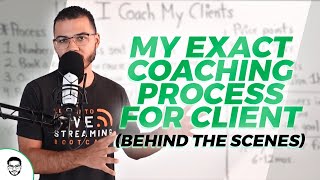
Denzel Rodriguez walks through his one-hour coaching sessions for financial clients using velocity banking strategies. He covers how he onboards clients, what he charges, and the exact steps he takes in each session to help them implement the approach.
Hello everyone. Today I'm going to be sharing with you how I coach my clients, walk you through my process in a one hour coaching session with my client, what that first call looks like. This video will be very valuable for those who are financial coaches and consultants. And you're looking to implement the velocity banking concept or infinite banking into your system, into your practice. And this is also great for my loyal subscribers, loyal followers. People have been really actively engaging in the material and you've been doing the pregame work and you're ready to move forward in some financial coaching and consulting. Helping me help you put your velocity banking strategy in, in place, right. And you get to really see, you know, get a little insight, really look at how I operate, see if it's worth it, right. And if it's not, keep watching the material. There's really only a handful of us in the velocity banking practitioner space. Right off the top of my head you've got Mike, Adam, Mike Adams, Matthew Pilmore and Connor J. Wallace, the Kwok brothers. They touch on velocity banking, but they're more real estate from what I see. So you know, again, there's really only like a handful of us and there's a couple of other smaller YouTube channels that do velocity banking. And if you're someone that's like trying to implement the concept, you know it can work. You've ran your numbers, you're, you got the debt tool, but you just really don't know how to put it together.
Right.
You don't know how to calculate the costs and you really want a second set of eyes on your strategy. I can be a great value add in that case or some of my fellow velocity banking practitioners and coaches. So with that being said, let's take a look at the board. So here's what my process looks like. On the left side of the board here, when I have that first phone call with a client, before they even get on a call with me, they have got to send me their numbers and questions and in advance. So I have a standard Velocity banking spreadsheet that I will send to them and they will fill it out to the best of their ability along with questions. This truly helps me and them get the most value out of that phone call. We can really maximize that one hour call, right? Step two, they book the call automatically, right? So they'll be able to automatically get a link and they automatically book a call according to what works for them. So let's say they became a client on Monday and then they booked a call next week. Monday so seven days later.
Right.
Well, in that time, I'm going to encourage them to review the course material because they may have signed up for coaching plus my courses. So I'll have them, you know, go through the material or I say often on my channel to do the pregame work. And there's a playlist called velocity banking pregame work. And, and if they were to just go through that, it really helps them prepare tremendously for that first call once they're on the call.
Right.
Seven days later, they booked it on the Monday, let's just say seven days later, boom, they locked in a time, the first five minutes, 10 minutes max. I'm just gathering data, little intro about themselves, where they come from, what are their goals. Am I working with a single person, married?
Right.
What are their pre existing philosophies and mindsets around money? And then I'm also trying to figure out their why. Why do they want to work with me? You know, why do you want to do velocity banking? Why do you want to get out of debt? Like, I need to know what that end game is for them in their own words, not my words. I need to hear it come out of their mouth. So when we're having continuing phone calls and I'm building a relationship with them and the moment they start to deviate from what they originally said, I can bring that up and said, hey, you said your goal was to pay off these five debts first, and now you're putting yourself into a new debt because you're getting a new car, or you're trying to invest in crypto, or you're trying to send money and start a real estate wholesale flipping business. But you, you initially said this, so what changed?
Right?
And then we, we run through the numbers, they say, well, Denzel, my income has gone up. I just received the windfall of cash. I still want to keep paying off these five debts right here, but I also want to take a portion of my cash flow and put it over here. So if they can properly explain to me with the strategy, with a plan, as to why they're deviating from the original plan, then I will cater my strategy to what they're doing.
Right?
Because I'm not trying to cause conflict or collide different financial philosophies. That's, that's not going to help benefit them. But if I can analyze. Well, here are the risks. Did you look at this risk? Did you look at this cost? Did you look at that? And they might say no. Yes. No. Okay. After we looked at these two nos can we change those to yeses or will this alter your strategy? Delay it?
Right.
Maybe want to recapture this cash flow right here so we can feel more comfortable over there.
Right.
So that's typically how I like to operate as well. I don't impose my strategies on people. Rather, if I know your why I now have the root, so I can come from a very good position.
Right.
And provide the most value to you. And then looking at the goals is getting to know that person very quickly. I don't want to spend a whole lot of time there because the rest of the call, part four, the rest of the call, is just strategy. I am not trying to get this person's life story. I'm not trying to figure out your financial traumas that mom left you when you was a child, that daddy wasn't there, he went to jail or mom went to jail, or dad passed away early on, or mom passed away, or, you know, a brother, sister died. All of those things are important information. But it is not the priority in that first phone call. It's about the strategy. You came to me to get your life in order, to get your financial household in order, the discipline. Okay, let me give the strategy first and then over time, I then build a relationship with the client. Especially if I have someone that just books a one hour phone call with me, there's no way that I can, you know, build a level of trust with that person. Now what will happen is because I've been on YouTube now for four plus years, I have people who've been following me Since I started YouTube but never actually worked with me, they jump on a one hour phone call with me and they give me their whole life story in 30 minutes. And what I'll have to do, what I've learned, is how to very nicely and politely cut them off to say, hey, we can talk your life story or we can talk strategy. I don't say it like that because that's, that's too cold, right? And I can come off a little cold sometimes. I've, I've learned this over time, but I have to have a sh. I have to control the conversation. I have the guide, guide the call all the way through because that person has invested money and my goal is for them to recover that investment plus more and have a strategy to leave the phone call with, have action steps to leave that call with so that there is no doubt that they didn't just have a fun, entertaining phone call with me and, and then I upsell them into something else. No, I want to make sure in that one hour we are creating a master financial plan. And then just from that work alone, they're going to ask me, denzel, how do we keep this going? Yeah, I need to get your full program. Yeah, I can't fool around with, with one call. That ain't going to work.
Right.
So coming back to the board, the rest of the calls just focus on strategy. In the last five, ten minutes or so will reiterate the strategy plus action steps like, okay, you're going to go to this bank, you're going to apply here. Before you apply, you got to bring the credit score up here. You're going to get me the amortization schedule on your mortgage that. Are you going to do all these things in those. In that 60 minutes? That's what the call looks like.
Right.
Here are my price points. One hour session is $247 an hour. Average financial coach with certifications or without people who are experienced, you're usually going to pay anywhere from 3 to $400 or more for a financial coaching session. It can be pretty costly. You know, with cost of inflation has gone up really, the cost of coaching, the cost of financial literacy has also gone up over the last few years quite a bit. So I remain very competitive in my space. I'm in my, I'm in my own pond. That's the reality here, you know, and that's why I'm really talking to financial coaches lately and financial consultants who are looking to add velocity banking to their practice because this is such a phenomenal position to be in. It's so flexible.
Right.
You really can cater strategies where it's not so cut through throat, cookie cutter, you're stupid if you use a credit card. You're stupid if you do this, you're stupid if you do that. You know, we don't have to discuss financial traumas. You know, that takes a long time for people to really open up to financial traumas and dealing with the mindset of a person and, you know, figuring out your financial philosophy and figuring out what was your first experience with money. Like, you know, the customer today is not asking those questions, how do I fix my financial trauma? They're not asking that question. They're asking Denzel, I need a financial strategy, I need a plan, right? And I give them the plan. And then if they don't proceed with the plan, well, with follow up calls, then we can say, well, what happened? Oh, well, I have this spending problem. Oh, okay, well, let's address that. But see, initially, especially if Someone's just booking a one hour call with me. And that's why I typically don't even promote my one off sessions. It hasn't yielded the best fruit in my opinion. If anything, what it, what it's done is really just, it allows the client to see if they want to work with me on a long term basis or not.
Right.
So, but I prefer putting things in packages together so that they really have the full scope of things because you know, you're not going to create financial freedom overnight. And it's going to take time. It's going to take time. So different price points, right? 247 an hour for 10 sessions. I just times it by 10 to 2470. And then I have my seven year coaching practice, one time payment 3497. And I literally work with the person for the next seven years to achieve financial freedom. So it is a, it is a wealth of information, knowledge, wisdom, strategies that we're putting in place where you, you know, as a financial coach, we're not just talking how to get out of debt and how to invest 15% of your income. No, we're, we're talking like how do we accelerate debt, Become a master over debt, Leverage debt, build business credit, personal credit, start a business, create cash flow investments, asset protection, estate planning, security insurance, I mean the whole nine effective cash flow management, creating efficiency, I mean, you name it, I want to cover that whole process to financial freedom. I specialize in velocity banking. That's what people are initially hitting me for. They want to implement velocity banking. Once you've mastered it, then we go to the next stage. Then we go to the next stage. Next stage. And I have an entire team of people who specialize in those other stages.
Right.
And all I'm doing is I'm being your biggest cheerleader, right? I'm facilitating the conversations, I'm connecting you with the right resources and the right information to make the best moves in your personal finances.
Right.
So depending on when someone enrolls, my priority, one of my priorities is for them to recover that cost. That first call. I want to help them recover the cost that they invested with me. That, that, that's like one of my personal goals. So someone invests 34.97 with me in the first call. I literally want to illustrate a plan that recaptures cash flow and saves money on interest. More than that. 34 97. This way it's like it didn't cost you anything, right? You invested 3,497 and you receive 10,000 in the form of the strategy, you literally recovered the 3,497 in the first phone call. And then when they actually implement the strategy over, say 30 days, 60 days, 90 days, they literally recover all of that. It is amazing to see.
Right.
And in that phone call, I will typically cover the first six to 12 months at max. Because when I do financial coaching, I'm literally going to like, day by day, week by week, month by month, in terms of each and every step they're, they're taking. When we're doing velocity banking, money coming in, money going out, making the chunk, evaluating the chunk, illustrating the borrowing costs, making sure that our borrowing cost is have been offset or completely at zero, even in the green, where it's actually benefiting us to borrow, we actually make more when we borrow, rather than just using our extra cash flow to accelerate debt.
Right.
And illustrating both, like proving that leveraging the debt can go faster than just making extra payments at the end of every month.
Right.
Actually showing the math that this will go faster by one year, by two years, by three years, four years. However, it is over the long haul of whether it's just getting out of debt or paying down enough debt to the point where we can, you know, create an investment strategy or create a business strategy to increase our income, increase cash flow, leading us to financial freedom. So with that being said, that is how I coach my clients day in and day out. Monday through Friday is typically when I do my calls. Very rare on the weekends. That's, that's me time. That's allows me to reboot.
Right.
Stay fresh, stay active.
Right.
And grow, increase my performance week to week. I work with clients all over the US on different time zones. And again, when, when, when you're a financial coach now, talking to the coaches and consultants, if you don't have a scheduling platform like calendly, that's what I use. You don't have a scheduler that's automatic. You're causing unnecessary stress in your business, in your life. You've got to have a set calendar. People can book calls whenever they want. And it's automated as well as a financial spreadsheet.
Right.
You don't want to be like gathering numbers from the client on the call. That is, oh, my God, that's just too kind, too time consuming. And sometimes like, I'm so flexible, where I'm like, listen, if you don't know how to use a spreadsheet, go get yourself a construction piece of paper or even a college rule paper. And I want you to write in big letters, your numbers, your income, your expenses, your debt and your cash flow, interest rates, monthly payment and everything on a piece of paper. Take a nice photo of it and send it via email. Like that's how flexible I am when, when I'm dealing with my 50, 60 plus year old crowd that claims to be terrible with tech, right? They're not terrible, they just don't want to do it right? That's all. And so I'm like, ain't no excuses because look at me still using a whiteboard, right marker, pen and paper all day, every day on my YouTube channel. So no excuse when it comes to gathering the information from your clients before they jump on that call. Very, very key. That being said, my name is Denzel Rodriguez, your personal finance geek of the 21st century. Have a wonderful day, God bless, and we'll be talking soon.
Sa.









