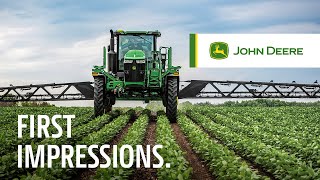
This is a YouTube video titled "First Impression of the newest See & Spray™ | John Deere Precision Ag" featuring Jason Norrisworthy, a University professor and EMS Farming Chair for Weed Science at the University of Arkansas Division of Agriculture. The content, recorded in March 2022, discusses the challenges of Palmer Amaranth weed in US agriculture and highlights the benefits of John Deere's targeted spray technology, including cost savings, reduced herbicide use, and minimized crop injury.
So Palmer Amaranth is the number one weed of US Agriculture. And there's actually some recent survey work conducted by the Weed Science Society of America that has deemed it the most troublesome weed of US agriculture. I'm Jason Norrisworthy. I hold the rank of University professor and the EMS Farming Chair for Weed Science here with the University of Arkansas Division of Agriculture. I had an opportunity to go and visit some of the sites where John Deere had some research ongoing. I was really excited. You know, I think the targeted spray is really going to offer a lot of value to our growers. I think one that's obvious is a reduction in herbicide expenses. And anytime that you're cutting the amount of herbicide that you have in the field, there's a potential cost savings associated with that. And I think in addition to that, where you're using the SEE and spray technology, you're going to have less tendering and with that you're going to be able to cover more acres per load using the SEE and spray technology. And obviously that's of value to our growers. And then something that we've seen in some of our work this past year is that it really allows us to reduce the amount of injury that we can see in a crop. When you are specifically spraying where that weed is located, you're going to really minimize the broad scale damage that you see. The one thing is that we know using the SEE and spray technology, we're going to reduce the amount of active ingredient or the amount of herbicide that's actually on that acre. I mean, again, we're just being better stewards of the land.