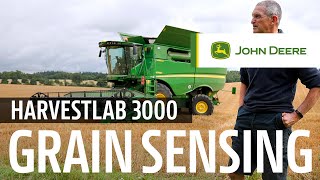
This is a YouTube video titled "HarvestLab™ 3000: Proteinmessung auf dem Mähdrescher" containing a detailed monologue from a single speaker discussing a precision agriculture project involving protein content measurement in milling wheat across variable soil types in South Oxfordshire. The speaker explains the use of the Harvest Lab technology integrated with a combine harvester to create protein maps and improve yield management. The content is technical and focused on agricultural innovation, recorded in September 2022.
I got involved with Harvest Lab because we've been doing this project with Reading University and a number of other countries in Europe looking at protein content in our milling wheat. We're 1,000 hectares situated in South Oxfordshire between the Thames and the Chilterns. We're on very variable soil type ranges from sort of clay cap through to gravel with a little bit of river silt. Mostly quite poor. So we've got one field that's got 17 different soil types in it. So it is a bit of a challenge. Precision agriculture makes sense in that we've put the right amount of fertiliser in the right place to produce a more even crop. It's not about saving money on inputs, it's about evening up the yield, which then that brings up your total yield from the field. The Harvest Lab is located at the bottom of the clean grain elevator. It's plugged into the terminal on the combine so you can have a reading as you're going along and create a nice protein map as you're cutting it. I think one of the things that struck me in this particular field is up on the bank over there, there's a really high yielding bit of ground and that's where I expected to have a very low protein rate. But actually, conversely, the protein was quite high there. So whether it was drawing out more nitrogen to help increase the protein whilst not being diluted by extra yield, these are the sort of things that need to look into. And this data will help us make some new decisions, I think, in terms of going forward, I think there are some adjustments we can make to the system so that we can analyse each load as it comes off the combine, which we could then put into separate bins. So a low protein and a higher protein bin. But working with someone like John Deere, I know they'll iron these things out. That's why we go into these projects to try and develop something that's usable at the end of the day.