
John Deere Africa Middle East | From Factory to Farm | Interview with Charles Schleusner
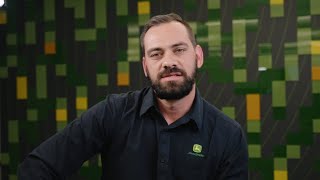
Charles Schleusner from John Deere discusses how the company integrates technology and data into agricultural equipment across Africa and the Middle East. The conversation covers challenges farmers face adopting new tech, how John Deere recruits talent, and the company's approach to innovation in agriculture.
Chuck Scheuchner, manager, Product Line Marketing, is going to have a discussion with us in terms of the tech stack technology that's available within the Deere system and how the whole ecosystem comes together and adds value to our producers. Let's have a discussion.
Chuck.
Looking at the data and looking at farming equipment these days, what's the value in it for our consumers? Having a one solution, basically saying that you've got your equipment, you've got your data, you've got your technology as well as your hardware situated within one dealership. What's the benefit in that for a customer? At the end of the day, where.
Technology has allowed us to go is to create an ecosystem around our vehicles to plan work that needs to be done in the vehicle, get it to the machine so it can be executed, and then analyze the results at the end so we can do it better the next time. So as we've added technology to the machines, we can now expand the the value we bring with them, allowing us to plan the work to be done, send a plan to the machine to execute it, and then get the data back to analyze it on the backside. No other manufacturer except for John Deere can put that all together, design it as one and support it as one. Between us and our dealers, that is a unique value proposition we bring to our customers.
So what are those challenges of bringing, you know, green on green? I mean, because obviously you're not going to be the masters of all disciplines.
Yeah. So we focus on that core workflow of identifying the work to be done, capturing that in instructions for the machine, executing it, and then being able to analyze how it was done. That requires us to have digital, so cloud based technologies integrate with telematics and mobile solar connectivity and a lot of integration with the controllers on the machine to be able to accept the right commands and to provide the right data back to allow for better decisions to be made both in the cab and out other industries. You see companies taking different approaches, like the cell phone industry, for example. You've got an Apple platform with integrated software and hardware and you have Google, for the most part, separate hardware and operating systems. We found that we can best serve our customers when we bring the hardware and software together along with the strong dealer channel. And that's the path we've charted and the path we plan to stay on.
And I guess there's that. It's almost like a machine learning component. The more data you can put together, the better decision making.
Yeah. So it starts with the data we collect from the machines. When the customer provides permission for us to do so. We will take that machine data, analyze it in large numbers, be able to identify failures of machines or performance in different operational types, look at that in mass and identify improvement opportunities. Right. And machine learning, the power of big data has allowed us to get farther, faster. That allows us to introduce new features more quickly when we have the telematics in place, more so than we would have without it.
So Chuck, looking at the technology we've got available right now, that must have originated from some sort of demand in the market. Moving forward, what will be the key decision drivers in developing new technology? And what will John Deere look at when deciding in which direction we're going to move to?
Yes, great question. I think when we look at customer needs, it starts with understanding their process. So I talked before about going to the field to do a job. Customers have done that since they did it with horses and plows. Today they just have different technology. Our job is to understand how that process is working with the current technology, scan the market for additional types of technologies and figure out where you can plop that into that customer process to make it more efficient, more effective and more profitable for a customer. It starts with understanding that process. That hasn't changed in frankly thousands of years or since. We've started cultivating soil and just scanning the technology market and figuring out where we can drop it in as it changes to make that process better and better for the customer.
Obviously you're gathering all the information, all these data points. Where is, if you look at the technology engine, you know, where's that inspiration as far as technology is concerned? Where do you look? To different industries? I mean, obviously, I think Deere is obviously leaders in that field as well.
I think going back to where some of these things started, you, we look at the aircraft industry, jet engines, they've had much higher priced machines, been able to spend more earlier on technology. They were an area that collected a lot of data and used it for product improvement. That was one source of inspiration. Other industrial companies do things similarly kind of in the rolling vehicle market. At John Deere, the construction side of our business started on the journey of collecting data before the AG side did. And that showed the AG division opportunities to use that data to start to improve our products. So the inspiration did come from outside companies as well as just within Deere and AG kind of took it from the moment we started putting the new emissions technologies on our machines. We had a new technology that we needed to monitor and improve and that started it on the AG side.
So I want to talk about talent. So again, competitive. I mean, I'll ask the question, is it a good time with Facebook laying off talent and all the rest? I mean, is it tricky to find the right people? And what does the recruitment strategy look like? Because again, junk in, junk out, human capital wise.
So as we've raised our profile as a technology company, it is both given us access and awareness with other kinds of talent, let's say from Silicon Valley or elsewhere in the world that we might not have had access to before. So we are bringing in new talent from tech industries at the same time that raising that profile has created a situation where in some cases other companies are coming to poach us from talent. So it has overall been very net positive that we're getting access to more talent. But it has a downside too in that people look to us for the talent as well. People may not know we do have a Silicon Valley office, in fact, multiple between Blue River, Bear, Flag and our main John Deere San Francisco office. We do have offices there today and that has occurred over the last five years as we made this turn, needing more digital talent and ultimately into the autonomy and sensing space we knew we needed to go to those kinds of places to get it. And that's what drove opening those offices there and frankly acquiring those companies.
And is it a similar recruitment process? I'm thinking Facebook with the hackathons and all the rest. I mean, what is that your typical recruitment process look like?
One of the differences with hiring today is we're bringing in a lot of mid career individuals with experience from other industries versus bringing in a new university graduate and training them from the ground up. Oftentimes when we're recruiting that talent, we will ask for them to share past projects to the extent they can to help us understand how they think and whether they're a good fit for deer. In order to attract some of this talent, we've had to adapt some of our workplace environments. We embrace agile development technologies that'll allow us to get software out faster. It's also caused us to adopt things like hackathons, allowing employees to work on what they want to work on and innovate on some of our most challenging customer problems in an unstructured way. We've had outcomes from some of those hackathons that have generated new offerings that have been fast tracked to market that might not have ever gotten there in our normal process. So that's just one area we're innovating with how we work and a lot of that's inspired by the talent we brought in from other industries.
We've got this traditional agri conservative, and you've got this other world that's just colliding with it. But I think it's the best of both worlds coming together.
We definitely agree, and we believe it helps us provide more value to customers across that broader ecosystem than just narrowly focused on the equipment than we ever had before.
Excellent. Thank you.
More from Francisco




Desh Ke Superhero | Mr. Madhava Rao | Faster Pole Installation with GreenSystem™ Post Hole Digger



En CasaToro John Deere encuentras el respaldo que necesitas para mantener tu maquinaria lista



