
John Deere Africa | Tech Terrain 2 | Episode 4
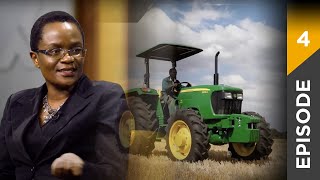
John Purchase hosts a panel with agriculture and finance experts Langa, Davi, and Nico to discuss South African farming challenges: input costs, sustainability, infrastructure, and financing. They argue the agricultural master plan and public-private partnerships are essential to modernizing food systems.
Good day and welcome to this episode of Tech Terrain. And from me, John Purchase, I am privileged to have a number of very excellent guests in my studio today. But I want to start with you, Langa. From your perspective, what do you see as the critical issues in agriculture that we need to address? For example, in the master plan, I.
Think one of them is the input cost. If I look at the current season and where we're going, I mean, we see the rise in inflation, we see the rise in input costs, we see the rise in fuel prices and even the cost of land. And so you have to be aware of when your farmers or your clients are planning ahead, are they able to cater for those input costs? And then secondly, I'll say sustainability, particularly, I think from a climate change perspective. There's so much variation in climate change. I work predominantly with the developing farmers, and one of the things that I realized is if they are not able to put sit down at the right time, they almost messed up in grain production. So we have to be able to react quickly to climate change and be ready. If it's planting, planting, do all your processes in time so that you're not hit by the variations in climate. And obviously dealing with the developing sector, again, I would say in the South African context, transformation is very important. And when I say transformation, it's not only from an inclusivity point of view where you're bringing in your previously disadvantaged, your black farmers, but it's also bringing them in and allowing growth of the sector. That's transformation, really enabling the sector to grow and grow inclusively. I think historically we've sort of floundered, I think, in financing agri transformation. We've had ideas, we've discussed it, but I don't think we've ever had very concrete plans which we can run with and implement and measure our growth. And you having mentioned then the master plan, what I like is it says, we are here. This is where we are in terms of agriculture production. This is where we are in terms of agri transformation. By 2030, these are our targets for agricultural production, agriculture growth, the value chains that are there. And this is where we want to be in agri transformation. I like that. I like that kind of scenario because it then says when you invest and put your resources into that plan, you know what you're trying to get at. And you can measure it over a period of time.
Absolutely. And it reminds me of the old adage, if you measure, you can manage. And I think that's what we're trying to do. With the master plan and the action plan. And we've got to start setting ourselves targets and ensuring that inclusivity realizes in real terms. Davi, from your perspective, you also look at the critical issues. You have to analyze the situation because you're financing into an environment that is uncertain at times. How do you see the critical?
Yeah, John, thank you. If you look at the agricultural industry as a silo, it won't work. We must look bigger than that. And that's the nice thing about a master plan. It will encompass everything. We have critical challenges in infrastructure, water infrastructure, road infrastructure, water availability and all those things plays a very important role in the agricultural sector, apart from the finance that's available. We will touch on that later on. But all those critical issues plays an important role in the sustainability of the sector, on the commercial, but also on a development farmer side. And then policy certainty. I think that's a major stumbling block still in agriculture at this stage. As soon as we have policy certainty, I think the sector will thrive even more than we currently do.
Yes, and I think policy certainty, especially around land reform, is a critical one. The whole debate still in Parliament around the constitutional Amendment, around section 25 on the so called expropriation without compensation. Once we can get these things sorted out and we can get a number of the land issues sorted out, certainly it will attract investment. Nika, from your perspective, what do you see as our big challenges and our critical issues in growing our markets and creating more opportunity in agriculture?
John, I think you've touched on it in the sense that we need that pull factor. We need a market for our produce and I'm not talking just limiting it to the local market. We need to open up trade corridors, we need to make sure that we enhance our trade with the rest of the world. And therefore it links up with policy, policy certainty, specific actions to unlock those opportunities. I that is important for us, to place us and keep our position on the world stage from an agricultural production perspective and then something else which is more local, but it also flows into the rest of the world. I think our ability to understand the information in our system, we need to make sure that we have proper information systems available across agriculture so that that we can use that to design our plans. If you look at the master plan, for instance, there's a lot of work that went into it and it has to be based on facts and one need to have that fact base. One needs to protect and build out on that.
Yes, and there are many good examples. Just for example, in the livestock industry I think the Livestock Identification Addressability system, the LIT system, would be one such value chain system that you need to bring in. But we need to digitalize basically all our value chains to make them more competitive, because in the end we've got to be competitive. But we also need to be partner with governments on many of these issues, because logistics is very often a government term. How do you see logistics, Lange? We've seen now with the riots and the problems that we've had in the last week or two or three, even now with the cyber attack on transnet, that our logistics are vulnerable and that it's such a critical factor in our competitiveness in terms of costs, the opportunity, opportunity costs that we're losing, et cetera.
Yeah, that's critical, John. And I think the fact that you could attack one corridor and virtually almost bring the country to a standstill just shows how important logistics is. And more so that I think we also need some diversity in our logistics. We shouldn't just rely on one harbour. I mean, if 60% of our produce goes through Durban, to me, we're setting ourselves for challenges when there's a bottleneck in Durban. So we should be able to open up more harbors, open up transport systems. So it's a very critical issue. And then I think it's even worse for our developing sector, emerging sector. I mean, if you look at the roads in the rural areas, they're really in a state of disrepair. I remember one time visiting one farmer and he said to me, a truck came to load his cattle for the auctions and that guy never came back again. So we need to sort out that otherwise people will not be able to access markets. And I'm talking about both inputs and output markets if we don't have proper road infrastructure.
Yeah, I'm worried about our infrastructure in general and the investment in our infrastructure and in our ports and absolutely, we have to diversify. We're also going to go and look at where those critical areas are in terms of hotspots. I'm thinking of Moi river and the truck torching that's happened quite regularly. These are the type of things that we need to address, as a matter of fact, of urgency. Davi, I want to get back to the government. You raised the issue of policy certainty, but also government services around biosecurity and a whole lot of other services that they inspection services, etcetera, which are all part of the value chain. I mean, just in the Department of Agriculture there, I think over 60 acts that regulate different industries and these are critically Important to ensure order in market and etc. Is government supporting agriculture enough?
John? That's a difficult one because we've got the free tier system in government, local municipalities, provincial government and then national government. And a lot of those important issues is actually on provincial level. If you look for example at veterinary services, when there's an outbreak of foot and mouth disease, for example, in kznt, it's actually a responsibility of the provincial government, but national government also has a responsibility on that. So there's a disconnect between provincial and national government in certain cases and that's an obstacle for agriculture taking it forward. Specifically, if we look at the livestock sector, our exports depending on the foot and mouth disease free status of South Africa, yes, we can negotiate with individual countries, countries to get those exports out. But if we want to scale it up and have new market access, we need to sort that out. So I think that's one of the problems. And then other services on local level, license fees, those type of services where there's a collapse in services from a local level. You see some of our dairy factories closing down in northwest and moving to other parts of the country due to service delivery problems. And that's a critical issue for our farmers.
Yeah, I think we're all worried about service delivery both at the regional level and even nationally. If you look at Eskom, for example, electricity supply and electricity supply into agriculture is incredibly important into your processing, into your production. And if you don't have security of supply, you're going to run into problems sooner or later. Nika, you mentioned the issue which is close to my heart of markets and market access and competitiveness. How should we be growing our markets both locally and internationally? Any suggestions from your side? Be more proactive.
I think John, again there's a role to be played by government and then obviously the private sector. The challenge. Davi touched on it from a three tier perspective, but I think also from a cross functional perspective. The dti, the Department of Agriculture, all these departments need to join forces to make sure that you do unlock those opportunities. I still think it takes too long for us to open up markets to get the necessary fit to sanitary requirements in place. The regulatory environment, which is a part that government can play, I think that's something where we need to focus on. And again, I think the master plan might help us to agree on certain things. And if we agree on certain things, then we can focus and go and tackle and find solutions for that. Yes, we had the National Development Plan a couple of years ago. I Think that was an excellent platform from where one can develop further. But now we're looking at the master plan. From a private sector perspective, I think we can also help. And from a standard bank perspective, I'm just using an example. We have a fair interest in China as a result of our shareholder, a large shareholder that sits in China. So we've actively gone and tried and opened those corridors for trade and facilitate the buyers and bringing the buyers and the sellers together within the ambit of the regulations that you're allowed to do that. And I guess we need to emphasise those kind of actions to make sure that where we can go onto the international stage, that even we, from a banking perspective, provide the necessary framework and support then into. Because at the end of the day it's still your producer that needs to activate that trade, but we can help with at least bringing buyers and sellers together.
Absolutely important langa. I wanted to touch on the market access for developing farmers through. And obviously many of them are already accessing through aggregation models, international global markets, the trade markets. But also one gets a sense that there's opportunity in local markets or the circular economy within a region or within a district and we're not really doing very well with that. I think our fresh produce markets need an overall. I think we've got fantastic models. In terms of your agent market model that we have have, it's pretty unique in the world, but they fall under the auspices of the municipalities. The municipalities are really not well run in South Africa. But if we get a different model there with a public private partnership, perhaps with the Department of Agriculture, creating market access, do you think something like this could work? And also in your smaller central. Not just Johannesburg or Pretoria or Cape Town, I just think there's an untapped opportunity for smallholders to. To gain market access.
I certainly believe so, John. I think yeah, a lot of the product tends to go into large markets and the local markets, they are there. But I think what then becomes a challenge is what ends up in those local markets is usually poor quality products. You take it. I mean, you have ladies sitting by the side of the street. By the end of the day, the tomatoes, if it's tomatoes are rotten, you know, they won't be able to come back. So we need to look at that market access infrastructure for them. And I think it's simple, fairly straightforward infrastructure, knowing that you can deliver to this market at a certain time of the day, just like the big markets operate and people can come and buy. And yeah, I'm looking at the Big markets and even the city markets that we have, the weekend markets, they work very well. So if we can replicate that kind of model where people can bring in their produce, they know that by a certain time it's sold, then they make maximum value, optimal value out of the product than sitting there for hours and hours on end. And often with the same product that doesn't pass, that doesn't flow into the market. So we need to aid that. But over and above the access, we also really need to assist with the quality issues. Whether it's providing storage infrastructure, for instance, cool rooms to keep the products a bit longer because often it's under some shade in the sun and it is destroyed by the end of the day. So we need to explore that and try and open it up a bit more and help a bit more to get quality product and get the product to last as well.
Yeah, I couldn't agree more. When we with the lockdowns, we realized how big the informal agricultural market was in South Africa and the distribution of food and the convenience that for example at taxi ranks, etc. And I think the figure that I have is that 60% of loaves of bread that are sold are sold in these informal markets. 30% of fowls, broilers sold are live chickens. And once you start and 50%, nearly 50, a bit more than 50% of the produce sold on Johannesburg fresh produce market goes into the informal sector. So we need to create opportunities, better business support opportunities for that informal sector. And I think then you're also going to attract better quality, better food, security for households, etc. In the place. I think that is a huge opportunity.
Right in the lockdown. The invisible hand of the economy plays a significant role. If you look at what happened with livestock auctions, for instance, the uptake of online auction facilities and then actual transactions that take place, it would not mean that immediately it would happen for the fresh produce market or for that matter any of the other sub industries. But I do think that technology inevitably will find its way into the way we buy and sell products in the agricultural value chain. In the fresh market environment, there's already a couple of platforms. We ourselves are investing into. A platform to facilitate that kind of trade. Whether that's going to be the silver bullet tomorrow, I think time will tell. But I do think there's something to be said for the change of the status quo in the terms of how we market locally.
Yes, I think we. I'm going to give you a chance now, Davi. I'm pretty involved with the United Nations Food System Summit that's coming up and you might have seen that we're already involved in that in the pre discussions or the pre summitties on the go at the moment. And somebody was very critical. Food systems are always evolving because technology is evolving. There's new ways of being efficient, of driving business. I think we, with technology, we're in such an evolving state of our food systems and we can actually, by using the technology, by being inclusive and creating more consensus within our social partners, we can be so more effective in what we produce and how we do it. I think we're moving in that direction. Dave, you wanted to comment on that.
John, just to add to the comment about technology that also shortens the supply chain from the producer to the consumer, which actually benefit on both sides. And in terms of the fresh produce markets, I mean there's a couple of markets that's been developed, the Muketti market for one, which is separate from a municipality, which is a huge success. So the development in that infrastructure to aggregate produce and then distribute it from there is also where private sector can play an important role.
I think private sector should step up and use those models in the process. I want to get a bit more.
Yeah, I was just going to say just another point because all of us come from the banks. I think the other thing is providing banking services to that market. A lot of them. You talked of the chicken industry, for instance. They sell in the informal market, they spend all that money. So by the time they deposit the money, it's probably 1,000 rand, 2,000 rand. And then you look at it and say, but for such a size industry, why are you banking so little money? But what happens is it's a very much cash business. They receive the money, go and buy their inputs, do everything. So by the time he deposits anything, it's probably just his profits because even the workers are paid in cash. So I think if we also enable banking services in that market, it will help the and it will help them to access finance as they grow.
John, to what Langa is saying, if I said to you 15 years ago, you're going to buy a coffee by taking a picture of some little thing on your phone, you would say that, you know, that's highly unlikely. It sounds too futuristic and it's happening today. We've all accepted that technology. So that type of step change in the way we market agricultural products properly on the horizon and we'll see those changes slowly but surely really creeping into the system.
Yeah, I think food systems are Going to evolve. We can have a lot more pressure in terms of meeting The Sustainable Development Goals. 17 Sustainable Development Goals. We've got to move into the just transition of trying to be carbon neutral by 2050. All these are going to be drivers because the consumer is also going to push you in that direction. And so we must be ready for that change and move with that development to remain competitive and to create more markets. I want to get down to more the financing aspects and you guys are the specialists in the financing. The one area I think commercial financing is working pretty well. But development finance in South Africa remains, I think a major challenge, especially with the land banks problems. Perhaps you will take on how do you see it from a commercial bank side and how involved are you in development finance? What are the major problems in development finance? Because we hear from black farmers that access to capital remains or access to finance remains, one of their biggest challenges.
I think in a nutshell, finance in the developing sector requires partnerships. It can never be a commercial bank solution alone. We need partners to work with to overcome those, we call them pain points in the sector. For instance, one of the biggest ones is that own contribution. If you're going to access finance, particularly for long term finance, we'll ask you for own contribution. And invariably most of your developing farmers are not able to raise that. And that's why we're all sort of working to try and get this blended scheme going. And that's the partnership that we need because it will unlock, it will enable the farmers to have that own contribution and then we'll be able to finance them. Then you get technical expertise. In some instances it's not adequate or there's not proof of. That's one of the biggest things that actually you find that farmers have been doing this work but there is no evidence of it. So in terms of technical expertise, what we would try and do then is work with technical assistance providers with a track record that are able to do that or even better still, joint ventures with our existing clients. We've got a track record of the existing client, we understand them very well. So if they are partnering with the community or their workers, trust it's an easier deal to look at because you know the expertise is there, so the chances of success are there. And then security. Government fortunately offers credit guarantee like the Kula credit guarantee scheme, but you have other guarantee schemes going on. So for me that's why I say you need to bring in the partnerships access to markets. We work with our corporates who offer offtake agreements or whoever Else in the market can offer a secure market that we can play place reliance on. So yes, it's been a challenge, but I think the challenge can be overcome by the partnerships. Collaborative partnerships. All of us have something to gain by playing in that space and we're able to finance the developing sector.
Davie and the Land bank. What role does the Land bank play?
John? Definitely I think the Land bank still plays an important role. But there needs to be a change in the mandate for a Land bank to compete with commercial banks on the open market for funding and then lend that onto a developing market. That doesn't make sense. That business model is not sustainable. I think support from government to the Land bank is important because we need the Land bank as a development finance institution which is crucial for our transformation in the agricultural sector. So yes, that's important, but also important for a Land bank is its footprint into those markets is also very important. Yes, commercial banks have that footprint, but the Land bank doesn't have that. It lacks that footprint to support the farmers that they actually need to support in an effective way. So yes, Land bank is crucial, but definitely a change in mandate.
Nicot commercial financing. How would you sum up commercial financing in general in South Africa? Is it meeting the needs of the commercial sector? Is there sufficient capital and capacity available? Often we hear from farmers that say that even commercial farmers, that access to capital becomes a bit of a problem.
John I think there's ample funding available. I think one must not confuse the aspect of the source of funding with having only one source of funding. You need to understand the impact that it has on your balance sheet if you rely on 100% funding model to come back to commercial finance in South Africa within agriculture. I think if you look at the numbers we have been steadily growing our lending book and I am referring to the banking sector as a whole, inclusive of Land bank but specifically focusing on the commercial banks who are the major players financing into to agriculture. At one stage I thought that we might even be growing at a rate that is not sustainable in terms of the growth that we had. But again one needs to take into consideration in that time frame, just before we were hit by the pandemic, there was a lot of investment into long term crops and that specifically required a lot of capital which only starts to yield a return in a 5 to 7 or to 10 year period depending on what you're planting. So that growth has been steadily there. The other side of the coin of financing is bad debt and one needs to have a balanced view of growing a Book from a lending perspective, but keeping intact the risk portion of your book, that bad debt doesn't go out the window because after all, it's not your money, it's depositors money that you're lending out. And if we look at the bad debt rate for agriculture, that has been fairly good. As a matter of fact, it's been very good, despite the fact that we went through a couple of difficult years. And that shows to me the ability of our farmers and the resilience that they have to stay on top of their game. It's not an easy ride, specifically when you're struggling from a pricing perspective and from a yield perspective, and then you still have to make your payments. But I think the South African commercial debt in any event in agriculture is at, at good levels and supporting growth in agriculture.
Well, that's very good news. So we, we've touched on a couple of, of, of, of constraints or key issues around high input costs, around infrastructure and logistics, around markets, around competitiveness, uh, around the financing system, safety and security, you know, with the, with the, with the mayhem that we had, uh, a week or two ago and always the issue of farm safety and so on. How do you see it and what can we do to improve that situation?
Yeah, look, we have police forums and if you look in the livestock sector particularly, they actually have a livestock theft unit in there. So I think we need to, I don't know whether it's a capacity issue, but we need to strengthen that because unless if you have a policing mechanism that works, you will not be able to contain, you know, the farm murders, the thefts and everything that goes on in there. We need to really strengthen, capacitate our police and make sure that there is a reaction and a reaction that has consequence. Otherwise, if it's not like that, then you leave that space open for anybody to come and do whatever they want to do because they know there is no recourse. So we need to really strengthen our safety and security measures at that level. I would really start with the policing itself and make sure that it's done efficiently. And people know that, you know, if you do something wrong, there's a consequence here.
Yeah, absolutely. I couldn't agree with you more. And we need more community policing and working with the police and consequent management, as you call it, accountability. If people are not doing their job, then they've got to be held accountable in the process. I think that's, that's very critical. Some closing comments on critical issues that we might have missed.
Nico, let's start with you, Jon. I think coming from a financing angle to it, I think it is important for specifically our producers, but not just producers, everybody in the value chain that we're now sitting in an environment with fairly low interest rates. So from a lending perspective it's actually a good place to be. And we also are experiencing good product prices and in the grain industry and for that matter in most of the other industries, we also have good yields. So we sit in this super cycle with low interest rates which is something not common for agriculture. Looking at our past and I think one needs to make use of this opportunity to make sure that your debt structures are at the desired levels and if there are opportunities for you to expand then probably now is the time to go and look at those opportunities given the favorable environment that we're in.
Thanks. Good advice Davi.
John, just to add to Nico, as long as you expand in productive assets, that's very important. I think, you know, to add to Nico, finance is available. There's not a problem in that aspect. Interest rates low. Yes, we are in a commodity super cycle so the future is positive. I think now is the time to do responsible financial planning for the future because we know agriculture is cyclical. There will be a drought again, we don't know when. But you know, do your financial planning on a responsible way so that you can be sustainable over the longer term.
Great advice Longa. The ladies always have the last word.
I think I'd like to end where we started off. For me the highlight really of what we're doing now is this agricultural master plan because for the first time I think we're actually developing a plan that has more buy in from all role players than we've done in the past. I mean we did have the, what was it? Operation Pakistan? I think it was the closest to MO buy in. But previously really it was either industry driven or government driven and we were not all in it together. But this time I get the sense that everybody is on board and I think for me that's the critical issue that we have. If it's an issue we have a common plan, we can all commit to making it happen and all pull our weight to making it happen. I think if everybody sees their role in it and see what the outcome is and it's a guaranteed outcome. Guaranteed in the sense that if I say I'm going to pull my weight, I do so if somebody else says they're going to pull their weight, they will do so. Then we will all work together towards that. I'm really very optimistic about what we're doing now and I hope we bring it to fruition in 2030. We achieve all our objectives.
Thanks very much, Langa. I can only say thank you to you, thank you to Davi, and thank you to Nico too. I think all our guests, our listeners and viewers will have gained much from the perspectives of our guests today. There is a bright future for agriculture. Yes, we have challenges. Yes, we are addressing these through master plan and through various structures. But stay informed and speak to your financiers, your banks and your relationship managers within the banks and make sure that you well aware of what's happening. So thank you very much.
At John Deere, we understand the heart of a farmer. We understand the pleasure and the pain, the waiting for rain. We know that your work has no beginning or end and that your hands often bear the scars to prove it. That is why at John Deere, we understand that the diversity of our land applies to the people too. We commit ourselves to break the ground, to offer customized solutions in credit and support, to offer flexible finance and competitive interest rates. We often drive the extra mile because we know that you'd rather spend your time farming than queuing in a bank. At John Deere, we are committed, competitive and convenient. And when you shake the hand of one of our experts, you know that they are bringing you finance that is built for you.
More from Francisco




Desh Ke Superhero | Mr. Madhava Rao | Faster Pole Installation with GreenSystem™ Post Hole Digger



En CasaToro John Deere encuentras el respaldo que necesitas para mantener tu maquinaria lista



