
John Deere Africa | Tech Terrain 2 | Episode 3
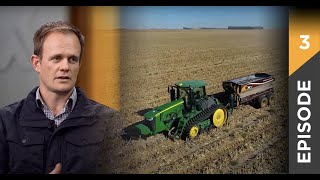
Tony Ndoro hosts industry experts and farmer JP Menkes discussing soil pH management, lime fertilizers, and precision agriculture in Africa. They tackle variable application technology, input costs, and how farmers integrate these tools to improve yields while managing sustainability challenges.
Foreign.
Hello and welcome to this episode of Tech Terrain. I'm Tony Ndoro. Now, in previous episodes we looked at the importance of soil analysis. This time around we delve deeper and discuss lime fertilizers and variable application. Our guests include Nadia Nichols from Lime Crop, Tiantel Blanche from Sion Agri, Louis stratham from Omnia, Dr. Johnny van der Merva from AMT and Steon Klutta from Agtech Africa. We also paid a Visit to farmer J.P. menkes from Philjunskruen. We kick off this episode with a discussion on soil analysis and the application of lime. With me in studio is Tian Tablanche and Nadia Nichols. Nadia and Tian, are you well?
Yes, you're well? Thank you.
Fantastic. Good to have you on Tech Terrain, by the way. And I'll chat to you in just a moment. But we'll start off here. Tian recently visited JP Menkes who's a farmer. Let's hear what he had to say.
I think when it comes to liming, there are two important factors that we recommend lime for. First of all, it's the soil ph. So anything below 4.5 is considered as an acid soil which can then influence the crop and the productivity. So once you've limed up to 4.5, theoretically there is no soil ph that can harm crop. And then the second one is for the nutrient availability in terms of phosphorus, potassium and even nitrogen and all other micronutrients that's in the soil. It influences the uptake and the availability of that soil once you go up to 5 and 5.5 ph. So we don't only lime only for soil ph, we also lime to get the availability of the nutrients optimal. The end goal of doing lime applications is definitely to get the optimal focus on fertilizers.
Now Louise Stratham and Dr. Johnny van der Merva are with me in Studio. Gentlemen, good to have you with us on Tech Terrain. Are you well?
Well. And yourself, Daniel?
I'm fantastic, thank you. Okay, Johnny, if I may start with you. Obviously fertilizers are a huge part of a farmer's inputs. What percentage would you say that is?
Yes, it depends of course on what type of crop you are busy with. Especially if we look into the grain crops. We know it's a huge part of any variable cost operation and it depends on the areas also that you currently producing in. But it can be anything between 15 and even up to 40% of the direct cost in your farming operation.
Alright now Louis, what are the latest trends when it comes to fertilizers?
Worldwide production has changed a lot in the past 10 years, Tony. Where in the past we talk about the primary nutrients being nitrogen, phosphorus and potash, then we moved to the so called secondary macronutrients being sulphur, calcium and magnesium. And then we took a huge leap and we introduced micronutrients even into dry land row crops. The current discussions revolves around micronutrients, microbes, biostimulants, humic acids, fulvic acids. But what's very interesting at this point in time is the introduction of technology. And by technology, it's not the normal stuff that we put into farming equipment like tractors and harvesters, but it's taking satellite pictures and using artificial intelligence to actually add value to the data that we have to assist farmers in doing the right thing at the right time during the growing process of a specific crop.
So with all that being said, what are the key things that should inform a farm in terms of what to use, what type of fertiliser to use and when to use it?
Yeah, I think as we said today, the dependency of growers to keep up with the high yielding crops that we're having now is the use of highly technical, skilled people. So what we do is we analyze the soil, we analyze the SAP of plants, we analyze leaf tissue, and in accordance with the analysis, there is technical people that they recommend whichever nutrient is in a short supply because the crop will only respond to that specific factor that is in a limited supply.
Alright now Jonny, with all that being said, so many analysis taking place and so much technology, but still there exists some risks, correct?
Yes, definitely. I think especially within this coming season that we're going into, we are expecting input costs and input costs already went up significantly. So that will definitely put some pressure on the profit of all the producers out there. And I think you must do smarter input, cost and planning for the coming season, especially taking all these factors into account. And I think the other risk that we can identify is the risk of availability of fertilisers, especially within the next season, not only the price risk. So the farmers must choose what's the worst risk they're going to take into account for this coming season with these prices that are really high at the moment, but also availability that's in short supply.
So availability and prices. I suppose that brings me to the next question, Louis. In terms of availability in South Africa, are we producing a lot of fertilizer? Where do we stand when it comes to fertilisers in the context of the rest of the world?
Yeah, it's interesting, Tony. South Africa imports a very, very big percentage of the fertiliser usage. So normally fertiliser is very energy intensive. So you would find these big producers close to, relatively speaking, cheap energy sources. So the majority of fertiliser sits in the Northern hemisphere. And because we don't have any primary production facilities in South Africa, we are dependent on imports of fertiliser. Now, I mean, everybody's well aware that prices of commodities like maize has increased. Therefore there's big pressure on supply from fertilisers and that we see in the price currently of fertilisers as well. So, as Johnny said, I think producers need to carefully plan in terms of the upcoming season to be supplied and to make sure that they engage with their suppliers, that the supplier make sure that there's product available for them.
So what are the factors that are determining the prices of fertiliser worldwide and particularly in South Africa?
Tony, as I mentioned, you know, fertiliser is a supply and demand market and because we import the majority of our fertilisers, we are exposed to the global dollar price of fertilisers. We know that maize prices across the globe has increased and therefore we see the increase of local fertiliser prices. So what determines the price is obviously then the global price of that specific commod. And then obviously what we've seen in the past three to four months is an increase in freight prices to get the product into country. So that's a huge impact. And then obviously exchange rate plays a big role. But what we've seen of late is also the local logistical costs to get the product from the import harbour to the producer. It's playing a bigger role as we speak. And we're all well aware that our infrastructure is not up to standard and not effective as such.
We're all concerned right now about climate change and so forth and sustainability when it comes to soil. How much of that must the farmer consider?
Yes, I think again, analyzing what's currently in the soil, going to your local experts, contacting the fertiliser companies and assessing what nutrients are currently in the soil available, putting that back and ensuring the long term successful production and to ensure food security for the long term. And I think that's a crucial factor that our local farmers must ensure, especially with the unrest that we had the past couple of the past month. So we need to ensure that we have a sustainable food supply and over the longer term. So we need to have a sustainable and natural resource base.
Food security is critical in Any country, Louis, and how much, what role should government play and are they doing enough?
Moment.
Yeah, that's a, that's a very. And the question is, Tony, what is enough? At the end of the day, as input supplier, we've got a model where we work very hard to bring back to the farmer the technology, the research and development and make sure that the term that goes about is nutrient use efficiency. So we must make sure that whatever spent, the farmer gets a return on his investment. And the only way that we can do that is to stay abreast with, with latest technology and to make sure that we apply technology here and do research and development to make sure that we bring that information back to the farmer to optimize them.
Fantastic stuff. Johnny and Louis, thank you so much for coming through to Tech Terrain. Interesting conversation, thank you very much.
Thank you.
Fantastic stuff. You're watching Tech Terrain. Please stay with us because coming up we'll be speaking to JP Menkes. He's actually a farmer. We'll find out exactly how this all affects his operation. Well, still under discussion today on Tech Terrain, we're speaking about soil lime and of course, fertilizers. We'll soon hear from farmer J.P. menkees on how the relevant precision agriculture practices are working for him. But let's start off with Stian Kluta. Stian, are you well? Good to see you again.
Thank you. Yes, hi Tony.
Fantastic. Good to have you with us. Stan, let's talk about, you know, as a farmer sitting there, he needs to understand what he, what inputs he needs to get into his soil. Where should he start? How does he get that information in the first place?
So yeah, Tony, throughout the spectrum, if you look at liming or neutralization of your soil, you have to first collect the data. There's technology available to collect the data. Now if we look at advanced Technology where at 10 kilometers per hour within the field, at a 15 second interval, you can collect samples and in real time it collects the samples and gives you analysis and plots that so that data set can be transferred to a data repository. But then also, as we do it traditionally and still largely the practice that's been followed is your agronomist will do the soil sampling on a 1,1 hectare grid and those grids and those results will be averaged and you'll get your zone mapping on ph levels and that you feed into your machine. So firstly, the data needs to live somewhere on a platform, whether it's a data repository or a data platform that can actually add the value to the raw data that you have collected or you leave that for your advisor, your trusted advisor. Then lastly, it's on the hardware side and on the machine control side where you control the hydraulic drive that actually applies the nutrient or the lime in this case at the correct rate because your machine is running at a, at a certain speed. And that speed varies throughout the field based on field, field condition or just that the operator varies the foot on the pedal. So that has to adjust according to the rate that the prescription is asking and the speed that you're traveling at. So it's a PWM valve that opens and closes to, to get the output to what you want it to be.
Okay, so steer. And I've reached a particular point and now I need to choose which technology I need to now bring onto my farm in order now to use all that information, all that analysis. What's the first step?
So, Tony, the first step there is to understand the technology is fairly basic. It's known technology in the market. It's not on the front edge necessarily of development. It's machine control in a sense. And the thing that the deciding factors are twofold here. Firstly, it's the support that you'd be getting because of the variability in weather patterns and windy conditions being very affecting lime application severely. You have to have those, the slots are just minimal in which you can actually apply lime. There's a larger window, larger time frame, but if it's windy, you can't necessarily apply it effectively. So your support should be in place. You have to choose that supplier or that support structure that would really take, take you through the season.
When you say support, are we talking about the dealership network?
That's right, yeah. Your dealership network should have the necessary skill to be good at the fault finding process, to not spend a day at finding the solution and then a week later deliver a part, have parts in stock and have that available. And then secondly, it's the integration with the rest of your ecosystem that you're working on. If we talk about something like operations center that John Deere offers, everything ties into that and lives, all your data lives on that platform. So it would make sense to have the rate controller, John Deere office to feed into that and to continue that data stream of yours throughout the season until harvest time.
All right, stm, please stay with me. But right now let's go across to JP Menkes and hear what he has to say.
The reason for me to move to precision technology is to confidently address problem areas in your field and to take out under Apply and over apply and to more move it to an exact apply basis where we are now with the technology that's available from John Deere. For me to use the John Deere rate controller was an easy decision. Most of my products on the farm is John Deere and we are confident with the JD link and operations center and the integration between the machines was also very easy. So it was an easy decision for me. And the people that backs you with the product have the know how to service the product and to supply the product and to teach the farmer how to use the product. Isupport network is senves which I'm very happy with at the moment. I think they have a very good, good relationship with the farmer. The people who work for them know what they do in the field and they also have a 24 hour call center which is. So if there's a problem that persists on the farmer on the tractor, you can call them anytime and the problem will be solved. The flow of data for me made it very easy. The agronomist sends me the data to my operations center which from there I can allocate it to it the specific tractor which will do the application. The trends I see for farmers for moving more towards technology is profitability. Farmers profitability each year goes down, therefore our production must rise every year to keep us on the farms. And there are two ways to look at before you buy precision technology. The first way is to look at it over is for how much money will this technology spare me. The other way to look at it is for how much money more will this technology help me make? I prefer to look at it the way that before I buy precision technology I look at the second one is how much money will it bring me in at the end of the year? Then the decision for me is very easier to invest in that technology.
All right, interesting. Now sti, let me bring you back here. What are your thoughts on what we just saw? What do you think of JP's application of technology?
Tony? What I like about JP's application is that he goes back to the roots or to the foundation of farming and then he uses that knowledge that was passed on through generations and he uses technology to scale that. So whereas some farmers feel that they have to adopt technology, they have to start using technology and out of a place of fear you basically start to invest in technology. What JP did and that's the right thing, he went and did the calculation and saw that this will really help me to scale my knowledge that I have in this specific zone on my farm. I can scale this to the rest of my farm with the help of and assistance of technology.
So he's basically working alongside the technology. That fear of technology taking over, he's just put that aside. He's working with the technology is what you're saying here.
Absolutely. Technology will never replace the farmer.
Fantastic. Stian, thank you so much for chatting with us here on Tech Terrain. We'll see you again next time.
Thank you, Tony.
Well, thank you for joining us today on Tech Terrain. For more information or to watch previous episodes, visit www.techterrain.co.za. hope you enjoyed this episode. And until next time from me, Tony Ndoro, it's goodbye.
More from Francisco




Desh Ke Superhero | Mr. Madhava Rao | Faster Pole Installation with GreenSystem™ Post Hole Digger



En CasaToro John Deere encuentras el respaldo que necesitas para mantener tu maquinaria lista



