
John Deere Africa | Tech Terrain 2 | Episode 5
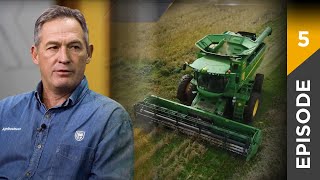
A panel discusses financing for South African farmers, covering commercial and development finance, cash flow forecasts, and the challenges emerging farmers face. They explore how technology and blended finance can help manage risk and support agricultural growth.
I think we need to start to first look at at how the commercial banking sector works and in broad terms because sometimes there are wrong perceptions in terms of the business relationship between a client and the bank. I'm going to start with you, perhaps you can just give us a broad overview of how the commercial banking sector operates.
Thanks John, I think from a standard bank perspective agriculture specifically because agricultural finance is quite specialized given the deep cycles that we have in agriculture. So it's one of the sectors in banking and I'm not referring to the corporate investment banking side of banks which works with the large corporates, the listed companies I'm specifically referring to our farmers and non -listed entities. It's one of the sectors in all the banks not just in the standard bank example where there's a separate division or unit that specifically looks at agricultural finance because of the specialized nature of it. So I think it's important for clients out there to understand that over and above having a business plan that you need to get in touch with the guys within your bank that deals with agriculture because it's a dedicated resource that sits in agriculture and all the banks are quite well structured in terms of placing the resources across the country to make sure that they can address those requests coming from the clients into the bank. Then obviously as I said what then needs to go along with that and if you're not sure how to do that the bank can assist you because we not only have the relationship guys at the front end we've got that specialized unit sitting at the back to assist you with what needs to be in that business plan of yours and how you need to approach the repayment of the loan that you want to take out from a planning perspective and actually putting pen to paper in displaying that and that's in short how you would approach financing in agriculture. Obviously there's lots of nuances and complexities that can be added to that but that's the basic line of entering into the agric finance world in a commercial bank.
Toby from the commercial side when the client comes to you what or what does he does he bring in terms of cash flow statements and securities and business plans etc.
Joenja the important one I think is the you know the business plan one of them but the most important one will your cash flow your cash flow forecast where you can show affordability on the longer term that's very crucial obviously security plays an important role but nowadays you know what's becoming more important is the jockey you know the person that you are financed to make sure that you know that the person that you finance after the skills to deliver on what he or she says is going to be delivered that's very important in terms of your business plan it's also important to know that yes there's a lot of financial statements that you have to supply the relationship manager because in the end the relationship manager is the one that's going to present your case at the credit committee or the credit forum where it needs to be represented so that relationship and working relationship between yourself and your banker is very important to keep him informed so that he can make a good presentation at that specific committee so financial statements crucial cash flow forecast crucial security yes unfortunately in our banking system security is still still a very important one and then then then your jockey that that you will be banking is becoming more important what's also important is to take note you know in terms of the credit application there's a lot of rules and regulations to which the bank must comply with in the in terms of the bank act in terms of of the the south afrika reserve bank so it's not a it's not a straight straight forward thing they still still some some legal requirements and compliance as well yeah great.
Thanks very good background so longer that brings us now to development finance which you an expert on and in south afrika we're battling with access to to finance for for a lot of small holders and emerging farmers because they don't have the equity necessary the securities etc how how how is how are you approaching that dilemma and how do we improve rolling out development finance i think.
I'D like to go back and start with the client themselves john a lot of our developing farmers and i'm broadly speaking here they have experience in farming some experience they've been financed either out of their own resources or out of whatever support program that they have but what they don't do is keep records of what they've done so they don't keep the financial records they don't keep the records of production and unfortunately in the bank we rely really strongly on your historic performance to to believe in you that you can do what you you've said you want to do so i would really urge most developing farmers that coming to the bank that whenever you have on any form of money whether it's grant money or some ESD program enterprise and supplier development programs of the corporates manage it like it was a loan you know account for it fully show where you spend the money in acquiring input show the money that came in from your sale of your produce so show how you paid off all your debtors and you remained with some profit so we need to start there because then that creates um you know a a record for you to say that you can manage finances and produce what you say you can produce we need to start there then then we come now to the things that we say are not the the technical expertise i think if people sort of put the effort that i was talking about to to demonstrate that technical expertise it would make it easier given that it's not there we do partner with technical service providers your commodity associations and others that that provide that technical expertise and are able to to you know to assist the farmers right from from end to end and i think doing that has enabled us in in many instances to bring land that was probably sitting there follow in into production that's very helpful uh then in terms of um security we use guarantee facilities to provide the security for that loan but obviously a guarantee facility will never be a hundred percent because they also say that if they did that will probably be reckless in our own lending so they will always still be some limited exposure that the client will somehow need to to cover for but um and then yeah so i've covered the technical expertise in in the historic performance as well as the guarantee but the most important thing is there must be repayment ability if there's no repayment ability then there is no deal even if it's faltering because the challenge with the developing sector if it's a faltering deal if it goes south that's it normally there is no because there's nothing to fall back on so there really must be strong repayment ability for us to to to be able to consider that i think i'll stop there for now sure.
I think what's important john is to is to remember that those four aspects that banks look at uh from a lending perspective are interrelated so you you there might be a specific factor that's got a certain emphasis on it which then lacks in a different area and these things need to complement each other so it is not necessarily a simple tick box of i've got all four year in some shape or form these things need to talk to each other and that's why it's critically important that if you're not sure what it looks like that you talk to an advisor to assist you with bringing those those aspects aspects together just to remind us those four critical aspects in its simplest format is the bank is going to ask the question of to whom are we going to lend money and that speaks not just to the name and surname of the the person it speaks to the character of the borrower the capacity of him displaying that he can do what he what is the jockey uh so whom are we going to lend the money to borrow the money to then what is the money for what is the purpose of of of the loan if we understand that because now it can get technical it's short term it's it's long term it is straight up finance you need to understand what are we financing and then what would be the source of the payment how are you going to pay back the loan that's the third one which you need to explain and normally that's where the cash flow comes in along with the financial statements also referring to the previous point and then lastly you know if all else fails what where will the bank go to and that's the security portion of it if you can answer these other questions adequately and then there's the mitigating circumstances the reliance on security becomes less and therefore one needs to understand the balance if you if you go out and you do a long term loan then suddenly you have to take a view into the future and therefore security becomes quite important when you do term financing if you do short term bridging financing the source of repayment and the and the and how sure are you that that will happen becomes quite important and not so much the security to support the transaction and those are the dynamics that one needs to understand between those four aspects.
They'Re not independent they're linked and you've got to and you've got to it's a judgment call that you make on all those factors in the end you mentioned that Nico that you get different mechanisms of financing and different things that you're financing in agriculture one of them is technology en and we really are in the technology explosion phase in agriculture if there's one place that you can use various forms of technology from genetics to to to earth observation satellite tracking big data artificial intelligence all these aspects are becoming so ingrained in the in the whole agriculture production and value chain uh how do you breath longer i can come to you uh have you got a specific focus on this technology and how you how you find an.
Answer yeah we have a specific focus in in our team on on digitization and technology and it's more so to use it as risk management so to speak for instance um one of the things that we we're looking at is is remote sensing and that's fairly fairly useful in the sense that you know your farmer puts the crop down you can look at the lens and see how it's doing various patches of the lens some is out performing the other and obviously then there's time to react and intervene quickly or even for us in terms of decision making if a farmer comes to us and says sorry my crop was grazed down by livestock you should be able to be able to pick that up in the picture that indeed that happened so you're able to prove the risk that was presented to you so that's one of the things that we're using and then one of them that we also considering is payment systems because we pay out bank loans but would like to be enable you know clients to be and other parties to be involved so the third party payment systems and controlled payment system so that you are able to allocate that loan and the client is able to pay their various suppliers out of that and we're able to track that and when the income comes in it comes in it's and it's it's locked in there that you pay wherever the debt is and the client you know earns their their profits out of that out of those proceeds so i'm just mentioning too but certainly we are looking at technologies particularly to help us manage the risk that we have to deal.
With in the industry we know that modern agriculture is capital intensive and ag machinery big tractor big harvest can go up to 10 million rand and you guys finance these and but they also come with a whole lot of other advantages how do you see the technology explosion in agriculture and financing thereof John.
You know precision farming is an old thing now it's actually you know if you don't do precision farming you you shouldn't be you shouldn't be in a business actually so very important to invest that in that technology what's important is that the technology must also you know earn you income and make sure that you can increase your efficiencies and you know make sure that you that you can pay back that that loan that 10 million rand from one harvester what's important is that that harvester can supply a lot of data back to you for you as a farmer to to make an informed decision but you know you spoke about artificial intelligence and big data there's also possibilities to link that data back into for example a banking system where those two platforms can interface with each other so that the credit process can also be assisted with that information that that comes back for example your your long term average yields that you acquire on on a certain piece of land which make the cash flow planning in the future no much easier so definitely a lot of advances in that technologies and you know as agribusinesses and farmers invest in developing that technology banks are also investing into technology to support the industry uh from that perspective as well longer said in the beginning you know in terms of record keeping uh you know technology how you know artificial intelligence how you manage your transactional account you know that says a couple of things about you as the jockey and that's being used in clear decisions.
Going forward thanks very much for that dive i think it's absolutely critical critically important that you also get the balance right between not over capitalizing but also not not staying behind on the technology because you've got to improve your efficiency at least by two percent per annum either through technology better management otherwise you're staying behind you spoke earlier about the uh high input costs and things that are that are coming in et cetera and uh to counter that you've got to become more efficient in your in your production process so these are absolutely critical matters let's just let's just deal with the the the flip side as you called it just now the foreclosure side and then when you can't meet your payments et cetera nico banks what is the approach to foreclosure and repossessing et cetera what what is what must farmers do when they in trouble uh.
John there's a saying that that that goes that you know in in a foreclosure it's only the auctioneers and the lawyers that actually get money out of it the the lenders and the and the farmer is is from how the queue works in terms of the insolvency act there's a certain sequence in which payments get takes place so having said that it serves the bank no interest and benefit as to taking farmers to to the insolvency court or or any legal action that is absolutely the last resort unfortunately um if all else fails that is unfortunately the process that you need to embark on and then there's also certain legal requirements that that that uh requires the bank to do certain things in and you must understand that that normally in a circumstances like that there would not be only one creditor there might be multiple creditors or lenders and therefore one needs to understand the dynamics of how the law works when that happens to put it simply when you when you experience some form of stress from a repayment perspective whatever the cause might be the earlier you you make that known to the bank the better because then you can start planning around that and that the bank does not have to go into a position of so -called default where then certain actions kick in which is required by law and in terms of how the banks work that that we need to deal with it when you go into that position obviously one can start making new plans and we often have those uh situations either it be a drought or in certain instances where payments are later whatever the reason is um then we reschedule and we rearrange the way we we we we've we've structured the debt we've got certain things like covenants for instance which we measure which is a bit of more technical issue and sometimes a bridge takes place from a covenant perspective one needs to understand how would that be remedied en once you understand that then you can rearrange the whole financing package so so it's important that communication happens early and that you don't see it as a failure because something has happened talk to your bank.
As soon as possible i think absolutely good advice longer sometimes i think people don't understand that the principles are basically the same for commercial and for the emerging farmer criteria etc it's the same processes that you go through am i correct if i say that yes john.
Very correct and i think that's why you find people saying banks don't lend to the developing sector yes but i mean you have to lend in compliance with the national credit act you can't do so when you already see that this person cannot afford the loan because you are setting them up for failure so that's one thing and secondly once the loan is is got once the client goes into default there are two considerations can you rescue it is it a going concern or is it all hope lost and if if there is a way of rescuing it then you can put in a remedial plan as nico said and and try and assist the client through if not by law you hand it over to the legal people and they have to deal with it and we have to do that we cannot bypass that otherwise we bypassed our own the regulations that govern the banking sector and i always say one of my learnings in going into the bank was if we allow those defaults to carry on it impacts on our book right and it impacts on how you price your your your products for and when i say products your loans in the acres sector for instance there was an investment summit i think back in 2018 19 one of those the president's investment summit and one of the things that really was an eye opener for me there was a lady from Uganda she said she went to the bank to borrow money to set up a meal a sugar meal and they gave her a loan of whatever amount five year repayment period and i think 30 interest rate that that really struck me that one of the reasons we can still continue to lend to to our agriculture sector is because we are managing the performance of those books if we don't do that ultimately the lending to the sector will become extremely expensive and nobody will afford it so it's what we need to do is to prepare the client to be able to access the money not lend recklessly and end up with a book that's not.
Performing well you mentioned such an important thing the national credit act in section 80 it's actually a couple of sections around section 80 around the affordability assessment we've dealt with that in agriculture around so -called organic use of a constant waterlotskult carry over the carry over debt and whether you can do it and allowed to do it and all those legal complications in that and people don't always understand that you bound by those.
Legal aspects but John that's that's the responsible lending side of that that's the reason why the banking system in South Africa is you know one of the top performance in the world and the trust in our banking system relies on.
That absolutely i think the the financial crisis of 2009 2010 showed that we had the best resilience for the best systems actually in place in terms of of managing that and that that that being certainty and i think what the other thing that people don't understand is you were talking about the 30 percent i've traveled with one or two banks in afrika and if you look at the interest rates of 27 28 29 30 percent people don't understand that in South afrika the low interest rates are actually a great opportunity and saving farmers a lot of money and a good time to to to relook at your your debt situation and to make sure that you using your debt correctly in the structure of your business i think we're running towards the end unfortunately time is catching up with us but perhaps i can start with closing comments from your side niko advice that you want to give to to clients and to farmers out there in terms of the financing of of agriculture in South afrika.
Jon i think it's critically important that you have a relationship with your financiers that's not just your bank you used trade creditors as well that you understand the dynamics of how all the the the credit that you use how how that is structured en that you that you are able to service that properly and therefore if you struggle with that make sure that you've got a financial planner to assist you in in in doing so something which i often refer to is is financial leverage you need to understand what debt actually does and that you can use debt to your example to to to to your benefit if you do apply debt incorrectly it is a dangerous thing so so that fine line between a positive and a negative leverage you need to to understand in the if it's if it's foreign to you then that's important that you make sure that you that you've got somebody to to assist you with with.
That planning absolutely absolutely good advice longer coming from your side i think for.
Me it's it's role players in the developing sector and i mean i come from there we facilitated many development programs and having moved into commercial sector i think the greatest learning for me is as we work with developing farmers let us prepare them to be able to access commercial loans once we've done that we've really done the development if you give somebody a grant and there's no accountability of how they've used it we're not developing them if we give them a soft loan whatever it is and there's no accounting of how they've used that loan we're not developing them but if they can be if they're able to account for that money and actually grow out of it then we have achieved development one short question are we.
Making progress with development finance also through.
The banks yes we are but i mean the banks will always have to to rely on yeah to do what they need to do under the regulations within the bank so we have to work within the ambit of the regulations that we have and that's why partnerships are exceedingly important for us if we to make progress in financing the developing sector we need the partners that we work with as i say the partners for technical assistance the partners for security and even core financing partners because then that makes the the loan amount one less and secondly cheaper for the client so it's definitely a partnership space and that's why government must come in with this blended finance because it's one of the biggest partnerships that we we're looking forward to it will unlock a lot of opportunities for the developing farmers absoluut.
Ja i am a great believer in the blended finance and i think my colleagues here has done a lot of work in in developing that's quite patient work as you know it's taken a long time but i think we might be getting over that hurdle i think that could be a big injection for agriculture and we must have proof of concept and show that it works that we can leverage more money from our partner government also in this process darwee closing comments from your side turn we.
We are currently In het ekstie, in het ekstie, in het ekstie, in het ekstie, in het ekstie, in het ekstie, in het ekstie, in het ekstie, in het ekstie, in het ekstie, in het ekstie, in het ekstie, in het ekstie, in het ekstie, in in het ekstie, in het ekstie, in het ekstie, in het ekstie, in het ekstie, in het ekstie, in het ekstie, in het ekstie, ekstie, in het ekstie, in het ekstie, in het ekstie, ekstie, in het ekstie, in het ekstie, in het ekstie, in het ekstie, in het ekstie, in het ekstie, in met die toekomst weer. We sien er weer zoveel inderdaad kende van die moeilijke tegels. So Make sure the decisions you make now in terms of your financial planning will be able or will assist you to be financial sustainable in the future as well.
Dank u heel, Darwy. So from my side to Niko, to Langa and to Darwy, a very big thank you for sharing your expertise with us, your perspectives en verweeg even al ons gevoelig, ondeles wat het de baas gespecheerd is, in het gesproeit, in het regeverboos, in het regulatiek dat er is. En ik denk dat er ook aangekomen is in het gesproeit en in het financieel dit, wie dit eur is, in het proces. En ek denk dat dit ook goed is voor ons agriculture sector, because financing remains one of the major pillars of our whole agriculture sector. Thank you.
At John Deere we understand the heart of a farmer. We understand the pleasure and the pain, the waiting for rain. We know that your work has no beginning or end and that your hands often bear the scars to prove it. That is why at John Deere we understand that the diversity of our land applies to the people too. We commit ourselves to break the ground, to offer customized solutions in credit and support, to offer flexible finance and competitive interest rates. We often drive the extra mile because we know that you'd rather spend your time farming than queuing in a bank. At John Deere we are committed competitive and convenient and when you shake the hand of one of our experts you know that they are bringing you finance that is built for you.
More from Francisco




Desh Ke Superhero | Mr. Madhava Rao | Faster Pole Installation with GreenSystem™ Post Hole Digger



En CasaToro John Deere encuentras el respaldo que necesitas para mantener tu maquinaria lista



