
John Deere Africa | Tech Terrain 2 | Episode 1
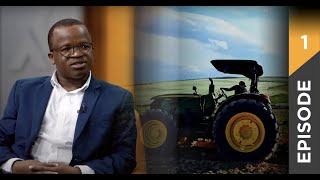
Tony Ndoro hosts agricultural experts including Wandile Sihlobo and Thomas Dredham to discuss how technology and mechanization are reshaping crop and livestock farming across Africa. John Deere representatives Jakob Bears and Henty Breath explain how integrated farming operations boost profitability and sustainability for African farmers.
Foreign. You're watching Tech Terrain and we're excited about the lineup in this episode where we look at the many pillars in a farming operation. Our guests today include one delicious Hlobo from Agbiz and Thomas Stratham from Sion Agrippa. Dr. Michael Bradfield from the Livestock Registering Federation also joins us alongside Jakub Bears and Henty Breath from John Deere. Hello and welcome to the brand new season of Tech Terrain. Good to have you with us. I'm Tony Ndoro. Now, during today's episode, we'll be discussing farming as an integrated operation and at the same time give you a glimpse of what you can expect in the rest of the season. The now, a farming operation goes through a number of seasons and phases in just one year. There's so many pillars that all have to be healthy for that operation to function successfully. Finance, plant health, animal health, soil health, mechanization, natural resources, and of course, the list goes on and on. And there's a saying in the farming community, or I suppose in the business world, surround yourself with people that know more than you. Now the question beckons, must a farmer know more every single thing or is the best recipe to align yourself with the right partners and specialists to make sure you run a successful farming operation? So we kick off today's discussion with my first two guests in studio. Wandele Sihlobo, chief economist at Agbiz, and Thomas Dredham, an independent agronomist from Sion Agri. Gentlemen, thank you so much for joining us on Tech Terrain. Good to have you with us. Wandila, let me start with yourself. Of course, farming is a complex organism. If I want to become a farmer starting off, whom should I surround myself with?
Thanks for having me on Tech Terrain. Tony. I think the farmer doesn't really have to know everything in agriculture, but you just have to be linked with all of the suppliers that you need. Obviously, depending on what commodity you are focused on, technology suppliers gets to be one of the important stakeholders to have in the table. And obviously the finances, as you mentioned in your opening remarks, are some of the important stakeholders that you sit with on the table. And then depending on what you are focusing on the next season, all of those key players that you'll be sitting with on the table will be able to give you the insights as well as working with you on the next step as you lay forward all the practicalities for the next season.
Okay, Thomas, now you're an independent agronomist. You're on the ground a lot. What's Going on, on the ground.
Tonio, from our side, we like to look more at the information side of the swales and agronomy site. So precision farming is a, a complex project, like we say, but it consists of a lot of factors. It can be technology, it can be information, it can be machinery. But on our side, we look at the information side to try and get more information to the farmer. Looking at the soil analysis, soil classification, trying to service them on the side of variability and to boom, be. Be more profitable on the farm side.
Okay, so profitability is key. One delay. What should a farmer be looking at to remain profitable?
I think, Danielle, it depends obviously on a commodity that you are focusing on. Commodity prices are going to be your starting point to see which one is doing well. You take, for example, if you are in grains, if your soil can do both soybeans and maize, I think you will look at those ratios. But also on the input side, which is where Thomas was talking about, to say what technologies are needed, what advices are needed. So working on your input costs as well as looking on, on selling prices, that's where the farmer is going to be able then to decide. And obviously it's not as easy to switch from one crop to another crop because you also have the machinery and all of the other implements that you have on your farm. So I think it's working around that and also hedging the timing of all of your selling products that will assist you on that.
All right. Staying with the profitability issue, Thomas, as an independent agronomist, what services do you offer farmers in terms for them to reach that particular point that we're talking about? Profitability?
Yeah, as I said on the previous one, we look at the soil side, the agronomy side. So we do soil analysis, grid soil sampling, trying to determine what variability there is in fertility side of swales and trying to rectify that by doing variable application of fertilizers and lime. Then we look at soil classification, where we look more at the physical properties of the soil. As Mondeli said, there's different types of soil and they have in different areas different potential for certain crops. And for that potential, we try to, again, with variable application of population, seed density and then fertilizer, we try and manage that on the farm for the farmers. And then in season, we look at crop inspections, trying to in season, determine what the weakest link for that season is and rectifying that with products like foliar feeds and herbicides and fungicides. And then in combination with leaf analysis Then we can determine what the problem for that crop is at any certain stage.
So much analysis that you're doing soils, crops and so forth, would you recommend that certain farmers change crop and so forth? Do you come in and say maybe your soils at this point is maybe better to start going in this direction?
Definitely. As you can imagine, there's a lot of variability in the fields and there's a lot of differences in different areas in our country on a climate side and on the soil side. So when we look at the physical properties and the fertility of the soils, we can determine to say to a farmer, listen, it's rather for you, better to do soya beans or better to do sunflowers or whatever the case. So from that information systems we use, we can try and give better accurate advice for a farmer.
Okay, so it's not farming back in the day, in the 1800s, you just go and start tilling in the soil. Is it wandile? There's also mechanization. There's so much technology. How is this enhanced farming?
Yeah, I think, I mean, what Thomas is outlining is very important because it means that you have to understand the quality, quality of your soil as well as what could pretty much do well onto that. But the point about the mechanization that you are raising has helped South Africa immensely. I mean, if you look back, Even starting at 1994, up until to today, all of the new technologies we have gained, both the mechanization, but also on the biotechnological side, they've been able to boost our productivity. We now have a sector which has nearly doubled in its output. And largely it's not the expansion in area planting, but rather more of the productivity we have gained because of technology and mechanization.
So it's made us a lot more productive, Thomas, which is all well and good. You know, there's all this fancy new technology around. I mean, so many different things that we've spoken about here on tech terrain in the past. But the key is the implementation of it, is that we know it's not cheap at all. But you know, at which point do you say to a person or to a farmer, listen, maybe you want to go this way in terms of technology.
I think the big thing that changed over the last few years, a few years back, it was very expensive to put that technology on your equipment to handle the variability. But I think the big thing that changed now, or it was always only for large scale farmers. But I think the big thing that changed now, if you buy a new planter or Spreader or sprayer for that case. It all changed now because it's already equipped with that precision farming technology. So now for a small scale farmer, if he buys a new equipment down, he has the ability to do the variability or the variable application on our precision farming maps. So now it changed, it's still expensive. Everything is expensive but it changed. It gave us the opportunity, opportunity to help the small scale farmers as well.
Yeah, talking about just you bring in small scale farmers, it's all about support from so many of those partners that we mentioned right at the beginning, isn't it?
Yeah, I mean it's all about the support and the partners that you're mentioning. But I think that on the point that Thomas is making about machinery being expensive, but the gains also that you get from applying these technologies are just as much to the previous point that I was mentioning to say technologies in South Africa have given us capabilities to be able to do well. You take simple commodities like maize for example. We farm in 2.5 million hectares but we produce nearly 20% of Sub Saharan Africa cars, output. And the key thing there is the productivity that you get from there, which on a net, net basis I would say that it leaves the farmer on a positive end. But obviously the partnerships that we do get, either it's a partnership between commercial farmers and the new entrants into the sector or the government, they assist on crowding in the resources that make it possible for farmers to be able to acquire some of these necessary technologies as well as the skill set that comes with Thomas and the other colleagues that are in the industry.
Fantastic. Thank you so much guys, lovely chatting with you. Once again, thank you to Wandile and Thomas for kicking this discussion off on a high note. We're talking about the farming, operational farming as an integrated operation. We'll be focusing next on livestock and joining me will be Dr. Michael Bradfield. He'll share his thoughts. What we've just discussed the many pillars of a successful farming operation. And up next a more detailed discussion on livestock. And I'm honored to welcome Dr. Michael Brown to the studio. Doc, are you well?
Yes, very much so. Tony, always nice to be with you in the studio.
Fantastic. Good to see you. Let's talk about livestock. Where are the opportunities first before we look at the risks?
Yes. So Tony, I think what many people don't and producers don't recognise is that 40% of livestock belong in smallholder and emerging hands in South Africa out of the total of 14 million livestock that we have. So there's an enormous untapped potential as well, especially for the value chain. And now export is starting to play a bigger role in South Africa as a capital base. So for grain producers, my wish would be that grain producers handle the livestock in exactly the way they handle their grain. You know, grain farmers are very good at what we call precision farming. Things must be exact, they use modern science, etc. And if only they would do that with their livestock and see it as a base where they can handle their livestock in exactly the same way that they handle their grain enterprise. I think there is a lot of potential there.
Well, Doc, that's a fantastic point you make there. 40% of the herd in South Africa is actually in the hands of the small scale farmers or substantial, as you say. Very interesting point. But now talk to me please about the risks of livestock farming.
Yes, so just as much as there's a tremendous potential, especially on the export side and to really lift our GDP in livestock farming, the big risk is animal health. And as was demonstrated, a recent outbreak of foot and mouth, for example, cost the country the livestock sector immediate 4 to 5 billion rand. And so that is something that we going to have to work hard at mitigating together with government and the industry itself. We're now having good discussions with Department of agriculture, land resources, etc. To see how we can mitigate those risks. But there are opportunities to be able to overcome those.
Well, Doc, why does livestock find farming fit in so well with crop farming?
Yes, Tony, it's very much like a hand in glove. For example, the maize farmers, after they reaping it now in the winter, and then they sit with maize double, for example, you know, what's left from the harvesters and that forms an excellent basis of feed for cattle feed. It'll take those cattle through the toughest part of the year, winter months for at least 3, 4 months. It will take those animals through the winter, for example. So it's integral. And you can put a product through the cattle as feed. And of course that feeds the nation as well. So the two work hand in hand.
They do work hand in hand, as you explained. But would you recommend that a crop farmer start maybe looking at his livestock and actually operating that as a different profitable unit?
Yes, very much so. See the livestock unit as an integral segment of the crop unit and manage it in the same financial discipline. You know, know exactly the kilograms produced per hectare out of your livestock, know exactly what your costs are per livestock unit. Everything you do in your crop unit, you should be doing in your livestock unit and managing it the same way.
What are the trends internationally when it comes to livestock farming and looking at South Africa as well.
Yes. So of course trends are moving to high quality meat. For example. Traditionally we used to see how much meat we can supply. I don't know if you remember going into a restaurant and used to see if you can eat a kilogram of steak. And if you could eat a kilogram of steak, you've got your name on the wall, you know, and we produce some big boys doing that. But those times have changed. Now we actually eat less meat, but more high quality meat, etc. So that's probably the biggest international change that's happened in the livestock sector is more quality product than a quantity product.
We spoke a little bit earlier on with my first two guests, Wandile and Thomas, about technology within the agriculture space. What sort of technology is there when we're focusing on livestock, Doc?
Oh, there's some very exciting technology that is being applied now. We heard here of the world of genomics, for example, where we actually sequence the animals and there's almost a change where we're not going to look at breeds, we're going to look at the DNA and select according to their DNA. Going into the future, we look at the TAG technologies, the identification of an animal. We can now monitor what they eat, how much food they eat, when they eat, for example. We also have good technology when we can see how much they eat. We want animals that eat a little bit of food but produce a lot of meat, for example. And when we go down that route, we can essentially almost halve the amount an animal eats and double the production in livestock. And those are the tremendous opportunities we now going into and using.
Well, you know, if you're looking at the environment right now, many of us are worried about the environment, the impact so many, so many different industries have on the environment. Let's look at livestock. How does one manage one's livestock so that you have the least impact or adverse impact on, on the environment?
Well, remember, livestock are used where often where we can't grow the grain. So the hilly parts on the farm, for example, the mountains, etc. So that's why again, they fit in so perfectly with the grain industry and the grain farmer. But at the same time we can overgraze, for example. So there's got to be a very strong component of this natural resource that I've got. How do we manage it properly? And you've got to be really very careful doing that.
All right, Doc. Finally, just from a layman's point of view. And still on the environmental issue, there's so much spoken of about cattle and methane gas and you know, the adverse effect on the natural environment. Explain that to me a little bit.
Yes, and sometimes I think it's overdone. You know, even humans exposed methane G gas at times. So of course livestock, at certain times livestock do a little bit more because they burp and actually that's where most of the methane comes out because of the, you know, ruminant and seven stomachs, five stomachs, I can't remember exactly but of their stomachs. But if we do our selection properly and we manage it properly, even livestock can be carbon neutral. And that's where we are moving towards in livestock. So rather than seeing livestock as part of the problem, we can see livestock as part of the solution really in the whole greening the environment. Because in the end of the day evolutionary, we've always lived with animals and seen them as a good source of protein and we should be able to do. We need to be able to do exactly the same thing with livestock. So rather than seeing them as a negative, we need to be seeing them as a positive.
Alright, from. Fantastic. There's a solution to everything. Thank you so much, doctor.
That's a pleasure.
All right. What a great pleasure to spend a bit of time with Dr. Bradfield. Now we look forward to delving a little bit deeper into the subject of livestock later on in this series. Now we're moving on to the implementation of technology and more specifically the role of mechanization. That's up next. Now early on in the show we spoke about integrated farming operations. We looked at livestock and also crop farming. Now what I want to do is focus on the technology and the advancements in technology in today's farming operations. And who better to ask than the gentleman from John Deere? I want to welcome into our studio, I've got Jacob Bears and Henty Breath. They join me today from John Deere. Gentlemen, good to have you with us. Are you both well?
Yes, thank you Mr. Ndoro.
Fantastic. Jakob, may I start with yourself? Just how critical is mechanization when it comes to farming in 2021?
I would say critical, but it all depends. Earlier in the episode we spoke about livestock. You talk about row crop, you know, you talk about game. All of them has got tractoring for that. You can go on a bicycle, you know, if one seed you go somewhere. But leveraging the right tractor of the right piece of equipment, we can support the farmer with the right piece of equipment for his Today they've got all diversified pieces of.
Plough plant and start forming is not adequate or sustainable anymore. We all know technology is changing at a rapid pace almost on a daily basis. Therefore from a John Deere and an organization point of view, we need to keep up with it as well. And we realize that. Therefore John Deere locally as well as globally are heavily invested in research and development on a daily basis to keep up with these changes. And through this whole series we cover, and we've heard it earlier today, the different pillars in the farming operation of which mechanization is only one is the technology we develop how it integrates with all the other pillars in the long run to ensure sustainability and profitability. For example, John Deere developed see and spray which is technology applying herbicides only where it's needed. Through that you get more efficiency, you're saving on your herbicide cost, you're saving on travel time and you can do it at the faster speed. This is one example, there's many more that's linked, integrated to other aspects of the farming operations, helping farmers to save and be more profitable and more sustainable in the long run.
Can I quickly jump on?
Yes.
So we like to. People like to throw. There's driverless cars and we know there's this auto track or tractors almost driving itself. But guess what? For the last five years we've got tractors that's already telling the technician and the customer and the dealer hey there is there might be something going wrong. Order the following part and or stop operations. Those are small little things. And what's amazing Tony, is you think Africa, we at the bottom end of the world. We've got actually a bunch of R and D stuff that we're testing here because of the importance of the farmers here, but also the severity of our conditions. And that makes us proud. We, we're not just here to sell it, we're part of the whole development.
So you're saying you look at Africa as a continent, you look at me as the African farmer. You're not bringing in importing products from Europe and so forth. You're developing products that are suited for the African farmer, for African climate, basically for Africa.
Henty, Tony, definitely from John Deere side. We cater for all farmers at different levels and with products suitable for our conditions. Like you've mentioned, linking it back to precision and technology. Those are buzzwords and everybody think it's only the high tech but you get different levels from entry level for technology and precision farming. All of it together with the other aspects of integrated Farming businesses to provide solutions for our customers.
All right, now just to wrap things up, Jako, I'm a farmer. I'm sitting there thinking, listen, that's a great piece of kit. I'm going to invest in that particular kit and that particular piece of equipment. But really, in my industry there are no guarantees, are there?
Each of these of the following episodes of Techterrain 2.0. We want to demonstrate the tech true value of these technology solutions. That's why we go into the to the farm. That's why we bring these industry experts to demonstrate and show that it adds up. You can't just invest in some kind of a technology or a new tool and you can't see the return on investments. And that's the focus of, if I can Summarize Tech Terrain 2.0.
Okay, so there's a challenge out there. You're saying that we're going to demonstrate through Tech Terrain this whatever John Deere has to offer will be beneficial to anybody, any farmer out there who's going.
To invest in it, Any specific application.
Yes. I love that. Well, Yaako, let's wrap this, let's wrap this up now. So we've got a whole season coming up of Tech Terrain and you're going to be showcasing a lot of fantastic new ideas, new equipment from John Deere. And I suppose the critical question and the challenge to you from a farmer would be will this help my business grow?
Will it help your business grow? We're going to share a lot of new technologies from the different industries within agriculture, of course, from John Deere itself. But the reason why we're going to the farm, the reason for Tech Terrain 2.0 is to demonstrate that value doesn't add up. If I make that investment, what's the return of that investment and over how long? And that's the focus of each of the following episodes of Tech Terrain. And would love to actually ask feedback from farmers on the different social media that's out there to let us know that's how we want to engage and improve on Tech Terrain.
Fantastic. Lovely chatting with you gentlemen and it's going to be a fantastic season. I look forward to chatting with you again.
Thank you, sir.
Well, there it is, Henty and Yaku talking to us about what we can expect from John Deere. Of course, Tech Terrain is powered by John Deere. So this was a jam packed episode and certainly an appetizer on what to expect in the rest of the of the season. Join me again next time on Tech Terrain. I'm Tony ndoro Bye for now.
When we go down that route, we can essentially almost halve the amount an animal eats and double the production in livestock. And those are the tremendous opportunities we know going into and using well.
And I would, you know, if you're looking at the environment right now, many of us are worried about the environment, the impact so many, so many different industries have on the environment. Let's look at livestock. How does one manage one's livestock so that you have the least impact or adverse impact on the environment?
Well, remember, livestock are used where often where we can't grow the grain. So the hilly parts on the farm, for example, the mountains, etc. So that's why again, they fit in so perfectly with the grain industry and the grain farmer. But at the same time we can overgraze, for example. So there's got to be a very strong component of this natural resource that I've got. How do we manage it properly? And you've got to be very careful doing that.
All right, doc. Finally, just from a layman's point of view and still on the environmental issue, there's so much spoken of about cattle and methane gas and you know, the adverse effect on the natural environment. Explain that to me a little bit.
Yes, and sometimes I think it's overdone. You know, even humans exposed methane gas at times. So of course livestock, at certain times, at certain times livestock do a little bit more because they burp and actually that's where most of the methane comes out because of the, you know, ruminant and seven stomachs, five stomachs, I can't remember exactly but of their stomachs. But if we do our selection properly and we manage it properly, even livestock can be carbon neutral. And that's where we are moving towards in livestock. So rather than seeing livestock as part of the problem, we can see livestock as part of the solution really in the whole greening the environment. Because in the end of the day evolutionary, we've always lived with animals and seen them as a good source of protein and we should be able to do, we need to be able to do exactly the same thing with livestock. So rather than seeing them as a negative, we need to be seeing them as a positive.
Alright, fantastic. There's a solution to everything.
Thank you so much doctor, that's a pleasure.
All right. What a great pleasure to spend the best bit of time with Dr. Bradfield. Now we look forward to delving a little bit deeper into the subject of livestock later on in this series. Now we're moving on to the Implementation of technology and more specifically the role of mechanization. That's up next. Now early on in the show we spoke about integrated farming operations. We looked at livestock and also crop farming. Now what I want to do is focus on the technology and the advancements in technology in today's farming operations. And who better to ask than. Gentlemen from John Deere, I want to welcome into our studio I've got Jacob Bears and Henty Britt. They join me today from John Deere. Gentlemen, good to have you with us. Are you both well?
Yes, thank you Mr. Ndoro.
Fantastic. Yaako, may I start with yourself? Just how critical is mechanization when it comes to farming in 2021?
I would say critical, but it all depends. Earlier in the episode we spoke about livestock. You talk about row crop, you know, you talk about game. All of them has got a certain element of mechanization and then a component of technology. Now technology can be from just managing your livestock all the way to the mechanization itself. But these are extra tools that you need to do it more efficient. That's why you leverage. You don't go tractoring for that. You can go on a bicycle, you know, if one seat you go somewhere. But leveraging the right tractor of the right piece of equipment behind it, hopefully you reduce your input costs and improve your efficiency. And that's what we believe at John Deere is ensuring we can support the farmer with the right piece of equipment for his operation. And it becomes quite complex. If you look at farmers today, they've got all diversified pieces of farming, different components and there's not a one size fits all. And we're privileged that we've got a dealer network that's invested heavily in order to have the capability to advise the farmer on, you know, what's the right components. And we're fortunate from John Deere that we can tailor made certain solutions. We're not just coming in and pushing one certain product because we've got one factory. We're fortunate. We've got a whole globe of John Deere and partners that we can leverage to support that farmer in order to do it as efficient and effective.
Now just Henty, to pick up on what Jako is talking about, what he's saying here, that obviously one size does not fit all. Which means you as John Deere have to get into a lot of research and development. Is that taking place, Tony?
Definitely, yes. In today's time and age to, to plough, plant and start farming is not adequate or sustainable anymore. We all know technology is changing at a rapid pace almost on a daily basis. Therefore, from a John Deere and an organization point of view, we need to keep up with it as well. And we realize that. Therefore John Deere locally as well as globally are heavily invested in research and development on a daily basis to keep up with these changes. And through this whole series we cover, and we've heard it earlier today, the different pillars in the farming operation of which mechanization is only one is the technology we develop, how it integrates with all the other pillars in the long run to ensure sustainability and profitability. For example, John Deere developed see and spray which is technology applying herbicides only where it's needed. Through that you get more efficiency, you're saving on your herbicide cost, you're saving on travel time and you can do it at the faster speed. This is one example, there's many more that's linked, integrated to other aspects of the farming operations, helping farmers to save and be more profitable and more sustainable in the long run.
Can I quickly jump on? Yes, so, so we like to. People like to throw these driverless cars and we know there's this auto track or tractors almost driving itself, but guess what? For the last five years we've got tractors that's already telling the technician and the customer and the dealer hey there is there might be something going wrong. Order the following part or stop operations. Those are small little things. And what's amazing Tony is you think Africa, we at the bottom end of the world. We've got actually a bunch of R and D stuff that we're testing here because of the importance of the farmers here, but also the severity of our conditions. And that makes us proud. We, you know, we're not just here to sell it, we're part of the whole development.
So you're saying you look at Africa as a continent, you look at me as the African farmer. You're not looking, you're not bringing in importing products from, you know, from Europe and so forth. You're developing products that are suited for the African farmer, for African climate basically for African American.
Handy, Tony. Definitely from John Deere side. We cater for all farmers at different levels and with products suitable for our conditions. Like you've mentioned, linking it back to precision and technology. Those are buzzwords and everybody think it's only the high tech but you get different levels from entry level for technology and precision farming. All of it together with the other aspects of integrated farming businesses to provide solutions for our customers.
Alright now just to wrap things up, Jaakko I'm a farmer. I'm sitting there thinking, listen, that's a great piece of kit. I'm going to invest in that particular kit and that particular piece of equipment. But really, in my industry, there are no guarantees, are there?
Each of these of the following episodes of Tech Terrain 2.0, we want to demonstrate the true value of these technology solutions. That's why we're going to the, to the farm. That's why we bring these industry experts to demonstrate and show that it adds up. You can't just invest in some kind of a technology or a new tool and you can't see the return on investments. That's the focus of, if I can Summarize, Tech Terrain 2.0.
Okay, so there's a challenge out there. You're saying that we're going to demonstrate through Tek Terrain this whatever John Deere has to offer will be beneficial to anybody, any farmer out there who's going.
To invest in it, Any specific application.
Yes. I love that. Well, Yaaku, let's wrap this. Let's wrap this up now. So we've got a whole season coming up of Tech Terrain and you're going to be showcasing a lot of fantastic and new ideas, new equipment from John Deere. And I suppose the critical question and the challenge to you from a farmer would be, will this help my business grow?
Will it help your business grow? We're going to share a lot of new technologies from the different industries within agriculture, of course, from John Dietz. But the reason why we're going to the farm, the reason for Tech Terrain 2.0, is to demonstrate that value doesn't add up. If I make that investment, what's the return of that investment and over how long? And that's the focus of each of the following episodes of Tech Terrain. And would love to actually ask feedback from farmers on the different social media that's out there to let us know that's how we want to engage and improve on Tech Terrain.
Fantastic. Lovely chatting with you gentlemen and it's going to be a fantastic season. I look forward to chatting with you again.
Thank you, sir.
Well, there it is. Henty and Yaku talking to us about what we can expect from John Deere. Of course, Tech Terrain is powered by John Deere. So this was a jam packed episode and so certainly an appetizer on what to expect in the rest of the season. Join me again next time on Tech Terrain. I'm Tony Ndoro. Bye for now.
More from Francisco




Desh Ke Superhero | Mr. Madhava Rao | Faster Pole Installation with GreenSystem™ Post Hole Digger



En CasaToro John Deere encuentras el respaldo que necesitas para mantener tu maquinaria lista



