
John Deere Africa | Tech Terrain 2 | Episode 2
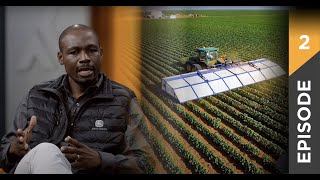
Thomas Stratum, Wandile Sihlobo, and John Deere representatives discuss how precision agriculture and soil analysis technology can help African farmers increase profitability. They cover soil health monitoring, adoption barriers, and why data-driven farming matters for the continent's agricultural future.
Foreign you're watching Tech Terrain. Today we focus on optimization and timing and of course, profitability. Our guests include Thomas Stratum from Sion Agri, Wandelesse Clobo from Agbizz and stian Kluta from AgTech Africa alongside Admiream Chayro from John Deere. Hello and welcome to the second episode of this year's Tech Terrain series. I'm Tony Ndoro. Now, in the previous episode we looked at the pillars of an integrated farming operation. In this episode we focus on soil health and analysis and find out what's happening in this particular space. We also look at the implementation of technology and the benefits it holds for farmers. And I welcome to studio Thomas Stratum who is an independent agronomist from Sion Agri. Thomas, good to have you with us. Are you well?
Fine, thank you. Thank you, Tony.
Fantastic. Talk to us about the variations in soil. Are there so many variations that we need to do such in depth analysis?
Yes, definitely, Tony. I think if you look a few years back, farmers normally just took one or two samples per field or per farm and from there on the fertilizer agent or agronomist will do a recommendation and they will applicate the same product over the whole farm or the whole field. Nowadays, because we know all the variability that's in the fields, we take a one hectare or two hectare grid, meaning we take every hectare, we take a sample, send it to the lab and then we do precision farming maps on a chemical analysis. From there on we can determine what the variability are and then do rectification maps for them on lime and fertilizers. But the variability is immense in the fields, especially if you go to the Eiffeld or the Eastern Free State, there you get five or ten different soil types in a field. If you look at this analysis side the same, the variability is much bigger and as well in western areas as well, but definitely where you have more topography and higher rainfall areas that makes that the variability is more in the fields.
That's interesting what you just said. Now Thomas, can you clarify that for me? Are you saying that on one field or one acre we can find different soil types?
Yes, definitely. So when you look at the physical side of the swales, we look at the soil depth, the soil structure, the soil colour, and there's 74 different types of soils. In South Africa. If you look at our system that we classify soils, so especially in the ifl, the Eastern Free State, Natal area, there you can get every 50 meters a different soil type. It's the same in the western areas, but a bit more bigger areas. But the variability is definitely there. And that's where the precision farming methods comes in to try and manage that variability.
Talk to me a bit about the technology. I'm sure that there's an advancement in technology when it comes to soil analysis. Talk to me about some of them.
Because of the variability, we use variable application methods on the equipment as well. So you need a variable spreader, you need a variable planter to manage or rectify these differences in the fields. So that's where the technology comes in. And I think over the last few years we made immense advancements on the technology side. So now it's very easy to manage these differences in the fields.
Why is this beneficial to a farmer?
Our main difference object is to try and get more profit for the farmers. So if we can manage that variability by lowering the farmers input costs on the areas, that's high risk areas and shifting it to the higher potential soils and where it's easier for him to make money, then the profit goes up. So at the end of the day, everything is about profit per hectare and that's the drive on our side as.
Well as an agronomist. What's the first thing you look for for when you step onto my land?
The first thing is to get information. I think the biggest problem out there, there's a lot of farmers that will put in 10, 12, 15,000 rand hectare, but they don't have any insight into the soils. So the problem, if you don't take soil analysis and you don't do soil classification, you don't have an idea what you're working with. So the first thing I'll do is tell you to do a soil sample or look at the physical soil property so that we can determine what we're working with.
Alright, so Thomas, you step in, you analyze and then you classify the soil.
Explain to me classification side. We're looking at the physical properties of the soil, we're looking at the swell structure, we're looking at the soil depth, we're looking at the soil color and we classify it into 74 different soil types. So we use that to determine with the climate, with the area, with the rainfall, we can determine what the long term term yield probability will be for each soil type. So on this classification site, a few years back we normally only did it to see where the better and the lower potential swirls are. But nowadays we do it to see where the potential differs and to, like I said, to variable to fertilize as well as plant population in season.
Now, Thomas, fantastic. Lovely chatting with you.
Thank you, Tim.
That's Thomas Stratum. He's an agronomist, independent agronomist, talking to us about the importance of the soil that you're farming on right now. In our next segment coming up, we'll be talking about the profitability of farming operations with economist Wandele Sikrovo. Well, let's continue our discussion on profitability. We heard from Thomas Stratum about the importance of soil analysis if you want a profitable operation. And of course, profit is at the heart of any farming operation. And there's a host of factors to be considered, I'm glad to say. Joining me now is agbiz's chief economist, Wandile Sihlobo. Wandile, good to have you with us as always here on techterrain. Let's start right at the beginning, Wandile, and talk about the decisions that a farmer has to take. I mean, we've got to sit down at some point and say, listen, for me to turn a profit, this is what I need to, where I need to start, this is where I need to end up. Talk to us about that. What would you recommend a farmer looks at first?
Yeah, I think, I mean, it obviously would depend on what, what are you, what farming entity are you in? Are you in a livestock, Are you on crop farming, Horticulture? And that will need a careful planning of your, of your enterprise budget, of knowing what are the key inputs that will be required onto that. And I think besides, in addition to that, it will also be important obviously to know the timing. Take for example, if it's a soybean entity, knowing about when to actually get your seeds and also when does the season start and also when should you hedge your prices? Because at the end of the day, you will only be harvesting in the next year, which is around about March going into April, while the planting will be happening somewhere around about October going into November. So I think knowing all of those timings and also to the discussions that we had with Thomas about understanding the soil as well as its capabilities, utilizing various technologies to be able to tell you that is part and parcel of all of those things that the farmer needs to be equipped with.
So, Wandile, I'm listening to you. You're talking about the fact that the farmer has to sit there. This is my crop, I must anticipate this type. I'm in this particular climate. But there's climate change. It's not so predictable as, as it used to be. Factor in that for me, yeah.
I mean, that's why you have the precision farming which we're talking about, because now you are able to have your forecasts about the climate conditions. If you are under irrigation, you have the better technologies under how to irrigate. So all of those technologies, they are there to cushion you to an extent. Obviously, they cannot fully take away all of these risks, but I think they enable the farmer to be able to anticipate what, what will come over the next couple of months. Which is why the story about the technology adoption in farming becomes so important, mechanical as well as biological. Because all of that cushions the farmer throughout all of these tough decisions.
And the risk of bad timing.
The risk of bad timing is always, I mean, a key thing, which is why we were saying about you have to have your agricultural advisors, either it's agronomists, various companies that are supplying you with the inputs and all of the mechanical stuff that you use on the farm, because they are able to tell you when is the right time to plant, when is the right time to apply what solutions on your farm, and then you have to get those right. Because if not, the yield at the end of the season might be affected and ultimately the profitability.
When should a farmer start making that or start converting to precision farming?
I think the conversion of precision farming, given now we are at a state where climate change is a reality. In South Africa, yes, we have just had two good seasons, but we don't know what the next couple of seasons would look like. So any technologies which are brought in through precision farming in general, that enable the farmer to do well, I would say as much as your income allows, begin to add up technology solutions by solutions, and your farm, farm at the end of the day will be fully transformed.
So do you recommend farmers still pull resources, I'm talking about when they want to purchase equipment, farming equipment, because we do know that it can be very expensive. Is that something that you would recommend?
Yeah, I think it depends on that because the sharing of some of the implements carries its own risks, depending on what crop you are in, as well as some regions that you are in, because some can transfer some of the diseases that are either existing in crops in some other areas, and then the farmer might stand at a risk of doing that. But obviously for some, there are certain ways under which, you know, such risk could be curbed. So I think that it will depend on the financial solutions onto that. But another thing that is also important in the equation is that the price of technology, yes, it becomes much more Higher at the start when they are being introduced, but, but over time the price of that begins also to be more affordable. And importantly is that some of the technology providers, they are now also creating the machinery that is adaptable and affordable even for medium scale and family farms. And I think that now there is that flexibility in solution that does exist.
Which farmers can benefit from, you know, within different industries. You get, you know, they'll tell you this and maybe 10% of startups will make it in this particular industry. Talk to me about the agricultural industry. What are we seeing in terms of numbers, in terms of sustainability?
I mean, I think on the sustainability side in South Africa's agriculture industry, I would say it's been there. But look at the structure of South African farming sector. You think back, for example, let's say 1994, 1993, there were a number of farming units, over 100,000 of that. If you look at to now as of 2017 statistics, we have about 42,000 units that are there. So yes, there's a lot of consolidation that had been done that has happened. But I think the important thing is that the output which is the key thing that has been sustained and actually been growing. So in as far as to say the success of the new entrants, I mean if you look at literature now in agriculture, the success rate is always relatively small, somewhere 6% or so. But I think with now new technologies, relationships that you can make with your service providers, those are all instruments that enable success.
Wandile, lovely chatting with you as always.
Thanks for having me on.
Fantastic. Good to know that we're doing all right when it comes to the agricultural sector in South Africa and throughout the country continent. Coming up I'll be chatting with team John Deere. They'll be talking about the science of agriculture, precision agricultural practices and how they can enhance output on your operation or in your operation. Stay with us here on Tech Terrain. You're watching Tech Terrain. And up next, a focus on precision agriculture. Joining me is Diane Kluta from AgTech Africa and at Mayam Tsairo from John Deere. Gentlemen, welcome. Good to have you with us.
Hello.
Tony Stian, let me start with yourself. Precision agri practices, that's a passion of yours. But can you just break it down for us? What does it mean?
So Tony, there are different levels of precision agriculture. So throughout the spectrum of farmers you can either enter by say looking at guidance solutions and then you can be the top end farmer that uses his data that he collects on his farm on a precision level and he starts to look at, relook at it every season and optimize on top of that data and his history basically. So but to summarize further, to look at that top end farmer and where it can go to is you farming a zone with specific potential that was measured by an agronomist. That potential has got its own enterprise budget. It's not just the farm level enterprise budget or field level enterprise budget. It's actually a spot within a field that you farm for profitability.
So the data that we're speaking about will help you determine which zones fit for what crop or whatever it is that you want to do with them.
That's right, yes. That data speaks to, yeah, basically speaks to your profitability. And yes, you can go into your crop rotation, how you do that planning going forward. But the data that you, it's not just your yield data that you saw last year, you incorporate the different layers that you're measuring. So all your inputs got a cost related to that. So you stack all these costs and then at the end of the season when the harvester goes over your field, you not only see a tonne per hectare, you start seeing a rand per hectare margin that you're making. And that is real actionable data where you can see, look, it's good to be on the front page of the magazine saying I've got the best yard yield, but did you really make money on that spot?
That is critical, isn't it? And admire if I can bring you here in here as well because we're talking about all this fantastic data that we've been speaking about on tech terrain. But the critical thing I would assume is for the farmer to be able to read that data, understand it and then say, you know, this is the relevant equipment I need from whatever source of may be.
Thanks very much Tony. I think firstly, let me take you back. I think when we're growing up, I think mechanization was just about putting this, the seed on the ground and waiting it to harvest. But when we talk mechanization now we are talking a whole broader things for the farmer to be able to make decisions that will help him to be more productive, to be able to, to help him to be sustainable in the future. He needs to be able to understand the challenges and the problems that he has to find solutions that suit his problems. But however, it's an investment that he has to look at it as an investment to be able to ask himself what does he want to achieve at the end of the day and what kind of Problems that he wants to solve in order for him to be able to maximize or is yield and to be able to be profitable in future.
Now, Stan, you're on the ground, you know, you're speaking to different farmers all, you know, all over the place. And in practical terms, if I'm a farmer and I'm hearing data, I'm hearing technology, I'm hearing all these fantastic things, I just struggle to put in my GPS to find where I want to go to, it might seem a bit daunting. And talk to me about the skills required in order to be able to operate some of this or to work with some of this technology we're talking about.
So you're spot on there, Tony. It is a challenge, it is daunting. And what you hear farmers say is they talk around the fires about machine learning and about artificial intelligence, and then when they go back home, they realize they have to implement it on their farms. And that's where the scary part comes in. So how do you start that journey? And then the skills is required then to support you on that journey. And luckily, companies like the John Deeres out there have got their dealers that are skilled and set up to really support the farmer on their journey and to make sure that he's got the relevant technology. Because there's a lot of noise in the market out there. So the key is to start with what's your need, what do you want to solve and how can technology help you in that journey?
Are you finding there's a bit of resistance still to technology, to mechanization, to at all?
Absolutely, absolutely.
What do you say to that farmer?
So the barrier they face is either cost, they look into the cost aspect of it, or just the skills and not understanding. And where do you start? You know, like I say, the noise out there is incredible. So finding that relevant solution is really important. And asking yourself the question, why do I want to do this, what do I want to control and what do I want to achieve?
Admir. How does John Deere step in now and say, listen, you know what, we understand these are your fears, but how do you come in and allay some of those fears that we're talking about? Some of the farmers still may have at the present moment?
I think we provide a solution to the problems that the farmers actually are encountering. If you look at the zone farming that Stan has mentioned, we are looking at to be able to ensure that the farmers have qualified, got that knowledge, that understanding of his field, and to be able to know what he can maximize at each part of his field and be able to give him that information through our partnerships and be able to say from this, you can apply this much of fertilizer on this soil to be able to get the yield, maximum yield for that particular field. That's the solution that we provide.
I think one of the sayings that we've used on Tech Terrain is to measure is to know, isn't it? And that's critical. And you're coming in saying, listen, you need to measure. You can't just pour, whether it be water, whether it be fertilizer and so forth, you need to measure.
Absolutely. That's what we see. Obviously after generations of farming on the same land, you realize what your average yield, your long term average yield is given the climate change, given your soil potential. But when you start to measure, then you can truly start to optimize and that's where the precision technology really comes to live and the effectiveness actually just comes out.
Well, Admire, lastly, what's your advice to a farmer who wants to maybe invest in more plant?
Okay, Tony, I think that's a very broad question. I think if you look at our farmers across, across the continent, across everywhere, they've got different challenges, they've got different problems. What we need to be able to ensure that the farmers have knowledge about is to be able what kind of problems do they have and what solution does mechanization provide them. I'll take you back again to say it's about variables that you use in your farming. For instance, let's talk about fertilizer, which is a huge component of of your cost and that impacts your profitability. How much fertilizer are you going to use? Our technology, our mechanization will be able to assist the farmer to be able to ensure how much the fertilizer you'll be able to use, maximizing on his yield and be able to reduce that component of cost and be able to be profitable in the long run. If you look at application as well, there is different technology on, on spraying that we're using that will help him to be able to reduce that cost.
Okay, so you listen, first look at the business and then recommend is basically what you're saying.
Yes. Understand the farmer's problems and then we provide a solution based on his problem at that point.
Fantastic. Admire Stian, thank you so much for joining us here on Tech Terrain. Good to see you. Well, there you have it. We have to mechanise, we have to accept technology and as Admire was saying, they will come through. Have a look at your business, understand what your needs are and then come up with a solution. Well, thank you for joining us for today's episode of techterrain. In the coming episodes, the focus will fall on research what is available and how farmers can apply it to the benefit of their own farming operations. That's it for this episode of Tech Terrain. I'm Tony Ndoro. Bye for now.
Sam.
More from Francisco




Desh Ke Superhero | Mr. Madhava Rao | Faster Pole Installation with GreenSystem™ Post Hole Digger



En CasaToro John Deere encuentras el respaldo que necesitas para mantener tu maquinaria lista



