
John Deere Africa | Tech Terrain | Episode 16
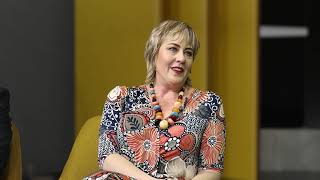
This is a YouTube video titled "John Deere Africa | Tech Terrain | Episode 16" published in October 2020. It features a detailed broadcast of the Tech Terrain series focused on World Cotton Day and the cotton industry in South Africa and Africa. The program is hosted by Tony Ndoro and includes multiple expert guests such as Henny Brewer (CEO of Cotton SA), Tanya Okamp (independent communication specialist for Cotton SA), cotton farmers Leonard Fenter and Joseph du Plessis, and representatives from John Deere discussing cotton farming technology. The content covers the importance of cotton as a crop, its economic and social impact, challenges faced by farmers, mechanization, and innovative John Deere equipment for cotton harvesting. The episode serves as an informative presentation rather than a conversational transcript involving Francisco Jimenez.
Foreign.
Welcome to Tech Terrain. Good to have you with us once again. I'm Tony Ndoro. Now, sadly, this is the last broadcast in this series of Tech Terrain. We hope you've enjoyed it, but we've still got one more show to go through and the 7th of October is World Cup Cotton Day, and that's in celebration of the importance of this crop around the world. We'll talk to Henny Brewer, CEO of Cotton sa, as well as Tanya Okamp, an independent communication specialist for Cotton sa. Two cotton farmers, Leonard Fenter and Joseph du Plessis, spend time with us to share their insights. We then welcome Philip du Plessis and Lucas Honefelt from Team John Deere back in studio to discuss the latest and greatest technology and in this sector. So remember to go to techterrain co Za for bonus material uploaded by us on a weekly basis. Right, let's kick off this week's show. Today is World Cotton Day. So you're probably asking yourself, why does cotton have its own special day? It's a critical and simple question that will be answered in just a few moments and just the right people to do that. Henny Brewer from Cotton south, he is the CEO and I've also got Tania Okamp, who is an independent communication specialist for Cotton South Africa, to talk to me about World Cotton Day. Guys, thank you so much for coming through to Tech Terrain. Good to have you with us. Tania, if I may start with you, why does cotton have its own special day?
So cotton is actually the only crop that is both a fiber crop as well as an edible crop. Because of this uniqueness of this crop, the World Trade Organisation decided to declare the 7th of October as World Cotton Day and it will be commemorated. It was declared in 2019 and this will be commemorated annually because it's so important and it's so unique. It ensures poverty alleviation, it creates jobs for hundreds of millions of people. It's a fibre that's produced for more than 7,000 years by more than 100 countries worldwide.
So, Henny, cotton is a major part of our lives. We live with it on a daily basis. Talk to us about the importance of cotton from a South African perspective and also from a continental perspective.
I think it's a fibre that's got the properties, you know, it's cool and comfortable and it breathes. So I think given our climatic conditions in this part of the world, it's ideally suited to our temperatures and so on. I think from an importance point of view, if you look at the consumption Figure in South Africa. I mean we've established through a survey that we conducted a couple of years ago that at retail level, I mean the equivalent of cotton fiber used at retail level translates to roughly 300,000 tonnes of Cottonland, which is, you know, if you express that in bales, it's roughly 1.5 million bales. Whereas we currently producing only 30,000 tons of cotton land in South Africa. So there's a huge, you know, opportunity to increase this crop. I think we have the potential to grow much more cotton in this country. And it can also, as Tania has pointed out earlier, I mean it can contribute to a poverty elevation and you can also earn a lot of, you know, foreign income for our country, 100%.
Tanya, you also mentioned that cotton is a food crop. That was a bit of a surprise to me.
Yes, many people when they hear cotton they think T shirts, denims or good quality sheets. It's also used for animal feed, but not only animal feed, for human consumption as well. So, so the cottonseed oil is used to deep fry food, but also it's used in products as mayonnaise, hair shampoo, soap and if you look at your industrial fibers as mops. But to me one of the most interesting aspects are that the American dollar bill is actually made of cotton.
The American dollar bill?
Yeah. So it contains cotton fibre.
Okay, so I'm right. It is a huge part of our daily lives, isn't it? Heiney, let me come back to you. I mean the pandemic covid19 what effect has it had on cotton production in South Africa and on the continent?
Yeah, I think in South Africa, you know, we could, the industry could carry on in terms of production and processing. So in that regard it didn't have a huge effect. But I think from an offtake perspective, I mean exports and so on, because of the decline in world, the world economy, you know, because of the, you know, consumers are, I mean the led to less consumption and so on and that slowed down the exports of cotton from South Africa. So I think the only effect, negative effect that we've seen in South Africa was the slower than normal exports of cotton that has taken place. But from a production and processing point of view, things continue as normal.
So Tania, what role does cotton, South Africa cotton assay play when it comes to assisting farmers in the country?
So we've got a dedicated role and function that includes development and transformation. And through our partnership program with the retailers, we've also got Mr. Price that specifically contribute directly with a fund towards small Holder Cotton Farmer Development. But it's not only a program for the small farmers, we also do training for our commercial farmers, provide them with updated market research and the applicable information to enable them. Because it's a scientific process.
100%. Henry, are there many people employed within the cotton industry from the, you know, all the way through the whole value chain up to processing and into the market as a big employer?
Yeah, no, I think if you, we made the calculation the other day. I think if you take it from farm level right through to manufacturing, it's roughly 50,000 people that currently employed. I think a figure that we can use is also the International Cotton Advisory Committee also made a calculation that says for every ton of cotton lin that's been produced, that creates between five and six permanent jobs in the cotton value chain. So if you now convert that into, you know, the numbers, 25 million tonnes of cotton is produced in a normal year and you multiply that by 10, it gives you 130, 140 million people that's employed by the cotton industry.
Wow.
And mechanization in that, in that sector?
Yeah, I think mechanization in the, in the developed the world, you know, there's not a lot of labor manual that's still taking place. But in the developing world, I mean that is one of the major commodity commodities in terms of job creation. I mean countries like China, Pakistan, India, if you, I mean it's. Everything is done by hand in terms of the planting and the, and the harvesting. A country like India. I had a meeting the other day with a delegation and they told me that they provide jobs for 60 million people in India alone, you know, the cotton industry. So that's a huge job, you know, creator.
Okay, let's move away from the farm and talk retail as well. How's retail involved in the production of cotton?
So the production of cotton last year we actually celebrated the 800% growth in the industry, which is incredible. And that was also due to the involvement of South African retailers. In 2013, there was a huge decline in the total cotton industry with the import from textiles in China, a diminishing of the whole industry and cotton Essay realized that something needs to be done to turn around this industry. And as South Africans do, we take hands, we work together and we make a difference. Mr. Price was the first, Mr. Price Group was the first retail company to come on board and that created the security with the farmers with a demand to increase the demand on local cotton. And was followed by edcon and then Woolworths. And when we also announced Our participation in this World Cotton Day that's led by the International Cotton Advisory Committee in America. South Africans don't need a reason to celebrate Opportunity is a celebration opportunity. And we were very grateful for John Deere and Woolworths that immediately said, we'll partner with you to celebrate this Cotton Day. So not necessary only in their offtake, but also, As I stated, Mr. Price for the development of small farmers and then Woolworths specifically, specifically on sustainable cotton. To them as a business, sourcing sustainable is a very important business goal. And their target is also to be the greatest sustainable retail sourcer worldwide. They were also the first retailer to sign up to the BCI program. And their current target is to have 2.2 million products of BCI cotton in the shelves this year.
Wow, that's amazing. Now, Henny, a last one to you, please. Tanja spoke about the local market. Talk to me about the international market. Is there growth? Can we grow it?
Yeah, I think we've seen over the years that, you know, since the 1960s, there was an average 2% growth, you know, in production every year. So it is something, I mean, it's, it's. As long as there is population growth, you have to grow more cotton in order to clothe the, the nations, you know, so, and obviously as far as, you know, in terms of economy growth also very important, then the people will have more money to spend on clothes. So those two factors play a major role in growth going forward.
Now, Henny, cotton is sometimes referred to or perceived to be a thirsty and dirty crop. Is that fair?
No, it's definitely not fair. I think we've seen over the years, you know, since the middle 90s with the new GMO technology that was introduced in the world, that in terms of chemical applications, cotton is using far less than it used to use. You know, in the case of South Africa, for instance, we hardly use any chemicals anymore any longer. And I think the other thing that cotton, you know is, well, it feels it, you know, water. From a water point of view, it's a thirsty crop. And that's also not true. I think information obtained from the 44, 44 most important cotton producing countries in the world indicated that, you know, cotton requires in terms of irrigation water. In those, in that case study only, you know, it came that it only uses, you know, 230 millimeters of irrigation water. The rest is supplemented by, you know, normal seasonal rainfall. So if you want to further, you know, express that or, you know, it use, Roughly it uses 1200 liters to produce 1 kg of Fiberland, but that translates into or converts to 230, roughly 30 millimeters of irrigation water. So it doesn't use, you know, more water than any other food crop in South Africa, for instance, maize. And I think the other important thing from cotton is if you compare it with maize, which is our biggest competitor, if you express, you know, the, the in terms of turnover for every millimeter of water, use cotton and use, you know, express it in turnover, then cotton is almost double that of maize.
Guys, thank you so much for coming through Tech Terrain and shedding a little bit more light on the crop cotton and just how, you know, I've learned a lot. I didn't even know we could it was a food crop as well. So I've learned something from this particular conversation with Henny Brewer and Tanya Okam, Henny Cotton SA CEO and Tanya as specialist communication independent communications specialist for Cotton South Africa. Thank you so much, guys. So there you have it. There is a very good reason why we have World Cotton Day the 7th of October of every single year. Because cotton is a very important crop in so, so, so many ways. Stay with us. Now early on in the show we spoke about the importance of cotton and also why cotton actually has its own day as in World Cotton Day. Now I want to speak cotton producers and find out what challenges they face, why they chose to actually grow cotton. So I want to welcome to Tech Terrain. I've got Leonard Fenta, chairperson of Cotton South Africa and he's been growing cotton for over 40 years as well. And also a new entrant into the cotton sector, we might say just three years of growing cotton. Joseph Du Plessis, a new entrance dryland producer of 2019. He also joins us here on Tech Terrain. Gentlemen, thank you so much for joining me. If I may start with yourself, Leonard. You've been growing cotton for over 40 years, which is, which is a long time. What have you seen over this period of 40 years? What are the main changes for you?
Well, it starts 40 years ago when my father, before that, my father started planting cotton in South Africa and the seed was not the same quality and sizes and everything as today. That was very difficult. By time with new technology we started plant better the cotton and we got new technology inside the cotton in the plant like the roundup ready and BT technology. In the past we spray more or less 12 to 14 times a year. Today we spray about two times a year only for sucking insects. So it's very, it's more easier to farm, but it's much More expensive, but by time in the past, we pick with the cotton with by hand, put it in wool bags and export it to the gins. And later on we start to getting one round, two row pickers. And then we start getting the module builders, putting the cotton in the module builders and send it to the gins. Today we have this new machines like 8 ray strippers, John Deere strippers, and 6 ray John Deere pickers where it makes this big round bale. They do all the job for you. They put it down on the land, on the ground and you come with your trucks and you export it to the gins. It's much easier today, but it's much more expensive.
So technology has played a big part. Big part, yes, 100%. Let me come to yourself, Joseph. I mean, three years ago you were farming maize. You've got made that switch to cotton and you're the dry land producer for 2019. Talk to me about why you decided to change from maize to cotton. And also just explain to us the meaning of dry land.
Yes, Tony. We farm on the far western side of the cropping area, inside the country. It's the Northwest Province, close to the Kalahari Desert on the western side of us. No further cropping is done because of the low rainfall and the erratic climate. We don't have any irrigation, so we are completely dependent on rain to be able to grow crops successfully. And over the past few years, the climate has definitely changed. Climate change is a reality for us. The rainfall has become much more unstable and much more erratic than it used to be. And with that, our prices of the grains are determined by the free market. So anytime we have a good crop, the surplus and abundance in this country, and it has to be exported, and then prices fall to something we call export parity, which is the world price less the transport to the coast at that price levels, crop production, grain production is not economic anymore for us. So in the other years when the grain prices are quite high, it is because that part of the country we farm in, crops have failed or have not good crops. So a lot of farmers have started going out of business. The sustainability is a big problem. And profit because mainly of low profit. So we had to start looking for alternatives which we could maybe better handle the difficult climate with. But also when we have a good crop, we still have a good price. And that crop was cotton. So we did a lot of research, traveled around the world, also had a look in other parts of the country where Leonard Venter farms. And then we decided we are Going to try cotton and we've had three seasons now and all three seasons went very successfully. So we are, we are very glad and very excited about, about going forward with cotton. We see that the cotton plant is a very hardy plant. It can handle drought much better than maize or soybeans. And it can handle the heat as well. Heat waves, very, very high temperatures doesn't affect the plant as much as it does grains. And then as well, there's ample opportunity to export good quality, profitably profitable to other countries. And it has made a big difference in the few of us that have started experimenting with it, our businesses. And we see it as a big game changer in the far western part, parts of, of the cropping part in the country.
Wow. Well done. Three good years so far. So good luck going forward as well. If I may come back to you, Leonard, when we look, looking at Joseph, he's in the northwest part of the country. Where else is cotton grown in South Africa and what are the challenges do some of our farmers face?
All right, well, starting with them and then Northern Cape also we produce cotton and Lapopo provinces. In the past, I think still at this moment the biggest part of our country producing cotton, even our small scale farmers is producing cotton in the Limpopo province. Province, Province. And also the small scale farmers and commercial farmers in KwaZulu Natal is planting cotton. And that's the areas in South Africa suitable to plant cotton. Yes. And people also in the free state starts planting cotton now.
Okay. You know, we had earlier conversation about World Cotton Day and one of the things that came out was the, the fact that harvesting cotton can be quite expensive. How have you overcome that, Joseph?
I think, Tony, in the past cotton harvesting was done by hand and then it moved to mechanized machines. And now we have very sophisticated machines which allows you to be able to harvest large acreages or hectares, large area very quickly. But it comes at a price. It's very expensive. So for us starting small, we couldn't afford a machine on our own. So two other farmers and myself started working together. Between the three of us, we bought two machines together. So we share machinery to be able to do this. And it works out quite well for us. It's a new concept. We were not used to sharing machinery with other guys. It's something we had to do. But for us at this stage it's working well.
That's fantastic. Just look, looking ahead, the opportunities for cotton from cotton assay perspective, even when it comes to beneficiation as well, are you pushing some of the other farmers, you know, to have a turnkey operations.
Yeah, you see, Let me explain to you this way. The commercial banks and all the financial institutes has come to the party. They must come to the party. Cotton is a little bit different than the other commodities. And with land banks problem at this stage we have a little bit of problems to finance the production loans of the farmers and also to buy this very, very expensive equipment. We need the commercial banks to come to the party. There's a difference between a combine and a cotton picker and stripper. Combined you can harvest maize, corn, wheat, sorghum, soya beans, sunflower. With a machine like the cotton picker and stripper, you just can, you can just harvest cotton. So the banks and the commercial banks is not so willing to help with. Because if the farmer runs into problems or he wants to sell it again, there's not so big market for it because a cotton farmer has to buy the machine from a cotton farmer. So that's not the same position with the combines. But there's a big future, a big future for the small scale farmers there. There's a big future for the commercial farmers. In South Africa, for example, we use 1.5 million tons of. Million tons of bales. 1.5 million bales. We produce 220, 220,000. So there's a big, big market for our cotton. At this moment we export nearly 80% of our cotton. Because of our economic industry is not in the position to, you know, to put, take it over to yarn and everything for the use of cotton. So we export most of our cotton 100%.
Joseph, your operation, where do you want to take it? You know, where do you see yourself in the next five years?
I think, Tony, we see cotton as part of a system with other crops. I don't think we'll only plant just cotton. One of our things we'd like to is to diversify and not put all the eggs in one basket. So in the past we used to grow just maize. It was maize fence road to fence row, just maize. And cotton is a very good alternative. So I think we'd like to grow it. We are only three farmers now that, that planting in our district. But much more are very interested and I think pretty soon more people will start growing cotton. And I think it will lead to a turnaround in sustainability and profitability which will bring back economic life and prosperity to those parts in the far west that have suffered quite long now 100%.
And Lena, just lastly from a cotton essay perspective, decided encourage young and new entrants into the farming arena to maybe delve into cotton.
Yes, the more we can plant, the better for our country. When we export our cotton lint, it's bringing in dollars. So we've been paid in dollars when we export our cotton. So we need to get more cotton. The more cotton you plant, the cheaper it is to genii, because at the time, same certain cost per kilogram to ginger cotton. And if there's less cotton, the price go up for the farmer. The more cotton you can produce, the cost come down to each and every farmer producer. And we also want to encourage our small scale farmers because that's a crop that suits them very well. You know, in Africa, thousands and thousands of small scale farmers produce. Zimbabwe must produce one small scale farm. Farmers produce a hell of a lot of cotton. We need to get that right in South Africa to get our small scale farmers also involved. We've got 2,000 now. We've got the land to take them up to 20,000. Even more if everything goes well with us.
All right, gentlemen, thank you so much for coming through to Tech Terrain and sharing your knowledge with us. And also, Joseph, good luck with your operation. And I know, Leonard, you've been going at it for the last four years, 40 years. So I think you can impart a little bit of knowledge to your right hand side there.
Thank you.
All right, well, there it is. We heard it from the horse's mouth that cotton is profitable and it can be in certain, certain situations, the preferred crop. So go ahead and maybe start looking at cotton with maybe a little bit of a different view. Sam. Now, earlier in the show we heard from two cotton producers and we also heard from Cotton sa. It's time now to speak to John Deere team and find out just what technology they have to offer to cotton producers and cotton farmers on the African continent. And to do just that, I've got Lukas Groenevelt and Philip du Plessis to talk to me about two particular pieces of equipment. Gentlemen, welcome to Tech Terrain. Good to have you with us, Philip, it's your first time. Lukas, welcome back. Let me start with you, Lukas. I mentioned there are two different options here. Talk to me about them.
Yes, Tony, I think we are very privileged that we can offer this type of technology to the customers in South Africa. So we've got a cotton picker and a cotton stripper. And I think Philippe has got a lot of experience as he's our cotton expert in South Africa. And he can tell you more about.
The product, the two products. Talk to us about the cotton picker.
Tony. Hello and thank you. To be here on the program today, you've got two different products. The cotton picker, your cotton picker you'll use on higher yielding cotton cotton as well as your irrigation cotton. Your cotton stripper is for the lower yielding cotton and that's mostly dryland and the lower rainfall areas and the lower producing cotton, that's where you will use your cotton stripper.
Okay. And when you look at your cotton pickers, they've got six row units and talk to me about that as well. You can interchange, can you?
No, you've got a picker, you've got a stripper and it's. The functionality on the two machines are different. The front parts of the machines, they differ from the model builder and backwards they are both the same. On your cotton picker, you've got your picking units on the, on the front and that will pick your cotton from the, from the plant and put it through to your model builder. It's available in a six row option that can be adjusted from 30 inch row spacings to 40 inch. On your cotton stripper, there's two different headers that you can put on the machine. It's either six row or eight row cotton cotton headers. And there's also row widths available from 30 inch to 40 inch.
Okay, Lucas, you know, I want to get back to some of the. Talk about some of the specifics, but technology also plays a huge part in this because you've got the Go Cotton app as well. How does that work with this equipment that we're talking about?
Just to come back to the machine, Tony, I think it's important also to notice that we are the first in the industry to offer you this kind of technology. And this, I'm talking about the module, how the cotton is formed in the machine. Because that really is important for the production as well as the effectiveness, you know, of the whole cotton industry. It really enables our customers, you know, to, to basically do a one man operation. I think, and Philip can also elaborate a lot on this going forward is that, you know, in the past customers had to add various machines, various operators. It was a whole logistic nightmare, you know, on a field, you know, to gather the cotton, put them in bins and transport them. I think with this module of ours, you know, it's made in a bale, a big bale, so it's easier, transportable. You can bale on the go, the machine can release the bale on the go. So it's really Enhancing the effectiveness as well as the productivity of the machine. It also, I think, very important, you know, lessens the cost implication on the customer because you've got one machine, one operator, one tractor and one loader, where in the past you had, as I said, the whole logistics entourage, you know.
To just do this bail still just sticking with that. The round module builder that you're talking about. Philip, what's the difference between the CS, CS690 and also the CP690? What are, what, what are we. What are the differences?
That's the numbering differences between a cotton picker and a cotton stripper. So the CP is cotton picker, the CES is cotton stripper.
Okay. All right.
To elaborate on what Lucas has said about the difference on the. The machines, the capabilities of the machines. If you look at the previous machines that, that we had that didn't have the round module builder, you had anything from eight to 10 additional machines on the field to do the same work. And customers, especially in the US where the machines were firstly tested with one cotton stripper, you've done the same work that if you had with two cotton strippers in the past that didn't have the model builder. So it is expensive machines. But if you look at the benefits in the machines, there is, there's value into that, into the technology that's available and the module builder as well.
Yeah. Do you offer JDLink with the pieces.
Of equipment and JD Link is part of the machine, so Remote Display, Access Service Advisor, remote. All of that is available on the machines as well. The Go Cotton app gives the ability to the customer that they can do general maintenance, daily maintenance on the machine with all the steps that they need to go through and check on everything that need to be done on a daily basis. It's also available on the applications and the adjustments on the machine is easy for the customer as well, to work through that. And he's got it on his telephone that he can work through that and do the necessary adjustments for the customer.
And the operator and servicing of the machine. Yes, yes, definitely. I think it's very important. It also gives the customer, you know, full visibility on what's happening in the machine on the end of the day. So he can see it remotely. You know, I think they can also make adjustments remotely. And as we said, you know, it helps really to bring that productivity and effectiveness back to the farmer.
Okay, talk to me about harvest identification.
And yield mapping on the machines with round module builder. There's a plastic on the back, there's a RFID tag. So that tag is the link from the field that can go through the value chain for the customer as well. So it goes to the gin, and from there the ginner can take that information and the lint that is produced can go through the rest of the value chain and see where is the cotton going to. The customer, on the other hand, can take that information and trace it back to the field. You've got your harvest id, your harvest mapping that, you've got the yield mapping that, as we say. But then you can can take specific characteristics of that cotton and you can trace it back from the gin with the better quality cotton to see what was the fertilizer that was used, what was the applications that was used, chemicals, planting dates, what was the weather like in that specific area. And the customer can work from that as well to better his yield in the future as well and to increase profitability.
Lukas, does it do all these or do these machines do all of this in a sustainable manner? Because that's really important.
Yeah, I think what we see is, you know, as Philippe said, it is expensive equipment. And what we see is that customers actually come together and they buy this technology so that, you know, as a collective, you know, it's more sustainable and they can afford this to implement this technology. I think Philip also always used the example of the traceability, and I think that's a very nice example. You know, if you walk into Ngampu and you buy a John Deere T shirt, and on the label you can see exactly which farmer and which district produced this cotton.
So, gentlemen, why is John Deere part of World Cotton Day?
Lukas, I think it's to clothe, feed and shelter the world with such an important crop. We can do all of these 100%.
Thanks, guys for coming through. Philip Du Plessis, thank you so much. And also, Lucas Grunewald, the team from John Deere talking to us about these two pieces of equipment, the cotton picker and the cotton strip as well, all infused with John Deere technology. Ready to assist you in your operation. Now, as I mentioned at the beginning of this show, this is the last episode in this series of tech terrain. It's been an amazing journey, and I truly hope that you've learned as much as I have from all the amazing guests from the continent that we've had on this show. And also, thank you so much to John Deere for initiating this program and also what amazing technology that they've brought to the show as well. So don't forget to go to Techterrain. Co? Za. You can find all the material we've been uploading, it's going to live on our website. That's not going to go away. So you're still welcome to go onto techterrain Co? Za. Well, that's it from me for now. Thank you so much for joining me for the last few months of Tech Terrain. I'm Tony Ndoro. Until next time. Bye bye. Sam it Sam.
More from Francisco




Desh Ke Superhero | Mr. Madhava Rao | Faster Pole Installation with GreenSystem™ Post Hole Digger



En CasaToro John Deere encuentras el respaldo que necesitas para mantener tu maquinaria lista



