
John Deere Africa | Tech Terrain | Episode 9
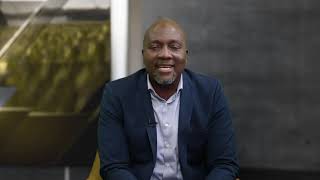
Tony Ndoro hosts experts from John Deere and agricultural institutes discussing precision farming, mechanization, and AI in African agriculture. A South African father-son farming team shows how they're using the latest technology to manage soil, water, and crops.
Foreign hello and welcome to Tech Terrain. I'm Tony Ndoro. This week we look at the future of technology in the agricultural space on the continent. We'll also take a look at the management of soil and water and also mechanization. So stay with us. We'll also be looking at technological advancements, suitable skills which are required to manage these technologies. On the farm in Studio are Ib Urstasen from McCain Foods and Ernest Beck from the Periton Agri Institute. We visit Kurz and Clifford Timkulu on their farm in Senegal where this father and son combination run a very successful operation. The John Deere team is back in studio and we discuss the latest and greatest in technology. Remember to check in on techterrain co za weekly for bonus material related to the discussions. Let's kick off the show. Well, it's time now to talk about precision farming and also skills training in the agricultural space on the African continent. And just with me to do that is ibi Urstason from McCain Foods. And I'm also joined by Ernest Beck from Peritam Agriculture Institute. They're a training institution. Gentlemen, good to have you here on Tech Terrain. Ibi, let me start with. With yourself and I want to talk about the soil and health space. What are the opportunities that lie in precision farming?
Well, Tony, I think there's basically four huge buckets. One is in terms of resource utilization is how we utilize the, the soil, the water, the sunlight. Then obviously in terms of inputs, we utilize the seed, fertilizer and that. Then we look at in terms of mechanization setup. What does your implements look like? The combinations, Something we all sometimes forget is capital expenditure. What does it look like in terms of where I do my capital expenditure? And then it's actually, how do I combine all these three facets within these four buckets? Then that is key.
What are the new developments when it comes to precision farming?
Well, it is, it's in terms of technology. There's a huge jump in the last few years as software and I think Ernest can talk a lot about that, is how that developed in the last few years, the principles. There was a lot of stuff that we actually understood from an agronomic and soil science perspective, but you could never really implement it because technology many years ago didn't allow you to do that. Now with this integration of science, technology, technology in terms of implements, we've come a long way so that you can integrate all those and you can actually do a seamless integration from the bottom up until harvest delivery, everything.
And Ernest what's key about what IB is saying is that when we look at the technological space, obviously we need to then upskill or even train right from the beginning. Anybody who wants to be getting to that particular space. Are we on the right track when it comes to training in the agricultural space on the continent?
Yeah, I think that we are keeping up, you know, in Africa. I think it's not the same like in South Africa, where we have all this technology and stuff, but I've realized that there is really a lot of opportunities in Africa for training. And what we did with John Deere, the partnership that we had, is that we are training in partnership with John Deere in a number of countries in Africa. And we take our technology to these countries and we show them how the combined sprayers and this stuff are working. And at stages like in some of these countries, we had on one day something like more than 100 farmers coming. And with the government of the country, you know, collaborations taking place, and we do training in conjunction with them. And it's very important to see how these farmers appreciate what we're doing in Africa and how our facilitators go around with the skills that they are having and learn them new technology or expose them to the new technology that are available in agriculture.
Now talk to us about the youngsters you're training at your institute and the practical part of it. Do you get them out into the field? Because I assume that's very important in agriculture.
Yeah, we've got advanced tractor operator training where we have a number of our learners coming and they will be driving themselves in the combines, in the sprayers and in the implements. They will learn how to go about with the data that the implement is giving them, how to use the instruments. And most of these guys, we train something like 200 a year, and most of them are getting opportunities to go and work abroad in the USA or in other countries. And that's why it's accredited training. And they get the certificate that's accredited by the AgriSita. And we do this almost every third month where we train them and they can go abroad and do contractors work or whatever.
Okay, IB let me come back to you on this one. Precision Fund. Can it alleviate some of the pressure that is on the land at the present moment? You know, we're worried about the environment, we're worried about the. The amount of actual agricultural land or viable land that we have.
Tony, I think it's exactly what the purpose of precision agriculture is. It is applying the right amount of the right product at the right place so that you can actually alleviate the issue of having applied too much or too little that leads to pollution and putting more stress on the, on the environment. And the same with irrigation. Over irrigation, under irrigation is just as bad. So it's applying the right amount, right time for technology that allow you to do that.
Abby, please give me a practical example, Just one practical example.
Okay. If I use irrigation as an example, it's like we now have equipment, technology that can communicate with your irrigation system. So you can either do variable rate irrigation, you can give more where you need more, you can give less where you need less. You can remotely start and stop it. You can also link your moist soil moisture probes with your irrigation system so that it automatically starts when the soil water content of the soil goes below a certain value and it stops when it gets above a certain threshold. So it is automated and it's. You only apply what is needed.
Yeah. Are farmers buying in on this?
They do, yeah. The biggest challenge, and maybe Ernest can also say the biggest challenge I found was that if farmers don't understand it, then they are afraid to use it. Once they actually get comfortable with it, that's when they realize she. I should have used this a long time ago. Yeah, why don't we use it, Ernest?
I want to come back to the technological aspect a little bit when it comes to training as well. Because Ib mentioned right at the beginning, software is playing a major part in it. Is that something that you're training the youngsters coming up? When it comes to agriculture, everyone is.
Uncomfortable when it comes to change. You know, people don't really embrace change. And the moment you understand the benefit that you're getting from the change, then obviously everyone wants to go. And that's so important, you know, currently that we are talking a lot about the millenniums and the Xennials and these young people that we need to introduce to agriculture. And these people are the ones that's actually attracted to computers and technology. And I think now is the right time to get the youngsters, train them in this technology, make them come to agriculture and really, you know, get involved into agriculture. Because I believe they are the ones that's coming with new change and they are the ones that the future of agriculture is invested in.
Yeah. Is your institution throughout the whole continent. Are you operating throughout the continent?
What we are doing, we do a lot of training in Africa and in South Africa.
Okay. Just, just marrying the two. I mean, you're talking about the millennial, the millennials, the, you know, the farmer of the future. And I'm sure we can now skip a generation and have them start with precision farming practices and have that attitude in mind. Am I correct? Ib? Right. Start, skip a whole generation. This is where you're going to start. This is how the training must be.
Yeah, I think the precision farming principles actually fits it quite well because nowadays the youngsters, like Ern said, they really want to see how that actually happens in practice. They want to use the technology, they want to see it makes a difference. If it's just the old way of doing things, they think they are not that interested. It's not, it's not so much fun actually. This makes it a lot of fun as well. It's not only hard work, the technology brings fun into it as well.
So Ibi, let me get one last word from you. Where do you want to see us in 20 years?
Tony? I think what would be really exciting if we can start getting everything implemented, the whole integration. Because we have to realize that there's no way that we can continue in agriculture, be competitive, have a future and even grow if we don't implement these principles of precision agriculture. The technology that we have, embrace it and actually be excited about where we're going. That's really what we, we have to get into our minds.
Ernst, same question to you. Where do you want to see us in 20 years?
Well, I believe that we must bridge the gap between the commercial farmers and the emerging sector. And I think there's a skill shortage, especially in the emerging sector where we have the need for financial training, farm business management, marketing of agricultural skills and especially how to operate, implement. So we need to upskill them and make sure that they are also participate in active agriculture and that they are involved and that they develop so that we can get them on the level where the commercial farmers are. And we need to give them a lot of exposure to all of these implements and new precision techniques that we are using in agriculture.
Well, I'll be sharing with you gentlemen. Ib and Ernest, thank you so much for coming through to TechTorrent and sharing some of your knowledge with us.
Thanks, Tony.
Well, it's good to know that we are taking precision farming practices seriously on the continent and also we are taking training in the agricultural space seriously on the African continent as well. Now this week our Tech Terrain team went to visit Khors and Clifford Timkulu. It's a father and son team who are farming in South Africa. Wanted to find out from them how they are embracing technology and their operations.
Kuas Mtimkulu is a farmer in the district of Senegal. He farms with maize, soya, sunflower and livestock. Kua started off as a farm worker, fixing tractors and implements for more than 30 years. Working in the environment taught him a lot about agriculture and it also helps awakened his love for farming. Clifford Ntimkulu is the last born child, of course. Clifford grew up helping his father on Frikiduba Priya's farm on weekends and school holidays. And this is where he was taught about mechanization. Watching his father fixing, building and cleaning implements and tractors, Clifford also caught the farming bug. In 2008, he joined his father on his farm. Technology plays a key role in expanding their farming practice and increasing yields.
Plant millis sonoblom and biki sawyers dan non splant work harbor for Bieste LKR.
Kurs joined the Grain SA Pharma Development Program in 2007 and Clifford joined in 2000.
2014.
One of the challenges that farmers have is that not all of them can afford the latest technology to use on their farms. But with the knowledge and skills that Clifford picked up from his father, he was able to utilize the technology they have on the farm to maximize potential.
The blood ATL water can moi infiltrate yeah of the tracker, the best computer is W in 20.
In 2011, Father Kues received the prestigious Grain SA Development Farmer of the Year award. This year, Clifford is a finalist in the category New Era Commercial Farmer. This father and son team is committed and dedicated to taking this operation from strength to strength. We congratulate them on their successes and we look forward to following their story. Clifford has big plans for the future.
Night.
The future of technology is here. A seamless flow of data. Machines that can learn and make decisions, helping farmers detect their operations to the next level. Get the most out of your equipment. Get the most out of your land. Make an investment towards a sustainable future for generations to come. But I've been looking forward to this particular part of the show. It's time to discuss technology and also what John Deere has to offer on the technological front. From the John Deere team, I've got CFR Nell and Vikha Shepherdsad joining me now. Gentlemen, how are you? Well.
And you, Tony?
Very good, thank you. Stefan, let me start with yourself. We know technology is advancing exponentially, but you know, right at this present moment, what are some of the most recent developments in the agricultural space?
So, Tony, I'd like to break it down a little bit. So I think if you look within the agriculture equipment, there's a lot of technologies, I can name a few examples, but I think one of the most recent ones is electrification. So whether it's a split between a mechanical and electrical driven equipment, so that electrical feed gets generated in the system of movement and that can feed back into example a trailer that will help push the tractor. So I think that's some of the newest technologies within equipment, amongst others that helps with also lubrications, etc, fuel economy. And then if we go a little bit outside equipment, what we talked a lot about on this show is all of this connected support, JDLink satellite navigation. But I think we're moving closer now to full implementation of artificial intelligence and machine learning where actually data is generated, machines start to make decisions. Artificial intelligence obviously part of that where a CPU within equipment. So obviously it gets more, let's say more developed in terms of computerized systems that you need. And then outside of that space, obviously the data that goes into the clouds, shared amongst different platforms, different suppliers, connected support where you can actually use that data that you apply from the machine with cameras and sensors that we see data that's captured and how the machine is utilized and then actually doing predictions in terms of how long the machine's components will last and then also possible failures and solutions before it happens.
Stefan, so many new innovations, but. And you also spoke a little bit earlier about data collection, but how does this apply practically to the farmer out there?
So that's the most important part. All of this needs to be towards the benefit of the producer. So if you look at a farmer using all of this data and technology within equipment, outside Internet of things, etc. It's all about getting more out of your land, right. So produce more yields or get More feed per kg out of your current capacity. That can also go beyond, if you look at smaller farmers that we believe need to have access to mechanization. So these type of technologies can help that farmer in a type of a platform to book services. So it's almost mechanized services for rent, if you want to call it that. And that can help those smaller guys that can't afford equipment today to actually rent that services and increase their yields and hopefully be on a path towards growth and more sustainable agriculture. So that's more on a productivity side then efficiencies are critically important. So aside from having your repeatability, there's a lot of benefits to that, right? It's your soil compaction, it's where you spray. But all of that is to reduce input costs. So to every droplet of chemical that you apply, every piece of fertilizer that you put in every seed. So moving closer to a per plant basis. So all of that would help the farmer to basically be more productive and more efficient. And if you take the back end support system, I think so producing the crop is more important as well, is equally important as supporting your machines. Right. So with, with these things we talk a lot about on the show with proactive support, connected support, so using things like expert alerts that would predict machine failure and you fix it before it breaks. So uptime is also critical for farmer to get the optimal planting window utilized. So all of that is actually to the benefit of the farmer to remain relevant in a global competitive market in producing food and clothes.
Well, Stefan, you mentioned so, so, so many new advancements there. Vika, let me come to you. Where did this all start?
So, Tony, started in the early 90s with GPS accuracy up to 30cm, which gave you the opportunity to do healed maps. And then started developing into greater accuracy where we were able to do automated guidance, which John Deere then launched in 2002, the AutoTrack system system with RTK, which gave you up to 2.5 cm accuracy with repeatability.
Repeatability, what does that mean?
So repeatability is where you can go back onto those exact same lines year after year.
So, Vika, at the present moment we know that drones are widely used, but also satellites are coming into play. Yes.
So, Tony, drones are the hype at the moment, where you're able to scan your field and then also utilize the drones for spraying. John Deere has a concept which is called the John Deere Nest, where you use satellite imagery and drone technology to be able to get your imagery and then use the drone to autonomously spot spray the fields where it is required.
Talking about autonomous technology, at some point there was a concept from John Deere. Why has it not come to fruition?
So, Tony, interesting enough so that I think the idea for read correctly on the Internet. That being said, the idea of the first autonomous tractor actually started in the 1940s, but obviously John Deere also had for many years a very small concept at the John Deere Pavilion in the US where people could see that. But recently a lot of more momentum has gone into the autonomous tractor kind of concepts. And one of the reasons it's not out in the field today, so there's many. But I think if you can sum it up so some is the cost, right? So obviously in the older days there wasn't many companies focusing on this and able to provide components at an affordable Price that would make business sense for the farmer. So that's the one thing and I think we're getting closer to that today where more companies get into the space, develop the components that is needed to build such a tractor. The connectivity, the Internet is getting more stable across. So I think that is kind of helping us in the right direction. But then if you move one step back again, this is all concerns that you talk about safety, right. Would that autonomous tractor be able to distinguish an animal in the field versus a rock versus the crop? It actually needs to work. So I think as we work through this and people get more acquainted with the technologies, it is there, it is costly. But I think we will see that coming into in the near future. And then what we've also seen is a move from having smaller kind of autonomous machines. Right. So instead of having a big autonomous machine, you can also now going people in the space of having smaller ones that would work more lightly and can recharge on solar panels.
All right, so Stefan, what are the opportunities available throughout the value chain and also what can we expect on the technological front from John Deere going forward?
So Tony, I think if you look at the value chain horizontally or vertically within any agriculture conversation commodity, it's the sharing of data. It's very important. So the data that equipment generates can then be helpful to the guy that's in the production or in the technologies of crops. So I think using that to get everyone the best data to make the best decisions and R and D developments in their products is critically important. And then if I go to the consumer side, I think it's the traceability. So the consumer today would like to know the food they consume or the clothes they buy. Where is it coming from? How was it produced? Was it safe to environment? And there's so many concepts today that's being talked about and I think that's a critical piece of that in the value chain. If I go to John Deere's technologies, I think the operations center and JDLink we talked a lot about throughout the show. But within that there's also some systems that allow permitted the customer chooses that he can actually share his data to service advisors as well throughout the value chain and they can use that data and feed it back to the customer to make better decisions. And then I think the connected support we talked a lot about is something that we will see continuously growing as machines develop. With more sensors and cameras and machine learning, we can be better at predicting possible failures in future. So being more proactive and then also the concept of actually being able to log into your machine over a distance. So you don't need to be on the farm to take care of your equipment or manage it. As a farmer itself, you can be anywhere and you can manage your equipment as the dealer can support it. So there's a lot of technologies in there that I think is helping us to combine to the benefit of the full value chain as well for the farmers.
And can most farmers access this just using a simple smartphone?
Yes, in some sense. But you also need connectivity. Right. So you're going to need data as well. 4G in some countries and we know it's not widely available.
Yeah.
But the systems are set up to work offline and then you can also then connect the data will then synchronize the moment you get connectivity again.
All right, fantastic stuff, guys. Thank you so much for coming through to Tech Terrain. Stefan and Vika. So there you have it. John Deere is not standing still when it comes to R D on the technological front. Well, that's it for this week's Tech Terrain. Thank you so much for being with us. Next week we'll talk about animal feeds and the importance of quality animal feed to achieve optimal production. Don't forget to go to techterrain Co Za for our bonus material that we upload every single week for. Myself, Tony Ndoro, until next time. Bye bye.
Sam.
More from Francisco




Desh Ke Superhero | Mr. Madhava Rao | Faster Pole Installation with GreenSystem™ Post Hole Digger



En CasaToro John Deere encuentras el respaldo que necesitas para mantener tu maquinaria lista



