
John Deere Africa | Tech Terrain | Episode 14
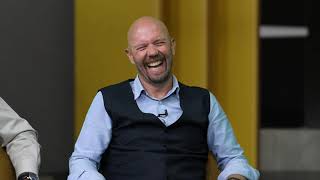
This is a YouTube video titled "John Deere Africa | Tech Terrain | Episode 14" published in September 2020. It features a hosted talk show format with Tony Ndoro interviewing multiple guests including Arun Kole from FarmSol, Jacques Besson from Number 7 Media, Omri Fansale from Agri SA, and representatives from John Deere. The episode discusses agricultural development initiatives, support for young and female farmers, community aid during the COVID-19 pandemic, and the features of the new John Deere 7R tractor. The content is informative and focused on agriculture in South Africa and the broader continent.
Foreign hello, and welcome to Tech Terrain. I'm Tony Ndoro. Now, we all know that farmers have to be resilient in these trying times, but they are also caring. So in this episode of Tech Terrain, we're going to focus on the good work that farmers do within their communities. We kick off the show with arun Kole from Farmsol as well as Jacques Besson from Number 7 Media, covering a number of development initiatives in the agri sector. We are then joined by Omri Fansael from Agri SA to highlight some of the recent projects undertaken to support communities in need. Of course, Team John Deere is back in studio with me this week to unpack the formidable technology in the all new 7R tractor. Remember to visit the Tech Terrain website regularly for bonus material uploaded every week. Let's start the show now. As we know, there are a tremendous amount of initiatives within the agri space in South Africa and on the continent as a whole. Whether it's trying to rope in young farmers to get them on the farms and get them farming as well, and also skills transfer from the more experienced farmers to the new entrants into that market space. Well, here to talk to me a little bit more about that, I've got Arun Kole from Pharm Sol and also Jacques Besson from Number 7 Media. Gentlemen, thank you so much. Welcome to Tech Terrain.
Thank you. Nice to be here.
Jacques, I want to start with you that you've covered a lot, you've gone into a lot of the communities. You run a podcast series for John Deere. Tell us about that series, Tony.
Yeah, so obviously the core focus there is looking at the business of farming. So it's not necessarily, you know, you know, how the equipment or the technical stuff, but it's really what strategic overview these farmers take. I mean, a lot of them are, they're not farmers anymore. You know, some of the part of their portfolio is 40%, the farm, 60% are 10 other different businesses. So it's interesting to look at how their brains work, how they make their decisions, of course, in creating that blueprint for other farmers, for other business people. So there's always a bit of gold. But very importantly, also looking at what some of these guys are doing and have been doing for some of them 10 years, where they develop their workers and more importantly the community. And it's really to identify what these initiatives, what they look like, and again, just to share it and give a lot of the other farmers ideas as to where they can start and what works and what doesn't.
Interesting what you're saying, give me an example.
So probably one of the best examples. So during lockdown I was fortunate to pop down to Uppington and I sat down there with a few of these raisin farmers. And the one thing that struck me, what was quite different to what we normally hear, obviously we know what doesn't work. It doesn't work handing over a piece of land and walking away. So it doesn't. But in this instance, the gold in Upington is the Orange River. That's the real, the most important. If you've got the land, you don't have water, your land is worth nothing. If you have the water and you don't have land, you don't have a business. And what they started doing is creating joint ventures where some of the local, the community, have the water rights. The farmer, the established farmer, doesn't have additional water rights. And the water rights is then used as equity to buy into the new joint venture. And what's so exciting about that, not only is there's now proper buy in, but also now they're working alongside the mentor, the fourth generation farmer. So as far as transferring skills and knowing what not to do, it's more of a success recipe.
And that equity issue, I mean, that's a fantastic way to use your equity. Arun, let me come to you on this one. Farmsal, you call yourselves farmers of farmers. What does that mean?
Well, indeed, Tony, it's because of the generational outlook that farmsol has about farming. I mean, we believe that if we want to ensure that there is continued food security into the future, we need to produce new farmers today so that, you know, future generations can thrive. I like that Jack has just mentioned the fourth generation farmer, but I mean, if you look at South Africa today, you know, South Africa is deemed to be food secure, but it's food secure because of farmers that have been farming for generations, you know, and we have to protect this. But again, in addition, if we are to blossom as a nation, we have to ensure that we, you know, produce new breed of farmers that can be, be able to tackle food security challenges into the future and be able to provide more food. So we have to do it now. So that's what we mean by farmers or farming. We have to produce those farmers today to ensure that there's food security into the future.
I'm passionate about young farmers getting young people interested in farming itself, not just for food security, but just to move them also away from the usual fields everybody's running into at the present moment. And that's something that you are also passionate about as Farm Sol, isn't it?
Yes, indeed. You know, because of the generational outlook that we have about farming as a business, we place a lot of emphasis in the next generations of farmers and that's the youth. You know, farming should no longer be a profession that is just entrusted to senior older farmers, you know, but again a place where the youth feel welcome and supported, you know, to be successful enterprises that is able to contribute into the economy of the country, you know. That's why actually last year we launched a what we deem what you call a Farm Solar Youth Ambassador program with an aim of, you know, supporting the.
Youth.
To give them an opportunity and give them awareness about the opportunities that are available in the agricultural sector, you know, and this initiative is led by one of the hard working female farmers that I know, Njabulo Mbokani, who happened to also be, you know, part of a program that we have as farmsol.
Yeah, very true, Jacques. You got a chance to actually visit Njabulu, didn't you?
I did Soni. And what an inspiration. I'm not just saying, I mean this is a 25 year old with almost like a 50 year old's wisdom. And what struck me about it was the, you know, this is a single mom, she 16 years old, had a son and she was looking at her son and it started with, I'm gonna do, I wanna make sure my son has a, has a foundation to build on where I'm now. This is not gonna work. So it was really, you know, that attitude of I'm gonna, I want a better life. And I think that's also what makes that inspirational. Because I think at this stage a lot of the youth, it's not sexy. Farming is not sexy. Versus what are the opportunities for me to, you know, create a better life, create a job for myself, for my family, you know, for the next generation. But yeah, very inspirational, well done. I mean if that's what you guys. The type of talent. And I'm very excited about what's coming for sure. But yeah, 25 years old, go getter. 200 hectare farm, you know, so it's quite impressive.
Aaron just also wants to elaborate what you think the future holds for us when it comes to young farmers, but also women in agriculture, you know, that's, we need to push that, don't we?
No, absolutely. I mean, Farm Sol, in partnership with Southern brewberries, support over 520 farmers across eight provinces. And these farmers plant, you know, maize, nanjimo, yellow maize. They plant bali they plant hops that goes into SAB supply chain. 163 of those farmers are female farmers, you know, but of course we have to do more and support more, more female farmers, especially also focusing on the youth, you know, so, so absolutely, it is, it is a drive on our part to ensure that we drive this. And you know, hence also, you know, I'm inspired by Njabula's passion as well, to, to want to participate as a young person to kind of show that in actual fact, yes, agriculture can be.
Fashionable as far, are you pushing more investment into the beneficiation just so that you get more involved, evolved, you know, upscale the business look?
Absolutely. I mean, one of the most important thing that you want to do when you get to, to to farming is to ensure that at the end farmers are profitable. So I've mentioned three crops that goes into SAB supply chain. But you, you need more crops into that production system, you know, and, and for us as a business, we, we want to expand that to ensure that we, we bring more crops into the production system, you know, for sustainable crop production purposes, but also to ensure that the farmer can be sustainable and grow, you know, so we are open in terms of that we would want to. Again, we are looking at partnerships, you know, where there are more crops that are supported into a program.
All right, great one, Jacques. Lastly, let me get a last comment from you. You know, what are you seeing out there? We're making progress.
I think so, Tony, but one thing is very clear is that there, and I mentioned a blueprint earlier, when I say blueprint, I mean it very broadly. But I find that. And just talking to some of my old friends that are farmers where some of the guys, they want to do something, but their definition of doing is again, there's a piece of land and a few cattle. And I mean, I'm oversimplifying, but there are really farmers that want to do something, they don't know where to start. And then you have tremendous case studies. So for me, I think I'm very excited to be collecting these interesting case studies and making it available for the rest of the market to learn. And again, not to reinvent the wheel. Classic example, I've mentioned the raisin farmers with how they use equity. But then again, you have another farmer that says, listen, I'm concerned with when my farmers retire, so let's start working the next 20 years to build them a retirement home so when they finish, they have a place to stay. It's little things like that that, that goes far Beyond. Hey, there's a piece of land.
And.
And off you go.
What's the name of your podcast?
Burport. And we've just launched the English version as agpod.
Okay, all right, I'm glad there is that English version. All right, thank you so much, guys for coming through. Jacques, Aaron as well, thank you so much for coming through to Take Terrain.
Thank you. Thank you so much.
There you have it from FarmSoul. Their plan is to attract and to empower young farmers, farmers by creating programs. And you also heard it there from Jacques. He's been on the ground visiting some of the fantastic work that Farm Solar is actually doing. He's seen it firsthand that some of these programs actually do work. Now, of course, farmers have good hearts and their work extends way beyond the farm gates, especially at a time like this when we all working or fighting this formidable pandemic called Covid. Talk to me about some of the initiatives or some of the good work being done by farmers in their communities. From Agrisa Agri, South Africa's Omri Fansale. Omri, thank you so much for joining us on Tech Terrain. Good to have you with us. Now give us a couple of examples of how some farmers are actually assisting their communities.
Yeah, I think people often underestimate the role of farmers in the value chain on the betterment of rural societies. So what we've done since five years ago, we've actually started a drought campaign. And we've helped more than 14,000 farmers across the country. And obviously, you know, that affects farm workers, it affects their families, it affects in very rural areas, things like, you know, paying the school fees for kids, etc. So in conjunction with corporate partners, our commodities and our farmers, we've actually managed to make a massive difference. Obviously, the challenge continues, but, you know, farmers are guys that are hands on, that knows what needs to be done, and they've played a massive role and are playing a massive role in stabilizing the rural societies of South Africa.
Talk to us about the Surplus Food Aid campaign. What's that about?
Yeah, we've launched that with Resourceful Year and some other partners to make sure that we, we actually contribute towards food security in rural areas. So we are driving that initiative where we're helping hundreds of families to actually survive through Covid, where people cannot afford food. And it's been a very successful initiative that we tackle with a lot of passion and that relates to people in rural areas. All people in rural areas that are really suffering because of economic hardships and challenges that they have that are completely out of their control.
And that's a good point because when you look at the rural areas, I mean, you look at people, a lot of the influence coming from the cities, all of the noises made in the cities, online and so forth, but there's a whole other world there where your farmer is part of that community in the rural area and they're hands on, they see what's happening, they are more equipped and better equipped to respond to what's happening on the ground.
Yes, exactly. You know, in the cities, people walk into a shopping mall and they walk into a shop and then they think the food comes from I don't know where. But oftentimes they forget to make the connection to the farmer and the farm gate and the challenges that guy has to face in order to actually get the food there. And I think that is something that we are driving to create an awareness of. Where does food come from? You know, being the only food security, food secure country in sub Saharan Africa, it's obviously very important that we maintain and nourish that asset that we have.
Very true. Talk to me a little about Food.
Forward SA yes, well, Food Forward is doing a fantastic job in providing food across the country. We also work with them, you know, on providing food to rural communities. And it's extremely important because more and more, more we will need institutions like Food Forward and like John Deere to actually help us fire that up further. Because, you know, the pandemic is not over. And I think psychologically we think maybe it'll be over in six months. It might not. So the need is going to increase and therefore we need collaboration as a value chain.
Yeah.
So the need is definitely there to talk to us a bit more or to explain a bit more about Food Forward essay. Here's Andy Duke.
So Food for South Africa's model is predicated on what we call food banking. And that involves the collection of edible surplus food from the supply chain. So agri sector, farmers, producers, the manufacturing sector, as well as the retail sector, we take those surpluses for free from our supply chain partners, we bring it into our warehouses, we check it, we sort it, we store it, and then we redistribute that to close to now 900 nonprofit organizations across the country that offer verifiable services in communities throughout South Africa. Farmers are compassionate, farmers are caring. They, you know, they love the earth, but they also love that the fruits of their labor are getting to people that need it.
There's some good work being done there by Food Forward South Africa Umril, I want to get back to what's happening on the actual far. Maybe the whole. The complete value chain. Because of COVID 19 we've had to close our borders. Okay, it's exports are open now, but that also meant a lot of job losses, you know, within the whole value chain, the agricultural value chain. Is that not correct?
Yeah, it's absolutely true. And you know, it creates particular challenges and I think a guy like Russo Salier that has actually been, you know, setting a great example, maintaining his own seasonal workers in terms of food security as well as reaching out to hundreds, thousands of community members to actually provide them with food parcels to keep, you know, food security in that area is an extremely good example of what can be done if one puts your mind to it.
Very true. Talking about Rousseau Saleh is a farmer in the Western Cape. Let's just go across there and see on the ground what type of work he's been doing.
There's lucky bike beans south by that as Swaya Mansvatos Bai Seto Setsaki Millimial Bay or Oxo Bay. That the OSA but mainstream.
What a fantastic example of working with your community, assisting your community there. From that farmer in the Western Cape and Omri, when you look at that particular example, that's just an example, isn't it? Because that's happening throughout South Africa.
Yes.
And I think that's probably the most under marketed and under published part of agriculture and part of the do good story in South Africa. I mean we employ 850,000 people in our industry. You know, that's just farm workers and farmers across South Africa are doing their absolute best to help their communities, to help their farm workers, to help, you know, give their inputs in communities. And I mean the stories are endless, you know, talking about helping with water, helping with food, helping municipalities, you can just name them. So our farmers are the glue that keeps the rural areas together.
A good way to put it. I talk to him about the drought relief fund. It's a key initiative because here we're focusing on COVID 19. But South Africa is coming out of a big drought. Isn't a major drought.
Yeah, well, it's been going on for five years, you know, and it's still, it's still going on. I mean in the Northern Cape, parts of the Eastern Cape and the Western Cape, it's in a acute problem. So what we've tried to do in agri essay is we've created our own drought relief fund where we actually help farmers with feed and fodder and you know, with all kinds of initiatives. But obviously climate change is a global risk and in Covid times, people forget that it's still going on. So that is also a key priority for us and should be for any government that wants to maintain food security.
Now, Omri, with all of this in mind, I want you to look into your crystal ball. Are we heading in the right direction when it comes to agriculture?
Well, I think for sure we are. We have massive challenges. Obviously, the reset button has been pushed on the whole economy, on the whole world, actually. And only by working together, hand in glove, can we actually pull ourselves out of the mud. And we've started doing that. But there needs to be a bigger consciousness to actually fire that up to a much larger extent, because I believe that as South Africans and South Africa, we will not be successful if we don't do that. And I think the farming communities are an example of what can be done. But further collaboration and further trust and coordination will be essential taking us forward 100%.
Omari, thank you so much for coming to Detect Terrain.
Thank you.
Omri Francel from Agri Essay. He says it's all about collaboration. It's all about working together, it's all about helping each other out. And it starts with each and every one of us. Sam. Well, it's that time again when we invite the John Deere team to come into studio and join me. And I've got Freddie Rubin alongside Jean. Ello to talk to me about the all new 7R tractor and why this tractor should be part of your operations. Gentlemen, good to have you with us. Are you well?
Keeping very well, Tony. And yourself?
I'm still strong. Still strong. Jean, let me start with you with this tractor. Where does it fit in? When it comes to the John Deere.
Stable, these seven R is a notch, you know, below the eighth R in terms of technology. We'll say it has nearly the same technology, but then it's much lighter compared to, to, to the, to the 8R tractor.
All right, Freddie, let me come to you. It's jam packed with technology, but there's also other options and farmers will be spoiled for choice with this particular tractor.
Yes, Tony, thank you. The 7R, as John already mentioned, it's like a mini 8R, so it's got most of the features of the 8R. It's just a more compact tractor. It's a little bit shorter in wheelbase, it's a little bit lighter, but it has all the same functionality. It's got the quick hitch at the back, it's Got the same cab level of comfort that you can select as a customer, going through the select, premium and the ultimate packages on the tractor, so you can get the best combination of what you need in your operation. Also, the technology in there, it's jam packed with all the jetty, link, connect and all the features of guidance that you need on a tractor to farm commercially. And one of the biggest improvements on this tractor is that we listen to customers. We gave the tractor a little bit thicker axle, and we also offer it in the wide axle that you can have your dual wheel configuration, which you can ultimately adjust for row crop applications to fit into your 0.9 meter and your 0.76 row crop configurations.
Right. That's fantastic. So you listen to what the farmers needed and you put many of those recommendations in the new 7R. Sean, I want to come to you on this one. What are the applications? What's this tractor suited for?
Tony, the 7R tractor can do a number of applications, and just to name a few, it's good. It comes with dual wheels, which is ideal for planting, so you can use it for planting. One other thing that our farmers can use the 700 tractor for for is also for baling. It's a very good tractor, like Freddie mentioned, but comes with a lot of technology that you can also use it for baling. Beyond Baling, the 7R also, it's a very good haulage tractor. You should be able to use it to move your grain cuts around within your field. So it's a tractor that's, you know, it's very versatile. Let me put it that way, Sonny.
But you talk to me about the tire technology here.
So, Tony, you have your conventional tires. Many years ago, we moved from the bias tires or the crossplane. Then we moved into the radial tire technology where you needed less air pressure and to get better flotation and better traction on the tractor. But technology has evolved so much that all the brands of tire manufacturers, they already supply an if technology tyre and a VF technology tyre. And the if technology tire is basically increased flexion, which allows you to operate the tractor and have a better flotation with lower tire pressure to basically reduce the soil compaction. But where the VF technology takes it one step further is that you need less air pressure and you do not have to get off the tractor to change the inflation pressure to get the same result. So at a lower inflation pressure, you can get much better traction on the machine. And that will give you ultimate performance on your machine. And it will also help with the effectivity of your tractor.
Which one of those two do we find on the 7R?
So on the 7R, you have the the option to select either if or VF tire technology. And what we are seeing is that we are going in road crop applications to reduce the compaction to narrower tires. And if you add a narrow tire with the VF technology, you get basically a larger tire with a longer footprint, thus decreasing the effect of soil compaction.
Okay, fantastic stuff. Jean, Anything else in the pipeline? What can we expect coming out of John Deere?
Tony? I think, you know, we don't sleep, we listen to our customers and we think, you know, beyond today, for the next 10 years, 20 years, how can we make the lives of our farmers very, very efficient and easy? So obviously, Freddie, feel free to chip in. So we're talking about the next generation of tractors. We're looking at an instance where if you own a piece of John Deere in terms of parts, in terms of serviceability, it becomes easier for you to service this tractor. So components, you know, within our tractors can be moved across easily. So if you buy a part four, maybe, let's say we're talking today about the 7R, you have an 8R, there will be changes in horsepower, but then in terms of components, these components are much more alike. So you can, in terms, if you buy spares for your 8R, you can use the same spare to fit in the 9R. Freddie, you might want to touch on.
Yes, Tony? So the need is because if you look at the growth and the introduction of new products into the market the whole time, ultimately you'll need space for your parts and service parts and you want to reduce that number of items in the system, so you want interchangeability. So at the end of the day, we're going to look at designing a tractor and use common components to build another tractor or just scale it down so that you have a whole series with basically common components, component structure, so that you have less components and service parts that you have to keep as a customer and as a dealership in the John Deere network.
Before I let you go, guys, I'm a farmer. I'm looking for a good piece of kit. Convince me why I should get this all new 7R.
7R. So the best part of that is with all the technology that we offer for you as a commercial customer, at the end of the day, it's managing your phone farming operation and the technology incorporated in the 7R with all the features that you get to customize it according to your needs. I think the 7R will fit perfectly in your operation to manage your farm.
John, same question.
I'll go back to the word versatility. This 7R is a very versatile tractor that you can. You might not have money to invest in a number of tractors, so. And you're a commercial farmer. If you own just one 7R, you can use it for multiple applications. And then beyond that, you have a very durable and robust structure which becomes cost efficient in the long run. So you might want to consider it.
Tony, 100%. Okay, you've convinced me. Thanks for coming through as always. Jean. Hello. Of Freddie Rubin is convincing us about the all new 7R tractor available from John Deere. The guys say it is a very versatile tractor. It is durable and of course you'll be backed up by John Deere all the way. Well, we hope you enjoyed this episode of Tech Terrain. Join us next time when we focus on the all important issue of financing in the agricultural sector. Don't forget, go on to our website techterrain co Za for bonus material that we upload every single single week. For myself, Tony Endoro, be safe. Until next time. Bye bye.
More from Francisco




Desh Ke Superhero | Mr. Madhava Rao | Faster Pole Installation with GreenSystem™ Post Hole Digger



En CasaToro John Deere encuentras el respaldo que necesitas para mantener tu maquinaria lista



