
John Deere Africa | Tech Terrain | Episode 11
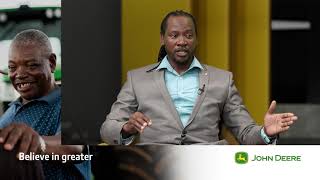
This is a YouTube video titled "John Deere Africa | Tech Terrain | Episode 11" published in September 2020. It features a multi-segment presentation hosted by Tony Ndoro focusing on agricultural biosecurity, crop protection, and sprayer technology in Africa. The episode includes expert guests from McCain Foods, University of Pretoria, Bayer, and John Deere discussing topics such as biosecurity importance, pesticide regulation, environmental protection, and advanced spraying equipment technology. The content is a structured talk show format with multiple expert speakers but does not include Francisco Jimenez.
Foreign hello and welcome to Tech Terrain. Good to have you with us once more. Now this week we are focusing on biosecurity. What is biosecurity and why is it important on the African continent? The COVID 19 pandemic indirectly raised renewed awareness on this topic of a lot of science and technology development goes into optimizing crops, protecting animals and ensuring safety. We welcome in studio Ibi Urstason from McCain Food South Africa and Dr. Matlo Calaba from the University of Pretoria. We talked to Dirk Ace and Tilibale Nepupamba from Bayer about the fine balance between optimizing production and risk. You can also look forward to the John Deere team discussing developments in sprayer technology. Remember to visit the Tech Terrain website regularly for bonus material uploaded every single week. Let's kick off the show. So in this week's show we are focusing on biosecurity. But what is biosecurity and what do we need as a continent to be biosecure? I've got two gentlemen who are here to explain all of that to yourselves and to me. With me, Dr. Matlockalaba from the University of Pretty Victoria in South Africa and also Ib Urstasen from McCain Foods in South Africa. Gentlemen, good to have you with us on Tech Terrain. Ibi, let me start with you. Give us a holistic picture here. What is biosecurity? How does it fit into the agricultural space?
Tony, Biosecurity is actually a holistic concept that directly relates to sustainable farming, food safety and then the protection of the environment, which includes biodiversity, for that matter. In the agricultural and farming context, it is not only looking after the management and regulation of the use of biomaterial, but it's also managing it in such a way that you ensure that quality negative effects from diseases and pests are actually managed and maintained to not get there.
Okay, Doc, talk to me now about the importance of biosecurity when it comes to the impact it has on our economies on the continent.
I think maybe. Let me just take it from where I've mentioned it or described it, you know, and he did explain it very well, that it involves sustainability, involve environment, but it also involves farming. So if you think about what farmers do, they produce food, then the food moves through the value chain up until the final consume. So what it basically means is that at each and every point there are measures that are needed to ensure that biosecurity is there, is sustained, so that the consumers would have safe food. So for the continent to be entirely biosecure, that means that they need to have these measures available throughout the value chain, first and foremost to protect the consumer, but also to protect the environment as well as plant and animals, because those are the sources of food.
Okay, now, going forward or even now, I suppose, what do we need to be biosecure?
I think it's a matter of being accountable, having the discipline and actually then managing that responsibility of the use or misuse of biochemical material to an extent that you actually do not harm the environment and make sure that all the minimum, for instance, minimum residue levels are adhered to to ensure safe food to the consumer.
Ivy is a knowledge out there. Do the farmers know what they have to do, when they have to do it, and how to do it?
In the private industry of today, there is a lot of knowledge and from institutions like where McLow is affiliated to that can actually help us and give us guidance on what those regulations should be and what they are. So I think in South Africa, a lot of that had been taken over by the private sector in terms of having the biosecurity measures in place and managing them.
Doc, let me come back to you. Give us a couple of examples of insufficient or maybe a lack of biodiversity in farming.
Well, in the food system. There are actually a number of examples that one can give and there is one that I think most South Africans would be familiar with. About two years ago, we, we had an outbreak of listeriosis. That was a typical case of what we're talking about, that somewhere along the chain there were laxes in these regulations and in measurements. And eventually due to that outbreak, some people died. Many people were affected by the disease. But it shows that, as Ivy said, you have the accountability and the responsibility that needs to go with ensuring this biosecurity. But who needs to do that? And I think we need to explain that. So various role plays, but the leading role player in this case is government, because government is responsible for coming up with the regulations that will ensure that we are biosecure. But regulations alone will not be enough because the farmers in the private sector, they need to know what, what is it that they must do to comply with these regulations. So that communication and filtering through that it is important, then you have a second layer of enforcement inspection. And that again is required, is both the responsibility of private sector government and other role players. But finally, as consumers, like you asked, is this information and communication out there? And that is important that you need to realize that as a consumer, if there are indicators that certain things are not up to standard, you know, things like Packaging this information in there, things like expiry dates because that's where some of the laxes come in and the seriousness or the concerns about biosecurity, then they come in there. So all of us in a nutshell have a responsibility and that accountability that my colleague mentioned.
Now IBI just on that same factor about accountability and you know, we're all responsible. Yeah, we're talking about the farmer, the producer, government and so forth. But we're going through difficult times now. We've had in southern Africa, looking at South Africa, there's been a drought, very severe drought the past few years or so. That happens in other parts of the continent as well. So some farmers will say, listen, I'm having a hard time here, you know, I don't have the finances to go and buy brand new pesticides and so forth. And you know, it becomes very difficult, doesn't it, to adhere to some of these regulations?
Tony, I think we don't have a choice. The farmer, well, everybody has this responsibility but from a primary production perspective, we can't just say that it's hard times. And therefore I'm going to skip on certain things because the economic impact is severe. We've had the foot and mouth outbreaks where we had auctions halted, where there was a ban on trade of meat and wool. We have when those fall army worms come around, they destroy crops and you get rejections from consumers and retailers of products not only because of quality issues but also when minimum residue levels are not adhered to. So you can't abdicate that responsibility because the economic impact is so severe that it's going to impact you.
In any case, Dr. Calaba, just to close this off as well, when you look at the continent as a whole, your example there from IB about foot and mouth disease, sometimes the borders are then closed between countries and so forth. Then my question's got to be simple. If your neighboring country is not adhering to certain standards, what do you do as country A?
Like he said, you know, there are international guidelines on how to deal with this measures. And in particular to the question that you raised, what do you do if your neighbor or your trading partner is not adhering to those regulations? It's pretty simple. If they don't stick to the requirements, that means they are transferring the risks of, you know, food and mouth infection into your country. So a reasonable thing to do, it may be seen cruel sometimes you shut the borders until they comply. That's what you would do and that's how the continent, you know, would eventually Improve on biosecurity. Of course it is costly to do so because that means that there has to be regulations, there has to be measures, there has to be resources to comply with all those. But the risks are just too far to, to, to, to neglect the seriousness of these issues.
Very true. I be. Can I get a final quote from yourself?
Tony, like Matlow just now said, is that our biosecurity regulations and how we manage it is so crucial in our ability to export internationally as well. Because that's the key that unlocks the door for us to be able to do that. If we are not taking the responsibility to actually secure our biosecurity regulations and the food that we produce, those doors are going to get closed and we're not going to be able to open them.
All right, good point. Gentlemen, thank you so much for coming through and joining us on Tech Terrain to share your knowledge with us.
It's a pleasure.
Thank you.
All right, there you have it. So the message is clear. Government are responsible for coming up with the regulations, but the responsibility is ours to adhere to those regulations. Stay with us on Tech Touraine. Well, now it's time to talk about the fine balance between optimization and of course protecting the environment. And here to do that I have two gentlemen from Bayer, Dirk Ace and Telibali Nepumbada. Thank you gentlemen for coming through to Tech Terrain and joining me. Dirk, let me start with you though. Crop protection is a critical part of optimization. Is that a correct statement?
That's correct. And we're facing that daily challenge where we got more and more people and less and less land. So it's really about doing things more efficiently. And I think that that's what's driving agriculture.
But is there buy in, you know, when you make that particular statement, is there buy in from everybody? Are we all on the same page when in farming in Africa?
I believe we are. And I think what we're also realizing is the importance of farming, specifically in Africa, to uplift that developing farmer, that small farmer, because we really want to see him to also be a commercial successful farmer because that will really support food provision in years to come.
Tilibali, let me come to you. Can you please just elaborate a little bit more on the balance between optimizing and the risk to the environment. What we're talking about now.
Thank you, Tony. Before pesticides are authorized for use, obviously we have to go through legislative process where we apply for registration and then from there we get a registration certificate which is a license to sell pesticides to do that we have to provide the authorities with a lot of studies, be it environmental studies, be it the residue studies and efficacy studies, as well as toxicological data. That is just to make sure that both human beings and the environment are protected adequately. To do that, when farmers are to use the products or pesticides, they have to be provided with the labels, and the label will give them the safety precautions and warning statements and the protective clothing that they have to wear before they use pesticides. Obviously, they have to observe environmental conditions before they apply pesticides, to make sure that before they use that the environment is conducive for applying such pesticides.
So there's a lot of research and science that goes into those pesticides in the first place?
Absolutely.
Okay.
We generate a lot of data, we spend a lot of money to be able to do that. And it takes us time before we license the product.
Talk to them about the enforcement at the end of the day, because there are obviously some dodgy pesticides in the market. You know, how do you enforce the laws that are in place at the moment?
As Bayer, we pride ourselves because we have got the highest standards internally. But when it comes to enforcement, it's a joint effort between the authorities and the company like Bayer. So we make sure that our products that we bring into the country or that we manufacture into the country are properly authorized. The authorities, on the other hand, have got a duty to make sure that whatever is placed on the market is authorized by the law, as per the laws of this country. So that's how it's done. And any member of the public, they've got their duty to report any illegal activities that they see in the market.
Okay, Dirk, how can we avoid harmful residues?
Yeah, and I think maybe to allude a bit, what Telwali also mentioned is this development of a product takes at least 10 years. And in that there's various steps, including various types of scientists, from biochemists to engineers to plant pathologists. And if you look at the development process, it all starts at what is the impact on the soil? For example, this is measured what's the impact on soil organisms, water organisms and beneficial organisms, as well as insects like bees. So each of these steps are tested and making sure that there is no harmful effect. And then this data is obviously submitted with the application for registration 10 years later. And this is then assessed through various Experts under Act 36 of 1947. So it's a long process costing about 200 million euros a shot. And it's interesting 1 in 200,000 products only reach the market 1 in 200,000 of new molecules that are screened. So it's very intensive.
I suppose the other question has to be, before I must remind you about the residues to be, you know, you've got to get the buy in from the farmer, isn't it? To say, listen, you know what, this is what you must use, this is what we've come up with, this is what's really best for your long longevity as, as a farmer.
Yeah, absolutely. And, and, and to really add a benefit to him so he can be more efficient. And you were talking about residues. This is one of the assessments that is done. So the, the candidate product is really put on a crop and we look at the breakdown process to make sure that it's under a acceptable norm, that it is safe for the consumer and to make double sure. What is also done is they take a basket of crops, assuming the average man will eat a slice of bread and he'll drink a glass of wine, he'll have maybe some potato chips and some vegetables or a salad. So they take this basket and make sure that if all these products were applied on all these crops that it's still in a very safe situation, that this potential product can't affect him.
Yeah, Tilibali, talk about harmful residues.
Look, in South Africa, I think we are the only country in the continent, if I may say, that says the so called maximum residues limit. So these are statutory limits. So when we apply for registration, we submit the so called toxicological data together with the residues data. Residues data is biological data that is generated under South African conditions where we apply pesticides on crops, be it on maize or apples, and then from there we harvest these apples on intervals to make sure that at least we can calculate or create a so called breakdown curve. And once that data is collected, the samples are collected, then the data is sent to the Department of Health by the Department of Agriculture and then the Department of Health will do the so called dietary exposure assessment and then from there they will set the so called safe limit, which is a legal limit. So what it means is the farmers, when they apply pesticides as prescribed by our labels, they have to stick to our labels to make sure that when we harvest the end product, be it grain, be it an apple or a carrot, the amount of a pesticide that is left there is within the so called allowable limit by the authority. But bear in mind pesticides are chemistry products. It doesn't mean that when you buy an apple there's always a pesticide residue. No, doesn't mean that in the event that there is a pesticide residue, that's where now we have to comply with the so called safe legal limit. So how do you comply? It means that the authorities have got the duty to monitor. Even companies like Bayer, we've got a duty to monitor that the products that are on the shelves do not contain residues that will expose human beings to harm in terms of data exposure.
Interesting. Doug, just to close us off, please talk to me about technology. What part technology is playing in everything that we're talking about right now?
Yeah, I think there's various aspects of technology. The one is the technology bond, the development of a product and then also technology is related to the farm. And I'm just thinking of examples of digital imaging. We've got a system called Fieldview where we can see what's happening in a field to identify problem areas, which I think is wonderful because then you just have to treat potentially that problem area which is very good for the environment. And then other technologies is also how you apply this product. For example, the technology of seed treatment, which is specifically applied to a seed so you don't have to spray a big area, which I think is also a very good innovation. And technology is also going towards a process where you've got equipment which is really just treating where the problem is. So I think this is also the way things will develop in future. Very exciting times.
Right, gentlemen, thank you so much for coming through to Tech Terrain and sharing your knowledge with us.
Thank you.
All right, all the best for the future. So there you have it. You can rest assured that the plant protection products that have been produced at the moment have been well researched and will help you optimize, optimize your yield without causing any harm to the environment.
It's.
Now for this segment I want to talk about sprayer technology and I've got two gentlemen from the John Deere team, Nelius Usin and admirer join me now. Gentlemen, thank you so much for joining me. Let me start with you. Admire and talk to us about what John Deere offers in this particular space.
When we talk about sprayers. Tony, thank you very much for that question. We first of all need to determine the type of crop that we are talking about. Also the spraying quality as well as the hectares that has been planted. Then when you move on to trail sprayers, these are very good sprayers that you can find which are affordable as well as they've got some limitations. With those limitations we've got an aerial sprayer which is very productive with no limitations of the crop size. And again a best solution for wet fields. And then you've got self propelled sprayers which is one of our best products, which comes with a boom that allows ground, which allows you to apply it more ground cover that you have as well as more technology which comes with the spray.
All right, so Nelius, talk to us about the applications of these sprays on the ground.
So for application on the ground we have industrial exclusive exact apply. That means that we are pulsing the chemicals that get sprayed to the crop at 30 hertz. It gives you a more uniform droplet for coverage over plants and the chemical go where it's supposed to go. So a customer can do with a lower dosage of chemicals the same job as spraying conventional on a higher dosage.
These days obviously we have to be very, very, very environmentally friendly. Talking about the sprays that you have as John Deere, are they geared towards the environment?
Yes, for sure Tony. It's environmentally friendly for with turn compensation. We just applied the correct amount of chemical to do the the job on the plant and not having that chemical landed on where it's not supposed to go and protecting the environment.
Okay, let's be specific now if I can come to you at Maya and talk to us about the difference between the self propelled R series and the M series sprayers.
When we talk about the M Series sprayer, we are talking about a sprayer that is more affordable in the market which comes with customization options where customer can customize it according to his needs as well as coming with latest technology that is available for spraying applications. So the R series sprayer is our premium sprayer which comes with a number which comes with the various customization options which are available as well as the latest technology of spraying applications. Again, the CHESS is made in such a way that the sprayer can be used as a fertilizer application tool.
Alright, Sonelius, just expand a little bit more on the dry box and also tell us about the aftermarket support on your sprayers.
Alright, so Tony, the dry box that can be fitted to the sprayer make it versatile to use it all season around, not just spraying so you will be able to put down dry fertilizer on a machine. And if we start talking about after sale service which ties in with the productivity, we at John Deere have the strategy of performance, uptime and cost of operation. So this sprayer is designed with in mind productivity, performance, keeping it running all season round and also the cost of operation. Like I already mentioned on exact apply with the minimum amount of chemicals Bringing the input cost down of the customer. We also focus on uptime and John Deere have a real strong dealer network across Africa for in the unlikely event of a breakdown, the customer would be back on the job as soon as possible. Through the technical support from dealerships.
Can I admire the sprayer also comes with an option of a carbon fiber boom. Why?
The carbon fiber boom actually reduces the weight of the machine which improves on the performance of the machine on uneven ground as well as on fuel consumption. It reduces the fuel consumption. The application becomes more accurate when you're applying on your crops. Various crops that you apply.
All right, so Nilius, what does all this mean on a practical level on the ground?
So Tony, if we go back to productivity that it's a lighter boom in the back that balance out the weight of the tank so you don't have to overload the machine in front. The advantage of this is you can spray in much wet the fields before getting stuck. Carbon fiber is. There's no maintenance on it, no corrosive properties from the chemical on the, on the carbon fibre boom.
Okay. Also talk to us Nellis about the, the nozzle. Why is this so important? Why is it critical?
So a nozzle worn out through a season and that's the main, the smallest part that will get the chemical to the plant. So if you underdose or overdose, that will be additional cost to the farmer and the chemical wouldn't do a proper job on the plant.
Alright, so these nozzles actually developed for specific applications?
Yes, that's correct, Tony. So we have different kind of nozzles for the different applications. With conventional spraying you maybe want to have an air inducted nozzle that's a specific nozzle designed by John Deere for the application. And when pulsing you need a different type of nozzle that can accommodate the pulsating and get the chemical exactly where it needs to go.
Do these all come in the different sprayers?
When the customer orders his sprayer, he specifies the nozzles he wants. We fit six different nozzles to a nozzle body. And depending on the application, the machine can switch between two different nozzles at different times depending on the speed, weather and the amount of chemical that needs to go to the plant.
Alright, now admire. We talk a lot about data and technology on this show. Talk to us about John Deere technology linked to the sprayers and why that's important. Important.
So on the sprayers we've got JDLink which will always make sure that the customers are connected with their machines at all times, as well as transferring the data of the machines to our operating center and also agronomic data to the operating center.
Yes.
So at Maya, when we specifically talk about Operations center, that's a cloud based application, the customer is still the owner of all the data in the cloud, but he's got authority to link his business partners and give them certain privileges to view what's going on in Operations Center. So a grammar nurse can go and have a look at it in season and talk to the customer. And when it's sprayed, immediately make the necessary adjustments to get the correct chemical or the correct fertilizer when using a dry box into the field and the prescription so that it will be optimal usage of that fertilizer or chemical.
All right, fantastic. So this equipment allows you to manage and adjust remotely. Admire and Nelius, thank you so much for coming through to Tech Terrain.
Thank you.
Well, there you have it. So the sprayer technology from John Deere allows you to manage every single droplet and of course, that allows you to be environmentally friendly. And that's it for this episode of Tech Terrain. Thank you so much for joining us. Next time around, we're talking conservation agriculture. We'll have guests to unpack that topic, but go across to techterrain co za, our website, to catch bonus material that's uploaded every single week. That's it for myself, Tony Ndoro. Until next time, stay safe.
More from Francisco




Desh Ke Superhero | Mr. Madhava Rao | Faster Pole Installation with GreenSystem™ Post Hole Digger



En CasaToro John Deere encuentras el respaldo que necesitas para mantener tu maquinaria lista



