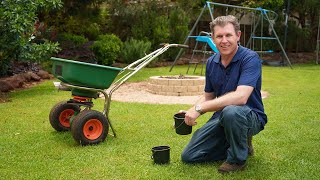
This is a YouTube video titled "John Deere Lawn Legends: Lawn Nutrition" featuring Duane, the head groundsman at Toowoomba Christian College, sharing his expertise on lawn care and fertilization. The content is an instructional talk focused on soil types, soil pH, fertilizer selection, and fertilizing schedules to maintain a healthy lawn. The video was created in October 2022.
Hi, my name's Duane. I'm the head groundsman at Toowoomba Christian College. I've been looking after grass for about 25 years, so I've learned a few things along the way. Also to keep my own backyard looking nice and green and lush. And part of that is providing good nutrition to my grass. When we fertilise our lawn, it's important to know what type of soil we've got. So if we've got heavy clay soil, it'll hang onto the nutrition longer than a sandy soil. Also important is to know about our soil ph. This will determine how available nutrition is to the plant. Sometimes if our ph is wrong, it can lock up certain nutrients, which is making our fertilising less effective. So I chose this fertiliser here because it's higher in nitrogen, which is what I would use now when my plant is actively growing and using more nutrition. And then this one is lower in nitrogen but higher in potassium. So I normally use this in winter to sort of strengthen and condition the plant. It's important to know the size of our lawn when fertilising, just because simply we want to know how much fertiliser to buy. And then once we know that, we can then spread the fertiliser using a fertiliser spreader such as this for a bigger lawn, or a handheld fertiliser spreader for a smaller lawn. So how often do we fertilize our lawn? I like to fertilize my lawn three times a year here. Once in summer when it's actively growing, once coming into autumn to give it reserves going into dormancy and. And then once in spring to give it a kick to get it moving out of dormancy. So as you can see, it's a fine balance to getting a beautiful lawn. It is important to take the time to know your soil and your grass and the size of your lawn so you can get it right when it comes to fertilising. But once you get it right, you can sit back and enjoy the benefits of a beautiful green lawn.