
John Deere Military Hiring Program – UK and Ireland online careers event
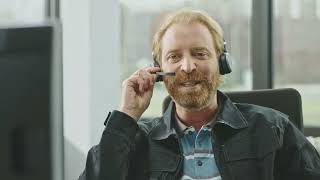
John Deere's military hiring program helps UK and Ireland service leavers move into technician and dealership roles. Speakers including Alan Corcoran, Bob, Will Foster, and Mike Rogers share training, mentorship, and career paths available through the dealer network, plus personal stories from former military staff who made the transition.
So, good evening, ladies and gentlemen, and welcome to our military hiring program careers event this evening. And my name is Alan Corcoran. I'm to you, Alan. One thing I was remiss of saying at the start, start. And Bob reminded me of that there. We will have a Q and A session later on, so if you have got any questions that pop to your mind as we're going through this presentation, you know, drop them into the chat and we'll pick them up and try and give you an answer to them later on this evening. So welcome to your new office. You know, this could be you in a very short space of time. Ultimately, you know, some of those pictures you see there are taken by our current technicians doing their everyday job. You know, you could be out in the Lake District in some beautiful countryside, servicing a customer's tractor, you know, and making sure they keep everything running for our customers. Or equally, you could be back at the depot handing over a new machine to a customer, making sure you set it up and prepare for him to take that out, do some work, or the picture down to the bottom, right. You know, you could be out in the summer sunshine optimizing the largest combine in the world, making sure the customer gets the best performance out of that combine. And ultimately, best of all, you get to do it as part of a team. You get to do it with your mates, your colleagues, and, you know, ultimately enjoy that time working as a collective team, serving our customers and making sure everything that you do on a daily basis adds value to them and ultimately helps them provide food that helps feed the world from there. But more about the detail. You know, our military hiring program that we launched back in July of this year, you know, has ultimately three elements to make it up. The training element, which we'll come to in a moment, which sets you on a journey to become a John Deere certified technician. And we'll say we'll go into the detail of that in a minute. I want to focus here on the next two elements. Mentorship, as Bob said a few minutes ago, you know, ultimately, we are well aware that transitioning from military life into civilian life and actually making sure that works for you and a positive experience for you is a challenge. And we know using your transferable skills, getting them into another. Here we go.
So why are John Deere opening up positions to service leavers? Well, we're passionate about finding a way to give back to. To those that have served the nation. And it provides our company and all John Deeres and especially those service leavers, a Sense of purpose. So we understand that the transition to civilian life can be quite difficult and we can help. And this is going to be part of our hiring initiative and through mentoring, we'll be able to achieve this. And this helps service members transition and build a resume and learn the industry, helps our company gain qualified talent. And let's face it, we do need qualified talent to join our organization to help those customers I talked about a few moments ago. And also to learn, grow and develop and potentially work their way through the dealer organization. And also giving back to the community helps grow our local communities. So why consider a career with John Deere and John Deere dealers? So, as I said, it's a higher sense of purpose helping our customers who feed, clothe and shelter the world. And we have similar core values to the armed forces. Integrity. You know, there's a lot of integrity and trust that goes between John Deere limited here at Nottingham, our dealers, our employees and the dealers employees. We strive to build the best quality products just like our forefathers who started the company back in 1837. We're committed to that quality and we're committed to providing great service and customer experience.
Excuse me.
And of course, we continue the path of innovation with developing new high technology products. Autonomy, electrification, all of those things are on the threshold of our horizon within the business over the next years. So it's really quite an exciting time to join John Deere and its team of dealers throughout the UK and Ireland and get on and develop, develop ourselves for the future and really have a satisfying career going forward. So where are we located? And the slide will move on.
Here we go.
Why work for a John Deere dealership? Well, there's a John Deere dealership close to your home. There are dealer locations from coast to coast, UK and Ireland. And what we have on, you know, what we have on offer is through those John Deere dealerships, we have competitive pay, which I'm sure we'll get into discussions about later on when we get to the Q and A. Advanced training. We know that you've got technical abilities from your service career and that can be very easily adapted with some advanced training onto our current product lines and previous product lines. You've got the technology that you're used to and apply it to a different industry. We offer career development through our learning paths and Alan will talk about those in a little while. So there is a career path and lots of training opportunities to go, not just stay in potentially the service department of a dealership, but move into marketing, sales parts, etc. And we have openings nationwide and you can see all the outlets with the yellow and green dots that denotes ag and turf dealers throughout the UK and Ireland. And currently, I believe I'm correct in saying we've got 125 open positions throughout the network. So there's quite a bit to go at and we'd love to, love to make some introductions. So over to you, Al.
One thing I was remiss of saying at the start, and Bob reminded me of that there, we will have a Q and A session later on. So if you have got any questions that pop to your mind as we're going through this presentation, you know, drop them into the chat and we'll pick them up and try and give you an answer to them later on this evening. So welcome to your new office. You know, this could be you in a very short space of time. Ultimately, you know, some of those pictures you see there are taken by our current technicians doing their everyday job. You know, you could be out in the Lake District in some beautiful countryside, servicing a customer's tractor, you know, and making sure they keep everything running for our customers. Or equally, you could be back at the depot handing over a new machine to a customer, making sure you set it up and prepare for him to take that out and do some work. Or the picture down to the bottom right. You know, you could be out in the summer sunshine optimizing the largest combine in the world, making sure the customer gets the best performance out of that combine. And ultimately, best of all, you get to do it as part of a team. You get to do it with your mates, your colleagues, and, you know, ultimately enjoy that time working as a collective team, serving our customers and making sure everything that you do on a daily basis adds value to them and, and ultimately helps them provide food that helps feed the world from there. But more about the detail. You know, our military hiring program that we launched back in July of this year, you know, has ultimately three elements to make it up. The training element, which we'll come to in a moment, which sets you on a journey to become a John Deere Certified technician. And we'll say we'll go into the detail of that in a minute. I want to focus here on the next two elements, mentorship. As Bob said a few minutes ago, you know, ultimately we are well aware that transitioning from military life into civilian life and actually making sure that works for you and a positive experience for you is a challenge. And we know using your transferable skills, using, getting them into Another walk of life and another workplace is a challenge. And ultimately a key element of our program here is the mentorship. You know, we currently have some mentors that have been in your position, have come from military service into the John Deere dealer network and made a success of it. You know, you'll hear from Will later, he's a prime example of that. But ultimately, these individuals that we've got already know what it's like for you, know what you need and what support you need to make that successful. And as part of the program, we'll pair you up with one of these individuals and they'll be there to mentor, support and guide you forward from there. And then the third element of that is around the connection. You know, connecting you to a John Deere dealer, you know, can be quite a daunting task. We know you, you know, writing a cv, applying for a job, going for an interview, they're not anything anyone enjoys. And if it's something you're not familiar with or not comfortable with, it can't be quite daunting and do that. So as part of the program, we will connect you with your local John Deere dealer, as Bob says, anywhere in the UK and Ireland that you want to relocate or settle down to, and make sure we open that door for you so that that initial contact is as stress free and easy as we can possibly make it. So ultimately, three main steps to the program. So we're going to look at now the training element of it, you know. And why would you want to become a John Deere Certified Technician? Well, ultimately, being a Certified technician means that you have been trained, you are qualified and capable of supporting our products in front of our customers, our products that are growing in technology becoming ever more advanced. The Certified Technician program means that you will be well equipped to support, repair, maintain whatever that product needs to make sure the customer gets the maximum out of it. And you'll do that as part of a team in some of the most modern dealerships in the world, ultimately looking after that product from there. So the other element that we have as a part of a certified technician is that's part of a journey, that's part of a career progression plan that our technicians have to go from certified technician and move up the ranks of technical support, all the way up to becoming a Master Technician. So that's a detailed plan, a detailed career path that is there and available for you, you know, as you transition out of the armed forces and through our military hire program, to certified Technician, all the way to Master Technician, ultimately from there, you know, so those opportunities are what we are offering as you come through the program and become a certified technician with us. So what does it take to become a certified technician? Certified technician ultimately is a three step process. Step one, level one, as you see there on your screen now, level that's about making sure the solid foundations are built to build the rest of your career on. Most of you coming out the armed forces, if you come from a technical background there, will be able to use your transferable skills that you already have and get through that very, very easily. And that element itself is web based training that you can engage with at any time and make sure you use your transferable skills and transfer that into the terminology, the product and the systems that John Deere use. Most of them you'll already be familiar with. The level 2 element becomes the system overviews that gets into a little bit more depth around the systems that we use in the John Deere products as you can see them on the screen there. And again, if you're used to working on product in the armed forces that you have, you know, ultimately most of that will be fairly familiar. So both level one and level two are web based training, you know, so ultimately that is part of our military hire program. We are offering you the opportunity to complete level one and level two at your pace, at your time, during your resettlement phase. And then the level three piece, which is the more in depth on the John Deere product diagnostics, you know, we expect once you have gone through the program and you have a successful employment, that level three will be completed when you're in employment with the dealer to get you to that certified technician status. But the training we're offering doesn't just focus on the technical element, as you can see in the example in front of you. We also cover the parts business, we also cover the sales element of the business as well, you know, so ultimately we're offering over 70 courses as part of our military hire program to you completely free of charge. All we need you to do is register your interest and we have a conversation about which route best suits you and then we set you up and access that. And all it's going to cost you is time, you know, some of your time, some of your resettlement time, getting yourself better equipped to transition into a job with one of our dealers across the UK and Ireland. So ultimately that's the key element of the offering as well as the mentorship and opening the door to the dealer network as we've spoken about before. So how do you get involved if what you see there, you want to learn more about it, you want to actually register for the scheme. As you can see on the screen there, we've got a website. You click that link will take you to the website from there. In that website, you'll see some data and you'll see some details about what the program is. We're running this program in partnership with our colleagues in the us so you'll see a lot of American terminology, a lot of American graphics, etc. Don't let that put you off. We are running this in parallel with them and they're supporting us with that. Ultimately, from there, as you scroll down that page, you'll see the two buttons, the two yellow buttons as you see highlighted in the middle of your screen. The left hand button is about opportunities at Dealer Network. In our Dealer Network, if you click that button or alternatively scan the QR code that's on your screen now, and that will take you to a contact card where we ask for just a bit of background information on yourself. And ultimately, when that comes to us, we will then reach out to you, have a brief conversation and help you get set up on the program from there. So hopefully not an onerous task to fill in a bit of information about yourself, tell us why you want to be part of the program, what your ambitions are, and we'll try and support you with that. Get you assigned a mentor, get you set up on the training and move forward from there. So it's quite a simple process. It's quite easy to engage with and give you access to all of that free training as we go forward from there. So that's a very quick overview of the program. Just as a reminder, you know, we have time for questions at the end, so if there's anything there that you want covered in more detail, anything that's still unsure for you, stick a question in the chat, that's absolutely fine, absolutely fine. We'll come to those and we'll answer those for you later on. So where I'm going to go to now is I'm going to introduce again Mr. William Foster, forged to his mates. So hopefully he doesn't mind calling me force. And what we have asked Will to do is, you know, give you a bit of a five minute summary of his transition, his resettlement plan and where he is now ultimately and how he felt for that. So over to you, Will.
Good evening. Thank you, Alan, for the introduction. Yeah, hi, my name is Will Foster. I did 23 years in the Royal Armored Corps. And after that I left Bovington from technical training and thought that you know, I needed to use my skill sets developed and honed over my time in the army to best effect to kind of establish my next career. And it was a happens of circumstance really as to how I almost fell into this job role. And then I said on numerous occasions that there was a, an inner child woken with inside me and that was the pass passion for tractors. You know what kid doesn't love to play with trains, tractors and tanks on their carpet when they're younger. And I've used that little antidote quite a few times. If you've ever spoken with with me in the past, I'm sure if you're watching this your one of your biggest concerns is going to be like the, the how process that I was always asking myself. And one of the easiest questions that I needed to answer right out the back was the where but was it, was it the job that I was after or was it the location? And for me I wanted to come back home to the Midlands. So looking around, realizing that we are very rural around here, so I then kind of stepped up. The next question was what line and what industry would I be going into. So doing a bit of digging around, I needed to play to my strengths but also try and ensure that I had job satisfaction as well. Having done such a high paced line of work in the services with all that pressure and the technical know how and abilities, you've got to use that so that you can furnish yourself with an income that's going to sustain this standard of living that you've been accustomed to throughout the time, support your family. So I, you know, working on armored vehicles for all of my time, I knew that the use of technical documents, specialist tools like the logistics chains, how to go about getting repairs done or communicating with other people on how to do something, should I not be aware on how to do it as well. And over the time that I've been doing so, I've been now an agricultural engineer for about three years now, working on John Deere products for just over two. And the iconic kind of green and yellow that you will hear people talking about drew me in for the simple fact that it is a world class beating bit of kit. You know, I was used to working on the best armored fighting vehicles and now I'm working on the best agricultural machinery. And there's a lot of transferable skills that we always talk about, but it was using those skills that I developed and getting them working with the latest Technologies that also was very similar. So you're talking about like data network establishments. When Bowman came in and how hot off the press that was. We had kind of three avenues of approach. Whether you're driving and maintenance, working on the spanners, communications, being in signals or whether you were a weapons platform operator. Not much call for that out here in Zimi street if you're one of those guys. But you will know how to work tools. So I was like, okay, I can, I can do this one. Do the customer facing old enough and ugly enough to be able to talk to people on farm and overcome problems. I liken times of the year like harvest to being on an operational tour. Often you will be working outside of your comfort zone under high pressure, but you've got the can do attitude where you've got to come up with a solution that's cost effective and timely. All things that we are kind of used to with being in the services and accountable really. People are relying on us to drive around in our vans with our set of tools and our laptops and our phones, communicating effectively, repairing as quickly as possible so that the downtime that the customers may or may not be incurring is as minimal as possible. And the sense of kind of gratitude that some of the farmers are able to give you is rewarding to itself. You talk to some of them and they will, you know, they will come back at the end of the year at Christmas, furnished with roses and chocolates and alone because they don't forget. And you, when you develop this customer relationships it kind of feeds back into, I'm going to admit it slightly, your ego. And you're going, oh, I did a good job there. Or if you don't know, you know how to chat with some of the younger guys that are younger than you but more experienced than me. And there's being humble about it as well. And I often find I will sit back after a job and really appreciate kind of the level of support that I've had from my team, but also the kind of the appreciation I see in their faces when I've stayed a bit longer because they're struggling a bit and it's a two person job, whatever the case may be. I can't be an advocate enough for John Deere and I've been trying to push this military hiring bit for quite a while with Alan trying to get it just because the we're alluding to this transferable bit so much. But the awareness out there, we need to push it a little bit more because it, it is a, it's a hand in glove kind of fit. There's a lot of people that will follow suit when it comes to the courses available to you during a resettlement phase. But remember, you are now about to move into your newest career and you're doing it for yourself. So you've got to ensure that you're looking after number one first. Land yourself with the job that you, you're going to be fit for and with what it is that the Deere have got on offer. The moment that kind of four stream technician, sales, parts and management, we've all got at some level from like lance corporal upwards bits to that. We've got a guy from the RAF who was the air traffic controller. He's doing precision act. Working with satellites and all that kind of stuff finds it quite easy. We've got a guy from the household division who's gone into managerial positions at a depot. So yeah, I can't be an advocate enough and I'm kind of trying to bring as many people on as possible like book who you will speak to in a second and yeah, the team at Elanga are just ace.
Excellent. So thank you all, appreciate everything you're doing for us and the program and ultimately the advocate for, you know, life as a John Deere technician. It's great, great. Nice to see a smile on your face as well, which is great. Shows how much you're enjoying it. So that's the perspective of Will who's, as he rightly says, you know, being in, in the John Deere world for the last two and a bit years and say loving every day, as you'll see from his LinkedIn posts, you know how much he's enjoying it. He goes from there. So next thing I'm going to do is have Mike, Mike Rogers give a little bit of his perspective. As we said at the start, Mike's currently still serving and going through his resettlement phase as we speak from there. And Mike currently is one of the candidates we have on this program. And you know, I want Mike to give you a bit of background on himself, how he got into the program and ultimately how he's finding his time going through the program and how he's managing his resettlement as he goes from there. So Mike, thank you for joining us. I'm going to hand over to you now, so take it away.
Thanks Alan. Yeah, so as Alan said, my name is Mike, Mike Rogers. I'm currently going through my resettlement army last year, due to leave the army next April, which will have seen me do roughly about 23 years service and I'm currently enrolled on the John Deere military hire program and I've been for around about three months now. Just a bit about me then. So prior to that then just where I differ from Will, I don't live in a predominantly rural area. I'm very much in a fairly built up sort of place up in Mansfield in the East Midlands. However, I sort of come from a fairly rural setting on the Shropshire Worcestershire border. Led a very outdoor childhood, very interested in the countryside and the outdoors and whatnot. Spent a lot of time in my dad's workshop growing up, tinkering with things. He was still is a mechanic really specialized in farm and plant machinery. So that sort of sparked me interest from an early age. And then on my mother's side, grandmother on that side, I had a farm which is still in the family. So I spent a lot of time up there around with my uncle, was doing jobs, helping out at lambing, getting up for milking. So the seeds were planted early on really from there then it scratched an itch, a child itch that I'd had since I was a child and I joined the, joined the army and went into a predominantly combat role. So not, not engineering specifically or anything too technical. However, after a bit of time I specialised and went down the driving and maintenance route that Will was talking about just now, which saw me progress onto becoming a driver mech. So a sort of SMA supervisor within the troop and whatnot. And then my natural progression was sort of working towards training as an instructor on various vehicle platforms and then spent two years down at the driving and maintenance school at the Armour Centre in Bovington in Dorset. We were taught a variety of courses on different armored vehicles and that's everything from learning, teaching people how to drive and to maintain service, low level repairs and whatnot. So that was my sort of the direction, my military sort of the direction I took within the, within the army. So why, what sort of made me think about going into this, this industry? Coming into my resettlement period, there was one or two things I wanted to do. Definitely wanted to work my hands, wanted to be outdoors, preferably doing something. Looked at a few different career streams. All predominantly sort of engineering and hands on roles with a lot of high profile companies that were specifically looking at hiring service levers. When I dug into it, nothing really was what I was after then I sort of follow will on LinkedIn and I know him from me days. We were in the same regiment. We also worked together down at Bobbington so we knew each other pretty well. I dropped him a message and had a phone call with him one night. We talked about the John Deere military hiring program that was being launched soon after quite a bit of success in the States. He then put me in touch with Alan. Alan told me more about the program, took some details and we got the ball rolling from there. Really enrolled me on the program and then I was given. Well, what that consisted of really was Alan firstly sort of helping me expand my network. So he put me in touch with a dealership in Newark just up the road. And that's, that's going really well. I've been up for a visit and had a chat with them and had a look around. So hopefully something fingers crossed will come of that at some point. But also I've got a John Deere University account. What I'd liken that to, I suppose is the DLE Defence Learning Environment is very much continuation training for guys that are already employed with the company. However, they've also opened up the military IRM program to that. So for instance there's the service technician syllabus on there as well as parts and sales and one thing and another I'm currently working through the service technician thing. So it's basically just Stocksbury Basic Internal Combustion Engineering component parts. And as you work through it gets a bit more advanced, the drive trains and hydraulics and things like that. And as you get through, you know, you see your progress ticking along nicely. Another thing that sort of me and Will have jacked up between us was instead of me going away and spending me money on courses and whatnot, this isn't. I'm not, not putting all my eggs in one basket, you know. But this is the sort of route I want to go down. So I've sort of invested me resettlement time in this. So I've used me grt my graduated resettlement time to go away and work alongside him. Ben Burgess, which is a John Deere dealer in, in Oakham. All unpaid, just work experience. I've done five days so far. Three of those was a sort of block release which was last. And we've been over that time. We've done things like reacting to breakdowns on farms, servicing in the workshop, servicing in someone's farmyard and then you know, swapping components and yeah, it's. And that's been an invaluable sort of experience for getting your hands on the tools. Even though I've got a lot of experience with military vehicles and whatn getting your hands on the actual attack and seeing the differences and you can't beat that. And it's just further sort of piqued me interest sort of in regard to the future. Just very quickly then. So where I see it going from now, I'm planning on. Well, I'm still pushing on through the John Deere University program, sort of ticking away at that on the evenings and weekends. And then I'm planning on if will allow me and the guys down at Oakham will have me again, I plan on going on doing a bit more with them and then any other dealerships that would take me on for a bit of unpaid work experience. And hopefully in the near future, somewhere in the near future, I'll look to secure employment as a agricultural or sports turf service technician within a dealership. That's about me. Thank you.
Thank you, Mike. Much appreciated for both of you for sharing your experiences and sharing, you know, some of the things that you've managed to overcome. And as you rightly say, Mike, you and Will working together are even, you know, enhancing what the original program was designed to do by adding the work experience bits, which ultimately are something that we can work out for anyone coming into the program using some of their resettlement time to have work experience opportunities for there. So great. Thank you both for that. So, you know, we've got a number of questions coming in. Those of you that are submitting questions, thank you. Those of you who have still got that little itch at the back of your mind, you know, feel free to drop the questions into the chat and we will get to them as we answer them. So I'm going to hand over to Bob now, who's going to host us and manage our way through some of the questions that we've got. So over to you.
Okay, thank you, Alan. Thank you very much, gentlemen. Thank you both for your stories. And yeah, a couple of questions for you, William. Yeah, there are many business trying to recruit, resettling military personnel. What made you choose John Deere?
I'm. There's something quite dear to my heart, pun not intended, but it was to do with branding and identity. Really one of the things that blindsided me when I drove out of the camp gate for the last time, never to be allowed back in on an official capacity. And that following morning, not having to dawn my berry again stripped me of the kind of the ethos and identity that we take for granted while serving with your regiments and cause and who have you. And I was scrabbling around trying to find something like, for like. And with the PRANCING deer and the green and yellow and the history behind it as well kind of just rang out to me and I was like, I can get hold of that. I had done something similar that book did, but off by myself really. And I've gone and volunteered my time during my resettlement. But you have to take into consideration that whilst I was doing that, it was through the pandemic days and recruitment had ground to a halt and technically I was unemployed for four days. So I was staring down the barrel of being unemployed and not pulling an income. But it was being sure in my own capabilities that something would transpire because of the soft skills and qualifications furnished with me to me whilst I served. And it was, yeah, like I just mentioned a few minutes ago, it was a hand in glove kind of affair. So if you can work a spanner on a tank, you can work a spanner on a tractor, combine, spray or whatever the, the bit of equipment may or may not be. But as far as kind of job satisfaction and branding go, that was one of the biggest pushes for me was the lure of the prancing deer.
So how does the John Deere work environment compare to that in the military?
Very similar. So on the day to day basis, for instance today, poor Book actually just missed the, the bus a little bit by leaving a day too early. But I've had to pull a tractor in over the, over this week and it's, it's a big job that I've got going on. So you know, I wake up, I have my cup of tea in the morning, I get in my van supplied to me and I drive to work 15 minutes away and I speak with parts who is basically your quartermaster's department, pull up the technical documents so that we can get the part numbers which are like NATO stock numbers. We make sure that they're right serial numbers and kind of fit for purpose, order them, wait for them to get demanded. And the supply and demand chain logistics, is that similar to that of the tank park in any way? You get your bits, you stick them on, you test it and then once you've put it all back together, you send it back to the customer. But that can be anything from a quick five minute job, nice on a Friday afternoon all the way through to maybe a week's worth of work depending on how in depth you need to go as well.
Okay, and you know, how does the chain of command work? Is that similar too?
Yes and no. So it's, I think it's a hierarchical kind of structure that we were used to with the services either one up and two up, that people will be able to relate to. So I am answerable although qualified in management and all that kind of stuff. The responsibility that takes its toll on you whilst in the services, you kind of, you take a step back and you've got to be appreciative more of just being on the coal face but because you've got that managerial experience you kind of can use it to your advantage and for forecast before things come out. So I answered to my service manager who I would liken to a troop sergeant and then he would be answerable to a depot manager who I would liken to a squadron Sergeant Major and bearing in mind I'm being service specific here so you'd have to excuse my army isms and then above that you would go to the directors and kind of the group service managers and all that kind of stuff which are going to be like your regimental sergeant majors if you're going down the non commissioned kind of route. But being able to talk with them is a lot easier because you're not having to jump through all the kind of pomp and ceremony that we were accustomed to whilst wearing a beret as opposed to a baseball cap.
Thanks, Will. Alan, I've got a question. A few questions are coming from online. This first one's from Harry. Can we confirm if this program is solely focused on employment as a technician?
Well, we can answer that one pretty straightforwardly. The answer is no, which is a fairly straightforward to the point answer. Ultimately if we look at the population of jobs that Bob spoke about, the 120 whatever jobs that we currently have listed, predominantly the focus is technicians because that's where the, the work gets done. Ultimately if you like, in the dealership, that's where you are supporting the product, that's who's actually making sure the customers can use the machine. So we have a lot of focus on recruiting technicians without a doubt, but ultimately you know, the rest of the behind the scenes support for those technicians, whether it be parts, whether it be admin, you know, management as well alluded to as well and ultimately someone to sell the machines in the first place. All of those other roles in the dealership we currently are recruiting for and we currently have opportunities on this program for those individuals, you know, so we talk a lot about technicians because ultimately that's where our primary focus is. But we have focused on all the roles as well. So you know, if your skills suit sales or logistics as far as parts go or even management because I see we've got a question in there as well from Dan around, you know, his role in the raf, you know, management positions in the dealer, you know, Will within Ben Burgess has just said, you know, they've got, you know, a service manager down there who comes, who's ex armed forces and actually doing a management role within the business. So no, we're not just focused on technicians. We're focused on the whole dealer business ultimately. And the program will fit for all of those places?
Yep, absolutely. And from Annette, will places be be able to be secured at the start of a transition which is a year out from leaving the service? That's from Annette.
Yeah. So I'll pick up on that one as well, Bob. I guess ultimately. Annette, thank you for the question. Ultimately, we don't have a time limit on when the right time to join the program is. You know, I think from those people Will Mike, you'll be able to confirm this, you know, during your resettlement phase. The sooner you get started, the less stressful it becomes managing that time through that resettlement. So ultimately, from our perspective, you know, that program is open to anybody at any point during your resettlement. Whether it's day one or whether it's the last day or anywhere in between, the program is there. What I would encourage people to do, if it's something you're thinking of, something that will work, the sooner you get started on it, the sooner we can start lining things up and the more relationships and the stronger connections you can build to the business during your resettlement phase from there.
Okay. And one more. Does the military program align for engineering management position as an as AG Engineering is the industry I would love to get involved in post service. And that's from Aaron and yeah, would you like to take that one as well?
I can take that one. Aaron, thank you for the question. Ultimately, in the UK and Ireland, you know, we don't necessarily have any manufacturing engineering, you know, so the roles that we talk about here within the dealership are supporting roles, whether it be supporting the product, you know, supporting the parts and the logistics or the management associated with that ultimately. So yes, absolutely. There are management positions there. An engineering background will support, you know, people in those roles. You know, if my understanding of your question is correct, you know, we technically don't have any engineering management positions, you know, to walk into, but you know, we have management positions and an engineering background, you know, would be beneficial to them ultimately. But nothing directly engineering management, I would say, if that makes sense. But hopefully I've understood that correctly. If not feel Free to you know ask any follow on questions if you still got something or even give us.
A call, you know we'll happy to happily take a phone call too. Mike, I've got a couple of questions for you. Do you think military leavers are aware of this career path?
No, I think the word's slowly getting out there but I know certainly when I talk to people when yeah you know we quite often my peer group, you know when we sit down for a coffee or whatever we're chatting about because we're all about leaving around the same time, you know we're talking about what we're doing and I certainly know of no one sort of in my immediate sort of circle that are. That are considering this already or even heard of any opportunities really. So no, I don't think it's. I don't think it's very, very well known to them at the minute.
So what would you say who's never considered it?
I'd say definitely look into it. So research it. Get in touch with Alan or have a look at the stuff that's. The stuff that's out there. The link that you were showing earlier there's a lot of information on the, on the website. Now one thing I would say because I questioned it originally I pushed through it though because there is. Alan alluded to it earlier. There's a lot of Americanisms on there and on the application there were a lot of Americanisms that could possibly put people off. Don't let it put you off, just persevere with it because it's well worth doing. Research it, look at your similarities between what you do. Like I say I'm by no means a sort of master mechanic or anything like that but I'm pretty. I've done a lot of maintenance and a lot of repairs and bits like that and it is very relatable and having seen it firsthand I've seen how relatable it is to. To service life.
Cool.
Will one for you. What inherent skills do you think military levers have that which, which will fit well into a dealership. Dealership position.
I remember talking with somebody else about kind of one of the bug bears when leaving the services and it she hit the nail on the head was like do you struggle when people say that not they going to do and don't do what it is they say that they're going to do. And I think it's kind of ingrained in us that we will see a job through to the end as quickly as possible and keeping a high Level or high standards that is kind of come from trivial things like bullying boots and getting told that they're never good enough, cleaning up after yourself or making sure that your weapons clean or put together correctly. So that kind of standards, the solid C that we used to get force fed whilst in the services, the core values that mentioned earlier I think John Deere and the army share somewhere in I think there was seven, we're sharing four of those in any way. So yeah, it's quite a simple one to kind of come across and people do genuinely appreciate appreciate you doing what it is that you say you're going to do. And on the flip side if you can't do it being able to communicate that one as to why so seeing a problem but they're also want to kind of come across and people do genuinely appreciate you doing what it is that you say you're going to do. And on the flip side if you can't do it being able to communicate that one as to why so seeing a problem but also coming up it sounds a bit cliche but with a solution hand in hand people you know that that stuff doesn't come coming up it sounds a bit cliche but with a solution hand in hand people you know that that stuff doesn't come isn't taught, it's learned over years of kind of development, trial and error. So when you're bringing those kind of soft skills across from the time in the services isn't taught it's learned over years of kind of development, trial and error. You're just talking to your peers and your managers that much more effectively getting the job done. And I think it's probably one of the things that kind of makes my life easier is that I'm able to say it as it is, heirs and graces aside, but without being rude, you know. And also I need to kind of allude and highlight some of the, the sense of humor and the banter that is akin to quite, quite a. What's predominantly has been a male dominated area but like the teeth, arms and combat services we started to get girl guys and girls coming in as well and I'm seeing like young girls coming in as ag engineers as well now. So that diversity and inclusion and all that kind of tick in the box stuff that we need to do is also prevalent and present in this line of work.
Yeah, certainly, certainly there have been a number of young ladies, you know, come through our apprenticeship scheme that we run out of Langer. Yeah. Which is great to see and you know there's quite a buzz about the whole industry to be fair. And that connection to those link to land is very, very strong. People will watch it, watching this, will think this might be all about tractors. Will, can you explain what sort of other equipment your colleagues work on at the dealership or in the dealer group?
Yeah, well I'm a bit of a. Having worked on a 70 ton tank I was always after kind of the bigger is beautiful. So not knowing what a 9 Rx was until I got onto farming simulator and realize yeah, yeah, that's my kind of size. I want to be playing stuff like that one. Yeah, yeah. The lion's share of the work is done on tractors but it doesn't take too much kind of digging around to work out that you've got other stuff that's involved in harvest. So the kind of the crop cycles, how to put these seeds into the ground, how to prepare the ground, how to kind of control pests and pesticides and all that kind of stuff. And then ultimately at the end of that cycle being able to pull it out of the ground as well and the, the amount of equipment, I mean a lot of it goes onto the back of tractors but also you get some very specialist machines that are very specific for either the crop or the job role that they're going to be doing. And the support publications that come with the John Deere network, you know, you don't need to be a rocket scientist to be able to work these out. They're very intuitive. And I've found that John Deere have kind of concentrated on work on teaching you how to work out the problem as opposed to how to solve the problem and telling you what to do. So they'll give you the resources, the login details, where to look, the step by step process in order to get to the conclusion that you want after. And I was promptly put in my space by another service guy because I had a bit of a bug to bear to bear when it came to the support publications. And actually it wasn't the publications that were at fault, it was me. And I soon saw the errors of my way because he then educated me on how to correctly use those and connect with the machine. And I was blown away at the connectivity and the use of technology. I know I can look at my customers tractors here and now and find out whether they've got any faults on it. And sometimes I can find out that there's a fault with a tractor or there's something some optimization kind of details before they are even aware of it. And that just adds to credibility for you as a technician or a dealer or whatever it is and kind of helps promote and sell more later on in life.
Yeah. And staying connected to that customer throughout the lifetime. And yeah, using our telematics to the best, best advantage. That's super cool. Al, I have another question for you. This is from Gaz from the RAF Xref. Is this program available to those who have already left the armed forces?
Absolutely, absolutely it is, Bob. You know, we have opened this program up to any service levers at any point on their journey, whether it be start of their resettlement, all the way through their resettlement phase, or even those who are actually out in civilian world doing a career that maybe doesn't give them the prospects or the opportunities that they're looking for. You know, this program is available for them. Absolutely, absolutely. You know, if you've got the skills and the capabilities. Gaz, I think from your question, not convinced. We've got too many helicopters in our part of the world, unfortunately, as far in our network. But ultimately, you know, those transferable skills, if you've got them and you can put them to good use, absolutely. The program is there for you, definitely.
But we did have a large drone at Agritechnica last time around, so that kind of technology is almost with us, crop spotting and all that. Jaz, okay, one from Dan @ the bottom there. What benefits does John Deere provide its employees and make you stand out from your competitors? Well, I'll have a stab at that one, unless you want to, Al. Obviously the John Deere dealerships are franchised, independent businesses. So I can't give you a hard and fast rule, but integrity, commitment, quality, innovation, all of those buzzwords I use right at the start. Gaz, you know, there are varying rates of pay throughout the country depending on the dealership business, the type of business, whether they're ag, the turf, the location, geographic location. There's all sorts of benefits, working hours, benefits as teams. There's many, many facets here, the pensions, the health care, things like that. I cannot give you a fixed this is it from our ag businesses or our turf businesses because it will be dependent on that franchised outlet or, sorry, that franchise business. So I'm not trying to sidestep it, but that's the way it worked. But the way it works. But there are many, many facets to that.
You know, ultimately, Bob, maybe if I could just pick up a little bit on that. You know, I think some of the things we often talk about with service levers, I know Will talked about this this evening already. You know, what we do offer is exactly what Bob's talked about through our dealer network. But we also offer a structured career path to make sure that you can reach your potential, make use of those transferable skills that you've learned over many years in the services. You know, that career path to reach your potential ultimately from there, you know, the opportunity, as we said, to work in a business that is growing and evolving all the time, ultimately bringing the latest technology into it and, you know, that opportunity to feel as if you're giving something back, you know, you are doing something that is helping our customers ultimately feed, grow crops and feed that growing population, feed that world, which, you know, in society today, you know, having an actual feeling that you are contributing to the greater good of everyone, you know, gives, hopefully give me gives, hopefully most of you out there, you know, a sense of, you know, satisfaction, sense of achievement, actually, just to be able to contribute like that.
Yeah, absolutely. And while we're having a little bit of fun at the same time, hopefully. Dan asks, so you're recruiting for the dealerships, not for head office? Well, for the right people. There are always opening openings here at head office and actually, you know, there is a work work or a people flow from the dealerships into head office and also there is an outflow from head office back to the dealerships. So that does happen, Dan. So yeah, some of our colleagues here at Langer are from the dealerships. In my team, I've got a couple, Alan has a couple as well in the training team. So that is possible. And likewise a number of people that are out there back in the dealer organization, in the dealer businesses that are ex John Deere head office or overseas as well. So I think we're out of questions from at the moment. Would you like to wrap this last bit up?
Al, thank you for that. Thank you for hosting the questions. I mean, I think the one thing we will say is, you know, if there are any other questions, feel free to reach out to Bob or I, you know, we can help you and support you from there. And any questions that come in the chat that we haven't been able to answer tonight, we'll make sure we get an answer out to everybody from there. You know, so ultimately, just to close out tonight, just before we let you, let you free to continue with your evening, ultimately what we just want to say is, you know, our slogan has been for many years, nothing runs like a deer. You know, our businesses, our dealer businesses are growing and evolving at a faster and faster pace. As with the technology that comes into the business from the product and the support tools and services that are there to support people, manage their relationships with the customers and manage the support of our products from there, we want to focus ultimately on recruiting technicians to support that product. But it's not all about that. It's across the whole business. So we want to offer those opportunities through the military hiring program to all those places. As Will said, you know, management, parts, service sales, you know, they're all key roles within the business. And ultimately people from military services will have some of those transferable skills that we can support and develop into something that will fit very nicely into our dealership businesses. So take a look, see what we can offer you. And ultimately, the QR code at the bottom is a link to our dealer jobs page. You know, so that's separate to the military hiring program, but that will show you and give you an idea of all the open positions that are out there at the moment. As Bob says, there's about 120 something of them at last count yesterday. So there's plenty of opportunities. You know, we want to use this military hiring program to get you in a position to take advantage of those opportunities as and when they come. So feel free to get involved. What we will do is thank you all very much. Thank you to Will and Mike for your participation. Much appreciated your time and effort. Thank you all for listening. Thank you for taking an interest in the military hiring program. And I say feel free to reach out if there's anything else you want to learn. Thank you everybody. Have a good evening. Thank you very much. Sa.
It.
More from Francisco




Desh Ke Superhero | Mr. Madhava Rao | Faster Pole Installation with GreenSystem™ Post Hole Digger



En CasaToro John Deere encuentras el respaldo que necesitas para mantener tu maquinaria lista



