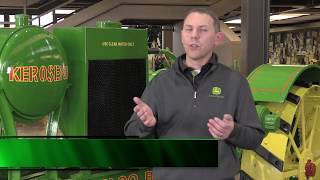
This is a YouTube video titled "The Waterloo Boy" created in March 2018, featuring Neil Dahlstrom presenting a historical overview of the John Deere Waterloo Boy tractor. The content covers the origins, development, and significance of the tractor model in John Deere's history, highlighting its features and impact on the agricultural machinery industry.
I'm Neil Dahlstrom. In celebration of a hundred years of John Deere tractors. I'm standing on the display floor of John Deere world headquarters in Moline, Illinois. And I'm standing in front of a 1920 John Deere Waterloo Boy model N tractor. John Deere acquired the Waterloo Gasoline Engine Company in March of 1918, marking our permanent entry into the tractor and engine business. But John Deere's tractor work actually began as far back as 1912. Over the next seven years, John Deere learned through its own designs, through experimentation, through field tests and conversations with customers and dealers, that what customers were really looking for was a durable, economical and reliable tractor. The Waterloo Boy was just that tractor. You would actually start the tractor using a little bit of gasoline and then you would convert to the less costly kerosene to actually operate the tractor in the field. This two cylinder engine, later known as a Johnny Popper, is a familiar sound to John Deere customers around the world and would be the mainstay in the product line all the way until 1960. Deere debuted the John Deere Waterloo Boy tractor at a farm show in Salina, Kansas in August of 1918. But it wasn't until January of 1920 that the two brands really came together. Effective January 1920, the John Deere Waterloo Boy tractor got a makeover. In this case, that meant being painted in the well known John Deere colors. A green body, yellow wheels and a leaping Deere logo on the front frame. This definitely was, as John Deere advertising claimed, a good tractor backed by a permanent organization. This is the history of the 1920 John Deere Waterloo Boy tractor.