John Deere engineers test combines and headers in northern Denmark, measuring performance across different crop conditions. The video covers software updates, mechanical improvements, and how their machines stack up against competitors.
So here we are in northern Denmark. We're back in Region 2, getting those critical crop conditions for our customers. We've got the same machine that you saw last year. We've done a lot of updates over the winter, working to bring it ahead to the rest of our FB2 design machines and continuing to iterate the design for our customers.
So here you can see our benchmark machines, our base machines. We always compare our new prototype to the latest machine of competition in the market. We've got eight headers here on the test side because we have four combines and we've got for each combine, we've got an extendable table auger platform and we have a Draper platform, so we can compare every possible configuration.
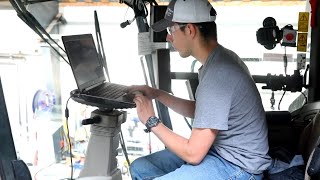
Two days ago we started new software changes on the machine when going from our software version one to software version two. So I only have a few more things to calibrate, just have the head controller to calibrate and once that's done, I think this machine will be ready to go out to the field and harvest. So on this combine we put a lot of shafts out of the machine, put some strain gauges on, and now we are able to measure the torque of all of the major functional components on this combine. The goal is to get an understanding of how the power is distributed through the machine. I'm here to support the evaluations of the header and the combine, to evaluate it, to ensure that the header can feed the combine very well, to report if there is issues or if there is failures. To the US team. We already tested this header in oats, summer barley, wheat, oilseed, rape and header is performed very well so far and can fiddle the combine even in high speeds. We are testing the tracks on the Grizzly combine in North America, Europe and Australia. So here in Europe, we are focusing specifically on the compaction, flotation, ride quality and the durability of the track. So right now we are going to record operator ear noise measurements during harvester operation to determine the losses of the different combines. We collect samples during the harvesting at the same speed for each combine. And we use this machine to separate the grain and the straw from a sample for each machine. It's far more accurate and faster than doing by hand.
So these two machines obviously together with sre, set the benchmark in today's industry. And our goal was to build a machine which does much better than these machines and we achieved our goals and, and they're actually doing much, much better than you explain.