EP101. Why Black skincare matters
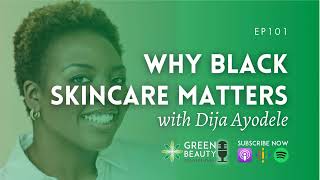
This content was created by AI Formulation Tutor. This content was uploaded by AI Formulation Tutor. This is a YouTube podcast episode titled "EP101. Why Black skincare matters" (published 2022-03-24) — an interview hosted by Lorraine Dallmeher (Formula Botanica) with guest DJ Ayodele, a skincare clinician, educator, founder of Black Skin Directory and author of Black the Definitive Skincare Guide. The episode is a conversation about the beauty industry's failures and how to improve care for Black skin: education gaps in training and clinical trials, marketing/language that excludes people of color, mistrust and historical harms, common concerns for Black patients (hyperpigmentation, acne-related pigmentation, dermatitis, pseudofolliculitis/razor bumps), and business barriers faced by Black beauty entrepreneurs. It also includes practical formulation and product advice for inclusivity (prioritize water/hydration — glycerin, hyaluronic acid, ceramides — plus sealants like shea/cocoa/mango butter; use facial oils only as a post-hydration layer; jojoba and apricot kernel oil cited as good options), and information on where to buy the book and connect with the author. The episode includes calls-to-action and links in the show notes, and is aimed at formulators, practitioners, and consumers interested in inclusive skincare.
Chapters
Today on the podcast, I'm covering a topic that is extremely important for the beauty industry. Particularly, and thankfully, in light of the growing talk around inclusivity and beauty, this episode is all about the need to increase our knowledge, our understanding and our appreciation of black skin. And to do so, I'm joined by a guest who I've been wanting to interview for a very long time, who is greatly renowned and respected in her field and but has also just written a fantastic book called Black the Definitive Skincare Guide that has got the industry buzzing. I am of course talking about DJ Ayedeli. Deja is a proponent of changing the narrative around black skin. Given the hideous fact that we've been told for centuries that black skin isn't beautiful and that we see that the beauty industry still mainly caters for white people, the skincare and the beauty industry has long failed to consider and reflect the needs of black skin. So I am so pleased that we can explore how to change the way that the industry caters for people of color through today's episode. This is so important. Black skin is beautiful. And as Deeja says in her book, Black Skin Tells a Story. So settle in for today's podcast as we tell that story. Welcome to Green Beauty Conversations, the podcast that challenges you to think about how you buy, use, make and sell your natural beauty formulations. We tackle topics that will make you think and encourage debate about green beauty with your friends, followers or customers. I'm your host, Lorraine Dallmeher. I'm a chartered environmentalist, biologist and the CEO of award winning online organic cosmetic formulation school Formula Botanica. We have thousands and thousands of students in over 180 countries around the world who study with us to become organic formulators and entrepreneurs. Visit our website@formulabotanica.com to try our free online formulation course. So in today's episode I am joined by DJ Ayedele Skincare, expert esthetician, owner of Skincare Clinic West Room Aesthetics in London and founder of the multi award winning educational platform Black Skin Directory and now published author, Deeja is a pivotal champion and advocate for providing the tools for people of color to be educated on their unique skin care needs whilst pushing the industry forward in its requirement to serve this sector. I am so pleased to welcome Deja onto the podcast today. Hi Deja, welcome to the podcast. How are you doing today?
I'm really well, thank you. Thank you for having me.
Oh, I am so thrilled that you're here and I know our community is going to be so thrilled and our listeners are going to love this. So I want to go straight in at the beginning with your book and I know you explain this in your amazing book, but I think it's important for all of our listeners to hear this. Why did you write Black Skin? What was your big motivator?
Wow. I mean, I think I had several motivators. My number one motivator was black women and the struggle that I've seen black women go through, especially as being a clinic owner and being a very hands on esthetician. The struggle that black women go through, which is what I call an emotional legwork of doubts and anxiety. Things like, is this product suitable for me? There's just always an underlying, you know, undercurrent of I'm not sure if this is for me. And I want to sort of address that, which is what I do in the book. As someone who works in the industry, you know that nothing I've said in that in my book is actually not to take anything away from it. It's not, it's not nothing groundbreaking as such, but at the same time it's groundbreaking for black women because it finally is saying, you, you can go and have that chemical peel, you can use that retinoid product, you can use that glycolic acid. It is all there. The taking is all for you. That was my, I would say, my number one primary motivator. But also as a big educator, I'm big on education. I'm big on people having the right qualifications to do the things that they say they're going to do. I was also always intrigued how, you know, people would leave beauty school quotation marks and. And yet they wouldn't know why black skin was black or they wouldn't know why the classic signs of aging, such as lines and wrinkles tend to show up at least maybe 10 to 15 years later. A white woman on a black woman versus a white woman of, you know, the same age group. So being I have that education focus, my second, what I call stakeholder was actually people like myself in industry who weren't getting their full education, who. And I wanted to really narrow that gap in education. So I always say, on one side, you know, black women, my north star settle it once and for all. On the other side, students, practitioners, again, provide them with the education to be able to serve a wider community.
Well, you say it isn't groundbreaking, but I actually think it is because I have read a lot of books over the years. I have a huge bookshelf next to me here, and I can tell you there I, I could probably summarize what, I mean, what's written about black skin in those books in a couple of pages, if it's even in those books at all. And the same goes obviously for coily hair, curly hair, et cetera. So I think it's fantastic that you've brought this together. And I know that that's in particular why our community is absolutely going to love hearing about this.
I hope so.
So, so, going back to the industry, what, what are the main problems that you see in the beauty industry when it comes to skincare products for black skin?
I think one of the main problems we have in the industry, first of all, starts with education. Students are coming out into industry to become practitioners in the industry, but not fully equipped or with enough confidence to treat darker skin tones, not enough knowledge about the products they're using, the ingredients that they have access to to treat darker skin tones or to even advise darker skin tones to use. So I think one of the main problems we have is the education. Also. I see a lot of therapists who just have a lack of confidence. They sometimes know what they're talking about, but they don't have the confidence. And so again, that's an issue. And language is another issue. I think a lot of brand owners and formulators don't always know how to pull the language out so that people of color, women of color, will understand if that product is suitable for them. Which is why I do get a lot of questions like, is this suitable for me? And I'm sat there going to, of course it is. But then when you look at it, at no point does it tell them, at no point does it say, and it's literally simple things like, this product is suitable for you. If you have darker skin, it will do, it will work like this, or if you have lighter skin, it will work like this. And it's. And I find it very simple, like, because I'm always like, come on, just, just use the words. Just make people know that it's for them. But I think where we've always lived in the default sort of white skin world, especially in the Western world, brands haven't always kind of realized that that is something they need to do. Because in clinic, I never have any of my white clients saying to me, is this suitable for me? It's a given, right? Whilst I have skin of color clients who will ask, but is this right? Is this okay for me? You know, and then they'll go, but if you use it dj, that means it must be okay. So again, the language. And I'm literally like, it's as simple as making sure you use the right words, pull out the right messages. So that's a big thing that's missing as well.
I can totally understand that and have seen that for myself. It's fascinating to hear though, that, that people are questioning whether they can use these skincare products just because that language hasn't been used. So why do you think there are so few resources specifically focused on black skin?
I think it starts with things like clinical trials not being extended far out to cover all skin tones. I think it's also there's an education gap there where people just don't know and you don't know what you don't know. So therefore you can't create a resource if you don't know it. I think it's to do with things like there's this historical thing that says women of skin of colour don't spend as much, so therefore no need to include them in the narrative, they're not spending. While, as we know, that women of color spend on average 140 pounds more than their white counterparts when it comes to and hair and beauty, according to the Shades of Beauty report, which was done by Superdrug, there's a mix of things that are historical in terms of our spending power, in terms of just not, not being included in the narrative. For example, things like SPF and. As well as the education element and also the clinical trials and also people not wanting or brands not wanting to be held responsible for any mishaps. So especially for example, in the States where there's a, you know, a high litigation society, brands not wanting to be held for stuff like that. So therefore they don't extend their testing, they don't extend their provision. And also, even within the black community, there's mistrust. You know, there's been several from a very, from a medical point of view, mistrust of medical professionals. We've seen that recently with the uptake of the COVID 19 vaccine. So certain skin and color communities just the uptake has been low because there is a tremendous amount of mistrust and we're only then talking about medical stuff. So when you talk about beauty and skincare, the mistrust is even higher within the black community and there's myths and misconceptions about how things aren't suitable, laser is not suitable, glycolic acid isn't suitable, retinoids aren't suitable. You have all of that sort of in a melting part. So of course, then that contributes to the lack of provision and the lack of resources. It's not just one thing, it's a. It's several things together.
I love the fact that you're trying to change the narrative, and I can imagine that your book has been a really important step in that process. How has it been received so far?
So far it's been amazing. I mean, I'm still gassed. Like, I went to a bookstore on Sunday and I was like, oh, my God, it's my book. When you write a book, when you do anything in the public eye, you open yourself up to a lot of judgment, a lot of criticism, whatever. So, of course you're a bit nervous. I knew I had written an excellent book, but I. I was very concerned about the reception it would get. And I have to say, the reception has been completely outstanding. And it's been loved all over the world, from as far as Australia to America, you know, to Canada to South Africa. It's been very well received and I. And I can't fault the reception at all. It's been amazing. The support has been outstanding.
Oh, that is so lovely to hear. And I'm so happy for you. And I can imagine if I ever wrote a book and I was in the bookstore, I'd be doing exactly the same thing. Very exciting. So let's dive into a few more elements of things you talk about in your book. Now, you mentioned in your book that black women come from a lower base when it comes to beauty. Can you please walk us through what you mean by this statement?
So again, for me, it refers back and harks back to the default white. So when it comes to beauty and skin care from all the researchers out there and historical research as well, with the Western standards of beauty and Western access to beauty and skincare and products and all that sort of stuff, white women have always had a head start. The industry is default white. Even in magazines, it's default white. A lot of, say, for example, the magazine industry, the editors are white. So therefore you tend to speak to your own image without even knowing that you sometimes leave other people out the products. When I used to be a blogger, you'd go to all these sorts of product events and say it was a makeup brand. And you'd say, you know, you've invited me now, have you got anything for my shade? And they'll go, oh, you know, the eyeshadows are great, but, you know, we're not ready to do foundations yet for darker skin tones. And it's like, imagine how that makes someone feel and the industry has always been like that. It's always been catered for the lighter skin toned. And it's only when black women and darker skin tone women stamp their feet, something gets provided. Even as far back as the 20s, when Coco Chanel used to tan on the French Riviera. But yet someone of a darker skin tone is. It's okay for a white woman to want to tan and be darker, but it's not okay for you who's naturally tanned. That's not acceptable. So black women do come from lower base in terms of provision, in terms of product education, knowledge, access to treatments, acceptance, and, and you've been told that the, the standards of beauty is the approximation to whiteness. How straight is your hair, how straight is your nose, how light is your skin? That's the closer you get to that European standard beauty. That's what, you know, counts you as beautiful. So, of course, that's the head start that white women have, or I'd say white women and men, because obviously it exists in the male category as well. It's much greater than, say, in the color people have. So therefore, that's what I mean when I say we come from a lower base. We have to have that space to catch up, which we are doing in leaps and bounds, actually. But there has to be an appreciation of that lower base to start with.
Absolutely. We still have a long way to go as an industry, I think, but as you say, we're starting to see progress. And it's, it's conversations like the ones you're starting with your book that I think will play a really important role along the way, which, of course, is so exciting to see. So you run your clinic, you're an esthetician. What are the main skin issues that you've seen black women deal with in your extensive experience of running your clinic?
The main thing is, which in itself isn't an issue, but a symptom of something else, is hyperpigmentation. Because hyperpigmentation isn't technically a skin condition. It's the outward sign of, of another skin condition. But that is the main thing. This, this need, desire for flawlessness, porelessness, flawlessness, it's all there. But things like acne, which is obviously universal to everyone. But I think with acne on black skin, there's the extra whammy, is that hyperpigmentation that, that comes around. But also things like dermatitis, papillosis negras, which is the fleshy bumps you can get on your, on your face, which are Completely formless. However, they're cosmetically undesirable. Even things like Pseudofeculitis Barbie, which is otherwise known as razor bumps. Or in growing hair, if you see women who have maybe pcos, so therefore have a much higher degree of facial hair, because shaving and, and waxing and all that sort of stuff can cause coily hair, which Afro hair is coily to go back into the skin and cause these painful bumps. But because for so long, laser wasn't, was, wasn't deemed as suitable for black skin, even though it is, again, it's come up in leaps and bounds in the last 20 years. You know, this is things that black women would, would just suffer in silence with, because of course, they've heard about so and so down the road who had laser and it burnt and scarred and all sorts of stuff. So again, that access and the misconception is there. I mean, I tell women all the time, have laser done what? You just need to know that this person is experienced in doing in black skin and they have the right device, but that those are sort of the things I see generally in clinics. Some of it is universal. But how it affects black skin is what tends to cause the problem, especially in terms of the pigmentation that it leaves behind.
Absolutely. And you obviously describe a lot of this in your book. You explain this. I would encourage all of our listeners to go and buy their own copy. Of course. And the link will be with this podcast episode too. It's very much one that you need on your bookshelves. I have to say, your book was widely read by the Formula Botanical team. So at one point it felt like everyone had bought their own copy. And that was so much fun because we had conversations internally. We, you know, I was going, I'm going to interview dj. What shall we talk about? And our team of formulators was particularly fascinated by the part of your book that discussed how black skin contains lower levels of ceramides, which leads to higher transepidermal water loss. So one of the questions that they asked me to ask you is what should we be considering when we want our formulations to be inclusive?
I think one of the things you need to be considering is ensure you have a high water content to start with, because a lot of the time people think, oh, my skin is dry, I will just maybe add an oil or a shea butter or a cocoa butter, which are all great, but they will sealant. When skin is dry, it needs hydration. Hydration comes in terms of water content. And if it's not water Then things like glycerin, hyaluronic acid, those are the sorts of things you want to be considering for a product, but also making sure you're including of course the shea butters and the cocoa butters or mango butter or anything like that, making sure it's a really nice formula mix so that you're getting a high level of hydration in the skin, but also you're protecting that, that, that hydration by ensuring you have something that acts as a sealant. So I'm really a big fan of sort of two step products where you have the hydration that comes from like a general moisturizer that's full of things like ceramides, hyaluronic acid, the water content, glycerin, but then just going on top of that, often just layering a pure cocoa butter or something like that, or shea butter on top just act as a sealant. Especially in the, in the colder months I've seen, I've had conversations with formulators where they've done sort of summer versions and winter versions of the same product because again, in cold weather the skin loses moisture very, very fast, especially on black skin as well. So you can have two different types of slightly a richer formula, for example, for the colder months. So things like that really do make a difference. And also just educating, providing that education as well that it's water you need to hydrate the skin, not oil. I find that that goes a long way. I spend a lot of time talking to clients in clinic about I've got dry skin. So you know, I just, I just put a facial, I'm like, wrong move. What we wanted there was a hyaluronic acid and, or moisturizer and then maybe a facial oil on top, not the other way around. So even just providing that education and drawing that nuance out, I think that will enable your, your customers to actually have a better experience of their product.
Yeah, and I'm sure all of the formulators listening are taking frantic notes at the moment because this is absolutely wonderful stuff. And I guess following on from that, another question that was put forward by one of the formulators on my team was about facial oils. So you obviously been talking about oils and you mentioned in your book that you don't really recommend facial oils yet, as I'm sure you've seen as well, we find that oils are hugely popular in the indie beauty community and the indie beauty formulation world all over the world. So are there any plant oils that you would recommend for black skin skin and if so, which ones Jojoba oil is great.
Apricot as well is great, I think. It's not that I am against facial oils per se or oils per se. It's more they use as a replacement for moisturizer, especially for dry skin. If you want to use a facial oil post hydration, post hydrating the skin, great, knock yourself out, go for it. I'm guilty of doing that from time to time, especially in the colder months. However, it is not a replacement and I think that's where I kind of draw the line and make sure that I provide that education that it's not a replacement. But my kind of favorites go to are jojoba. I like jojoba. And I love an apricot kernel as well. I think those are my two top.
And those are both absolutely beautiful oils. So I can understand why you as examples as well. Coming back to your book, I was particularly moved by your statement that black women and women of color are slaves to the white aesthetic. I thought those were fantastic words that you put there in writing. And we know that the beauty industry has been pushing people to become whiter with straighter hair for quite a long time. I mean, you touched on this earlier. I know this is almost an impossible question to answer, but how do you think we as an industry can change the narrative even more to help people understand that black skin and textured hair is beautiful?
I think for me, when I again I go back to education, I think we have a lot of in terms of provision of product, I think we have a lot of that. But education, I think is key for not just product formulators or people who work in the beauty industry, but also the wider beauty ecosystem because you can help develop all the products you want. But if your marketing team or your PR team don't know, then your great product doesn't go anywhere. It doesn't reach the right people. So it's not just about people who work in the industry, but also the wider ecosystem. I think it's also about ensuring that when we look at employment in the industry, we are not just putting people's skin of colors at the shop front. I think it's important to have people of color right up throughout sideways in organizations because I think that's how you get, that's how you get the best outcome for everybody and everybody's learning. It's important that yes, we, we look at advertising now. We see different colors of people, different types of hair on show and all that sort of stuff. I think it's also very important to support the black Beauty entrepreneur. Black beauty entrepreneurs, when it comes to even things like accessing finance, really, really low. When it comes to just basic business knowledge, really low because it doesn't exist. A lot of people haven't had mommy or daddy who's. Or auntie or uncle who's able to sort of invest in their business. A lot of black beauty entrepreneurs have the skill, right? They have the knowledge, but they don't necessarily have to express themselves. They don't have the marketing skills. They don't have the savvy, what I call the savvy. Like, for example, I can walk into any room regardless of who's there, and I know my way around. I can talk to anybody I see. I can go to a lot of things where I see a lot of black beauty entrepreneurs and they don't have that inner confidence that allows them to do that because they might feel like imposters, for example, in a room where nobody looks like them. So I think it's very important we have rooms where there's a variety of different types of people from different types of backgrounds in those rooms as well. I think we can all take a minute to look around. Sometimes I walk into rooms and I'm sorry, I'm the only one who looks like me in this room. Next time I'm coming, I'm bringing a couple of other people as well. All of us has to be able to look around and say, what's going on here? I think business skills are so important, more so than beauty. For me. I always say I love the business of the beauty industry, right, because we all want to make some cash, right? But I find sometimes with the black entrepreneurs who have beautiful products, they lack access to funding and they also lack access to the business skills, the things that actually enable them to be really successful in the industry. And the network. I find a network sometimes don't have the network. And. And we all know beauty is a people business. And when it comes to the higher echelons where you kind of make, you can make some, you can make a good income and all that. You need to have a network. And if you don't have that, no matter how great your product is, you're going to hit stumbling blocks which are going to be bigger than say, maybe the white product founder with mummy and daddy who gave her 20k would hit. I'm not saying there's not white formulators out there who are working from the ground up. You know, they are. But statistically, people of color find it harder to exist within the beauty industry.
Yeah, well, thank you for, for summarizing that because, I mean, it's very clear from everything you're saying that this is going to be a team effort. We are all in this together and we all have to want to make change. And I can see that more and more people do really want to make change. And I think I keep coming back to it. I think your book is a fantastic marker in that movement of changing the narrative. DJ it's been so interesting talking to you today. I really appreciate you taking the time to come and talk to me on the podcast. First of all, where can our listeners buy your book? I will add that the link is with the show notes, but where else is it for sale and where can they connect more with you?
So the book is available. Black Skin Definitive Skincare Guide is available at all good bookstores. Lots of what I'm really grateful and thankful the lots of independent bookstores also took it on. But also your general, big, big stores, your Amazons, Barnes and Noble in the States, Target in South Africa, exclusive books. So it's available literally everywhere. And also where you can connect with me is the easiest way to connect with me is on Instagram. My handle is dj_ayodele. My website is dji daily.com so I am my name everywhere. But Instagram is the easiest place to connect with me. But also I always say, you know, if you want to get in touch with me personally, my website is via the best place to go rather than DMs and all that, which sometimes get lost in the melee. And I don't like that happening to anyone. So my home plan is dji daily.com.
Excellent and we will include all of those links with our show notes for this episode. Thank you so much for coming on the podcast today. It's been an absolute pleasure talking to you.
Thank you for having me. Honestly, it's been brilliant. I can't wait to actually listen to this as well. Yeah. And I hope that it's useful to your, to your audience. And you know, it's definitely one I've ticked off as a bucket list item.
Oh, thank you so much. Excellent. Thank you. What a fantastic episode. Thank you so much for tuning in again today. I'm sure you'll agree with me that it's conversations like the one we just had that are so desperately needed to change the narrative around the way that the beauty industry caters for people of color. I would love to hear your thoughts. So please do come and leave us a comment on our social channels as both the Formula Botanica team and I love hearing from you. And while you're on your phone listening to this podcast, I strongly encourage you to buy a copy of Deeja's book at the same time because it deserves pride of place on every bookshelf, including yours. A link is available in the show Notes for this podcast so go and find it now and go and hit that order button. I promise you you need this book. Thank you for joining Deidja and I for this latest episode of Green Beauty Conversations. I hope you enjoyed it and if you did, please do leave us a five star review so that other people can enjoy these conversations too. Make sure you subscribe to our podcast on Apple Podcasts or Spotify or whatever your favorite podcast app is and stay tuned for the next episode. Follow Formula Botanica at Formula Botanica on Facebook, Instagram, YouTube, TikTok, Twitter or LinkedIn. We are everywhere. Visit our website@formulabotanica.com and sign up for our free online formulation course today.
Sam.
More from AI








EP249. Why retailers are asking for proof—and what it means for your beauty products


EP247. How to build a heritage beauty brand - Evelyn Akande from Kanda Natural
