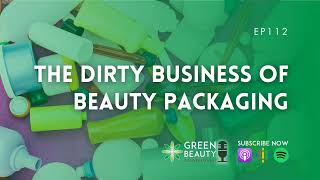
A short opinion piece by Lorraine Dallmeyer (Formula Botanica CEO) reflecting on a recent interview about beauty packaging. She argues consumers are confused by material labels (e.g., PET, HDPE), criticizes industry claims that recyclable plastic equals circularity given limited recycling infrastructure and low recycling rates, cites statistics from A Plastic Planet, and issues a call-to-action for brands to show customers how to dispose of packaging and for listeners to demand that information.
Chapters
I've just finished recording an episode with Mia Davis, VP of Sustainability and Impact at Credo Beauty, in which we discuss the sustainability of samples. And by the time this recording goes live, you'll already have listened to my discussion with Mia in your favorite podcast app because it was released last week. Now I loved talking to Mia. It is really refreshing to speak to someone who gets how unsustainable this industry is and who is actively trying to make realistic change. And I want to briefly unpick a topic that Mia touched on which I think is highly relevant to the sustainable beauty conversation. It's the fact that no one really understands what our packaging materials actually are and what they're made of, which makes it harder to know what to do with them when you're finished. And I thought this was a brilliant point to make and one that I think makes it much harder for the beauty industry to become circular. So for that reason I wanted to jump on quickly, record this super short opinion piece and challenge you to join me in talking about the complexities of packaging. Hi, it's Lorraine Dallmeyer, Chartered environmentalist, biologist and CEO of award winning online organic cosmetic formulation school Formula Botanica. I host the Green Beauty Conversations podcast and these are my green beauty opinions in which I share my main takeaways from the podcast interview that we released last week. In this short episode I put forward my main thoughts on the topic we last discussed, as well as setting you a challenge to make the green beauty sector a better place. If you want to be the first to hear all of my latest episodes, make sure you subscribe to this podcast now. We've all seen acronyms such as PET and hdpe and there are various other ones we see on plastic for beauty containers, and some of these plastic materials come with recycling symbols and some apparently don't. And I guess the question is, how is the beauty industry supposed to improve on its waste streams when most consumers have absolutely no idea what to do with these different types of packaging materials? As Mia pointed out, some plastics are better than others. But how are beauty shoppers supposed to know this? It's so confusing and the mainstream industry is not making life any easier for us with the claims that they're making. I can't even count the number of press releases and articles hitting my inbox at the moment which tell me about the profound breakthroughs that some of the mainstream beauty brands are having in developing recyclable packaging from recycled materials. And I want to say this is a good thing, regardless of what materials they're using it's good that the beauty industry wants to do better. It's good that they're starting to find alternatives to the materials they've used for decades. Is good that they care. Where I start to call bs, however, is when they claim that their non refillable plastic packaging contributes to the circular economy purely because it can be recycled. In an article I read the other day, one packaging company even boldly stated that they had closed the loop on circularity precisely because they had created a tube for the beauty brand l' Occitane which can be recycled. They called their recycled and recyclable plastic tube the holy grail in responsible packaging. Now, an economy can't be circular if some parts of it aren't set up yet. The fact is that plastic recycling facilities around the world aren't up to handling the volume of plastic that comes their way. And that's assuming that customers even recycled the packaging in the first place. Let's remind ourselves of some plastic recycling statistics, courtesy of the pressure group A plastic planet. In 2018, the UK recycled 9% of its plastics. In the USA it was less than 5%. Over half of plastic waste from relatively rich countries is actually exported and dumped on countries that don't have the infrastructure to handle it. So we cannot possibly claim that to be closing the loop with some of these new types of recyclable plastic packaging coming onto the market. However innovative they are, and however hard the companies have worked to develop them, the infrastructure simply doesn't exist yet to close that loop when the recycling facilities we have can't handle the volume of plastic going into them. So how do we change this? Well, I think Mia hit the nail on the head when she said we need to have more conversations around beauty waste. And even this morning I received a press release from beauty brand Dr. Pawpaw telling me that they'd made a TikTok video on how to recycle their packaging and it had then racked up an impressive 750,000 views. Beauty shoppers are clearly crying out for this information as well. So I think it's time that all beauty brands, big or small, start to show their customers what to do with their packaging when they're finished. It may not be the most luxurious topic to talk about, and I understand that the big brands in particular want to probably spend more time telling us that we're not young enough so we need to buy their products. But I think the conversation is moving on from that and I think we must work together as an industry to do better. So My challenge to you for this week is the following let's get more people talking about the exciting topic of beauty waste, and let's talk about it more together. I know that a lot of beauty brands listen to this podcast and if you're a beauty brand founder, I encourage you to make your next online video and explain a video on what to do with your packaging once your customer is finished with it. If you're a beauty shopper like me, then go and ask your favorite brands to show you what to do once you're finished with your cleanser or moisturizer or serum or shampoo. Suggest that they make that video for you and their other customers. Not only will having a conversation around beauty waste normalize this topic on social media, but it might also inspire others to take part. Thank you for listening to my Green Beauty opinions. Remember to visit the Formula botanica website@formulabotanica.com to try our free online formulation course. And if you haven't subscribed yet to the Green Beauty Conversations podcast, please make sure you do so in your favorite podcast app. Leave me a five star review if you enjoy the conversations. I host and I'll be back soon with my next episode. Sam.