EP139. Sustainable haircare - why less is best
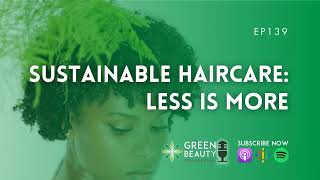
A Formula Botanica podcast episode (EP139, published Dec 15, 2022) in which host Lorraine Dallmayer interviews Suzanne Soter Davis (founder of True by Nature/O Bloom and Formula Botanica course lead) about minimalist, sustainable haircare. Key themes: using fewer, multifunctional plant-based products to reduce waste and water use; washing hair less often and supporting the scalp microbiome ('release the grease'); oils and plant-derived silicones that protect/penetrate hair; and a product spotlight on Suzanne's two-tone bi-phase shampoo bar designed to cleanse + condition in one sustainable format.
Questions this video answers
December 15, 2022.
The episode cites 'the average British household uses 216 bottles of hair care per year.'
About 200 pre-launch commitments were reported.
TrueByNature.ca (spelled T-R-U-U "True by Nature" CA).
Chapters
I talk a lot about skinimalism on this podcast, a concept which embraces the idea of using fewer, simpler beauty products on your skin. But one topic no one is really talking about is doing the same for your hair. What would you even call that? Hairimalism. And when you browse around the Internet, you start to see all the blogs that recommend a five step or a seven step hair care routine in which you shampoo and condition and exfoliate your scalp and hair and dry, detangle, deep condition, mask and cleanse. It's a lot. And if you tie that together with a 10 step skincare routine, you might literally spend all day in the bathroom. Once you bring the sustainability factor into the conversation, you can see why it's so important that we do start to talk about minimalist hair care. According to one recent study, the average British household uses 216 bottles of hair care per year. And as we all know, hair care is generally sold in plastic packaging because no one wants to break a glass shampoo bottle in the shower. Now, hair is an emotive subject when it comes to beauty. People are happy to accept skincare advice, but are often far more skeptical about hair care advice. That might be you too. And that's why I want to tackle the topic of a minimalist hair care routine on the podcast today. Less is best, as my guest is going to tell you. And you may not agree, but I encourage you to keep an open mind. So stay tuned for a fascinating episode in which we uncover what your hair, regardless of its texture or type, rare, really needs. Welcome to Green Beauty Conversations, the podcast that challenges you to think about how you buy, use, make or sell your green beauty formulations. In my weekly episodes, I explore the sustainability of the beauty industry and encourage you to join me in changing the industry for the better. I'm your host, Lorraine Dallmayer. I'm a chartered environmentalist, biologist and the CEO of award winning online organic cosmetic formulation school Formula Botanica. We have thousands and thousands of students in over 180 countries around the world who study with us to become organic beauty formulators and entrepreneurs. Visit our website@formulabotanica.com to try our free online formulation course. And if you want to be the first person to know what's happening in green beauty, make sure you subscribe to this podcast in your favorite podcast app. So in today's episode, I'm joined by Suzanne Soter Davis, the founder of True by Nature O Bloom, a hair care brand in Canada that focuses on eco friendly hair care products using nature Sourced ingredients. Suzanne's journey into hair care formulation was born out of her own frustration to find effective yet natural hair care products that didn't compromise nature. She couldn't find a single streamlined product that was working quite right for her and her family's hair. So she set out to learn all she could about what the scalp and hair are all about and how various hair products affect its health and growth. Now Suzanne is also a student mentor and course lead for the Diploma in Organic Hair Care Formulation at Formula Botanica, which makes me doubly thrilled to welcome her today to the podcast.
Hi Suzanne, welcome to the podcast. How are you doing today?
I'm great, Laureen. Thank you so much for this opportunity.
Oh no, I'm thrilled because I really want to get stuck into this topic. We haven't covered enough about hair care on the podcast.
It's great that you're here.
Now your message is that you want people to use fewer products on their hair. Why is that?
Yes, I definitely would love it if people use less products. There's just so much waste out there and too many resources are being used in terms of water usage and heating the water. And then you have to rinse out all these products. There's too much buildup on the hair which then we need to cleanse off and wash down the drain. Plus all that packaging, which unfortunately is mostly plastic. All this product usage is interfering with our how our scalp naturally functions. And it's expensive. So it's a lot more sustainable in many ways for us to rethink our hair care by simplifying it.
That makes perfect sense. And yeah, there's a lot to unpick.
Here by the sounds of things.
So in prepping for this podcast, I read that apparently, according to some people, every basic hair care routine should encompass the steps of cleansing, conditioning, moisturizing, detangling, styling, and treatment. Now, I can tell you I don't.
Take all those steps every day.
I don't have time for that in my life. But does your hair realistically need this many steps?
Well, there's no such thing as one size fits all when it comes to hair care. As you know, what works for me may not work for you, and what works for somebody with straight hair may not work for somebody that has massive amounts of curly or coily hair. So although we all want and need to have this gorgeous looking hair, we don't necessarily need to go through all of these steps. So the amount of product that we're routinely using can be narrowed down by looking for multipurpose products. And they do exist, I know because I've done them. There are lots of plant based leave in conditioners that can also detangle and protect the hair, enhancing its shine. So it all begins with learning the steps of what your hair needs and how it responds best and matching them with your lifestyle as well.
Which makes perfect sense. I mean, the idea of that being the basic routine just got me thinking, you know, if the basic routine involves us cleansing, conditioning, moisturizing, detangling, styling and treating, what does a complicated one look like? Because I know you hang out in some of the curly hair groups on around the Internet, so what are some people doing out there?
I do think we all need a routine. It's just a matter of simplifying it. As I mentioned, by using multifunctional products that can achieve this. So you can buy a product that moisturizes and conditions or provides protein for your hair and another one that detangles. While these two products can essentially have the same basic ingredients, I say why not combine them? The problem is that the mainstream cosmetic companies want you to think that all of these are different products when a lot of them have actually the same ingredients. I mean, let's face it, there are thousands of companies out there, they're all fighting for your spend. Unfortunately, many of these formulations are all the same, just marketed differently.
That makes sense. I mean, when you go into the supermarkets and you look at all the hand soaps, for instance, the liquid hand soaps, they all look different, they all have pretty packaging that's all different. Then you turn them over and they are literally identical. So I'm guessing it must be the same then for a lot of hair care products out there.
Yes, it is. It is the same. I think what matters is the hair is really, it's complicated. What works for you this year may not work for you next year. So there's things like lifestyle, stress and hormones. These all impact how your body reacts to making hair. And the issue is that we're not just dealing with hair, but we're also dealing with the scalp. So there are two factors to consider. Sometimes you can wash your hair and damage your scalp, or vice versa. It's all a science, but it doesn't have to be complicated. Very true.
Well, we'll come on to the scalp in a bit because I think that's a fascinating topic in itself. So your motto is less is best. So you've alluded to this a little bit already, but what would you like to see people using on their hair?
I would Love to start by seeing people washing their hair less often. Washing daily is really not necessary and the mentality that our product must foam in order to properly cleanse is something that really needs to change. This mentality has taught us that we need to wash, rinse and repeat because we're essentially stripping all the goodness that our scalp provides. So don't take my word for it. It has been extensively researched that the scalp needs to be cleansed less often for it to function at its best. So the scalp's oils are just better than any other hair growth scalp you could even buy or make. If I could bottle that stuff and sell it, I'd be rich.
There's a concept now, it's true about the foaming component because of course we teach our diploma in organic hair care formulation and when we were putting it together, we realized some of the naturally derived surfactants we were working with, they don't foam that much. But people expect that. They almost think it's not going to clean properly if that foaming component isn't there.
How would you change people's mindsets on something like that?
It's just educating them on trying to source more natural products because as you mentioned, it doesn't need to foam in order for it to properly work. So they just need to understand that we don't need these harsh detergents. And in following the curly and coily different clubs and conversations, we have learned that some of the ingredients are actually used for conditioner. So you can wash your hair with a conditioner and that's something that's very much followed in this group.
Yes, I've heard about that. It's not something I can do on my hair because I turn into a giant grease ball, but I know that it really works for some hair type, which is fantastic. Are fascinating. So on your website you say when it comes to healthy hair, simple means better. So you're already talking about less, but you're also talking about simple. So what does simple mean in relation to hair care?
Simple means going back to plant based hair care products rather than synthetics. It means you're using nature's best plant extracts and proteins. They're beautiful ingredients that you can add to your hair care product. I mean, I've seen numerous chemists suggest why would you use shea butter in your shampoo if it's going to be washed away anyway? This makes the formulation much more expensive. Well, I think the opposite. I think ingredients like coconut oil and argan or avocado oil can actually penetrate the hair strand. And nourish it, protect it so this doesn't wash off. When you wash your hair, your hair is then healthier, not just clean and stripped off as natural protectants. If we're using less products and washing less often, then it just makes sense that we would then have healthier hair. But just using plant based ingredients, this can be way more sustainable to us. You would then need less products.
It's interesting because I think that's something that's often overlooked by the mainstream hair care industry. I mean, you talked a bit about oils penetrating the hair strand.
Can you tell us a little bit.
About the types of oils that can do that? Because I think that's a fascinating topic in itself.
Oh, yes, definitely. But we have, we're blessed to have so many plants and each plant has its own component components and some benefits to hair care. So when we're creating hair care formulations, we're looking for some plant oils that can either remain in the hair like they protect your hair, and then some that are sealing oils so some of them can coat the hair and make it shiny and just protect it against the elements. So there are a lot of different ingredients. And I've been a big fan of using silicone based, plant based silicones in hair care for this very reason.
Yeah, I mean, there's a whole fascinating array of natural ingredients coming onto the market now for hair care formulators. We're just not seeing that many brands come out. So I think it's fantastic that you're obviously heading in this direction. So we've talked about fewer, we've talked about simpler products. But do all hair types respond well to that type of formulation? I mean, you have very curly hair, I have straight hair. I'm sure there are listeners with wavy and coily hair and everything in between as well. Do fewer simpler products really work that well for all of those hair types?
I don't think it's necessarily about hair type, but about developing a simpler routine and yes, using the right products. I've seen, for example, a lot of people adding table salt to their shampoo because it dries up their hair and their scalp nicely in the roots so they feel they don't have to wash it more often. This is a big problem. So rather than adding table salt to your shampoo, why are you not seeking out a more natural option? Maybe this is why we're seeing an influx of hair loss at the root. And so many of us have split ends or hair shedding. So it's the product itself that really needs to be Redesigned. We need to working on protecting the scalp microbiome, which is such a big key in having healthier hair. We focus so much on the hair itself, but not enough on the scalp. And this is the foundation for healthy hair. Yeah.
Well, let's talk about the scalp for a minute. Can you tell us a bit about the scalp microbiome and, and how it relates to the overall health of the hair?
Not to get too technical here, but basically the microbiome, as you know, is an ecosystem of healthy bacteria and fungi and even viruses that protect the skin and the health to help it heal. On the scalp. The microbiome is like a miniature Amazon rainforest of goodness that sits on your scalp like a little protective layer and it's drastically damaged by any harsh products we apply to it. So soaps and harsh shampoos, then gels, then styling agents and even high heat from blow dryers and curling irons. This is a reason why less is best and why I advocate on washing your hair less often, actually even leaving it greasy for a few days. It's amazing for the scalp. I know I'm going to have a lot of people say, oh no, a greasy scalp, but I started a trend called release the grease where I'm working to educate people.
Don't educate people on the fact that.
Their scalp, the scalp sebum like the oil is not a gross thing. It doesn't need to be feared and that leaving your scalp oily for a day or two can actually help you produce healthier hair. Why? Because healthier hair starts with a healthy scalp. So especially for children that are under three years old, we need to teach them from the time they're born that they really don't need to have baths and showers daily and that their hair certainly does not need shampoo at all.
Release the grease. I love it. Suzanne. I'm not sure if I'm fully ready to commit to that yet, but it's something I think we should all start to consider anyway. So finally, I just want to geek out on formulation with you because you have launched your brand oh Bloom and you've created a two tone bi phase shampoo bar. So it's cleansing and conditioning in one. It's two different colors. It's really awesome. I recommend all the listeners go and check it out. You wash with one side, you rinse and condition with the other. I've never seen anything like this before. So how hard was it to create and how have your first testers and customers responded?
Yes, thank you for that. I love the fact that you're saying geek out because we're so into this conversation and this is one of my babies. This product, this Bi face shampoo bar is something I worked very hard to adjust and to get right because you have to get the temperature right on the shampoo side so that when you pour or mold the conditioner side, they don't all mold together into one. So it was a challenge, but it's really, really nice. My goal was to create a two in one product that gave people no excuses for not being satisfied after using a simple shampoo bar. Plus, I figured if the average person is using 24 plastic bottles of hair care products in a year that will end up in landfill anyway, then why not choose a sustainable shampoo bar instead? So it's a labor of love.
Well, it's a very beautiful labor of love. And how have your first testers and customers responded to it so far?
Oh, they absolutely love it. When I did a pre launch, I already had 200 people committed to buying it, so the response has been overwhelming. I'm very excited about it. It's great. I love the fact that people are reacting so positively to having natural products or products that have naturally sourced ingredients. It's groundbreaking. And I'm hoping that people will also take my advice to go less and just take your time with washing your hair and looking after your hair. It's really not that complicated and less is truly best.
Well, I love your vision, I love your mission and I'm sure our listeners will be now thinking about how they can use less and release the grease at the same time. So if people want to find out more about you and about your new brand and want to come and buy your amazing two tone shampoo and conditioner bar, where can they find you?
Thank you, Lorraine. Yes, so we have a website and Instagram, a TikTok, a YouTube page, and our website is TrueByNature CA that's spelled T R U U. It's a bit of a family history thing. So it's true by nature. CA make sure and follow us because we're not only selling products, but we're also educating people on what the scalp and the hair need. So that's great.
Amazing. We'll include all of those links in the show notes. So please do go and check out Suzanne's amazing new brand. Susanne, it's been so lovely hanging out with you. Thank you so much for joining me.
Thank you so much, Lorraine. And remember to release the grease. I will.
Thank you.
I would love to hear your thoughts on this episode. Are you ready to release the grease? Are you happy to start using fewer products on your hair? Would you consider changing your hair care routine? Please do come and leave us a comment on our social channels as both the Formula Botanica team and I love hearing from you. And if you want to hear more about some of the topics that we've covered today, please do delve back into the podcast archives. Go and listen to episode 94, in which I asked how we can make solid formulations feel luxury. Or head even further back into the archives and listen to episode 29 in which we speak to Aqua Wood of Shea Butter Cottage about ethical natural hair care. Or episode 61, in which Anna Green and I unpick the topic of skinimalism. There's a wealth of information in our old episodes and I do encourage you to go back and listen to them. Thank you for joining Suzanne and I for this latest episode of Green Beauty Conversations. I really hope you enjoyed it. If you did, please do leave us a five star review so that other people can enjoy these comments conversations too. Make sure you subscribe to the podcast on Apple Podcasts or Spotify or whatever your favorite podcast app is and stay tuned for the next episode. Follow Formula Botanica at Formula Botanica on Facebook, Instagram, YouTube, TikTok, Twitter or LinkedIn and come and give me a follow at Lorraine down there on Instagram. Visit our website@formulabotanica.com and sign up for our free online formulation course today.
Sam.
More from AI








EP249. Why retailers are asking for proof—and what it means for your beauty products


EP247. How to build a heritage beauty brand - Evelyn Akande from Kanda Natural
