EP179. From formulator to founder: Leslie Reichgelt of Bella Botanicals
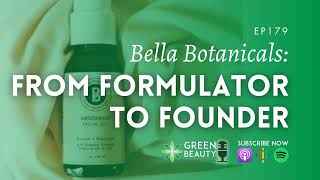
Leslie Reichgelt went from X-ray technician to founding Bella Botanicals, a skincare brand she launched online in 2019 and expanded to a retail storefront and spa in Wisconsin by 2022. She keeps 70-80% of sales local, stocks about 17 U.S. stores, and learned hard lessons from her first contract manufacturing run of 1,000 units per product that didn't sell through.
Questions this video answers
November 2019
September 2022
About 20 wholesale accounts
Around 17 stores in the U.S.
Approximately 70–80% local sales
Chapters
Aren't there too many beauty brands in the world? Gosh, how many times have I heard that question? I don't think I could even put a number to it. But you know what? It's a common worry that many beauty entrepreneurs have. And if you've listened to me on the podcast before, then you'll know that in my opinion, it's not the new beauty brands we should be limiting. No, instead, it's the old ones with their unsustainable ways and their toxic marketing messaging that we should be firmly booting out. So I love it so much when I get to tell our graduate stories. These are such inspiring entrepreneurs who often have no background in beauty or skincare or hair care before they come to us. And they just decide one day that they're going to take that first step and change their life. Then they enroll with us at Formula Botanica. We teach them how to formulate organically, we show them how to turn their formulations into a brand, and then they go forth into the world and smash their way into the marketplace. But most people don't believe it's possible. They really don't think that they too have the ability to do this. And today's podcast is to show you, to tell you that you do. And I'm going to prove it to you by telling the story of Leslie Reitgeld, founder of Bella Botanicals and Formula Botanica graduate. Lesley is an inspiration to me and to my team, and I promise you after this interview, you'll be fangirling over Lesley too. So settle in, hang up that do not disturb sign, and let's get started. Welcome to Green Beauty Conversations, the podcast that challenges you to think about how you buy, use, make or sell your green beauty formulations. In my weekly episodes, I explore the sustainability of the beauty industry and encourage you to join me in changing the beauty industry for the better. I'm your host, Lorraine Dartnayer. I'm a chartered environmentalist, biologist, and the CEO of award winning online organic cosmetic formulation school, Formula Botanica. We have thousands and thousands of students in over 180 countries around the world who study with us to become organic beauty formulators and entrepreneurs, visit our website@formulabotanica.com to try our free online formulation course. And if you want to be the first person to know what's happening in green beauty, and I know you do, make sure you subscribe to this podcast in your favorite podcast app. So in today's episode, I'm joined by Leslie Reitgelt, the founder of Bella Botanicals, a natural and organic skincare brand based out of the U.S. leslie is a Formula Botanica graduate. We're so proud of her. And has been formulating her own skincare formulation since 2018. She officially launched her online store in November of 2019 after leaving her full time position in the medical field. Since then she hasn't looked back every single year. She's continued to grow and expand her business and her knowledge in the cosmetics industry. In September of 2022, she opened her first brick and mortar store in Onalaska, Wisconsin. So exciting. And is currently working on expanding her wholesale plan. She currently stocks the shelves and around 17 stores in the U.S.
Hi Lesley, how are you doing today?
I'm doing great. How are you doing today?
Lorraine, I am so pleased that you're here. I am so looking forward to this interview. I've been looking forward to this for ages. So let's dive straight in. Can you please introduce you your brand and tell us a bit about what you sell?
Yeah. So my name is Leslie and I own a small indie beauty brand called Bella Botanicals. I currently have an array of natural and organic skincare products. I would say my most popular would be my natural beauty trio. So that is a sweet orange facial CLEANSER that is pH balanced and we use a coconut based surfactant. So it's very gentle, mild, but delivers a lovely cleanse to the skin without being overly stripping. And then we have a hydrosol toner with lavender and witch hazel, a little cucumber extract scented with lavender and vanilla. And then we have a moisturizer with organic argan and jojoba oil, ecosert approved hyaluronic acid hemp extract. And then we use a little lavender and Tonka bean butter to give it a very nice, lovely natural aroma. Aside from that, I do formulate products that contain hemp extract. I really do believe in its authenticity as a very effective ingredient in your skincare routine. And we really, really enjoy formulating and working with it here at Bella Botanicals.
I love it. They all sound heavenly and well, we're going to dive more into what other people think of your formulations as well, because you've been going for a little while now. Let's go back to the beginning.
Okay.
Why did you decide to start Bella Botanicals? What was the big mission behind it?
Well, it's always funny when people ask me this because, you know, you always think people are going to tell you I had this like need to start a business and I didn't whatsoever. I had a need at that point in my life, which was about four or five years ago, to really do some self discovery and to really hone in on what I had to offer the world. I think that sometimes we get pivoted into a certain career. And as a woman, I had two children and they were my focus for a long time. And then I got to a place where I was like, I don't feel fulfilled in my career and I, I want more for myself. So that allowed me to do a deep dive and I started doing a lot of work on myself. I started trying new things. And one of the things I tried was a soap class. So one of our local businesses here that houses a lot of like natural skincare products was hosting a class on making cold processed soap. So I went to that and was completely inspired and fell in love. I started making all kinds of soap. I made liquid soap, I made bar soap, I made foaming soap. I like all, I made all the soap from there. You know, when you get started down a path, you kind of listen to the universe, right? And you follow that, that intuition that you have driving you in a certain direction. And that led to more products. So I started making oil blends and I made body butters. And really the next step for me was signing up to learn with Formula Botanica. And that really was the foundation for me that allowed me to, to grow my skill set as a formulator. And instead of, you know, going on Google and seeing what types of formulations were out there, I was able to take it to the next level and learn that Google doesn't always know what they're talking about. And that really, if you want to formulate safe and effective skin care, that has a shelf life because that's very important to the consumer. I needed that proper education. And really having that foundation was what allowed me to formulate the products that I, that I have today, that and that I found success with in my skincare line.
That's so amazing. And we're so thrilled that you enrolled with us because I love that we've got to know you and got to know all about your brand. And I'm so enjoying watching your story. So let's share a little bit about your story. Let's, let's paint a picture for our listeners. Where were you when you first started? Like, what was your business like when you first started? And then let's talk about where it is today so we can have a look at what happened in the intubating period.
So when I first started, I was working full Time as an X ray technician. That is what I had gone to school for. And when I first started making products, I would just give them away to people. And then I had a group of friends that was like, well, we like what you're doing and we pay for the products. And so I remember one of my. One of my first sales was to one of my neighbors who has a daughter that has a autoimmune disorder. And one of the byproducts of that was that she had just like chronic dry skin. And so I had made this body butter using hemp seed oil, cocoa butter, mango butter, you know, lovely, lovely natural ingredients. And that was my first purchase. She bought it and it worked wonderful for her daughter. And. And then from there, I had another group of friends that were like, oh, yeah, let's see what you got. So I met them and I showed them everything I had, and they're like, yeah, we'll just buy everything. So really does start small. It really does start with leaning into those people that want to authentically support you.
And.
And it's a trickle effect. You know, it's. It's. Nothing happens overnight. So it was those few sales. And then from there, I started doing craft shows just in my local community. And I started kind of building. Building a network of more people kind of in my space, the small business community here in our. In our town and in our area. And from there, you really start to meet more people that are interested in, you have to do and what you have to say and the knowledge that you kind of bring to the table. And from there, one of the big changes for me, aside from signing up for Formula Botanica, was my husband and I were able to do a build out in our basement. So I was able to put in a cosmetic kitchen right here in my home. So that was three or four years ago now. And so that really was instrumental for me because up until that point, I was making products out of my kitchen. So, I mean, any mom out there can imagine what that looks like when you have kids that constantly want snacks and to eat. And I'm like, I spent two hours disinfecting. Do not even come into this kitchen. I go to the neighbors and ask them for snacks. That's where we're at here. My. My headquarters was my dining room. And so having this space to come down to, to separate. I had a door I closed. Everybody knows you don't come down into mom's workspace. It stays clean. And it is where I am able to focus and really make my Products. So. And that's too. I was able to purchase larger equipment, so I was able to make larger batch sizes. And then from there, you know, the business just kept growing. You know, as a person that starts out loving the ingredients and loving the skill set as a formulator and loving the ability to share your products with people, there's this whole other side of being a business owner, and it's really a lot of legwork to gain the knowledge that's needed to learn how to market and advertise, to learn how to run your books. It's really important that you financially set yourself up for success. And it absolutely is not going to happen overnight. You are going to have to set yourself up to weather the storm of a small business owner. And that is not one that steps into a pile of money every day. You know, sometimes straws and trying to figure out, like, okay, how do I pay this bill that just came in? You know? But it takes having a plan and leaning into other people sometimes that are more knowledgeable than you are about certain things. That's one thing as a business owner that I've really learned. You know, you can try to do it all yourself, but, you know, most of the time, you're not going to be successful at that.
No, I get it. So you've told us a little bit about the beginning and about the incredible setup that you created quite soon, actually, which sounds really exciting. I'm going to ask you a few more questions about that in a bit, actually. Tell us where you are today. Where is Bella Botanicals today?
Yeah. So today we have a storefront in Onalaska, Wisconsin. So we house a retail location for Bella Botanicals. And then we also have an esthetician and a massage therapist. So we have a retail and day spa there. Right now we have about 20 wholesale accounts. We are growing every year. About every year that I've been in business, I've been able to double my sales. So the growth has been really, really cool to see. But now I'm kind of at that level of how do I set myself up to withstand the growth? Because I can only make so many products myself. And so the next level for me is working with a contract manufacturer. So we tried that. I did one run of two different products. We did a thousand of each product, and it didn't work out great, to be completely honest with you. It was a really big learning experience for me. It really opened my eyes to know that just because you're signing, signing up to work with a big contract manufacturer, it doesn't necessarily mean they're going to be able to make and recreate products like you can. You know, there really is something special about the handcrafted products. When they're done safely and correctly, they can really be incredible quality. And so, so now I'm at this point of growth where I would like to open up my products to more shelves, but I don't necessarily have the foundation in place quite yet to be able to do that and continue supply products to my growing direct to consumer list of customers.
That's so exciting that, I mean, first.
Of all, huge congratulations.
You've doubled every year since you started. I think that is in itself is worth a party because that is incredible that you've achieved that. And where you are now, from having your cosmetic kitchen at home, as you call it, to now having a storefront, you have staff there, you have an, you have a esthetician, right? You're selling thousands of units, you're in 17. Incredible. I mean, what an incredible achievement. Congratulations. Let's go back to the beginning again a little bit, to your lab. What was it like? Because I know a lot of the people listening will be thinking, gosh, she set up this lab at home, she must have had tons of space. What was it actually like setting up a lab for yourself in those first stages?
When we built our home, we originally had planned in our basement to do a little family room and bedroom and then we have a bathroom down here. So really, like this is probably 5, 600 square feet. You know, it's not a large space, which, you know, depending on what you're doing and where you're at, I think when you're starting off especially, you have to kind of wear the shoes you can fit in at the moment. And this was it for me. I was able to those for that, like, first year I didn't pay myself. So I took all of the money, all of my profits and built this out. But honestly, I mean, as long as you have a separate space with a kitchen. And I do think it's very important that you have a space where you don't have traffic. You can't have people coming in and out when you're trying to manufacture products. I mean, it's something that's, that's doable for people. And honestly, some of the biggest brands you see out there started small just like this. You know, when you think of organic growth and that, that's where we're at, you know, like organic, sustainable, you know, there's so many ways to look at that and you can look at that from the business perspective, not just from like the products that you're creating, but it, it can be in all facets of your life. And I think starting out with within your means is a really great place to start. And then you can organically, you know, scale as you have customers to, to grow with you.
So what does it feel like now.
When you walk into your store and you think, my goodness, I've come from these humble beginnings and now this place is mine and I have people working there for me and all my products are here. And I feel so proud. I mean, what's it like?
Tell me.
It's awesome. I don't, I'll be completely honest, I don't always do a great job at giving myself a pat on the back. You get into this growth cycle and mentality where you are always constantly like, like, what do I need to be doing? What's next? How do I, how do I grow? How do I make this better for my customer instead of like just standing in and being like, wow, I did this, I did this myself, you know, so I definitely do need to do a better job at that. But it is really nice. And I get goosebumps every single time somebody walks in. And really like, my customers are great at building me up. I will give them kudos all day long because they'll walk into the store and be like, lastly, look at this. And I'm like, oh, yeah, thanks.
So cool. Well, let's talk about your customers for a minute because you have a business model that I absolutely love. You predominantly sell locally. So tell me more about how this happened, why you decided to embrace this business model. Because I know lots of our listeners who want to start beauty brands immediately start to think about selling in multiple countries and they make it too hard for themselves or they start shipping real big distances. But you stayed local. So tell me how that all started.
So it for me was building a community locally here. I think there's so much beauty in tapping into your local community because you'll find that there are so many people that want to support you and there's so many people that want to see small businesses succeed. I mean, how great is it that somebody can find a skin care regimen that's made within a 30 mile radius of where they live and know that they can rely on those people for these products, rely on me for these products they use every day. You know, like, that's really cool. So when I first started out, I really, I started going to local business events. I'VE always personally been a supporter of small business. So, like, when I would visit, like, a new boutique, I would introduce myself. I started early on a little collaboration. We have a little. A Facebook group called the Boss Babes Group, and we all really kind of leaned on each other because at the beginning, you know, there's so many questions that you have as a small business owner, and there's just, you need support. And so creating that group gave me that support, but then it also allowed me to tap into their customers and vice versa. There's so much to be said about finding ways to collaborate with others as a small business. And instead of thinking that you have competition within these other businesses, you really can look to see how you guys can collaborate and really help each other grow. And that really was instrumental for me. And then at the base of it all, it's creating products that people love and really see a difference in. You know, like, you can go out there and collaborate and put yourself out there all you want, but at the end of the day, if your products aren't being enjoyed by people or by the demographic in which you set out to create products for, it's not. It's not going to work.
No, I get it. So just for context, what percentage of your sales would you say goes to your local community?
Probably around 70 to 80.
That's amazing.
Yeah.
So I love that you put yourself out there. You went out, you got to know people, you talked to people, you hustled. I know a lot of people when they do that, in the beginning, they feel scared. Was it scary for you to put yourself out there? And if it was, how did you get over that fear?
Yeah, it's definitely scary. You kind of have to just learn to have thick skin and know that rejection is part of the process. And the mentality I've tried to have is you can't take rejection personally. And even if somebody has something negative to say about one of my products, like, I always take that as a learning experience. Any feedback is good feedback, whether it be positive or negative. And. And I think some of the areas and opportunities that you have in your life for. For growth come from not having that easy engagement with people. You know, where people. You. You have. Where people are asking you, like, the hard questions, and, you know, when people are really challenging you to represent yourself in a certain way, that maybe you're not ready for that level yet, and that's fine. But then you know what you have to do to grow to get there. I recently went to the CosmoProf convention in Las Vegas. So this was my first beauty convention that I have ever gone to. And it was the coolest thing to see beauty on an international scale, which is something you experience every day because you. You guys are an international school. But for me, it was like talking to people from all parts of the world, experiencing products that are made from all different parts of the world. It was really cool, but it really allowed me to see, okay, well, if I want to compete at this level, there are a lot of foundational steps that I still need to put in place in order to get there. And that was so good for me to see.
That's amazing. So how did you get to where you felt that you were ready to launch Bella Botanicals? Because I also know a lot of people sort of get stuck in that sort of swamp of perfectionism where they can't get over themselves. They're like, I'm not ready.
I'm not ready.
I don't know when I'm ready. I won't launch. How did you get to the stage that you went, let's do this?
For me, it actually was like, I would say divine intervention. I always like to call it the universe. You know, I feel like the universe does have a plan for you. So I have been working as an X ray tech at a small clinic in a small town right outside La Crosse, Wisconsin. And they had decided to shut their doors. So I was faced with, do I move to, like, the big hospital in lacrosse or do I step away and full throttle this business for a little while? And this was actually. And I had already been like, putting the steps in place to launch my online store, but I just wasn't exactly sure what that plan was. But then when I found out the clinic was closing and we were closing in November, right before Black Friday, and I was like, okay, universe, I feel like you're trying to tell me something here. So I ended up stepping away from that career and launched my online sales, Black Friday. And it was probably the best thing I could have done. When I launched, I actually, I tried to be a little more strategic about it. I didn't launch with all of my products, but here I launched the website and I have people reaching me out, like, reaching out to me, like, where's the moisture boost? Facial serum? Why isn't that on the website? And I'm like, I didn't think I was ready to launch with that yet. They're like, no, just like message after message, like, where's the moisture boost? Where's the moisture boost? And I was like, okay, well, I guess I need to put that on there too, you know? So I already had, like, I already had customers that were semi familiar with my products and had been using them. And it really is so important that you have people that are willing to be open and honest with you about the efficacy and functionality of the products that you make, because they will tell you, you know, how you're doing. And I did. I listened to them, and I listened to what they said, and. And those customers and consumers really helped drive the offerings that you see on. On our website today. But it was super scary. I still, like, I'll never forget that day and seeing those sales come in and just being like, oh, my God. Oh, you know, it just. It was just the coolest thing. But it was also kind of what I needed to just kind of give myself that, like, push, you know, like, you can do this.
Well, let's talk about that. How has Bella Botanicals changed your life since you launched it?
It's changed my life in so many ways. I think as a woman, there are things in life we feel obligated to do. Right. We feel obligated to get married. We feel obligated to have kids. And that's not. I'm not saying that that's a bad thing, but I'm saying sometimes we allow that to drive where we derive our happiness from in life. But I think as a person, I've grown to understand that for myself, I'm a very multifaceted individual. There are so many things about me that are more than just being a wife and being a mother to my kids. And when I was able to. Oh, my God, I feel like I'm gonna start crying.
Sorry.
I think we saw that when I was able to step into my own strength and my own power and my own wisdom and understand that I was capable. You know, I think we put so many barriers on ourselves, and we look at the world and we say, wow, they're doing that thing. I could never do that thing. But you can. You can. You can do the thing. You know, you just kind of have to believe that you can do it. And so for me, it's just been so fulfilling. And not only has it fulfilled me, but it's given me a platform to inspire others. I think that. And I know for myself, growing up, beauty was hard. I had a really hard time learning to love who I was on the inside and. And then on the outside, right. Because they're so intertwined and having a platform where I can share that with other people and just allow women to know that beauty is, is so much more than what we're seeing on the outside and that if we really are going to love ourselves, we have to do, we have to do the work inside. And I think there's this culture in the beauty industry and I see it, I saw it at the convention I went to where everybody just feels like they need 50,000 things and they need to be all done up and they need to take three hours to get themselves ready. And at the end of the day, you're spending all that time focusing on your outward appearance. It takes away, and I think it chips away a little bit at your self worth when you spend that much devotion on something so externally. And I know that's kind of contraindicated to the industry that I, that I'm in because I'm selling you a product that goes on your skin and is improving the health and wellness of your skin and therefore improving how you feel about yourself. And, and I love that. But I just struggle so much with, with the beauty industry. But I am so grateful that this career has allowed me to have a platform where I can talk a little bit more about that and inspire other women to feel better about themselves.
Yeah. And I know that many of our listeners will be feeling inspired. I know I am. And thank you for being so vulnerable and sharing that because.
Sorry, I think.
No, no, no, don't apologize. It's good for people to hear this, that you know the amount of self worth and that you can derive from stepping into your passion like this is life changing and it's hard to describe it until you've been through it. Yeah, you have definitely been through that transition and look at where you are now and it's amazing. So huge. Congratulations.
Thank you.
So what's next for Bella Botanicals?
Well, what's next is I am trying to secure a new contract manufacturer. Right now I am at a kind of a little bit of a stagnant level of growth just because I can't keep up with the demand. And if I really like want to grow the brand, that is really the next step. I went to that convention to meet with a bunch of contract manufacturers. So I have a whole lists now that I've been communicating with and so. But with that comes a big financial ask. You know, that's, it's in. In order to grow, you know, you do have to put more money up front. So it's kind of working that out strategically so that I am not putting myself in a position where I Am, you know, going to be in a struggle financially to be able to off whatever debt that I have to take on. So it's something I'm really sitting down and, like, doing the hard work with. It's really funny because we bought the building that Bella works out of now that the storefront is out of, and so that building cost us $320,000. And that was hard thing for me to kind of, like, financially, like, workaround in my head, because that's a big chunk. It's a commercial loan. It's a. It's another business. But I did it. And so, and I. And I have yet to take out any loans for Bella Botanicals, the skincare brand. But I'm trying to, like, work this out in my head because it's like, I see the value in this property, right. To take out that loan, and I still struggle to see that same value in my skincare brand, like, to take out, like, to go and say, hey, okay, I need a hundred thousand dollars to work to scale my brand. Like, to me, I'm like $100,000 for Bella. Yeah. I don't know. I'm trying to work that around in my head a little bit and have a better mentality of that. Like, I know the worth of my company, but it's just. It's just one of those things I'm. I'm currently struggling with. But that would definitely be the next step for me is growing the order quantity that I have on supply of each SKU so that I can really work to grow that. Recently, one of the things that I really had to come to terms with was some of my pricing. As you know, and as we all know, prices have gone up across the board. Raw ingredients have gone up. Shipping has gone up. What used to ship parcel is now shipping freight. So you went from a $50 bill to now you're paying 250 to ship certain raw ingredients. And at the end of the day, like, some of my products were just not profitable, so I had to kind of readjust some things, and I had to increase some of my price points, which was really hard for me to do. But at the end of the day, my customers have been so great. I'm still, you know, like, my toner is. Is the struggle. Is the struggle. Because hydrosols are really expensive. They are. They. I mean, it's just. Look at what it takes to make them. Like, they're great and there's a price to pay. Yes. For them. I had to. I had to get real with that But I mean, my customers just love that product, so it's definitely something to figure out how to continue. But that pricing strategy is really important as you're looking to grow, because at the end of the day, if you're not making money with what you're doing, it's not something you're going to be able to grow with.
I love this, and I love watching you go through these growth phases. And this is very normal. And to people listening that might be sat there going, oh, my God, $100,000. But once you've got past those first years, those are the sorts of figures you start to deal with. I mean, I had it in the beginning as well. If I. If you told me 10 years ago that it would be costing me millions to run Formula Botanica, I would never be, you know, I'd be hyperventilating on the floor. But you grow through those phases and suddenly you're like, oh, actually, that. That's really quite manageable. But it's part of the growing pains. And I think that's a wonderful, wonderful thing to hear.
So huge congratulations.
So, final question. For anyone listening who's dreaming of becoming a beauty entrepreneur and following in your footsteps, creating their own path, what advice would you have for them?
My advice would be to just start small. Don't think that you have to come out the gate with a whole bunch of different products and make huge batch sizes of things. Really start small. Listen to people that are using your products to see how they feel about them, and then maybe just do a little work to understand where you want your. Your, your business or your life to go. Because if you want to do this as, like a side gig, and if you want to just sell at, like, local craft shows, and if you just want to have a small footprint, that is awesome. There is something to be said about, about that. But if it is a business that you want to look to grow and scale, just know that it's not going to happen overnight and set yourself up for that. You know, understand financially what you are taking on. And it's doable. All these things are doable, but it's not doable without a plan. We start off and we're going with all this adrenaline and we're so excited, and that's so great and fueling at the beginning, but sometimes we let that drive us so much that we're not logically thinking about the basis of what we need to do to set ourselves up for success. So I would just say, don't forget to do your homework and Educate yourself as much as you can. You know, take all the Formula Botanical classes. You won't regret taking a single one because it all will give you knowledge that is going to help you grow in your business.
Amazing. So educate yourself, do your homework, get the basics right and start small. Great advice. Lesley. You are a phenomenal entrepreneur. I am so pleased that you've been on the podcast with me. I love your story. I love watching what you're doing. I wish you all the success in the world. Where can people find out more about you and your work and come and follow you online?
Yeah. So Our website is www.mybellabotanicals.com and then you can find us on Facebook and Instagram at My Bella Botanicals. And then we also have a YouTube channel, my Bella Botanicals as well. And we're recently trying to launch on Snapchat My Bella Botanicals as well.
Amazing. We'll include all of those links in the show notes. Thank you so much for joining me today. It's been such a pleasure.
Yeah, thank you so much for having me.
I would love to hear your thoughts on this episode. How do you feel about putting yourself out there locally like Leslie did? And have you followed Leslie and Bella Botanicals online yet?
I hope you have.
So come and connect with me. Leave us a comment on our social channels as both the Formula Botanica team and I love hearing from you. And if you want to go and hear more about some of the topics we covered and be inspired by other graduates, please do delve back into our podcast archives. Go and listen to episode 157 in which I interviewed Formula Botanica graduate Roshan Dorset, founder of the Glossary, who tells us how she built her award winning superfood beauty brand with just 2,000 British pounds in her back pocket. Amazing. Such an inspiration. Or go and listen to episode 127 in which I interviewed Nazbashir, founder of Solo Skin London, also a Formula Botanica graduate, who told me how she went from suffering with skin struggles to really putting herself out there, creating an amazing brand, selling out her product ranges and then bringing in an additional income for her family. Such an inspiring story. Naz is amazing. Or go and listen to episode 107107 in which I interviewed Formula Botanica graduate Stella Nisreen Kanan, founder of Naughty Alchemist in Denmark, who told me all about the way she built her beauty brand into her existing aesthetics practice in Copenhagen and now grows her own organic herbs for use in her formulations at an organic farm just outside of the City. Such an inspiration too. There's a wealth of information in our old episodes and I really do encourage you to go back and listen to them. Thank you for joining Lesley and I for this latest episode of Green Beauty Conversations. I really hope you enjoyed it, and if you did, please do leave us a five star review you so that other people can enjoy these conversations too. Make sure you subscribe to our podcasts on Apple Podcasts or Spotify or whatever your favorite podcast app is, and stay tuned for the next episode. Follow Formula Botanica at Formula Botanica on Facebook, Instagram, YouTube, TikTok, Twitter or LinkedIn or Pinterest. We're everywhere. And come and give me a follow at Lorraine Dalmayer on Instagram. Visit our website@formulabotanica.com and sign up for a free online formulation course today.
More from AI








EP249. Why retailers are asking for proof—and what it means for your beauty products


EP247. How to build a heritage beauty brand - Evelyn Akande from Kanda Natural
