EP185. Secrets of a self-made beauty entrepreneur
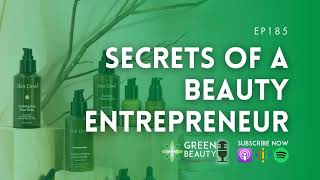
Podcast episode (Green Beauty Conversations, EP185) featuring Formula Botanica CEO Lorraine Dallmeyer interviewing graduate Dewi Kao, founder of Skin Dewi. The conversation traces Dewi’s journey from learning formulation to solving her daughter’s eczema, launching a natural/organic skincare brand, navigating Indonesian regulatory limits on home manufacturing, supply and contract-manufacturer challenges, importing raw materials, and ultimately building a GMP-compliant contract manufacturing facility focused on natural and organic formulations. The episode also includes practical entrepreneurial and mindset advice for aspiring formulators.
Chapters
One of our big mantras here at Formula Botanica is that formulation can change your life. And we say it all the time. And every time I say it, I realize it sounds like an enormous promise to make. But you know what? It's true. And I know this because every graduate I interview tells me how life changing formulation can be. And it's funny, really, because most people don't even realize that they can formulate for themselves, let alone start a business selling those formulations or turn formulation into a career. And although for many of our graduates, that career dream is to start their own skincare, hair care or beauty business, there are actually significant opportunities for formulators even beyond the milestone of launching a brand. And today you're going to hear the story of one of our graduates who has created a skincare empire. She is amazing. Now, most countries around the world allow you to manufacture your own skincare brand at home, but that isn't the case in Indonesia. So what would you do if you were formulating and the authority suddenly turned up and shut down your small research lab? Well, logically, you'd go to a contract manufacturer, which is what many of our graduates end up doing anyway once their businesses take off. After all, if your brand is in high demand, you can't necessarily keep creating thousands of units of skincare or hair care in your home lab. But what would you do if that manufacturer then started having trouble with delivery times? Would you just accept it? Would you try to find another manufacturer? Would you give up? Or maybe would you build your own factory? Well, today's interview is with Formula Botanica graduate Dewey Cao, who did exactly that. She had a challenge, saw an opportunity, and ended up building her own factory. This is amazing. You're going to be so inspired by her story because she is a true entrepreneur through and through and has been inspiring me for the last eight years since I've known her. Settle in to listen to today's podcast episode so you can hear how Dewey has built her formulation career into a very significant business. Welcome to Green Beauty Conversations, the podcast that challenges you to think about how you buy, use, make or sell your green beauty formulations. In my weekly episodes, I explore the sustainability of the beauty industry and encourage you to join me in changing the cosmetics industry for the better. I'm your host, Lorraine Dallmeyer. I'm a chartered environment environmentalist, biologist, and the CEO of award winning online organic cosmetic formulation school, Formula Botanica. We have thousands and thousands of students in over 190 countries around the world who study with us to become Organic beauty formulators and entrepreneurs. Visit our website@formulabotanica.com to try our free online formulation course. And if you want to be the first person to know what's happening in green beauty, make sure you subscribe to this podcast in your favorite podcast app. So, in today's episode, I'm joined by Dewey Kao, Formula Botanica graduate and founder of Skin Dewy, an award winning skincare brand that also offers body care products made from natural and organic ingredients. And the whole brand was born from a mother's love to solve her baby's eczema. The skincare products are personally formulated by Dewey, who prides herself in formulating high performance, yet gentle and safe products that deliver results even for people with sensitive skin. And on top of running this amazing skincare brand since 2023, Dewy has even launched her own 1000 square meter manufacturing facility, which will be the first manufacturing facility in Indonesia that focuses on natural and organic formulations. Hi, Dewi, how are you doing today?
Hi, Lorraine. I'm doing great. How are you?
I'm so pleased that you're here. I mean, we've known each other for years. I am just thrilled that you're on the podcast with me. This is so, so cool. So thank you.
I am excited to be here. Thank you so much for inviting me to be here.
Yes. So for our listeners, can you please start by introducing yourself and your business?
Hi everyone. My name is Dewi Kao and I am the founder of Skin Daewi. I have a beauty brand and, well, I started the beauty brand because of Formula Botanica and actually you inspired the name Lorraine. Do you remember that?
I do, actually, I do. Do you want to tell us the story?
Well, a few years back I was thinking of what should I name this brand? I was looking at something botanicals or something natural, you know, something like a plan name or something like that. And then you said, why not use your name? It's Dewey. Everybody wants to have dewy skin. I'm like, oh, it's not actually pronounced Dewey, but it works.
I know, I remember you explaining that to me. You're like, it's more like Dewey. Do we do it? I'm not doing it. I'm not doing it justice at all. Sorry.
Only the Indonesian pronounce it Dewey and everybody else pronounce it Dewey. So it works. It works just fine.
So you have your amazing brand. Tell us more about what you do and how long you've been doing it and everything else that you're doing at the moment.
Yeah, so, well, maybe I should start from the beginning. Well, a few years back, 2014, 2015, I forgot the year. I was facing a huge difficulty. I had my second daughter, she had eczema and I, you know, wasn't sure what to do with her. And then one day I was in Germany and I saw all these organic products and all this plant based. I don't know what they are, but stuff remedies basically that you can take on a daily basis. And I thought, wow, this is great. If, if plants can help to, you know, like cure, not cure, maybe like help you with normal conditions, why not the skin? So then when I came back to Indonesia, I started looking at I should probably do it, take the proper education and all that. So I started looking for schools, you know, teaching me how to formulate. And I don't know how it happened, but I stumbled upon your Facebook group. I actually don't know how I got there, but I found this amazing group and started learning so many things. And then it turns out it was Formula Botanica's public group. So then I signed up for the courses and then the rest is history.
Amazing. I remember that actually that group around the time you joined had literally a couple of hundred people in it. And now, I mean we're at 85,000. We have seven members of staff at Formula Botanica just to manage that group. It's like crowd control. So, yeah, things have changed a little bit. But in those days I was obviously in there all the time and I remember chatting with you and it's really exciting to see your journey because you've not only got your skincare brand, now what else have you recently built?
Yeah, since the skincare brand, I've journeyed through a number of things from. I did a online. Well, not online. Well, sort of online workshops. It's called Seoul Day. We. So we do mindset healing kind of thing. And then I did coaching for a while and then I also did. Actually tried to run a cafe.
Wow.
So I had a cafe and it's filled with like zero waste store, you know, where you can buy it things in bulk and all that. That was during the pandemic, so that did not work out. And then my recent one is I created a manufacturing facility for the business.
Amazing, amazing. And of course we're going to go further into that in this podcast because that's really what I want to share your story and show the career progression that you've been been through as well by becoming a formulator. But can we just go back even further in time. What were you doing before you became a formulator? So we can paint the picture.
Well, let's see. So I before that, I actually ways before that I was born in Indonesia. I grew up in Singapore and then went to the United States. And then after graduating I stayed in the United States for a while. So, so I graduated, worked there for a little while and then came back to Indonesia in 2008. So in 2008 I didn't know what to do. I know that I want to do something. I tried career path, tried working for companies, didn't quite work out. Tried the family business, didn't quite work out. But I know that I've always wanted to run my own business. I just didn't know what or what kind of business. I dabbled here and there. I tried selling clothes, I tried selling bags. I tried, I think I tried a bunch of things. And then after that I just stopped doing anything. I mostly were housewife. I got married, have children.
And at that point you obviously came across the idea of formulating what made you want to become a formulator. Was it related to your, your child's eczema or was it more than that?
It was actually at first it's more of finding a solution for my daughter. I wanted her. It was hard to find the proper skin care for her to use here in Indonesia. So I thought, okay, well I should probably learn how to formulate so I can make something for her. And then through that process though, I learned so many things. I learned more about the skin. I learn about how your life, your food, your diet, your emotional, like everything affects the skin, not just what you put on, but anyway, so I thought I should just start from what can I mean While making changes in the diet, she has a lot of allergies and all that. While making lifestyle changes, I thought I should create a product so that she can, she can have something used that is safe and good for her, nourishing for the skin. So I started to, yeah, I started to find classes and how I can formulate using plant based materials.
Amazing. And let's, let's talk about what you've been through since that stage because can you walk us through the process of creating and launching Skin Dewey? Because your brand is lovely.
Thank you. Yes. After I learned how to formulate, I realized that a lot of people needed this information, like all the knowledge that I've learned in dealing with my child's eczema. So I thought I really want to give back. You know, like I learned so much. I grew so much. And I have all this information. I should not keep it for myself because I looked around and I saw my friends having babies with eczema, my parents having parents, friends having grandchildren with eczema, so that I thought I should share this. And I believe in empowering, you know, like, rather than just buying something and not really understanding why, why not educate yourself and you have more information and you can empower yourself. So then I started at that time. Yeah. Then I started teaching people, sharing my knowledge, and I started conducting workshops. The idea is more of, again, it's to knowledge transfer, is to share and not just like teaching people skincare, how to make your own skincare, but also like the mindset, the holistic, you know, like the, the lifestyle, the diet, it's all of those. What happened was in 2018, I believe there were more and more people interested in the products, not the workshops. So I had some friends who said, you know, I really don't have time to make my own products. You just make this for me, make that for me. And started. I started creating like a bespoke products for, you know, for friends and family, just close relatives. And then they love it so much and their skin transforms so much people with acne, and it really turned out well. So their friends started asking, what are you using? Like, I want some of those. So then, you know, word got around through words of mouth. And then before I know it, I have like so many people requesting products for me. I'm like, okay, I think I should probably do this properly before I get arrested, because they're very strict here. So I thought I should probably do it the right way. So that's when I started to look into manufacturing in it, you know, using gmp, better quality and all that. And then I found, well, at that time, actually, I thought, well, maybe I should make my own factory. So I started looking around. How do you. How do I even create a small factory? I mean, not, not something big, but something small, just so I could manufacture it. Because it's very difficult to find a contract manufacturer here in Indonesia that deals with natural and organic skincare. The traditional ones, yes, there are plenty. But then organic, it's slightly more difficult because it's, you know, different raw material. They're not used to the way how it's formulated. So I have a lot of difficulty in that. And then I found this class, the ISO. I forgot the name. ISO, la la la la class. And I thought, oh, I should take this class because I need to learn how to be better at gmp. Whatever. So I took it and then I realized, okay, you probably only knit this if you have, like a real factory, not. Not when you try to do it at home kind of thing. But through that, the course instructor actually recommended me, a consultant that turns out to be my current consultant now in building my manufacturing facility. But this is like way years before that. So I met up with him and he told me, okay, what do you have? So I have this brand. I have all these products. And he's like, you should really focus on marketing. You should not even be thinking about manufacturing because that's like a whole other ball game. You should be focusing on branding, marketing, get your sales numbers up then and only then and think about having your own manufacturing place. I thought, okay. So I told him, give me two years, I'll come back to you in two years.
And did you?
Two and a half years later.
I love it. I love it.
At that time he thought, wow, this, this girl, she's driven.
But you are, you're very driven. And that's what's got you to where you are today. And just for our listeners, I just want to provide some context. So in Indonesia, you're not allowed to manufacture your own skincare products at home. Indonesia is one of a handful of countries around the world where that, where that is legally mandated. I think India is another one. But most countries like here in the uk, in the US in Canada and Australia, where many of our listeners are, you would be able to manufacture from home. But obviously you had this massive hurdle to overcome knowing that you couldn't just set up a mini lab in your own home. So you then decided to build your own contract manufacturing plant. Why? Why did you do that rather than using one that already existed? I know you've already said there were some challenges with raw materials, but you were working with one for a little while, weren't you?
Yeah, well, several reasons. So the first one is we're not legally allowed to have our own lab unless it's in a GMP certified facility. So at one point, I think this is back in 2018, 2019, I forgot I was inspected by the health authorities. And then they found a small little lab that I have and I got into trouble because of it. So they shut down the lab. Yeah, it was, it was very scary at that time. So they had like all the yellow police tape around it.
Oh, my God. And you probably had like shea butter and rose hydrosol, you know, like it was some kind of toxic chemical facility. Oh, my goodness.
Shaking very seriously here. So I Had to shut down that little. It's a small, little room to shut down everything, throw away all the raw materials there. And then they even make me throw away like all the equipments that I have. Like, I have to completely shut it down.
Oh, no. I'm so sorry. That's awful to have to go through that.
So then I started looking into. But I need my R D so space. I need a, you know, a place that I can innovate and do all that. And then basically, for you to legally have your own lab, it has to be like a GMP certified facility. So I looked into, okay, what does that mean to have a GMP certified lab? It's like building a small factory basically, because they don't care how big it is. It could be 10 meters, 5 meters. But it has to be following that guidelines. Like what I have to install all these things. Like, it doesn't make sense. It's like having building your own factory basically just for a lab. So that's why most people have the lab. Not, not all the time, but usually inside the facility. It's just easier that way. So that's, that's the first thing. The second thing was during the pandemic, skincare, local skincare, was booming. It was like the industry was just skyrocketing. And so the place that I contract manufacturer with suddenly have this line of orders. So they were limiting. Can you only create how many purchase orders? You can only have so many batches. And then the demand was rising. So I'm like, okay, how do I do this? And before that, I was getting my products within two to four weeks because of the long wait. I had to wait like three months, four months. So I thought, okay, this is not working out. What if I need to scale up even? And then they're full and I have to wait more in line. Plus, it was difficult for me to innovate and create new products. And, you know, so I thought I should really look into having this manufacturing facility. So that's, that's what triggered and prompted the whole thing.
And one thing you told me previously was that the contract manufacturer you were working with also couldn't work with natural and organics. It just wasn't something in their wheelhouse. So you had to buy the raw material materials yourself and give them to the manufacturing plant, which just isn't the way things are normally done. That must have been a real headache for you as well.
Not really, actually, because when I was starting out, well, you know, taking classes and all that, it was hard for Me to find raw materials. So I started buying them from all over the world and shipping it to Indonesia. And because of that, I need to create an import license so I can port all these raw materials legally. So when the time came, I was already ready. I have my import licenses. I have, you know, sources of where to buy the raw materials for from. So it was not very difficult. It actually works out better because then I can, you know, screen and choose my suppliers and all that. Yeah, so it worked out.
That's amazing. I mean, you've basically taken some huge challenges that you faced about getting raw materials, about being able to manufacturer at home, about working with a contract manufacturer who suddenly let you down in terms of delivery times. Most people would just look at that and go, oh, I'll give up, or I'm just gonna. I'm just gonna go with it. I'm just gonna work within the parameters they've set for me. But you didn't. You just kept going and you took these challenges and you turn them into massive opportunities. Tell me about the mindset behind this, because I think that's something that our listeners would really benefit learning from you.
One thing that I did not get to at the beginning was that I know that when I do something, it has to serve a higher purpose. Like there needs to be some kind of meaning and fulfillment. So that's why I tried a bunch of things and I didn't really feel anything. I made money, sure, but, you know, it was just the money, so I didn't feel it. But with skin daily, it's different. There is a purpose, there is a mission behind the brand. And so despite all the challenges, despite everything they throw at me, I need to see it through because I'm on a mission. And so we've helped. So with our products. We work a lot with people with skin, issues of acne sensitivities, and they totally transform their skin. And then you can see the lives that change because of that. They become more confident. We believe in being confident in your own skin, like in your naked skin, my skin, you know, so all of that is driving me to keep going because I. Yeah, I need to see it through.
Yeah, I totally get it. You're trying to create something that's bigger than yourself in the world, that has meaning and impact, and. And you're going to see that through whatever you do. And I think that's incredibly inspiring. So tell me about the factory you've built.
What's it look like it is built in? Okay, so in Indonesia, with the current situation now we need to have the factory in an industrial location. So you can't be near like a city or something like that. So it took me a while to find a place that is not too small and not too big and you know, something that I can still afford. So finally found one. It's a warehouse, it's in like a complex, like a warehousing complex basically. And I bought the one that is 10 by 11 by 50. So it's about 550 square meters. And then we build it two floor. So it's about thousand ish plus square meters. So at the ground floor it's, you know, fairly simple. It's. I wanted to have a clean looking layout, but of course still following the GMP guidelines and all that. So on the first floor we have mostly like the storage area and we also have a powder facility there. And then on the second floor is where we have all the liquid creams, you know, paste and whatnot. So that's all on the second floor. And it has an open layout. So from many different spots of the place you can see from end to end, like what they're doing inside, what's being processed inside. So a lot of glasses, a lot of open air kind of concept. Yeah.
Amazing. Do you have your lab in there now?
So we have a QC lab, we have an R and D lab, we have a microbiology lab. So I have all the labs that I need. I used to send my products to Ries to do the challenge test because I couldn't here in Indonesia.
Wow. And now you offer this.
We don't have the license to do it for other people, but yes, we can do our own products in house.
Incredible. Okay, so what's the vision for this incredible contract manufacturing facility that you built? What are you going to try and.
Do with it so? Well, with my background in natural and organic formulations, I still believe in that. So I believe we might be, I think we might be who we are. The first contract manufacturing facts facility that focuses in natural and organic. So I'm really excited, I'm excited to share more knowledge around this area in Indonesia especially because they don't really understand the difference between, you know, what is traditional, what is natural, what is, you know, there's still a lot of great areas in this. I'm, I'm excited to be the first one.
Duff, well, I'm really excited for you as well. I think this is amazing. How many brands do you think you could have space for?
It's not very big. Probably. I don't know, 50 to 80. So it's not a lot.
That's, that's still a fair number to me anyway. That's really exciting. So any brands in Indonesia or Southeast Asia or anywhere really, I guess, because you could probably take on anyone listening to Dewey today if you need a new contract manufacturing facility. This one sounds incredible. So I love how you've gone from being sort of careerless, you knew you wanted to be an entrepreneur, trying lots of things out, no formulation knowledge, and now you have your own skincare brand, you have an ingredient import business, you have a manufacturing plant and you've built basically an empire in under a decade. I think this is hugely inspiring. So how does it feel to have made this your career feel?
That's a good question. I feel like there's still so much to be done, Lorraine. Despite, I mean, when I look back, oh my gosh, like, yes, I've done this, I've done this, I've done that, then I look forward, oh my gosh, there's still more to be done. But how do I feel? Happy on one hand, tired at some times. Yeah. But also excited I think for what's to come. I think there's still so much more that I want to do, so I'm excited.
Tell us, what would you like to do? What comes next? Are you buying up all of Indonesia's skincare brands? Global domination?
Well, for one I would love to see a local, so Indonesian based skincare brand that is premium being able to go global. That's still. There's more local brands now, but not on the premium side that are going global. So I'm happy for that. But even in the country itself there are still looking at your local. Why are you so expensive? So they still think us local being cheap and imported being better, thus being more expensive. So yeah, so that's one something that I would love to be able to go through that mindset that local can be premium as well and we are equally if not better than other imported brands because we formulate for the climate here, for the people here. So that's one part of it. And then the second part is being able to have a premium brand from Indonesia that could go global. So that would be my more homework to come.
That's very exciting and very inspiring and actually it's something I hear from a number of our graduates in lots of different countries around the world because there is still this very Eurocentric viewpoint around what beauty should be, which is of course absolutely crazy and has no place in the modern beauty industry in My opinion. So I love your mission, I love what you're doing. What advice would you have for someone who wants to turn formulation into a career like you have?
Well, start from why you want to do it in the first place, because when you found your why, that's the fuel you'll be needing. When you come into all the obstacles, all the problems, all the difficulties, all the issues, you're going to need to come back to that and write it out big, big in a big sheet of paper bowl, put it in a wall somewhere that you can see. Because there are so many times and moments when I just feel like I wish I could just give up. But then I. When I think about, no, I can't give up because I. I'm on a mission and I have to come back to my why. And it's so easy to get swayed, right when you're facing all these challenges and difficulties, but having a clear sense of why, it's the first thing that really helped me to stay on course. That's the first one. And then the second one is to really think about what you want to create and build and how you want to position the products. And then stay at that, like, be consistent because it's so easy to look around, look at that brand, they're doing this. Oh, that works. I want to do that too. And then you look at another brand, oh, look at them, they're doing that. And then before you know it, you kind of lost your identity. And then you start to lose your raving fans because they no longer know who you are. So that would be more difficult, I think, in staying and holding on to your course and staying true and authentic to your identity. That would be another advice I would give. And then the third one maybe is on more on the financials. Like so many people thought that, oh, I want to create a business, it's going to take so much money and I don't have all this capital. There's no way. I don't think that's true as well. Jump first and then figure out the rest later. Because somehow, some way it will just work out. Somehow. I don't know how, but somehow it just always does. So when I started the brand, I only started with maybe in USD $1,500. So it's not a whole lot. And I used most of it to take for real opportunity because.
Excellent. Well, I think that was a very good investment.
I agree. But because of that, I have. I was empowered with knowledge, I was empowered with a lot of things. And then I Just build it upon that.
Well, very good advice, Yuvi. Thank you so much for sharing that. I think that's, I think it really shows that you have your why in front of you all the time, which is why you just keep going because you know that there's a bigger purpose, like you said, a higher purpose to what you're trying to achieve. And not being distracted by Shiny Object syndrome, I think is another excellent piece of advice. And of course, yes, do it wrong with Formula Botanica. That's lovely. Thank, thank you for sharing your story and thank you so much for coming on the podcast today. It has been so fun hanging out with you again. It's lovely to see you. Last time we saw each other in person must have been at least 4 years ago pre Covid. So I hope we get to see each other again soon at some kind of industry event. In the meantime, where can people find out more about you and your work? Where can they buy your skincare? And if they have a skincare brand that they need a contract manufacturer for, how can they get in touch?
They can find us. Well, I have a website www.and our and we're on Instagram, Facebook, tick tock, LinkedIn. That's and my personal account, Daily Cow. So if you want to look for contract manufacturing or anything else, you can find me in my Instagram dwee Kao.
Amazing. We will link all of that in the show notes and I have no doubt you'll have plenty of people reaching out to you. Thank you so much for joining me on the podcast today.
Thank you, Lorraine.
I would love to hear your thoughts on this episode. How would you have tackled some of the challenges that Dewey faced? Has her story inspired you to become a formulator? Tell me what you think. Leave us a comment on our social channels as both the Formula Botanica team and I love hearing from you. And if you want to hear more about some of the topics we covered today, please do delve back into the podcast archives. Go and listen to episode 89, in which I interviewed Sarah Brown of Pie Skincare, who also runs a manufacturing plant but just for her own business. That was actually one of our most popular episodes that year and people still reference this interview a lot to me, so make sure you check it out. It was a great one. Or episode 91 in which I interviewed Sandra Velazquez of Nopaleira, who just like Dewey, also points out in her interview that the cosmetics industry is built upon this archaic Eurocentric view of beauty and is also aiming through her amazing brand, Nopalera. For global change in Beauty. There is a wealth of information in our old episodes and I do encourage you to go back and listen to them. Thank you for joining Dewey and I for this latest episode of Green Beauty Conversations. I really hope you enjoyed it, and if you did, please do leave us a five star review so that other people can enjoy these conversations too. Make sure you subscribe to the podcast on Apple Podcasts or Spotify or whatever your favorite podcast app is, and stay tuned for the next episode. Follow Formula Botanica Formula Botanica on Facebook, Instagram, YouTube, TikTok, Pinterest, Twitter, LinkedIn we're everywhere and come and give me a Follow Lorraine Dharmeyer on Instagram, visit our website@formulabotanica.com and sign up for our free online formulation course today.
More from AI








EP249. Why retailers are asking for proof—and what it means for your beauty products


EP247. How to build a heritage beauty brand - Evelyn Akande from Kanda Natural
