EP201. FRUU Cosmetics and the sustainable charm of "wonky fruits"
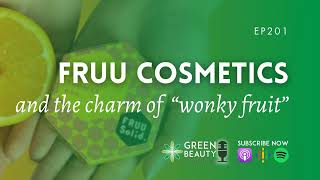
Podcast episode (Formula Botanica EP201, YouTube, 2024-02-22) in which host Lorraine Darmeyer interviews Dr. Terence Chung, co‑founder of FRU(FRUU) Cosmetics. FRU transforms 'wonky' fruit and agricultural byproducts into beauty products (lip balms, creams, body scrubs, deodorants, shower and shampoo bars, bath/home fragrance and fragrances). The discussion covers FRU's origins (started in a spare room in 2017), product expansion and retail placements (John Lewis, Sephora, Boots Beauty concept store in Battersea, a Camden concept store, Holland & Barrett NL, Hong Kong), sourcing approaches (direct and via distributors), technical challenges (using high percentages—often 30–60%—of upcycled fruit ingredients; difficulties with water-rich fractions, preservation and microbial risk; fibrous/pectin components), marketing and consumer perceptions of 'wonky fruit', and future plans (scaling, industry and university collaboration; exploring personal fragrance and wider use of avocado and citrus waste).
Questions this video answers
2017
30–60%
About 10–15 different fruit and sources
John Lewis; Sephora; Boots Beauty concept store in Battersea (London); a FRU concept store in Camden; Holland & Barrett (Netherlands); retail presence in Hong Kong
A team of four to five people
Chapters
Upcycling is the word of the moment in the beauty industry, and I don't think it's going to be a passing trend either. In fact, I suspect it will become part of the very fabric of cosmetics. And that's a really good thing, because why should we use virgin raw materials for all of our formulations when there's perfectly good waste to be upcycled into oils, butters, scrub particles and functional ingredients? Even now, some beauty brands are even making a name for themselves with that upcycled waste. They're tapping into what appears to be virtually unlimited waste streams from the food industry, and they're using that waste to create new cosmetics. I think this is a hugely exciting shift in the beauty industry and hopefully a big part of the move towards some semblance of sustainability. After all, if you're not having to harvest plants that are under ecological pressure and you can instead use a byproduct which works just as well, then surely that's the most desirable option. And that's exactly what we're talking about on the podcast today. So I'm going to be speaking to the founder of FRU Cosmetics. A brand relies heavily on ingredients produced as a byproduct of processed fruit waste, which then not only diverts a waste stream into a new product, also generates vital extra revenue for small fruit farmers. So if you want to get an insight into the way that beauty can incorporate waste, settle in for another great interview. Welcome to Green Beauty Conversations, the podcast that challenges you to think about how you buy, use, make or sell your green beauty formulations. In my weekly episodes, I explore the sustainability of the beauty industry and encourage you to join me in changing the beauty industry for the better. I'm your host, Lorraine Darmeyer. I'm a chartered environmentalist, biologist and the CEO of award winning online organic cosmetic formulation school Formula Botanica. We have thousands and thousands of students, over 20,000 in fact, in over 180 countries around the world, who study with us to become organic beauty formulators and entrepreneurs. Visit our website@formulabotanica.com to try our free online formulation course. And if you want to be the first person to know what's happening in green beauty, make sure you subscribe to this podcast in your favorite podcast app. So in today's episode, I'm joined by Dr. Terence Chung, a biochemist and the co founder of FRU Cosmetics, who leads his pioneering London based brand that transforms wonky fruits and agricultural byproducts into eco friendly beauty and toiletry products. So with a solid background in Biochemistry and a passion for sustainability and innovative brand design. Terence, alongside his co founder Kelly, began crafting Frou's products in their modest spare room in 2017. Recognised as a multi award winning brand, Frou proudly graces the shelves of esteemed retailers such as John Lewis Sephora Boots Beauty only store in Battersea, London, Holland and Barrett, the Netherlands and log on y Hong Kong. Hi, Terence, how are you doing today?
Yeah, I'm good, thank you, Lorraine, how are you?
I'm good and I'm really looking forward to this chat because I'm fascinated by what you do. So let's start at the top. Can you please introduce fru to us and tell us about what you make and sell?
Yeah. So basically, Frou in a short sentence, it's a company that's very focused on turning sustainable ingredients into natural cosmetics. In a nutshell, we use what we call wonky fruits from a marketing term, but essentially byproducts that come from the juicing industry, agriculture industry, but basically all of the organic byproduct waste products into sustainable natural cosmetics, which is not new in a way, but we kind of do it to the max. So we don't only use just 1% of certain ingredients as like marketing ingredients like the industry often use, but sometimes we to use up to 30 to 60% of those type of ingredients, which is a challenge in itself a lot of the time.
Well, we'll talk about that a little bit more in a minute. What sort of products do you make and sell?
Yeah, I mean we started out in our spare room, so at a time we had very little money and also very little space. So we started with our lip balms which we can manufacture good scale in a small space. And then we branch out to other things like color version of those lip products, hand creams, body scrubs, and then afterwards we, we've gone into deodorant, sort of hand, lips, body and then we went into shower and also, and also shampoo bar. So. So things, it's kind of really expanded and lately we've gone into ether and bath and fragrances as well.
Wow, that's quite the lineup. So why did you create fruit? What was the big driver behind it?
I would say multitude of reason. It's hard to really completely narrow it down, break it down. I would say I've had an interest in solving, I would say big problems. So one of them previously in my previous life was solving the MRSA issue of super drug and superbug and antibiotics resistance that you find in hospitals. And that was actually my PhD thesis and then afterwards I went into education actually and it was during that I kind of half the inspiration of true because basically my students were way more into cosmetics than my lessons A lot of the time time they're applying a lot of products during a lessons and. And then, and then yeah. And then actually one lesson it was. It was a chemistry lesson actually and it went into cosmetics and everyone just so fascinated about it. But then I also realized that most of people when they pull them, pull their products out of the pockets, it's not just full of plastic but also full of obviously synthetic ingredients which I felt is kind of in a way anti what we're trying to do. If I imagine like 30 years ago I was sitting in the same classroom and we were talking about protecting the earth, etc. But it really doesn't seem like much has kind of progressed from point of view of consumer or whatever is available on the market. So I felt like I had an incentive to do something about it. But at the same time I also had a side business at a time that is so unrelated something to do with importing. Importing product and selling them and that. That I had the first experience in business so. But I wasn't really interested in it. It was just like making some time money. So. So the ndna2 kind of self combined together in a sense. So. So. So then I went into cosmetics with some of my science knowledge but then also obviously some of the know how from business point a few times.
Yeah, well, amazing. And I look forward to delving a little bit more into this in this interview. But coming back to what you said earlier about the drivers behind what you do. I mean you mentioned wonky fruits for instance. So talk me through the sorts of ingredients that you're using in your formulations and what's the story behind their origins as waste streams?
Yeah, I mean Wonky fruits is a term that we've kind of started using I would say in probably last two, three years because a lot of customers or consumer has misconception and kind of negative connotation about waste itself. Even though technically a lot of these wastages are only sort of wasted because of we can't find a way to make use of them. For example, and the milk industry way has always been a waste, but now they find a way to turn them into protein powder that all of these gym going people are consuming at the moment. So. So a lot of it is just the mis. The missing a lot of sort of downside of using these ingredients which there really Isn't that many? So part of it is a marketing problem and then part of the technical problem as well of trying to incorporate these ingredients. And I would say one of the reason why we went into FRU is that fruits is a very, probably one of the most perishable agricultural products we can produce and we can consume as well. Probably one of the first thing that goes off when you were to go into a supermarket to buy your berries started going off very quickly, grapes started going off very quickly, and then avocado we can never get right in terms of when it ripes. And that is actually an industrial problem rather than just a problem in your fridge as well. So. So fruit producers have always had a problem of trying to get those windows right and then actually getting it to meet with the demand of the supermarkets and obviously everyone else on the planet as well. So that mismatch creates a lot of excess waste from a fruit point of view as well as a lot of other issues with like sizings of the fruits or if the fruits is slightly too violently picked, then you would see some excess damages on the outer case, for example of avocado and. And from our case, we talk about avocado a lot because it's just so fastly consumed by everyone right now. We're like in the avocado generation right now, isn't it? And such a high percentage of the flesh actually has oil in it, as we know as a very oil rich fruit. And oil is used in a lot of cosmetics and therefore we do use avocado oil that extract from a lot of these wasted avocado in our products. On top of that there are a lot also different waste stream as well in terms of, for example, in Sicily they produce a lot of citrus, so lemonade for example. So. So there's often a lot of excess peels as well as seeds that's being produced as a result of those industry and basically make use of the oil and the scent that's extracted from these material. So I would say we think use a good handful of these ingredients, I think from about 10 to 15 at least different type fruits and sauces. So it's complex to go into all of them at the same time.
Yeah, yeah, I get it. But exciting at the same time though, because I think a lot of the people listening will feel like their ingredients are being brought to life a little bit more. Where do you actually get your ingredients from? Are you sourcing them directly from suppliers? Are you working with intermediaries?
Yeah, I would say probably most producer Would tell you that where they source their ingredients is probably a trade secret, closely garbage secrets. So obviously I can't disclose completely where get it from. But we are not a fruit processing factory. So we don't have a facilities for example in these fruit producing country where we ideally have a place there to process all of these materials. So we source them sometimes directly and sometimes also via distributor. The distributor of these material as well because. Because the amount they source is a lot higher than what we would have just by ourselves. And obviously that only makes sense because that means you can have the economy of scale and as a brand, just by ourselves, we can never quite do that ourselves unless we're at the scale of Body Shop or Lush for example, which we're not at the moment. But yeah, we were always conscious that that was the hurdle potentially at the beginning. That also means we can't use very fancy or proprietary material until a certain scale. For example, we are talking to the largest avocado manufacturer at the moments of the entire world and see if we can better use of some of their wastages. And yeah, just believe me when I, when I asked them, okay, do you have any, any bottleneck in terms of your production for these material? They're like no, because that's just so much wastage. But obviously they didn't disclose. They just say there's unlimited, you could have as much as you want.
So, so that's, that's an incredible, incredible concept. Would you say that fruits are the easiest ingredients to upcycle, particularly when it comes to cosmetics?
I wouldn't just narrow down to which fruits, but I would say which components of the fruits. So obviously avocado is a very unique fruit set. You don't find a lot, I think a parallel fruits. Most people don't even call it fruits, but it will be olive, which is very again, high oil content coming from the fruit body. Fruits as a whole, that's obviously a lot of different components. At the moment we're making use of more the oil component. So that comes from seeds, the kernel, so stones of cherry for example, those are very high oil content, part of fruits. But yeah, I think going forward we'll be looking more into using sort of both the water contents, which is actually probably the most challenging parts to use because as you know, water is essential to life, but also essential to the growth of a lot of other nasty things like bacteria, fungus, etc. And on top of that you have the other nutrients that comes from fruits, which is great for you, but also really great for bacterial Growth as well. So there's always that challenge of finding the best way to preserve these material. Once you introduce the more water based ingredients, obviously you also have the fibrous material which is much less used. Obviously you get a pectin that really isn't often used in cosmetics. It's used much more in the food industry. That comes from the peels of oranges potentially and comes from apple. And also obviously the sense that a lot of it you can derive from the very fortunately the peels of juicing industry of oranges and lemons, which means we have a lot of citrus notes in a lot of our fragrances and.
They'Re very beautiful, that's for sure.
Thank you.
Are you seeing as a brand owner, are you seeing that more functional ingredients have the potential to be made from upcycled materials and waste? Because for instance on the podcast last year I had Jeff Chapin from Carbon Wave on who created the this emulsifier derived from waste seaweed. Are you starting to see more functional ingredients come onto the market?
I think there's definitely a lot more potential of that happening. The interesting thing about Carbon Wave and seaweed, obviously seaweed is a relatively oil rich. Do you even say plant but like sea plants? So. So you can obviously use the oil components and turn it into something that is emphilic, so it can attract to both water and oil and obviously turn into surfactant. So I think in the fruit, well you can definitely do something very similar. But it's very much down to obviously what the supply chain would look like. Is there going to be enough demand for it and then also what the cost would be to actually turn that into that. I think there's definitely potential. It's very much the case of would there be investment going into it? Because you can't have a small producer doing these type of things because they're that for so much R and D just to nail that process right at scale to achieve that economy of scale. And from a biochemist point of view, that's never quite easy. And I think it's definitely easier in the States to do something quite innovative as that because people are much more into investing in new venture, whereas in the Euro people are a lot more conservative in terms of investing in your ideas.
Let me ask you a follow on question to that then. How do you think we can make upcycling the norm in the beauty industry? Because at the moment it isn't the norm, let's face it. But when we go to trade shows, everyone's starting to Talk about upcycling. So how can we get there?
I think a lot of it is mindset shift apology to the old formulators who are really into their silicones and synthetic polymers, which like gives you the most amazing texture. And part of that problem is also that if you just look into the chemical industry or just look at any chemist, most chemists are train to make use of petrochemical because that's what started the whole chemical revolution. Technically. You were to go back to university and go actually we need to stop thinking about using petrochemical now and much more into thinking about using natural ingredients as the core of the feedstock. Then those chemistry would come and those knowledge would thrive within the chemistry community and then, and hopefully that would start changing mindsets and then you'll see much more in terms of those materials. But also one of the hardest challenges also matching the cost of a barrel of crude oil, which we know is they're cheap. That part of a change might also have to come from a government as well, imposing carbon taxes, etc. To then raise the bar of using barrel of petrochemical a lot higher. Then there's much more price parity in terms of making use of renewable material comparing to crude oil.
Yeah, absolutely. Well, I love the education piece by the way, because of course that's why Formula Botanica has trained over 20,000 students because. And formulators, it's because people don't want to go and learn the sort of old boring methods. They want to work with the natural feedstocks. As you say. Touching on something you said earlier, you said from the consumer side, there's still a negative connotation around waste. How are your customers receiving upcycled formulations? Is that then feedback that you've had from people about not wanting to have waste in their products?
Definitely. No one wants to have something that comes from the bin in your product. Right. So so much of it is just down to the communication piece and marketing piece. And sometimes it's just a change of using Waze into some other more creative way of communicating your message. And we definitely see that obviously when we're doing trade shows and now we've got kind of a concept store in Camden, so. So it's just down to day to day experience with interacting with customers and understanding what type of marketing message would kind of flick a light on for them rather than going questioning, are you using moldy fruits from a supermarket from all of the yellow label aisles, which really doesn't give you the premium piece that you need for using actually still quite premium cosmetic material that's, it's very expensive. So. So yeah, I mean consumers, they only really have 10. Well, 10 seconds is a very long time, to be honest. I would say about five seconds to decide what product they buy. First thing is from the bottle and or whatever container they're in. And then name what they know of the brand and then what it says at the front pack, which is what ingredients or what type of marketing message claims you want to portray. And you really don't have much time to educate. Okay, we're making use of waste and the waste is also clean ways as well, rather than what you're thinking. But so much of it is a marketing concept. If wonky fruit doesn't exist in the supermarket aisle, then the wonky free message wouldn't really resonate so much either. So.
So yeah, well, let me flip that question on its head then because obviously fruit is doing really well at the moment. Do you think that the sustainability and the upcycling message is something that attracts some customers to you as well?
I don't know, 100%. I would say whoever come across our products and know that we make stuff out of wonky fruits from our marketing point of view is they remember our brand. I don't know actually. I think I need to do some more marketing research ourselves, actually. I don't know whether that actually attracts to our brand or repels them from our brand, but they definitely remember us. So that's one thing most customers unfortunately still don't have the mindset of. Oh, I go into supermarkets and I want to buy something that's better for the planet today or next week or next month. And you would hear all these sort of market research that tells you that consumers are willing to spend more to buy products that are better for planet, etc. I think there are a slight trend of that happening, but it's still a very minority. I would say the statistics is maybe four or five years ago as 80% of customers are not really equal consumers considering themselves. And I think it still is nowadays. If you ask people's priority when they go into supermarket to pick up a product, the first thing they think about is price. Second thing they think about is maybe whether it's a brand that they know of, whether they've got a word of mouth that tells them a product is good. And then eco credential is probably at least fourth or fifth in their consideration, which is I think, getting higher, but it's not high enough to go like, oh, that's going to Influence someone to put that in their basket. Yet for majority of people, you, you might see that in maybe 5, 10% of people, but it's not quite enough to carry the whole industry yet, unfortunately.
Oh well, we can only continue to hope that that will improve and it's through brands such as yours that hopefully that education piece will start to help more. So tell me, what's next for froo? What is on the horizon?
What's next? Actually, I don't know, it changes day to day. It's just such a fickle brand because we're still only a team of four or five of us. And actually a lot of probably my fault, actually a lot of the creative decision and commercial decision is down to still myself and Kelly and actually a lot of it down to myself because I'm still, I don't know, what do I call myself? Chief formulator, chief of design and everything else as well. But yeah, there are a couple of things we're thinking about. Definitely previously and in the last three, four months I think focus has been a lot about some gifting. So we've gone into sort of home fragrance and gone into Bath and I think those range would expand definitely. And yeah, I think the next thing, interesting thing, actually quite challenging, would be personal fragrance. And then. Yeah, so we're working on that at the moment and probably the most exciting thing is working out how best to make use of those. I don't know even just in the UK, I think with calculation we've got about 40 million ton of avocado flesh going to waste each year. So it's just, just figuring out what's the best way of make use of these material. And that might involve, that definitely involve industry collaboration, but might involve university collaboration or even potentially some funding from the government as well to fund that.
Exciting times ahead for fru by the sounds of things. Terrence, thank you so much for joining me on the podcast today. Where can people learn more about you? Where can they learn more about fru? Where can they come and buy your products?
Yeah, I mean you can always connect me with me on LinkedIn. I'm always quite open to answering questions, etc. And then, yeah, you can find our products now in John Lewis. We've just opened our range display in Boots Beauty concept store in Battersea. We, we also have a concept store in Camden and you can always buy from our online website. So it's just search for F R U U through on Google and then you should be able to find us.
We will include the links to your website in the show notes. There are many, many listeners outside of the UK so they I'm sure will come and look you up. Thank you so much for joining me on the podcast today. It's been a pleasure talking to you.
Brilliant. Thank you so much Lorraine for your time and I hope everyone enjoy what we've talked about today.
Thank you. I would love to hear your thoughts on this episode. How do you feel about using fruit waste in your cosmetics? What upcycled ingredients have you spotted in beauty products? Tell me what you think. Leave us a comment on our social channels as both the Formula Botanica team and I love hearing from you and if you want to hear more about some of the topics we covered, please do delve back into the podcast archives. Go and listen to episode 181 in which I spoke with Jeff Chapin of Carbon Wave, who I mentioned in the interview with Terence Carbonwave has created a seaweed waste derived emulsifier which sounds just amazing. Or listen to episode 199 a couple of weeks ago when I interviewed Thomas Kerfoot of inky ingredients and Owen3, who supplies upcycled ingredients to all sorts of beauty brands. Or go Back to episode 59 in which I spoke with Anna Brightman of Upcircle who process their own waste ingredients in house to create cosmetics. There's a wealth of information in our old episodes and I do encourage you to go back and listen to them. So thank you for joining Terrence and I for this latest episode of Green Beauty Conversations. I hope you enjoyed it. If you did, please do leave us a five star review so that other people can enjoy these conversations too. Make sure you subscribe to the podcast on Apple Podcasts or Spotify or whatever your favorite podcast app is and stay tuned for the next episode. Follow Formula Botanica Ormulabatanica on Facebook, Instagram, YouTube, Pinterest, TikTok, Twitter or LinkedIn. We are everywhere and come and give me a follow at Lorraine Dalmeyer on Instagram. Visit our website@formulabotanica.com and sign up for our free online formulation course today.
More from AI








EP249. Why retailers are asking for proof—and what it means for your beauty products


EP247. How to build a heritage beauty brand - Evelyn Akande from Kanda Natural
