In Conversation with May Lindstrom
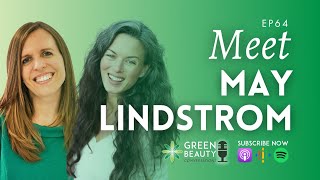
Interview (Green Beauty Conversations / Formula Botanica) with May Lindstrom (founder/CEO/formulator of May Lindstrom Skin) conducted by Lorraine Dallmeyer. May describes a lifelong connection to plants and touch stemming from a hippie upbringing in northern Minnesota, her personal history with severe skin sensitivity and healing, and how that shaped her formulations and client work. The brand emphasizes a small, carefully curated product range (currently seven products including iconic items such as Blue Cocoon and Honey Mud), sensorial delivery to encourage ritual use, in-house manufacturing in Los Angeles with direct ingredient sourcing from trusted farmers, and a company living-wage policy based on Los Angeles living-wage standards. May discusses handling copycats (taking it as flattery), retail challenges (stock rotation, recalls/reformulation), sustainability framed as ingredient provenance and human/planetary stewardship rather than packaging-only approaches, and advice for indie founders: stay true to your sourcing/values, make products that change lives, and resist unnecessary product proliferation. She outlines a future vision of measured, values-aligned growth and re-imagining the studio’s scale while preserving ingredient integrity and team care.
Questions this video answers
May 25, 2021
Seven products (she keeps the range small and curated).
Blue Cocoon and Honey Mud.
In-house manufacture in Los Angeles.
Base pay is set to meet Los Angeles living-wage standards so employees have access to healthcare, housing, food, schooling, etc.
Chapters
Hi, I'm Lorraine Dallmeyer and I'm the CEO of Formula Botanica, the online award winning organic cosmetic formulation school. And I have an amazing exclusive video interview for you today. So this video interview is part of my Green Beauty Conversations podcast. And if you haven't subscribed to the podcast yet, please do click on any of the links below to subscribe on itunes, Spotify, Stitcher, or any of the other major podcast apps. Because I regularly put out conversations like this one that I know will inspire you to get involved in indie beauty. So today I'm interviewing May Lindstrom, the CEO, founder and formulator at May Lindstrom Skin, the iconic beauty brand that everyone knows and loves. Now, May embodies the word authentic more than anyone else I have ever met. So I promise you, you are going to be blown away by this interview, just like I was. So settle in. I really hope you enjoy it. And make sure you subscribe to Green Beauty Conversations at the end so that you can listen in on all the conversations that I there. It is so amazing to have you on the podcast with me, May. Thank you so much for joining me. How are you doing today?
Oh, I'm doing so good, Lorraine. It's wonderful to start my morning with you.
Awesome. Well, let's get stuck straight in there. So I would love to talk first of all about your journey of starting May Lindstrom skin. Let's go back to basics. So why did you start and what was it like when you first started?
It depends where you start counting. For me, this is something that's just been in my blood. This is my native language if I were to have one. I was raised in the middle of nowhere in northern Minnesota on 80 acres. I was born in a barn, raised by hippie parents. I had an outdoor outhouse with a little star in the moon till I was 14 years old with 40 below winters. And so I was raised quite different. I was raised in a very intentional back to the land kind of way with my parents, but in the middle of a very conservative farm country, really in the Midwest. And so I had a really interesting upbringing of being kind of an outsider within my community, but then also really enmeshed in this beautiful community of the small friendships that my parents had of collective energies of like minded people. My mom is a body worker and does really incredible massage therapy and really special intimate women's work and energy healing and really beautiful things. And so I was raised with such an attention to our body and our senses and connection and very much to our Planet. The beauty of being raised by hippies is everything was magical, and I saw this planet as the gift that it is from. From very early. I grew up surrounded by farmland, and so I have this deep connection to our food and where it comes from and to how things are grown. And so that's the heartbeat of where this comes from. And it was amplified by my own skin. Really what I learned from childhood is that I was born into a long genetic trail of sensitivity to the highest degree. So going back generations in my family is extreme sensitivity. Eczema, psoriasis, dermatitis. The kind of inflammatory disorders that really just make your skin painful to be in so much pain, so much heat, so much inflammation, peeling and itching and rashes and all the sexy stuff. So I didn't struggle very much with acne until later in my 20s. But my childhood was full of fear in my own body. Something as simple as washing my hands at. At the sink with conventional detergent at an elementary school would create blisters. I'd go school shopping for clothing and touching the formaldehyde, and the clothing would make me break out in rashes.
So, oh, my goodness.
Strong personal history tied into the work that I do now. So when people ask when this started or how the. How the company started, it was really. It was this long, winding trail of. Of this passionate spark that I have for touch and sense and connection that met with this foundation of really respecting our planet and the bounty of what we grow upon it. And mixed with this personal history of. Of having so much fear in my body and being afraid to touch things and feeling like my body was rejecting me and my skin was rejecting me and spending a lifetime rebuilding what that relationship is and. And also how to actually address that. How to feed and nourish and ultimately heal those conditions for myself on both an emotional and physical level, and then discovering later in life that this is really the journey that I want to be on with my clients. And it's just so much more than about a product. It's more than getting clean, getting moisturized. It's how to come back to ourselves and. And work with those traumas and work with those painful memories and the childhood stuff and the ick that sticks. How to let that go.
Yeah. Wow. What a story. And you've touched so many lives through channeling that story into your beautiful business. So thank you for. For sharing that. Obviously. I mean, I'd like to. I'd like to also find out what it's like nowadays, because obviously you started off with this with this vision, I suppose, of, of touching other people's lives like you managed to help your own skin issues. What's, what's made skin like nowadays? What's a day to day like in the business.
Right now? Right now is a really powerful, beautiful time actually, where we're almost a decade in further than that, if you count my early years on my own, before the website was even live, and when this was a consultation business working with bespoke clients. But really this, this company has been an activ vision for almost a decade and where we are today. I am so proud. I have a team that's incredible. We do 100% of everything in house. It's like my own Willy Wonka chocolate factory. I come in the door to the studio and it smells incredible. And there's just whole walls full of ingredients and tubs of herbs and spices and salts and clays and all the glass jars with the oils lined up and you can see the colors and everything just sparkles. It's so alive. Our ingredients are the best there is in the world. And our sourcing has just deepened over the years as our relationships have grown and our quality standards just get to get better and better as we are more connected to our people, to our vendors, to our farmers, to the communities and the team itself. It started as just me. It was just me and my recipes and I'd order whatever ingredients I could access, and I blended and filled every single batch and brought every single package to the post office. And now it's like I've multiplied and just made babies. Everywhere is kind of what it feels like. I come in and where once there was me, now there's, you know, there's several people in the kitchen who are making this happen and blending and doing every step of the process, from communicating with the farmers to managing our sourcing of our glassware, to the printing, to the, you know, we have a whole team that just does qc, just does quality control to make sure that every line of the box is printed perfectly and the gold foil stamping is immaculately lined up. And the level of obsession with detail is a little over the top, but it's kind of what we're about. I spent so many of my early years in formulation working one on one with people who'd come from really severe skin traumas. And it was heavy. It's heavy work. And it taught me everything about how to make a product that's effective because it was all about effective. It was about how to heal people who were in pain and, and so it was very functional and not necessarily so sensorial and not so beautiful. Really, really about the topical and healing that skin. But what I found over time was there was so much more needed and it is that extra. It is the thing that makes you want to actually go in to the bathroom. It put those healing ingredients on your face. If it doesn't smell good, if it doesn't feel good, if you don't yearn for it.
Yeah.
If it feels like just another reminder of something that's broken in yourself, then what takes you back there, what gets you back into that space where you're in relationship with your skin and, and so these things, I spend just an unbelievable amount of time training to see the littlest detail and to care just a little bit more and to put a little bit more heart into that email, into that batch, into that convers. And it's because of this. It's because the sparkle has left so often and if we don't pour it on extra, you almost don't notice. There's just so much distraction and noise that if we can't come back to something so tangibly beautiful, we don't.
Wow, that's just absolutely amazing. I absolutely love it. I wish I could come and first of all come and see your lab with all these amazing ingredients because there is nothing more exciting. But also the attention to detail, I mean, that just, that just spoke to the heart. I suppose my next question really ties in with that because I've heard you say that you started formulating when you were a child and, and obviously you formulate results and it really sounds to me like you were born to be a formulator. That's how you come across as well. So what advice would you give to new formulators who look up to you? Because there are so many people who look up to you and who want to create formulations that really work. What advice would you give them?
I feel like we know when we're a child who we are and adulting is just about coming back to remember. And I had many different career paths. I went a zillion different directions before I circled back here. But I also never stopped being here. This was always something in the background from when I was a small child sitting in a mud puddle pulling in plants and mixing things in the dirt, to being a teenager going on road trips with my mom and jumping into a river and pulling out clay and covering our bodies in it, to being in my 20s and working with women out of chemotherapy and working with post cancer skin and radiation and all these different skin conditions and to where we are now. There was layers of things happening in the background. I was a chef for a long time. I love to cook. I really thought that that was my call. Every time I would get obsessive about ingredients, and every time I'd think about our farmers and the people who grow and the planet that it sustains and all that that affects, I just kept thinking that this was about food, and ultimately it was going to come back to me and this restaurant and all these things. And now I finally understand that it was never about food. It was always about gathering people around the table, and it was always about coming back to our senses. And it's such an easy thing to do with food, to gather someone around the table and give them a meal and feed them from your hands. It's so easy to say, I love you with food.
Yes.
And. And that's the thing that resonated. I think I knew how to do that, but it turns out so many people know how to do that, and so I don't have to. But what I found was when I'd washed my face in the company of girlfriends, they would watch how I touched my skin. And when I talked about what it meant to come back to these senses and to feel the temperature of your skin, to feel the texture of your fingertips, to be in that process of cleansing and anointing, people weren't talking about that. Nobody was lighting up about that. And I didn't know anyone who wanted to gather around a table to do that. But, man, I do. I do. I think that when we start gathering around tables, whether that's a metaphor or something literal, I think when we come together and we share these parts of ourselves, these intimate pieces, I think we are going to be on such a deeper level of connection. It's just blowing the kitchen table right up into something even more special. Wow.
That's beautiful. So, effectively, you're saying I love you through your formulations in a way, is what you're saying.
It's the whole point, really, at this point, I think I could put almost anything in those bottles because it's just about the ingredients. And beyond the ingredients, it's really about the delivery. And the delivery is not from me, it's from you. And so a formulation, when you're working with really, really good ingredients, which I do, is about getting out of the way. It's like what you trust a great chef to do. When you go to the best restaurants in the world, you know, you can. You can put in front of 10 different chefs. A raw whole chicken, a handful of carrots, some celery, some garlic, a couple of spices and some salt and some olive oil. And you're going to get 10 entirely different meals from 10 different chefs. And so the question isn't, you know, whether those are ingredients that are good for your body. Perhaps they are, perhaps they aren't. Perhaps you're a vegetarian and you're leaning towards something different. Perhaps you really just want to eat ice cream. I don't really care. Whatever it is you're going, going for, go for that. But I think that what happens after that, whether you're choosing the ice cream or the giant bowl of steamed broccoli, or that beautiful roast chicken dinner prepared 10 ways by 10 different chefs, when you bring it home and you come into your own space, that's really where the magic happens. So all I want is to be a catalyst to bring you back to that space. And I know that you won't show up there if it doesn't feel good. So right now, my motive is to bring you pleasure in that bottle. Wow.
Absolutely. Beautiful. Well, let's talk about those bottles then. You have seven. Is it seven very successful products at the moment?
Seven at the moment. I try to keep it small, so if one comes in, maybe one goes out, maybe a couple of new ones come, and then I really. I think that choice is beautiful, and choice is also paralyz. So I think it's really wonderful to have just a handful of things that work really well that you can mix and match and adapt together and learn to play with, like the spices in your cupboard.
Well, that was exactly what I was going to ask you, actually, because, of course, those seven products that you've made, you know, people love them and they recognize them around the world. You've made some really iconic products there. And if I go into. I know our classroom and I say, the Honey mud, everyone's like, yeah, yeah, made it in. They are icons. But I've heard you say in interviews before that you only need a few products on your skin, and that rather than buying dozens, which I think is a phenomenal message to put out there, because I think there's far too much pressure to buy too many products. But most beauty brands are under constant pressure to add new products to their range, and you seem to have resisted that pressure, which I find fascinating. So how do you resist that pressure?
It's really not that hard. You just say no. It seems so obvious. Well, part of it might be practicality. So when I began it really was just me in my house and every single batch I made in every post office trip was me, usually with a child under one arm. So how many boxes can you really carry? Right. So in the early years, it was. It was very small, it was somewhat manageable, and then I lost my mind and had to start hiring help. Right. But there's that breaking point somewhere in there. And it took a long time between that point and this point. And somewhere in there was when people started asking me for new products. It was somewhere when I was big enough for people to care if I had new products, because they knew who we were. But the point at which I would actually be able to make new products with any kind of consistency was much further down the line. It's like now I didn't have the team and the resources to be able to launch a new product every season, even if I'd wanted to, which is not my philosophy. Never has been and never will be, frankly. So when the capability to respond in the way that would be considered typical for a skincare brand became possible on a logistics level, I don't need it. I don't need it. My clients don't need it. The only people who've ever asked me for that is the retailers. It's not the clients. When the clients are asking for something new, it's because they're frustrated with what they're already doing. And so usually that's a time to revisit what you already have. See if you really understand the products that you're using, whether they're mine or somebody else's, really going deep into why isn't it working? And maybe why it isn't working is because you are coming into the bathroom, if you're even going there at all, if you're even actually showing up to be in. In that ritual with yourself, are you rushing through it? Are you breathing? Are you really showing up? Are you there? It's like eating a meal and never seeing it when you just churn it into your body. Yes, you are feeding yourself, but you're not digesting in the same way, you're not absorbing the nutrients in the same way. And your skincare is very much like this. You can have the best products in the world, you can spend all your money on skincare all day long, but if you don't show up to use it, it's not going to work. And if you show up to use it but you really aren't there, it's the equivalent of just shoveling food down your throat. Yeah.
I love that you live and breathe your philosophy in such a powerful way as well. And I think a lot of beauty brands could learn from you, actually, because they are under constant pressure to continuously churn out new products, and it's not sustainable, nor is it, as you absolutely say, right. For. For the customers, for the people using these products. So you've created a really iconic brand in the indie beauty world. I think it's safe to say that you are known far and wide in the formulation community are tens of thousands of followers, and students, hundreds of thousands of followers certainly know who you are and so many people look up to you. So it's an interesting one. Over the years, I've also seen a lot of people copy you and copy your formulations. Particularly the Blue Cocoon seems to come back a lot. So how have you handled this? Like what? How do you feel when something like that happens?
Well, I mean, the Blue Cocoon is so beautiful. I have. Here's what I know. Why wouldn't you want something that looks like the Blue Cocoon in your collection? It's delightful. It's completely delightful. It's such a beautiful formula. It's so special. I'm so proud of it. It's made a monumental difference in my own skin, and it's been a game changer for so, so many of our clients. That's what I know. And I know that it also reads really well in print. When you're scrolling through your Instagram and you see the. Luca, can you stop? It's pretty. I've been looking at this jar every morning and every night in my own personal ritual for a decade. And still I get butterflies. Still I get excited when I make a fresh batch. Still I get exc. On Blue Cocoon days at the studio. It's special. And so, of course, of course there's going to be people who try to replicate that. And they can try and they can have their variation and it's okay. We're all making variations of somebody else's art. We are. It's fine. There's worse things. I've had much more blatant copies. I've had, you know, entire website copied, taken. I've had product names taken. I've had, you know, all of those things. And really, these are like children I'm sending off into the world and they take on their own lives. And I can only take it as flattery, the fact that anyone's paying attention to my brand. We're still. We're still just little, really. And in a certain space, of the beauty community, we're known, but in the larger beauty sphere, we're a baby. We're a teeny, tiny drop in the ocean, and we're a small family business. It's my husband and I and a handful of our favorite people making the most beautiful thing that we could dream up and doing it the way that we just knew that it could be done and didn't know if anybody would care. And it's really special. So I think that the more the merrier, honestly. And if that puts my business under because everyone's making a version of the Blue Cocoon, I mean, I won in some sort of weird, wonderful way. If copycats of the Blue Cocoon are what takes me under, then there's a success in that, too, and it won't. We could run our business sustainably on that formula alone.
Yeah, I believe you. And, you know, ultimately, they say you haven't really achieved success until you have a good couple of copycats. I think you've very much cemented your success right there. I say you're little, but you're. You're little, but impactful in. In that respect. I read an interview with you a few years ago in which you openly discussed the issues that you'd face with retailers not rotating stock properly. That was an amazing interview. And I was sat there going, yeah, go, mate. That's awesome that you're addressing this. And you also said this doesn't fit with your ethos of providing fresh ingredients, fresh formulations, you know, everything we've been talking about. I also know you went through a recall situation where you had to reformulate one of your formulations. And we were here at Formula Botanica. We were so impressed with how you handled that situation with such grace and such transparency, which is very rare to see. So, first of all, would you be willing to walk us through what happened? And secondly, how has that made you change your approach to working with retailers?
That's a really. I loved that interview. First, I'm always so happy when people ask real questions that they really want the answer to. I'm a fairly quiet person, but I'm very much an open book. And this work is so personal to me that I really, really believe in sharing everything. And I think you have a right to know who I am. And it's because I've made this business personal, and so I've welcomed that, and I welcome all aspects of that. And the retail conversation has always been a little bit of a challenge for me. And it's because of the way that we operate, we do things differently, and we do things differently than even other small makers. And part of that is making our own products. That's one most skin care, even in the natural beauty sector, even in the indie natural beauty sector, is still made by just a handful of white label companies that slightly modify and tweak the formulas to meet the vision of the investors or the whoever happens to be putting money behind a brand. And it's not what we do. And frankly, it's a business that I don't know anything about. It's always a funny one because people contact me and ask, well, how did you find your lab? How did you do? And so they asked me those questions and my answers are pretty unsatisfactory because I have been doing this since I was a child and obviously with a lot more seriousness the last 20 years or so, but is just something that I grew into and I never imagined outsourcing, it just never even occurred to me. And when I think about it now, it's, it's at these growth point breaks where I get to make decisions. And those decisions come in many ways. They can be in the form of, well, can we do a promotion? Do we have enough team, do we have enough capacity, do we have enough ingredients, do we have enough everything to be able to support a promotion? Maybe. But if I'm also supporting one for a retailer who wants to do a JW P, which is a constant demand from partners across the board. So let's say I have 50 retail partners, it wouldn't be outlandish for once a year each of them to ask me to do some kind of promotion with them. That's a totally normal expectation for a retail partner once a year to offer some kind of promotion. But if I have 50 of them, that's 50 promotions a year of Meilan, Stromskin something or other. And then what if we want to do something on maylandstrom.com, which of course we do, because that's where our magic is. That's where we get to service you directly and care for you directly. And so if I want to add a couple more there now I'm 52, 53, what. How many promotions do I have to prepare for in that year? And that can be a wonderful thing. If that was my business model and what I really wanted to do was just be everywhere and blow up and how many people can I bring into my pool and how fast can we grow? I am not interested in that at all. I have zero interest in walking into a giant manufacturing facility, even if it's my own, I don't want to have a giant manufacturing facility. I love the way that we work. We have access to such special farmers because we're small. We had to reach a point where we were big enough to get access to the ones that wouldn't talk to us when we were too small. But now we're at a point where we have the best of the best in the world. And it's a special spot. We're big enough to have access and we're small enough that they can still provide for us what isn't available on a large scale to anyone else. And so it's really special. And it just happens to line with, I know every person on my team. I know them, I know who they are, I talk to them, I know their families, I care about them, I can take extraordinary care of them. They're paid very well. Everyone has great benefits. There's career growth, everyone's fulfilled. And I can't do that for a thousand people. I could maybe do that for a hundred people, and we're not even halfway there. So we have a lot of growth ahead of us, but it's a very particular kind of growth and it's not one that's going to be determined by somebody else's schedule or what they need from me. It's going to be what our clients need from me and what I can genuinely put my heart behind creating.
Yeah. You have such a strong philosophy in your brand and I think this is part of the reason why you've been so successful. It. It shines through in the way you. In the way you. The way you speak, the formulations you make, the way you position your brand in the market. Everything is just totally you and, and what you stand for. And I, I think that's really commendable. And I think a lot of indie brands should be watching and listening to this and thinking, how can I do exactly the same? So you've been such a pioneer in the industry and I'm sure you've seen massive change in indie and natural beauty and how they are perceived since you started your business. Because you said it's. It's almost a decade now, so we know that the next big change to come to the sector is, is going to be all about brands embracing sustainability. So how are you bringing sustainability in the business or how have you already.
The way that we always have, really, that was standard from day one, has really been about ingredient integrity as step one. And I think it does have to start there. I Had somebody reach out on Instagram a couple weeks ago where they had forwarded me this article, terribly written article. They were just asking what was your opinion on this? And it was about. About how essential oils are destroying the world because of. For. I mean, in summary, it was. It was about how terrible essential oils are for the environment and why synthetic is better. And it was just the most absurd argument I've ever heard. Because if you think of the parallel with food, it's really is absurd. Don't plant that garden. It will take up too much space and grow too many plants that will feed too much oxygen into the air, too many nutrients into the soil, too many nutrients into our bodies. Yes, definitely, you should, you should go synthetic instead. Doing my best. I have a reputation for being kind, and that's one that I value a lot because I think that kindness is underrated. And so when I get something like that, I also have to bring my humor with the kindness because she was really concerned. And whoever wrote and distributed that article was also really concerned. But we lose track of the big picture when we try and just villainize a particular ingredient or a particular sector of something. It's like the debate right now about, you know, clean beauty versus green, beauty versus natural versus organic versus eco versus I mean, just whatever. It just none of it matters. It doesn't matter at all. And, and I say that as someone who makes formulas that fall within all of those titles, none of which I claim, none of which I use, because I think it's all nonsense. How I feel about how to care for my personal own skin has been the same for roughly four decades. This is just how I care for myself. It's what I know how to do. I don't have a name for it. And when I came into formulation and started refining these particular recipes to meet these particular needs, I wasn't trying to make a green beauty product or a natural beauty product. I was trying to make a product that would hurt these people who. That would help these people who were hurting. I really just wanted to be able to help. And it was that simple. It wasn't even a career path. It was the thing that I did because I knew how to do it. And it turned into its own thing. And so it's just, it's never been my direction. And I think we spend a lot of time in these arguments about terminology when we could take it back to connection and frankly, bring your Cetaphil. I don't care. What I care about is this part where we're kind to ourselves and we come back and we connect to ourselves. And if all you have access to is Cetaphil and. Or if all you have access to is water and olive oil, if all you have access to is your Chanel, if all you have access to is your balanced skin, I don't care what you have access to most is you. Why are we fighting about the other stuff? We are all doing our best. And if we are all in this space and if it really is about self care, then I have nothing to say about any of the other formulas or any of the other philosophies on, on beauty. Because the most beautiful thing is not in those bottles.
Yeah, that's beautiful words and very true. I mean, there is a lot of argument or a debate constantly going on and it, it isn't necessary really, because I think as long as we're all in it for the right reasons and we're all heading in the correct direction, then, you know, we can all come together. But you're right, it is very interesting how these labels seem to get people so fired up.
So sustainability to bring it back, the things that are core, it is how it's grown, it is thinking about it through the whole path from what's happening with the soil. Where is that soil? Where is it being grown? What communities is it feeding? How are they being cared for? Sustainability on the human level, sustainability on the planet level. All of that starts with the ingredients. But then there's also what happens when those ingredients come through our door. It's how we treat our own people. Are they paid well? Are they able to live in the place where we are? We manufacture here in Los Angeles. A living wage looks very different than it does if we were to manufacture in China, or even if we were to manufacture in, say, where I'm from, Minnesota, we could do business a completely different way if I lived somewhere where the living wage didn't need to be so high as Los Angeles. But we've instituted something at our company that we've decided is our own living wage policy. And we base our pay, our base pay has to meet Los Angeles living wage standards so that no matter where you are, our bottom is sustainable. And whether you're shipping our packages or you're blending our formulas or you're answering a customer service email for us, you have access healthcare and the home that's safe to live in, and food and the schools you want to send your children to, and all the things that I want for my family. So I try to see that through from, from the Soil to the seed, to the farmer, to the communities, back into our own space and our own people. Because it's only with that that it can trickle out into our care of you.
I love that you say that because. And this is something we talk about a lot on this podcast, actually is a lot of people view sustainability as just being packaging. We've just had an amazing conversation about.
The packaging is so obvious. Put it in glass, it's fresh ingredients. Put it in glass, box it in something recyclable, that's it. It's not complicated.
That's all the talk about. And yet you're talking about, you know, ingredients, provenance, which is incredibly important and hardly ever gets. Gets raised. You're talking about paying a living wage. I mean, l', Oreal, for instance, has just committed. Committed to paying or their supply chain and their staff and living wage by 2030. That's 10 years.
2030. Why they're L'. Oreal. I'm not even a 10 year old company. We have had no investors. We were built on credit card debt, personal credit card debt and risk. And ultimately we were built by our customers. That's it. We answer to nobody. And our funds reflect that. Like what you invest in goes entirely into the product, not into a marketing campaign about how you should put stuff in recyclable material. Of course you should. It doesn't require a marketing campaign, it's just bogus. Of course, if all you're talking about when you talk about sustainability is how you package, we're so far behind.
I know, I know. I completely agree with everything you've just said. Well, let's move on then. Because I think we could talk about this one for quite lot a long time. I probably get quite fired up by it. There are so many new indie beauty brands coming onto the market all the time now. I mean, there is a real flood of them coming on. And as one of the early pioneers in the indie beauty sector, what advice would you offer to anyone entering the market nowadays? And how do you think you could break through the noise in 2021?
Oh, man. First, I'm going to be your biggest cheerleader. I really think that the more of us, the merrier. I know I said that earlier and I feel like it warrants repeating because I get asked this a lot because I have been in this space for a long time and because there have been so many brands that have come up in similar footsteps. Right. Similar shades. We talked about that. And I remember these conversations early on with some of my early retail partners. And we'd come together to have a dinner or to meet for a drink, or we'd come to each other's businesses and we'd talk about what would this look like if we were all actually successful in the thing we imagined, right? And we talked about this when. I won't name which retailers, but they've grown. When maybe there was just one store. And for me, when we were just little and maybe we just had our first four products or, you know, didn't. We weren't really out yet. And so we'd meet and we'd have these conversations, but we could see forward, we could see this, we could see 10 years ahead, and we were right. Now, these green beauty stores where there used to just be one or two, now there's one or two in every city. There's one or two in every block in the big cities, right? And brands like mine that really weren't around, there was just a handful that could come to mind 10 years ago now, I mean, I don't even know who's up and coming. My head is down, I'm working. I have so much going on. And every once in a while I'll look up and I'll go, oh, well, that's pretty. What is that? I'll get curious. Or. I mean, I learn about it so much from my customers now because. Because they're trying all the different things. And so they'll ask, you know, have you used this? Or, you know, how would you mix it with yours? Or if I want to try this, how do I do with this? And so I get to be a kid and go exploring again. And I mean, really, what I would say is you have to remember that anybody can make a product. And the way that most products are made, they are being made, they are the same. So unless you have a different access to ingredients, which only happens if you do your own sourcing, which you do not get to do if you outsource manufacturing. And I'm just going to repeat that part. If you outsource manufacturing, you do not get to do your own sourcing. I'm repeating that because that is a difference. The sourcing is why I don't do outside manufacturing. There's been many times where I thought this could touch so many more people. We could reach so many more people if we did outside manufacturing. And ingredient sourcing is more important to me than growth. So I come back to that. So what I will say, if you are using outside manufacturing and you're growing your brand, great. You have to bring More. What is it that's special about you?
Yeah.
What is the message that you're bringing? What is. You know, the bottles are just a delivery system for you. They are in the best case. Otherwise, your formulas better be magnificent. They better be be so spot on that your clients use them. And whatever you've packaged that experience in, it really has to move somebody. And it either has to physically change their skin or it has to change their relationship of themselves to it. And if you can do that, if you can do either of those, and if you can do it with heart and do it with people that you love and in a way that you feel good about, you'll do great things. And if you compromise on any of those, you're going to get washed out because it is a big market. And that's fine because it really does show you what you're made of. And I just get to be more me with every year that goes on. And in my early years, I was just so excited to get going and so excited to get started. And I'd made this thing that I knew was really beautiful, but I really didn't know if anybody would care. And when I saw that people did and it was resonating, it affirmed for me the path that I was on and I knew that I could keep going. And every time I listen to that and I just move in the direction of true to me, every time I stay and go deeper there, more paths open up. And that's been true all along. And with every year, I get more brave and I make bigger decisions and I make harder decisions and I make more out of the box decisions because they're the right ones, not the expected ones.
Beautiful. So effectively, and this is something we've said a lot to our students as well, is you change lives. And what you're saying is if you want to be successful in this business, you have to be able to change someone's life. And I think that's absolutely what you've achieved and which is why you have been so successful. So I guess my final question then, and you already alluded to this a little bit, is where do you want to take May Lindstrom skin moving forward? Because you said you're doing growth in your own way, and I think that's fascinating. What does that mean?
I was imagining this actually yesterday, and it was the first time that I imagined something different. I was in this program a couple of years ago, and it's kind of a coaching thing. May you do it in this group? And anyway, it's a month long program. And it forces you to really focus on your stuff and think about what you're doing. And there's all these writing prompts within it. And one of the first writing prompts was a prompt to make a goal, and ideally to make it a measurable goal, something you could actually see the change in. And I had decided for that project to focus on my company. It was a mix of personal and professional work that I was doing. And I got challenged by my husband, who's also my business partner and our cfo. So it was a little bit to poke at me because. And I don't like to talk about the money part of the business, other than the fundamentals of whatever it costs to get the best quality is what we do. That's the rule. That's the rule. And if it comes a point where that choice breaks the company, the company needs to be broken. It's fine. So that's about how much I think about it. Sometimes I have to think about it more, you know, 2020, and everything that happened with the pandemic was a year that I had to think about it more. And so. So a couple years ago, which was pre pandemic, kind of to just poke me at the ribs, my husband was like, well, what if you made it a financial goal? What if you actually decided to operate as the CEO that you are? And what if it was a financial goal just for fun, just for this project, little writing, writing thing. And because I had so much resistance to it, I did it. And so I made a goal. It ended up being a little lofty, which was funny.
Goals are good.
But it was the first financial goal I'd ever made in a company. And it was like eight years in, and so that was funny. And then nine projects later, you revisited your first project and you said, what if you took the core of that first goal and made it fantastical was my interpretation of it. What if you took the goal that seemed a little uncomfortable, that seemed a little scary, or maybe a little bit out of character, and you made it this incredibly playful, wide open thing. What if it was fun? What if it was easy? What if this was just incredibly spectacular? What would you imagine? And so I took the vision that I described to you, Lorraine, of walking into my studio and seeing the lineup of all the oils and the salts and the clays and the spices and all the smells and the sounds of people working in the machines and the bottle fillers. And I mean, there's so much energy and aliveness in that sound. And the smell of that environment. And as an assignment, I blew it up and described it times 100. What would that look like if that wall of ingredients was more spectacular? And that doesn't necessarily mean larger, but did I source it from somewhere else? Did it come in a different format? Is it packaged differently? Is it actually the physical space that's rearranged differently to showcase that? Is there something different there? And when I look at, you know, right now, there's six women in our lab blending and filling these bottles, what would it look like if there was 16 or 60?
Wow.
And maybe I don't want 60, right? Because maybe I don't want that big. But just for fun, just to play, what would 60 look like? What would they be doing? And so when I forced myself to imagine 60, even though I said I didn't want 60, it just pictured something else. I got to picture whole groups of people, and I got to picture these incredible formulas being made that maybe weren't even my formul. And it was the first time ever that I had even imagined that somebody else might formulate for our company. There might be somebody else who has something really incredible to bring, and a whole team could work on it, and I could come in and just be excited and be the cheerleader and poke my little fingers in there and maybe make it a little bit better, right? Or I could just mess it up a little bit and go, sorry, guys, and then back off and come back and they fix it. So I don't know. But what I know is that I'm giving myself more permission to dream in different ways and to just question, just question, because I also will get really stuck in, like, well, we do it this way, and we do it the best way. And I was like, well, maybe when you started that five years ago or 10 years ago or a year ago, when you thought you were doing it the best way. But we always have to revisit our best way. So my goals for growth are the same as they've ever been. We just show up every day and we try to do better than the day before. And that just gets applied, cut and paste across every part of our company, from the sourcing to our customer care to making an extraordinarily beautiful experience on maylandstrom.com it's, yeah, how can I make it more special? Is the question every day.
I love it. I need you in my planning days.
Fantastic. You can just replay this little part.
Like, how can my channel. How can I channel May Lindstrom in all of our plans?
Yeah. Just gather your team and say, how can you make it more special? Yes, that's it.
Beautiful.
Ask God. Repeat.
Thank you very much for sharing that. That was incredible. And thank you so much for this whole interview. You conduct your business with such grace and such kindness and such a powerful philosophy. It has been a real treat to find out more about you and about how you run your brand. So thank you so much for joining me today on this podcast. May.
Thank you, Lorraine. It was really special to be here.
So I really hope that you enjoyed this video interview with Mei Lindstrom. This amazing exclusive was brought to you by greenview Conversations, which is the Formula Botanical podcast. So please do click on any of the links below and go and subscribe so you never miss another episode. And I also want to encourage you that if you'd like to become a formulator, you come and sign up for the free course that we're always running on our website. So again, find the link below this video and you will be able to also become a formulator and maybe start your own iconic indie beauty brand one day. So, my name's Lorraine Dalmeyer. I really hope you enjoyed this interview. Make sure you subscribe to our YouTube channel, and I'll be seeing you again soon for the next episode.
More from AI








EP249. Why retailers are asking for proof—and what it means for your beauty products


EP247. How to build a heritage beauty brand - Evelyn Akande from Kanda Natural
