What Africa Can Teach The World About Green Beauty
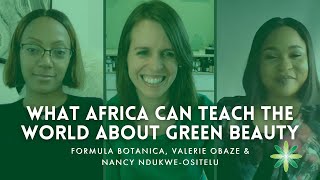
A Formula Botanica-hosted YouTube panel (recorded June 8, 2021) exploring the growth of green/natural beauty across Africa. Host Lorraine Dallmayer speaks with Nancy Ndukwe Oshitalo (Beauty Fest Africa) and Valerie Obazi (R&R Luxury) about rising consumer demand rooted in heritage ingredients, the surge of homegrown brands, and persistent barriers—limited sustainable packaging options, few contract manufacturers, regulatory hurdles, lack of funding, and gaps in formal formulation and business education. The panel calls for greater global representation, retail/investor partnerships, incubators, and value-added local processing so African brands can scale authentically.
Questions this video answers
June 8, 2021
Host: Lorraine Dallmayer; Panelists: Nancy Ndukwe Oshitalo and Valerie Obazi
BeautyFestAfrica.com
2010
Website: randrluxury.com; Instagram: @randrluxury
Chapters
The global beauty industry keeps growing and growing, and indie beauty brands all over the world are finding a huge foothold in a sector that's been traditionally reserved for the major multinationals. However, the story of African green beauty is not yet coming sufficiently to the fore. Why is that? What are the barriers holding back the amazing beauty entrepreneurs that are emerging across an entire continent? I'm joined today by Nancy Ndukwe Oshitalo from Beauty Fest Africa in Nigeria and Valerie Obazi of RR Luxury in Ghana. In this panel discussion, we explore the growing consumer appetite for green beauty across an entire continent, the changes required to lift up this amazing industry that is simply relying on ingredients that are part of their heritage, and the elements that African green beauty can teach the entire world. I'm Lorraine Dallmayer, CEO of online organic cosmetic formulation school Formula Botanica. Thank you for joining me for this panel discussion. I really hope you enjoy it. So today's panel discussion looks at the way that the green beauty sector has grown across the entire continent of Africa. And I am joined by two amazing panelists who are here to share their thoughts and views on a very vibrant and exciting industry. I'm here with Nancy Ndukwe Ushitalu from Beauty Fest Africa and Valerie Obazi from RR Luxury and the Spa and Wellness Association Africa. Welcome to both of you. I would love to start with a round of introductions, so I'm going to start with you first, Nancy. Can you tell us more about who you are and what you do, please?
Hi, Lorraine. It's great to be here. Hi, Valerie. My name is Nancy. I run Beauty Fest Africa, an online learning platform, the biggest and the largest learning platform for beauty entrepreneurs in diaspora.
And across the globe.
And I'm excited to be here and speak on green beauty, one of my passions. That's it.
Well, it's wonderful to have you with us, Valerie. Welcome to the panel. Can you give us an introduction to yourself as well and tell us more about who you are and what you do.
Hi, Lorraine. Hi, Nancy. Lorraine, thank you very much for inviting me to be part of this platform. I know I came via the Spa Wellness association link, but R and R being the natural skincare brand that I founded 10 years ago, well, 2010. So actually in our 11th year, we focus on using natural ingredients from the African continent. Born out of a need of wanting to find a moisturizer for my newborn baby that was natural, 100% natural and derived from the local. From the local community. So something I wouldn't have to import. As I was living in Lagos, Nigeria at The time. And that's the genesis of the brand. We currently have a range of products that span from different products using different ingredients, all African based ingredients. And we've made like sheer oil, shea butters, coconut oil, black soaps, all formulations that have been with our ancestors and our, you know, our, our country for decades, our continent for decades and centuries. And just really excited to share those things with the rest of the world in a way that, that they can kind of recognize, not in the traditional sense of how it was, how it was packaged before. So that's what we at R and R do. And I'm just excited to have this conversation today.
It's wonderful to have you both here. So thank you very much for that introduction. So let's dive straight into the questions. And I'm going to start with you, Nancy. What do you think is the consumer appetite for green beauty across Africa at the moment from your viewpoint in Beauty.
First Africa, I feel like it is growing. It has grown. And because of the explosion of information, you know, that Africa has access to the explosion of the Internet. People want to know. People are asking questions, they're asking deeper questions, they're asking more pertinent questions. It's not enough for you to tell them, you know, you have a skin active. They want to know what, they want to know where, you know, they're concerned now, also about the environment, but before the environment, they're concerned about their health. And we see how the things that we ingest, whether orally or through our bodies, our skin, the largest organ, as you know, we know it has a huge impact on, you know, the way we live and the quality of life that we have. And these things are intertwined and make people, you know, ask these questions. People are asking questions. People want to do better. You know, people want to be better. And I can say that it is majorly from the issues we've been having with the environment and you know, how literally information is at everyone's fingertips. So they're not taking, you know, half baked from you anymore.
No, I love that. No, and that's good to hear and I would love to hear your input on this as well. Valerie, I mean, you're in Accra at the moment. What do you see as the consumer appetite for green beauty where you are, but also on a wider African scale?
Lorraine? I say for me that the appetite for green beauty has definitely grown over the past decade since I've been in the business. When I started the business, I anticipated that my audience were mainly going to be an International audience We, like I said, the ingredients in our formulations are things that have been in our communities and our environment for centuries. So they're very much not anything new to us. Our parents, our grandparents, our great grandparents have used them as part of our, you know, cleansing, moisturizing, even newborn baby rituals. It's not something that was new, but in their raw form mostly. So I came along in 2010, had a baby, wanted something to use on her skin that was natural but also easy to use. So I know that we have shea butter. It looks great, it does great things for your skin, but in its natural form, it can be quite messy, a little bit, you know, difficult to use in its raw form, especially if you're in the uk and it's a cold block of shea butter that you have to whip up on the stove. So when you've got a newborn baby, the last thing you have time to do is whip sheer on the stove or melt it in the microwave. So discovering that I could have sheer in a liquid form as an oil changed my perspective on, on, on those local ingredients. And I just thought, great, finally I've got something I can use on my baby skin while she's screaming and I'm moisturizing. I know that I'm using the best that she could possibly ever get. And if that's the case for me, there's going to be many other families, you know, women and families that would benefit from using this as well and see the benefits of it. And at that point in time in 2010, I knew there was a huge audience in the international community for organic natural products, that that need hadn't really surfaced in Africa itself because people were more, more likely using products that were imported because that's just what we were used to. The big name pharmaceutical brands was generally what was being consumed in the beauty space in Ghana, in Nigeria. So we expected it would be international community. But once we actually created a product that was good and it actually looked good, the packaging was great and we gave it to people to test and they loved it. We added our own elements to it, like essential oils, which gave it the extra smell, the aromatherapeutic qualities people like, okay, I can really get with this stuff. You know, it's not, it's not like the old, the old style that we're used to with our grandma slathering it on us. This is something that's quite modern, but it's the same thing and it has the same qualities. Why not? And we became so busy meeting the demand of the local and regional market that we didn't even get an opportunity to export to the international market until maybe two or three years ago. So definitely the appetite started around then because there really weren't any brands doing what we were doing at that point, except maybe for hair care, but not many for skincare. And since then it has increased and increased. There are many more brands doing similar products, learning about formulating because before formulation was something that scientists do, right, or people that have studied cosmetic cosmetology, but with the oils and fats that we use to make our products, the average person can whip up a formulation in their kitchen, you know, practice, play around with essential oils and create something that is actually usable. And you know, you don't have to worry about using preservatives, etc. So barriers to entry are quite low. And it's created a whole new industry, which is just awesome. It's not what I foresaw, but it's just been a great, a great thing to have come out of, you know, starting this brand is having so many others in my space doing the same thing.
Well, that brings me straight onto the next question then. Actually, I'm going to come to you for that, Nancy. And first of all, can I just say, Valerie, you know, many congratulations on your success as well, because that is absolutely phenomenal and a wonderful story to hear. So Nancy, I'm going to ask you a follow on question to that then, which is what are you seeing in terms of homegrown beauty brands trying to meet this demand that is obviously really rising? I mean, you've both said appetite has grown. There's been an absolute explosion in information. People are asking more questions, they're more concerned. So what's happening in terms of homegrown beauty brands?
Thank you, Valerie, for that. It resonated with me when you mentioned that this is stuff that we've had for centuries. Green beauty isn't new to Africa. It just has been repackaged, if anything. And then, you know, some ribbons placed on green beauty and then it's been, you know, sent back to us, you know, but we've had this for ages. And so what people are doing now is that they're learning, they're researching, they're testing a lot more. This is what we never used to do. Like she mentioned, you know, with Grandma, you would simply. Grandma never needed to use any recipes or any measurements. There were no measuring cups. She just poured in what she needed to pour in. And you know, it tasted good if it was food or it worked good if it was skincare. But now we know that measurements matter, and people are taking the time to learn to measure, to learn to formulate. And we're also sharing more information for people who are cosmetic scientists here, people who are formulators, they're sharing a lot more information than they used to in the past. Previously, you would have, for startups, basically the name of the brand and then the name of the product just slapped on the bottle and it's handed over to you. You better use it. If you don't want to use it. It's, you know, it's up to you. Not anymore. You have to be clear about the skin active, the percentage, etc. People are asking deeper questions, and, you know, I must give it to the ones who are serious about growing their businesses. They are, you know, rising up to these challenges and, you know, they're, you know, being as honest and as transparent as they can be. You know, people are having deeper conversations now. We're having loads more podcasts, we're having loads more lies, you know, showing people how to use these products, you know, and then we also are realizing that because something worked for one, it's not going to work for everyone. There's this. There's this inconsistency. People truly, I don't know if this is for everyone here. I hope not. We believe that, you know, Africa is a niche market. And I beg to differ. I mean, we have 1 billion, over 1 billion Africans. That's not English market. You know, we have over 56 shades of African skin. That is not a niche market. And so you cannot slap on one thing and expect for it to work.
For, you know, everyone.
It's not working anymore. And, you know, we're learning all of that. Formulators in Africa are learning that. And, you know, we're. We're changing our ways and, you know, becoming more accountable, and we're going to attract people who are more conscious, and you're going to attract a larger buying crowd by being more accountable, being more transparent.
Thank you for sharing that, Nancy. I absolutely loved what you said. You know, green beauty is not new to Africa, and I think that's something that I really want to lift out of this, of this recording as well, because that's such a strong message to give. Valerie, I was wondering if you could maybe share what you think. Some of the biggest struggles are that beauty brands are facing across Africa, because obviously there's a demand out there. We know that the appetite has grown. People want green beauty. But what are the main struggles that brands are Facing at the moment.
Oh, okay. All right. So working and producing in Africa, I mean, I can't speak for the whole of Africa. Africa is a continent, okay, not, not a country. But I've lived in Lagos, Nigeria and I currently live in Accra, Ghana. And I know that the struggles for us are quite a few, but I feel like everywhere has its issues and so some good outweighs the bad and so on and so forth. But some of the issues I've come across in our growth has been access to packaging, diverse packaging, sustainable packaging. As we get older, as a brand, we want to be able to be more sustainable with our packaging. We want to use more sustainable materials in our packaging, which we honestly don't have that many options here. We have very few companies. Even with the plastics that we generally tend to use for packaging, we are very limited on your options. So when I started the brand, I was sourcing my plastics within Nigeria, again from a sustainability perspective and accessibility perspective. But after a while, you know, we were very limited on the variety of packaging that we could use. And it was also something that was very much flooded in the market. Once we started using it, we found that a lot of other people were buying it, you know, it was being sold in the market and people buying it in smaller batches. So we were all starting to look very similar. And where I didn't really want to source from outside of Nigeria at the time, it became non negotiable. We had to, in the process of stepping up and elevating our brand and making sure that it stood out not just from the local community, but in a global perspective and other options. Other issues that we have in the continent and in the region, the sub region, is that access to contract manufacturers. So for us, if you're a startup brand like myself, you've got to learn everything. You've got to be the manufacturer, you've got to be the formulator, you've got to be the chemist, you have to do everything. You don't have contract manufacturers that you can reach out to and say, hey, I'm producing this brand, this is what I want in it. This is what I wanted to be like. Can you advise me? Can you make this for me at a cost that doesn't really exist. I know that I've seen a couple coming up, which is exciting to me, but generally, especially when I started, it absolutely did not exist. If you're in the, if you're in Europe or in America, in the western world, you want to start a beauty brand. The first thing you do is go to a contract manufacturing. Don't really start to make it in your kitchen. Yeah, we do have. You do have cottage industry, but mostly when it comes to beauty, because of regulation and compliance, you tend to go to a contract manufacturer to do that for you, source the raw material and everything on your behalf. Here, that's not the option. So you're sourcing the raw materials, you're dealing with all of the compliance aspects yourself. So with Nigeria, you're dealing with nafta, which is the regulatory board for cosmetics and foods. In Ghana, you're dealing with the Ghanaian fda, which again is the same regulatory body, and the Ghana Standards Authority. And you're learning all of those things as a startup brand going on your own. There's no one really to guide you in that respect because it's a new industry, a new niche. So I mean, hopefully now with brands like myself and other ones that have been around for five years plus, we can also teach the newer generation, give them guidelines on what they need to ensure that they. To ensure that they are also complying, not just putting something out there with no, you know, repercussions, with no, you know, what's the word I'm looking for? No standards, you know, no pmp, no stamp of approval from the rent from the relevant bodies. This is very important. And once we started the company, we set out immediately to find out what were the compliance steps that we needed to meet and then, you know, we went on to do those things. But imagine as a small brand, starting in your kitchen, trying to grow, having to do all of that yourself, that's definitely a big challenge. So I'm hoping that some factories will spring up that are doing contract manufacturing to help those that really don't have time cut out three or four years, you know, because it really is not that easy to get those combined things down in our part of the world. Unfortunately, it's getting better, but it will give them a head start that brands like myself didn't have. So I think those are two key things. Packaging and manufacturing are two big issues. But the industry is changing, it's growing. And I think that the more and more people that come to the table, the more opportunities that there will be for that. And for us, we're also working backwards and creating a. We're just about to complete our raw material factory in the north of Ghana where we'll be producing our raw materials as well. So adding that as a separate stream to what we do so that we'll have the entire value chain and Also be sewing back responsibly everything that we've been taking out.
Very exciting to hear and well, congratulations obviously on adding that additional stream to your business. Thank you. I think, I mean, you made such an important point there. Africa is not a country and obviously a lot of people often talk about Africa as if it is one country. And I think, you know, that is a very important thing to lift out. This podcast for everyone who's listening now, Nancy, you look at Africa from a, you know, a Pan Africa perspective, given your role with Beauty Fest Africa. You know, Valerie's talked about access to packaging, access to contract manufacturers. Are these common threads that you're seeing? Come back with the struggles faced by beauty brands that you deal with?
Yes, yes, I completely agree with Valerie and a couple of additions. Access to funding. The truth is we should stop lying to ourselves. Running a business requires money. You need money to make money. And startups with tons of potential, etc, just do not have enough funding. And access to funding is something that we need to tackle amongst ourselves. And then, you know, maybe reach out to, you know, financial organizations to help support. And then secondly, a major thing is access to education. I feel so strongly about that. You passion is not enough to run a beauty business. It is not a hobby, it is a business. So passion will not cut it. Passion will take you from, you know, laying on your bed at night wishing and hoping to maybe creating a name, but that's about it. You need education. One, formal education as to how to produce stuff that's safe and effective for people across the world to use. And then secondly, you need education on business administration. If not you, you're wasting your time. You're going to start say 1, 2 years with your passion. And that's, that's, that's literally it. And we've seen too many businesses flounder after 2, 3 years. Give it max 5 years with prayers, etc, that's about it. You can't go past five years without knowledge on business administration. So I believe that we need to create that structure for people to learn formal education about producing, formulating and then go to business school. Go to business school so your business, your beauty business can thrive, so you can make money off it and impact lives and stop owing people salaries, etc, so you have access to opportunity because there are tons of times where you see people sharing bulk orders, etc, however, because you're a startup and you do not have sufficient savings and basically everything you get is thrown back into the business because you don't even have, you know, savings in the bank, you can't do so much. When opportunities come, your hands are tied. You don't have access to proper packaging. You do not have access to fairs and exhibitions that you must go for to find people to collaborate with you and grow the brand. So these are issues that I feel challenge African beauty entrepreneurs and then finally replicating success across platforms most people are so used to. We've seen what has happened with COVID People have been used to selling on shelves, in stores etc and having ambiance etc work for them. However, people need to learn to be, to go with the flow and you know, also move with change because things will change. We've seen Generation Covid. There's literally generation C. You're going to be catering to that generation in a short while. What are you doing to posture to thrive in this season where you know, everything literally is online? Are you trying to replicate success across platforms? It's so important that you educate yourself. Formal education about formulation business school is a no brainer. It is an essential. And then finally learning about how to market during these times online. Thank you.
I love it. Powerful words. We need access to packaging, access to contract manufacturers, access to funding, access to education. And then people need to adapt based on what's happening at the moment. Absolutely.
So what can I. Yeah, jumping in there, jumping the gun. But for me, you know, like you said, access education is very important. But what I realized is that with the growth of SMEs globally, okay, so it's not even just a niche situation or a local situation. SME is growing globally. There are more options for people to, to use. One of my favorite universities is Google University. Okay. You don't have to necessarily have the funding because business school is really, really expensive. So depending on which one of course, but you know, it is expensive and you, you can teach us up a lot online or you can have access to courses. So you've got Formula Botanica for the formulation end business development side of things. I know that cater to those things. So I'm a student of Formula Botanica and I know there are many others and I know there are others that is growing. So I think where this doesn't exist in our relevant countries, you're able to offer that as an online course. The only difficulty with that is the access to the ingredients. We can maybe localize the formulations that access to ingredients isn't an issue. But the world is becoming more global. You're able to access information online, you're able to do a lot of learning online as we've Seen in the past year. As Nancy rightly said, brick and mortar was dead for seven solid months. Seven to nine solid months. So I went to a course at MIT late 2019. But guess what? Most of those courses are now available to you online, whereas before, oh, no way, it has to be in person. Now a lot of those courses are available 100% virtual. So these things, you know, with the way the world has changed, we should use this to our benefit for sure. And there's definitely opportunities to learn more. So thank you, Formula Botanica, for also bringing that knowledge and that learning resource to the table for those in the entire world.
Thank you very much for saying that. That's very kind of you. I wasn't expecting that to come up in the middle of the conversation. So I. I do very much appreciate the shout out. And yeah, I think there is an awful lot you can learn online. Absolutely. But it sounds to me like the wider beauty industry also really needs to support brands across the entire continent of Africa with ingredients, with access to contract manufacturers, with access to packaging. What do you think the global cosmetics industry should be doing, Nancy, in order to support all these brands that want to start up and start really catering. Catering with these amazing homegrown ingredients that, as you say, have been around for centuries?
I will begin with representation. I feel strongly about representation. I feel very strongly about representation. I know that we are so far away from where we were previously, which is a great thing. However, I believe that it needs to improve. You are not doing, surely, when you have a stake in it, if it is called trade, then we know that there is a transfer of money. And so you need to be invested enough, you know, to care about, you know, looking long term at this. Who am I catering to? Let's look at the word cater. What does the word cater mean? You know, embody the entire word. Keita, look out for these people. Like I mentioned previously, Africa is not a. It's not a niche. It is. It is not. It is not. We're too many to be called a niche. One billion people cannot be called a niche. Different skin tones, over 50 skin tones cannot be called a niche. So truly cater to these people and then we can begin. The first step is by truly thoroughly representing these people on, you know, platforms, etc. Let's take, for instance, with skincare, let's use skincare, let's use beauty. How many times do we have people, you know, have access to information for colored skin? We really do not. And so we can do better there. I believe that that's the. That's the very first step, representation. And then people begin to ask the right questions. When they begin to see it enough on every platform, they begin to ask questions. And then it's from questions that we get solutions. We know that it is from curiosity that everything, literally everything has been solved. So representation brings, you know, the entire flow in.
What do you think, Valerie? What can the global cosmetics industry better do to support brands across Africa, but also where you are in Ghana?
I think for me it would be like Nancy said, representation, but in the reverse in the sense of opening up their shelves. Two brands coming out of Africa. So if the concern is the quality or the stability of the product, then perhaps they should open up to doing incubators, because they should, at this point, should know that there are many brands in the beauty space. There's even a new term that has been coined about a beauty, which is African beauty in its simplicity and all that it offers. It has a huge market. We traveled to many trade shows, we've traveled to many consumer shows, and we've seen the reception for the products that we have and we sell online in the UK and, you know, we do sell online through some partners in the US and we know there is a need, there's an audience. So why is it that there's no representation for African beauty brands on the shelves of international stores, whether it be online or physical stores, the freight lines, you know, shipping is not an issue warehousing, as long as you can find out from the brand that they're able to fulfill the volumes, you know, they put in, the work, they're meeting all the compliance. You can have them ensure that they meet the compliance needs of your specific country and then take a chance. Take a chance on us. What would it, what would it hurt to do that? We've grown huge followings, a lot of us, on social media. We've worked really, really hard to get to where we are. I think that the international cosmetic beauty industry needs to take a chance with African beauty wines.
I love that. And we have a lot of people listen to this podcast. So I'm hoping that there are lots of retailers and potential incubators listening to, to your words now, actually, and thinking, yes, this is something I need to move forward in.
And might I add as well that what we're doing, we're not only African beauty brands using African raw materials. When you look at the story and the narrative and the transparency of what we do, we are the authentic African beauty brand because we are based here. We create employment here. We use the ingredients from here, and then, you know, we package and we export to other countries. So our products have been used in formulation for decades, like I said, by big pharmaceutical companies that we're all familiar with. And it's been great because they have been providing a source of income for those that they're buying the raw materials from. But often the raw material leaves as raw material, which does not put anything truly, honestly back into the economy of the country that it came from. So if someone is going to tell the story of an African beauty ingredient, why not let it be an African beauty entrepreneur? Right? And why not put your money on that authentic story? The buyer of today, the millennial buyer, the person who is buying your product that say, hey, we're supporting the African community in wherever, wherever by purchasing raw materials from them. How about they know the full, transparent story that says we are based, you know, here, or we have offices or we have factories in Africa that are supporting the local community, and we are the entrepreneur. The founder is actually an African man or an African woman. You know, how about they actually work with brands that have that authentic story behind them?
That's beautiful. And I hope that everyone's listening and paying attention to you, because I honestly think that. Absolutely. Representation and, you know, really opening up retailers to the brands coming out of, well, the entire continent of Africa could be extremely exciting. So you never know who might be listening. So I've got one final question that want to put to both of you, and it's a big one, and you've both touched on this already a little bit already, but I just want to put it to you anyway. I'm going to start with you, Nancy. What can Africa's green beauty movement and the amazing brands that are arising all over the continent teach the rest of the beauty and the cosmetics world?
That's a beautiful question. It is. It is. Owning culture. We've been able to do that beautifully. I hope you can hear me. It's owning culture. We've been able to own our culture. We've been able to be authentic, like Valerie mentioned, and we've done it with such grace, with such beauty. If there is anything, it would be showing them how to own culture and then make some decent amount of money. Owning culture. We've done it beautifully. They. They have a lot to learn there. I know that there are plants that grow in certain areas and regions in diaspora. It'll be beautiful to see people, you know, just hone that and, you know, create products just from, you know, stuff that's been you know, there culturally for years, stuff that they've grown for years. It's, it's a beautiful heritage to be able to own our sheer like Valerie has. I believe that she was one of the first people who started doing sheer oil here. And it was, it was beautiful to see. People have been able to own black soap. We've been able to own, for instance, Fonio acha that we use for exfoliating hair in place of jojoba beads. So if there's anything for us to show and give the world, it is owning culture beautifully and making money, you know, from owning culture.
What a beautiful answer. Thank you. So, Valerie, I'm going to put the same question to you. What can Africa's green beauty movement and brands teach the rest of the beauty and cosmetics world?
I think, like, you know, I said previously and also Nancy just touched on is understanding the authenticity of the story. Okay? Those products are products that we've used growing up that we use as babies. Our parents use, our grandparents use. Who better to tell that story than us? Okay? So if the, if someone else is telling you that story, it's not that it's not authentic. If they've discovered it, they deserve to talk about it too, you know, but at the same time, what better than to hear it from people that have actually grown up? You know, my grand aunt who just sadly passed away in January, she featured in our 10 year anniversary documentary and I had her feature in there because I said to her, what have you been using on your skin all these years? She if I say to her, do you use blah, blah, blah, acid, lactic acid, hyaluronic acid, glycolic acid, for example? No, of course not.
Ever.
She has this amazing skin at the age of 91. What is it that you've been using? Shea butter. Okay. It's not a lie, it's not contrived. It's the reality. Shea butter is here to stay. It's been here for hundreds of years. It will continue to be here in 100 years. We've been using this since we were born and it's a fantastic product. And of course it's one of many different products. And the more that we can produce and add value to it here on the continent. And it one is an authentic story, it too adds values to the economy and where it's coming from, it's not just throwing, you know, peanuts, raw nuts that are leaving the country or leaving the continent with very little value. It's actually adding value to the continent. So the more the International community recognizes that and demands that. Okay. You know, because the international community like to get behind stories or behind movements. And a movement, one of their movements should be to say that we are going to demand that we purchase value added raw materials from the continent because it creates a massive difference in the lives of the people that are producing them.
Okay.
And it's creating employment. If you really want to give back, that is the best way to give back. Not, not necessarily through aid.
Okay.
It's actually creating employment for people to have livelihoods and not live in the poverty cycle anymore. And that is the change that we are trying to see. And for the beauty sector locally to flourish, I think some of the barriers to entry in terms of compliance and standards, etc. Not to lower standards, but to make it easier, more accessible for startups to come to it. So maybe lower the costs of certification, lower the number of steps that you have to go through. So there are various bodies that you have to register with. How about creating one unified body for cosmetics that takes all of the relevant boxes for you to get that instead of having to go to several different places. So that's for our local bodies, our local regulatory and standards bodies to consider. And finally, like Nancy said, access to financing.
Okay.
Most of the businesses here are bootstrapped from. And when do you stop bootstrapping and actually start getting people to come in and invest in you and believe in you? You know, we're in year 10. Of course, we've had conversations with investors prior to today, but the banks need to make accessible low interest loans for startups to be able to grow and scale their businesses. And we have to have, I mean, women have an issue globally getting investment. You know, a small percentage of people that venture capitalists and private equity investors actually put their money back on. But we need more people to buy into beauty. Everybody's seen in the past year how important the beauty industry is. When people were sitting at home, they were not buying new clothes because they were not going anywhere unless it was loungewear. What they were buying was their beauty products that they couldn't live without whether they're leaving the house or not, and wellness products that were making them feel better about being in lockdown and stuck at home and not seeing their families. So the beauty industry is one of the largest growing industries in the past year or two. And more support needs to be put into that. And more support needs to be put into the global perspective, not just very regional Western viewer doing things. Investment needs to take place in Africa. That's not A investment and its partnerships and its collaborations so that brands, startups here can actually scale on a global level.
Thank you very much. I think there's a real rallying cry in these messages that you're putting out there. And as I said earlier, I really hope that, that people are sitting up and paying attention to this because I think the global cosmetics industry has a long way to go to really nurture and put into the entire African beauty community. A lot of work to be done, but it sounds like both of you are making amazing strides in the right direction to at least raise awareness of these very important issues. So thank you both for taking the time today to talk to me. If people want to learn more about you, where can they do so, Nancy, I'm going to start with you.
BeautyFestAfrica.com Just go there. You'll see everything you need. BeautyFestAfrica.com.
Perfect. Oh, sorry.
Very quickly, thank you, Lorraine, for this platform. This is the beginning of, you know, the conversations that need to begin, you know, to happen. And thank you for championing that. We appreciate you and we celebrate you. Thank you.
Thank you. It's lovely to have you on. Okay, Valerie, if people want to learn more about you, where can they find you?
I love Lorraine, how you're so, you know, also what I'm looking for, you don't take the compliment. I think that's the British thing in you. You know, we have to, we celebrate, you know, what you're doing. The platform that you've created, it's benefited people globally. You're doing an awesome job. And you take that, take that compliment and go with it because it's. We don't get celebrated enough. So we, if no one does, we will definitely talk about what you've done and what you're continuing to do. We love you. I personally love your podcast. It's one that I listen to often because apart from being interesting, you take tangible lessons, tangible tips away from that. And so, you know, it's really great and awesome what you're doing. So thank you. If people want to find out more about R and R luxury, you can visit our website, which is r and r luxury.com so r a n-d r luxury l u x u r y.com or head to our Instagram page. We are and rluxury. And on my personal Instagram is alerieoba. So you can find out more about my entrepreneurial journey if you do wish to do so. But yeah, thank you so much, Lorraine. It's been great speaking to you and thank you for championing African Green Beauty. We appreciate you.
Thank you both for being here and all of those links will be included with the show Notes.
Bye.
Thank you. Thank you for joining me and our panel discussion. I hope you found it interesting and useful and that you were as inspired as I am by Nancy and Valerie and the work that they're doing. If you want to see support them further or learn more about what they do, the links to their businesses and to them is below this video. If you'd like to learn more about Formula Botanica, please do come and check us out@formulabotanica.com we have a free online organic cosmetic formulation course that we would love to invite you to come and take.
More from AI








EP249. Why retailers are asking for proof—and what it means for your beauty products


EP247. How to build a heritage beauty brand - Evelyn Akande from Kanda Natural
