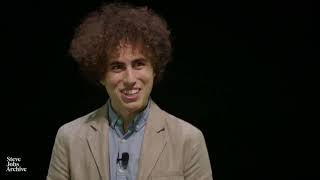
Gabriel Birnbaum: Engagement Maxing
Gabriel Birnbaum, former Substack growth designer and founder of the AI photo app Can of Soup, talks with Substack CEO Chris Best about engagement-maxing in social products, the tension between what hooks users and what serves them, and building Can of Soup's upcoming camera and photo-editing features.
Chapters
my, my eyes went black and everything disappeared. I thought about my, my past. I thought about my mother, and, uh, that didn't make it better. And, uh, you know, it's, it's, it's a real mess.
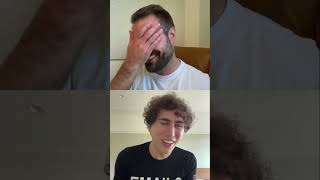
All right, well, we're doing some good, we're doing some good QA as we go here. Um, I, by the way, I'm Chris Best, uh, co-founder and CEO of Substack, and I'm here today with Gabriel Birnbaum. Is that how I say your last name, by the way?
That is correct.
Um, who is most famous as a former amazing growth designer at Substack Inc., but incidentally is also the founder of the hot AI startup Can of Soup. Uh, thank you for coming on my Substack.
I'm glad to be here, man. It's, uh, It's very exciting. It's only you could match my, my, um, shirt game.
Yes, this is— I'm cheating, this is my Roster shirt, but I do, I do love this one. It's become a daily driver. Um, okay, you have a really good question about engagement maxing, which I'm excited to talk about. Before we dive into that, could you give us like a 2-minute what is Can of Soup? What are you up to? Tell us about your world these days.
Sure. So Kena Soup is an AI photo sharing app. So you can use it to make these funny AI photos of you and your friends in any imaginary situation. So I don't know, I can make a photo of me and Chris on the moon comparing who has the best shirt. And you just type that and you get it. And so a fun new way to kind of interact with your friends.
It's an amazing app. If you don't have it for some reason, you should get it. Add me on there. I think I'm like— @chris or something. I've been having a ton of fun with it. I don't know, I still go in there and I'm just like, I had an idea. Usually it's either I had a fun idea for myself or I want to make fun of you, so I put you in a compromising situation and hope that you see it.
Yeah, those are always pretty good. My heart kind of stops whenever it's like, oh, Chris Best made a photo of you. I go, oh no. Well, what am I doing now?
What's your top— what's your favorite can of soup that you've ever seen so far?
For me, it's the one of, um, I think Vogue took that, or Vanity Fair took that photo of you, um, Hamish and Jay, and, uh, Jasmine made it for Ben's face 3 times. And that one, that one really did it for me. That's a fantastic one.
That was perfect. Um, all right, engagement maxing. Tell me, what's your— what are you thinking?
Um, yeah, so basically, like, I keep hearing people talk about, um, and this is new relationship to Twitter but also to Instagram, to a lot of social media right now. And it's— it— the conversation kind of goes like this. Um, someone says, well, I don't like, um, the posts I'm receiving They don't feel very good to me. And then some executive in a suit and with charts is like, no, actually—
You think people at Instagram wear suits?
Oh yeah, of course. The Silicon Valley version of a suit. And it's basically like, well, actually, engagement actually works. You can see these metrics, how you spend more time in the app, how you, you know, by all behavioral kind of ways to measure, I am more quote unquote engaged, whatever that means, to that content. And I find it, I find the discrepancy really weird between what people, how people feel about these products and how people use these products. I'm a big believer in revealed preferences as in like what you do is actually much more who you are than what you say. However, I wonder if we're living in a world where this won't age well. I think a good analogy in my head that's been, and I sincerely don't know the answer to this, but like, analogy that's been in my head is television before kind of The Sopranos and kind of that era of prestige television that people are like, oh, actually you want dumber shows that are not fun where the characters are undeveloped. You want to like bring to the minimum so people can just follow mindlessly. And it turned out that actually that was partly true, but there was certainly like a giant, like quote unquote market of media that wasn't being created, um, just through that, um, paradigm.
Very interesting. I'll tell you my theory on this that I've— is like half, probably half-cooked, half-baked— is when you get into looking at this closely, what you realize is that the convenient abstraction of the self as one coherent entity has started to break down. And if I sort of think about myself and my own conscious being, there's kind of like the me that talks and uses language and tells stories and explains myself and says what I want and thinks things through and is like a systems 2 thinker in the, whatever, Kahneman framing. And then there's kind of like the lizard brain version of me that just does stuff. And different types of media and different types of products speak directly to different versions of myself. And I actually think that I've come to believe that I've been doing this podcast before I was doing the live version of this. I was doing kind of like the traditional, like, you film a podcast, then you edit it. So I wound up doing a little bit of video editing where I was just kind of going through the thing of, like, When do you cut? How do you focus? Like, what looks good? What, like, what is the impact this media is having on me? And something I've come to believe is that both video and film as a medium and product development acts much more directly on the lizard brain. It kind of like circumvents the conscious mind and the version of you that is reacting to it most viscerally and powerfully, and the version that you have to take into account and design for is actually the unconscious, emotional, feelings-driven meat mind of a human. And I think that's true of film, and I think it's true of product development. And in order for things to work, quote unquote work, they have to work for that. And so this is why if you make a product that like sounds really good and has a good pitch and is like the eat your vegetables product, that's like, don't you in principle want a product that is like only boring good?
Instead of scrolling, why don't you learn about cookies?
Instead of scrolling, why don't you learn a thing, right? But if you, and you, and if you, you can make something that appeals to the rationalizing self, but it doesn't quote unquote, work.
It works. Yeah.
And then, so the, and the reverse is also true, which is you can make something that works that the conscious self actively dislikes. And I think that's the thing that you're, that's the thing that you're, you're, uh, you're where you're experiencing. Like, I have this on Twitter these days where I like, I go to on Twitter and then it's like, watch this video of this guy getting killed. Yeah. And then I watch it and I'm like, man, I hate that. I hated watching that. But the algorithm is like, yeah, but you watched it though. I'm like, yeah, I did, but I'm like, I'm not happy about it. And so I see the job of a good product designer kind of is almost like conspiring with the rational self against the base self.
Any concessions. That's how I feel. You know, it's like you, you actually want closer to like lizard as you can get, but you want some concessions, some, you know, it's like, yeah.
Well, part of what you're like, part of what you're doing, just forget about using a product just as a person.
Yeah.
You're often kind of like hacking your own lizard brain. You're like, how am I gonna get myself to work out? How am I gonna get myself to read the thing I care about? There's sort of like a little bit of like self-management that goes into that. There's like, if I do my homework, I can, to have a snack or whatever. There's that thing where you, as the putative master of your own self, need to figure out how to sort of hack your own lizard mind to becoming the version of yourself that you want to be. An aspirational mode of design for a software project, I think, is to kind of aid in that process. So this is what I would love for Substack to be, is this place where it's like, yes, this quote unquote works. This is compelling to the lizard mind. You're going to go, it's going to be fun, it's going to be good, it's going to be compelling, and you're going to look back at that time you spent after and say, yeah, I'm glad I did that.
Yeah.
And it's tricky to do both.
No, it is tricky. And it's like, and maybe part of it that I'm reacting to is like the incompetence of some of these products as in like they don't do the maxing that well. Like I think TikTok is the example where like actually like max the shit out of me. I don't care. Like it's amazing, you know?
We both know what I'm here for.
Yeah, we know what I'm here for. And in a world where like, I think Instagram to me is, which is my mortal enemy. I, it's always like, Oh, like another cooking video, another like painting dripping video. And it's like, sure, I'm watching this, but it's very replaceable in my brain as in like I could do one of many million things that would make me feel better. So like, it's almost like I'll do it, but whatever. And I think this is where like, yeah, I don't know. It's not a fun place to be in product-wise or life-wise, you know, as in like if you're living kind of, you know, Yeah, if you're kind of just like plugging yourself into the slot machine, like— Exactly.
Mindless. And I think, like, I don't want to be too judgmental about that. I think some of that is— is people want some of that, and some of that is okay. Like, you know, I'm gonna like goof around and scroll through a thing and like switch my brain off and watch a dumb reality TV show. Like, I'm not judging that.
No, no moral judgment. But I do think there's like that better is my thing is like that, that's the, that's the TikTok magic is like they just do that better. Yeah. And it turns out that if you max it, it's actually good.
Yeah, I think that's good. On the other hand, if I had a friend and they're like, man, I'm spending 10 hours a day on TikTok, I'd be like, it's probably not the right way to live your life.
I'd be like, why not 11? What, what can we do to get you to 11? 11 and a half.
The other thing that I think is interesting in this vein is I think your own tastes and your own attention span and your own lizard brain reaction to things are not totally fixed. I don't think a big part of what you— again, if you sort of think of the process of becoming a person and self-management, there's a lot you can do to shape your own tastes. And that if you've ever had something that's become an acquired taste or you decided you wanted to get into something and then did something that felt like a little bit of work and a little bit unpleasant, but then on the other side you were able to get into it and you feel like your life is richer for having developed the taste for whatever it is, wine instead of cotton candy or whatever the version of that is.
What's the latest taste you had to fight for?
Taste I had to fight for? Yeah, it's a good question. I haven't been doing too— like, there's something I've conspicuously declined to fight for. There's a lot of people that really are into wine. I kind of like wine, and I'm sort of like, anytime we're having wine, I'm like, whatever's good, man. Like, just— I'm sort of—
I don't know.
It's something I could imagine if I had a lot of time on my hands getting into, and I've just sort of passed on that thing. I do find I still really enjoy reading physical books, but it's a thing that's like, I have to kind of push myself to get into it. It's not a thing that naturally falls into my routine.
Yeah. It's a late-at-night thing for me, books, because it's like you can actually convince yourself, you know?
Yeah, you have enough time to sit down and do it and it's not fighting with other things. Um, but that's part of what, you know, if you're taking the highfaluting approach of like, what is the point of media? I think one of the points of media is the purpose of media is to have an immediate effect on me, right? I'm using it like a drug. It's like, make me happy, make me titillated, make me, you know, forget about the world, make me escape, make me enjoy this. And that's an important piece of it. But another important piece of it is Who am I becoming? What is this training run that I'm putting myself through? What is it turning me into? And is that getting me closer to the kind of person that I want to be? I think that second thing is the thing that the conscious mind ought to care about if it's smart. And then the thing that I feel like people are often rebelling against in that, the revealed preference says you like it, but you report that you don't like it. Is sometimes just a mismatch between those. It's like, I do like it the same way that you could be addicted to a drug and report that you really want to quit it and still— like, that's a real, that's a real, you know, that's a revealed preference. There's some people who will say— I think Bryan Caplan says this, the like extreme libertarian guy— he just says, oh, that's— you're just lying. Like, your revealed preference is actually just to use the drug until you die.
Just lie to code, bro.
Um, but I, I, yeah, I think it's like a meaty philosophical question and one that is not natural for a, uh, number-go-up tech company.
No, exactly.
Contemplate unless so explicitly.
I love the way you put it because it's, it's kind of like remove products, how would I want to treat myself? And it's like That's the— maybe that's where the chart's kind of— but it's so hard to like, you know, if you're making products, you know, I'm as growth bro-y as they come. And like, I would just neglect that. I would go full libertarian and like, go, the number keeps going up. Maybe that's why it bothers me. It's because it's within me, you know, to think this way.
I mean, you know, my answer to this is you kind of do, like, you want to put yourself in a situation where you can number go up, right? Like, you want to be able to make your thing work. And then part of my theory on this is like, well, just pick the game that you're playing pretty well.
Exactly.
Like, I think of this for Substack. If we put ourselves in a situation where we have to choose between something that we think is like good to do and something that's going to make the business successful. Already we're in kind of a pretty bad failure state. Even if we say, oh, we're going to be altruistic and not make the business successful, well, then we just have an unsuccessful business that doesn't really have that much of an effect on the world.
Pick up and go home.
And so I think the trick you want to do then is, imperfectly as it may be, yoke the success of the number going up to the value you actually want to create in the world and make sure that those things have some— give yourself some— set up the rules of the game that you're playing. And in the Substack case, this is like, the way that we win is when people are paying money for things they actually value. Could we get you to pay for something that maybe is not in your best interest? Maybe a little bit. It's not like a perfect thing. It's not this magical pill that makes everything never have any problems. But as a general rule, saying, look, people are going to make their own choices about what they spend their money on. And if we help them make the decision that by their best lights is giving them value and keeping them happy to the point where they're subscribing and voluntarily paying, that actually does set up a pretty strong positive incentive such that if we do kind of become growth bros and make number go up, we're on balance, like, yeah, actually doing something worthwhile. And you let people leave too, right? So it's like, if you, you know, to the extent that we're creators are betting, you know, their creative endeavor on the thing, having exit rights where it's like, yeah, you actually could, if we turn into evil Substack and start to screw you, you can like take your ball and go. The fact that option exists both means that people can trust us and come in the first place. And it means again that if we're just, even if we are being number go up growth bros. Now we just need, we need to actually treat people well. So you try to, this is my answer is you try to pick a game that you can play where when you win, the people that you're serving also win. And then once you're playing that kind of a game, that's, I think that's about as good as it gets. I don't think there's, there's, there's perfect.
No, I totally agree. For us it's like the, the, the silly, it's a very silly game, which is like, can you make more funny pictures? And like, There are many funny pictures that you can't make right now, or good pictures, better pictures, whatever that means. And doing that feels really straightforward and like unphilosophical, if that makes sense. I think when you involve money, it becomes also way less philosophical. I think, yeah, I almost don't envy as well the position that something like Twitter is on, which is like What is the game that they're playing, right? It's like, yeah. And you know, some of those guys, you know, they were figuring it out as they were building it. Like, I keep thinking about 2003. Do you know that like Zuck stopped working on Facebook for like 6 months to work on this thing called Wirehog?
No.
Oh, this is a crazy story. So basically, Sean Parker convinced them to do like a peer-to-peer sharing platform called Wirehog with some social features because, and they stopped working on Facebook for 6 months to work on that and it shipped. And you know, they kind of like kept both things going for a while. They just thought that it was much more, it would be more profitable. They didn't think at the time that Facebook would be this profitable. I think it is counterintuitive. That human attention is worth that much. Like, Facebook earns what, like $58 per US user per year? That's like a lot of money. And yeah, I keep thinking about if I were in that position, I don't know that I could have predicted that, like, it would have been— this is to say, like, I think it's fine if those guys picked games that, you know, they were kind of figuring it out, but Yeah, that's the, you know, you don't always know, you can't always plan in advance, you can't always predict.
I think this is one of the like weird mind fucks of being an entrepreneur is you're sort of like playing a game and figuring it out at the same time. You're kind of just like, you're constantly like in this state where your reach exceeds your grasp and you're kind of both trying to win at the current thing and sort of trying to sense like Am I going in a direction that's gonna work? Like, am I near the thing? Is this like— it's a, it's an interesting, interesting dilemma.
I think, I think the thing that keeps me sane is that it's something I took from you, which is the idea of what's the story. And like that, like if you like kind of like draft your thing as a novel, it feels like it makes sense. And it's like if the story kind of makes sense, you're usually like not that far off and you can kind of like create different stories and so on. But you know. Very cool.
Um, can I ask you what's next for Can of Soup, or is that top secret?
I could talk about it. You can ask me about Woody as well if you want. That's, uh, it's—
what's next for Top of Soup and what— Can of Soup, and why are you obsessed with Woody Allen? Did he do that?
Um, for Can of Soup, we're, um, making the— a camera. We're making the next camera. I believe. And so what we're doing now is giving people the ability to not only create these magical photos through text, but also to change their real photos. So that's the teaser. Woody Allen.
Oh, I gotta ask one question. That sounds really cool. How is that different than like a Snapchat filter or a, you know, of the things that we're used to?
I don't— I think it's probably a continuation of that. Um, there's much more you can do, right? If you kind of look at what a Snapchat filter does, it's kind of like it's always pasting things on top of a photo. And, uh, I actually think we got pretty far, um, in like kind of expression with those, those, with those constraints. But I think there's a lot more you can do when you can actually truly literally change anything about a photo. And I think they'll be very exciting. It's also, people get to create these things for each photo, let it evolve, let it be customized for each photo. So to me, it's almost like a continuation. That's why I feel like it's a kind of what Cana Soup is now is a bit like an anti-camera. Like you have a camera and then you have the thing that you type and it's The opposite. Um, and, and to me, what we're doing next feels much more like the next, um, iteration of what a camera is, which is like, it's a capturing device for, um, what you want to express, but also what you're living.
Sick. I look forward to it. In the meantime, everybody here should download the current Can of Soup app and make a photo of Gabriel Uh, that's just whatever you want, whatever, whatever you think would be funny, and then post it to Substack Notes and tag us so that we can, uh, we can see what you come up with. Um, okay, Woody Allen. Why, besides the obvious, why are you obsessed with Woody Allen?
Wait, what is the obvious? I'm gonna make it there.
Well, I mean, okay, you tell me, you tell me.
Well, I'm a Jew, you know, it's, uh, I like Woody Allen. I think it's, you know, It's, it's, I, I find, uh, basically I like his movies. Like fundamentally, I think he's a genius. Uh, I think his movies are like a good mix of like lizard brain and challenging, you know, kind of like intellectual brain is, and they're easy to watch, but they're actually quite good and rewarding at, at, at their best. And, and they're easy to watch at their worst, at least, you know, it's like they're never insufferable. Um, well, they're sometimes insufferable, but most of the time they're not insufferable. Um, And I think it goes back to my thing of, I think genius is hard to get. You gotta take it as you have it. So to me, he represents that as well. I think, you know, if you kind of focus on, people are always like, well, but what, you know, what about his relationship with the woman? And the story is he ended up dating his girlfriend's adoptive daughter when she was like 19. He was like 40-something. It's really weird, really bizarre.
It does sound weird on the face of it.
It's really bad. Still, they've been married 30 years. And I'm like, maybe they knew something we didn't. Like, this is the other thing that I'm like, I don't know. My favorite Woody Allen movie is Crimes and Misdemeanors, Sophia asked. So that's a good— Match Point, if you find Woody Allen annoying, you want a movie without Woody Allen on it, Match Point is your go-to. But that's where it comes from. And hopefully I won't get canceled because cancel is over.
I'll publish this and we'll see what happens. All right, I got one more question for you. And then we should do this again in person one time at Substack or your place would be fun. What's it like being a founder?
I feel like before founding, I kind of saw life kind of project by project, you know, like, yo, you're working a job and you're like, you're working on, I'll be here for 3 years, 4 years, you know? It's like, oh, I'm doing this side project and it feels, and I feel like a lot of kind of weird existential insecurity came with that way of life. And I, you know, at least for when I left Substack, one thing you wanted to ask me if I miss Substack, which obviously deeply, and I feel like designing Kenna Soup, you know, it came from conversations we had and it came also from the view of Can we, can I recreate this? And so it feels really deeply important to me and it feels like my life's work. And as such, I feel a sense of security and like self-security that I didn't know that I would get. That was the most surprising part. And so it feels great to feel self-secure about the work you do, even when it's like blowing up and it's weird. When it's fucking falling down and it's weird, you know, like everything in between, it have that security kind of like protects the, protects me from the explosions kind of.
That's awesome. Cool, man. Well, thank you for, thank you for joining the live. We'll talk soon again. Thanks, Gabriel. Subscribe to his Substack and download Can of Soup.
Thank you. Thank you, Chris. Cheers.