Mark Manson: On Killing Your Dream, "The Subtle Art," Anxiety & Depression | TUH #269
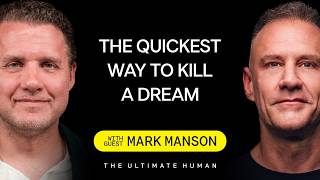
Mark Manson discusses why success doesn't guarantee happiness, citing research showing two-thirds of baseline happiness is genetic. He argues self-efficacy and strong relationships are the only reliable levers to raise your happiness set point, and that a bad relationship is worse than being single.
Chapters
The quickest way to kill a dream is to achieve it. People who achieve a big dream, the problem is, is they wake up the next day and they don't know what to hope for anymore. And so anxiety sets in, depression sets in.
You've called anxiety a crisis of hope. It must be something endemic in society that's causing people to feel anxiety.
We've become a society of people that like don't really know what to hope for. I think so much of it is just rooted in an inability to investigate the reality of what our assumptions are.
Us setting the wrong expectation and being let down because we framed an unexpected outcome, and when it doesn't happen, we're let down.
To really be psychologically well-adjusted and stable, you need something in your life that you wake up and you're like, I'm excited for that.
What are the exercises that help you honestly look at yourself?
What it took me a little while to realize is that, um, Ultimate Human.
We spend a lot of time on this show talking about longevity, biohacking, performance, and how to optimize the human body. But there's another side to human performance that people don't talk about enough: your mindset, your meaning, your relationships, and the internal patterns that quietly determine the quality of your life. Today, I'm joined by Mark Manson, bestselling author of The Subtle Art of Not Giving a F, and this conversation goes deep into burnout after success, the arrival fallacy, radical responsibility, ego, anxiety, and why the pursuit of a better life often starts with brutal honesty. If you want to understand what really drives fulfillment, not just achievement, this is the one episode you're gonna wanna watch all the way through to the end. Mark, welcome to the show. Hey guys, welcome back to the Ultimate Human Podcast. I'm your host, human biologist Gary Brecka, where we go down the road of everything anti-aging, biohacking, longevity, and everything in between. Everything in between. And today's guest is kind of one of those in-between guests. Um, I, I'm, I'm actually really excited to, to run this podcast. Uh, we did— he just met my parents and some of my staff outside, and we started a mini podcast in the kitchen before we got in here. But my wife is an enormous consumer of his content. My team has read all of his books. I think you're going to find today's podcast so insightful, so helpful. Welcome to the podcast, Mark Manson.
Thanks for having me. It's great to be here.
I'm pumped that you're here. You know, there, there's a kind of an interesting theme that, that runs through a lot of my podcast guests, and I don't think that you're, you're very different. I find that the most impactful people, like the people that are really moving the needle, that are the most passionate, the most driven, and making the greatest impact, have solved some kind of problem in their life. And you know, when I was looking back over your life and your history and some of your content, you know, you didn't have a particularly easy time when you were younger.
Right.
And I don't wanna mischaracterize it, but you almost felt like an outsider. Yep. In your teens. And you had a lot of what I would call typical traumatic events that so many people watching this podcast have grown up with, you know, divorced parents, didn't really feel you fit in in school, moved around a lot, financial struggles, and then sort of just went on your own personal journey of becoming this global nomad for a while, which I found really fascinating, which is how you met your wife, right? I mean, had you not done that, which is, it's always like so fascinating because, you know, here was this just global nomadism going on while you're trying to figure out life and, you meet your wife, you know, just randomly in, what is it, nightclub in Prague, I think? Or in—
São Paulo, Brazil.
São Paulo, Brazil, yeah. At first she rejected him, but he reeled her back in. But what's even more fascinating to me is after you wrote New York Times bestselling book, which right here on the table, and sold more than 20 million copies, had achieved a level of socioeconomic success, probably also personal success, you kind of arrived. That's when you hit the burnout phase. And I believe that this happens to more of us than will actually admit that. And I wondered if you just unpack that for my audience.
Sure. It's a great place to start because it's, I think it's something that surprises people. And like you said, it doesn't get talked about a whole lot. And I think some of it too is that people don't like hearing it. Because I think people who are on the ascent, who are climbing their personal mountain or chasing their goals and dreams, they don't like hearing that reaching the top might actually be problematic in certain ways. So to kind of—
Call it the arrival fallacy sometimes, right?
Yeah, well, so the best name I've heard for it, and you are correct that this is actually a prevalent thing, but very few people talk about it, but I'll get to that in a minute. The best name that I've heard from it, The best name that I've heard of it came from Quincy Jones. Will Smith relayed this to me. He said that Quincy Jones used to call it altitude sickness, where he said that people who climb too quickly, they get sick and they sabotage themselves to come down the mountain.
Wow.
Yeah. So to quickly kind of summarize what you were just describing, like, I was kind of this vagabond nomad happy-go-lucky guy living in Argentina, living in Thailand, running a blog, not a whole lot of cares in the world, right? And with some dreams and aspirations of becoming a writer and kind of revolutionizing the personal development space and self-help space. And what happened when "The Subtle Art of Not Giving a Fuck" came out is that basically all of the dreams that I had had up into, say age 30, came true within about a 6-month period of time. Wow. And at first it was absolutely amazing, right? It's like, all right, let's crack the champagne open. Yeah. Let's take a trip, take the wife to Paris. Like, let's really celebrate and enjoy this. But very quickly, I'd say within a month or two, a pretty deep depression started to set in. Wow. And what made it worse was that I wasn't expecting it. I was like, struggling to get out of bed every morning. And I'm sitting there, I'm telling myself, I'm like, this is the best thing that's ever happened to me. I'm killing it. I'm like, my book is everywhere. I'm getting invited to all these amazing places.
60 countries. I mean, it's astounding the level of success.
And yet I'm like, I'm feeling lost. And what it took me a little while to realize is that, you know, Probably the quickest way to kill a dream is to achieve it. 'Cause once you've achieved it and you wake up the next day and you're still the smelly insecure guy that you were the day before you achieved it, and you still have to take out the trash in the morning, and you still have a stupid argument with your wife about something, and you still are worried about what your friends think of you, you realize that, that, okay, this thing that I've been chasing for decades, it didn't actually change anything. It didn't fix anything. All of my problems are still the same. And that is, I think there's just this feeling of loss of like, I don't know what to do anymore. Like this is, I literally did the best thing I knew how to do in this world. And it didn't fix my problems. And it's interesting because as time went on, you know, I think the worst part about the altitude sickness is that you don't really feel at liberty to tell people, right? So it's like when you go see friends and family, everybody's like, "Oh my God, things are, this is amazing." Yeah, it's like if you had a big exit, you can't like bitch about it.
Exactly. Didn't you just sell your company for a lot of money?
Nobody wants to hear. Yeah, nobody wants to hear you cry about it. And so you feel like you kind of have to keep up appearances of like, "Oh yeah, it's amazing, things are great, I'm so excited." And it's funny because I, you mentioned the exit. So I had a friend in New York who was co-founder of a very large unicorn startup and had exited for 9 figures and also had not been working, had been kind of lost for a year or two. And it's funny 'cause I, a few months later, I ran into him and he was like, "So how are you doing?" And I said, "Oh, things are good. It's pretty crazy what's going on with the book and everything." And he's like, "Yeah, but how are you doing?" And I'm like, "Well, I'm getting by." And he just looked at me and he's like, "It's rough, isn't it?" And I was like, "You know?" And he's like, "Dude, I exited 2 years ago. I still don't know what to do when I get up in the morning." Wow. I think when you realize, when you're young, money motivates everything. Success motivates everything, status motivates everything. And then once you achieve those things, for the first time in your life, you have to ask yourself what's worth pursuing simply for the sake of pursuing it. And that's actually a very hard question to answer.
Yeah. I had a tipping point in my life and I've never really thoroughly unpacked it and examined it, but for 20 years, I was a mortality expert for large life insurance companies. And we were attempting to predict mortality to the month. And it was some of the most accurate science in the world. And at that time, like most people, I was in the pursuit of happiness, but happiness was a destination that I was, going to arrive at some point. And I was sort of willing to be miserable and tolerate it because I had framed this sort of destination in my mind. But realizing after 10 years, I was no closer to achieving this level of, I guess, socioeconomic success or financial freedom. And it was all that I thought about and all that I obsessed about. I wasn't present for a lot of that timeframe in my life. And a lot of things went really wrong. I had a divorce, I had a bankruptcy, I had several failed partnerships, I had several failed businesses. And I always felt like the victim. I was like, man, I had a really shitty partner. Man, I just picked the wrong spouse. You know, we grew apart. I got really screwed in this deal. I can't believe that I hired that manager. He's a terrible manager. And I do remember the day where I was just sitting in silence and just kind of exhausted. And I realized that I was exactly where I was in my life because of the sum of all my own choices. And I had no self-help motivational guru help me get there. This was just this sort of really internal realization. Started to tap back into my faith a little bit. And I just took radical responsibility for everything. And I was like, you know, I can see why divorce is my fault. I can actually see why I ended up in bankruptcy. I can see why that partnership went wrong 'cause I acted like an asshole. And it was both a very difficult point in my life, but a very liberating time too. And it was very shortly after that that I just quit that industry started a functional wellness clinic without even being a doctor. And that was the first time I did something without even having a plan. Like I didn't have any expectation for it. I didn't have this dream of success. And now that I look back, like it's, you know, from the outside looking in, that's been the most successful, that part of my life from then, at least socioeconomically and impact-wise. And I haven't really unpacked what I did or how I got to that point or why it was so impactful to me. And a lot of what you talk about, I actually wrote one of these down, the muscle of radical self-honesty. And I wonder if you'd unpack that too, because I think if people had a mechanism to stand up and go through these kinds of realizations, I think instead of letting 10 or 20 years just kind of slip by, and they could get ahold of it now and do something about it.
I think it's what it sounds like happened in your case, and this happens to a lot of us, is at a certain point, you look back on all of your failures and failed relationships and realize they only had one thing in common, right?
Yeah, yeah, you, right, yeah.
And it's like you can't dance around, you can dance around that for a year, maybe a few years.
It's just a shitty feeling when you internalize it too.
But once you get like 10, 20 years in, it's like, okay, I can't pretend this is not the common thread through all of these. It is funny, I think people, there's a natural reluctance to accept responsibility and ownership because I think people tend to confuse responsibility with blame, right? So it's, and a lot of this just, I think, comes with the way we're raised maybe the legal system, but like the idea is that if I'm responsible for my failure, that means it's my fault. That means I'm a failure or I'm a loser in some way. There's like some moral judgment that should come down on me. But interestingly, like I think those faults and responsibility are actually two different things. And while they can sometimes happen together, they can actually happen independently as well. Like the example I use in my book is that, you know, you wake up one morning and somebody has left a newborn infant on your doorstep, it's not your fault that that infant is there, but you are absolutely responsible now.
Right, right, yeah.
Like you have to take care of this situation. Or like if, you know, if I walk across the street after this podcast and I get hit by a car, it's not my fault I got hit by a car, but it's my responsibility to recover. And it's my responsibility to, go to PT and get the appropriate surgeries and take care of my body and make sure I'm rested. So, we have a tendency to assume that if it's not our fault, then it's not our responsibility. And, oh, don't accept responsibility 'cause then that's gonna mean it's your fault. And then that means there's something wrong with you. And the liberation of responsibility actually comes from what you just described is the recognition that you are making a choice in each and every moment of your life. Whether you realize it or not.
Yeah.
Like even not making a choice is a choice that you are making in every moment of your life. So it's every moment that arises, you have an opportunity to choose where your attention goes, how you react to a situation, how you're gonna move forward, how you're gonna see something, what the story that you're gonna tell yourself is. And when you take ownership and responsibility in every moment, you are now allowing yourself to control those reactions and control those narratives that you create for yourself.
If you know me, you know I don't recommend anything I haven't personally tested. That's not a marketing line, that's just how I operate. I've been on the road my entire career, different time zones, brutal schedules, no margin for days off. And so I'm constantly testing what actually works in my own body. NAD+ was something I keep coming back to. It's the molecule your cells use to produce energy and repair, and it declines faster than most people realize. When I found Symbiotica's Liposomal NAD+, The absorption technology is what got my attention. I tested it, I felt it, and it's been in my bag ever since. I'm always evolving what I put in my body, and this one has stayed on the list. I'm genuinely excited for you to experience it. This is the standard we hold every product to before it even reaches you. Now let's get back to the Ultimate Human Podcast. Is that just about like drawing yourself to the present and just being more aware of like, how am I feeling? What's coming at me right now? Like Tony Robbins talks about shifting your state or taking a pause.
Yeah.
Like he says, 5 seconds will change everything. You just pause 5 seconds before you reacted to the situation.
I think a lot of it is that kind of self-awareness because I think a lot of, so many people are, you know, you're in autopilot so much of your life. And so yeah, taking that pause, checking in with yourself, what am I feeling right now? What are my assumptions in this situation? There's an immense amount of value in that. And then I think it's like anything, the more you practice doing that, the more automatic it becomes, the more you start to recognize in each and every moment of like, okay, well, I'm bringing some assumptions to this argument, or, you know, or, oh, I have a tendency to be defensive in these sorts of situations. So maybe I should, you know, I should take a step back and consider if I'm doing that again. And honestly, like, this is, so the interesting thing is like this kind of separation between event and reaction, this gap that opens up, like this is what pretty much every personal growth or mental health intervention is designed to do, right? Whether it's therapy, right? Like a therapist is sitting you down stopping you and saying, "What were you feeling in that moment? Why did you respond that way? What was the assumption when you responded that way?" Whether it's meditation, right? Focus on your internal feeling, focus on what emotions are arising. Where did this come from? What's the thought that's arising? Where did that thought come from? Who's inventing that thought? All of these are just techniques. Journaling is another one, right? Like going back through your day and, kind of like thinking about why did I make this decision or what was I feeling at this moment? These are all ways of just kind of creating that 5-second gap that you just talked about, right? So the next time something happens, you're not just instantly reacting, you're actually able to stop, focus, kind of assess the situation and bring a little bit of wisdom to it.
Is that the ego that is taking over? Because, We talk about how the ego can be so damaging, right? And we can actually just steal years from your life, insulating itself, protecting itself, not wanting bright light to be shown on it. And I think a lot of people don't recognize how powerful that is in a negative sense.
Yeah, so ego's a funny thing because it's, The way it's used in popular terms, I think it's often a misnomer, right? So everybody's like, "Oh, that guy's got such a big ego." Like Donald Trump has a big ego.
It's like, "We dropped the most beautiful bomb. No one could drop a bomb as beautiful as I am. I'm the only person in the world that could." There's definitely an ego there. I mean, let's give it up.
The funny thing about the ego though, so like if you actually go back to Freud and like look at what his framework is, Basically what Freud said is he's like, there's two conflicting, there's kind of an inherent tension in all of us, right? So there's our animalistic impulses and urges and desires. It's just these like very, these subconscious wants. And then there's social expectations, rules, norms, culture, judgments from other people. And those two things are often in conflict. And so, The original theory was that the ego arises as a way to negotiate between those two sides, right? So it's like, I have a desire to, I don't know, like go eat an entire birthday cake by myself, but like I'm gonna feel sick and I'm gonna miss this podcast and I'm gonna like, I'm not gonna, be present for the work I need to do tomorrow, and it's gonna be like a whole mess. And so, you develop kind of these narratives and beliefs about yourself of like, okay, I'm not the type of person who does that. So, like when you tell yourself like, I'm not the type of person who just eats half a cake 'cause I feel like it, that's ego, right? That's self-definition. That is deciding who you are and building an identity for yourself. Where ego goes wrong is when ego starts to become inaccurate, like an inaccurate reflection of reality. So generally what we refer to as people with a big ego is people who have beliefs or self-identify in a way that is just completely false or wrong, right? So it's like, if I was a huge asshole to your whole team, and then I came on this podcast and told you I was the nicest person in the world, That's somebody we would call someone with ego, a big ego, right? So the misnomer here isn't that you should get rid of your ego, it's that you need to have an accurate ego. You have to have a clear, your ego should actually reflect your real behaviors, your real thoughts, your real feelings. Because if you delude yourself and convince yourself of a bunch of stuff that's not true, not only are you gonna make yourself suffer, but you're gonna make other people suffer.
And so how does, how do people just draw awareness to that? I find like a lot of your content so refreshing, like, you know, 10 Years of Therapy in 10 Minutes. And, you know, I've, and I've watched that several times because it made me realize partially why I'm so happy in my current relationship and why we had become different people in my previous relationship. And a lot of it was so poignant and so refreshing. Part of what you talked about was how when you're in a relationship, especially a marriage, you're not just signing up for that person and your interaction between yourselves, you're signing up for everything, their entire ecosystem, right? The time they go to bed, their sleep patterns, you know, their—
Their family.
Their family.
Their childhood baggage.
Like, it—
it all comes with their financial beliefs, their religious beliefs. Like, it all— it's all a package.
And you don't— you don't run into those things until— I mean, you can be 10 years deep and start and still be— um, I, I will say, I am the most deeply content that I've ever been in my adult lifetime. Um, amazing spouse, Sage. I'm like obsessed, um, with her. I watch her sleep. I love her so much. I mean, I love this woman. And, and we spend probably 50 or 60% of our time just laughing at each other. Yeah. You know, we really get each other's, you know, sense of humor. And I was an only child, so I didn't have spouses growing up. So I tend to act like a brother to my wife and like tease her like a sister just to push her buttons and see how far I can take things. But she knows that about me. It's just a great, you know, dynamic. But, you know, back to the ego and these realizations. So how does somebody wants to go on this journey of introspection? How do they start? Like, because like you, I'm not a fan of just all of these, this self-help motivational guidance that seems to be endless. And, you know, it has to, you have to have it with you your entire lifetime. You know, I love philosophically how you approach like, You can fix something and then you don't need me anymore. I don't need to be your therapist for 20 years. What I need to do is come in and fix this problem and sort of off you go.
By the way, before I answer that, I wanna say I'm happy you're bringing this up and I'm happy I'm here in general, just because—
I'm happy you're here too. And so is Malia, is the happiest that you're here right now.
'Cause we were talking in your kitchen, and we could get into my health journey at some point if you want, is it's, I'm a latecomer to this whole train that you've been driving. And it's, as someone who's been consuming a lot of content in your industry, a lot of your content and a lot of other people, I get frustrated at how much relationships aren't talked about because it's, as someone who has gone deep on the psychological side, like the number one, outcome driver in terms of wellbeing, both psychological and physical, is the quality of relationships. There's so much research around chronic stress, anxiety, depression. I think it's people who are depressed are twice as likely to have heart disease. There's research showing that people in happy marriages actually, their wounds heal faster. So like there's just all of this amazing research around social quality, relationship quality. And I feel like it doesn't get talked about.
You know, I think the reason for that is like we're biohackers.
Yep.
And we don't know how to biohack that.
How do you measure that?
And what I will tell you without naming any names. Yeah. Some of the people I hold in the highest regard, I mean, some of the most intellectually dominant figures in this industry that are mentors of mine, I've read multiple books of theirs, have the worst relationships.
Yeah. Yeah.
And have had multiple failed relationships. And I would love to unpack that.
To me, yeah. I mean, as a fan and a consumer, that feels like the elephant in the room to me. Yeah. When I like watch podcasts and read these books and things like that. But yeah, so back to your question, I'm glad we're getting into this. The first step, we already talked about kind of developing that awareness, right? So it's like, okay, what's the story I'm telling myself here? How am I defining myself? I think I'm a nice guy. What if I'm not a nice guy? What if I'm actually more impulsive than I think I am? I think the core practice here is to look at your beliefs about the world in general, but primarily about yourself. What are the things that you assume to be true about yourself? And what if they were wrong? What if, and I think of it, I always tell people, I'm like, try on beliefs like you try on a pair of jeans. You know, it's like, see if it fits, see if it feels comfortable, see how you look in the mirror when you try it on. You know, so it's like, try on that idea. What if you aren't a nice guy? And you've just been telling yourself, right? Sit with that for 10 minutes and actually go through your life and ask yourself, what would that mean? How would that explain my relationships differently? How would that explain how I approach people differently? And what you might find is like, oh, that fits better than what I had before. Wow. And that becomes kind of that moment of realization. Kind of coming back to the self-honesty piece, I think so much of the stress and anxiety in our lives is purely driven from an inaccurate view of ourselves and an inaccurate view of the world. We've adopted beliefs. We think the world should be a somewhat, we think the world should be a certain way. We think we are a certain way. And these things aren't true. And so we spend, We spend so much of our time and energy and effort trying to square the circle, so to speak, right? Like tying our brain in knots rationalizing, you know, oh, well, my business partner, you know, he was just really selfish and like, ah, I should have hired a better manager, right? And it's like, it's like no.
I did that for years.
Right, it's like, no, there was actually, there was a personal failure going on. There was a blind spot in yourself that you weren't seeing. And so I think so much of this stuff, there's all this talk about the mental health crisis and the anxiety crisis and all the kids are freaking out and all this stuff. And I think so much of it is just rooted in an inability to kind of investigate the reality of what our assumptions are.
I find that very refreshing. In fact, I've heard you talk about an experiment where this guy had before and after pictures and he got in really, really, really good shape.
Yes.
And they showed these before and after images to a large audience of men and women. And the men all picked the image of the guy when he was jacked, not when he had the dad bod. Yeah. And then the vast majority of the women picked the image of the guy when he still had the dad bod. And the way that you, um, explained and rationalized, it just made so much sense because you were like, you know, they looked at this figure and said, he doesn't actually look like he'd be that much fun. Yeah, he's probably going to leave the party at 9 o'clock. Um, he's probably getting up at 6 in the morning.
He's not gonna eat anything.
He's not gonna have birthday cake at my niece's birthday party. Yeah, yeah, I don't know if I want to sign up for that level of like discipline. The other dude looks like he'd be a freaking joy to hang out with.
Blast.
Yeah, and I'm gonna spend time with him. And I thought that reframing was, was really interesting. And I think it shocked me a little bit because I mean, intuitively I probably would've gravitated to the same thing.
Totally.
It's not to say that not taking care of yourself isn't a good idea.
Yeah, but it's funny. Yeah, so it was a post, it was, and I actually, it was funny 'cause I think it was a coach who posted a before and after picture of a client. And he like made a kind of a joke of like, "Look out, ladies, you know, this guy's coming," or whatever. And then a bunch of women replied saying, "I prefer him in the before." And then a bunch of guys replied to that saying, "You're lying, that's impossible." So then they ran the poll and it turned out, yeah, like 80, 90% of the women preferred the dad bod and 80, 90% of the men preferred the like the chiseled jack guy. And it's just, it's interesting because I think it's reflective of like how people come to the same experience with a completely different lens, right? As you know, the women were coming to it of like, "Who's, how am I gonna feel around this person?" Whereas the men were coming to it as like, "How reliable and disciplined is this person?" And it's the men admire the reliability, the discipline, the ability to achieve an extremely difficult goal. Whereas the women are like, "But yeah, am I gonna feel bad around him? Is he gonna be fun? Is he gonna like—" pay attention and be present if I wanna do something with him. And it's, again, it's just that it's an example. And of course, both sides seemed completely incapable of accepting that there was another perspective out there. But it's another case of just reevaluating our own assumptions about things and being flexible with them. It's understanding that, I think that that's another piece about the ego thing, that it's not just that your ego needs to kind of reflect reality, you need to have a flexible ego. You need to be willing to change your mind on things. And I think it's so much of our stresses originates in that rigidity of, "No, it has to be this way." That guy has a six-pack, he has to be attractive because I want a six-pack. It's like, well, Maybe those things— maybe those things aren't true, and maybe you don't need a six-pack, right?
Hey guys, let me tell you about one of my favorite new hydration drinks. Now, this is for distance athletes, HIIT cardio exercisers, people that sweat a lot or exercise intensely. And A-Game is a hydration drink. It has 8 essential vitamins, it has all of the electrolytes, the entire suite of B vitamins. Before you freak out and read that it has 21 grams of sugar, which it does, the sugar is coming from natural cane sugar and honey. My preferred mechanisms for getting glucose into the blood during intense exercise. It also has natural flavors, but these natural flavors don't come from bacterial fermentation. They actually come from real citrus fruits, and the color is from vegetable juice, not artificial dyes. So next time you're looking for a great hydration drink and you're exercising intensely, A-Game is your choice. Now let's get back to the Ultimate Human Podcast. I want to get back into the relationship thing, but, um, you know, there's— when you talk about the you know, research on longevity, cardiovascular disease, first of all, I completely agree with you. If you look at big meta-analyses and Blue Zone data, real longevity data, there is a common thread that is a non-negotiable in all of these Blue Zones and the big meta-analyses. And that is this sense of community and connection. But I don't think we really define that. Yeah. Right? And, You know, one of the longest running studies ever done in longevity, the Harvard Longevity Study, it said the number one predictor of lifespan was the quality of your relationships. Yeah. And yet you're right, we don't spend a lot of time talking about it. And I think a lot of it is because, and this is a question for you, we don't really know how to define connection. Yeah. Like, what does it really mean? Like, you know, I wake up every morning and I go to my son's house and there's like a group of guys that, you know, we work out, we go through this intense workout together and it's my favorite part of the day. And it kind of sucks during the workout, but I do feel that sense of community and connection, but maybe you could unpack that for us.
I do think this is at the heart. Of the issue. There's a thing in psychology called the legibility bias, which is that we tend to focus on things that are easily measurable and counted. And we tend to focus less on things that are kind of intangible and difficult to define.
Legibility bias, I gotta write that down.
So it kind of makes sense, right? Like if you, let's say you're really getting into longevity and health and you really wanna start optimizing things in your life, Well, there's this whole nebulous area of relationships and community and feeling socially connected. It's like, well, what does that mean? Or I can test 500 milligrams of magnesium versus 300 and see how I feel.
Yeah, you look at these 58 biomarkers and I can try to move 'em. Exactly. Which is kind of the world I live in, right?
Right, right. And there's tons of value in that. And it's part of the value is that you get that measurement, right? So you can see, you can experiment, you can get the outcome, you can start optimizing and, you know, all this stuff. On the relationship and the social connection side, it's much more difficult because ultimately it's subjective, right? Like maybe you feel completely connected and loved with 6 people really close to you. Maybe I don't feel connected and loved unless I have 10 people close to me or whatever. Some people like to have a few really strong relationships. Some people wanna have many, many, many social connections and wanna be able to, see a lot of people at different times. So everybody's a little bit different. A lot of it has to do also with your relationship with yourself. So what you see consistently is that people who feel a lot of shame, negativity towards themselves, low self-esteem, they have trouble feeling safe and secure in a social relationship or a romantic relationship. And so even though they might have a, a marriage and kids and tons of friends around them, they still feel alone. So, it is difficult to measure, it's difficult to track. I mean, you can put numbers on it like the Harvard study did. You can, but it's short of just kind of tracking things like mood, life satisfaction, psychological wellbeing, emotional volatility. These are all self-report metrics, right? And so you're literally just either going to people and asking them on a scale from 1 to 10, how loved and accepted do you feel this week?
Yeah, yeah, yeah. And most people have never even considered that.
Yeah, and you can do this with yourself as well. There are a lot of mood tracking apps and things, and you can actually start identifying a lot of interesting variables if you track your mood over a long period of time. But yeah, I think this is why it gets overlooked in the longevity and health conversation quite a bit, just 'cause it's like, how do you measure it?
How do you measure it? And like, what are the ways to hack it? Yeah, right. Right? I mean, we have ways to hack detoxification, fat loss, muscle building. We got peptides for this and peptides for that. And the vast majority of these things work, But hacking our relationships, and when I see my peers that are struggling with very difficult relationships, because it's the one area where we haven't really developed good hacks. Like, everybody in our industry is waking up in the morning, getting sunlight in their eyes, right? The data's in on that. And so every one of us would be easy to put a hit on because within 30 minutes waking, we're all outside.
And meanwhile, they don't talk to their wife until 12:00 PM. Exactly.
And that's why I was so excited to have you on today because I find what you talk about so refreshing. I feel like I accidentally figured it out with my current spouse. Yeah. Because I'm in the place where I think people would love to be with their relationships. But if you're not there, how do you go about doing it? Yeah. What are the hacks? I mean, or what are the exercises that you go through? Very specifically, like, you know, should I sit down with my spouse and say, hey, what are your non-negotiables? And here's my non-negotiables. I mean, should we open that conversation? Like, and so to deepen the relationships that we have, um, because I don't think connection comes from the time you spend around people. I think it comes from the time that you are actually connected. Yeah, with them. It's quality. You know, there, there are a lot of house— houses full of husbands and wives and kids that don't really know each other, right? They coexist. It's more of like a cohabiting place where the other's just a dependency, but I don't know that they're really, you know, they've really woven that fabric.
Yeah, I think it's, the way I would characterize it is that it's primarily a skills issue. I think it's useful to see, relationship quality as the output of developing certain skills. So, we've already talked about self-awareness, being able to kind of question yourself, humble yourself, look at blind spots. I would describe that as one fundamental skill of relationship quality, mental health. I would say another one is quality of communication, which is what you're getting at. And it's funny because it's, It's super cliché, right? It's like, oh, married couples, they've gotta communicate. And it's, again, it's not just about sharing information. It's about intent and empathizing with the other person. It's understanding their values. It's understanding not just what happened at work today, but how do they feel about what happened at work today? How does that relate to, the thing that maybe they've been insecure about the past couple years, checking in with them about it, having that slightly uncomfortable conversation of, "Oh, wow, that sucks that your boss said that to you. How does that feel given that you're unsure in this new role or whatever?" So, it's like seeing the conversation underneath the conversation, empathizing with the emotion, addressing it directly, and then, and then being comfortable, you know, kind of playing in that more vulnerable space. That's absolutely another skill. Ironically, I would say the responsibility piece comes back into play here because what you see in a lot of unhealthy relationships, I would actually characterize, quote unquote, a toxic relationship is two people who chronically don't take responsibility for themselves and/or try to take responsibility for the other person. So we come full circle a little bit here in that—
Try to fix them. Exactly.
When you see a dysfunctional couple, almost all in every single case, at least one of the person is trying to take ownership and responsibility for the other person's feelings and actions. They're saying, "Oh no, no, no, let me tell you how to fix this in your life. Oh no, you're angry. It's your fault that I'm angry. You shouldn't have said that," right? It's like these things are all— It's a relinquishing of responsibility over my own actions and emotions and understanding that my wife's actions and emotions are her responsibility. And so we can come together and communicate with them, right? It's like I can come to my wife and say, "Hey, when you said that, I got pretty upset. Let's talk about why that happened. I'd appreciate it if you didn't do that again." Versus like— Appreciate it if you didn't do that again. Yeah, yeah, yeah. Versus like, "You made me angry. You're such a bitch, blah, blah, blah, blah, blah." blah, blah, blah, right? It's like what's subcommunicated in that latter accusation is that my anger is your responsibility. So, don't do that again.
Wow. And how much of this is us setting the wrong expectation and being let down because we framed an unexpected outcome and when it doesn't happen, we're let down? You know, in the infrequent times where, you know, Sage and I have disagreement, it's usually because, at least from my perspective, that I've set an expectation for how she should behave. Yeah. That is not anywhere in line. There's no basis for me to do that. Yeah. Like we have, You know, I have invited a bunch of guests over to the house that I didn't tell her were coming and they're there. Yeah. And she's in her pajamas working on the computer and I expect her to get dressed and come out and be happy and be engaging and come out and meet these people. And she's like, no, I'm actually doing work in here. I didn't know they were coming over. You didn't tell me. And then I'm upset with her, you know? Yeah. And then when I reframe it, I'm like, you know what? I don't know why I set that expectation on her. Yeah. I'd be actually pretty upset if she set that expectation on me. Yeah. You know, at least give me the courtesy if you're gonna, you know, if you want me to be socially engaging with a bunch of new strangers, at least give me a heads up that they're coming to you.
Just spring it on me. It's the classic relationship scenario. I often call that the mind reading scenario. Yeah. You know, it's like where like my wife will get mad at me for not doing something and I'm like, I didn't know you wanted me to do that. I can't read your mind. And then, you know, she's like, "It should be obvious." And I'm like, "Well, it's not." You know, that happens quite a bit, right? So communicating expectations, checking in on things. The other thing that happens a lot in relationships, especially early on, is that people have the different definition for things, right? So very, simple and common example. My wife and I, we have a very different definition of what a clean kitchen looks like.
Oh dude, you're hitting all the high points. So, so does my wife. Yeah. I'm like, if there are no tennis shoes on the counter, we're doing well.
We're doing pretty good. Yeah, we're doing pretty good. Yeah. You know, we have, we have different definition of, you know, what quality time looks like. We have a different definition of what a fight looks like. You know, so it's, people come from different families, they come from different cultures, they come from different backgrounds, they have different and so you have different definitions of all these things. And what's funny is that I think a lot of couples early on, they get into trouble because they try to change their partner's definition. They're like, "No, no, no, no, this is what clean is," or "This is what quality time is," right? Instead of just understanding each other's definition. Like my definition of a clean kitchen has not really changed, and I've been with my wife for 14 years. but I sure as hell know what her definition of a clean kitchen is. Yeah. And so when she's coming home from a trip, I'm like, we gotta get it.
We're gonna meet her definition.
We gotta get it Fernanda clean, not Mark clean. Yeah, I love that.
You know, and I think, you know, this expectation leads to a lot of apprehension. You know, you've called anxiety a crisis of hope. You know, I sat with that definition for a little while because it makes a lot of sense to me that, you know, hope is your, at least belief that something's gonna turn out a certain way. And when it doesn't, or that you hope certain person isn't at a dinner party when you arrive, or you hope that, you get to head home early, or you hope that the food is good at a restaurant. And again, I wonder if you would, like, give us some context around that too, because when I do stage talks and podcasts and lectures, and I'll just generally ask the audience, you know, how many of you suffer from anxiety? And 70% of the audience will raise their hand. I'm like, wow, there can't be a condition, you know, a pathology that exists at that scale, right? So it must be something endemic in society that's causing people to feel anxiety.
Yeah, so I have a pet theory around this, which ties into that hope thing. So anxiety, it's, I think it's the only emotion that's very future-focused. So fear is, there's a lion in front of me, it might kill me, it's present. It's like this thing is happening now.
Yeah, I'm standing on the edge of a 30th floor balcony and I'm afraid of heights. I mean, that's—
Yeah, whereas anxiety is a fear of what might happen in the future. It's like, okay, well, if I walk through the savanna, I might come across a lion, what am I gonna do if that happens? So it's kind of this mental preparation for the future worst-case scenario. That starts happening. And I think there are a couple things that have kind of scrambled our brains around this. One is that we are so overexposed to all of the possible problems in the world that could happen in the next week, year, 5 years. We are constantly, you go online for 2 seconds, you're getting hit with messages of like, you know, World War III is gonna start, there's gonna be another pandemic, there's gonna be global warming. There's just all of these narratives that are constantly taking place that things are getting awful, things are gonna, the world's gonna end and all this stuff. And so that's one piece of it. But I think the subtler piece of it, which is the crisis of hope piece, is that to really be psychologically well-adjusted and happy and stable, Humans need something to look forward to. Like you need something in your life that you wake up and you're like, "I'm excited for that." I'm like, "I can't wait for that to happen," or, "I can't wait to pursue that." And I think this comes back to where we started, you know, after "Subtle Art," like people who, the altitude sickness piece, like people who achieve a big dream, the problem is, is they wake up the next day and they don't know what to hope for. They're like, "Well, I just did all the good things I could have imagined, so like I don't know what to hope for anymore." anxiety sets in, depression sets in. I think we live in a world where we're so over-aware of all of the problems of everything. Like there's just anything, name anything interesting or exciting or whether it's a job or a relationship or moving to a certain place or a political movement or whatever, like we are so, Everything is criticized so often and we see the downside of everything so clearly that I think it's, we've become a society of people that like don't really know what to hope for. Like I don't know what's good anymore. I don't know what a better life even looks like, much less how to get there, right? So it's, I ultimately see it as, there's kind of a lack of clarity of like what matters and what is good and what's worth pursuing. And when you remove that from people's psyches, anxiety starts setting in, right? 'Cause it's like, well, I can't think of anything good in the future, but I can think of a lot of bad things in the future, right? So it's, and then the brain's a predictive machine, so that's where it goes.
And all it has to predict is what's happened in the past. I mean, it only has its experience. Experience, and then it just supplants that experience in, in, in the future, you know. You know, well, you know, my, my relationships never work out, um, you know, so I'd be shocked if this one did, you know. Um, and I've even heard sports psychiatrists and sports psychologists talk about how, um, they'll work with professional athletes and, uh, a golfer will walk up to something they need to one-putt and he'll he'll say out loud, "Probably gonna two-putt this." Yeah. You know, in some ways allowing themself to fail by, but meeting their expectation of failure, which in a weird way makes them less anxious. 'Cause see, I told you I was gonna two-putt it. Yeah. And then when they fail, they've met the expectation of failure. Yeah.
There's this classic saying in psychology, which is that people would rather be right than happy. Yeah, that's exactly.
And that's a perfect example of that. So do you think that we frame things like that either as a defense mechanism or without even being aware that we're doing that, and therefore we're sort of subtly setting ourselves up to achieve mediocrity, to strive for mediocrity and just stay in that comfortable soup of not taking too much risk and staying. Or life is never great. It's just kind of okay.
It's, in a weird way, it is the comfortable, easy way.
Like, what they say, good is the enemy of great, kind of, or, you know, if it's good, I don't want to do anything about it.
Yeah, there's a certain, it really, it's kind of sick, but like, there's a certain psychological safety in underperformance, right? Like, it's to do something truly great, you have to invest a lot of energy, emotion, effort, strain, right? And you still might not succeed. So like, that's a lot to give up for an uncertain outcome. Whereas if you kind of set the bar low, you're like, well, I'm pretty sure I can hit that. And I don't have to invest as much. And yeah, it would be disappointing, but I'd rather be disappointed than give something my all and then come up short, right? So like a lot of people unconsciously, they kind of make that negotiation in their head. And it's very tricky. I think we sabotage a lot in that way without even realizing it. It's crazy if you look at, If you look at the research around goal achievement in psychology, the number one factor of whether somebody achieves a really difficult goal is something called self-efficacy, which is literally just the belief that you're capable of achieving the goal. Yeah. It's something like if you just honestly believe that you're capable of achieving something, it increases the chances that you achieve it by like 33% or something like that. Yeah, it's so stupidly simple, but it has just a massive outsized, outsized effect.
Guys, early access is finally here and I could not be more excited to launch the Ultimate Filtered Showerhead from Cold Life. You've heard me say it before. Your skin is the largest organ in your body and it is not a barrier. It is a gateway. Every single day it absorbs chlorine, fluoride, PFAS, and heavy metals straight from your tap. This showerhead eliminates those toxins instantly, and it's the simplest way to protect your health doing something you're already doing every single day. It installs in 60 seconds. It has incredible water pressure, and it's finally live. Go check it out now and use my code ULTIMATE10 for 10% off. Be one of the first to experience the Ultimate Showerhead. Now let's get back to the Ultimate Human Podcast. I meet and deal with a lot of, you know, young entrepreneurs, and I love the entrepreneurial spirit. And, you know, there's sort of careless overexuberation, right? Without any semblance of a plan or this is gonna be a billion-dollar company. And I'm like, yeah, okay, let's talk about how it gets to $100,000 first, right?
Let's talk about your first sale.
Yeah, yeah, let's talk about the first sale. And, you know, and they're like, well, Coke or Pepsi or, you know, Monster Energy has done it, but, you know, and this tastes better, so it's gonna be $1 billion. And I'm like, there's a lot of distance between cup and lip there. But by the same token, there, I feel like there's a lot of these young entrepreneurs that because everything is not mapped out and because everything is not perfect, they actually really don't believe much in their idea. You know, I went through this with, going through this with my daughter, and she's launching a chemical-free skincare line, which she's deeply passionate about. She's a nurse, she had background in health services administration, just always been healthy, always been very, very cautious about what she's put on her skin. And when she got her medical degree, she really started going down the rabbit hole of all these things that damage your skin, phthalates, parabens, polyfluoral alcohols, and she just went headfirst into starting the skincare line. It's been amazing to watch her as a young entrepreneur unpack this. But what I noticed that she does a lot of times is, you know, when I ask her if she'd shared this idea with some of the people that she holds in the highest regard in her life, she hasn't. Because she's afraid that the idea is not yet good enough. So I can see that her belief, and hopefully this podcast comes out after she launches this, sort of throwing Madison under the bus. But we talk about it a lot, but it's, you know, is her belief in it as strong as it needs to be for someone to like lead a brand and lead a company that you're passionate passionately wanna start.
Yeah, you almost have to become like an evangelist for something.
I say, look, it can't be what you do, it's gotta be who you are.
Right, my favorite line around this was a long time ago, like 15 years ago, Elon Musk was giving a talk at a conference or something, and somebody in the audience asked him, they said, what words of encouragement would you give to struggling entrepreneurs? 'Elon said, "None, because if you need words of encouragement, you shouldn't be starting your business."' Wow.
Yeah. And it's— That's really powerful.
Yeah. But it's so true. It's, you need to believe in something so deeply because it's, look, even if it is a great idea and even if people are excited about it, the process of building a business of like, the amount of embarrassing launches and ad campaigns and, you know— Oh, talking about mistakes, you probably— Failure, fear of failure, yeah. Yeah, I mean, you fall on your face so many times and very publicly. And so, yeah, you need the underlying belief in the business needs to be so strong that all of that feels worth it.
Yeah, you know, when we started the Ultimate Human platform, we started this media platform with the sole intention to give without the expectation of receipt. And the reason why I did that was because I wanted to remove all of those initial expectations that would create these, this systemic and repeated failures. Like, oh, we didn't get enough affiliate links or we didn't put things behind a paywall or grow the Instagram account as fast as we thought. Just took all that pressure off and said, We just need to create the most intentional, authentic information and give it for free. And if we've accomplished that, we've succeeded. So that's how I'll define the success of the business. And what it allowed us to do is like put all of the effort into the message. And since then we've monetized it for sure, but put all of the intention into the messaging and not into all of those things that create all of those landmines for failure. And when we got to tens of millions and then hundreds of millions of views and I saw the adoption rate and likes and shares and forwards and comments, I realized that we'd done it right. And I was trying to set up the media platform to not fail. Yeah. By removing a lot of those expectations. But so for entrepreneurs, because having a relationship with your business is like having a relationship with your spouse. Yeah. And I think a lot of people need to prepare for that. And, you know, I started a company with my spouse when we were dating, then we got engaged and we got married. And if anybody tells you that you can start a company with your, significant other and separate business from pleasure. That is the biggest lie I've probably ever told. Oh, kudos to you.
I'm sitting here in awe right now. I'm like, that's a lot of stress.
Oh dude, so much. And we had a mixed family. You know, I had 3 kids. Wow. Divorced. She had 1 young daughter, divorced. We moved the families in together. Oh man. Then, you know, we started a business together and initially it did not go very well. Yeah. So we were making like, you know, 15-year married couple with the same family decisions, like 3 years into our relationship. Wow. And I've, my view on relationships is that the best relationships are the ones that have gone through everything that is meant to tear them apart. Yeah. And somehow they haven't given up on each other. Yeah. But that's my sort of rudimentary definition of a good relationship because I experienced that because, you know, when you go through all those things that are meant to tear you apart and you somehow figure it out, then when some measure of success comes, it is such a panacea, especially if you've achieved it together. Yeah. But any case, what are some things that young entrepreneurs and young folks in relationships, especially women, because You know, I always quote the statistic that 82% of all autoimmune disease is found in females. Not because autoimmune disease is selective by sex, it's selective by weakness. And what a lot of the research intimates is that women have a tendency to put the needs of other people before the needs of themselves. They call it caregiver syndrome. Yep. And by slowly but consistently putting themselves in the backseat, their spouse, their kids, their career, their girlfriends, their coworkers, what have you. They haven't taken any time for that introspection, for self-care, for what actually makes me happy. And they wake up one day, they don't like what they see in the mirror, and then they also feel terrible. And very often, because that kind of stress weakens the immune system, now they end up with Hashimoto's or or some other kind of autoimmune condition. So what would you say to those women? And what would you say to, you know, young folks in a relationship or starting a business? What are like the exercises that build the mental resiliency that help you create community and connection, that help you sort of, honestly look at yourself to see some of these blind spots, like you say, because if I was to give any advice to any, and I don't give any kind of relationship or advice on success, but the exercise that I inadvertently went through in my 40s, if I had done that in my 20s, I can't imagine how much different my life would've been. [Speaker] Right.
I think the thing that comes to mind is just, And I ask, so as you can imagine, one of the most common questions I get from people is, "How do I stop giving a fuck?" How do I stop giving a fuck? Especially how do I stop giving a fuck what other people think? And I noticed— That's a big one. This is much more prevalent in women than it is in men. And I think this is something that maybe has gotten missed or hasn't gotten broadcast. As women have ascended and achieved more educational and professional success, there's an aspect of it that I guess was never shared with them, which is that there's a piece of kind of reaching those higher rungs is being willing to embarrass yourself, being willing to be hated, being willing to fall on your face in front of thousands of people and be judged by them and be criticized by them. And it's not, Historically, all the great men of history who achieved all these extremely, the stratosphere of achievement, it was not pleasant getting there. Right. It was not a picnic.
Where they say nobody enjoys the climb, everybody enjoys the view, right?
Yeah, it was not a picnic. And so I often hear from very talented, driven, ambitious women, and it's a very common question of like, how do I stop giving a fuck what other people think? And I always throw a question back at them back at them, which is, and this relates to your daughter, first of all, you're never gonna stop giving a fuck what other people think. You're a human. It's good that you give a fuck about what other people think, otherwise you'd be a sociopath. Yeah, so it's like— Exactly. First of all, let's acknowledge that, yes, you should care what other people think. The question is, what do you care more than what other people think? And the question I throw back to them is I say, what are you willing to be, What do you believe in so strongly that you're willing to be disliked for it? Wow. Because if you can't answer that, then yes, your default is just going to be make people like me. Yeah. Do whatever. Classify. Do whatever is gonna get other people to like me. Wow. And some, like, to really level up and just for entrepreneurs in general, right? It's like to get through that pain period, you have to, to be working on something that you believe in so strongly that it's like, yes, your family's gonna laugh at you. Your college friends are gonna stop returning your calls 'cause they're like, "What is this guy doing?" Bukowski has this amazing sequence in one of his poems about this. He's like, you have to, "You'll be laughed at, you'll be derided, you'll be insulted, you'll be isolated." He said, "Isolation is the gift. Isolation is the opportunity for you to hone your craft." And it's a package deal. And I think it's sitting with that question of like, What are you willing to be disliked for? What do you believe in so strongly that you're willing to embarrass yourself for it and feel like it's still worth it? It's not easy to find that thing, but I think when you do find that thing, that becomes kind of that north star. It can be that thing that you do wake up and hope for every day, right? It alleviates the anxiety. It gives you direction and it gives you, something to keep climbing towards. Yeah.
You know, often when we talk about community and connection, people also talk about their purpose. And I get asked a lot on podcasts, even though I'm not a profess to be any form of relationship expert by any stretch, how do I find my purpose? Like, how do I define my purpose? You know, because, It is so true that when you don't have that north star, it's very detrimental to your health. And we've now unpacked this in a way that we can link negative emotional states and elevated catecholamines to heightened cortisol, from heightened cortisol to adrenal fatigue, to impact on the immune system. So, the biohackers, we can draw this biophysiological line. We can give you all of the— the rationale behind the cellular biology of how stress makes you sick. Yeah. What we haven't figured out is how do we help people identify who they are and how do they figure out what their passion is? Some people are blessed. They were really good at soccer. They were, you know, a talented athlete and they found that sport. They went to an Olympian level or they played professional sports and that was their calling. And then they were able to manage their way out of becoming a professional athlete into society and they did just fine. But for those people that are sitting around, they're an entrepreneur or maybe they're a 9-to-5er. The one thing they do know is that they're unhappy with their status quo. The one thing they haven't been able to crystallize is, you know, that why am I here and what is my purpose? Do you have any ways to help people frame that?
Yeah, it's a difficult question. And it's funny 'cause I often, I kind of hate how this question's often, you know, even—
And I don't wanna make it so, you know, kitschy because, you know, I think people stumble upon it sometimes because it's like, it's the most painful thing in their life. Maybe they suffer from drug or alcohol addiction, they fixed it, now their purpose is to help other people.
First of all, yeah, I feel like purpose is, it's similar to spouses, right? Like some people meet their spouse when they're like 15 and they're just together for their entire life. It's rare, but it happens. And I think the same thing is true with purpose. There are some people that when they're 12 years old, they're like, I'm gonna be a doctor. And then they're a doctor for their entire life and they love it. And it's like, good for you, you won.
I hate you. Yes, you little nerd.
You won the existential lottery. You're purposeful. Well, okay. But most of us, most of us like finding our lifelong partner. There is a very long process of trial and error in learning from the mistakes, learning from looking in the wrong places. So to begin with, I always like, I don't even like the verb find. Even though that's what everybody uses. It's more like, it's more like develop a purpose or cultivate a purpose in your life. So what's interesting when you look at the research around this, it's what, like, if you ask yourself, what is a sense of purpose? Like what gives your life a sense of meaning? It's interesting, it's kind of at the intersection of two things. So the first thing is what, What is unique about you? What seems particularly unique or privileged or special about you or your situation or your context in life? And that could be anything from you have an extremely unique talent or skill that most other people don't have. It could be that you grew up, you had a very unique experience or came from a very unique background that most other people don't have. It could be that you have I have very unique relationships or connections in the world that most other people don't have, but it should be something that is very rare or unique that you have access to or that you inhabit. So that's piece number 1. Piece number 2 is how do you make the world a better place? And then purpose is when you connect those 2 things. So you're taking the thing that is your gift that is special and unique to you, and then you are, am leveraging it in a way that makes the lives of other people better. Yeah. When you combine those two things, that's when you start experiencing a sense of purpose. Wow. And those two things are hard because the first one is that a lot of people look at their lives and they're like, well, there's nothing special about me. I'm just a guy, right? Yeah. Like I just hang out and play golf and, you know, whatever, watch the movie. You really have to sometimes dig deep and really kind of explore your interests, explore your passions, your hobbies, your talents, and get a little bit of experience in the world to like really start understanding like, "Okay, what do I have a knack for? What is kind of unique about me? What do I do a little bit differently than most people?" One question I often ask people to look at is like, "What comes easily for you that seems very difficult for other people?" 'Cause that— and it doesn't even have to be professionally related. It could be something that's like, I'm really great at meeting people at parties, you know? Yeah. And I'm always the one introducing my friends to people and I'm always connecting people. Like that can be your superpower. The second side is also difficult because this comes back to the hope thing of like, what is worth pursuing? What makes the world a better place? What's something worth hoping for? And that really comes down to understanding your values, understanding, ultimately what you care about and what is particularly important to you. And so then you kind of get a marriage of those two things, but it takes time to find them. And just from what you've shared from your personal story, it sounds like you kind of went through a whole process. You did the 9-to-5 thing and then kind of came into this industry later in life and then probably found a merging of your talents and skills with all of this science and all these things. This amazing information that you can share with people. And it's like, you didn't just wake up and do that. No. Like that sounds like it was a multi-decade process that you had to work towards. It was. So people often talk about purpose as if it's something that you like find under a rock and it's like, oh, there's my purpose.
I found it. I've been looking for it. I left it in the bathroom.
Finally found it. Yeah. But no, it's something that you, you cultivate over many, many years, both through that self-exploration, but also understanding like, what do I value? What do I care about? How can I make the world a better place?
You know, back to how you frame this muscle of radical self-honesty, do you think that people that are generally happier, more satisfied, more content in their life, are there characteristics that they share? You know, like one of the, I don't read a lot of business or self-help motivational books, but I read Think and Grow Rich. And I think the original version of that book was Pray and Grow Rich, but Think and Grow Rich by Napoleon Hill. And when I found out, found unique about that book, and I think it was written in the like the 1920s. Yep. Or '30s. '30s. Was that he wasn't actually looking at the actions, like what did this person invest in to become rich? He looked at the characteristics of success. Right. The mindsets. The mindset, the like-minded people, quick to decision-making, not afraid to make a decision. And he, Gary Brecka wrote a book about these are the characteristics of successful people, and they were across different areas of success. Not all of it was socioeconomic. Some of it was religion, sports, entertainment, what have you. And he identified those characteristics. Have you, on your journey, been able to sort of embody the characteristics of people that are really content and just truly happy, like lives that other people would wanna emulate. Yeah.
It's funny, it's funny 'cause like happiness, first of all, when you ask like what's the primary trait that drives happiness, the thing that no self-help book will tell you is that it's genetics. It's like 60% of baseline happiness is genetically driven and personality driven. Really? Wow. So, think of it as like everybody kind of has a happiness center of gravity, Yeah. So like you can have peak experience. Let's say most people's is around a 7 from on a 1 to 10 scale. Yeah. So let's say you're at a 7 and then it's like you have a great, you know, you have a birthday party or a great vacation or whatever. So it goes to 10 for a few days. It's eventually gonna come back and settle at a 7. Similarly, like something bad happens in your life, maybe, you know, a friend passes away or, you know, a business goes under or something. It drops to a 3 or 4, but then over the course of weeks and months, it comes back to a 7. So, researchers call this baseline happiness. And what they find is that about 2/3 of your baseline happiness is just kind of genetically set. That doesn't mean that you can't manipulate it. There are things you can do to increase it, but it's funny 'cause it's just— That's wild. Some people are just more predisposed to be, cheerier and in a better mood than others. I personally come from a school of thought, like I actually have a chapter in one of my books called, the title is "Happiness Is Overrated." Because it's, don't get me wrong, happiness is great, but it's like, it's ultimately, I argue that it's, you wanna live a meaningful life, you wanna have an impactful life. Happiness is great, but it comes and goes. It's like any other emotion. It's that you can feel happy today, but like tomorrow you might feel like shit. And then the next day something else happens and it's just this roller coaster ride, but meaning and impact is permanent. Like that's what sticks around forever. But in terms of like what can actually raise baseline happiness reliably, there's, so there are a few mindsets and attitudes that can have an effect. Self-efficacy is one of them, which we talked about, just the belief that generally, I'm a capable person, I can do the things that I wanna do. And also that a belief that I can handle whatever setbacks or obstacles come my way. And then the other one we talked about, which is strong social connections. It's, again, it's like the number one driving factor of happiness and happiness research is quality of relationships. And it's— Wow. And again, it's something, it's not a say, it's like the relationship thing, I feel like in my industry is probably like the, in your industry, it's like, oh yeah, you should just eat less and exercise more. Like, it's so easy. Everybody knows and like everybody's sick of hearing it, but it's also just, that's the 80/20, you know?
Really? Yeah.
It's just deepening your, Just have good relationships. Have good, you know, get out, meet people, have a few good friends. On the romantic relationship, it's interesting. So no romantic relationship is better than a bad romantic relationship, but a good romantic relationship is significantly better than no romantic relationship.
No romantic relationship is better than a bad one. Yeah. Oh, meaning, okay. Yeah. So it's— Being single is way— Better than being in a bad relationship. Exactly. I would have to absolutely agree with that. And I think so many people get into relationships to fix somebody else. And I see it all the time with our friends, even with our families. I mean, without calling out any of my family, but there are members of my family that have been married for very, very, very long periods of time. And the conversation is always centered around, fixing the other. Why don't you eat this? Why don't you— like, he hasn't eaten that for 40 years.
Yeah, he's not gonna start today.
He's not gonna start today. Um, you know, like that, banging your head against the wall. Um, but then they're also, you know, going on 60 years. So, but they come from a generation of, you know, if something was broke, you fixed it. You didn't throw it away, right? Um, which is like, you know, my parents' generation there, because they're coming up 60 years.
Wow. There's something to that.
More than half a century. There's something to that. You can problem solve, that's for sure.
'Cause it's, and also a lot of problems, right? Relationship, a lot of fights are not significant. Like they're not— So not significant. It's just, you're just arguing about how to load the dishwasher. Like who cares? You know, there's no reason to like start excavating all of that. All of this, you know, like deeper emotions and like, "Oh, that's my childhood trauma 'cause my mom never let me load the dishwasher." It's like you can overdo this stuff to quite a degree. And I do think there's a lot of wisdom, and it's actually like, so John Gottman from the University of Washington is like the leading relationship researcher in the world. He says this, he says, "Every happy couple has unresolved fights." and recurring fights. He says it's completely normal. It's usually about stupid stuff that doesn't matter. It's like, oh, he watches too much football on weekends and like they've been fighting about it for 25 years, you know? And it's just, and he said it's completely normal. And he's like, it's only a problem if you let it be a problem.
Yeah, so just maybe just relax. Yeah. Yeah, let it go. For my audience that would like to find out more about you, obviously we've got the book here. I'm gonna link it into the show notes. Where can they find you? What can people do?
You can go to markmanson.net. I've got a free newsletter. I've also got a podcast called "Solved," which is available everywhere. Yeah, I'm on every platform. I'm like you, I'm everywhere.
Okay, all right, so they'll find you. I'll link it in the show notes. So I wind down all of my podcasts by asking my guests the same question, and there's no right or wrong answer to this question, but what does it mean to you to be an ultimate human? Oof. I'll give you a t-shirt if you get it. If I get the right answer? Yeah, if you get it right.
Oh man, the pressure's on. The pressure is on.
100% cotton, fits nice.
I would say being the ultimate human is to live in alignment with your full potential. Both physically, psychologically, and emotionally.
Wow. Your full potential, I love it. You think most people reach their full potential? No. Yeah, neither do I. Yep. That was powerful. Great answer. You got the t-shirt, you got the t-shirt. I might even throw in a trucker hat too. I'm feeling generous today. Yeah, um, hey guys, we're heading over into the, uh, VIP room, so there's VIPs waiting in there. They have a ton of questions. Um, but thank you for coming on the Ultimate Human Podcast, and until next time, that's just science.










