Path To Mastery x Gary Brecka
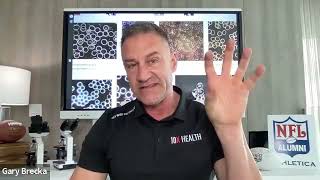
Gary Brecka, a scientist and health specialist, discusses human physiology, genetics, and wellness practices like breathwork and cold therapy. He answers audience questions on gut health, oxygenation, and mental health in a live Clubhouse session from January 2023.
So understanding our physiology is paramount to optimal health. Understanding which of the genes in our body are broken and then supplementing for their deficiency and understanding what's going on in our blood.
All right. Hey, Masters. Welcome to another episode of Path to Mastery. And today we are with Mr. Gary Brecker. Gary, how are you, sir?
I'm doing amazing, man. Great to be on here.
Awesome. You look amazing, bro. You always look super fit, healthy, and. Yeah, look at those guns, man. And you're with 10x Health Services Systems. Systems.
It's 10x Health Systems. Soon we're going to drop the system and go with 10x health once we get that URL locked in. But 10x health system grant Cardone acquired our wellness franchise in September of last year. So we changed from streamline to 10x health.
All right, awesome. And I met you at the event.
How many more months does this person have left on Earth? And to dial in mortality that specifically, we pulled five years of medical records, pulled five years of demographic data. We did one blood test, one genetic test. We. And then we could zero in with incredible accuracy. In fact, when I left that industry, I was one of only five certified expert witnesses in federal court for litigation related to that space. And so people ask me all the time, how are you so accurate at predicting gas?
That's what I was thinking. How can you get that from a blood test? It was like, wow.
Well, if you think about it, every human being that's on this planet leaves the earth the same way, right? We all die of the same thing. The definition of death is called hypoxia, lack of oxygen to the brain. When your brain can no longer sustain activity, then that's. That's when we're termed to be death dead. So what we decided was that we would start from that point and work backwards. Meaning if everybody dies of hypoxia, lack of oxygen to the brain, then why don't we figure out how quickly or how slowly? In other words, what kind of gradient, what kind of slope are people on? Are they quickly depleting their bodies of oxygen? Are they slowly depleting their bodies of oxygen? Oxygen. Because the faster we denigrate our oxygen utilization in the body, the faster that we die. Not only the faster we die, but the earlier the onset of disease and the more severe that disease. So by looking at a 28 year old male or a 22 year old female or a 30 year old male, we could actually go into the blood work. We could look at how well they were managing oxygen, and we could not only predict the onset of. But we could also predict the severity of disease. And so it became a very, very accurate model. In fact, we developed a saying in the mortality space that the presence of oxygen is the absence of disease. And nothing could be more true than that statement. There's so much power and so much biophysiologic sense in that one statement. In fact, if you really understand that statement, it's the most important single sentence you'll ever hear in terms of the impact on your lifespan and your health span. Because the presence of oxygen truly is the absence of disease. I mean, cancer, for example. All cancer, regardless of its form or origin, begins in a hypoxic environment. If you don't have hypoxia, you can't have pathology. If you don't have hypoxia, you can't have disease. If you don't have hypoxia, you can't have cancer. And so anything that depletes the tissues of oxygenation will not only have the onset of disease more rapidly, but it will have the severity of disease more rapidly.
So you're a scientist, is that.
I'm a scientist, yeah.
I got.
I just got a third one today, as a matter of fact. I know you can't see this on Clubhouse, but behind me are blood samples. This is called dark field microscopy. You know, one of the things I do for patients, I'm a big believer in trying to get back to basics of Mother Nature. And all that we get from Mother Nature is magnetism, oxygen and light. But we're not using those the way that we were our ancestors did. We rarely, rarely contact the Earth with bare feet any longer. Most of us are not getting enough sunlight. 85% of the global population is clinically deficient in vitamin D3, and we don't get the right types of light. So what I do with these blood samples behind me is sometimes I'll take a patient, I'll prick their finger, I'll put their blood on a slide, and I'll actually throw it up on the screen so they can see that their blood is acidic and the red blood cells are all clumped up and stuck together. Then I'll lay them on a pemf mat for 16 minutes and I'll alkalize all 32 trillion cells in the body, and you can watch those red blood cells separate. And as they separate, their surface area increases. When you have a red blood cell that has more surface area, it's got more places to take in oxygen. And so that's really what powers up A human being. Remember, human beings are not powered by fats, carbohydrates, vitamins, amino acids, nutrients or proteins. We're powered by something called ATP. So every resource that we put into the human body eventually at a cellular level, becomes ATP. Without ATP, we couldn't run. It's the Tesla battery of the vehicle. It's the gasoline of a car. The better we can manage ATP production, the more energy we'll have, the less disease we'll have, the better. Cellular replication, waste elimination, detoxification, repair. Everything is enhanced when this energy source is improved. And so by using pemf, and I don't mean to go down that rabbit hole, I show patients their blood 16 minutes apart. They can't even get their arms around it. You know, you alkalize all 32 trillion cells in the human body, increase the surface area of those cells, and all of a sudden you feel euphoric.
Wow. Well, I want to, I want to definitely make sure we, we, you know, we, we give everybody, we got, we got a bunch of people on Clubhouse listening in as well. And you guys are welcome to, to raise your hands. Come up. I, we got a few moderators going to help us take questions. But I do want to, I want to. And I did write that down. I said what you, what you said is what affects the oxygen is the presence of.
I'm sorry, is the absence of disease.
Okay, say it again. What affects the. Say it again.
Presence. The presence of oxygen.
Yeah, yeah.
Is the absence of disease.
Yeah, yeah. See, I have two sentences running into each other. I got that. The presence of oxygen is the absence of disease. There you go. All right, so I put a square around it because I want to get back to that in a minute. But I want to, I want to talk about something that you brought up at the 10x ladies event that really, really caught my attention. You were talking about the conveyor. Like, I thought it was the best metaphor for your system. Like when you take in food, it's like a conveyor belt. Can you, can you explain that to our. Everybody listening?
Yeah, sure. I mean, philosophically, as a human biologist and research scientist and, you know, a consumer of voluminous amounts of peer reviewed data, you know, I make the argument all the time that pathology and disease in the human body doesn't really exist. What exists is the absence of a raw material. So when you deprive the human body of an ingredient that it needs to complete a recipe, then the recipe doesn't turn out correctly. And we call that pathology, disease. We bring in Modern medicine, we'll bring poisons and chemicals and other things into the human body to try to fix that. But instead of looking at the recipe and deciding what raw material, what ingredient is missing, like, for example, if you have adhd, you're not deficient in Adderall. So why are we replacing. Why are we giving somebody that has ADHD Adderall? That's not what's missing in their body. If you have high blood pressure, you're not deficient in the calcium channel blocker or beta blocker or diuretic. You're deficient in something that lowers homocysteine. If you have adhd, you're deficient in L. Thine. So when we look for the raw material in the human body and we give it back to the human body, you'd be shocked how well it performs. You know, I feel like modern medicine has just lost faith in humanity and human beings and physiology. We don't even really train doctors on how biophysiology really works. We're not taught to look for root causes. We're taught to seek out symptoms and treat a symptom. And so when the analogy that I was using at that, at the 10x ladies event had to do with gut health, 40% of the people that are listening to this, this podcast in this clubhouse right now are dealing with some type of reactivity in their gut. Either gas, bloating, diarrhea, constipation, irritability, cramping. And these things take many forms. Celiac disease, diverticulitis, Crohn's disease, irritable bowel syndrome. All of which are nonsense diagnoses. But what happens is when we don't pay attention to the speed of the gut, then we lose focus on what is causing the pathology and causing the disease. So, for example, you know, remember Henry Ford was. Was actually not made famous for the automobile. He was actually made famous for something called the assembly line. And the assembly line was a glorified conveyor belt. And he would put hundreds of people in a long line standing about six feet apart, and he would put a part on one end of the conveyor belt, and it would move, and every six feet, somebody else would tinker with the part, and then it would go to the next guy, and he would tinker with it, and it would go to the next guy so that by the time it reached the end of the conveyor belt, it was a fully assembled part. The human intestinal tract is no different. It's a giant conveyor belt. It's 30ft long. @ one end, you have the stomach. At the other end you have the rectum. As you approximate the stomach, you have very acidic contents. As you approximate the rectum, you have very basic meaning, alkaline contents. So the bacteria that work in the rectum can't work up near the stomach. It's just like if I took the guy from the end of the assembly line and put him first in the assembly line, he'd have no idea what to do. So what if Henry Ford walked into his factory one day and doubled the speed of the conveyor belt? What would happen is you would start to shift the job from one person very quickly to the next. And the guy to my right is not trained to do my job, and I'm not trained to do the job of the guy to my left. But if you put her job in front of me, I'm not. I'm going to understand what to do. Bacteria in the gut are no different. If you accelerate the speed of the gut, you push very acidic contents into a basic media and the function perverts. If you decelerate the gut, you push basic contents into an acidic media and function perverts. This is why people that think they're allergies, after I sit with them for a few minutes, I prove to them that they're actually not allergic to the foods they think they're allergic to. People get them in my office all the time and they're like, gary, I'm allergic to wheat, soy, gluten, dairy, corn, and blueberries. I go, okay, well, right there, you'd be dead, right? You just told me you're allergic to all the essential amino acids, so that's not possible. So when you start to ask questions like, okay, if you're allergic to corn, is there ever a time that you can eat corn and not have a reaction? Most of the time, they'll say, yes. Is there ever a time that you can have gluten and not have a reaction? And they'll say, yes. And I'll say, well, right there, you know it's not an allergy, right? Allergies are not transient. You're not allergic to milk on Monday morning, unallergic on Wednesday afternoon, and then realrgic on Saturday morning. That's not how they work. What's happening is the genes that control the speed of your gut are broken. Therefore, the code that the gut requires in order to function properly is not functioning properly. So what we do is we go in and we supplement for these gene mutations, usually with complex of B vitamins very specific B12s, hydroxycobalamin or methylated cobalamin, amino acids like elmethionine, metals like zinc and magnesium. And when you put these raw materials back into the human body, then you see that function restores. Right. The conveyor belt starts to move at the proper speed. And now the contents aren't as important, because you weren't perverting your function because of what you were eating. You were perverting your function very often because of the speed of the gut. True allergies do exist. Celiac disease, which is a true sensitivity to gluten. Those types of allergies really do exist. But you will find that people spend a lifetime searching for what it is that I'm eating that's causing my gut to behave this way. And about 75% of people that have gut issues also have mild to severe anxiety. So why would someone that has a gut issue also be connected to anxiety? Because that gene is carried on the same gene. The gene that controls gut motility also controls something called homocysteine. And elevated and falling homocysteine is the leading cause of anxiety. It has nothing to do with your outside environment. This is why most people that have anxiety can't point to the specific trigger that causes it. So it's not coming from a cluster of symptoms. It's coming from their physiology. And as soon as we look at this, the five actual genes in the human body, we supplement for that deficiency, and anxiety eviscerates, and so do gut issues.
That was interesting. So I. You know, it's funny, when I. When I saw. When I heard you out there, I. Ironically, at the same time in my life, I. I'm going through. I saw a doctor, a holistic doctor, and they had me do a ALCAT test. You familiar with ALCAT test?
Do you know?
Yeah, I got. I got. I got all the stuff, and. And it came back, you know, I'm gluten. I have gluten issues. I have all kinds. I don't have the test in front of me. I should. I should be holding it now, but. But anyway. And they gave me, like, all these different probiotic, a vitamin a, fish oil, an oregano, which I've got another month on the oregano or so. It. It's weird because in the beginning, you know, I cut some stuff out and everything was kind of fine, but now it's kind of going back, even with taking the supplement. So I'm wondering if there's this probably something else that I'm missing.
Yeah. So let me. Let Me explain to you the issue that's going on there. So if we look at allergy testing in itself, an allergy test is conducted by taking a membrane and washing your blood down one side of the membrane and. And washing an allergen down the other side. Okay? So your blood's flowing down one side of the membrane, and on the other side they put corn, wheat, soy, dairy, you know, blueberries or what have you. And they watch how your blood reacts across this membrane. Does it get just mildly upset? So it's a mild allergy. Does it get moderately upset? So it's moderate allergy, or does it go nuts? So it's a severe allergy, but what it's measuring is the amount of inflammation that your body has in reaction to that allergen. But here's the problem. It doesn't take into account the fact that you are likely already in an inflamed state, meaning the scale for inflammation goes from a 1 to a 10. What if you're already at a 6? In other words, let's say that you and your friend. I approach you and your friend and I say, listen, I'm going to take my hand and I'm going to press in on your back. You tell me how much pain you feel, and I walk up to you, and I press in with a pressure of 2. You go, wow, I barely felt that. Then I go to your friend who has a pinched nerve in the middle of his back, and I press in with the same pressure, and he goes through the roof. He goes, ow. You know, like I had. I experienced a pain level of 10. Well, he experienced a pain level of 10 because he was already at an 8. So do you see the same pressure in two different people has two massively different outcomes. You were not inflamed, so you experienced the pressure as a 2. He was inflamed. He experienced that pressure as a 10. This is how allergy testing works. So if you're at a six and something causes a mild inflammatory reaction of a two, the test is going to capture that as an eight, and it's going to list that as a severe allergy. And then you get this lineage of things that you're allergic to when really you're either mildly or not allergic to them at all, but because they only caused a very minor inflammatory reaction. But the test picked up a massive inflammatory reaction. You get this huge, broad category of allergens. And then the other issue is that if you do not address the speed of the gut, in other words, if we're not looking at the five actionable genes in the human body, and you've never gotten the gene test to look at the five actionable genes in the human body, then you don't know if your gut motility is operating correctly or not. You don't know if your mind can properly degrade thought. You don't know if you can balance homocysteine and get rid of anxiety. You don't know if you're producing the right level of neurotransmitters and you're prone to depression or ADD or adhd, OCD or bipolar. In fact, if you haven't done that test, you don't know about these five actionable genes. You may not know that you have a dopamine deficiency leading to a tendency for addictive behavior. So understanding our physiology is paramount to optimal health. Understanding which of the genes in our body are broken and then supplementing for their deficiency and understanding what's going on in our blood. Right. Our blood's the ultimate roadmap. I mean, I love blood work because, well, I love blood work for what's not in there, because what's not in your blood is somebody else's opinion. And you know, very often when, you know, you go to your buddies or your family or your friends and you say, man, I'm not sleeping very well. And they go, oh, you know, take some Ambien. You need melatonin. Oh, you need theanine, or you need gamma amin butaric acid. But you don't know you're asking the wrong source. You know, we should just trust our bodies, right? When we ask our bodies these questions about physiology, it has no choice but to give us a truthful answer. And then we start supplementing for the sake of deficiency rather than supplementing for the simple sake of supplementing.
That's. Yeah. You know, it's funny when you said that I actually went to school for auto tech. I, you know, 30 something years ago, used to turn wrenches and I remember you do oil changes and then sometimes you would see in the oil you could see metal shaving some. Like you would know that or that would be really black. Or you'd see sometimes it have like antifreeze and oil and you would, you could tell if the, if the car was going to have a lot of engine issues. And what you just said just kind of reminded me of that. It just makes sense.
Well, I mean, think about it. I mean, I think the difference between a good mechanic and a great mechanic is that a good mechanic will, you know, fix your car when it breaks down. But a great mechanic will keep your car from breaking down. I'd rather have a great mechanic.
The problem is sometimes that you let it go so far, there's no coming back without. And sometimes you can fix it, other times you just. Engine is just limited.
Right, Very true. But you know, you'd be, you'd be all inspired by the healing power of the human body. Yeah, I think we've just, you know, as a society, we seem to have lost faith in, when I say lost faith in humanity, I mean lost faith in human function, lost faith in the ability for human body to heal itself. And if we would spend more time researching the physiology of the human body rather than the pathways of disease and pathology, you'd find that we would have not only a healthier, longer living, more thriving society, but you'd see a lot of these issues begin to eviscerate. I mean, it's staggering to me that 44% of the US population is on an antidepressant.
Wow.
At some point in their Life, more than 40% of the US population has been on a mood altering drug, either an antidepressant, an Adderall, Vyvan or other neuroplasticity altering drug for the mind. Because we understand like, you know, we understand the physiology of the brain that we not only create thought, but we also dismantle thought. We actually degrade thought. Right. When we get a stimulus, our body responds and it creates a mood. When that stimulus is removed, our body responds and degrades that mood. Right. So if we're not able to degrade neurotransmitters at the rate that we are able to create them, then we get personality alterations which we call add. Adhd, ocd, manic depression, bipolar, schizophrenia. These are generally missing raw materials, not the presence of disease or pathology in the brain. Most of these brains are not pathological. They have a chemical imbalance from the lack of certain raw materials. You put those raw materials back into the brain and normal pathic function returns.
All right, so I want to, I want to open it up to, to our friends on Clubhouse. By the way, if you are on Clubhouse, we are, we are recording a live podcast which will be on in the Path to Mastery podcast. So, you know, keep your eyes on that. It'll probably be out in the next month or so. But yeah, so does anybody give me a mic flash if you're on the stage and you have a question for Gary? Yeah, I see Lev. So I saw Lev and then I saw Augustus and then Robert So we'll see how many questions we can get to. We got about maybe 12 to 15 minutes max left, so we'll go Lev first.
Hey, Gary, how's it going?
Hey, how are you?
Good. I actually just got my results back today and literally had a call with Josh a couple hours ago, my methylation test. So, I mean, it was pretty cool stuff, but basically. So, yeah, covered some stuff. You know, gut. Gut issues, heart burn issues. I've had covered by the top, the MTR and the mthfr.
Yeah. When you have that gene mutation, the sphincter strength of the stomach is not intact. Right. So there's two. There's two sphincters on the stomach. One. One at the top called the cardiac sphincter, one at the bottom called the pyloric sphincter. And they work in opposite combination with each other. Right. One opens, lets food in, closes, then the other one opens, lets food out. When that sphincter relaxes, acid splashes back into the esophagus. This is not an issue with too much acid in the stomach. This is an issue with the lack of contractile strength of that sphincter muscle. So once you return the right nutrients to the body, that's that. That sphincter will slam shut and the acid won't splash back into the esophagus.
One more question. Sorry, question on this. So would these have to do with brain fog or. I mean, I'd say ADHD by these not being right with. I've never been diagnosed with adhd, but I've been told a lot. And I mean, I sometimes think, you know, I've a little bit of hard time focusing on stuff. So would being out of place cause that?
No question. Especially with that gene mutation. And oddly, it's actually not an inability to focus or concentrate, and it's not an attention deficit disorder at all. It's an attention overload disorder. It's an inability to focus and concentrate on too many things. So if we think about how the mind works, just imagine that you're sitting in a movie, the theater, by yourself in the front seat with a stage in front of you. And every time you have a thought, it's like an actor walking to the front of that stage and engaging you in a dialogue. Only when that conversation is over, that person should exit stage. When you have ADHD or add, what happens is that person stays there and the next person comes up, and then the next one, and the next one and the next one. And pretty soon you're maintaining a conversation with too many People. And this is why, in the active mind of someone that has adhd, it's not actually an inability to pay attention. It's you have too many windows open. So it's an attention overload disorder. So once we understand that it's an attention overload disorder, instead of getting an amphetamine to speed the mind up so it can process all of these things, we can actually take amino acids to quiet the mind down so you can focus on what's important. So, for example, when you have adhd, you could be thinking about a job you're working on. And then your friend walks up and you're thinking about the job, and you start talking to your friend. You notice the logo on your friend's jacket, which makes you think about a vacation you want to take. So now you're thinking about a job, talking to your friend, looking at the logo, thinking about a vacation you want to take all at the same time. What should happen is you should have been thinking about the job and your friend walked up. You stop thinking about that and start talking to your friend. When the conversation is over with your friend, you see that logo. And when the conversation is over with your friend, when you walk back to the car, you start thinking about the vacation. But in the mind of an ADHD person, all these pile up, right? And so what do we do? We give an amphetamine, right, to stimulate the mind to be able to process more stuff. So we make the mind work harder by putting an artificial stimulant in there. But that does three things. It creates dependency. It then creates what's called neuroplasticity changes and hypersensitivity. The receptors now require that stimulus. Pretty soon, you'll actually no longer be able to have even normal pathic thought without an amphetamine stimulus. And then the third thing it does is create addiction, dependency. But if we were able to put amino acids. I'm sure Josh recommended this, because I trained Josh myself. We start to put the right amino acids into the body, and all of a sudden the mind relaxes and it quiets, right? It's even going to help with you setting priorities, because people in your position will often say, and you've probably said this before, I work really well under pressure, right? And people that say they work well under pressure really mean I lack the ability to set priorities myself. So I use external pressure to set my own priorities, right? Because you. You said 100.
Yeah, he did.
So.
So. All right. Well, thank you, Lev. Is. Are you. Are you good with that? Do you want to Go to another question. Or is that.
Yeah.
You. You describe my brain 100 to a T. And I. I just want to bring up another analogy, though, real quick. That somebody that 10x ladies event brought up was. It's the multiple browsers on the Internet, right? That when you have 100 pages open, that's. That's kind of how the brains act in the moment. But no, you answered the questions, and I appreciate it.
Awesome, thanks. Thank you, Lev. Appreciate it. It's funny when you're saying that about the multitasking really is. And that's what I'm trying to focus on. You watch the clubhouse on my phone, take notes.
Right? Exactly.
And it's not easy the first time.
And it's. And this is not an attention deficit. You know, when we miss find it, we mistreat it. If we called it an attention overload disorder, we would start treating the load, not the speed of the brain. Right. So we need to lower the workload by managing getting tasks out of them.
Right? Yeah. So, I mean, so the good thing for me is I'm recording this, so I'm gonna go back and listen to it later and I'll get more. And that always happens. I do a lot of podcasts. I'll. I'll be interviewing, so I'm not getting the full. You know, the full interview. But then when I go back, listen to it later, I'm like, oh, that was amazing. And sometimes I do, but. All right, so who was next? I think it was Augustus. Right? Augustus, do you have a question?
Hey, how you doing, buddy? Yeah, man, how you doing? Guys, this is awesome. It's like you just described my brain. All my life I've been, like, thinking I was batshit crazy because my mind.
Moves at a million miles per hour.
If I take any kind of stimulants, then it's just over for me. And I'm like, what's wrong with me? Why can't I participate in the rest of the world. Come to understand now that I just need to slow my mind down. So this is. This is epic. So I heard you say something about amino acids. You know, how would I go about. Even though I haven't had any sort of work done?
Right.
How would I go about what? I mean, what would be your recommendation? What do I do next?
So there's. Yeah, if you can look me up on Instagram @GaryBreca. G A R Y B R E C K A. By the way, I don't do. I don't do anything but teach on Instagram. I don't sell anything. I don't have a ebook. I just teach. But if you insta. If you send me a message on Instagram, I'll send you a link and we'll get that genetic test done for you.
I'm gonna post the link up top. What's the domain again?
You can go to a website. I can bring www.streamline stream streamline medical group.com and then forward slash enrollment. Or you can go to my Instagram @GaryBreca and I'll send you the link. And then what we'll do is we'll send you a. We'll mail you a cheek swab. You swab your cheek 10 times inside, put it back in the test tube. You send that to the lab. You only do this test once in your life. It's $599. You'll do it once in your life because it's your genes, so that test will never change. And then once we see what genes are broken, then you supplement specifically for those gene breaks. So in your case, I would bet my entire career that you have a gene mutation called COMPT C, in which case we would use light metals, zinc and magnesium and B12, and amino acids like el methionine and same S adenosyl methionine in the right combination. And you supplement with those orally. In the morning, you'll be shocked at physiologic changes in your mind and your thought. Because, like I mentioned, the we not only create thought, we dismantle thought. And if we cannot dismantle thought at the same rate, then we get very crowded with our thoughts.
So I want to jump to. Do we have one more question? I know we're kind of coming to the end of the interview.
I love the questions because this is how we really help people.
Absolutely. Yeah. I think Robert is flashing. So. Robert.
Hey, what's up, Gary, by the way.
Augustus. Thank you, Robert, for your question. Hey.
So I was introduced to you not directly, but Rafael Vargas has always spoken about you.
And I love Rafael. Yeah, yeah.
He's always spoken about this breathing technique, and I never really understood it 100%. So I don't know if you can go into depth about it on the benefits of doing it every day.
Yes, of course I can. So the breathing method that I use is called Wim Hof. You may have heard of him. If you guys want to see just an incredible Netflix special, watch the Iceman. It's a whole documentary on Wim Hof. But Wim Hof is kind of the pioneer of breath work and essentially what he was able to prove, that through breathwork we can change the oxygen tension in our tissues. Meaning I can actually change the concentration of oxygen in my tissues just by using certain breath techniques. I'll teach that to you now. The one thing that I never compromise ever, ever, ever, whether I'm traveling or not, I'm home, I'm away, I'm in a room at home, is I spend eight minutes every morning breathing. And I know that sounds crazy. We spent our whole life breathing. But deep breathing to force oxygen into the cells in my body, into the brain. You'd be shocked how large of a component of mood and emotional state oxygen is. The difference between the emotion anger and the emotion passion is one neurotransmitter and the presence of oxygen. The reason why no one on this call has ever woken up laughing, no human being has ever woken up laughing is because you don't have the oxidative state to experience the emotion of laughter. But you can wake up angry because anger does not require oxygen. You can be two clicks away from the grave and you can experience anger. I can pinch you when you are in deep delta wave of sleep and you can instantly wake up angry. This is why when we deplete oxygen from the body, people stay in a suppressed emotive state. This is why people are constantly seeking gratitude, journaling and Tony Robbins events and goal and lifestyle and spiritual well being and motivation. I have no issues with any of those, by the way. I'm not denigrating those. I think they're great ways to orient your mind. But they can only stay in that state for a short period of time because their physiology drags them down into the state where they most comfortably exist. So Wim Hof pioneered a method of getting oxygen into the body. And it's a series of breaths followed by a breath hold, followed by a breath inhalation, followed by the next series of breaths. The reason why this is important because every physiological response that we choose to solicit in the human body needs a stimulus, meaning the body needs to ask for first for that nutrient. In other words, you can't just eat calcium and get strong bones. You have to load a bone, have it, ask for calcium and then deliver calcium to it. You can't just eat protein and get big muscles. You have to go to the gym, tear a muscle, then eat protein, then build the muscle. So in order to have your cells ask for oxygen, what we want to do is we want to take deep breaths. So you do 30 breaths in a row, as hard and deep as you can in, and then you relax. On the way out, you don't breathe the rest of the expired air out. Like you just go. When you get to the last breath at 30 breaths, you hold your breath as long as you can. What this is doing is it's driving the sensitivity of the carbohydrate, I mean the carbon receptor. So for CO2. So when you hold your breath as long as you can after putting lots of oxygen into the bloodstream, then what happens is it resets the carbon dioxide receptor. Then the next breath you take, every single cell that you just deprived of oxygen will suck oxygen up like its life depends on it. And oxygen will reach tissues that it normally doesn't reach. So this is why we do 30 breaths. Exhale and hold. When you can't hold your breath anymore, you take a deep breath and you hold that breath. When you can't hold that any longer, you start over again and you do that for three rounds. If you get fingers get tingly and numb, that's a great sign. If you get lightheaded, that's a wonderful sign. If you feel your body temperature changing, those are all excellent signs that oxygen is changing the tension in your tissues.
Amazing, amazing. Well, listen, I want to thank everybody for your questions. Appreciate you guys being on clubhouse. Make sure you follow the, the club breakfast with champions. Give the people on stage a follow as well. I posted my link at the top. If you. The podcast is the top link on the link tree. Follow the podcast. You'll be notified when this comes out. And then the second link down is, Gary, you're going to be presenting at.
10X the 10x one of the keynotes on the first day at 10x. I think you have Grant, Elena, Brandon and then, and then me. I'm speaking at 2:30 on Friday.
Sweet, sweet. So the second link down on the link tree is actually you can get yourself a virtual ticket to 10x. It's only $97 to go get yourself a ticket. You want to make sure if you. Well listen, it's a sold out event. I actually do coincidentally have one ticket. If somebody wants to go in person, just DM me a message. I can talk to you about what that looks like. But make sure everybody gets a virtual ticket right now. And Gary, I just got one more question for you and then we're gonna, we're gonna wrap it up. I wish I could do this all day, but I know we are on a timeline. You had talked earlier, you said the Presence of oxygen is the absence of disease. I love that. Give us a couple, like give us two things that we can do right now that anybody can do just to increase the oxygen in their blood.
First and foremost, it's breath work. The breath technique that I just had. In fact, again, if you just follow me on Instagram, I have a whole training video on breathwork. It takes about eight minutes a day. It'll be the best eight minutes of your life. You'll learn to crave that eight minutes, like a rack of cheese. You'll wake up and instead of wanting coffee, you'll want to get out on the balcony and breathe. It elevates your emotional state, it improves your mood, it gets rid of excess carbon in the body and it wakes up every organ system in the body. And so breath work is primarily what I would suggest. You know, the second things that I would suggest and there are cost. So I'm going to tell you some things that you can do that cost and some things that you can do for free. I would really get your blood work done and get the genetic test. If you don't have a roadmap for optimal health, you're just driving or flying blind, you don't know why you're supplementing. You could be taking supplements that are actually very detrimental to you. I'm not a big believer in supplementing just for the sake of supplements. You know, the blood work that we do is 64 biomarkers and 5 genetic markers. I can really turn you into a superhuman if I get that information. The other thing that I would really suggest is really start investigating cryotherapy. Cold water baths, dry and hot saunas, dry and infrared saunas. The reason for this is we used to think that all the benefits of cold water came from their it's anti inflammatory properties. Meaning you get in cold water, it shuts inflammation down. That's only about 20% of the benefit that we gain. The majority of the benefit that we gain from cold water immersion. In fact, as soon as we get off this phone call, I have 20 gallons of ice in my bathtub that I'm going to get in a cold water tub right after this. If you actually follow me on Instagram, you'll see it. But cold water immersion causes our body to panic and it causes the liver to to release a specialized set of proteins called cold shock proteins. Look these up. Cold shock proteins. You will be baffled by the benefits that these liver proteins have on the human body. They scour the body of free radical oxidation, they quadruple the rate of protein synthesis, which is muscle repair and recovery. And so imagine getting into cold water and then getting out. You. You feel amazing. You're energized, your mood's improved, your emotional state's improved, your inflammation is down, but now your blood is flooded with cold shock proteins. That mental clarity and euphoria that you feel when you get out is the feeling of being very, very clean of free radicals. And then the other thing is, and this is a benefit I rarely hear people talk about, but there is absolutely no faster way to strip fat off of the human body than by putting it into cold water. Because if you think about what a calorie is, right? If anyone understands the definition of a calorie. The definition of a calorie is the amount of heat that it takes to raise 1 cubic centimeter of water 1 degree centigrade. This means that a calorie is a measure of heat. So if heat is leaving your body, guess what's leaving your body? Calories. So when you get into cold water, the amount of caloric expenditure is almost seven times the caloric expenditure in intense exercise. In other words, 10 minutes of cold water exposure is worth 7 times as much HIIT cardio. So if you submerge yourself in cold water, thermogenesis sparks, your metabolic rate skyrockets, heat starts to dissipate, and calories are leaving your body en masse because water is 39 times more thermogenic than air. That's why you can die in 72 degree water. You can't die in 72 degree air. So I would say cold water, get your blood and genetics tested and learn to breathe. Those would be my big three.
Amazing. Amazing, sir. So what's the best way for someone who wants to get in touch with you?
I read all my DMs. I don't pass it off to a clinical team or pass it off to someone else. Takes me hours every night. I get through every single one.
So. Instagram. Gary Bracker.
Yes.
Amazing, bro. Last question. I know I said that before. Real last question. What is. What does path to mastery mean to you?
To me, Path to mastery means mastering yourself. Right? We have a tendency to spend a lot of time stuttering, studying other people, and we spend very little time getting to know ourselves. And the more that we get to know ourselves, the better off we'll be. In other words, no one's ever going to love you more than you love yourself. No one is ever going to believe you more than you believe yourself. No one is ever going to give you an opportunity that you don't believe you can handle. And this is a very valid scientific principle, because the thing that you don't control is the frequency that leaves your body. And people that are sensitive to frequency, or more intuitive, are only going to extend an opportunity to you that your frequency denotes that you can handle. So, for example, the most powerful frequency to leave a human being's body is a frequency called authenticity. Right? This is a wavelength that's emitted from the human body when your words are truthful and you believe what you're saying. And so my definition of path to mastery is mastering yourself. I tell people not to really set goals and find goals. I tell people to set passions and purpose, right? Because those lead to priorities. Goals are sort of something you stick out there in the lofty, not so distant future, and you don't do something for them every single day, right? And when a mother's raising a child, the child is the most priority. So when, if she has a goal to be wealthy, but she's raising her child, her priority will supersede her goal. So if you're mastering yourself, you need to find out what your passion is and what your purpose is, and that will become your priority, and then you'll smash through your goals.
Damn, dude. That might have been the best answer I've gotten. Thank you. Well, listen, I appreciate you. We, I. We got to do this again because, I mean, we could have done this for a couple.
Yeah, I'd love to have more time for questions. You know, my. My passion is. Is.
You know what? I'm gonna talk to Glenn and maybe we get you into the breakfast or champions room. And. And you know, that. That would be smart. All right, well, listen, I want to say I appreciate your time here today, everybody on Clubhouse. We appreciate you guys hanging out as well. Follow the club. Path to mastery. Make sure you look up Gary on Instagram. Gary Brecker, Correct. It's just your name on Instagram and.
Gary.
And everything will be in the show notes. Just want to say thank you, appreciate you, and we will see you soon.
Appreciate you, too. Take care.










