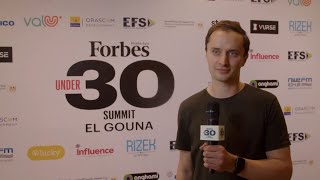
George Robson: Becoming a Partner at Sequoia at the age of 25
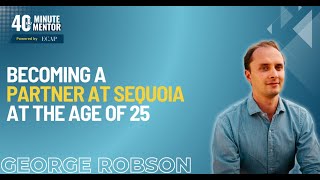
George Robson became a Sequoia partner at 25 after stints at Morgan Stanley and Revolut. He explains what the firm looks for in founders: origin stories, authenticity, domain expertise, and grit. He also discusses Sequoia's seed-focused model, the ARC program for pre-seed founders, and why the European tech ecosystem is booming.
Chapters
Lots of businesses will assume that that magic comes from, you know, the product and other things, and obviously it does in the kind of medium term, but it obviously starts with the people. I would argue mediocrity starts in the culture and the people inside the building.
Welcome back to 40 Minute Mentor, the podcast on a mission to raise aspirations and inspire the next generation of category defining founders, all in just 40 minutes. Today I'm joined by George Robson, partner at Sequoia the fund helping daring founders build legendary companies from idea to IPO and beyond. After starting his career in investment banking at Morgan Stanley and spending three years in the product team at Revolut, George was brought in as the second London based partner at Sequoia at the age of just 25. Since joining Sequoia, he has led or co led several investments into European fintech and consumer companies, including French home selling startup Zephir, which raised a $21 million Series A round. George has had a hugely successful career to date and it's fairly easy to spot where that entrepreneurialism that runs very deep within his veins. So it's something I'm sure we'll talk more about in this episode. So, George, a big warm welcome to you. James Lowe, a former 40 Minute mentor, kindly put us in touch and I've been really excited to get you on the podcast. So thank you very much for being here.
I'm grateful to James for passing on the baton. Happy to be here.
Good stuff. Well, we're going to warm you up as we always like to, with a few quick fire questions. So please finish the following sentences after me. Number one, the best career decision I've ever made was joining Revolut.
I mean, it changed my life, exposed me to the world of tech. It really broadened my horizons.
Awesome. And we will definitely come back to Revolut in a minute. The hardest lessons I've learned as a VC is, is I think when you
start hearing pitches, especially as someone who came from an operating background, it's easy to hear the version of the pitch that excites you the most. But obviously you're not the one running the company. Right. You need to really listen to what people are telling you and make sure you're hearing their version of the truth.
That's a great one. Thank you. One misconception about VC I'd love to
correct is that it can be transactional and that it's a finance business. You know, we're partnering with companies before there's a P and L, often before there's a product. Sometimes before there's even an entity. Right. That those founders own shares in. So you gotta be remembering that, you know, we have that humility for the founder journey and we'd like to be involved at those earlier stages.
Yeah, I love that. Thank you. And the biggest shift I see coming
in VC is I think it's getting closer to industry. I think that in an era of AI proliferating around the globe, many different deep tech verticals coming out, you know, the proximity we have to industries like healthcare, you know, defense, core industrial, the chemical industry, bioscience, things like this, that frankly, you know, five or six years ago were not front and center for vc. Just means a different set of relationships and a different way of helping founders ultimately go their business.
Yeah, I love that. Thank you very much. It's going to be an exciting few years ahead, I think, for you and anyone else in the ecosystem. Well, we've warmed you up nicely. I'm really excited to dive into all things Sequoia, but before we get onto that, I know the importance of education was a really core element of your upbringing, I think encouraged by your parents. So do you mind sharing a bit about that upbringing and how it has influenced you in your life and I guess how it still influences you today?
Yeah, I think there are a few really clear catalysts for change in the world, frankly. I think one is education. I think technology and entrepreneurship is like a second one that's very close to my heart. I think education for myself and my family, it was honestly a huge enabler for my parents just being able to live better life than their parents did. And it brought them into different industries. They were small business owners. I think that was something that, frankly, they never would have imagined was possible. For myself and my three younger sisters, they kind of impressed that on us and effectively gave us a choice of, like, you know, try and get scholarships and try and go to a better school and get a better education and do that from a young age if it's something you want to pursue. But understand that, you know, you being able to stay in that education system is completely dependent on you sustaining those scholarships. And effectively, what that means is you have a huge amount of gratitude, really, for, like, the generosity of strangers who are putting you through that journey. And for me, that was from, you know, 10 years old making that choice and sitting my first set of exams and sports scholarships and actually just being funded that way through 18. And it really changed my life because it exposed me to a completely different set of people that, frankly, I would never got the Chance to interact with. It was the first time I really ever heard about technology companies or it even dawned on me that, you know, people could found a business or could work on a business that they owned. And really it was a pretty big part of the motivation for me ultimately going and studying it at lsc because really economics, if you think about it, is about the study of incentives. You know, who has what, the kind of distribution of wealth in the world, things like that. And I think that curiosity was really sparked as a result of that decision.
I love that. Thank you very much. And it really resonates with me. I went to a very unique school called Christ Hospital, which is one of the last remaining true charity schools in the country. And a huge proportion of the kids that went there are from underprivileged backgrounds, single parent sort of families. And so they. It's all kind of do scholarships. A huge proportion get people pay for them to go. And the gratitude they feel from getting an experience they would never have had otherwise means they really pay it forward. And it's a sort of virtuous circle. So it's really powerful. So yeah, really, that really strikes a chord. You've clearly have this entrepreneurialism within. You mentioned your parents ran small businesses and you founded Kickstart Global while you were at the lse. So I think that was a global hub for entrepreneurial students. So has that always been within. Do you think you just saw that from your parents or has that just been something that over time getting exposure to things like technology, your degree, it's sort of a combination of things compounding. I'd love to hear more about where you think that spirit comes from.
Yeah, I think, I think it's a great question. I think it comes from maybe a couple of places. I think one, as I said, you know, having parents that are small business owners imprints on you that you can be a little bit more in control of your own destiny. But I think there's kind of a second learning from that is I don't think they loved what they did. I've always thought about work as sort of exchanging your time for money. Right. Which in the kind of canonical sense is I suppose what it is. But it doesn't have to be right. Like if you love what you do, you feel like you've decoupled yourself a little bit from just like trudging towards retirement. Right. And there's very few industries or very few roles that give you that amount of flexibility. And honestly, when I thought about kind of coming into the world of work, particularly at the lse, because the LSE is, you know, right in the middle of London. You're surrounded by industry, you have, you know, lawyers from the Royal Courts of Justice, frankly in like your student union having a beer, sometimes still wearing their wigs, like it's quite remarkable. So you're like up against it. It just always made me think about that relationship with work and I think that that was always going to pull me know, in the long run towards something that was a little bit less structured and hopefully where you, the distribution of outcomes was a little bit wider. And I think you always had that comfort with that level of risk, frankly, in taking it and that comfort of ambiguity. And as I said, you know, I think technology and entrepreneurship is the greatest vehicle for change. And I kind of wanted to align myself with that from a relatively early point in my career. But it led me through a bunch of random things on the way. I mean, I worked on the Hillary Clinton campaign for a year. I first worked with some friends and raised a little bit of venture funding for a terrible idea in my first year at university, which kind of led to part of the insight, again with some other friends in setting up Kickstart because London is a kind of weird academic place because as a bunch of single faculty universities, all of which are really good at one thing or maybe multiple things, but typically not everything. And LSC is a great case study of that Central St. Martin's Imperial UCL places like this where, you know, if you want to build a company, you need to have this kind of cross functional leadership under one roof. And it's hard to do that if you're at LFC surrounded by social scientists. So really the spirit of something like Kickstarter was just to go out and meet other people that could add some of the missing pieces to the puzzle. And you know, ultimately that's what I do for a living now, which is a nice end of the story.
Love that. I guess probably our listeners would have thought you would have kind of continued in that vein and started your own business straight after lse, but you went into investment banking. So I'd love to understand a bit about the decision making at that point because that's a critical moment, I guess, in your career making that decision and a bit about how important that foundational time was at Morgan Stanley. What did it teach you and would you. I'd love to hear your thoughts about whether that's a really good career path for others listening if they want to get into investing down the line.
So I Mean, I had a wonderful time at Mor Stanley. I was there for just under a year or around a year. I think the structure was a little bit different for me in that I'd actually met Revolut for the first time on a panel whilst you were actually representing Kickstart as we mentioned, while I was still studying lse. I guess Revolut would have been a pre seed or maybe a C stage company at that time. So I'd kind of been aware of the business and seen it increasingly coming out in the world. I'd obviously seen the rise of Monzo and other companies alongside that. But I was aware that there was this thing happening in Fintech and I'll always like fintech. I was always excited by this idea of building in areas where there was like an unbounded tam and there aren't many industries by the way where that is true. Right. If you think about it. So I saw that bubble coming up and then Morgan Stanley I think served a couple of specific pieces for me and I'll kind of come back to whether they were the right thing or they were important. But one was I think I had a sense of economic insecurity at that time and you know, Morgan Stanley will help you pay off your student debt faster if that's what you care about. I did and many other options. I think I wanted to kind of virtue signal a little bit that I was willing to work hard and really commit myself and again, you know, arguably it helps you do that. And then I wanted some loose mental model of good and bad companies because I had some notion that I'd either want to found my own business, join in the early stage business and you know, hopefully find some of the language or the frameworks to have a view of whether that was going to matter again in a world where we have a power law, most companies unfortunately don't and therefore getting that choice right is really, really important. I think in reality Morgan Stanley helps with all of those things. I would kind of liken it a little bit though to shadow boxing. It's like you're kind of watching people in the ring doing their thing and moving around emotioning, but it's not quite the same thing as sparring. And obviously you go through the motions of seeing how some of the mechanics of businesses are built. It's not quite the same thing as doing it. It's not quite the same thing as having agency over the decisions changing cells. In an Excel model it's still helpful probably. So I would describe it as like loosely correlated with the goal. Right. If your goal is to learn how businesses are built and how to help founders build better companies in the future. So honestly, when I get pinged and I get pinged a lot of like, hey, I'd like to. And maybe we'll talk more about this later. I'd like to go into vc. What should I do? Should I go into finance? Blah, blah, blah. Firstly, I generally tell people, don't go into VC. How old are you? Don't go into VC. If the answer is less than 30, don't think about it. Go and work in a business and get operating experience. Because that is definitely not shadow boxing, that is taking agency, taking responsibility and seeing how companies are built.
Yeah, I love that. And getting punched in the face a lot because early stage in scaling startups, there's so many things go wrong and it's, it's an important grounding, it's critical
part of the process.
Yeah, totally. Now that's really, really interesting. I love how thoughtful and considered you were when it came to the early part of your career. And it's clearly paid real the dividends. But you ultimately joined Revolut. It sounds like you tracked them quite closely and you went there in 2017, very early in their journey. So that must have been a fascinating time for the business. Did you have any hesitations at that point joining such an early stage company? And I guess I would love to know what helped you seal the deal on Revolut at the time because I guess that would have been a big risk leaving a very reputable bank where you're on a great career path with financial security. We'd love to hear your thoughts on that.
Yeah, I think, I mean the sort of reflection or advice I give on that is, I mean, of course I had a bunch of reservations that I'll touch on, but they were all like unfounded and wrong. Right. And they came not necessarily from the right place. I think, you know, I was in a job at Morgan Stanley where in year one, you know, I was earning more than both of my parents at the end of their careers. So that was like pretty amazing and I was very grateful for that. So that was a level of, I know that's not unfounded. Right. But that was a very like strange, significant thing to be true at like 21 years old. And there was that awareness, you know, it meant stepping away from that and that level of economic security, taking obviously a pretty meaningful pay cut, stepping into a role, frankly, where I had no experience, I'd never worked with software engineers. I'D never been a product designer and when I joined a revolution, I kind of did the same thing the entire time I was there, which was like launch and build the consumer subscription business. So like Revolut Premium for those that know the product, but think of it as like the Spotify Premium or the Amazon prime for a company like Revolut. So I was really excited about that, you know, that role and that responsibility. A bunch of people, you know, my parents included, I think were a bit cautious around that decision. They'd never heard of the company. It didn't, it existed. It had probably a few hundred thousand users, but frankly, no one was using it at the level it is today. Yeah, but all of that was unfounded, right? Because at the same time, I was 22 probably at that time and it didn't matter. I couldn't make a wrong decision at that point because I had nothing on the line. I was still working out, you know, who I wanted to be and trying to build my skillset that was going to serve me in the long term. And again, if you remember that when I went into Morgan Stanley, you know, I knew I didn't want to stay in finance. So I hadn't done any interviews for any private equity funds or any hedge funds. I did zero because I knew that that was not going to be something I was excited about. I knew I wanted to go into a company and joining Revolut outside of, as I said, the kind of unbounded TAM thing, I like traveling the multi currency products really resonated with me as a user. I think in addition to that, there was something about the intensity of the culture and the intensity with which Nick, Nick Staronski, the founder CEO of Revolut really signals that culture to people that really resonates. And I remember kind of two discrete pieces. One, looking at the website, it said eat what you kill was like one of the, I guess culture bylines at the time. This idea that you could come here and if you proved that you could solve problems in a certain way, it was merocratic enough that you could grow in responsibility and be given that platform. And that was kind of my experience from day one of being in the business again, because I was working on this product where I had no right to be able to do that. And then two, I remember in interviews with Nick, he said this comment which is like coming here is like going to the gym. If it doesn't hurt, you're not doing it right. Which is this idea that like if I'm going to step out from Morgan Stanley where, you know, yes, you work pretty hard, I guess you get well paid for it and it's relatively comfortable. You know, if you're going to step out and try and change, create an unreasonable outcome. Right. For an early stage company, meaning something that is big, that you know has no right to be, you need to believe that the one thing you can control is your culture and your people and you're going to put that absolutely paramount and push incredibly hard to make sure you can get through it. And I just trusted Nick that that was like the mantle that he had taken on for how he was going to build the business. And I loved that and I felt it in, you know, the people when I joined. So all of the reservations were totally unfounded. And, you know, I wish I had more people pushing me to say yes rather than say no.
Yeah, it's really interesting and obviously Revolut has, depending on who you speak to, the culture is, is sort of well known. It is a very place to work, but it's also an incredible place to work for certain types of people and others just probably would not survive it. There's a real intensity there. But clearly at that, in those early phase, I would imagine you were working with some exceptional people just all pulling in the same direction to build what it has become today, which is, you know, category defining and once in a generation type business. So it must have been amazing. I just wanted to quickly ask around the product piece because you, you had no experience of product management before. So I'm interested in what, why you went for that role and why you think they hired you for that role. Because on paper it wouldn't have made complete sense to just an outsider.
Yeah, I mean, by the way, I would extend that to the decision for Sequoia bringing me on. I think you have a combination of like, luck and good fortune. And I think that's true for Revolut and I think it's also true for Sequoia. I think on the Revolut side though, we had this phrase around, like, you know, solve for slope, not intercept. You know, in the spirit of like Y equals mx plus C for like graphs. And I think Nick is a big believer. Again, in the spirit of eat what you kill that you want to sell for people, that hopefully will compound at an above average rate. And the culture is built around that idea that people can come in, just commit themselves to that problem. Right. Try and become obsessed with it, go through a pretty painful period of transition. And honestly, you know, for the first year, year and a half. It was unbelievably painful because it was like learning the domain of fintech, like the domain of the kind of products we were building, all of the mechanics and all of the tooling, but frankly also all of the functional skills, like almost nothing was held constant right in that transition for me. But there were a group of unbelievable people in the business that really supported me and advised me and frankly, mentored me in making that transition. They spent huge amounts of time investing in it, but they knew that I was willing to put the time in myself. Right. To really commit. So I think that was part of the justification is like pointing to, in my own journey different points in my life where, frankly, I've been willing to do that already, albeit at smaller units of scale. And we'll come back to this later maybe when we talk about kind of founders pitching us. But by the way, I look for the same thing today. Right. Slow, not intercept. So I think that was probably the foundational belief. And by the way, you know, Nick, that was true for him as well. Right. This was sort of Nick's third job. He'd been an individual contributor trader in his last two roles, and then he founded one of the world's largest global financial services companies. So people can do it, and they do it all the time. So he's looking for people to, you know, step up to the plate with him and follow him.
Yeah, it's really, really inspiring for anyone listening to that. You can definitely pivot and go into new things. A lot of it's about having the right mentality to really attack it and the intellectual curiosity to want to keep learning. We need to come on Sequoia, but before we do, I'd love to hear your standout moments from Revolut and maybe the biggest lesson or lessons that you learned during your time there.
Yeah, I think one. You know, we all know that a power law exists in businesses. Right. And the power law is more extreme than whatever you think it is. Right. In reality, there's a very, very small number of companies that even have the potential to matter. Right. That are founded each year, and then there's very, very few that go on to actually be of that kind of scale. I think that lots of businesses will assume that that magic comes from, you know, the product and other things. And obviously it does in the. In the kind of medium term, but it obviously starts with the people. I would argue mediocrity starts in the culture and the people inside the building. And actually, the nice thing about that, that might sound Intimidating. The nice thing about that is that is entirely within your control, right? The kind of people you want around you, who you hire, attack, retain inside the business, you know, how you codify the culture you have internally is something that you should really think about doing on day one of the business. Because for a lot of these successful companies in history that have gone on to achieve that scale, they've been opinionated around those pieces, right? They've remembered that your culture is not for everybody. It is for somebody who sort of embody those values that you want to work with. So I think that was like concrete learning. One, you know, Nick has been incredibly consistent in that would signal it during the recruitment process, signal it on day one of you joining, because you'd go through this culture document, which is more or less remain the same, and then, you know, every single day, you would feel it when you actually work there. And I think there's a huge strength, frankly, and power that comes from that. So that's kind of piece one, I think piece two is. And this is sort of a reflection. I have now, again, having joined Sequoia and seen different founders working, but it's easy to assume when you listen to lots of great podcasts or you read lots of blogs or whatever it might be, that there's kind of only one founder mode for how people want to build their business, and that there's only one way to behave or to act. Right? And I now have founders sometimes that come and pitch us or pitch me, where I can kind of tell that they're playing somebody else, right, Based on something that they've read or they've seen in reality. You know, Nick runs the company as a. He's the founder of the company. He's effectively still head of product. He's effectively still head of design, because that fits in his skill set. And actually, there are so many different flavors and variants of that and so many different combinations of founding teams that go out to do it. Because when I was leaving, leaving Revolut, and again thinking about setting up my own business, and then when I came to Sequoia, I kind of assumed there was only one archetype. There's many archetypes. You don't need to worry if you don't feel that that is what you know best represents you and your preferences, because it's about finding the flavor of the culture, as I said, the people, but also the kind of working style for you as a founder CEO, that's going to translate.
Today's episode is sponsored by ECAP Financial your trusted partner for fractional CFO services. For companies looking to fundraise or go through an M and a process. Whether you're a founder looking to raise investment, planning for an exit or navigating financial challenges, ECAP Financial, led by the brilliant Corin Thompson, helps scale up secure the right funding at the right time. In 2024 alone, they've raised over $100 million for companies across deep tech, health, tech, climate tech, compliance tech and data aggregation. Alongside this, they completed financial due diligence for some of the best known investors in Europe with years of experience in deal structuring and fundraising. Alongside working with investors on the investing front, Corinne and her team provide expert advice to ensure you make the best financial decisions for your business growth. Make sure you check out Corin's bonus episodes launching throughout the VC feature season and to find out more on ecapfinancial.co.uk. now back to today's 40 minute Mentor. Coming on to Sequoia then I read that you initially set out to start your own business but ended up in one of the greatest VCs that has ever existed. So tell us a bit about how you ended up there. Did you have any big hesitations about making that move into vc and how was that transition?
Yeah, I think what is quite comical if you look at a lot of my partners and wonderful colleagues at Sequoia, is actually for lots of us, investing was not the goal. It's sort of something that ended up happening. I think I have some amazing partners. A lot of them were just busy running their lives, running companies, being executives inside of interesting businesses. I mean, a small number of them were investors prior to joining Sequoia, but the vast majority were doing something totally random and they sort of intersected with Sequoia at an important point in their life and you know, it happened and it was kind of like that for me. And that I was actually resigned from Revolut in February 2020, which as many will recall is more or less the month that Covid hit the uk. I'd gone out to set up a company that was in that domain and that it was basically focused on distributing personalized medication for chronic health conditions, which is one of the things that I'm excited about. I believe that in the future we'll buy much more personalized medication and that was not the right time to be founding that company because if you think about it, it assumes that there's going to be some flexibility in how pharma might manage supply chains and manufacturing again during a time of global pandemic, where a lot of those supply chains are being arrested to sort of manage the production of vaccines and other things that are more important. So it was a time of trying to close that rage, make that decision, commit to that path. And Sequoia kind of came out of almost nowhere remembering that, you know, I'd heard of Sequoia, I'd maybe read a little bit about the history. I didn't know anybody from Sequoia because even though we'd been investing in Europe at that point by since kind of 2007, we've been doing it long range from the stage. We didn't have a team here yet. So really when I took that first step, it was kind of in the hope of re pitching my business almost to the team. And a few of our colleagues kind of educated me on maybe why that wasn't the right idea to be pursuing, you know, at that point in time. And it was really the start of that journey of learning about the culture, learning about the pretty distinctive investing style I think that we have. And it's also this wonderful moment in time of opening a European office. As someone who is from London, proudly European, excited about the future of European tech, and then frankly learn a lot about the contribution to that through my journey at Revolut. It just felt like a great proposition to come and join Luciana on the team here on the ground.
Yeah, what a story. What an opportunity. So you were. Yeah, second London partner on the ground, first hire at a really young age, limited experience. It must have been a real honor. How did you deal with the pressure of becoming a VC for the first time in such a firm? Building up from the ground up? What was that like for you? And what were some of the biggest challenges and learnings you had to kind of get up to speed with in that first year in the role?
So that's a great question. So the first year in the role, just to set context, I mean, the US borders were closed, so we couldn't go and see our US best colleagues in person properly. It was the middle of COVID you know, it was Luciana and myself in London and we got a small co working space in Fitzrovia. The market was also kind of hot. I think that there was a perception now that you could build companies from anywhere and invest in companies from anywhere because it was kind of the absolute peak of kind of remote work and all of those different components. So it was quite a crazy time to be introduced into the market, to be honest. And I mean, the short answer to your question is basically the teamwork and support and expertise in the team. Right. We now have 55 years of investing experience at Sequoia Capital from the US but also we went to India, previously we went to China. We had a business in Israel. It wasn't the first kind of international expansion, if you like, of the Sequoia Partnership. And as part of that process, we had colleagues like Douglione who used to run all of Sequoia. Matt Miller used to come across and see us almost once a month to try and continue to build that cultural bridge between our new London office and the home base in the bay. And I think actually that really matters. If you think about learning to invest, you don't have the breadth of experience of having seen these repetitions of many of these exceptional companies. So the best way to try and instill that into you, outside of just waiting 20 years for you to see it, is basically storytelling. Right? And telling that story of all of these different experiences we've had or founders that we intersected at a really early stage, how they grew and evolved, how their businesses grew and evolved across these different chapters and sharing that kind of between the generations. And I think, you know, that contact time with the team and that kind of cocoon they can create around you really makes it possible. And Doug would always remind me that really the first two years in Adventure is just about working out where the bathroom is, as they would call it, and like you just got to work out how the system works and how the partnership works and how to start to contribute in that way to stories where you have. You have a unique opinion.
Love that. Thank you. I'm pretty certain all of our listeners, or the vast majority will know, have heard of Sequoia. But for those that maybe haven't or would like to learn a bit more about the fund, do you mind sharing a little bit more about what makes it so special investment thesis and particularly your focus in the London team?
Yeah, absolutely. So Sequoia has been around since the 70s. It's one of the first venture capital firms set up in, in San Francisco. I think what is a little bit different about how we work and you call it out of the top, we invest from idea to IPO and beyond. Meaning in reality, the majority of our new investments are at seed and precede. We started as a C firm. We still have a dedicated seed fund. It's actually still where I spend probably the majority of my time. But we have a bunch of these different funds through like Growth Venture, pre ipo. We have Public market funds. But we've also restructured our fund family about a year and a half ago to become an evergreen fund, meaning that we can basically hold shares in perpetuity in the companies in which we're in business. So really how we think about the world is we just make a small number of investments in new teams as early as possible, with a view to being business for as long as possible. And we've been fortunate that, like so many of the companies we've been able to partner with over the years, from literally a Google and an Apple and an Nvidia, to companies like a Doordash, an Airbnb, a PayPal, a WhatsApp, a Stripe, a Unity and a Klarna here in Europe. These are companies that have been able to go on to achieve really great things across a mix of different geographies and industries. And we work incredibly hard, as I said from those earlier stages, to support those founders. And in London, the plan is exactly the same. We do it as one partnership, one fun family across US and Europe. We really think about it as they're amazing European entrepreneurs who want to succeed here, right in this part of the world focused on European opportunities. There are founders from this part of the world that have ambitions to go to the us so we do it as one fun family, one team to make sure we support people wherever they go.
Love it. I mean, what a track record and what an exciting time, I guess, to be in the London business, sort of growing it. And yeah, representing such a historic fund in Europe, that's very, very cool. Coming on to talk about what you look for in founders, this is probably one of the things our listeners will be most interested in, especially if they plan to pitch you in the future. So I'd love to know what it is you're looking for, that sort of secret sauce. And how has that changed as you've become a more experienced investor?
I think I'd call out a couple of things here. I think one, sometimes when you start a call with a vc, they'll be like, tell me where you got the idea from, or some version of that question. And I think a mistake is to hear that as, like, tell me about the last three months of ideation that led you to this insight. In reality, you know, the founding story of the company is important, but if we're investing a seed and precede, you know, it's kind of mainly you, right? We're at a point where you have no product, you potentially have no team, you probably have no funding. So actually your like personal origin story is of primary importance. I will often say it as take me back. Like really take me back to where did you grow up? What was your background? What was your experience? Give me a sense of the kind of critical high agency decisions you ended up making early on in your life and how and why that has led you to be who you are and such that we are talking about this opportunity here now, today. And actually what I've observed is, you know, many people, and I think particularly to be honest, in Europe, people don't do that all too often, right? You don't look in the mirror and sort of tell your own autobiography back to you, but you should do that. You should get comfortable with sharing that and you should feel comfortable opening up a little bit of things that were hard and difficult and shaped you and that were stressful and the pros and the cons of that. Because we're trying to get a sense of who you are. And again, I mentioned this earlier, that is not the representation of Elon Musk that you think applies to you. That is who you are. To give us some insight into kind of two things. One is where does the unique and compelling insight for this company come from? And two is, you know, why are you the right person to carry this company to the scale of ambition that is going to excite us? So don't be afraid of that. I'd say that's the first thing. And I'd say too, you know, we look for a level of authenticity in that insight because really, you know, when you're such an early stage team, you are some combination of kind of domain expertise, right? Some expertise in the sector you're building, functional expertise that is ideally, you know, some technical skill set that is tightly correlated with the success of the business. And grit, right. Or some level of grit and motivation. So sort of shine a light on those three pieces as you go through the story.
Love that. And it's so there's so many similarities in a way with Agile, because those three aspects you just mentioned are exactly the assessment criterias we assess when we are interviewing for executives. And one of my biggest bugbears is when we are presenting candidates to clients when they are not authentic, when they do not just actually invest the time, both the client and the candidate, to go to that level of depth, to really understand. Because it's like a marriage. Like when you're placing a COO to work with a founder in a business, maybe series A or B, it is like a marriage, you need to understand each other at a really deep level and I always really frustrates me if it's too surface level. You're never going to truly know someone if they're not both sides are not being authentic and going deeper. So that's really, really interesting. You hear a mix of advice when it comes to doing cold outreach to VCs or not. So I'd love to get your take on that and just any other common mistakes you see founders making when they reach out to you. Because we really want this to be actionable and helpful for anyone to give them the best chance of making a good impression.
Yeah. So obviously warm introductions are going to help. I understand that because it gives some context, if you like, for the person that we're going to speak with. So I would say like the reason we launched the Sekora Art program was basically to open up that top of funnel, if you like, to make sure that people that are not typically in our orbit have a way or a forum to tell their story. Right. That is going to hopefully allow them to shine in that environment. Maybe we'll talk a little bit more about that later. But I think the thing I would say around kind of common mistakes, so there are a lot of sort of generic truths around why an opportunity might exist for a business that are not uniquely representing what is your unique and compelling insight? As we mentioned earlier, how is your approach different or you know, how does your right to win kind of shape inside of that particular market? And to go back to the Revolut case study, there were many, there still are many, many near banks. Part of the unique and compelling insight of that business was banks historically making money, a lot of money from fx. You know, in Europe we have a high density of currencies and you know, a lot of people travel frequently and are abroad. Therefore, if we forego revenue on something like fx, we offer free FX effectively. That can allow us to reduce our cost of acquisition by driving higher referrals and allow us to acquire customers to upsell into a bunch of other things. That is a very unique and compelling pitch, which is basically built on top of the assumption that mobile apps are here. Mobile based banking is a better experience, lower cost to serve. Those are things that are generically true that are true for 100% of people building a near bank. But if your pitch, your intro email just focuses on those generic truths, there's nothing that will inspire us around why this company will be different. But going straight to the kind of high level of insight of how we are different and better I think is the really critical piece. So land that in the email. And as I said, you know, we said earlier, when you introduce the team, don't just be like, hi, I'm George, I work at Morgan Stanley. I think I want to be a founder. Like, take us back in that first couple of lines of intro and give us a sense of why you and your co founders are exceptional. And don't be afraid to do that.
Great advice. Thanks, George. It's actually the perfect segue. You mentioned Sequoia's ARC program, which helps precede and seed stage founders build their businesses. So do you mind sharing a bit more about how that came to be, how it works and who should apply for a program like that?
Absolutely. So we launched ARC a couple of years ago. We basically run about two cohorts a year across us and Europe. It's a small program, you know, typically like maybe 10 to 12 companies per batch, all of which are pre seed and seed founders across frankly all industries. The way we think about it is when you go out and form a company, the first 12 to 18 months can look relatively similar. They're pretty intense. A lot of it is around kind of finding out again what the unique and compelling insight is for your business, defining your culture, finding different flavors of the same story that you're going to tell to your first investors, your first employees, your first customers going out and pulling together, you know, those early design customers for your company, finding the initial team members, all of that part of the in the initial ARC of the company. The point of ARC as a program is to help people accelerate through that and do it as, you know, a community of founders at a similar stage. We've had iterations of that, frankly, for a number of years we've been doing outside of the building. You can think about this as giving it a name and a website and trying to make it easier for a wider range of people to be able to apply. But it's something that, as I said, you know, seed and pre seed investing, following with people at that stage has been very core to our business for a long time. And we think about this as almost like a capstone to that effort and providing a great experience for those founders.
Love that. And do you have any advice for founders thinking after hearing this of applying and how can they get the most out of the program?
Yeah, I think we expect there to be a level of flexibility on the end product that you are building. Right. Because it's so early for you at this point in the company's journey. The result of that Is, you know, when you're investing at that stage, when you're partnering with people, you really think about this. The team is the most important thing, I would say the market, the market trends, getting a sense of the dynamics that may change the market structure, create opportunities for a new player to emerge. Those are kind of the two most important things. And the specifics of the insight around the product will kind of be shaped and morphed in reality, but also probably by the program and the experience itself. So when you tell the story, kind of lean on it in that ratio if you like. You know the founding piece we spoke about earlier, tell your origin story for the market, kind of educate us on the nuance of why this is an interesting approach, why the opportunity works. Here and now we talk about this concept of a why now for companies to really articulate, you know, why now is the right time to be able to cut through the noise and really reshape this market. And then yes, absolutely, explain your current working assumption of what the right wedge is and the right, you know, unique and compelling insight.
Great advice. Thanks George. Before we get to our final two wrap up questions, I just wanted to I guess look at the future of VC and what you're most excited about. So yeah, we'd love to hear your thoughts on, on that, that topic. Specifically the potential you see in the European ecosystem at the moment.
Yeah, I think, I mean the state of European technology is the greatest it has ever been. We have the first waves of companies that are 10, 20, 50 billion, $100 billion plus companies if you count businesses like an ASML. I think that there is a level of momentum behind a wider range of industries than ever. No, FinTech has been successful for a long time. We've had a great, you know, legacy and building great consumer companies. We've had waves from kind of 2015, 2016 onwards of successful B2B SaaS, companies like Miro, UiPath, et cetera going to the US and winning. But what we're seeing now is a rise in innovation around healthcare. We're seeing a lot of AI applied to a whole range of different industries. We're seeing industrial automation, verticalized robotics, we have a very strong foundation there. Defense tech obviously booming across Europe. So I think that like diversity of options for someone who's passionate about building an early stage company has never been wider while at the same time the amount of funding available to founders has never been greater. Right. We have an incredible platform as seen in precede across different European jurisdictions. We have a kind of growing community at series A and emerging community at Series B, there is all that foundation in place for you to build a company of immense scale. And the talent pool has existed for a long time, but I think is now sort of focused on the opportunity in these venture back companies over and above even alternative options like, you know, a finance or a more traditional career path. So I think the combination of those factors means there's a lot to be excited about on split 14.
Love that. Thank you. It's a really exciting time for everyone involved. And I guess with that in mind, what is your advice for anyone listening to this that's been inspired by your story and wants to get into VC in 2025? What are some of the skills they need to be honing that makes a really successful investor in today's world?
I think curiosity is obviously very, very important for this job. I think curiosity can be earned in a number of ways. Like I do believe that applying yourself, as I said in industry, getting yourself into a business, getting operating experience is important. And I think sometimes that that sounds like quite an intimidating statement. You know, I think in reality we don't all have the option to go out and like cherry pick, you know, the next deck of corn and be see that journey from zero to zero to a million. I think the reality is finding a founder that you trust, that you think sort of embodies the values of someone who could be a successful entrepreneur and trying to be close to the sun. Right. And seeing that experience firsthand is really, really crucial. And I would focus on that above all else. So focus on the individual, focus on your role, whether that's chief of staff adjacent, early sales hire, frankly working in customer support and rising through the organization, whatever that might be. And made that decision in good faith. Like I would almost think about it as VC will happen when the stars align, if it's something that you continue to be interested in. But the reality is the best way to maximize that you join the best fund where you're going to have the best opportunities to partner with the most exceptional entrepreneurs will come from having pursued kind of all the intermediate experience kind of in earnest along the way. So I'd really make sure you lean into those characteristics as you go down the line.
Yeah, love that. And I guess for founders who've probably had a pretty brutal few years, those listening to this, what words of encouragement would you share with them, especially as it comes to the year ahead and getting out there and raising more money to kind of hopefully fulfill their aspirations, operations and the potential of their businesses?
I think that, I mean, firstly for new entrepreneurs. I mean, as we touched on earlier, there is a wider range of industries you can apply that energy to, more capital available, I think a larger and more committed talent pool than ever. But also I think in 2025 versus even the 2021, where I think the market was a little bit more volatile, so you can hire people who are truly missionaries about what you want to build. That will come with you for the journey. And I also think for existing founders that have businesses that are maybe growing and scaling, the last few years has been brutal, right? In a number of ways. And I think that that can make it very confusing when you think about the future, because you've come through a period where you may have had to make some very tough decisions in terms of maybe laying people off, managing Runway in a complicated environment, things like that. But remembering that the reason you founded the company in the first place was to build something great. And that's going to require scale and commitment and investment and taking people with you. So you need to return to this mindset. It may feel more cautious, but this mindset of positivity as you go through that and you will still have ambitions to go to a new market and conquer some new hill or maybe go to the US and, you know, land and expand and be successful there. And all of that work is complicated and stressful and hard, but it's ultimately why you founded the company in the first place. So returning to that positive mindset is critical.
Thank you very much for sharing. We're sadly at an end. We've got two final questions. George, this is 40 minute mentor, so I have to ask, if you could be mentored by anyone, dead or alive, who would it be and why?
I think one thing I built an appreciation of since joining Sequoia is that of course there are these amazing companies that are built over kind of five or ten year periods, but there are a bunch of businesses that are sort of business titans, some of which are built over like 50 or 100 years. So I've always been fascinated by these industrialists that have been successful across time. So honestly, for me, as somebody loves fintech, it would be someone like, you know, the original JP Morgan or people that have really crafted these, like conglomerates that have existed across the ages.
Love that. And finally, what's one final piece of career advice or life advice that you'd like to leave our listeners with today?
It ties in with the name of this podcast, but find mentors. I think, you know, an observation of someone who spends a lot of time between us and Europe. Americans are much better at finding mentors, asking for help, you know, finding people to help push them up. Yeah, I think in Europe we can be a little bit bolder around doing that, so I think that's exactly the right thing to focus on.
You won't be surprised. I'm a big fan of what you just said and a big advocate for it, and I think it's a great piece of advice to close out this conversation. I've thoroughly enjoyed it. George, thank you so much for being so open about your experience and sharing such brilliant mentorship with us all. So really appreciate it and wish you nothing but success for the year ahead. It's going to be an exciting one.
Thanks so much.
Thanks George. Thank you so much for tuning into today's episode. I really hope that you found it useful and inspiring. If we have left any questions unanswered, or if you have any feedback or guest recommendations for future series, then please make sure you get in touch on info@jbmc.co.uk I often get asked by listeners how you can help us spread the word about 40 minute mentor. There are two simple ways you can help. Firstly, share this episode on your preferred social media platform and LinkedIn is probably where I'm most likely to see it and you can also leave us a review on either Apple Podcasts or Spotify. Every share on social media and review left on the podcast platforms really helps us to get 40 minute mentor in front of new audiences and share the power of mentorship even further. Thank you so much for your ongoing support and I look forward to seeing you again next Wednesday for even more pocket sized mentorship.
More from George
George Robson, Sequoia and Benjamin, Tech Barbecue: The SHOCKING Truth About Building AI Companies
[ENG] #201 - George Robson (Sequoia Capital) - Sequoia’s growth in the European Tech forest