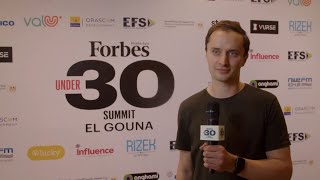
George Robson, Partner @ Sequoia Capital

George Robson, a Sequoia Capital partner, built products at Revolut including Premium and insurance before moving to investing. He looks for founders with deep insight into large problems, authentic grit, and strong teams. Sequoia's approach is patient capital focused on generational problems, backed by 49 years of founder learning and a global network.
Chapters
Hello and welcome to Riding Unicorns, the podcast about growth startups. I'm James Pringle and my co host is Hector Mason from Episode One Ventures. Today we are delighted to have George Robson, partner at Sequoia, on the podcast. Sequoia is one of the most renowned VC firms in the world. They've invested in over 10% of the world's tech unicorns. I think it's about 12 or 13%, which is an astonishing statistic. And George is leading the beachhead in Europe as they look to expand beyond the us. Prior to Sequoia, George was at Revolut where he led the Premium plus product. So it'd be interesting to have a chat with him about that as well and how that gives him context and perspective when looking at new startups. Hi, George. Welcome to Riding Unicorns. Thanks for joining us.
Thank you for having me. Pleasure to be here.
So, please can we start by getting background on your career and how you ended up at Sequoia.
Absolutely. I'm George Robson. I'm a partner at Sequoia. I'm based here in London, here in the eu. I joined Sukoi when we opened an office here on the ground. A year ago I joined from Revolut. I was at Revolut for many years, building a mix of consumer products as the business expanded from the early days across the EU into North America, into Asia Pacific. As the business grew, I was building something called Revolut Premium there, which is the premium subscription business, managing bits of Revolut plans, the insurance products, gifting business and the like. And before that I was at Morgan Stanley. I co founded an accelerator called Kickstart Global. I actually worked on the Hillary Clinton campaign for a year when I was at university. So I've done a mix of odd jobs.
Awesome. And what was it like moving from being part of a scale upside to actually now making investment decisions and meeting lots of founders?
So when I met Nikolai and the founding team at Revolut, it was clear to me that they have this incredible view of the world that they want to create in financial services. And that was a big piece of the excitement for me, jumping on the opportunity to build it with them. And when you think about what we do at Sequoia, it's actually not all too different from that. What I mean is we partner with a handful of new companies each year that are going out to solve some of the world's most important challenges. And it's actually a privilege to work with founders, particularly the earlier stages as they go on with that level of ambition. I think the thing that really impressed me when I made the move to Sequoia is just how thoughtful and deeply curious. Actually, a lot of the partners that I work with are about this. And actually when you think about what we do, we're really in the company building process of partnering with these founders as they go on that journey. And we've been able to do that repeatedly as a partnership, working with amazing people, not just across geographies, but across platforms, across sectors, and of course across time. And for me, actually, what that means is the transition has mainly been about learning some of the skills of entering this new ecosystem, working with partners across the eu. As we set up the new office and we move forward, it's quite different
being a VC versus being an operator and also versus being a founder. Do you miss any of the building at Revolut or building your accelerator, or are you building at Sigua as well?
I think one thing I'd say about the way that Revolut runs as a product organization, as a company more generally, is there's this concept of product ownership inside the building, which is really this idea of treating product as a sort of horizontal layer where anybody is building product that is either user facing or facing third parties that Revolut uses for infrastructure. Somebody owns that process end to end and is ultimately accountable for it. And you go out and you get resources from Nikolai and from the team to go out and realize whatever that mission is, and you're held accountable obviously to the performance of that. I think when we work with founders at the earlier stages, a lot of those questions are still being worked out. Right. When you work with an early stage company, particularly at seed and pre seed, the questions of who are our customers, what are they going to pay us for what we do? What are the right segments to go after? What are the right priorities that we set for the first six, 12, 18 months in terms of product, in terms of hiring, and ultimately in terms of expansion are still to be teased out. Actually, those are the sort of questions that I was answering when I was in product at Revolut, and I'm delighted to say we still get to work with our founders to solve some of those important problems today. There are similarities in that. I think the piece which is interesting is obviously doing it outside of Fintech, having been reasonable or at least a relative domain specialist inside of financial services now working with companies not just across geographies and sectors, but stages as well.
Yeah. And how important do you think it is being part of a company which had such a interesting and fast paced product strategy, how that helps you look at startups now and view them and consider what they're doing from a product perspective.
So I think this idea of product ownership that I mentioned is very central to that Revolut experience. You see it in how Nicolae communicates internally and externally in the business in terms of the scale of ambition that Revolut has. I think the main way you see that reflected is actually in the performance culture that is set out. Revolut. I mean, Nikolai carries that. He's a bar raiser for those who are around him and in his orbit. The way that's reflected is firstly this product ownership concept, so owning a process end to end. Secondly, making sure that you're very clear and very structured around what you want to achieve in terms of which are the key metrics you're going after, which metrics you want to move from A to B, but actually making sure that you give the people that are in your team that are across the organization quite a lot of autonomy and freedom in terms of the roadmap or if you like, the content for how they go out and actually achieve that change in that key metric. And I think that when you work with founders as a partner at Sequoia, you work as an investor, the relationship is one where you are there to support them in company building, to be their business partner. You're obviously not in the business day to day. You're really there to support and carry the bags. As my partner Doug says it, for them as a team. What that means is actually agreeing on these high level goals matters. Making sure we can support with hiring and company building and recruitment is important and distribution and thinking and strategy around product is a pretty important piece of the puzzle. So there are a lot of similarities in that sense.
I've heard rumors, and without wanting to unnecessarily draw gossip out of you, that at Revolut they'll often hire two people for one role and it's a battle to see who remains. Did you ever witness that?
So that's not something I actually experienced at the business. I think what I would say there's this incredible cultural principle inside the building of radical transparency in terms of how we work together. What that means is that across the organization, you know who's responsible for what metrics, which teams, you have a pretty heavy level of alignment as a result, visibility into what the roadmaps are of each of the people inside of the company. And Nikolai and the management team are very willing to give you pretty significant resources to go out and take big swings as a team to go out and hopefully drive the company forwards. And I think that's why you see inside the business that there continue to be a stream of new features that are added to the product as it's moved from something that was a travel card travel proposition back in 2016, 2017, when the business launched through kind of a current account into investments and savings and crypto and the like. And you may have seen the last 6 to 12 months big doubling down on insurance. They launched a hotel booking product called Stays. Right. And you might have seen in the news a couple of days ago an announcement around buy no pay later ambitions for Revolut. These are all new teams that are being created by people inside the company, private primarily, who have gone out to sort of build something new. So actually that kind of internal promotion is a really important piece of the culture.
Yeah, it's fascinating to see it develop into that kind of fintech super app, which we've all been hearing about for a while, but they continue to knock down verticals with relative ease. From your perspective, was the dream to become a VC or was it just that Sequoia was too good to turn down?
It was something that I thought a little bit about. When I was at university, I was working with friends running Kickstart, really enjoying being quite hands on with some of these really early stage companies. Those businesses in particular, a lot of them were pre incorporation. So it was actually founding teams and seeding ideas inside of the accelerator that was the experience that I really enjoyed. And at Revolut, I was fortunate enough that we launched multiple products from 0 to 1, given the nature of how that product has evolved, as you say. And it was something I thought a lot about and I think I was very fortunate. In 2021, as I was thinking about opening the office, we hired Luciana, he's my wonderful partner. We hired her across from Accel to really lead that effort here on the ground in Europe. I was incredibly grateful to go through the process and get to know my colleagues over that time and just really understand how deeply curious they are about what we're trying to achieve with our founders and the scale of the ambition, the kind of companies that we want to partner with. And I think the final thing I would say is if you look at the team that we have at Sequoia, it's a really nice mix of people that have a lot of operating experience from across their careers. People like Bill Coffin, he ran engineering at Google for a Decade. Our partner Carl, he ran all the good and market for a company called VMware. Grew that business from 200 people to 20,000 people over the time he was there. And actually both for our founders who work with partners at Sequoia, but also for me as somebody who's also looking, we're all looking to learn about how to be a better, better contributor, a better operator and a better partner. It's been a really great environment to do that.
You're a pretty young guy, George, and our listeners won't be able necessarily to tell that given it's a voice audio only format. How have you managed this? You know, going from product manager not a million years ago since you left university, to suddenly being partner at Sequoia, and have you found that a difficult journey to tread? Have you found there's any prejudice against your age or has it been a very seamless journey?
So firstly, that's very kind, thank you. I think what I would say is I have incredible people around me at Sequoia. If I look at my partners, not just here on the ground in Europe, but in the US as well. Right. Given that we work as one team, one dream between London and San Francisco, it's one fun family, it's one partnership, it's one portfolio, there's an incredible infrastructure in place, right, to make sure that not only our founders succeed as they try and build companies at global scale, but ultimately everybody inside Sequoia does as well. The age thing has not yet come up, which is great for me, but also, I mean, what I would say is, you know, we pull as a team. And in reality, what that means is when we work with our founders, when we work due diligence, a new company that we're thinking of partnering with, we will do that and make sure we leverage the full kind of expertise and resources that we have inside of Sequoia. Great.
So they're not making you go off and take coffees and buy them Diet Cokes.
That is. No, sometimes I volunteer. Yeah, exactly. What I would also say is, I mean, if I think about my experience at Revolut, I think when I joined Revolut, and I think this is still true to an extent today, Fintech was sort of as a vertical in and of itself. I think what has changed, particularly over the last five years in Fintech more generally, is it stopped being a vertical per se and evolved into something that is more of a business model for our companies. Think about monetization, even if their primary business, the service the end consumer sees is Maybe something else. It could be a marketplace, it could be something else. What it means is actually we're able to really work together when we think about supporting our companies to make full use of that. Given that we have a pretty broad set of experiences inside the group.
Do you think Sequoia works differently to other funds? And the reason I ask is it has a track record of being in an extraordinary number of unicorns. And so you guys, Sequoia have to be doing something right. Do you think there are reasons that you can identify for being able to pick companies that are going to be category defining leaders?
So I think there's a few pieces there. I think firstly, we've been doing this for 49 years of working with early stage founders and over that time, you're right, we've been fortunate enough to have a number of successes, but we've also seen a number of mistakes across more or less every sector and stage and geography actually where we now operate, there's a lot of learnings and tribal knowledge that comes from that that actually we treat very seriously. So we make sure that inside of the group we share those learnings not just with each other, but with the founders that we work with. So I think that's the first thing. Second thing, Sequoia as a business has expanded into geographies before. So we previously went to China, we have a wonderful partners in India and Southeast Asia, we went to Israel previously. We've been partnering with founders in Europe for 10, 11 years already, back to Declara and unity in the 2000s. And what that means is that we have perspectives that we share across offices as well as we see different geographies may be emerging in different categories at different rates. Good examples of that is financial services, Fintech more generally. There's huge amounts of innovation in terms of how things like a super app, for example, have evolved in China that are still yet to take on in the traditional West. We see it in live commerce and social commerce and the like and we can speak and work with our China based colleagues to make sure we share those learnings as a second thing. And I think finally the fact that we have this multi stage approach where we partner more with founders at seed and precede, but we're able to be patient enough and sit back and hope to work with these companies for 10, 20 years if that's what it takes as part of that journey and actually allowing people that patience in a partner to support them, knowing that we'll support them as they go through venture growth and well into the public markets and beyond is actually something that we really value in terms of how we work. And hopefully it's something that really resonates with the founders that we partner with.
And George, for you personally, what do you look for in founders? And does having the context of Nikolai help or hinder that process? Because the bar must be set at a level which is quite difficult for someone to meet that I think that's
a fantastic question and I suppose it's sort of the holy grail a little bit as well. And it's definitely something that I think we're all learning on. Well, I say there's no one size fits all for that. But what we love to see is founders that are armed with a unique insight into some problem that will matter, that is of some scale, right to consumers and businesses. I think part of our job is to really understand why these smart, motivated people are attacking this particular problem over millions of other things they could be doing with their time. And I think what we find is that the really best founders can clearly articulate the mechanics, right, the nuance of this pain and how this solution is radically better than what exists. And I think part of that process of being a founder, particularly founding an early stage company and going through that iterative process, is you need very high levels of self awareness as part of that journey. There are clearly so many unknowns when you work with companies, particularly at the seed stage, in terms of the target customers are what to build first, who to hire next, the nuance of thinking about pricing and expansion and the like. And the founder's role is to really put the best team on the field, to empower them to answer these questions. We want to be part of that team, to help them navigate it. And I think that some of my experiences at Revolut not just the content of actually the job, but also just the experience of working with amazing colleagues and working with people like Nicola, as you say, and thinking about the kind of strengths and weaknesses of those approaches is something that definitely helps. And I think that it helps us make some good decisions.
That's interesting. And I think it touches vaguely on something that I wanted to ask, which is whether you guys would consider yourselves more kind of thesis driven or opportunistic. And how do you think about that? You know, if you're building theses for areas that you want to invest in, companies you want to invest in, it can be really limiting and annoying having to say no to companies that don't necessarily fit one of those thesis. So how do you guys view that.
So what I would say is the main thing for us is we're looking for companies which are solving generational problems, so they have the potential to really change some part of the social fabric of how consumers and businesses live their lives in the long term. And at the early stage, which is where we prefer to partner with teams, it's also very much about the founder. At that stage, we make it a point to really seek out people who are independent thinkers that have a deep rooted need to win. And we're finding these qualities in founders across Europe and across stages and obviously across sectors as well. And what I would say is we prefer to come and work with a company where we have a prepared mind, where we feel we understand the nuance of their market. We work very hard to do that in the background. But what we find is that actually by really listening to the nuance of what these founders are saying and doing our homework and leaning on the expertise we have inside of the partnership and within the broader Sequoia ecosystem, we can really A, get up to speed, but crucially, B, support these founders quickly with
gauging people, which of course is such a large part of what we do. Have you guys found a way to productize that or build a framework around how to do it, or is it still very much a feeling that you guys rely on?
I think that there are so many different ways to build a company and I think it matters very much that founders lean into their personality and who they are and what their style of leadership is. And I don't think that any one of those is necessarily better or not. I think it's important to be authentic in how you do that because it's reflected in more than just how you treat your direct reports. It's reflected in ultimately the company culture and how people think about your business internally, but also externally as well. I think what I would say is broadly we are all some mix of domain expertise. So some expertise we built in some particular area or industry functional expertise, which is, you know, some it might be product, it might be design, it might be good to market or engineering. We have some level of experience that we. That has helped us build grit and determination across the time. And also we have luck right in the market timing or the certain opportunities or market setting we find ourselves in. And I think it's very important to think about that in terms of founder market fit is a function of all of those things in that you hopefully have some insight into the industry or the domain that will matter. You hopefully have a skill set that will allow you to attack that problem and have an unfair advantage as a team to go out and build it. It doesn't mean you need to have all the skill sets. Clearly you will hopefully hire a great founding team. We will hopefully help you build that team out to help you be successful. But you also need the grit and the determination and of course a little bit of luck to help you make sure you get there.
Yeah. You mentioned Sequoia has been around for 49 years now and I think one thing that we're seeing a lot in the market is impact mentioned across the board, whether it be new VC firms starting or people trying to tackle those issues. How does Sequoia see impact and does it have weight or any weight or what level of weight do you guys put on something that is going to do more than just become a unicorn?
So we think about that in a couple of ways, I think. I think firstly we're very fortunate that actually if you look at our LP base at Sequoia, the vast majority, I think it's 80, 85% of that is from charities, non for profits, foundations, research clinics and the like. So we view what we do as an important vehicle hopefully for positive change. And a lot of the returns that we generate are going to many of these great causes that hopefully will make a difference. That's the first thing I think the second thing is that we are also seeing a huge amount of innovation, particularly in impact in sustainability. I see it a lot across Europe. I think it is very positive that a lot of those founders that I see actually come from Fintech because I think a lot of them will focus either on this is solving a sort of technology problem which might mean something like manufacturing zero carbon concrete. That is something which you need quite especially a skill set to go out and research and develop and commercialize or they might think about it as a data problem. There needs to be data that is made available either at the supply chain level or maybe at the E commerce level at checkout where consumers need to make informed decisions of this product is cheaper, but it's two times higher emissions. That data problem actually has some similarities to many of the financial technology problems that people have solved in other industries. And I therefore think it's not surprising that we see so many high quality teams coming out of Europe given the amount of domain expertise that exists here. So I'm very, very excited about that and I think there are clearly incredible opportunities to create hopefully valuable companies, but also do a lot of good.
Changing the topic completely, how different VCs spend their time differently and there are some who are pretty desk based and researching and they're forming theses and they're going pretty deep on certain areas and there are others who are pretty network driven and they're the sort of two polar opposites in a way, and there's lots in between. What does a day in your life look like?
Firstly to say, so we work as one team across Europe and the us. It's one fun family. The reason I mentioned that is it means that we spend time looking at companies across that region because we want to find founders that are building those generational businesses. In practice, what that means is we do a lot of landscape work, a lot of thought work as a partnership, not just focusing on the eu, but thinking about these emerging trends across a region of that full stretch. So we'll often have to collaborate with US based colleagues in hopefully finding the right company to partner with. That's the first thing we do a lot of that work. We obviously meet with a number of companies which we love. We open a new office here in London on the ground, so we'll be able to finally invite people in to see us in person. But yeah, I would say there's a good mix of that, a good mix of us continuing to support existing secure portfolio companies, either that we work with directly or because we have some experience from Revolut or past lives that can contribute. And I think that point is important to call out because the working model at Sequoia is you probably have somebody you work with the most day to day who may or may not be, you know, your board member depending on the setup. But you probably also interact with a number of our partners on a monthly or bi weekly basis to help you solve some of these functional needs you have as your company scales. And that really matters because if you look at some of the most successful companies like Doordash or an Airbnb, where we partner with those businesses for 10 plus years, you will find at the point in time when that company goes public that they probably touched over half of the partnership at some point in that journey. So we work with a lot of each other's portfolio companies to hopefully help reach the right decisions.
This is quite a general question for VCs, but for Sequoia, how many meetings do you guys generally have before committing to a company?
We like to do a lot of work in preparation for those meetings and a large number of the new investments we make as a partnership are thesis driven and off the back of prepared mines or Landscapes that we've done. That's an incredibly important piece of our business. So hopefully, if we've done our job right, it should be relatively light lift for the founders. I think we generally like to build a relationship with teams well in advance of a fundraiser. Part of that is to make sure that we can obviously get to know each other, make sure the founders get to know us in terms of the working style and vice versa, because we really think about a fundraiser is really primarily a recruiting decision rather than a financing decision, given the amount of time that will hopefully partner together and work together over. So in practice, what that means is we try and keep processes quite light. We're fortunate to have a pretty light team, actually, across both regions. So it's a couple of meetings followed by a partner presentation and obviously some kind of broader market work that we might do. But our job is to frankly do our homework and make that process as smooth as possible when we do our best.
Do you think VC has it won your heart over and are you here for the long term or do you think there is a scratch you may want to itch going in the future?
I think this role, and I'm sure you both feel this is a privilege, right? Effectively, all day you speak to people that are trying to change some important piece of the social fabric of our lives. And an important piece of that is you see the future before it happens. You work with a lot of these emerging trends across a wide range of sectors, sometimes a decade in advance before it might actually reach the mainstream. And I do believe that's a unique privilege. I think I'm surrounded by incredible colleagues who are focused on investing not just in the region and in the ecosystem, and making Sequoia in Europe a success, but also in the team. Right. And making sure we continue to grow and level up. And it creates a fantastic environment to work. So I'm loving it. It's been an education, but it's been a fantastic one.
Yeah. Similar position over here for me.
So loving the VC stuff. What really motivates you? It's a question we ask quite a few guests and we get really broad range of ANSW answers, but it'd be great to hear what kind of gets you fired up in the morning.
I believe that entrepreneurship is an incredible vehicle for change. I think there are many different routes to that change, but I think entrepreneurship is one that I probably most closely align with this idea of creating something from nothing and supporting founders on that journey from, as Sequoia does, from idea to IPO and beyond. I think the fascinating piece of this is when we work with these early stage founders and we see the future before it happens. Just being part of that journey and really helping create these solutions that will fundamentally change the way millions of people live their lives. I think that's an amazing movement to be a part of. So for me it's definitely that and hoping to leave my mark with the founders that I partner with.
That's been awesome to chat, George. And actually we spoke earlier this week, so for our listeners, that was a funny coincidence. We didn't even realize the podcast was today, but there we go. But no, it'd be brilliant to chat before we go. We always like to play the dinner party guest game. So if you could have three guests to a business lunch or a business dinner, who would those people be?
So I'm somebody who's relatively new to podcasts. I've leaned into it pretty heavily, I think, over the last six, nine months. And one thing that's been pretty important for me, I think, over that time, because it hasn't always been easy. Right. Is it something that's funny and light hearted and interesting? So there's a podcast I listen to called Smart, the only podcast listen to, second to obviously you guys. There are three hosts on that, so Jason Bateman, Will Arnett and Sean Hayes, who are just three actors. And it's this podcast where every week they invite a guest, where one person invites them, the other two don't know who they are. And it's often someone from the arts, someone from sports, someone from politics, some from science, something like that. And the reason I like it is A, it's funny, B, it's a good reminder. I think lots of people have these pretty non linear trajectories in their career and they do something which I think in hindsight looks a little bit crazy and a little bit strange, but with some break of luck creates something hopefully magical. And I love it. I just think it's great fun. I think they are hilarious. So definitely, definitely that.
Was that called smotless or spotless smartness? Oh, smartless. Okay, I like the sound of it. I'm gonna.
So is your dinner party just all of them?
Them? If you listen to it, you'll understand. You'll understand.
Are you going to be an observer in this dinner party or are you going to be like chiming?
I'm an active, I'm an active participant.
And what's cooking?
What's cooking? Chicken vitas. It's in my wheelhouse.
Spot on. You can't go wrong with Chicken Vitas. I mean, Will Arnett and Jason Bateman. Very, very funny guys. So I'm definitely going to check that out. Awesome. Well, thank you so much, George, for coming on and telling us your Riding Unicorn story. It's been great to have you on and get some insight into how Revolut has kind of shaped your view on product and culture and founderability and things like that, and now what you're doing at Sequoia and getting in some insight into how that world operates. So thank you so much for coming on.
Thank you for having me. It's been a pleasure.
Thanks for listening to Riding Unicorns. If you haven't already, please like and subscribe on your favorite podcast platform. If you want to receive episodes direct to your inbox, go to ridingunicorns substack.com and subscribe on there as well. See you next time.
More from George
George Robson, Sequoia and Benjamin, Tech Barbecue: The SHOCKING Truth About Building AI Companies
[ENG] #201 - George Robson (Sequoia Capital) - Sequoia’s growth in the European Tech forest