"Complexity" & "Sustainability" with Neil Theise — Living Between Worlds 5.10
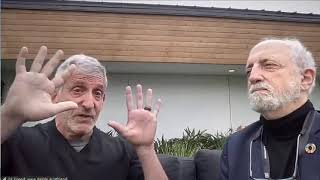
A 90-minute Living Between Worlds webinar (recorded Oct 16, 2024; posted Oct 23, 2024) in which Gil Friend interviews Neil Theise (MD, Zen practitioner, NYU pathologist and author of Notes on Complexity). The conversation introduces complexity theory as the scientific framework for how living systems self-organize, contrasts complexity with mere complication or mechanistic models, and distills four working principles: (1) numbers matter (sufficient interacting agents), (2) predominance of negative (inhibitory) feedback loops, (3) interactions are local (no global sensing), and (4) a low level of randomness/unpredictability (adjacent possible). The discussion links those principles to sustainability and organizational change (e.g., cultivating cross-functional networks, enabling local sensing, avoiding over-control), medicine (tissue self-organization, cancer immunotherapy), and spiritual/ethical attitudes (complementarity, acceptance of death as part of life). The session includes audience Q&A about applying complexity to learning systems, corporate buy-in, burnout, disaster/regeneration and political risk; it closes with pragmatic advice to act locally, cultivate practices that sustain caregivers, and hold expectations lightly in uncertainty.
Chapters
Welcome everybody. This is Living between worlds for October 16, 2024. We're closing near the close of the fifth year of this monthly series of webinars and conversations exploring the question that's in the title. What is it like to live between worlds in a time where, as Antonio Gramsci said a hundred years ago, the old world is dying and the new world is waiting to be born. And between is the time of monsters. And so here we are in the time of monsters. It's a great quote and it's a multi layered quote because it's monsters like, you know, smough fire breathing dragon, but also monsters in the sense of primal forces below the surface, not seen, not understood, but we feel them moving. And so here we are in these times. I'm Gil Friend, for those of you who don't know me. I'm CEO of Natural Logic Strategy Boutique and a coach to sustainability leaders and emerging leaders. And I'm coming to you from the Sustainable Brands Conference in San Diego. And I brought a special guest, someone I just met here. Neil Ties is an md, a Zen Buddhist, professor of pathology at the NYU Grossman School of Medicine, a pioneer in adult stem cell plasticity and the anatomy of the human. I love this. The human interstitium. And we may find out something about what that is because that might actually be relevant to the conversation.
Yeah.
And Neil is the author of a book called Notes on Complexity, A Scientific Theory.
I happen to have it right here.
He happens to have it right here. A scientific theory of connection, consciousness and being. Neil was one of the keynoters of the opening session at Sustainable Brands. I loved what he did. I was moved, I was unsettled. I was unsettled and comforted, strangely, both at the same time. And we've had some extended conversations over the last couple of days. I discovered to my surprise, that in my journal exactly one year ago is a note that says, read this book. And then one year later, here he is, which is actually also relevant to our conversation. Right. As fate would have it.
Would you say the man's name clearly?
Did you say your name clearly?
Neil Theis T H E I S E. It's German, so should be theiser, but Americans can't pronounce that, so it wound up thes.
So here he is. And the book again is Notes on Complexity with a subtitle. You can find that wherever you find or steal your books. And so we're going to explore together, for starters, the relationship of complexity and sustainability. And we'll see where we go. We'll Talk together for a bit and then we'll invite you all into the conversation and should be interesting.
And you know, thank you for bringing up the interstitium stuff. Yeah, let's get to that too, because I haven't had a chance to talk about that in three days. And it does have a relationship to all this.
Well, let's not start there. Let's start kind of more in context of where we are.
No, no, no, exactly.
These webinars have been and sustainable brands. So why, why are you here at this conference and why are we talking about complexity and sustainability? Why is that relevant?
So I'm here because co Ann invited me, who founded the conference. The real reason she read the book and recognized something in it. Complexity theory is the science that spans everything between quantum physics and relativity. And while those are really profoundly non intuitive.
Well, let me stop you right there, because for most people you say quantum theory and relativity, you said the span between them. Most people think of those as kind of in the same bucket.
They're in the same bucket, except quantum physics describes the very smallest parts of the universe and relativity describes the most vast. And so between them is the gap.
Yeah.
Is everything. Everything we're familiar with. We can't see quantum effects easily at our daily level of scale, although now we can measure some of them and some of our biology depends on them. And relativity. It's like we know gravity's here, but you know, do we walk around thinking about it and experiencing on a daily basis not so much, but everything that lies between, including living things. This is how life arises from the universe. It's how life adapts and changes as. As the environment changes. It's how living things organize themselves into larger scale structures, whether it's multicellular organisms or the organs of your body, or an ant colony or a flock of starlings, or in case of humans, a city, an economy, a culture, and ultimately the entire planet.
So, Neil, so what is complexity and what is complexity not?
Yeah, so complexity is not things that are merely complicated and a whole bunch of complicated things. Complexity. And we have a little bit of problem in English because those two things, people sort of use them interchangeably. But when we talk about complexity theory, we're talking a very specific mathematical and scientific definition that is not complex. It's simple. That's why I could write a thin book about it. It's how living things or elements that will comprise living things, if you have enough of them and they're interacting with each other, if they fulfill a handful of criteria, they will self organize into larger scale structures like ants becoming a colony, humans becoming a neighborhood, cells becoming a liver. I'm a liver pathologist, that's my specialty. And distantly, that's how I got to here. And so when you're talking about anything having to do with human culture, human experience, human society, complexity theory applies to it. So while I wrote the book focused on a fair amount of science and biology, but also consciousness studies, which is another thing that it relates to and ultimately spirituality. Because if you're talking about consciousness, you're going to be talking about Buddhism and Jewish mysticism and Shaivism and Vedanta eventually. So that's what I address in the book. But the responses I've gotten to the book come from artists, individuals as well as community of artists who see their art practice reflected in the complexity principles. I received an invitation from the Jungian analysts of Rome to go visit because they told me I was a Jungian, which I thought I was a Freudian, but apparently I'm a Jungian as the book demonstrates. Sustainability, people, for whatever we're talking about, when we're talking about human society or living systems, complexity applies. So it's a very open ended way of understanding the world.
Well, let's, let's go a little more specific.
Let me break in a second there. If it's easy for you to do, turn off your blur background because it's having trouble with two faces.
Thank you for, thank you for that. Let's see if we can do that. Blur my background, Turn it off.
There you go. Oh, I recognize almost where you're sitting.
I think so. Applies to everything. But here we are at a sustainability conference with a bunch of folks who've been talking about sustainability for a bunch of years together. So take us into the relationship of complexity and sustainability and why it's important to think about that and what it discloses or opens or invites for us to bring that frame into this frame. Right.
So one thing that complexity is a corrective for is that our culture for a few hundred years has made the choice to understand living things and the universe as a whole, as machine like objects, where if you understand the parts, you understand the whole, the parts are precisely the whole. And you can make predictions. If you know every little detail, you'll know what the next moment holds and the next moment holds and the next moment holds. And that's been useful for some things. We have cars, we have clocks, we have antibiotics, we have trains. But it's not really useful for understanding human health. It's not helpful for understanding How a planetary ecosystem works and responds to insult and how it could repair itself and complexity through those simple principles. I'll highlight one in a moment. Undermined that common understanding we have of the world being machine. Like an example in biology. Because I do stem cell research, there are a lot of people I've been, I've been in dialogue with who do tissue engineering. And just the fact that you say tissue engineering, it sounds like, oh, you'll take bits of tissues or you take cells and you put them together the way you would assemble a clock and you'll now have a tissue. But in fact, that doesn't work. We haven't been very good at growing organs.
Right.
What you really have to do is get a bunch of cells together with the right environment and cultivate it the way you would cultivate a garden or you would cultivate an ecosystem. And you allow the things to interact and do what they do, which is self organize into living structures.
Cultivate's been a very central word for me these last few years because it suggests a kind of passive activity, if you will. I mean, if I'm growing a garden, I don't make the plants grow, right?
You trust the process, the plants.
But I also create the conditions, literally cultivating the soil, producing a seed bed for the soil in which the seed can do well. I provide water, I provide the various, various circumstances in which what the seed is already bringing, right. And what the environment is already bringing, what the weather and climate where I am are already bringing, allows something to emerge.
Right.
Differently than if had I not participated. But not controlled by me.
Yes. And that's one of the fundamental principles, is that most of the organizational structure we see in the world, whether I'm looking at palm trees over here in front of us, how the tree becomes a tree, how each of us became, you know, I think we're all adults in the thing. How we went from a sperm and an egg to a fetus to a newborn, to however old we are now. All of this happens without us having to think about it. I have a scar on my finger here. And one of the things it reminds me of is that I sawed my finger when I was a kid trying to saw something. At the time I was really struck, I was like 10 years old. And it occurred to me, this is going to heal itself regardless of whether I'm paying attention. So who's paying attention? What in my body is doing this? And there is no ant in the colony figuring out, is there enough food? Where should we put a cemetery where should we dig tunnels? Humans are the only ones. Well, primates in general, I think, but humans specifically are really adept at creating stories where we are running the show that we exist in hierarchies and there are people at the top and there are people at the bottom and control filters down and there's stuff that comes up, but it's up to the people at the top whether they pay attention to it or not. That's not the way the world works, that's not the way biology works. It's mostly local interactions amongst individuals. And out of those local interactions, without sensing, without trying to determine what the global status is, a global status arises that's creative, adaptive, healthy, self sustaining and.
Has been doing that for 3.8 billion or so years.
Yeah, yeah, yeah.
On Earth, On Earth, wherever else. And I think of that as the open source R and D that's available to us to figure out how to do this because look, let me push back on you a bit. Ant colonies are one thing, airline companies are a different thing. Where arguably, arguably you need to have some degree of control and predictability and causality and recurrence as well as emergence. Those two words I think are in a dance together. That's really important.
I agree. And actually in the most formal version of the academic work in consciousness studies that I do, the most formal version of that that's been published with a colleague of mine who's a physicist and a Kashmiri, Shavist is looks at the three fundamental processes of the universe being complementarity, which we will probably get to emergence, though we have different words for it, and recursion, it's level after level after level scaling upwards. And that's another aspect of it, this open ended possibility across scales.
Yeah.
The principles of complexity apply whether you're talking about the quantum level, whether you're talking about molecules, whether you're talking about ants, cells, you know, ecosystems, et cetera.
Well, I'm going to put recurrence back into the stack because it's been different than recursion because there are certain, there are certain things where I want to ensure a kind of replicated, predictable replic. Right thing. Things will happen the same way if I do certain things. Good luck with that. But yes, yes and right.
Oh, exactly.
Because you know, we're both, we're both here because airplanes had schedules and wings didn't fall off them.
This year.
This year, yeah, this year.
But as we know, and again, this is very much our modern culture, we want a machine like predictability.
Well, we want, we want A, we want some assurance. Maybe there's ways to be comfortable in that without a machine like predictability. Right. Because there is seed time and harvest. Right, Right.
But there is also life and death.
Yes.
And, and you can't have one without the other. Can I, can I dive into that one little bit?
An important one.
Yeah. So one of these principles of complexity that I, that I was referring to is the idea that interacting things that form a complex system have to have a certain low level of randomness in the system, a certain low level of unpredictability. If you have too much randomness, then it's just ants not paying attention to each other, wandering all over the place. And there are no food lines, there are no tunnels, there's no colony, it's just disorder. If you have too little randomness in the system, then let's say the environment changes because the sugar cube that's been carried by a food line back to the colony, the sugar cube runs out. But the ants don't have any possibility of changing their behavior to stop doing the line even though the food has run out. And who's going to find the other food? So there needs to be a low level number of ants, in this case that are available to respond to a change in the environment. So if you look at a food line of ants, it looks like a straight line. And if you bend down and look closely, there's always a few ants, 3 to 4%, that aren't following the line. Those are the ants that if you step your foot into the line, those are the ones that rapidly find the most efficient way around your foot. They're the ones who are likely finding another food source so that when this one fails, they'll already be establishing the next food line and then they'll become part of the food line. So this low level randomness is essential to have creativity and adaptation.
What I'm hearing from you though is that it's not exactly randomness, it's a prime, it's a priming for deviation.
This is where we have problems with English and we'd have problems with other languages too. It's just these specific ones. Another way of thinking about it is unpredictability. There's a low level of unpredictability in the system. If you want to call in complexity. They often talk about quantum quenched disorder. So they're talking about there's disorder, but it's quenched down to this limited, but.
Not, but not too much, but not.
Not too quenched because then you have no chance for Adaptation.
If all the ants are obedient. Use like a, you know, human metaphor here. If all the ants are obedient and stay in line, which is a phrase that we have in our culture, there's.
No one to find the next food.
Source when they die.
Yeah.
If they're too obedient, they die. Right. If they're too random, they don't organize.
There's no colony. So you need this sweet spot. And this is a hallmark of all complex systems. It's a hallmark of all living things. And so one of my mentors in complexity, Stu Kaufman, he's one of the founders of the field and probably the deepest thinker about how complexity applies to biology and bodies and evolution and stuff. And he coined the term adjacent possible so that in this moment for the colony, in this moment for us, there's an array of possibilities for what the next moment might be. We can't define what that array is. It's not infinite because there's a limited degree of unpredictability. So it's not an infinite number of possibilities for the next moment, but it isn't a definable, predictable possibility for the next moment. It's this cloud of adjacent possibles. And the next moment, one of those adjacent possibles becomes the organization, the self organization of the next moment. The cloud falls away, and now you have a new cloud of adjacent possibles. And this is so something.
Something or someone needs to be attentive. No, that in some way, right?
No, no, no, no, no, no. There's no ant in the colony that's paying attention to any of this. In my liver. There's no cell in my liver that's directing the liver to organize itself. There's no cell in our bodies that's directing us to be hungry versus satiated, tired versus awake, you know, et cetera, et cetera.
There's some capacity to do that, which my car doesn't have, because your car.
Has no randomness built into the system. Your car is a machine with complex systems and complex systems. I mean, sorry, with complex systems and with chaotic systems, which is another related form of order in the universe. The whole is greater than the sum of the parts. You can't look at the parts, you can't look at the ants, you can't look at the liver cells, you can't look at humans and go, I know if I put them in a group, what they're going to do, how they're going to organize.
And modern humans so want to be able to do that.
And we so want to be able to do that. And efforts to try and do that often wind up with too much control. And so you're limiting the range of creative adaptation that the community can have because you're so rigidly controlling it. The most extreme examples on a political scope would be an authoritarian society. It's interesting, I have a paragraph in the book on how authoritarian societies inevitably fall. And that's because there is no global sensing, it's all local. But an authoritarian system is trying to globally sense everything. There will always be something they miss. And that's where the revolution takes place. When the book got translated into Chinese last year, they. I thought they would take out that paragraph, but they translated authoritarian as dictator. Okay, because dictators are bad, but authoritarians are good. So they left it in. But this is one of the things that makes complexity theory also kind of implicitly subversive. Because anyone who thinks they have a system and that they were in control of a system, whether it's a corporate leader, a teacher in a classroom, etc. There's always going to be surprises. You might keep a reasonable control, a reasonable predictability in the short term. In the long term, there are going to be things you can't predict. Hopefully those will be things that are adaptive. You know, a teacher in a classroom finding that because of a certain combination of students sitting in a corner, suddenly the whole class becomes more attentive and the teacher didn't have to figure that out. That just sort of happened. Or the other, you know, you have the wrong students together and they're just causing trouble and that suddenly there are issues. I was going somewhere with that example, but now I don't remember.
Okay, well, let me ask you something else next. You talked about the local sensing and the global awareness. And that touches on these four principles that you've distilled from your research here. Is this a good time?
Yeah, sure.
About them and the context, why I'm asking you this is that, you know, we're sort of implying that there, that there are. That there's some awareness and perception and teachings perhaps to harvest from this conversation that apply to how organizations might change, how, how, how emergent human organizations can cultivate nurture the healing capacity of the living earth better than what we do with our machine model. Yeah.
And so a lot of what I've been talking about this week is how these four principles that I keep referring to, we've covered two of them. The low level randomness in the system, low level unpredictability, quench disorder. That's rule number Four in the way I order them. Rule number three is everything's happening at the local level. There is stuff happening top down. Of course there is, particularly in human societies. But by and large that control, as we've discussed is very limited and ultimately isn't going to.
And it's limited in its sensing ability.
It's limited in its sensing ability which limits it in its capacity to have the entity that we're talking about creatively survive and change in response to a changing environment. The first two, the first one I title numbers matter. 25 ants are enough to build a colony. I know this because if you buy an ant colony for people in our age group, we used to do that from the back of comic books. Now you do it online. And if you, you get 25 ants in an ant farm and 25 ants gives you tunnels, gives you food lines and when an ant dies, they carry it off to a corner of the ant farm to make a cemetery. I've watched this a few times now because people have given me presents of ant farms the way. Please don't send me videos of murmurations of starlings. I've seen enough. That's the major thing I keep getting shown. When you get down to around five ants, they're not interacting with each other, they're not cooperating with each other. They're. We have some game activity happening here now.
I don't know. And sirens maybe, maybe zoom filters it out.
I'll wait till the sirens pass.
Zoom tends to filter out background. Are you hearing people screaming?
No, not hearing anybody screaming. The audio is, the audio is really good. Let me, let me just bring up a question or at least a thread that's popping up here. There seems to be different people talking and, and there's different elements about, you know, whether this behavior is purely like risk taking versus just randomness and kind of the other thinking is it purposeful exploration? It seems like there's different ways of describing perhaps, you know, those, those ants going around your foot or whatever. And I just wanted to bring up. There seem to be some of the terms that are, that are, that are coming up in the, in the chat. Does that make any, any sense or any comments to, to kind of differentiate again, risk taking, like purposeful exploration and just pure randomness.
Those, in terms of complexity, those are kind of all the same thing.
Actually.
The risk taking is the members of some members of the self organizing system do something that hasn't been done before but they're not thinking I'm going to do something risky or not Humans do that, but most members but cells don't do that. Oh, I'm going to take a risk here. But to explore a new way of self organizing when the environment changes is risk taking because you might make the wrong choice. It might not lead to an adaptation that allows the system to survive whatever the change in the environment is. On the other hand, there is some element of top down. It's not really, I emphasize the bottom up stuff because it is more important, but also because in our culture we overemphasize the top down stuff. And another way of thinking of this, bottom up versus top down, no global sensing everything at the local scale, you know, only it's only humans who talk about hierarchies and generally primates who exist in hierarchies. But the fact is, whoever thinks they're at the top of some pyramid, their interactions are also just local, they're not global. The President of the United States sits in the Oval Office and receives information from people they're interacting with that's local to them. What makes them at the top of a pyramid is they're connected to more nodes than most. And the strength of those connections may be more, but the way to actually map it isn't as a pyramid with a top and a bottom. It's to flatten the whole thing out into a web where you can see all the nodes that are connected to all the other nodes and those pockets of nodes that aren't connected to that top bit or only tenuously so. And so yes, there is purposeful action that can be taken. Of course there is. But the way that plays out within a web isn't under your control. The choice of which interaction you make, that's within your control. But what the propagating effects of that. So this actually brings us back to these four rules, because how we, how we use them informs what I'm saying here. So the first one, numbers matter. You need sufficient numbers to make a self organizing system, though how many that is is hard to calculate. But you know, you see it Happen, it happens. 250 ants is more complex as a colony than 25 ants. 25,000 is more complex than 250 in human terms. A village is not a city, is not a megalopolis. And it's not only numbers of interacting individuals, but the numbers of the degree of diversity of interactions between the individuals. So for example, an authoritarian system might have the same population as a freer society, but what's an authoritarian system doing? In part to retain control, they're inhibiting interactions Whereas some form of democratic society is fostering.
Well, they're inhibiting, they're inhibiting interactions in different ways. Right. Because the, the, the, the person at the top or the center of the web with the, with the rich connectivity, all that connectivity is filtered, right? It's always local. And the message that the president is getting in the Oval Office has come contain the bureaucracy sensing local events around the world. A vast network of lots of local sensing, but filtered. And all this is, you know, this is Russ Asprey's law of requisite variety is that you have the variety of the control system has to match the variety of the system being managed, otherwise it breaks. And that's where authoritarian breaks.
Right? Right, exactly. And so that's rule number one. Numbers matter. The rule we haven't discussed is that there have to be a preponderance of what we call negative feedback loops. Negative versus positive feedback loops are not bad feedback loops versus good ones. A negative feedback loop is inhibitory control influence. Inhibitory influence is a better way to say it. Like if you have an air conditioner in a room and the temperature is rising in the room, the air conditioner will turn on, the room cools down and the air conditioner turns off. So a negative feedback loop is keeping a living system oscillating within a healthy, what we call homeostatic range. If you see something that's not oscillating, it's not alive, living things oscillate. You can have. Now a positive feedback loop would be something more open ended. You think of a heater going on in a room and the temperature goes up and the more the temperature goes up, the more the heater turns on and so the temperature keeps going up and up and up. You can have that in a biological system, but it can't predominate. So an example that's obvious if you haven't already thought of it. When you have a fever, your temperature goes up and it goes up and it goes up. What that does is it stimulates your metabolism which then enhances your immune response and you fight off the infection. And then the negative feedback loops come back in to bring your temperature down to homeostatic range.
Hopefully.
Hopefully. Well, we'll get to what happens when it doesn't. And to some extent the inevitability that there will be moments where it doesn't. That's a corollary. So negative feedback loops have to predominate. You can have self organizing and that gives you a creative adaptive living thing. You can have a predominance of positive feedback loops and you get self organization. But that's like a tornado, cancer, economic bubbles. And their hallmark is very rapid growth, great consumption of energy and then collapse. And so those are your four rules, the numbers you have involved and the numbers of their interactions, are they robust enough? There has to be a preponderance of negative feedback loops. Can be positive feedback loops, but if they're too out of control, the system will collapse. Three, no global sensing, interactions are local. And four, there needs to be this low level of randomness, what that allows me to do. So a lot of this sounds like, well, this is high science and mathematics. But pragmatically speaking, since I've learned about this, I've learned if I've got a question about a living system, I can look at those four rules and they give me a lens through which I can identify what's out of whack here, where could I make an adjustment. So this is true when I'm talking about human disease, I'm a clinical doctor. An example of rule number two. We know that, we've known for a long time that part of the thing about cancers, many cancers, is they escape immune surveillance. So the immune system keeps cancers from becoming cancers. When a cancer happens, what do you do? Well, now we have these immunotherapies that restore the immune system's reactivity against the cancer cells. And what happens? Cancers that had been untreatable now disappear and patients stay in long term remission. So that was an example of we're looking at cancer as a problem we can identify. Lack of negative feedback loops. Let's put in some negative feedback loops and lo and behold, it works. Someone was asking me about, well, how do I talk to a corporate leader?
That's where I was going to go. I know it's a little bit out of your direct wheelhouse. No, no, no. Let's say a corporate leader is receptive, wants to do something, recognizes the need for profound transformation in their business. But they're in a structure that's both hierarchical in itself and is also nested in the economic system where Wall street accepts, you know, expects increasing profits every quarter. And there's, you know, there's positive feedback loops driving the thing right to break. Right. So what happens there?
Yeah, so number one, let me give you a different word than hierarchical. Arthur Kessler came up with the word holarchical. And a holarchic system is made of holons where each member is actually the whole. So that's easy in quantum physics, but never mind Unless you ask me that specifically, I'll come back to it.
I'm not going to go there.
Yeah, but so I've been asked this question a number of times. And one thing you can start off by doing where you don't have to talk about flexibility or changing anyone's mind, just offer them a map of the whole Archy, the web of interactions of the corporation. Not as a top down, this is the hierarchy we've instilled, but an actual representation of the actual communication networks. And what that often tells you, and I've done this in working with my hospital administration and my department administration, what it often reveals is, oh, this pocket over here is not well connected to this pocket over here. And we're missing creative possibilities because they're not talking or these different nodes. We don't want them in communication all the time. But if we've got a problem to solve, let's take, instead of bringing in the experts in this area, let's bring in an interdisciplinary group from different parts of the corporation and let them start talking to each other. That's where the surprising creativity often arises. And so you don't have to put it in these highfalutin terms. It's very pragmatic.
And this is why most of the time in our engagements with companies, we insist on cross functional teams right across the company and sometimes even across the supply chain, up and down, the diversity of people connected. Right. Because, and we've talked about this before in some of our prior calls, you know, in contrast to the usual notion, well, the American notion that a corporation is a person legally. Bizarre legal fiction, right?
Yeah, yeah.
And most people recognize, no, it's a collection of people. Gregory Bateson said, no, not quite right. Collection of parts of people. And my teacher Fernando Flores says it's actually a collection of conversations, conversations between people who are making requests and offers of each other and commitments to each other. And that's where the thing comes alive, that's where the world is actually created. So it's very consistent with what you're saying here.
So that actually gets us to a core corollary of all this. And, and this is part of our modern culture is okay, I want to know what's, what a corporation is. And this person says it's a person and this person says it's a collection of people and this, et cetera. And it has to be one or the other. Someone has to be right. Who's right?
So.
The way I got into this was I was working with an artist named Jane Prophet who was doing. She was interested, this was 25 years ago, in how humans interact with what we're now appearing on screens as avatars, though they didn't call them that then. And she created a world called Technosphere. You can Google it. It's kind of fascinating. And people would put creatures into that world and make some determinations about the characteristics. Are they herbivores or carnivores? And the animals would go out into this virtual world when there were a few thousand of them. All of a sudden they started organizing themselves into larger scale structures like herds or displayed carnivores, displayed hunting strategies that had not been programmed. So I was talking to her about stem cells moving around the human body. And she said, well, it's kind of like what we're doing with Technosphere with these virtual creatures, or what complexity theory people talk about in terms of ant colonies and slime molds. And this is the first time I heard anything about complexity theory. So now we have. I'll make explicit what I've sort of put in front of you an ant colony. From a distance, if you're approaching it, you see this dark thing on the. On the land in front of you, and you may not know what it is. The way you might hear a noise in the sky and look up and before you realize that's a memoration of starlings, you think, what's that funny ship in the sky? So things look like a thing from a distance, but you go in more closely and you see there's the ant colony as a thing disappears. It's just interacting ants from a distance.
And it's in a moment.
Yeah.
So you can change scale of view and scale of time. Right?
Exactly. Now, what happens if you go in closer to the ant, to the cellular level, which is where I spend most of my day, I'm looking at human tissues under the microscope hours a day. So someone's at my door, I look up, and we're two people. I look into the microscope and the piece of the person I'm looking at is a bunch of cells. I don't see the person. I see the interacting patterns of the cells. So the ant disappears, the starling disappears. My finger that might point at one of those disappears as I go in close enough. And it becomes just a colony of cells, a flock of cells that are interacting with each other. So complex systems can exist and I'm sorry for using this word. We'll bring it back to wholargy. They exist in a kind of hierarchy. And whether something appears to be a Thing or a phenomenon arising from interacting smaller things. Depends on your scale of observation. When I first learned about this, this really upset me because I was like, am I a body, a thing, or am I cells? And my daily practice is to think of it both ways. But this was sort of forcing me to go, but which is it really? And so this became like a Zen Cohen to me, very precisely. So just something I could not stop thinking about. It was this obsessive. It had gotten its hooks into me. And after a couple of weeks, I was walking around town in New York City, and I came to Park Avenue, and there was a stop sign, and. And I stood on the corner with the other people. Am I a body or am I cells? Which is it really? Am I a body or am I cells? And this. And the walk sign turned and everyone stepped off the curb, and I was stuck because my leg had become a flock of cells. And then in a moment, I collected it back together again and became a body. And it was. That was kind of the moment where I realized it's completely equivalent. It's 50 50. And the image I use, should I show the picture actually, or.
I don't think it'll work.
So if you think of that classic image of two faces in profile, silhouettes of two faces in profile looking at each other, you see two faces, but the space between them looks like a vase. So then you look at the vase and you miss the two faces. Which is it? Is it the two faces or is it the vase? You look at it one way, you get the faces, you look at it the other way, you get the vase. Either way, you're missing exactly 50% of the information.
Either way, there's an image.
Either way, there's.
There's an interpretation of the image that I make, right? I flip back and forth between. If, you know, it's like it's the Zen coin of not one, not two.
Right, right, right, right. And so. And actually, people go, well, I can see both. And people have studied this with FMRI machines, and people who think they're seeing both, they're just flipping back and forth really quick.
Like people who think they're multitasking.
Right, Right.
I want to go to the room. I know people have things to say here, but let me just ask you one more question before we do.
Wait, let me just go ahead and complete that thought.
Yeah.
So my collaborators and I refer to this thing versus phenomenon thing as a complementarity. And this is exactly the word that Niels Bohr used and how he was Using it at the quantum level for his light waves or particles. It depends on how you study it, how you view it, what the experiment is. So all these different things where you were saying is a corporation, a person, is the corporation, a collection of people, et cetera. All of those things are true. All of them are complementarities to each other. There is no preference for one or the other. Each one may be useful in a way. And the whole archy here is that it is all those things all at once. Just as a human body is a mechanical body. So I got a hip replacement this year, and I got an orthopedist who dealt with me in a very concrete, daily level of scale. I've now got this.
Which is exactly what you want, right?
Exactly. But if I have an infection, then I've got a cellular problem and I can solve it with a molecular intervention. And I don't care what the body looks like. I care what's happening down here with the cells and the antibiotic that I put into it. So therapeutically in medicine, we do this all the time. We're selecting the view that's useful to apply the therapy. We're not saying that, oh, the body is only cells. Sometimes the body is carpentry. And so that's the important thing to me, the most important thing is that our culture wants there to be an answer. And we often fight between these different answers. No, you're wrong. I'm right. You know, and the fact is we.
Often fight physically and kill each other for these even. Right.
And as you said before, it's not either or, it's both. And.
And it's context dependent.
It's context dependent. And that's where we have choices to make. Which view are we taking? And can we keep in mind that when we get caught up in one view, you're getting caught up in a single view. To really understand what's going on, you have to flip it to look from a different perspective. And that flexibility is what complexity has taught me, and my Zen practice teaches me, is look at it this way, then look at it this way and be comfortable with that, and then select which is the skillful view for this problem in this moment, for, for, and.
For these people in this situation. Because one of the doorways into the flip on complexity is what do we care about?
Right?
Right. You know, care about the hip, care about the cells or the fever, or care about the person that I'm talking with and what do they care about? And this goes even into the realm of the maga. And not MAGA people.
Right, right.
Who. You know, people may disagree with me, but in my. My limited contact, direct contact with folks, I live in a bubble and a bubble in the bubbles. My contact is limited, but I'm in my limited contact, if my ears and eyes are open enough, I discover that these folks actually care about things that are similar to things I care about. They have different stories they tell, they name things differently. They certainly have different interpretations about what to do about it. But most of the time, most of the people I have ever talked with, the concerns are very common. Yeah. And so that's another way into playing and moving with the context right now.
Exactly. The Dalai Lama often has said that what all humans have in common is they want to be happy, they want to be content. From there, we create problems, but ultimately that's what we're all looking for.
Let's go to the room, which is a lot more we could talk about, but I know.
Yeah, yeah. A couple of things. One, in just a second, Rick has got his hand up, so I'll call him up here. But this is Jim and Gillis is reminded me of kind of the next step after Dana Menows, 10 Ways to Intervene in the system. The idea of understanding the mindset behind the systems. Well, like the next order of that was understanding. There's all these patterns of different mindsets. And one of the goals would be to develop the capability to consciously choose a perspective at different scales so you can consciously recognize that no one is necessarily right. But be able to kind of choose and use purposeful observation through different perspectives to. To try to define the system better. I don't know. I'm stumbling a little bit in my words, but I think that's a shared path we had in our back.
Jim and I think. And the funny thing about it is that when you're doing that, you're also shifting your own sense of who you are in the conversation.
Absolutely.
Own identity becomes looser and more fluid and more flexible.
If you can consciously decide to step out of one perspective to go over here and. And choose. Consciously choose to flip your. Your perspective. That that is analogous to that. But anyway, that was just something that bubbled up. But Rick Buttello has his hand up. So I'll turn it over to Rick.
Go to Rick in a second. And anybody else, if you'd like to speak again, just raise your hand using the zoom function at the bottom of the screen. It'll queue up.
I've asked folks to do that, but Rick's the only one I see up and here comes Lou. So we'll go Rick and then Louis.
Very brief introduction. I'm a retired academic family physician that had a long standing interest in complexity science. I don't know if you know Joachim Strong book from Australia, but if you don't, I put his, his, his book that he published in 2016 on complexity science in medicine in the chat. So you may want to look at it as you were talking. I composed a question which is, is a complex question which I put in the chat. It's something you shouldn't really read out aloud. There's a, a limitation of our human capabilities of how much we can take in a question, particularly if it requires slow learning. So if you look in the chat, it was put in fairly late, you may want to just glance over. And the essence of the question is how can we create complex adaptive learning systems to be able to solve our wicked problems in medicine and outside of medicine? And how can we create, you know, you know, I don't like using the ant analogy, but I did pose that as a question. I, as you were talking, I was using AI to ask questions based upon your book and applying it to the question I just posed. Food for thought.
Thank you.
Is that a question?
Well, no, no, it's not. It's, that wasn't a question. But the question is in the chat box if you, if you open up the chat. It was a more elaborate. But the question is, you know, I.
Mean, I think the question you're asking of how might we cultivate complex adaptive learning systems, etc. This is the question that we've been in the whole day and it's, that we're, that we're in month by month is, you know, how does this kind of perspective change us? How's it changed you? Yeah, how might it change how we do what we do in the world and interact with the organizations we interact with at the start? I mean, one of the things I harvest from this and something we didn't get to, I want to come back to in a minute about planning is that these four rules that Neil is claiming are interesting queries, places to start to look. You know, four lenses that you could like, like a moire pattern. You put up two screens and you move them and you see different things. What do I see when I look at this screen through this screen? Let me put that one away. Let me take screen number two. What do I see? What's disclosed, what's opened? What kind of, where can I go in the conversation then? So that I think is where it starts here.
Yeah, very quickly respond though. But what I was saying, I don't think we have developed a very sophisticated, complex adaptive learning systems. And I think this session today is an example of not doing it very well from my point of view, because it's not interactive, it doesn't get people into small groups talking together and triads. You know, Dave Snowden has developed a methodology for cultivating micro learning communities and building it up. So we fall back on our traditional methods of teaching. And yet we're trying to help people develop their complexity skills.
Can I say something about this?
Sure.
We have 90 minutes and we have a self determined number of people coming into the room. And to create a complex system of value takes time, takes relationships, takes opportunities for communication. You've come into a podcast that's 90 minutes on a Zoom screen. It's going to have its limitations because of how we're doing this. But if.
And one that you don't know, but a lot of these folks know, is that we often do have breakouts in these sessions. We don't have a co host today, so we're not, as I said at the top, we're not doing breakouts today. This is a conversation in a fishbowl and now in an interactive conversation with you all.
I've been talking about this stuff for 20 years. It became a book because I wanted to write a different book and I was told I couldn't write that book until I wrote this book, so they twisted my arm. The way I've worked with this material over time is interactive with audiences between five people and 1,000 people. And given the time and opportunity either we have, you know, this summer, because of the book, I was asked to do a Shabbaton at Central Synagogue on complexity. And we had a whole day and we had breakout rooms and we had little didactic bits and then we had practice sessions, et cetera. Or I come into a place like this where I gave an 18 minute plenary. So a tiny nutshell nugget of complexity. But what's been happening with the thousand people who were sitting in the audience is conversations are happening and everywhere I turn someone's going, oh, could we talk to you? We're talking about what you talked about and it's playing itself out that way.
Which brought us to this here, which. Yeah. And my hope always for living between worlds is to drop some pebbles in the ponds that you all are and see where things ripple. So, Rick, I would say take your question and your provocation and make it so.
Yeah, well, my Follow up question.
Rick, I'm going to cut you off here because we got other people in the queue and I know time is running, but thank you for raising that, Lou. And then Marna.
Hi, Gail. Hi, Neil. Brilliant, brilliant conversation. Thank you. I'm currently doing the Fridt Trough Capra course. I don't know what you think of that, but it's just. I'm really enjoying it.
And what you think, Lou, what do you, what do you think of it?
I love it. I absolutely love it. And I'm in week five.
Let me ask the question differently. What's happening to you as a result.
Of it, as a result of being part of it? I am starting to think in a very different way, and I think that's incredibly. I've noticed that I'm thinking in that kind of emergent way. And one of the things that's happened is I'm learning to sit with the questions and see how the path emerges. And that's a big shift because, you know, you know me, Gil. I've been in corporate life.
I'm.
I'm in that liminal space. I'm taking a break to find out what my. What's mine to do. But what, what my question is to you, Neil, was, was, you know, given this whole world of complexity and living systems, how could we ever, you know, kind of get the corporates on board? Because they think in a very linear way. They have to have goals, they have to have KPIs. You have to hit your quarterly sales targets. It's growth, growth, growth, you know, 2 or 3% a year, continual growth. On a finite planet, we know that's not possible. We know that system is going to collapse at some point.
How do we. Extinction events. Yeah, yeah.
And how do we learn to coexist from a corporate world in. With the living system world, in this world of complexity, in this web of, you know, more on a nodal network rather than this hierarchy of a kind of top down. Because it's killing us.
So there are a couple of things that, how I've applied this stuff and used it, because I exist in a corporate structure, it's a hospital. It's different than a business, but it's not. And I'm head of a division, and it's the largest division in the department, and in other hospitals it would be a whole department. So number one is I remind myself that things are local, they happen at the local level. So I'm building relationships with people. I'm not trying to step back and go, what's the problem with my division. I'm talking to each member of my division. Sometimes I'm bringing them into a room so they can talk together. With my division, that's not always a helpful thing, but you have to feel your way. And that's a one on one sort of personal thing. That's an example of the local level business. Number two is. I don't remember what number two is. Number three is. Sometimes you can't. Sometimes it just doesn't work. Sometimes the system's going to break. And this is the last piece of the complexity puzzle. Mathematically speaking. Complex living things lie at the mathematical boundary between chaotic systems governed by fractal geometry and perfect order like crystals and billiard balls. And so you might think that a complex system could be mapped to a place in that zone, but because of the limited randomness in the system, it wanders around and eventually will step out into chaos. Into chaos or into rigid order and there's a partial or complete mass extinction event. The thing that makes us adaptive, capable of responding with creative change to a changing environment, also necessitates that sometimes things will die. If you're going to be alive, the price of living is death. And sometimes you're watching it happen. I mean, you know, as a physician, sometimes I'm watching this happen. And we don't know the right intervention. Is there a potential intervention? I mean, I think the task for us is to do our best at the local level. Be present with what's in front of you and do the best you can to determine creative adaptive ways to address the situation. But to do so without any expectation of what the result is going to be, you have to hold your expectations very lightly and, and then watch what evolves from what happens and then respond to that.
This is a deep challenge, Neil, because, you know, topically I can get that there's death as part of life. Okay. If it comes to my personal death of the death of a loved one or the potential death of a loved one, I'm mobilized in a very different way. More action, less philosophical. If it's the potential of mass extinction, I'm organized in a very different way. That's, you know, philosophically, I don't know how to go to accept that.
So.
Right, yeah. So when I wrote, especially when there seems to be some hope of averting it.
Right.
So.
When I had almost finished the, the manuscript, my husband and I went to dinner with a young friend of ours and there was a fair amount of wine drunk and he got disinhibited. And became very angry at my husband and I as representatives of the generation that had screwed his generation over. And I realized, now I'm going to get for clamped. I realized, if I didn't have something for him in this book, then why bother with the book at all? And so there's an afterward to the book for him. And I wrote it from the perspective of I'm a survivor of two mass extinction events. Well, three if we count Covid. So all of us have that in common if we're here alive on the screen. I grew up a child of Holocaust survivors. And I came of age as a gay man in New York City during the AIDS crisis. I saw survivors who lived with grace and happiness and contentment. And I saw those who were completely broken by the experience and chronically depressed, angry. My father was somewhere in between. I saw people on their deathbeds in AIDS who died angry, scared, you know, the full gamut of horror. But I also experienced people on their deathbeds who were taking care of everyone else in the room even as they were dying, As that hierarchy, oops, that whole archy of complex systems goes all the way down to the quantum level. At this level of scale, we're separate beings. At that level of scale, we are simply pure expressions of the universe as it is in every moment. People who respond better to the mass extinction. By better, I mean in an adaptive way.
Thank you.
Have cultivated that ability to understand that we are both simultaneously in complementarity, utterly insignificant individuals in a vast universe. And at the very same time, equally, we are each a pure expression of the entire universe in this moment. And it's a little weird to me that science leads to these kinds of spiritual questions. But why should that be strange? We're all talking about trying to explore the true nature of reality. And there's one true nature of reality. So we're all going to have different perspectives on it. It's all spiritual. So that's kind of how I hold this stuff in New York City right now. There's a lot, as there is everywhere. There's a lot of tension over the coming election. And a lot of our friends are very pessimistic and anxious and terrified, et cetera. And I am too, sometimes. But then I remember around this moment there's a cloud of adjacent possibles. And I can't predict what's going to happen. I can be optimistic, I can be pessimistic, or I can be realistic that we just don't know.
And we can do the work and we can.
And you have to do the work, and you have to do the work without expectation of reward.
Alan, thanks for waiting, Alan. And then Phil.
I thought Marna was on here, too. I'm glad to. This was very interesting.
Marna was. Yeah. We'll come back to Marna after you. Thank you for reminding.
Okay. There's so many things are stimulated, but one, the. The notion of the great complexity of. Of independent elements has struck me when at some point I considered, well, what are all the movements that I am part of? I'm an organizer, and I've been part of movements for just about everything. And when I look at each of these movements, they're all connected by individual relationships. One goes out through those networks of relationships. We find that we overlap and interact, but we're basically everywhere if we trace our different networks. So I be this sort of a sense of a civil society that has an impulse toward life, which is kind of the common ground of our various movements. And I call this. This is the political union of which I am seeking to be an organizer. Somebody immediately transcribed that into an acronym, the Unlimited Network Integrating Our Nations. And that's what I heard you talking about, if it were translated into some sense of political terms, that we are an unlimited network that integrates our nations in a world consciousness for life. And the imperatives of this time, the most simple. And they're always renegades along the edge that look for the most creative possibilities to move this unlimited network forward. And in particular now the need to call all the war makers to cease fire and come to the peace table to see what really is an option to turn this system, perhaps this unlimited network, this civil society, this most disorganized organization of everyone, is what we need to elevate. I very much appreciate your talking on this. The union is part of us, the Unlimited Network Integrating Our Nations. Thanks.
Lovely. Hopefully some things you've heard here today can feed that work that you're doing. Thank you, Alan. Philip, could you hold a second? Let me go to Marna first, since her hand was up earlier. Marna, did you still want to speak?
Yeah, thanks. I appreciated the prior question around how do we instigate buy in from stakeholders and leaders in the corporate environment? I think I'll speak for myself as a. An advocate and facilitator for helping raise awareness about and the. And the inherent problems of burnout on an individual level as well as the social societal level. And I know a lot of other people in addition to myself, who, you know, were advocates and we're allies and we're facilitators. And we have gifts to give in, helping ameliorate the damage of the moment in terms of stress, et cetera, and aren't sure how to maybe monetize or offer those gifts in an elegant and, I guess, financial way, because we're just so committed to how do we just help people. And it's almost like the financial part of how do I make a living as I do, this becomes a little bit of an afterthought and Happy Sukkot for anyone who is doing that today. Thanks.
Boy, do I hear you. And part of what that calls up for me is not only how do the caretakers take care of themselves financially, but how they do they take care of themselves emotionally, spiritually, et cetera. And one of the things I say in that afterward is none of the words in this book are going to change anything, because they're not. But if hearing this kind of way of thinking about things leads someone to take up a practice that allows them to directly experience these concepts, whether it's meditation or poetry or devotional practice or service, which all of you probably already engaged in up to your ears. But cultivating a way to feel that connection is key to me. And for all of you who I imagine I may be projecting, but I suspect this is right, all of you feel a deep connection to the larger world. The question is, how do you take care of yourself as you're shouldering that? And if we don't figure out how to take care of ourselves, then we burn out. We're not efficient at doing the jobs. We'll miss opportunities. So it has to start. If you want to fix the world, you have to, you know, start with what's going on inside you if you're going to have any endurance for always.
Used to drive me crazy as a younger man when my spiritual friends would tell my politically identified self to, like, you know, work on yourself first. Yeah, right. I thought it was crazy how we're in crisis, but we now have a reminder in our household of, you know, put your own oxygen mask on first before assisting others. That's the sheer practice, practicality of that. A small disagreement. Neil, you said the words aren't going to change anybody. But in fact, these words today in this conversation, like every conversation I'm in, do change me physiologically. Live real time in the moment. My biochemistry shifts, my neurobiology, as it's happening with all of us now and all the time. And, you know, is that momentary ephemeral, or is that something that ripples on in other ways, that's more of an open question. Right. But we, we can't not affect each other. That's the kind of creatures we are. Philip, thanks for waiting.
Yeah. You know, Lou's question really struck a chord with me. And I was born 1981. From the very beginning of my awareness, I've been being taught about essentially the.
End of the world.
You know, global warming, over pollution, widening inequality, social structures breaking down, all of this. And it's literally everything that I love. It seems, well, maybe not everything. Overwhelmingly the people and places and things that I love are caught up in these systems that just seem to be going off the cliff. And the, specifically when it comes to the question of resources, as Lou put it, the corporates, this is where the resources are. And it's so tempting and so desperate. There seems to be this such a desperate desire to find a way to steer those into a direction other than off the cliff. And it's so crushing, you know, the, the resistance of the, of these systems to that alteration and everything else. And when I think about the mass extinction event concept, something that I, I.
Guess.
Some place that I found something like solace or at least the ability to calmly think has been in the question around, you know, what if we survive? You know, and I mean we, in a very qualified way, those of us who may survive, who knows, the, the folks who get off the Titanic and somehow make it to shore to a boat. What can we draw from our experience in observing how all this has played out to inform how we might rebuild any differently? And then are there systems that we as humans could create that don't inevitably end up back into this place that there are and we haven't yet? I just, you see this potentially on the horizon. It looks like my connection's unstable here. I find myself wondering if, in fact the best way to save all of those things that I love and that do seem completely dependent on these unchangeable systems might be to just go ahead and try to start building within this pre apocalyptic world those systems and institutions that, that might in fact be sustainable in a post apocalyptic world? And trying to, you know, the tension for me is do you continue chasing after these resources that are caught up within these systems, or do you observe that there are in fact resources at hand that can be part of creating something else, something perhaps much slower to build as nature does, something that doesn't give us the catharsis and the feeling of immediate agency that we seek from being able to just throw the lifeline and reel the person in. And I find some sanity there. You know, you can judge for yourself, but.
Yeah, I mean, what you do, Philip, is what you choose to do. The best sense that you can make out of the situation as you interpret it. I have friends who are focused on the lifeboats. They've said the game is over. They're focused on the lifeboats. I have friends who I'm sitting here with 800 best friends who are focused on turning the corporate world and people who are dealing with liver and Zen meditation and books. And, you know, we all have different approaches to this. I, you know, it's not a place of figuring. Figuring out what's the right approach. No should's. No right approach. No me telling you what you should do. But here's the panoply. You know, we are. Some of us are ants walking in the food line, and some of us are ants who stray and find other approaches. And I think the challenge and the gift of what Neil is raising here is make a choice in any. I don't mean ultimately make choices in any moment and then see what happens and live with that. You know, find some. Some peace in the uncertainty of. We do our best and we see what happens and we do our best and we iterate and we do our best again and we see what happens. And maybe we learn from each other and maybe we find comfort in this together. And sometimes we find angst in this together.
And another thing I try to keep in mind is that I may think that some intervention I'm coming up with on the local level or the society level, I'm hoping it will be the thing that makes a difference and even that I'll live to see that that happens. And then I'll be able to pat myself on the back or maybe win a Nobel Prize because I saved the world. But the thing happens, it happens. But the thing that also happens is the way you interacted with someone while you were getting coffee today sets up a chain of events that you have no idea where those ripples are going to go. You will never find out where those ripples are going to go, nor do you need to where the change happens, what shifts the cloud of adjacent possibles from one headed to mass extinction to one headed to creative adaptation. We don't know. So it just comes back to exactly this. Be in the present moment, respond the best you can to what's in front of you. Sometimes that's trying to work at higher levels of scale. That's the best thing for some people. It's what allows them to feel value, and it's what keeps them calm. And for other people, it's like I. I have a neighbor down the hall who needs food brought in, so I take care of her. You find it for yourself.
Thank you, Dave. Whistle.
I was just provoked by Philip because I've been spinning around on some similar questions, I think, and ended up in a few conversations around collapse the last few weeks.
And I'm.
I complain about it. Just like I don't see why we need to have the motivation of collapse to make the world better. It seems like that ought to be something we're willing to do anyway, but it is. That does seem to be how we kind of.
Although. Although we do have the possibility of collapse. Yeah.
I'm not denying the possibility, but as a communication strategy, I find it. I think what Phillip's experiencing, and I find it disempowering, disposal, discouraging. I don't feel like it brings energy into the effort, personally. So I'm. I'm resistant to it as a. As a communications framing. But I had an epiphany today, and I hope this will make you feel any better or not, Philip, because we were talking today, we were talking about disaster, so that was much more cheery. But it was interesting to talk to some of the folks in Asheville about the way that the community has come together and a whole new set of impulses have been, I think, provoked there. Many of them are very positive. And it occurred to me that we could probably think of disaster as localized collapse. And we're definitely going to have lots of disasters. That's kind of foretold. And there are all kinds of interesting opportunities, I think, in that particular moment to have what I think of as regenerative outcomes. It's a. It's a. Carol Sanford, I think it's a node, you know, it's where energy gets together and then lots of new possibilities emerge. And so I was realizing that we should actually do, you know, kind of disaster planning with a resilient. With a resilient, regenerative flavor, you know, and be ready for them, because we know we're going to have them. And I don't know if you saw. If you kind of adjust to enough disasters, whether you stop collapsing or not, but I don't know. It gave me hope, anyway.
Alex Steffen has been doing some interesting work on ruggedizing and preparing for whatever is to come. Rebecca Solnit, who I've mentioned before, has a book called A Paradise Built in Hell about the community response that came out of The Northern California fires of some years ago. And it's very parallel, David, to what you're talking about with Asheville of, you know, somehow sometimes the very best of humans shows up in catastrophe where that, you know, you go down the hall to take care of your neighbor or people pull together in a place where there's no water.
For weeks I was in the blackout zone for Sandy in lower Manhattan.
Yeah.
For six. For six days.
Yeah.
And the extraordinary New Yorkers are really good at this, actually. The way they came together to support each other. It's like, oh, I can have faith in humanity again.
Humans do this.
Yeah. It's a shame that it often requires some sort of trauma or stress, but it's. But we do show up.
The trauma and stress makes it visible. Yeah, but in fact, it's their communities ever, all the time. It's just not. It's not news. Right. It's just life.
And the last eight months I've been walking around with a cane in New York City and without the cane, trying to get on a bus with a, with a messed up hip. People were just sort of like, I'm busy, it's rush hour. What are you doing? Just get off. When I have the cane with me, it's like a kindness wand. Everywhere I go, everyone softens. And not only do people make space for me to get on the bus, offer me a seat, but then I notice them smiling at each other because they're enjoying being kind to me. And it's been a great eight months. I don't want to give up my cane because I've seen the best of everything.
They're enjoying being kind to you. And their experience experiencing with Doris Lesson called the substance of we feeling.
Yeah, yeah, yeah, yeah.
Lovely phrase. And you know, so maybe there are ways we can all have invisible magic wands as we go through our days. George.
I don't want to be a downer, but I have to be realistic. In the the wake of Helene and Milton, I've discovered that there's a term called resistance, resilience, targeting. And resilience targeting is groups of people or individuals who are targeting resilience who are reading Rebecca Solnit's book and saying, well, all of that mutual aid stuff is communism, socialism, something we don't want. And they are trying to preclude it from happening before a disaster and bollocksing it when it does happen. For instance, the reports about armed militia hunting FEMA people in North Carolina, stuff is happening and it's real and it's Part of the backlash, which is growing against all of the stuff that the people here have been working on, trying to deal with survival. So this is.
Those folks would consider what they're doing to be negative feedback loops. And you and I would probably consider them to be positive feedback loops in the sense of not good, but accelerating an instability in the system.
Well, you look at, I've been reading some stuff and they say, well, one of the stories out is like, you know, FEMA will take your property if you, if you take the $750. And they're going to do it in a part of North Carolina which has lithium for batteries. And they're doing all this stuff and they're going to make 15 minute cities. And we don't want 15 minute cities.
For me, I, I remember.
Let me finish my point, please. For me, all of this stuff is unconscious reaction to the climate, the poly crisis, the metacrisis, which those people, I believe can't face in full. They can't look at that. So what they're doing is picking stuff off.
You see the incoherence of it. And these same people are denouncing FEMA for not being there. Right. And attacking FEMA for being there and not even being able to grasp the discontinuity of their response. Because there's something else bubbling under the surface there. Yeah.
This is something real and it's something I think that we're going to have to increasingly deal with as time goes on, as situations get more dire. It certainly would be bad news, but.
Well, I mean, you call it bad news, I call it, George, your perspective on the events that you're observing. And it's one possible interpretation and certainly something on the landscape. And again, again, we choose where we play in this mix of things. We're, you know, we're. We are now, what, 20, 20 days out.
Yeah.
From the most consequential election of our.
Lives, which every election has been for.
The last, all of us, but this.
One, even more so.
Even more so.
Yeah.
And, you know, and there's work to do over these 20 days, if those of you who are not active and work to get out the vote in swing states and critical districts all the way, all the way up and down the ballot, there's work to do because that's not a random throw of the dice. It's a consequence of, you know, all of these things put together. SRI Nasragada used to say that the cause of all things is all things. So we do what we do, and then based on where we show up in 21 or 22 or 30 days from now, we'll have a sense of the landscape that we're operating in. We don't know now.
And one thing that gives me some optimism some is that four years ago the Democratic Party was completely unprepared for what came after the election. And this time there's a lot more preparation. Will it be enough? Will it be efficient? I don't know. But there are counter forces engaged as we're talking. What the balance will be armies of.
Warriors on both sides.
Right, right, right. Before there were only armies on that side.
Yeah.
So, but you're right, I mean, and if you're living in that place where those people, where those militias are wandering.
Around.
You know, first a hurricane and then that. Oh, thank you.
And in those places there are people collaborating and supporting each other and resisting the resilience, resistors. So, you know, it's all going on. Jim Hartsfield, I think I'm going to give you the last word today.
Okay, let me give it a shot here. Implied almost in the title of this series is, you know, living between Two worlds. And I'm feeling like is the old, some of the elements of the old hero's journey coming back into play here? I think we are collectively that group that has gone out and experienced and fought dragons and come, come back with, and are trying to come back to the world with a new insight. The point is it's a human archetype that has lasted, you know, existed for thousands of years. So it's almost striking me as is maybe just. It is a part of, of the human existence of bringing these, these ideas back. So how can we, how can we, with more loving grace, bring these ideas back, back, you know, back to the village and help move forward? So it's not, you know, the two ideas is, it's, it's, it's up to us to bring those insights back in a way that's relevant, engaging, loving and graceful. And this, this is, is, is who perhaps we've always been as a collective. So I don't know, that was just kind of what bowled boiled up in my mind.
It's good. Thank you very much. Closing thought.
I was going to offer you the closing thought.
Well, I was going to take one after yours skipped. Okay.
I've talked enough.
Yeah, no, I just, I just want to, I thank you for who you are and the work you're doing and for being willing to step into yet one more conversation. You've been talking for non stop for days. Oh, right.
That's the final word. Thank you, everybody, for being here and for listening and engaging this stuff. Because to me, this is how I can maybe this is one way I think I might be able to make a contribution. And I'm really grateful for you to be here and paying attention.
Yeah.
Listening.
Yeah.
And that's my last word.
That's a good last word. And I echo that last word. To those of you who are new and those of you who've been here before, this is where. This is where the world is created. It's in the conversations that we have together. And as I said before, we change each other in that process and we change other people and the interactions we have with them. And for me, this is part of the work that there is for us to do. And so. And you know, we've had conversations by ourselves, but having them with you is a whole other dimension of it. So thank you for the gift of your attention in that and for wherever you go with the ripples of this conversation. And of course, we'd love to hear about that. Save the chat. If you want the chat, join us next time, third Wednesday of every month. We'll send out announcements of that. If you will post this video next week, Save the chat again. If you haven't done that yet, you can follow either of us on LinkedIn. That's probably the easiest way to track us down. If you want to do more Facebook or Instagram, etc. The book is Notes on Complexity. So check that out if you're interested. And as I mentioned at the top, I'll say again, most of my work these days is coaching sustainability leaders. If you are one or know of one who would benefit by that conversation, let me know. You can have a conversation anytime with the AI version of my coaching at Delphi AI Gfriend. It's kind of a strange and interesting experiment and we don't have our soundtrack here, but we usually close with the closing phrase of Brandy Carlisle's song, the I as we're talking about living in chaos and disruption and resilience, resistance and so forth. And what she sings is that you can dance in a hurricane, but only if you're standing in the eye. So go forth and prosper, folks. We'll see you next time. Thank you all for being here. Bye bye.
You can dance in a hurricane.
But.
Only if you're standing in the eye. You can dance in a hurricane.
But.
Only if you're standing in the eye.










